REVIEW · ATHENS
Acropolis, Parthenon and Ancient Agora Guided Tour with entrances
Book on Viator →Operated by Athens Walks Tour Company · Bookable on Viator
One climb, many centuries. This guided loop turns Athens’ top classics into a connected story, not a checklist, with entrances included and a licensed guide who helps you see what you’re looking at. You’ll hit the Acropolis complex first, then shift down to the Ancient Agora where everyday civic life comes back into focus.
I really liked two things right away: the way the guide keeps questions moving and the fact that you get time for photos and pauses instead of being rushed from stop to stop. Names that popped up in guide feedback—like Laura, Angeliki, Hermes, Elaina, and Stevie—match the same vibe: clear explanations, a steady pace, and real effort to keep the group together. The main drawback is physical: the Acropolis involves a long uphill climb, so bring patience, plan for steps, and consider water even if it isn’t part of the tour.
In This Review
- Key Things That Make This Tour Worth Your Time
- Why the Acropolis + Agora Combo Feels Like the Real Athens
- Meeting Point and the Practical Start at 9:00 am
- What You Get From the Included Entrances (and Why It Matters)
- Stop 1: Acropolis — Views, Structure, and the Big Idea
- Stop 2: Herod Atticus Odeon — A Roman Theatre Still Alive
- Stop 3: Theatre of Dionysus — Where Greek Drama Took Shape
- Stop 4: Parthenon — The Icon, Explained at Human Speed
- Stop 5: Temple of Hephaestus (Misnamed in One Title) — One of the Best-Preserved Views
- Stop 6: Stoa of Attalos — Covered Walkway and Public Life
- Stop 7: Ancient Agora of Athens — The “How People Lived” Hour
- Pace, Walking, Weather, and What to Bring
- How the Audio Headsets Improve the Whole Experience
- Value for $129.75: What You’re Really Paying For
- Who This Tour Fits Best (and Who Might Reconsider)
- Should You Book This Acropolis and Ancient Agora Tour?
- FAQ
- How long is the Acropolis and Ancient Agora guided tour?
- Is the tour offered in English?
- Are entrance fees included?
- What’s included in the guide experience?
- Where does the tour start and end?
- Is pick-up or drop-off included?
- Is there a limit on group size?
- FAQ
- What should I do if weather is poor?
- Can I cancel for a full refund?
Key Things That Make This Tour Worth Your Time
- Paid entry included for Acropolis monuments and the Ancient Agora, so you don’t waste time sorting tickets.
- Audio headsets let you hear the guide clearly through the wind and crowds.
- A small group (max 20) keeps the tour interactive, especially for questions and slower walkers.
- Photo-and-pause style pacing at major viewpoints like the Parthenon area and the theatre slopes.
- Acropolis + Agora in one morning so you see big monuments and the civic neighborhood that surrounded them.
- Morning start helps you beat heat and crowds on the hill.
Why the Acropolis + Agora Combo Feels Like the Real Athens

This tour works because it doesn’t just land you in front of famous stones. You start high, at Athens’ dramatic citadel, and then you work your way down into the Agora—the place where people met, argued, shopped, and organized civic life.
That order matters. On the Acropolis, you see power made visible through architecture and sculpture. In the Agora, you get the daily “how it worked” view, which makes the big monuments feel less abstract.
You also get a clear narrative delivered through a microphone with hearing devices. Wind and distance can swallow sound on the hill, but the audio support keeps the guide’s explanations understandable.
You can also read our reviews of more guided tours in Athens
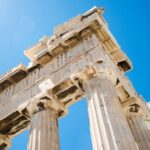


Meeting Point and the Practical Start at 9:00 am
The tour starts at Porinou, Athina 117 42, Greece at 9:00 am and ends at the Ancient Agora of Athens (Athens 105 55, Greece). You’re not required to hop between multiple meeting locations, which is a small but real comfort when you’re arriving in a new city.
The group stays small, with a maximum of 20 travelers, and that size helps you move as a unit. It also makes it easier for the guide to answer questions without losing the whole schedule.
It’s also listed as near public transportation, which is useful if you’re planning to explore the rest of Athens after the tour ends in the Agora area.
What You Get From the Included Entrances (and Why It Matters)
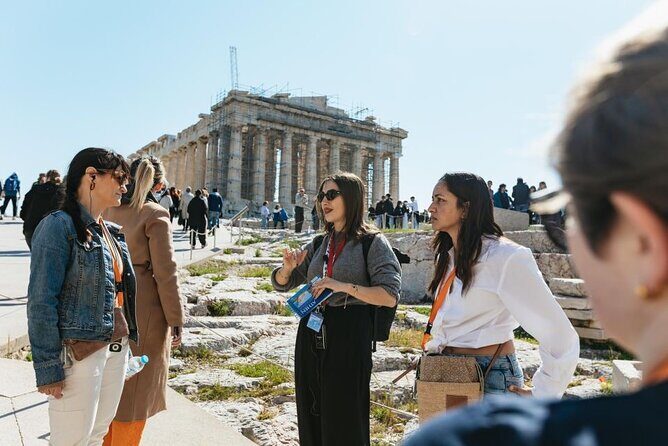
You’re paying for more than a guide here. The tour includes entrance fees for both the Acropolis monuments and the Ancient Agora. That’s a big deal because these are high-demand sites where ticket lines and entry timing can eat up your morning.
With paid entry handled, you spend your energy on the actual experience: listening, looking closely, and getting context at each stop. It’s the kind of value that’s easy to overlook until you’ve tried to sightsee independently and lost time figuring out logistics.
Stop 1: Acropolis — Views, Structure, and the Big Idea

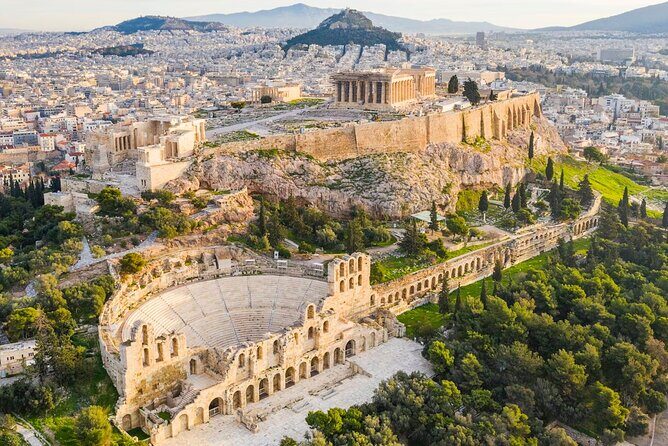
You spend about 30 minutes on the Acropolis itself. This is Athens’ ancient citadel, sitting on a rocky outcrop above the city, with the remains of several major buildings—and the Parthenon at its center.
What I like about starting here is that the guide can frame the “why” before you get overwhelmed by “what.” You learn how this elevated space functioned, and you start noticing details you’d miss if you were just taking pictures.
It’s also a realistic fitness checkpoint. Reviews and general experience point to the fact that the climb can feel steeper than expected. If you go in knowing that, you’ll enjoy it more—because you’re not surprised by the effort.
Stop 2: Herod Atticus Odeon — A Roman Theatre Still Alive
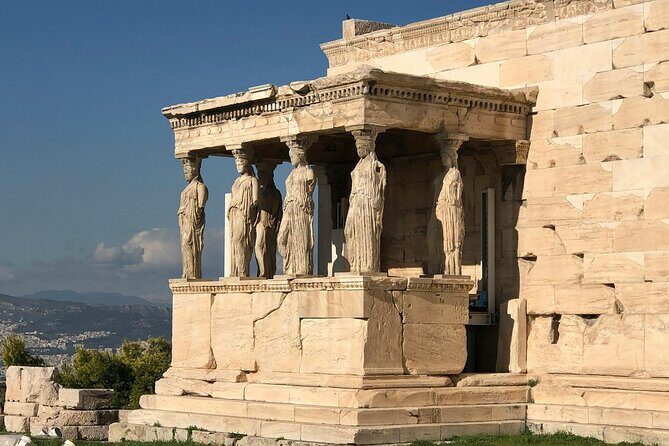
Next is the Herod Atticus Odeon, around 10 minutes. It’s a stone theatre on the southwest slope of the Acropolis, built in 161 AD in memory of a wife by Herodes Atticus, and originally roofed.
The most practical thing here is how the guide uses this stop to explain continuity. You’re looking at a structure from the Roman period, but it’s still used for performances today, which helps you connect ancient design to modern use.
If you’re the type who loves when the past isn’t locked behind glass, this is one of the stops that tends to land well. The views from the slope also give you a sense of how the city wraps around the hill.
- All Day Cruise -3 Islands to Agistri,Moni, Aegina with lunch and drinks included
★ 5.0 · 4,958 reviews

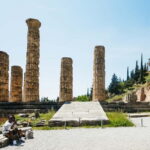



Stop 3: Theatre of Dionysus — Where Greek Drama Took Shape
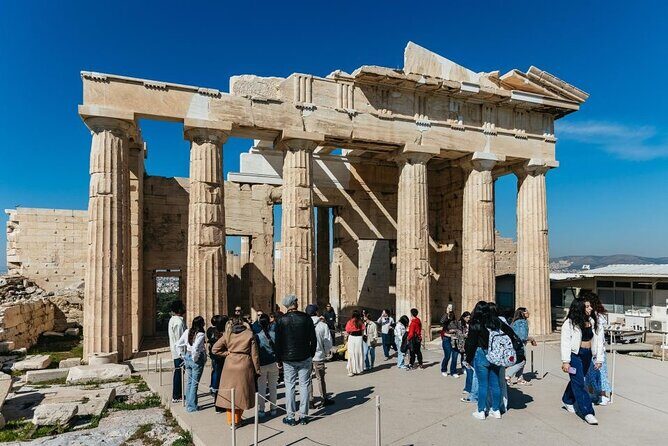
You’ll spend about 15 minutes at the Theatre of Dionysus. This ancient Greek theatre sits on the south slope and connects to the sanctuary of Dionysus Eleuthereus.
This stop helps you understand that the Acropolis isn’t only about temples and monuments. It’s also tied to performance, religion, and public life—especially when you consider how central theatre was in ancient civic culture.
Even if you don’t know much about Greek drama, you’ll likely leave with a clearer sense of why this space mattered. And the timing is short enough that you won’t feel stuck while the group moves to the heart of the complex.
Stop 4: Parthenon — The Icon, Explained at Human Speed
Your Parthenon stop is about 30 minutes, and it’s the moment most people come for. The Parthenon was dedicated to Athena, and its sculptures are considered high points of Classical Greek art. It’s often treated as a symbol beyond the site itself.
What makes this work as a guided stop is how you’re not just staring at a landmark. You get the story behind what you’re seeing—why the design and decoration were important, and how the Parthenon fits into the broader Athenian idea of public identity.
Also, you’re given a chance to pause. Many guides in feedback were praised for pace control, including moments to stop for photos and admire views. That matters because the Parthenon area is where people start to feel rushed if they’re not careful.
Stop 5: Temple of Hephaestus (Misnamed in One Title) — One of the Best-Preserved Views
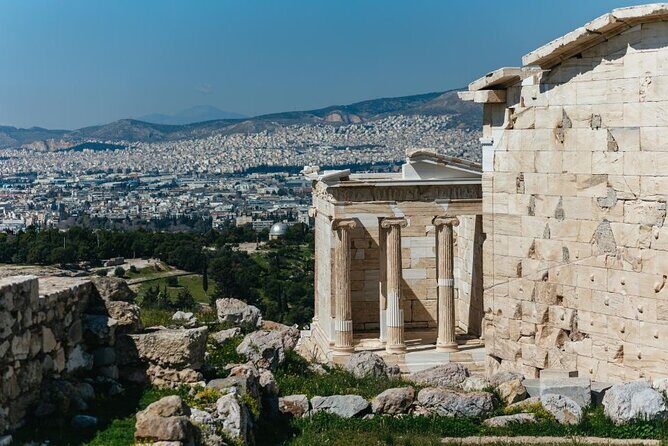
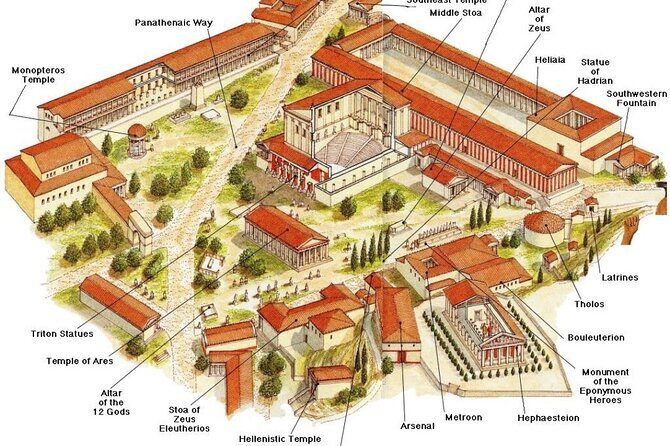
About 15 minutes takes you to the Temple of Hephaestus in the Ancient Agora. One stop title calls it Temple of Aries, but the description clearly identifies it as Hephaestus, built around 449 BC in the height of Athenian power.
This is a classic “wow” stop because it’s one of the best-preserved ancient Greek temples you can see in Athens. The Doric architecture gives you a crisp, readable sense of how Greek temples were designed.
It’s also a good contrast after the Acropolis. Instead of looking at monumental height, you’re reading architectural form at a human scale—right in the context of the Agora.
Stop 6: Stoa of Attalos — Covered Walkway and Public Life
Next is the Stoa of Attalos for about 15 minutes. This two-story colonnaded building was originally built in the 2nd century BC by King Attalos II of Pergamon and restored in the 1950s.
Right now, it houses the Museum of the Ancient Agora. Even if you’re not going deep into the museum collections during the short stop, the structure itself tells the story: this was a covered public space used for walking, shopping, and day-to-day civic movement.
I love stops like this because they quietly answer a question people often forget: not just what the city looked like, but how people moved through it in real life.
Stop 7: Ancient Agora of Athens — The “How People Lived” Hour
The final stop is the Ancient Agora of Athens, about 1 hour 15 minutes. This is the core area to understand ancient Athens as more than a museum of monuments.
The Agora was used for commercial, assembly, and residential gathering—bounded by notable hills and areas around it. That layout matters because it’s part of how the space worked as a hub in the city.
This longer time block is where the tour’s value really pays off. You’re no longer just collecting famous sights. You’re tying together the meaning of public architecture, social space, and civic identity.
If you tend to love the moment when a place clicks—this is where it happens. The Agora stop gives your brain time to connect the symbols you saw up top to the everyday world underneath.
Pace, Walking, Weather, and What to Bring
This tour is listed as moderate physical fitness. In practice, that means you should expect uphill walking and stairs, especially early with the Acropolis climb. Some people in feedback mentioned the climb was higher and steeper than they expected, even if they still felt it was manageable.
You’ll likely get rest stops. Guides were praised for building in breaks and not leaving slower walkers behind. But you should still show up prepared so you’re not bargaining with your energy the whole morning.
Bring practical basics:
- Water (even if the tour doesn’t list it as included)
- Comfortable shoes with good grip
- A layer for wind or chill, since weather can flip fast on the hill
- A photo plan: you’ll have time, but it’s smart to decide what you really want (views vs details)
Also, timing helps. One strong tip from recent experience is that going early makes a big difference—less heat, fewer crowds.
How the Audio Headsets Improve the Whole Experience
Many tours rely on the guide projecting their voice over distance. Here, you get hearing devices connected to the guide’s microphone. That changes the feel of the tour in a simple way: you can listen even when you’re not standing right next to the guide.
It also makes the experience more inclusive for mixed groups. When people can hear clearly, questions flow better and you don’t end up with half the group nodding along while missing key points.
This is especially useful at places like the theatre slopes and Parthenon areas where wind can interfere with sound.
Value for $129.75: What You’re Really Paying For
At $129.75 per person, this isn’t a “cheap add-on” tour. But it also isn’t just a walking lecture. You’re paying for:
- A licensed tour guide
- Entrance fees for Acropolis monuments and Ancient Agora
- Audio headsets for clearer listening
- A small group capped at 20 people
Once you consider that admission at these sites isn’t free, the price becomes easier to justify. And the time you gain matters: the guide helps you see meaning while you’re standing in the place—not after, when you’re reading plaques you didn’t understand.
The result is better value for people who want context and don’t want to spend their vacation figuring out logistics.
Who This Tour Fits Best (and Who Might Reconsider)
This is a great choice if you:
- Want a guided route that covers both Acropolis highlights and the Agora
- Prefer storytelling and Q&A over reading plaques
- Like a paced tour with photo stops built in
- Plan to spend the rest of your day exploring around the Agora end point
You might want to reconsider or plan carefully if:
- You find long uphill walks difficult. The Acropolis climb is a real factor.
- You’re hoping for a very slow, low-effort experience. Even with rest breaks, the terrain is what it is.
If you’re traveling with mobility concerns, there are examples of the guide adjusting for slower needs. Still, I’d treat this as a walking-focused tour and prepare accordingly.
Should You Book This Acropolis and Ancient Agora Tour?
Yes, if you want your Athens morning to feel purposeful. The combination of entrances included, audio headsets, and a small-group guided format makes it a solid value. You also get the best of both worlds: monumental Acropolis landmarks like the Parthenon, then the civic Athens of the Ancient Agora.
If you’re unsure, use this simple checklist: can you handle a steep climb, do you want more than photos, and do you like guided context? If those answers are yes, this is the kind of tour that turns iconic ruins into a real sense of how the city functioned.
FAQ
How long is the Acropolis and Ancient Agora guided tour?
It runs about 3 hours 30 minutes (approx.).
Is the tour offered in English?
Yes, the tour is offered in English.
Are entrance fees included?
Yes. Entrance fees are included for both the Acropolis monuments and the Ancient Agora.
What’s included in the guide experience?
You’ll get hearing devices connected to the guide’s microphone, plus a licensed tour guide.
Where does the tour start and end?
It starts at Porinou, Athina 117 42, Greece and ends at Ancient Agora of Athens, Athens 105 55, Greece.
Is pick-up or drop-off included?
No pick-up or drop-off is included.
Is there a limit on group size?
Yes, the tour has a maximum of 20 travelers.
FAQ
What should I do if weather is poor?
The experience requires good weather. If it’s canceled due to poor weather, you’ll be offered a different date or a full refund.
Can I cancel for a full refund?
Yes. You can cancel up to 24 hours in advance for a full refund. If you cancel less than 24 hours before the start time, the amount paid won’t be refunded.