REVIEW · ATHENS
Ancient Corinth, Sanctuary of Hera, Blue Lake & Canal from Athens
Book on Viator →Operated by Ancient Greece Tours & Transfers · Bookable on Viator
Corinth doesn’t feel like a stop. It feels like a story. This private day trip strings together ancient religion, Roman power, and even a quick swim spot—so you’re not stuck only in Athens. I like that it’s private (your group only) and I also love the mix of big-history sites plus “hands-on” time at Heraion/Blue Lake. One thing to think about: your driver is great at explaining, but you may not have a licensed guide inside every site unless you request one.
The biggest payoff is how the day moves beyond ruins-on-a-map. You’ll go from an engineering marvel at the Corinth Canal to the cliff-top walls of Acrocorinth, then down into Ancient Corinth’s streets—right where St. Paul’s story is tied to real places. The possible drawback is expectations: some people want someone to walk them through each room and entrance; this format is more about driving + interpretation, with optional add-ons for inside-the-site guiding.
In This Review
- Key takeaways before you go
- Athens to Corinth in one day: how the rhythm really feels
- Corinth Canal: the 45-minute engineering moment
- Acrocorinth (Acropolis of Corinth): walls, towers, and a rock that dominates
- Ancient Corinth: where Temple, Agora, theatre, and Paul all overlap
- Temple of Apollo
- The Agora and Apostle Paul’s podium (Bema)
- Roman buildings and the entertainment/ritual zone
- Lechaion road: the route to the gulf port
- St. Paul’s church and its mosaic
- Upper Peirene fountain and the Bema area: quick stops, good context
- Upper Peirene Fountain (Peirene Spring)
- Temple of Apollo / Bema pedestal
- Museum of Corinth: artifacts plus a marked Ottoman-era detail
- Village stroll and souvenir time: practical, not pressured
- Geraneia: a short view stop that actually helps you read the coast
- Perachora and the Heraion/Blue Lake: swim time plus sea-breeze mythology
- Driver vs certified guide: how to set expectations the right way
- Price and value: what $337.34 covers (and what to add)
- Who should book this private Corinth, Heraion, and Blue Lake day
- Should you book this tour?
- FAQ
- Is this a private tour or shared group?
- How long is the tour?
- Do I get pickup from my hotel or apartment in Athens?
- Are the tour activities offered in English?
- What entrance fees should I expect to pay?
- Is a licensed tour guide included inside the archaeological sites?
- Is food included during the day?
- Is there time to swim at Blue Lake?
- What’s the cancellation window?
Key takeaways before you go
- Private first-class vehicle + hotel pickup: round-trip comfort with direct transfers out of Athens.
- Acrocorinth views: the fortress-style acropolis on a monolithic rock gives scale fast.
- St. Paul connections: the day points you to places linked with his trial and preaching.
- Ancient Corinth walking time: Temple of Apollo, Agora, theatre/odeon/Asklepieion areas, plus the Lechaion road.
- Heraion/Blue Lake swim break: time to cool off, not just look.
- Entrance fees to budget for: Ancient Corinth site + museum are not included (€15 per person).
Athens to Corinth in one day: how the rhythm really feels
This tour is designed as a full-day loop out of Athens, about 9 hours total, in a comfortable, air-conditioned vehicle. Pickup is from your hotel or Airbnb, then you return you to the same place at the end of the day. You also get WiFi on board, bottled water, and refreshing wipes, which sounds small until you’re spending hours in a day tour.
The pace is practical: short stops for viewpoints and quick landmarks, then a couple longer blocks where you can slow down and actually absorb what you’re seeing. If you like structure but also want freedom to wander, this works well. If you prefer a guide inside every ticketed doorway, keep reading—this is where planning matters.
You can also read our reviews of more tours and experiences in Athens.
Corinth Canal: the 45-minute engineering moment
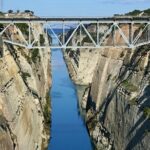
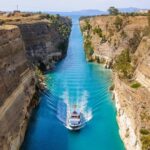
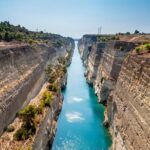
The first real “wow” is the Corinth Canal at the Isthmus. You’ll spend about 45 minutes here. Even if you’re not an engineering person, the canal is a standout because it’s framed as a project that shaped Mediterranean trade—and you can feel why the isthmus mattered.
This stop is also useful because it breaks the Athens-to-Peloponnese travel monotony. You get a quick sense of place before the day starts climbing and walking.
Acrocorinth (Acropolis of Corinth): walls, towers, and a rock that dominates
After the canal, the tour climbs into Acrocorinth, the cliff-top fortress above ancient Corinth. This is one of those places where you immediately understand why it was worth defending. The acropolis sits on a monolithic rock that oversees the old city, and the site is described around a system of three circuit walls reinforced by towers.
What I like about Acrocorinth in a day-trip format is that it gives you scale quickly. Even without a long sit-down, you see the layers of history built into the stone.
You’ll also encounter:
- Temple of Aphrodite traces: remnants on one of the highest peaks.
- Frankish Tower at the SW edge: fortified during Frankish times, forming the inner keep.
- Remains of churches, mosques, houses, fountains, and cisterns inside the fortress area.
You get about 1 hour at this stop, and that’s enough time to walk the perimeter areas, take photos, and get the big picture before heading down toward the main archaeological zone.
Ancient Corinth: where Temple, Agora, theatre, and Paul all overlap
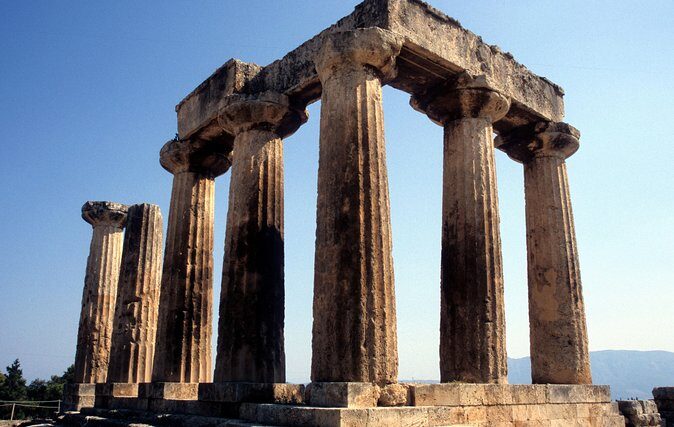
This is the heart of the day: Ancient Corinth (Archaia Korinthos) with about 2 hours allocated there. Entrance to the site isn’t included, so plan for the ticket fee later. The good news is the time budget is realistic for seeing more than just a couple photos.
Temple of Apollo
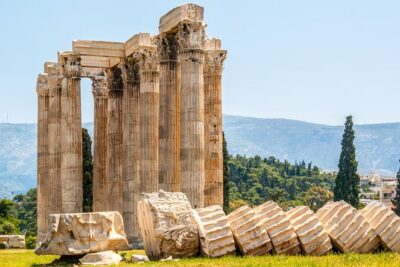
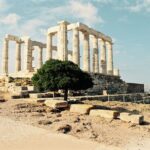
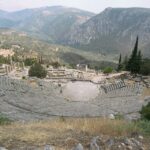
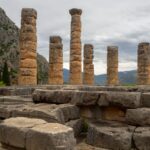
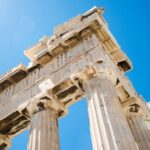
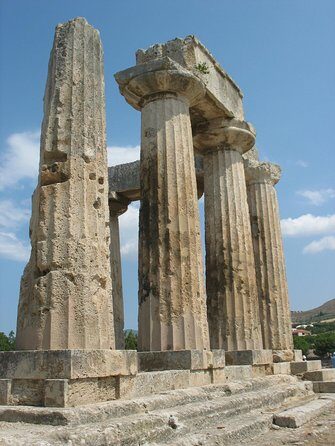
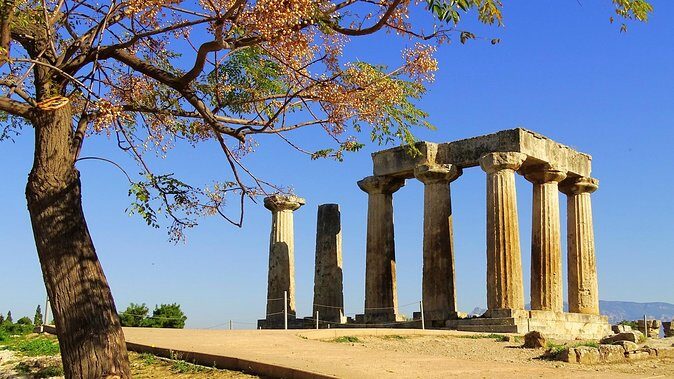
One of the highlights is the Temple of Apollo, described as one of the earliest Doric temples in the Peloponnese and on the Greek mainland. It’s known for monolithic columns, which are rare, and that kind of detail makes the ruins feel more specific than generic “old temple” scenery. The setting helps too: you’re not just looking; you’re placed inside the logic of the city.
- All Day Cruise -3 Islands to Agistri,Moni, Aegina with lunch and drinks included
★ 5.0 · 4,958 reviews



The Agora and Apostle Paul’s podium (Bema)
The Agora is a rectangular space, about 160 m by 70 m, built with central shops, small temples, altars, and the famous podium/Bema. This part matters because it ties the site to a named person: Apostle Paul’s address in 52 AD.
On a practical level, this is where it helps to pay attention to your driver’s explanations. When you understand where people stood and where decisions were made, the walking becomes more than sightseeing.
Roman buildings and the entertainment/ritual zone
You’ll also see areas linked with the city’s later Roman phase, plus the theatre and odeon/Asklepieion area. Even if you don’t stop for a long sit, your brain benefits from the contrast: what began as sacred and civic space became a more formal Roman city with public structures.
Lechaion road: the route to the gulf port
The Lechaion road faces the Corinthian Gulf and points toward the port of Lechaion. This is the kind of detail that helps you understand why the city mattered commercially, not just religiously. When you can connect a road to a port, the whole ancient economy clicks.
St. Paul’s church and its mosaic
At St. Paul’s church, you’ll get time to admire a mosaic mural connected to Saul’s vision on the way to Damascus. It’s a neat “faith-meets-art” moment placed inside the day’s broader ancient story.
One travel note: this is not a hurry-through stop. You should use the time to walk a bit, then stop at the spots that feel meaningful to you.
Upper Peirene fountain and the Bema area: quick stops, good context
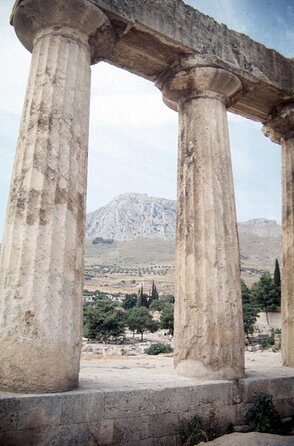
After the main archaeological zone, the tour adds two shorter points that can be easy to skip—unless you understand why they’re included.
Upper Peirene Fountain (Peirene Spring)
You’ll spend about 20 minutes at Upper Peirene Fountain, connected to the Peirene Spring. The spring is described as a gift of Asopus to Sisyphus, which means you’re getting a myth detail tied to a place people depended on for water.
Temple of Apollo / Bema pedestal
Then comes another short block around Temple of Apollo and the Bema/pedestal. This is where the site ties back to St. Paul’s trial—an elevated rostrum in the Roman forum where officials addressed the public.
Even 20 minutes here can be worth it. It’s the kind of information that turns a ruin into a human scene: hearing, judging, speaking, and responding.
Museum of Corinth: artifacts plus a marked Ottoman-era detail
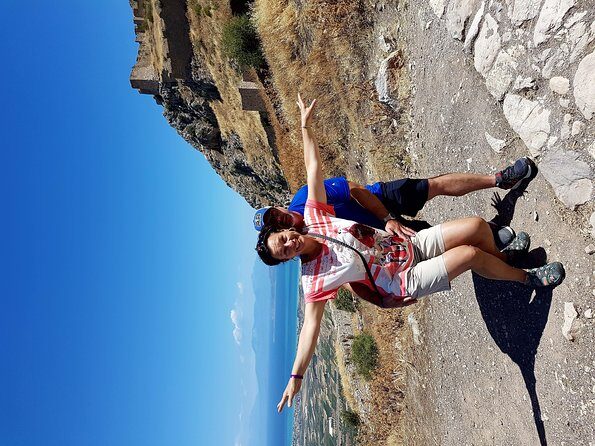
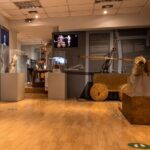
You’ll have about 45 minutes at the Archaeological Museum of Corinth, where you can see a large collection of artifacts from the site and nearby areas. Since the museum is ticketed, budget extra time for looking, not just moving through.
One interesting detail you’ll see mentioned for the museum area is Hadgimoustafa spring, a fountain built during the Ottoman empire. That’s exactly the kind of contrast I like on a day like this—ancient Corinth isn’t the only layer you’ll notice. The region kept living, and the architecture kept changing.
Village stroll and souvenir time: practical, not pressured
After the main stops, you get 30 minutes to stroll among village shops near the archaeological area. This is a solid time buffer for practical purchases: handmade souvenirs, gifts for family, and a chance to slow down after a long walking day.
If you’ve been taking photos all afternoon, this part also works as a breath. It’s less about monuments and more about normal life around the site.
Geraneia: a short view stop that actually helps you read the coast
Next is Geraneia, with about 15 minutes to enjoy views of Geraneia Mountain over the Corinthian Gulf and the SW coast of the Peloponnese. It’s short on time, but it serves a real function: it helps you mentally map the coast you’ll later picture around Perachora and the Heraion area.
Perachora and the Heraion/Blue Lake: swim time plus sea-breeze mythology
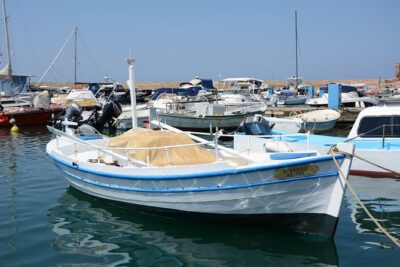
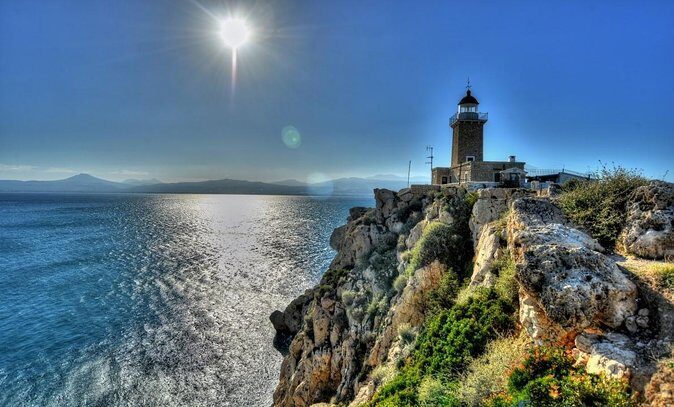
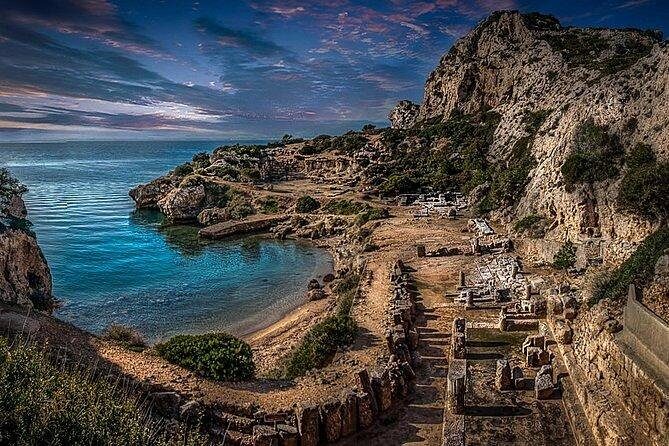
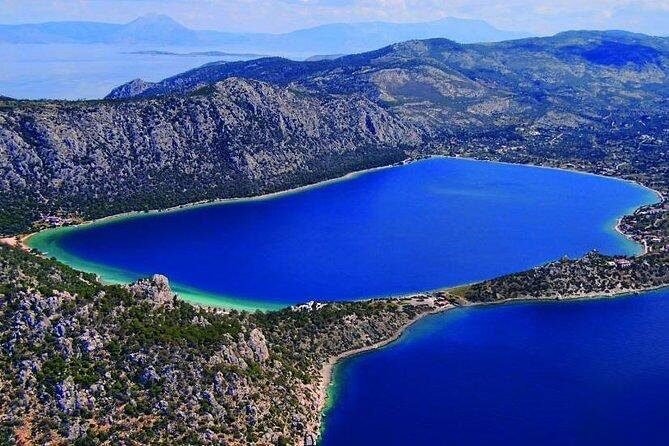
This is your break from “stone city” days. The tour heads to Heraion (Sanctuary of Hera) in Perachora, with about 1 hour 30 minutes here. The day includes Malagavi Lighthouse, and the main feature is the Heraion/Blue Lake area.
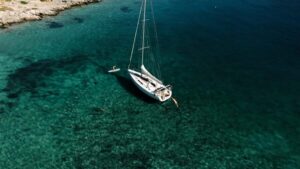
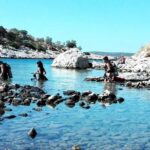
You’ll have time to taste authentic local fish tavernas delicacies (food and drinks are not listed as included, so expect to pay for what you order), and you get time for a refreshing swim and bathing under the sun.
This is the stop that makes the trip feel like a vacation day rather than a checklist. If you enjoy water breaks on hot days, you’ll appreciate having it built in.
Driver vs certified guide: how to set expectations the right way
Here’s the key planning reality. Your vehicle includes a professional driver with in-depth knowledge, and the tour is offered in English. But your driver is not stated as a licensed guide for entering sites and museums. That means you may be exploring parts of the archaeological areas and museum largely on your own, using the background information provided and your time inside.
The option exists to request a licensed tour guide to accompany you into the sites and museum for an additional cost. So before you book, ask yourself: do you want a history explanation at the stops, or do you want guided interpretation inside each ticketed space?
From the tone of the day, you’ll still get plenty of context. The best version of this tour is when you arrive ready to look closely and use your time inside efficiently—then add a certified guide if you want someone to point out every detail while you’re moving through.
Price and value: what $337.34 covers (and what to add)
At $337.34 per person for a private full-day tour, you’re paying for direct logistics: hotel/airbnb pickup and drop-off, a private first-class vehicle, and the driver service with historical commentary. You’re also getting WiFi, bottled water, and wipes, which helps make the long day feel less “tour bus tired.”
What’s extra:
- Entrance fees to the Ancient Corinth site and museum: €15.00 per person (not included).
- Licensed tour guide (optional): additional cost if you want someone certified to enter and guide inside.
- Food and drinks: not included. You can still plan meals and tastings, especially around the Perachora fish-taverna area.
Is it good value? If you’re traveling in a group and want convenience plus a deep hit of sites outside Athens, it’s strong. If you’re the type who only likes tours when someone literally guides every step inside every venue, you may want the optional certified guide so your experience matches your style.
Who should book this private Corinth, Heraion, and Blue Lake day
This tour is a good fit if you want:
- a private day that takes you beyond Athens limits,
- a mix of ancient sites with clear “story points,”
- time outdoors for views and a real swim stop,
- an English-speaking driver who helps connect the dots.
It’s probably less ideal if you:
- dislike walking and hills (Acrocorinth is a climb in practice),
- expect a licensed guide inside every site without paying extra.
If you fit the first group, you’ll likely feel the day was worth the travel time.
Should you book this tour?
I’d book it if you want one organized day that covers Acrocorinth, Ancient Corinth, and the Heraion/Blue Lake experience without the stress of coordinating buses, tickets, and transfers. The private format and the added time for swimming and viewpoints make it feel like more than ancient sightseeing.
If you’re very detail-driven and want constant guidance inside ticketed areas, consider paying for the licensed guide add-on. That’s the best way to turn a strong day plan into a truly guided, stop-by-stop learning experience.
FAQ
Is this a private tour or shared group?
It’s private. Only your group participates, with round-trip transit from Athens by a comfortable, air-conditioned vehicle.
How long is the tour?
The tour is listed as approximately 9 hours.
Do I get pickup from my hotel or apartment in Athens?
Yes. The driver picks you up from your chosen hotel, Airbnb, or apartment in Athens and returns you there at the end of the day.
Are the tour activities offered in English?
Yes, the tour is offered in English.
What entrance fees should I expect to pay?
Entrance fees to the Ancient Corinth site and museum are €15.00 per person and are not included. Other stops are marked as admission ticket free.
Is a licensed tour guide included inside the archaeological sites?
Not automatically. The included guide service is from the professional tour driver, but a licensed tour guide for inside the sites and museum is an additional cost if requested.
Is food included during the day?
Food and drinks are not included. The itinerary includes a chance to taste local fish-taverna delicacies during the Heraion/Blue Lake stop, but you should plan on paying for what you choose.
Is there time to swim at Blue Lake?
Yes. The Heraion/Blue Lake stop includes time for a refreshing swim and bathing, and it lasts about 1 hour 30 minutes.
What’s the cancellation window?
You can cancel for a full refund up to 24 hours before the experience’s start time, with free cancellation according to the policy.