REVIEW · ATHENS
Athens: Acropolis Guided Tour and Old Town Food Tasting
Book on GetYourGuide →Operated by ATHENS WALKING TOURS · Bookable on GetYourGuide
The best thing about this Athens tour is the way it links the Acropolis with everyday Greek food. You begin among theaters, temples, and sacred rock, then walk downhill into Plaka and Monastiraki for market sights and local tastes. I like the clear story arc, and I like that the food stop gives you a more ordinary side of Athens than monuments alone can provide.
I also like the south-slope entrance, which brings you past the Theater of Dionysus and the Asklepieion before the main climb. The possible catch is the pace and terrain: this is a four-hour walking tour on a steep, uneven hill, and the Acropolis security line can still take 30 minutes or more in peak season despite advance tickets.
In This Review
- Key points at a glance
- Why this Acropolis and food combination works
- Starting below the Acropolis at Dionysus
- The climb and the first Athens views
- The Propylaea, Athena Nike, and the Parthenon
- Mars Hill and the view back to the Acropolis
- Plaka and Anafiotika after the ancient hill
- Ending in Monastiraki with Greek flavors
- Guides and the pace of the day
- Skip-the-line access and the limits of the ticket
- Who should book this four-hour tour?
- Should you book it?
- FAQ
- How long does the Athens Acropolis and food tour last?
- What language is the tour conducted in?
- Where does the tour meet?
- How early should I arrive?
- Is Acropolis admission included?
- Does skip-the-line access remove all waiting?
- What food is included?
- Is hotel pickup included?
- Can I bring luggage or a stroller?
- Is the tour suitable for people with mobility impairments?
- What should I bring?
Key points at a glance
- South-slope Acropolis entry: Begin at the Sanctuary of Dionysus, the Asklepieion, and the Theater of Dionysus before climbing toward the summit.
- The four major Acropolis monuments: See the Parthenon, Erechtheion, Propylaea, and Temple of Athena Nike with an English-speaking licensed guide.
- Wide city views: Look across Athens toward the Odeon of Herodes Atticus, the National Observatory, and the hills of Filopappos, Mars, and Pnyx.
- Plaka and Anafiotika on foot: Walk through whitewashed houses, old chapels, and narrow streets in the area known as the Neighborhood of the Gods.
- Food near Monastiraki: Finish with Greek delicacies by the flea market, Hadrian’s Library, the Tzistarakis Mosque, and the Tower of the Winds.
- Important practical limits: You must arrive 20 minutes early, carry a valid passport, and select the correct EU or non-EU ticket category.
Why this Acropolis and food combination works
Athens can feel like two cities at once. On the Acropolis, you are dealing with temples, political power, mythology, and 2,500 years of change. A short walk later, you are in Plaka, where laundry, chapels, small shops, and outdoor tables make the city feel immediate and lived in.
I like tours that make this contrast easy to understand. You do not spend the whole morning staring at marble from a distance, nor do you leave the ancient center without seeing the places that shaped Athens. The route gives you a strong first look at the city in four hours.
The food tasting matters for another reason. Greek cuisine is not just a meal at the end of the day. It reflects local habits, ingredients, family cooking, and regional traditions. One of the guides, Angel, has been praised for combining food knowledge with a good sense of humor, while Katerina has brought a cook’s perspective to the tasting. The exact guide depends on the departure, but the food portion is designed to explain what you are eating rather than simply hand you a snack.
At $135 per person, this is not a bargain walking tour. You are paying for the Acropolis admission, advance ticket handling, a licensed local guide, and a separate food experience. If you already have Acropolis tickets and prefer to explore Plaka on your own, the price may feel high. If you want one organized outing that handles the major sights and introduces you to Greek flavors, the cost is easier to justify.
You can also read our reviews of more food & drink experiences in Athens



Starting below the Acropolis at Dionysus
Meet at 3 Dionyssiou Areopagitou Street, near the beginning of the pedestrian walkway leading toward the Acropolis from Hadrian’s Arch and Syngrou Avenue. Look for the orange Athens Walking Tours sign, and arrive 20 minutes before departure. The strict entry time means late arrivals cannot be held for, and refunds are not given if you miss the group.
The tour enters from the south slope rather than taking you straight to the summit. This is a smart introduction because you see the Acropolis as a sacred and theatrical center, not only as the home of the Parthenon.
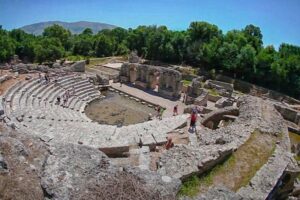
The Sanctuary of Dionysus comes first. Dionysus was linked with wine, theater, and celebration, and the sanctuary helps explain why the theater below the Acropolis became so important to Greek cultural life. The Asklepieion follows, a healing site connected with Asclepius. These stops are less famous than the Parthenon, but they add useful context before you reach the marble monuments above.
Then comes the Theater of Dionysus. From here, your guide can explain how drama developed in ancient Athens and why this setting mattered. The slope is steep, and the ground can be rough, so comfortable shoes are essential. The tour is not suitable for wheelchairs, strollers, or people with mobility impairments.
The climb and the first Athens views
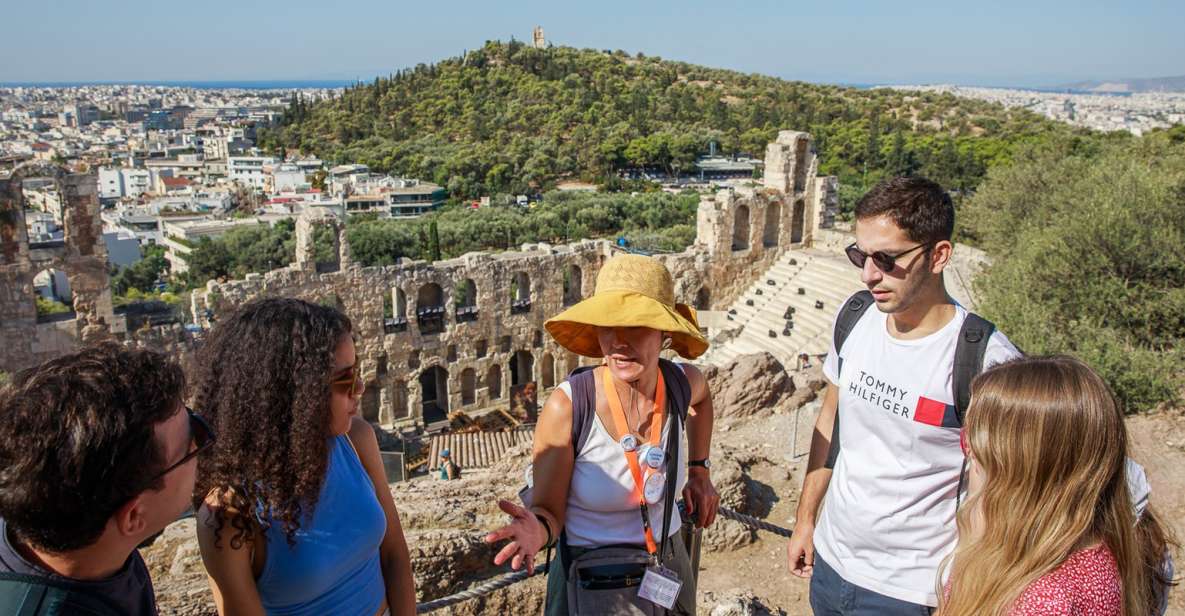
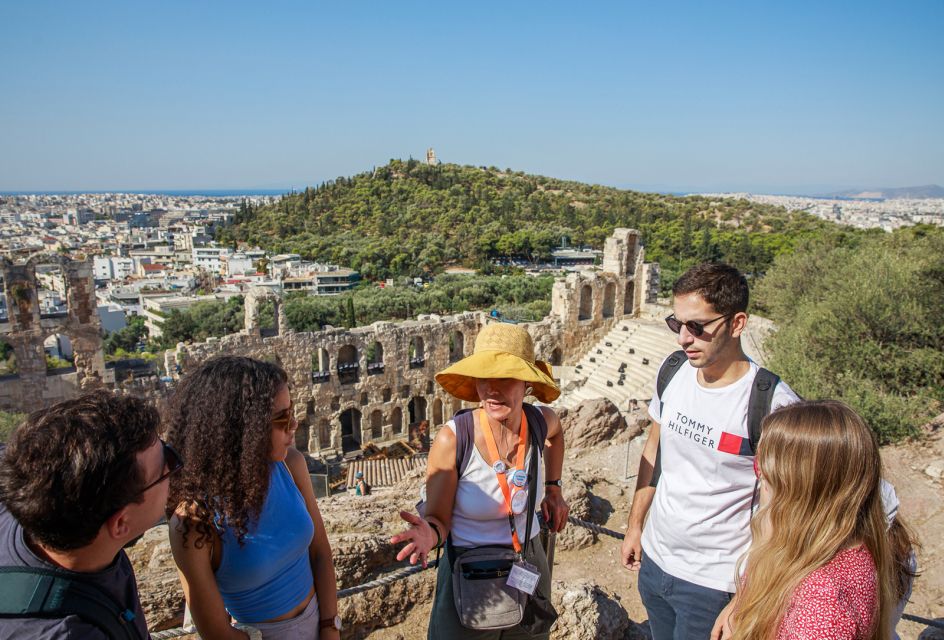
As you climb, your guide points out major sites around the Acropolis. This is where a live guide earns the fee. From the path, you can frame the Odeon of Herodes Atticus, the National Observatory, and several Athens hills in one broad view.
The hills of Filopappos, Mars, and Pnyx are not random names on a map. Each connects to a different part of Athens history and public life. A guide helps you see the Acropolis as the center of a larger city rather than an isolated monument.
Take your photos here, but do not save every picture for the summit. The lower approach gives you good views of the rock, its walls, and the surrounding city. Athens can be hazy or very bright, so a hat, sunscreen, and water are sensible choices. The supplied information does not specify bottled water, so plan your own refreshments.
The Propylaea, Athena Nike, and the Parthenon
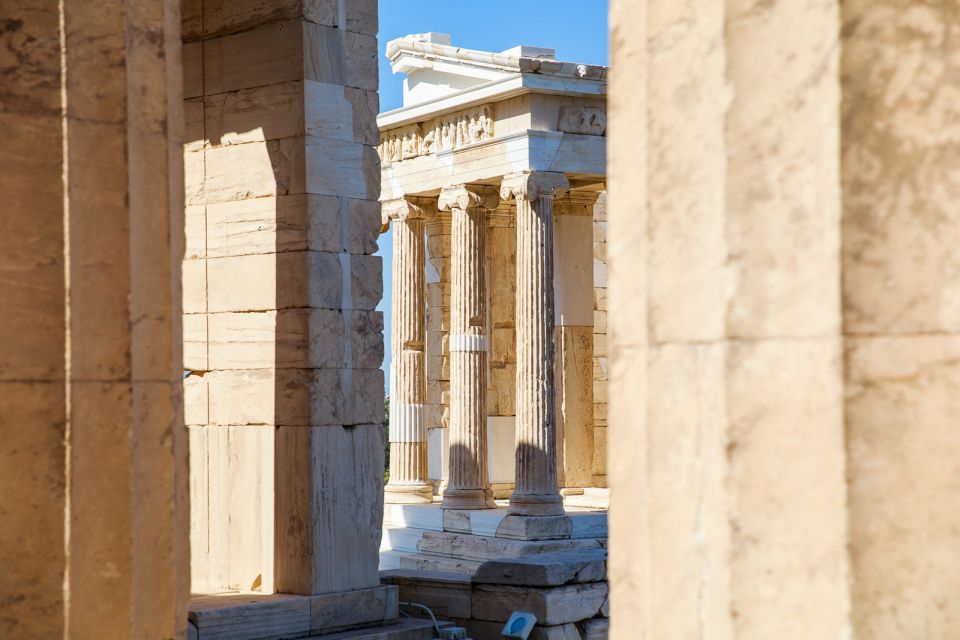
At the top, you pass through the Propylaea, the monumental gateway to the Acropolis. The entrance itself is part of the experience. It prepares you for the buildings beyond and gives your guide a chance to explain how movement through the sacred area was controlled.
The Temple of Athena Nike is small beside the Parthenon, but it deserves attention. Dedicated to Athena as a bringer of victory, it occupies a prominent position near the entrance. It is easy to overlook when the Parthenon dominates every view, so having a guide point it out is useful.
The Parthenon is the main event, of course. Your guide explains its role as a temple to Athena, its design, and the long process of damage and change that shaped what you see today. You should not expect a quiet, empty monument. The Acropolis is one of Athens’ busiest sites, and the tour’s advance entry helps with the ticket counter but does not remove security checks or crowding.
The Erechtheion brings a different mood. Its unusual design and the famous Caryatid figures make it one of the most memorable stops on the hill. Listen carefully here, because the building carries several religious associations and is less straightforward than the symmetrical Parthenon.
The summit provides the city views promised by the tour. You can look across Athens and toward the surrounding hills, with the urban sprawl extending far beyond the ancient center. This is also the point where the climb feels most worthwhile. The tradeoff is exposure: there is little relief from sun, heat, or wind, so weather-appropriate clothing matters.
Mars Hill and the view back to the Acropolis
The route includes Mars Hill, or Areopagus, beside the Acropolis. It has historical, mythological, and religious importance, and the guide uses the site to connect different eras of Athens.
Mars Hill is also a good place to look back at the Acropolis. From ground level, the sacred rock takes on a different shape than it does from the summit. The steps and stone can be slippery, so watch your footing and avoid rushing for a photograph.
This part of the tour adds meaning without requiring another archaeological admission. It also helps you understand how closely Athens’ ancient monuments sit together. You are not traveling across town between every sight. Much of the city’s oldest core is packed into a walkable area, though the terrain is still demanding.
A few more Athens tours and experiences worth a look






Plaka and Anafiotika after the ancient hill
After the Acropolis, the tour heads into Plaka and Anafiotika, often called the Neighborhood of the Gods. The change is immediate. Instead of wide archaeological views, you get narrow lanes, whitewashed cubic houses, and brightly painted shutters.
Anafiotika is especially distinctive because its small houses have a Cycladic look in the middle of Athens. The area is photogenic, but it is also a residential neighborhood, so keep your voice down and be considerate when taking pictures.
Your guide points out old chapels, historic buildings, and small monuments that are easy to pass without noticing. This is where a walking tour can show you more than a route from one major attraction to another. You get a sense of how the old center works at street level.
The Ancient Agora, Roman Forum, and Tower of the Winds appear along the way. The tour does not promise a full interior visit to every one of these sites, so think of them as exterior landmarks and historical waypoints. If you want detailed time inside the Agora or Roman Forum, plan a separate visit.
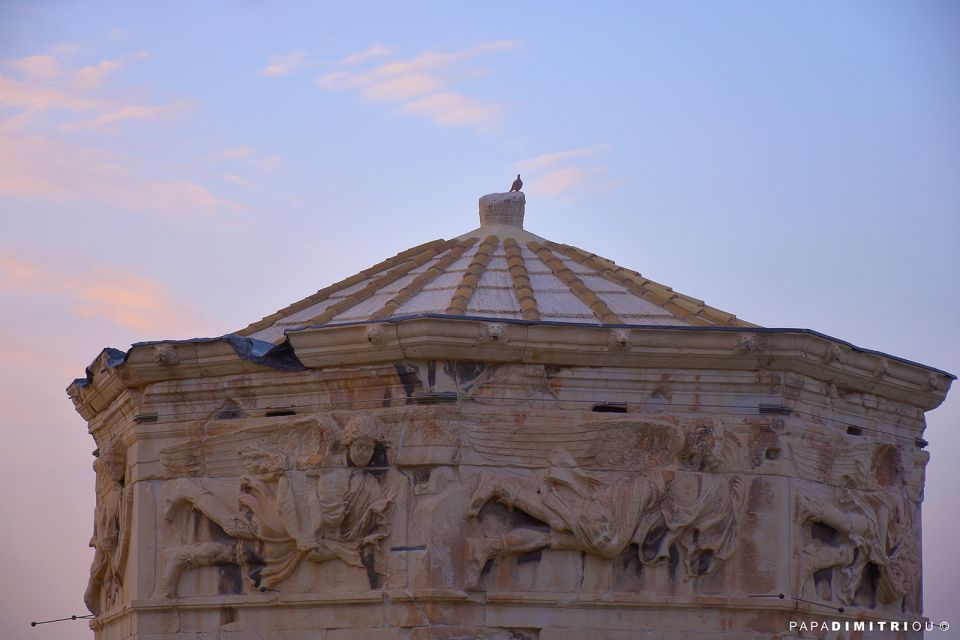
The Tower of the Winds is a particularly useful sight to have explained. Its purpose and design make more sense when a guide connects it to ancient timekeeping and the practical side of city life. Details like this can easily disappear when you are exploring alone with only a map.
Ending in Monastiraki with Greek flavors
The tour ends in Monastiraki Square, one of the most useful areas in central Athens for getting your bearings. Your guide points out Hadrian’s Library, the Tzistarakis Mosque, and the flea market before the food tasting.
Monastiraki is a good finish because it feels less formal than the Acropolis. The square connects ancient remains, Ottoman-era buildings, modern shops, street activity, and the market in one compact area. It is also a practical place to continue your day after the tour.
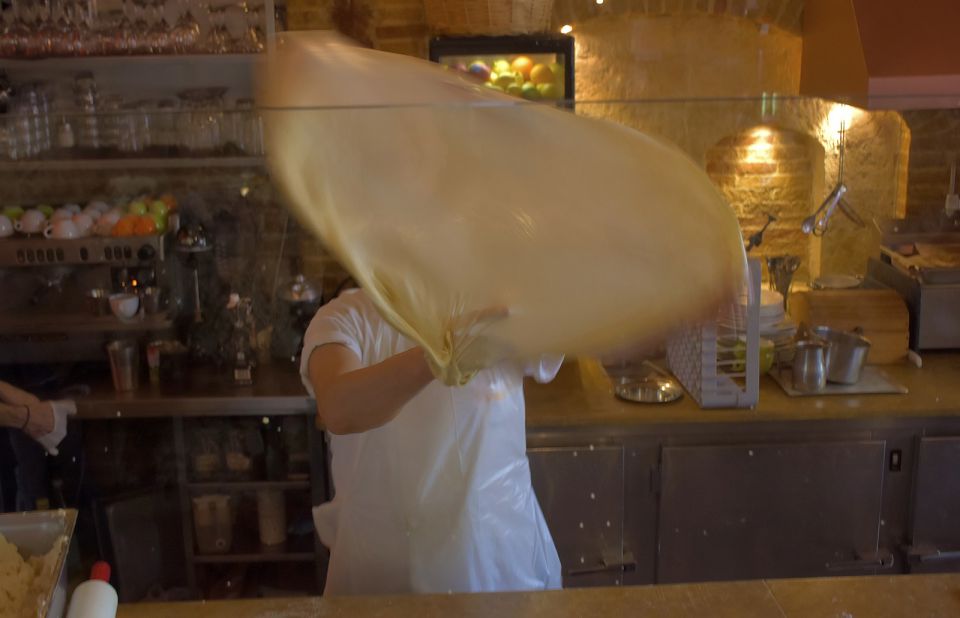
The food tasting includes local delicacies, but additional food and drinks are not included. Do not treat it as a full lunch unless your guide tells you otherwise. The exact dishes are not specified, and the quantity can vary, so you may still want a meal later.
The strongest part of the tasting is likely the explanation around the food. Angel has been noted for offering a broad range of Greek foods and for leaving people with full stomachs, while Eva has been praised for her enthusiasm and generous approach to feeding the group. Katerina’s experience as a cook adds another useful angle. These details suggest that the tasting is intended to be social and educational, not a formal restaurant meal.
If you are curious about Greek cuisine but do not know what to order on your own, this stop removes some guesswork. You can ask questions, try several items, and then return to Monastiraki or Plaka later with a better idea of what interests you.
Guides and the pace of the day
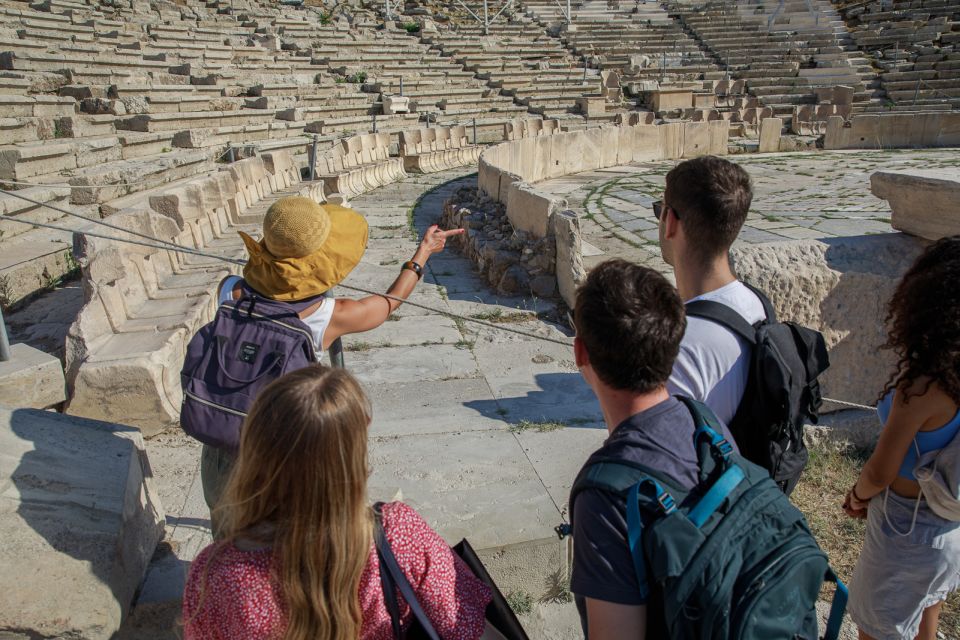
The Acropolis section needs a guide who can manage both the physical route and the flood of information. Niovi has been praised for keeping a comfortable pace and explaining both ancient and more recent events. Maria has also been singled out for an easy pace, which matters on a large hill with many stops.
The food portion may have a different guide. Katerina, Eva, Tina, and Angel have all led food walks connected with this experience. Angel has also been described as punctual, friendly, and well informed about both Athens and food.
The split-guide format can be a plus. The person leading you through temples is not necessarily the same person handling food, so each part can have its own focus. It also means the tone may change midway, from archaeology and mythology to markets, cooking, and local customs.
The tour lasts four hours, but the distance and uneven ground can make it feel active. Some departures may start early enough to reach the top before the largest crowds, though you should check the available start time when booking. Even early departures can face security delays.
Skip-the-line access and the limits of the ticket
The operator buys the Acropolis tickets in advance and handles the ticket counter process. This saves you from standing in the regular ticket queue, which is valuable during a busy day.
Skip-the-ticket-line does not mean instant entry. Everyone still passes through airport-style security, and waits can range from none to 10 or 30 minutes. In peak season, delays can exceed 30 minutes. Visitor numbers change during the day, so do not schedule a tight lunch reservation or museum entry immediately afterward.
You must bring a valid passport for verification and select EU or non-EU citizenship correctly when booking. Choosing the wrong category can lead to a price adjustment or loss of the tour. That detail is easy to miss, but it matters because archaeological admission prices can differ.
The tour operates in rain or shine. Bring sunscreen and a sun hat for hot days, but also check the forecast and wear suitable clothing if rain is expected. Large bags and luggage are not allowed, and baby strollers cannot be used on this route.
Who should book this four-hour tour?
I would choose this tour if you have limited time in Athens and want the main archaeological experience plus an introduction to the old center. It is especially useful for a first visit, when the city’s names and monuments can blur together.
It also suits you if food helps you understand a place. The tasting is not a replacement for a full food tour or evening meal, but it gives the Acropolis day a more human finish.
You may prefer a different plan if you want to explore at your own speed, spend hours inside the Acropolis Museum, or avoid walking uphill on uneven ground. Families with children under five cannot join, and the route is not suitable for wheelchair users or strollers.
The four-hour length is both a strength and a limit. You see a lot without giving up the entire day, but the schedule leaves little room for lingering. If the Parthenon is your main goal, you will get solid guidance and useful context. If you want long photo stops or detailed time at every monument, an independent visit may give you more freedom.
Should you book it?
Book this tour if you want the Acropolis explained clearly, prefer advance ticket handling, and like the idea of ending among Plaka’s lanes and Monastiraki’s food stalls. The strongest reasons are the south-slope approach, the broad city views, and the combination of ancient sites with a Greek tasting.
At $135, I see the value in the guide and admission, but only if you will use the full experience. It is less appealing for repeat visitors who already know the Acropolis or for anyone who dislikes fixed group timing.
Arrive early, wear sturdy shoes, carry a passport, and leave room in your schedule for security delays. With those conditions in mind, this is a well-rounded first-day introduction to Athens, provided you are ready for a steep walk and a lively finish.
FAQ
How long does the Athens Acropolis and food tour last?
The tour lasts four hours.
What language is the tour conducted in?
The live tour guide speaks English.
Where does the tour meet?
Meet at 3 Dionyssiou Areopagitou Street. Look for the orange Athens Walking Tours sign at the start of the pedestrian walkway leading toward the Acropolis from Hadrian’s Arch and Syngrou Avenue.
How early should I arrive?
Arrive 20 minutes before the scheduled departure time.
Is Acropolis admission included?
Yes. Admission tickets to the Acropolis are included, and the operator pre-purchases them for you.
Does skip-the-line access remove all waiting?
No. It avoids the regular ticket counter line, but you still must pass through security. Waiting can range from none to 10 or 30 minutes, and peak-season waits can exceed 30 minutes.
What food is included?
A food tasting of local delicacies is included. Additional food and drinks are not included.
Is hotel pickup included?
No. Hotel pickup and drop-off are not included.
Can I bring luggage or a stroller?
No. Luggage, large bags, baby strollers, and standard strollers are not allowed on the tour.
Is the tour suitable for people with mobility impairments?
No. The tour is not suitable for people with mobility impairments or wheelchair users because of the steep and uneven Acropolis route.
What should I bring?
Bring comfortable shoes, a sun hat, sunscreen, weather-appropriate clothing, and a valid passport for ticket verification.