REVIEW · ATHENS
Athens: Acropolis Guided Tour
Book on GetYourGuide →Operated by ARTYTOURS · Bookable on GetYourGuide
You can see Athens’ past in one big sweep. This Acropolis guided tour pairs skip-the-line entry with coach transfers so you spend more time where it matters: on the rock, among the ruins, and inside the story of Athenian democracy.
What I like most is the relaxed pacing at the start and the fact you’re not fighting ticket queues with limited daylight. Another strong plus: the guide wears you with headsets, so you can actually follow the details even while you’re walking.
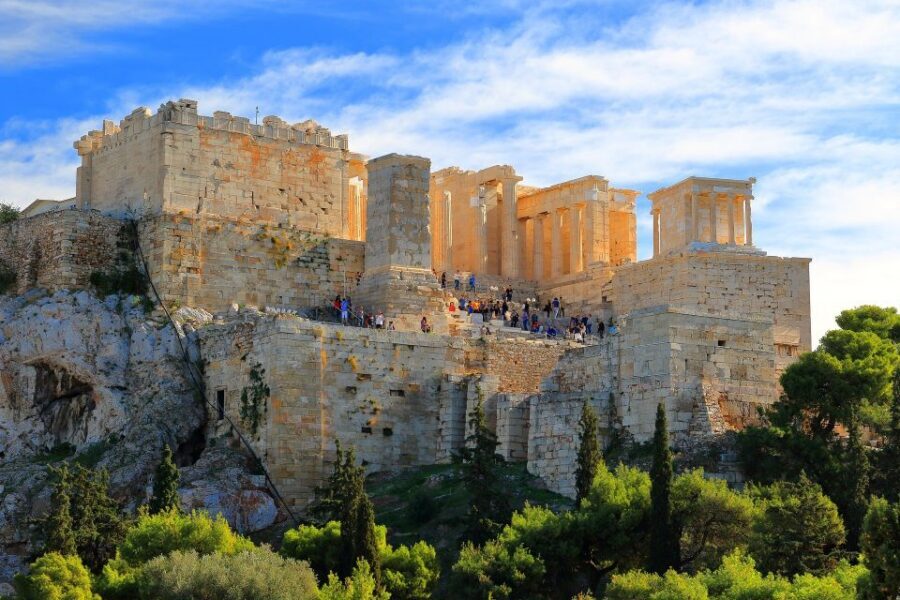
The other thing I really appreciate is the mix of monuments and context. You’ll get stops tied to the Parthenon area (including the Theatre of Dionysus) plus key spots like Temple of Athena Nike and the monumental entrance, the Propylaea. And you’ll hear how all of it connects to the golden age of Pericles and the ideas behind democracy.
One drawback to consider: timing can feel tight if there’s a long wait on the bus, and you only get limited free time once you’re up there (about 30 minutes). If delays happen, your self-exploration window can shrink fast.
In This Review
- Key Points You’ll Care About
- Where You Start: The Acropolis Tour Logistics That Actually Matter
- Athens by Coach: The Stops Before You Hit the Rock
- Entering the Acropolis: Skip the Line and Get Oriented Fast
- Temple of Athena Nike and Propylaea: A Smart Start with a Personal Time Window
- Parthenon and the Theatre of Dionysus: What to Look For
- Democracy from the Source: Pericles and Why the Acropolis Explains It
- Price and Duration: Is $94 for 4 Hours Good Value?
- Comfort and Practical Tips: Shoes, Water, and Heat Management
- Group Energy and Guide Style: What Can Go Right or Wrong
- Who This Tour Fits Best
- Should You Book This Acropolis Guided Tour?
- FAQ
- Is this Acropolis tour in English?
- How long is the tour?
- Where do I meet the group?
- Does the tour include skip-the-line tickets?
- What’s included in the price?
- Is food included?
Key Points You’ll Care About

- Skip-the-line entry helps you get started quickly at the Acropolis
- Audio headsets make the Spanish narration easier to follow while moving
- Propylaea plus Temple of Athena Nike give you an orientation moment right on arrival
- Short on-foot time, big sights: Parthenon and Theatre of Dionysus in one go
- Coach stops around Athens: Panathenaic Stadium, Syntagma Square, and more
- Mostly a walking tour, so plan around comfort and the heat with water and a hat
Where You Start: The Acropolis Tour Logistics That Actually Matter
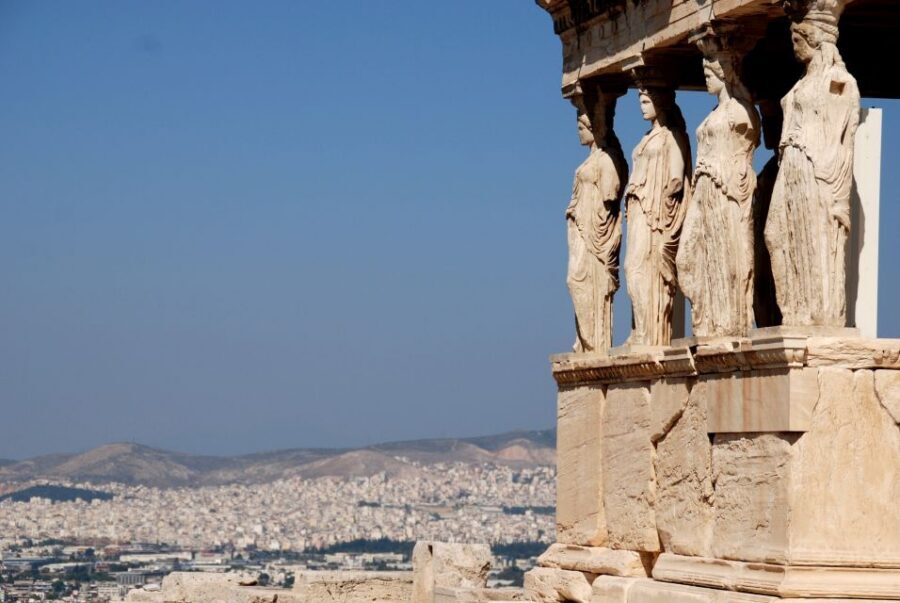
Meeting point is simple, but you’ll want to arrive early: stand in front of the Melina Mercouri monument, close to the Acropolis metro station. Representatives board you onto the bus there, and you meet the guide with the group once you’re moving.
This is one of those tours where the practical details decide if you’ll enjoy it. With the air-conditioned coach and onboard WiFi, the ride keeps you comfortable while you get briefed on what you’re about to see. Then, once you reach the Acropolis, skip-the-line tickets help you start the experience faster—huge in Athens where crowds can change by the hour.
You also get a headset. I love this because the Acropolis is not a museum floor where you stand in one place. You’re walking, turning your head, and trying to line up photos. With a headset, the guide’s Spanish narration stays clear without you constantly asking people to repeat themselves.
You can also read our reviews of more guided tours in Athens



Athens by Coach: The Stops Before You Hit the Rock

Before you even step onto the Acropolis, you get a useful tour of Athens from the bus. You’ll pass the Panathenaic Stadium, the famous venue where the first modern Olympic Games were held in 1896. Even if you’re not a sports-history person, it’s a great visual break from temples and ruins. You can also use this stop to mentally reset after the morning or whatever you’ve already been doing in Athens.
Next up is Syntagma Square area: you’ll admire the parliament and the Monument to Unknown Soldier. Then you pass by the Arch of Hadrian and other key spots. These aren’t there just for scenery. They help you understand how Athens layers new civic life on top of its ancient identity. The Acropolis is the headline, but the city around it gives the background you’ll notice while you’re looking at stones up on the hill.
The vibe here is efficient. You’re not stuck in long monologues on the bus, and you’re not expected to run around the city. It’s a smooth setup that makes the Acropolis part feel more focused once you arrive.
Entering the Acropolis: Skip the Line and Get Oriented Fast

At the Acropolis, you’ll skip the ticket line and enter quickly. That matters because the Acropolis is physically large and mentally dense. You don’t want your attention consumed by logistics while the best angles and lighting pass you by.
Once inside, your guide starts building the map in your head. You’re using the guide’s route to understand what you’re seeing. This is where the tour’s format works: headsets keep the narration steady, and walking keeps you from forgetting why each landmark matters.
You’ll also get a few named stops right up front, including Temple of Athena Nike and the Propylaea. These are not just pretty structures. They’re the kind of monuments that teach you how to read the space: entrances, thresholds, and how the ancient Athenians structured movement and sightlines.
Temple of Athena Nike and Propylaea: A Smart Start with a Personal Time Window

Temple of Athena Nike is a perfect first stop because it sets the tone. It helps you notice details like how temples were placed for visibility and how religious architecture is tied to civic pride.
Then comes Propylaea, the monumental entrance to the Acropolis. This is an especially useful stop if you want to avoid feeling lost. Once you understand the entrance, the rest of the terrain feels less like random ruins and more like a deliberate plan.
After that, you get about 30 minutes of free time to explore at your own pace. I like this because it gives you control. You can step back for photos, check out a viewpoint, or just linger where something caught your eye. Use it wisely: if you wander too far or waste it in one area, you may spend the rest of the guided time thinking about what you still want to see.
The big thing to remember: if the bus portion runs long, you might arrive with less time than you want for that self-exploration window. So keep an eye on how your day feels once you’re on the bus.
Parthenon and the Theatre of Dionysus: What to Look For
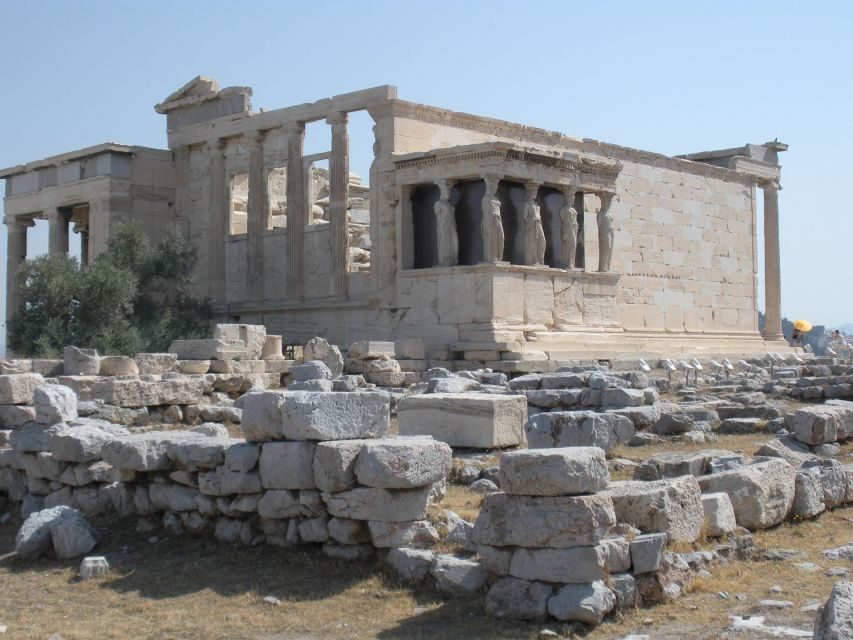
Once the tour moves into the core monuments, you’ll see two of the most famous sites on the Acropolis: the Parthenon and the Theatre of Dionysus.
The Parthenon is the star, but it can be easy to treat it like a postcard. With a guide and a headset, you’ll get help noticing how the building functioned as more than decoration. It’s where architecture, belief, and power show up together. Even if your visit is short, the guide’s narration helps you connect what you’re seeing to why it was built and why it mattered.
Then there’s the Theatre of Dionysus. This adds a different angle to the Acropolis story. It reminds you that Athens was not only about temples and politics—it was also about public life and performance. A theatre in a sacred complex tells you something important: civic identity lived in everyday culture, too.
If you’re the type who likes to understand what a place was used for (not just what it looks like), this pairing is strong. You’re seeing both stone worship spaces and a venue for gatherings tied to Dionysus.
- All Day Cruise -3 Islands to Agistri,Moni, Aegina with lunch and drinks included
★ 5.0 · 4,958 reviews




Democracy from the Source: Pericles and Why the Acropolis Explains It
This tour doesn’t just list monuments. It connects them to the idea of democracy, tying what you’re seeing to the place where democracy first appeared and the golden age associated with Pericles.
That’s the part I’d call the real value. When you hear the political context in the same space where those ideas were discussed, the ruins stop being abstract. The Acropolis becomes a physical reference point for a huge concept in Western political history.
You’ll learn about the city where democracy first appeared and hear how Pericles’ era shaped Athens. The guide explains significance while you walk among the monuments—so the storytelling isn’t floating in air. It’s attached to the route, to entrances, to the way spaces were arranged for public meaning.
Even if your background is light, you’ll likely leave with a cleaner timeline and better intuition for how politics, religion, and civic pride were intertwined in Athens.
Price and Duration: Is $94 for 4 Hours Good Value?
The price is about $94 per person for a 4-hour experience. For Athens, that’s not cheap, but it’s not random either. What you’re paying for is a bundle of things that save time and make the visit easier:
- A live Spanish guide
- Air-conditioned transportation from the city
- Skip-the-line entry at the Acropolis
- Audio headsets so you can actually hear the guide while you walk
- WiFi on board
When you add up those conveniences, the price starts to make sense—especially skip-the-line and headsets. Those two items reduce frustration, which matters because the Acropolis visit has limited patience built into it.
What’s not included is food and drinks, so plan to handle that separately. You’ll also have personal expenses like water if you didn’t bring it.
Overall, I’d think of this as a 4-hour “get your bearings fast and get the story right” tour. If you want a slow, independent wander with lots of unstructured time, you might prefer a different style. If you want direction, narration, and efficiency, this price can feel fair.
Comfort and Practical Tips: Shoes, Water, and Heat Management
The tour lasts 4 hours, and it’s not a sit-and-stare experience. Plan around walking on uneven stone and stairs. Bring comfortable shoes—I can’t stress that enough. If your feet aren’t happy, your brain stops caring about democracy and starts caring about blisters.
Bring a hat and water. The tour provides guidance to bring both, which usually means it’s a practical reality on the ground. You’ll also be outdoors for much of the time, and you don’t want to rely on finding things last minute.
You should also know it’s not suitable for people with mobility impairments or wheelchair users. That isn’t a judgment call on your needs—it’s a simple fit issue. If accessibility is a concern, you’ll need to look at a different option designed for it.
Group Energy and Guide Style: What Can Go Right or Wrong

Most of the experience depends on two moving parts: timing and guide delivery.
On the positive side, some guides do a great job keeping the group together and staying focused on history. One guide named Nico was singled out for efficient explanations and for meeting expectations. That kind of delivery can turn a short tour into a satisfying one because you feel like you’re getting value for each minute.
On the other hand, there are also clear cautions you should keep in mind. One booking had a big complaint about long bus waiting time, leading to a rushed visit where the free time felt too late into the day. Another booking mentioned an issue with the guide being extremely rude. I can’t predict what you’ll get, but it’s fair to say the quality of the day may vary with guide and timing.
If you’re the type who needs everything to be perfectly on schedule, consider that possibility. If you’re flexible and mainly want the monuments plus the democracy context, you’re more likely to enjoy the experience even if the day isn’t perfectly timed.
Who This Tour Fits Best
This tour is a strong fit if you want a guided introduction to the Acropolis with enough structure to understand what you’re seeing. It also works well if you’re visiting Athens for the first time and want the big names covered—Parthenon, Theatre of Dionysus, Temple of Athena Nike, Propylaea—without building a study plan first.
It also suits Spanish speakers (the tour is Spanish). If you’re not comfortable with Spanish, you may still follow some parts through the route and visible landmarks, but the tour is clearly built around Spanish narration and you should plan accordingly.
If you hate crowds and prefer quiet time only on your own terms, a group tour might feel limiting. But if you want a guided flow that moves you through the highlights in about 4 hours, you’ll probably like the setup.
Should You Book This Acropolis Guided Tour?
Book it if you want efficient Acropolis time, skip-the-line entry, and a guide who explains what you’re seeing with headsets—plus a quick Athens preview from the coach. For first-timers, it’s a practical way to turn a famous site into a coherent story about Athenian life and democracy.
Skip it or look for an alternative if your biggest priority is maximum independent wandering, or if you know delays and schedule changes will stress you out. Because of the group format and the limited free window, you’ll want a day that stays on track.
If you do book: wear solid shoes, bring water and a hat, and use that 30-minute free time intentionally. The Acropolis rewards focused looking, and this tour gives you the structure to do it.
FAQ
Is this Acropolis tour in English?
No, the live tour guide language is Spanish.
How long is the tour?
The duration is 4 hours.
Where do I meet the group?
Meet in front of the Melina Mercouri monument, close to the Acropolis metro station.
Does the tour include skip-the-line tickets?
Yes. You get skip-the-line entry to the Acropolis.
What’s included in the price?
You get a guide, transportation with air-conditioning, WiFi on board, and audio headsets.
Is food included?
No. Food and drinks are not included.