REVIEW · ATHENS
Athens: City Tour With Private Driver
Book on GetYourGuide →Operated by P.G.T. TOUR GROUP (Private Greece Tours) · Bookable on GetYourGuide
The clever part of this Athens tour is its private-car format. In one long day, you can reach the Acropolis, Ancient Agora, Lycabettus Hill, and Kallimarmaro Stadium without wrestling with city traffic or trying to piece together public transport. I like the door-to-door pickup and the freedom to adjust the pace. I also like that the route mixes famous monuments with ordinary Athens, including Plaka, the Flea Market, and the changing guards.
The main caution is simple: this is a driver-led tour, not a fully guided archaeological visit. Your English-speaking driver can help with timing, tickets, transport, and general information, but a guide inside the sites is not included. You will also pay entrance fees separately, and the Acropolis requires plenty of walking on uneven ground.
In This Review
- Key points at a glance
- A private route through Athens in one day
- Entering the Acropolis and its sacred monuments
- The Temple of Olympian Zeus and Kallimarmaro Stadium
- Parliament, the Presidential Mansion, and the changing guards
- Lycabettus Hill for Athens from above
- Plaka, the Tower of the Winds, and lunch
- The Ancient Agora and the restored Stoa of Attalos
- Choosing between two major museums
- What the private driver adds
- Price, tickets, and practical value
- Who should book this Athens tour?
- Booking advice and final verdict
- FAQ
- How long does the Athens private driver tour last?
- How many people can join for $424?
- Is hotel or cruise port pickup included?
- Is a guide included inside the archaeological sites?
- Are entrance fees included?
- Can I choose between the National Archaeological Museum and the New Acropolis Museum?
- Is lunch included?
- Is the tour suitable for wheelchair users?
Key points at a glance

- Eight hours in a private vehicle: Your group of up to three pays $424, with pickup and return included from Athens or Piraeus.
- A full Acropolis visit: See the Parthenon, Propylaea, Temple of Athena Nike, Erechtheion, Theatre of Dionysus, Odeon of Herodes Atticus, and Areopagus.
- The best city view: Lycabettus Hill gives you a 360-degree panorama across Athens.
- Ancient and modern Athens together: The route includes the Presidential Mansion, Parliament, the Tomb of the Unknown Soldier, Plaka, and the Ancient Agora.
- One museum at the end: Choose the National Archaeological Museum or the New Acropolis Museum.
- Flexible private service: The route can be adjusted to your wishes, and family groups can request changes for children.
A private route through Athens in one day
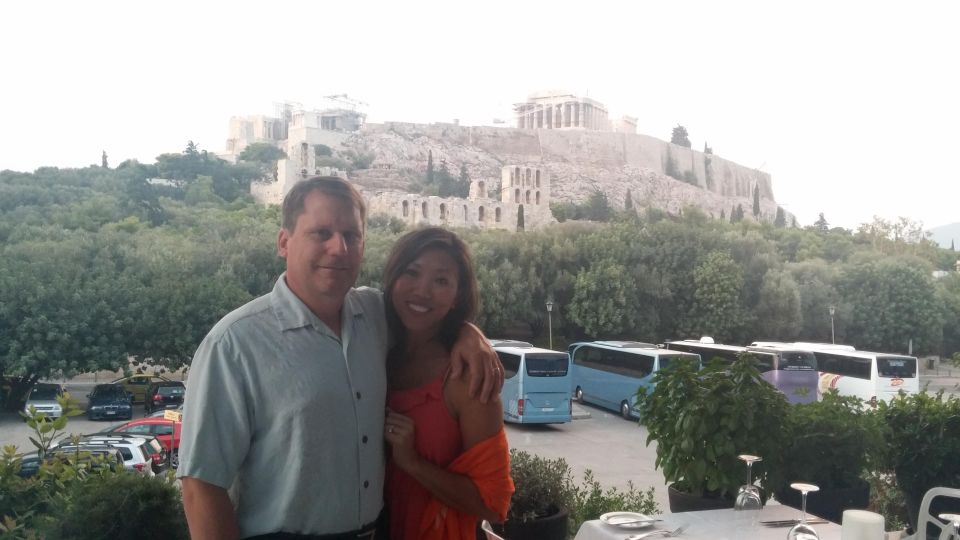
Athens is spread out, busy, and full of major sights that do not all sit beside one another. A private driver solves the biggest practical problem: getting from the Acropolis to the Temple of Olympian Zeus, then up Lycabettus Hill, across to Plaka, and finally to the Ancient Agora and a museum.
The tour lasts eight hours. That is enough time for a serious first look at the city, but not enough for slow, expert-led visits at every stop. You will need to make choices, especially at the end when you select one museum.
Pickup is included from an Athens or Piraeus hotel, residence, or cruise port. If your accommodation sits on a pedestrian street or cannot be reached by car, you will receive an alternative meeting point. Plan to wait outside five to ten minutes early. The driver will hold a sign with your last name.
The vehicle depends on your group size. Options include a taxi, sedan, SUV, van, or minibus. All are air-conditioned, nonsmoking, insured, and certified for tourist use. Chilled bottled water is included, a small comfort that matters on a hot Athenian day.
You can also read our reviews of more city tours in Athens


Entering the Acropolis and its sacred monuments
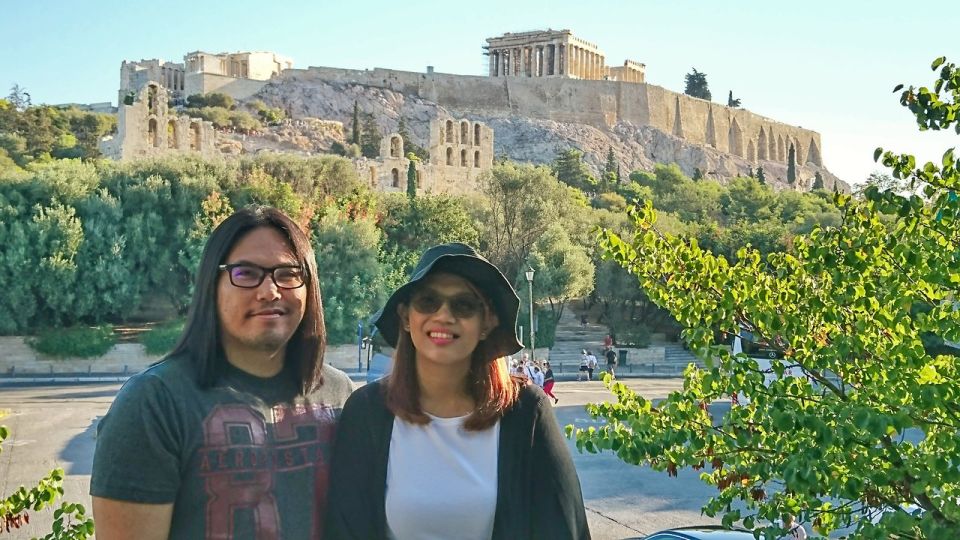
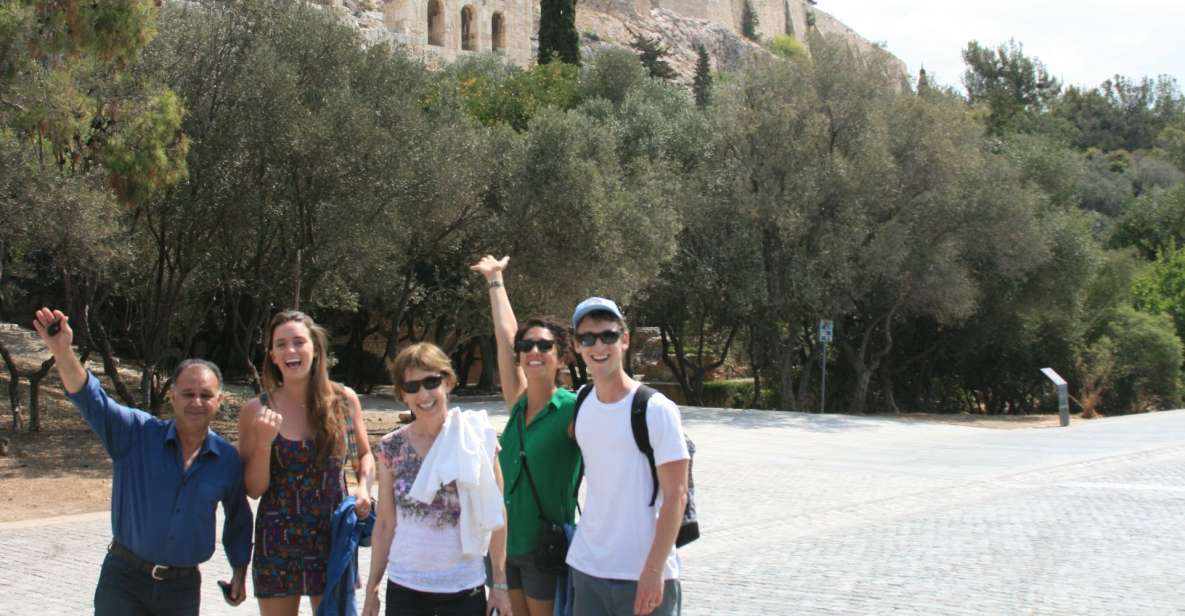
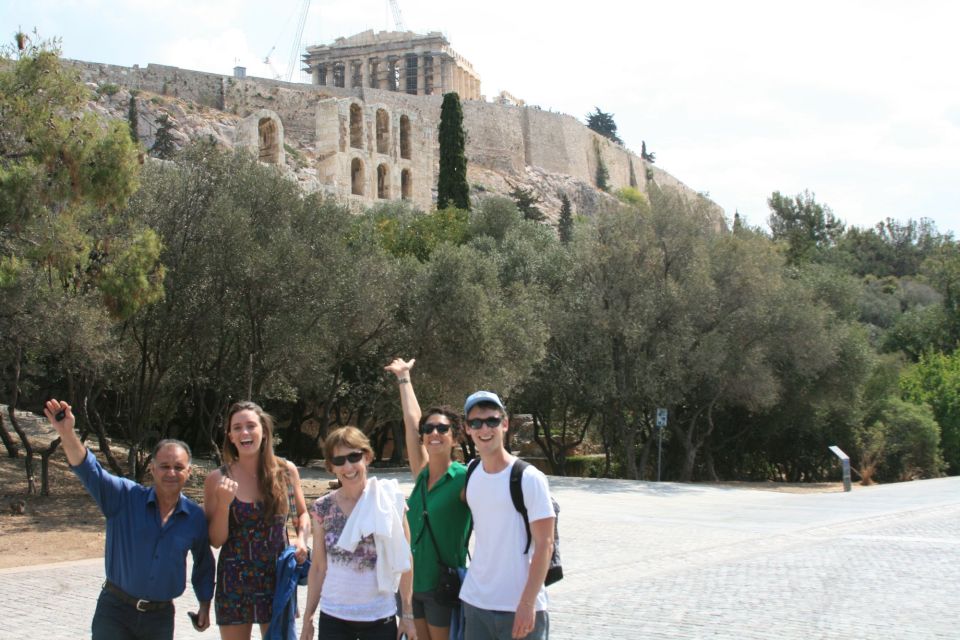
The day begins at the Acropolis, Athens’ famous sacred rock. This is the part of the tour that demands the most walking, sun protection, and attention to your footing. Wear shoes with a good grip, bring water, and carry a hat and sunscreen.
At the top, the Parthenon takes the main role. Built for Athena Parthenos, it is the monument most closely linked with classical Athens. The setting also gives you broad views over the city, though the main attraction is the building itself and the many layers of use and restoration around it.
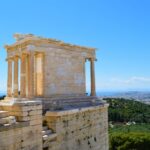
You will pass through the Propylaea, the monumental entrance to the Acropolis. From there, the Temple of Athena Nike sits near the entrance, a small but finely placed temple dedicated to Athena as the bringer of victory.
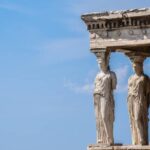
The Erechtheion is another essential stop. Its famous Caryatids, sculpted female figures used as architectural supports, make it one of the most recognizable buildings on the hill. The temple connects worship of Athena and Poseidon, giving you a glimpse of how several religious traditions shared this sacred ground.
Below the Acropolis, the Odeon of Herodes Atticus and Theatre of Dionysus add a different layer to the visit. The Odeon remains a striking performance venue, while the Theatre of Dionysus is tied to the birth of dramatic performance in Athens. The route also includes Areopagus, or Mars Hill, a rocky area with a strong connection to ancient civic and religious life.
The driver does not serve as a guide inside the archaeological sites. That distinction matters. You receive transportation, timing help, and an English-speaking professional who can give general context, but you should not expect a detailed lecture at every monument. If you want sustained interpretation inside the Acropolis, you would need to arrange a separate licensed guide.
The Temple of Olympian Zeus and Kallimarmaro Stadium
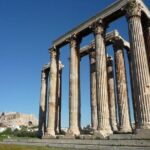
After the Acropolis, the tour continues to the Temple of Olympian Zeus. Its remaining columns help you understand the enormous scale of the ancient project, even though much of the temple has disappeared. This stop is useful because it shifts your view from the compact hilltop monuments to a grand structure built on a much larger footprint.
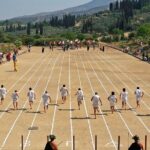
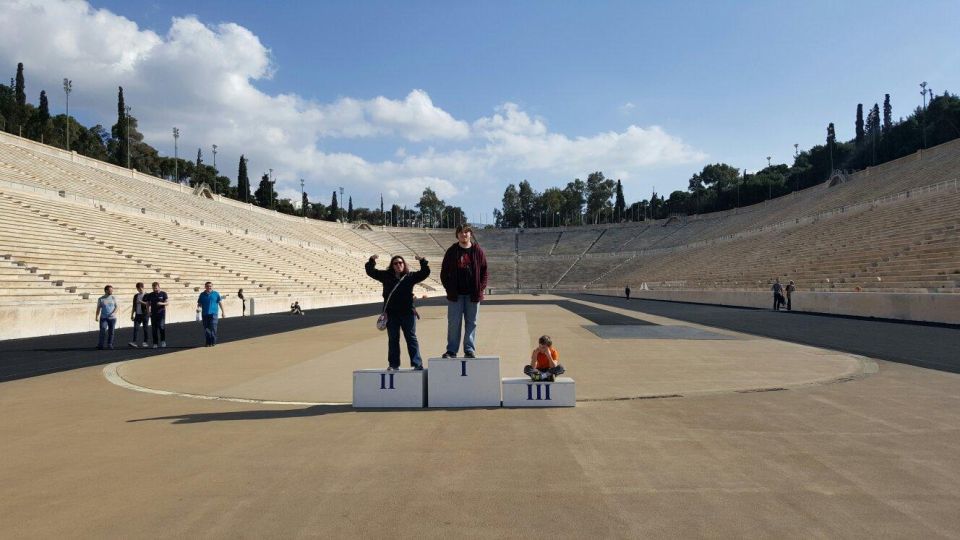
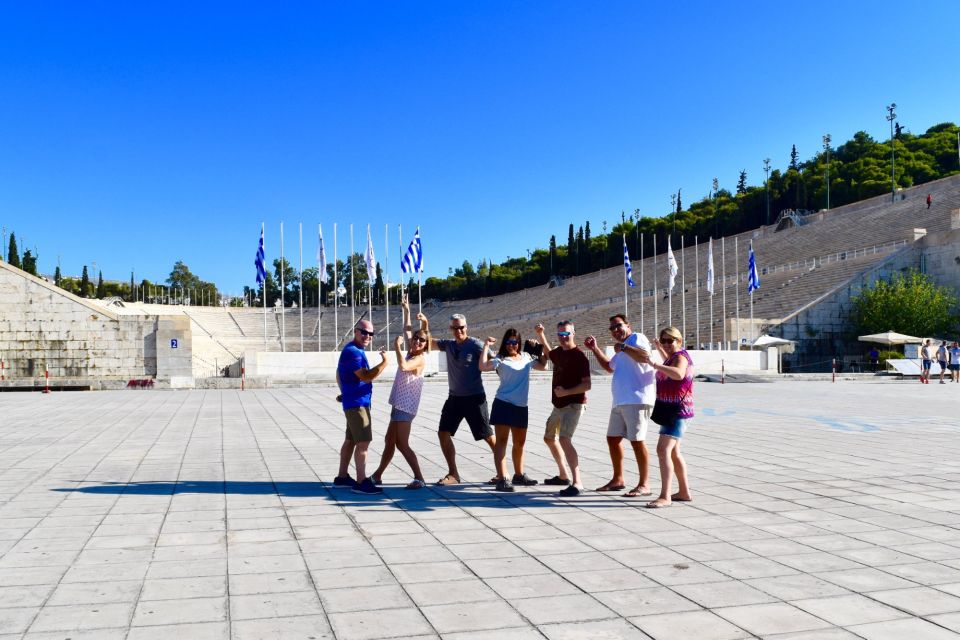
Next comes the Panathenaic Stadium, also called Kallimarmaro. The stadium is made of marble and hosted the first modern Olympic Games in 1896. It is a short visit, not a long museum stop, but its shape and bright stone make it easy to appreciate quickly.
This pairing works well. At the Acropolis, you see the religious and civic center of ancient Athens. At the stadium, you see how modern Greece connected itself to the Olympic past. You also get a break from the longer uphill walking of the Acropolis.
Parliament, the Presidential Mansion, and the changing guards
The private vehicle lets you see several modern political landmarks without adding a long walking route. You drive past the Prime Minister’s Residence, known as the Maximou Mansion, and the former Royal Palace, now the Presidential Mansion.
The route includes the House of Parliament and the Tomb of the Unknown Soldier. There is a short stop to watch the changing of the guards. Since this is not presented as an extended ceremony visit, keep your expectations modest. It is a quick look at one of central Athens’ best-known public rituals.
This section gives useful contrast to the ancient sites. Athens is not an open-air ruin field. It is a working capital with ministries, offices, traffic, shops, and residential streets pressed close to its monuments. The drive helps you connect the classical city with the modern one.
Lycabettus Hill for Athens from above
From central Athens, you drive up Lycabettus Hill, the highest point in the city. This is one of the most valuable stops for first-time visitors because it helps you understand Athens’ size and position.
The hill provides a 360-degree panoramic view. From here, you can take in the city’s broad spread and get your bearings before returning to street level. Bring sunglasses, especially in strong summer light, and allow a little time for photographs.
The stop is also a smart break in the rhythm of the day. Much of the itinerary involves monuments and museum displays. Lycabettus gives you open air and a chance to look at Athens as a whole. The tradeoff is that the stop is mainly about the view, so the value depends on weather and visibility.
You can also read our reviews of more private tours in Athens




Plaka, the Tower of the Winds, and lunch
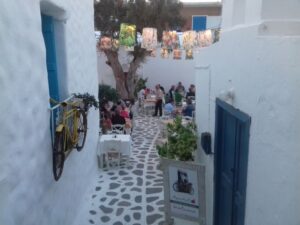
Plaka is described as Athens’ oldest and most picturesque neighborhood, with narrow stone-paved streets, Greek tavernas, gyros shops, antique stores, and souvenir stalls. This is where the tour feels less like a checklist of monuments and more like an introduction to the city as it is lived today.
You may have an optional lunch here. Food and drinks are not included, so budget separately. The private format gives you more say over the timing, which helps if you are traveling with children or want a slower meal.
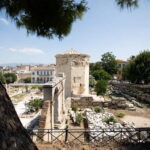
The Tower of the Winds is another highlight in this area. This ancient structure is easy to overlook if you rush from one headline monument to the next, yet it provides a nice link between practical ancient life and the ceremonial buildings on the Acropolis.
Plaka can be busy and commercial in places. That is not a reason to skip it, but you should know what you are getting. The neighborhood offers atmosphere, stone lanes, tavernas, and shopping, not a quiet untouched village.
The Ancient Agora and the restored Stoa of Attalos
After lunch, the vehicle takes you through the center toward the Flea Market area and the Ancient Agora. In ancient Athens, the Agora served as a political, financial, and commercial center. It is one of the best places on the route for understanding how the city functioned beyond its temples.
The Temple of Hephaistos, also known as Theseum, is the major monument here. It is especially important because it is considered the best-preserved ancient temple in Greece. Compared with the Parthenon, it feels more compact and easier to read as a complete building.
The Stoa of Attalos was an ancient shopping center and was restored in the 1950s by the American School of Classical Studies. Its long colonnade helps you picture the Agora as a place of business and public exchange, rather than only a field of stones.
The Agora is often a calmer stop than the Acropolis. In spring, the gardens and flowering plants add to the sense of space. Still, the site involves outdoor walking, and you should continue using sun protection. The quiet setting is one of the strongest reasons to keep this stop in the plan.
Choosing between two major museums
The final museum visit is a choice between the National Archaeological Museum and the New Acropolis Museum. You cannot properly cover both in the remaining time, so choose based on your interests.
The National Archaeological Museum is the broader choice. It contains major finds from across Greece, including frescoes from Santorini and the prehistoric gold collection from Mycenae, with the famous mask associated with Agamemnon. Choose it if you want a wide view of Greek archaeology rather than a museum focused mainly on the Acropolis.
The New Acropolis Museum is the more focused option. It presents the Parthenon Marbles and important archaeological finds from the sacred rock. Choose it if the Acropolis was the main reason you came to Athens and you want to understand the objects and buildings you saw earlier in the day.
The museum decision also affects the pace of the tour. If you prefer time to study exhibits carefully, tell the driver early that the museum matters to you. If you would rather spend more time outdoors, the museum may feel like a shorter closing visit.
What the private driver adds
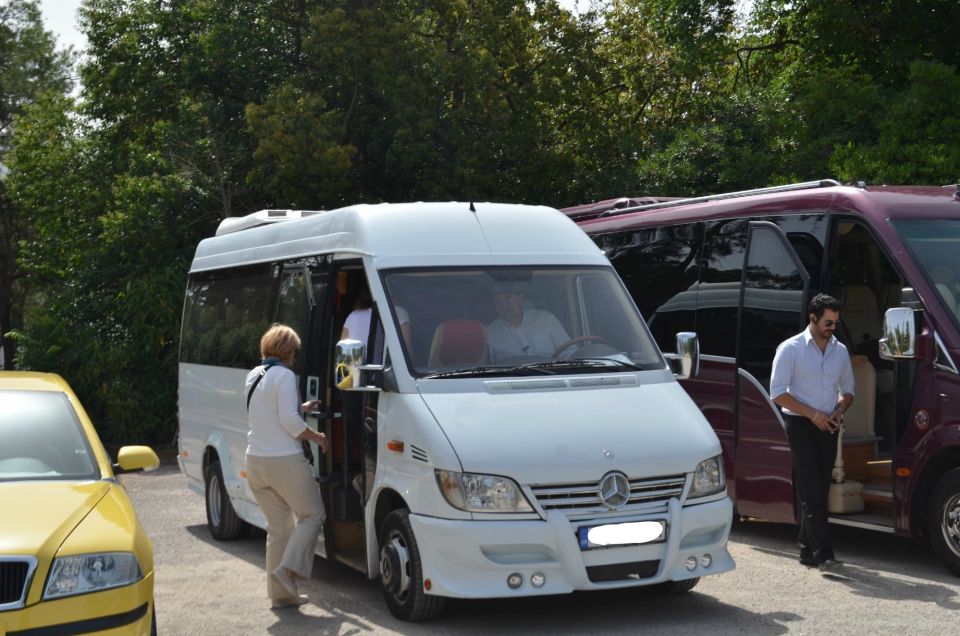
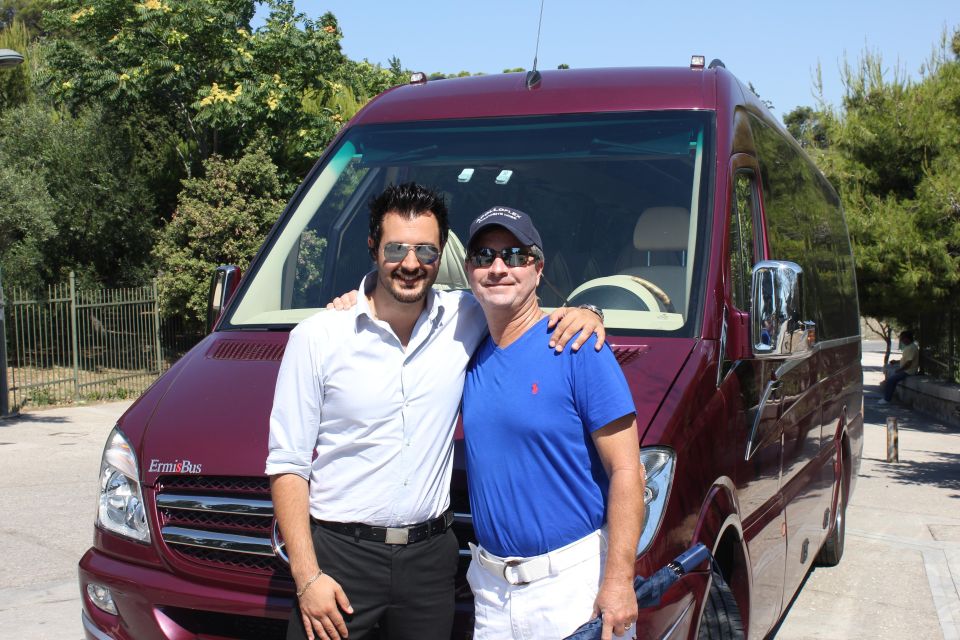
The driver is the central feature of this experience. You are not joining a large coach group, and the vehicle can be selected for the size of your party. Pickup, fuel, tolls, parking, and state taxes are included, so you do not need to manage small transport costs during the day.
The private setup is particularly useful in hot weather. On June 22, 2024, Mario adjusted the route and timing for Margaret’s group during an extremely hot Athens day. That is exactly the sort of personal attention that can make an eight-hour sightseeing plan manageable rather than exhausting.
George is also described as polite and accommodating, while Dominik is noted for being very pleasant. The overall rating is 4.6 from three reviews, so the sample is small, but the strongest pattern is clear: considerate driver service and willingness to respond to requests.
Do not confuse a private driver with a private guide. You have personalized transport and support, but no guide inside the archaeological sites. For some people, that is a fair trade. You get privacy and control, then explore at your own pace. For others, the lack of detailed on-site explanation will be a real limitation.
Price, tickets, and practical value
The price is $424 for a private group of up to three. At the full group size, that works out to about $141 per person before admission and food. For a solo visitor or couple, the per-person cost is higher, but you are paying for an entire vehicle, a full day of service, hotel or port pickup, and a flexible route.
Entrance fees are not included. The combined ticket for the archaeological sites on this route, excluding museums, is listed at 30 euros. The New Acropolis Museum is listed at 10 euros. The National Archaeological Museum price is not specified here, so check the current fee before booking.
The operator offers skip-the-line assistance and online help buying the proper tickets in advance. That does not make the sites private or empty, but it can reduce the time spent sorting out admission. Reduced and free admission rules also apply at certain ages, nationalities, and dates, so bring a passport or identification document. A copy is accepted according to the tour information.
From November 1 through March 31, reduced admission is available to everyone, and several dates offer free entry. Those dates include March 6, April 18, May 18, October 28, the last weekend of September, and the first Sunday of each month from November through March. Check the current rules before relying on a free or reduced ticket.
Who should book this Athens tour?
I would choose this tour for a couple, family, or small group that wants to see a lot in one day without handling Athens transportation. It is also a good match for cruise passengers arriving at Piraeus, since pickup and return to the port are included.
Families may benefit from the ability to adjust the route. The operator identifies the tour as family-friendly and says the schedule can be changed to suit children. Unaccompanied minors are not allowed, and pets are not allowed except assistance dogs.
This is not a good fit for wheelchair users or people with mobility impairments. The Acropolis, Areopagus, Agora, and other historic areas involve uneven surfaces, slopes, stairs, and outdoor walking. Even visitors without a disability should bring supportive shoes and avoid assuming that a car eliminates the physical demands of the day.
The tour also suits people who prefer a private, efficient overview to a slow specialist visit. If your priority is expert archaeological interpretation at every stop, arrange a licensed guide inside the sites. If your priority is seeing the major sights with a considerate driver and a little control over the day, the format makes good sense.
Booking advice and final verdict
Book this Athens private tour if you want the city’s major ancient monuments, central landmarks, city views, neighborhood streets, and one museum in a single eight-hour plan. The strongest reasons are the door-to-door transport, private vehicle, ability to adjust the pace, and drivers such as Mario, George, and Dominik, who have been praised for polite and attentive service.
Before you commit, decide which museum you want and set aside money for tickets and lunch. Tell the operator if your group includes children, if you are arriving by cruise ship, or if the heat is likely to affect your pace.
I would not book it expecting a fully guided history lesson. I would book it as a practical, comfortable Athens overview that gives you a broad first look, keeps logistics under control, and leaves you better prepared to return to the places that deserve more time.
FAQ
How long does the Athens private driver tour last?
The tour lasts eight hours.
How many people can join for $424?
The price is for a private group of up to three people.
Is hotel or cruise port pickup included?
Yes. Pickup and return are included from Athens and Piraeus hotels or residences, as well as the Piraeus cruise port. An alternative meeting point is provided if the pickup location is in a pedestrian zone or cannot be reached by vehicle.
Is a guide included inside the archaeological sites?
No. An English-speaking professional driver is included, but a guide inside the archaeological sites is not.
Are entrance fees included?
No. Entrance fees are separate. The listed combined ticket for the archaeological sites, excluding museums, is 30 euros. The New Acropolis Museum is listed at 10 euros.
Can I choose between the National Archaeological Museum and the New Acropolis Museum?
Yes. The final museum visit is to either the National Archaeological Museum or the New Acropolis Museum.
Is lunch included?
No. Lunch and drinks are not included. Lunch in Plaka is optional.
Is the tour suitable for wheelchair users?
No. The tour is not suitable for wheelchair users or people with mobility impairments.