REVIEW · ATHENS
Private Acropolis Tour – Ticket Included
Book on Viator →Operated by Volta Tours · Bookable on Viator
The best part of this private Acropolis tour is its focused route through the heart of ancient Athens. In about two hours, your guide covers the Parthenon, Propylaia, Erechtheion, Agrippa Monument, Odeon of Herodes Atticus, and Theater of Dionysus, then leaves you at the Parthenon to take in the view and snap your own pictures.
I like the personal format, since only your group joins the activity. I also like the guide-led storytelling, especially with Myrto, who is described as engaging, entertaining, and able to adjust the visit to the group. The main drawback is the price, $231.52 per person, especially since the €20 entry fee is listed as extra despite the tour title saying ticket included.
In This Review
- Key points to know
- A private route through Athens’ ancient center
- Starting with the Parthenon and its fifth-century BC setting
- Passing through the Propylaia
- Seeing the Erechtheion and its unusual design
- The Agrippa Monument and the ancient approach
- Looking down toward the Odeon of Herodes Atticus
- Connecting the visit with the Theater of Dionysus
- Ending at the Parthenon with time for your own photos
- Choosing an afternoon tour for Areopagus Hill
- What Myrto and the private format add
- Is the $231.52 price good value?
- Who should book this Acropolis experience?
- Should you book the Private Acropolis Tour?
- FAQ
- How long does the private Acropolis tour last?
- Which monuments are included?
- Is the Acropolis admission ticket included?
- Is this a private activity?
- Can I take my own pictures at the Parthenon?
- Can I cancel for a full refund?
Key points to know
- Private format: Only your group takes part, so you can ask questions without keeping pace with a large party.
- Six important sights: The route includes the Parthenon, Propylaia, Erechtheion, Agrippa Monument, Odeon of Herodes Atticus, and Theater of Dionysus.
- Two-hour visit: The tour is short and concentrated, which suits a first look but leaves little time for lingering.
- Myrto may be your guide: She is praised for being entertaining, engaging, and well prepared.
- Sunset option: Afternoon tours may include Areopagus Hill for a view across the Parthenon at sunset.
- Check the ticket cost: The listed price is $231.52 per person, while the €20 admission fee is stated separately as not included.
A private route through Athens’ ancient center
The Acropolis is not a single monument. It is a hilltop complex, and the Parthenon is only one part of it. A good guide helps you see how the buildings, gateways, theaters, and open spaces fit together rather than reducing the visit to a quick photo stop.
This experience covers the main Acropolis sights in a compact two-hour visit. You meet at the Acropolis in Athens, near public transportation, and finish back at the meeting point. The private format matters here because the site can feel like a lot to take in at once. You have one guide following your group, not a standard script delivered to a crowd.
That makes the tour a good match for you if you want context but do not want to spend half a day in a museum or on a long archaeological lecture. It is also useful if your group has different levels of interest. You can ask about architecture, mythology, politics, or daily life without waiting for a large group to move on.
The two-hour limit keeps the visit manageable, but it also sets a firm boundary. You will see the main monuments, yet you should not expect a slow, highly detailed study of every stone or inscription. Think of this as a well-organized introduction to the Acropolis, not an entire Athens archaeology course.
A few more Athens tours and experiences worth a look


Starting with the Parthenon and its fifth-century BC setting
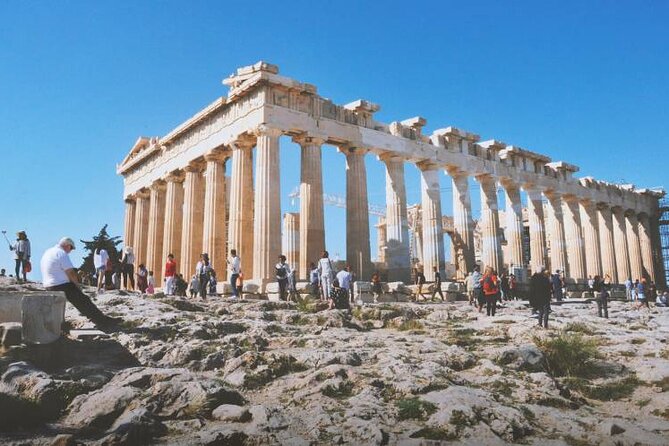
The Parthenon is the main event, and the tour is built around reaching it. Dating to the fifth century BC, it is the monument most closely tied to the modern image of Athens. Your guide explains the site as you walk, giving the building a place in the larger Acropolis complex.
The value of a guide is especially clear here. A bare view of columns can be impressive, but it does not explain why the building mattered, how it related to the city, or why the surrounding structures deserve your attention. The guide turns a famous photograph into a sequence of connected places.
You will not simply arrive at the Parthenon, take a picture, and leave. The route also includes the structures that frame the approach and help explain how the hill was used. That wider view is one of the tour’s strongest features.
At the end, the guide leaves you atop the monument area with time to take your own pictures and absorb the setting. This is a small but important detail. Some guided visits end the moment the formal explanation is complete. Here, you get a little space for your own experience rather than being rushed straight away.
Passing through the Propylaia
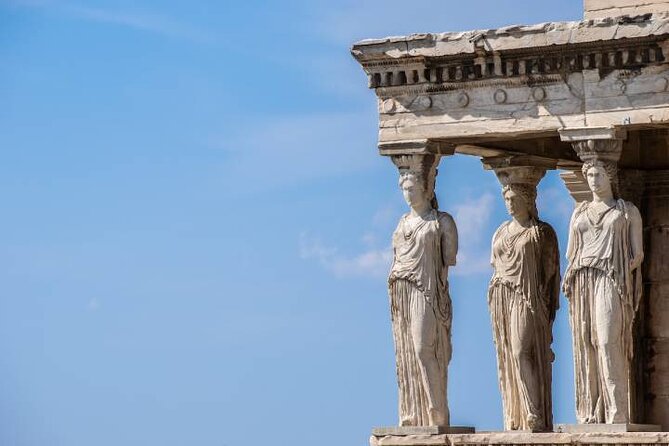
The Propylaia served as the grand entrance to the Acropolis. It gives you a sense of arrival before you reach the Parthenon, and it helps explain why the hill was approached as a ceremonial place rather than an ordinary public street.
A guide can point out the importance of this transition. You move from the city below into a controlled, monumental setting. Even with limited time, that change makes the Acropolis feel like a designed experience, not just a collection of ruins.
The practical catch is that the Acropolis is an active archaeological site with several major monuments close together. Your exact pace can depend on conditions at the site. The tour promises the major locations, but two hours is not enough for long stops at each one.
If you like a clear route and a strong sense of order, this is helpful. If you prefer to wander slowly, read every sign, and return to favorite views, a private guided visit may feel too structured unless you arrange extra independent time afterward.
Seeing the Erechtheion and its unusual design
The Erechtheion gives the tour a useful contrast with the Parthenon. Its design is less straightforward, and the building is known for its distinctive arrangement and famous sculpted female figures. It helps show that the Acropolis was not built around one simple architectural idea.
This is a place where a guide’s ability to explain details can make a real difference. Myrto is praised for sharing extensive historical information while keeping the visit entertaining. That combination is worth noting. A guide who only lists dates can lose you quickly, while a guide who tells stories without structure may leave you unsure what you actually saw.
The private setup also gives you a chance to ask about the differences between the two buildings. You can compare their appearance, purpose, and place within the hilltop complex. The supplied information does not promise a specialist architectural tour, so you should book this for clear general interpretation rather than a technical study.
The Agrippa Monument and the ancient approach
The Agrippa Monument is one of the smaller stops on the route, but it adds another layer to the Acropolis approach. Not every part of the visit is a major building. Some sites are fragments, markers, or remains that make more sense when someone explains what you are looking at.
That is where a private guide can earn the higher price. On your own, you might walk past a smaller monument without realizing its role. With a guide, the stop becomes part of the route rather than background stone.
Still, you should keep your expectations in check. The tour summary names the Agrippa Monument but does not give a detailed account of the stop or promise an extended explanation. It is best viewed as one piece of the Acropolis story, not a separate attraction requiring a long visit.
You can also read our reviews of more private tours in Athens





Looking down toward the Odeon of Herodes Atticus
The Odeon of Herodes Atticus is the large ancient theater on the southern slope of the Acropolis. Its shape and scale help you understand that the hill was connected to public performance as well as religious and civic life.
From the Acropolis route, the theater adds variety. You are not looking only at temples and gateways. You also see a performance space built into the lower slopes, a reminder that ancient Athens had places for music and drama on a grand scale.
The tour includes the Odeon among its planned sights, but the available details do not specify whether you enter the theater or simply view it as part of the Acropolis circuit. Do not assume a separate performance, extended interior visit, or special access. The safe expectation is a guide-led look at the monument as part of the two-hour route.
Connecting the visit with the Theater of Dionysus
The Theater of Dionysus is another important stop because it links the Acropolis to the origins of dramatic performance in Athens. Its inclusion broadens the tour beyond the Parthenon and gives you a stronger picture of the cultural life connected with the hill.
For you, this means the tour is not only about famous columns. The route includes religious, civic, and theatrical sites. That range makes the experience more satisfying than a simple walk straight to the Parthenon and back.
As with the Odeon, the provided information does not say how long you spend at the theater or whether the visit includes a separate entrance. The guide will cover it as part of the Acropolis experience, but the main focus remains the hilltop monuments and the Parthenon.
Ending at the Parthenon with time for your own photos
The tour ends at the Parthenon, which is a sensible choice. After moving through the entrance and surrounding monuments, you finish at the building most people came to see.
I like that the formal tour does not appear to end with an immediate exit. You are left atop the monument with time to take pictures and enjoy the view. That gives the experience a more personal finish. You can stop listening for a moment and simply look around.
Photo conditions can vary, and the information provided does not promise a particular viewpoint or guaranteed clear weather. Still, the end point gives you a natural chance to make your own record of the visit.
You should also remember that the Acropolis is an exposed archaeological site. The tour includes bottled water, which is a useful touch, but the visit still involves walking around the complex. Most people can participate, according to the supplied details, but you should plan your own pace and comfort carefully.
Choosing an afternoon tour for Areopagus Hill
Afternoon departures have the opportunity to visit Areopagus Hill and view the sunset across the Parthenon. This is one of the more distinctive details of the experience, since it adds a second viewpoint rather than ending entirely at the main monument.
Areopagus Hill is separate from the Parthenon area and is known for its broad view back toward the Acropolis. If the timing works, sunset can give your visit a more memorable finish. The wording is important, though: afternoon tours have the opportunity to visit, so you should confirm that this stop is included in the departure you choose.
Do not book an afternoon time solely on the assumption that sunset is guaranteed. The exact light, weather, and timing can affect the view. But if you have flexibility, the afternoon option may offer more atmosphere than a midday visit.
What Myrto and the private format add
The strongest human detail attached to this tour is Myrto. She is praised for taking her time, keeping the group engaged, and making the history entertaining as well as informative. Another guide named Andrew is described as helpful during the arrangements, including assistance in finding the guide at the meeting point.
That practical support can matter at the Acropolis, where the entrance area and nearby streets can be confusing. The information does not promise a special meeting procedure beyond the Acropolis address, so you should still read your confirmation carefully and allow time to find the meeting point.
A private activity also means only your group participates. This is useful for families, couples, or friends who want to ask questions freely. It can also help if your group wants a certain pace, though the published two-hour duration still shapes the visit.
The tradeoff is cost. A private guide usually costs more than joining a shared group, and this experience is priced at $231.52 per person. For a large group, the personal format may feel more reasonable because you are paying for a dedicated guide. For one or two people, the price is a serious consideration.
Is the $231.52 price good value?
The price is high for a two-hour walking tour. The personal attention, guide, and concentrated route are the main things you are paying for, not a long list of extras. Bottled water is included, but gratuity is not.
There is also a crucial ticket issue. The title says ticket included, yet the details clearly state that a €20 ticket entry fee is not included in the price. I would treat the €20 as an additional cost unless the provider confirms otherwise before booking.
At this rate, I would choose the tour only if the private format matters to you. It can be good value for a group that wants a dedicated guide and a direct introduction to the Acropolis without spending hours on site. It is less attractive if you are comfortable reading signs, using an audio guide, or joining a shared tour at a lower cost.
The high rating and praise for Myrto support the idea that the guiding is a major part of the product. But only three ratings are provided, so I would not treat that score as a broad measure of every departure. The right question is not simply if the tour is highly rated. Ask if personal attention is worth the premium for your group.
Who should book this Acropolis experience?
I would recommend it most to first-time visitors who want a clear introduction to the Acropolis and prefer conversation over a recorded guide. It also suits small groups that want to ask questions about the monuments without a crowd setting the pace.
Families may like the two-hour length and the guide’s entertaining approach. Couples and friends who want a sunset possibility should consider an afternoon departure, then confirm whether Areopagus Hill is part of their selected time.
I would be more cautious if you want a specialist archaeology experience, lots of free time, or a low-cost visit. The route is focused, and the price is substantial. You may also prefer another option if you want guaranteed ticket inclusion, since the admission information is inconsistent.
Confirmation is provided when you book, free cancellation is available up to 24 hours before the start time, and changes made less than 24 hours before the start are not accepted. The activity is near public transportation, and most people can participate.
Should you book the Private Acropolis Tour?
Book it if you want a private guide, a compact route through the key Acropolis monuments, and the freedom to ask questions along the way. Myrto’s engaging style and the option of an Areopagus sunset view make the experience more appealing than a bare sightseeing walk.
Skip it if the price is your main concern or if you want to explore slowly on your own. Before paying, confirm the €20 admission fee, since it is listed as extra despite the ticket-included title. For a small group that values personal attention, this can be a strong first visit to Athens’ ancient center. For budget-minded visitors, the premium may be hard to justify.
FAQ
How long does the private Acropolis tour last?
The tour lasts approximately two hours.
Which monuments are included?
The route includes the Parthenon, Propylaia, Erechtheion, Agrippa Monument, Odeon of Herodes Atticus, and Theater of Dionysus.
Is the Acropolis admission ticket included?
The details state that the €20 ticket entry fee is not included, even though the tour title says ticket included. Confirm this point with the provider before booking.
Is this a private activity?
Yes. Only your group participates in the activity.
Can I take my own pictures at the Parthenon?
Yes. The guide ends the tour at the Parthenon and leaves you time to take your own pictures.
Can I cancel for a full refund?
Yes, if you cancel at least 24 hours before the experience start time. Cancellations or changes made less than 24 hours before the start are not accepted for a refund.