REVIEW · ATHENS
workshop for painting acropolis/landscape with local artist
Book on Viator →Operated by ioanna art studio · Bookable on Viator
The best part of this Athens workshop is that you do not just look at the Acropolis, you learn how to put it on paper. In a cozy studio, professional painter Ioanna guides you through a watercolor scene, one step at a time, from the first sketch to the final touches. Beginners can take part, even with no drawing experience.
I like the small maximum of six people, which should leave room for personal help. I also like the clear end goal: you take home a finished little painting ready for framing. The main consideration is time. Two hours is enough for a guided project, but not for a full art course or a slow study of several subjects.
In This Review
- Key points at a glance
- Why this watercolor class makes a good Athens souvenir
- Starting with the Acropolis in a small Athens studio
- The first lesson: sketching and composition
- Watercolor techniques that beginners can actually use
- Light, shadow, and the warm Greek mood
- Following Ioanna’s demonstration from blank page to finished painting
- Who will get the most from the two-hour format
- Is $78.72 a fair price?
- Timing, transport, and a few practical cautions
- The main strengths and the one real limitation
- Should you book this Athens painting workshop?
- FAQ
- Where does the watercolor workshop start?
- Where does the activity end?
- How long does the painting class last?
- Do I need drawing or painting experience?
- What will I learn during the workshop?
- How many people can join the class?
- Can I cancel for a full refund?
Key points at a glance
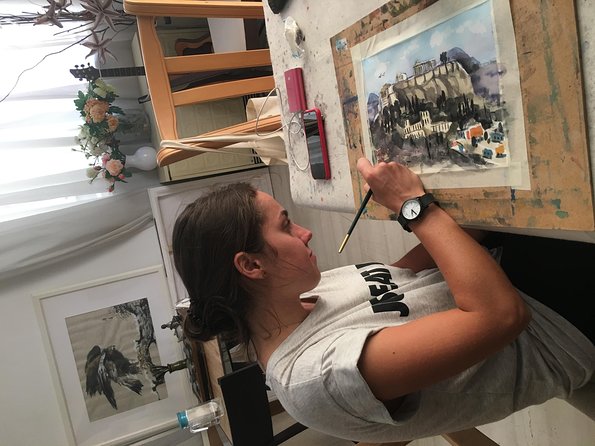
- Paint the Acropolis step by step: Ioanna demonstrates the process before you follow along.
- Learn useful basics: Practice sketching, composition, washes, layering, texture, light, and shadow.
- Designed for beginners: No drawing skills or previous painting experience are required.
- Small group format: The class has a maximum of six people, allowing for individual guidance.
- A finished souvenir: You create a small watercolor painting suitable for framing and hanging.
- Easy two-hour plan: Meet at Leof. Vouliagmenis 69A, with the class ending at the same studio.
Why this watercolor class makes a good Athens souvenir
Athens gives you plenty of standard souvenirs: magnets, postcards, miniature columns, and T-shirts. A painting you make yourself has more staying power. It carries the shape of the Acropolis, the warm Greek light, and the memory of a quiet afternoon at a worktable.
This class is built around that idea. You are not expected to produce a perfect museum piece. Instead, Ioanna gives you a manageable subject and a practical method. You sketch the main forms, arrange the picture, add color, and work toward a finished scene.
That approach matters if you have never painted before. Watercolor can look simple, but it is not always forgiving. Too much water can blur an edge. Too much pigment can make a bright area muddy. A teacher who shows you when to pause and when to add another layer can save you from the usual beginner mistakes.
Ioanna has more than 15 years of professional painting experience and holds a master’s degree from a school of fine arts. Her special interest is watercolor painting of Greek historical sites and seaside scenery. That background fits this class well: you are learning from someone who has spent years studying the same kinds of subjects you came to Greece to see.
A few more Athens tours and experiences worth a look



Starting with the Acropolis in a small Athens studio
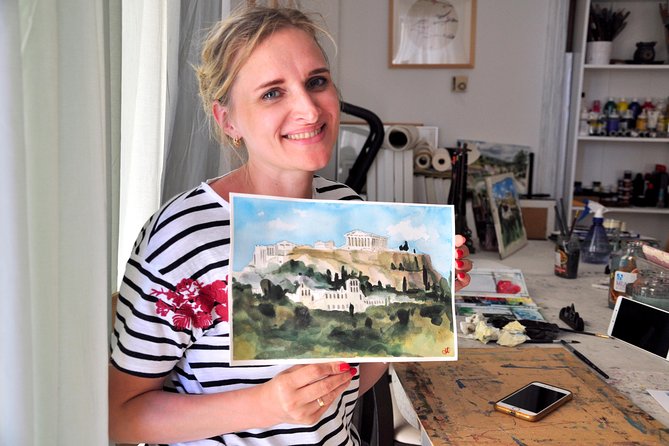
The meeting point is Ioanna Art Studio at Leof. Vouliagmenis 69A, Athens 116 36. The activity starts and ends there, so you do not need to arrange a second pickup or find your way to another part of the city afterward.
The studio setting gives this experience a different rhythm from a busy sightseeing stop. You can put your bag down, settle at the worktable, and focus on the paper. A drink is provided during the class, a small touch that makes the two-hour session feel more like a creative break than another item to check off.
The group size is capped at six. That is one of the most useful details here. In a large art class, you may spend more time trying to catch the teacher’s attention than learning. With six people or fewer, Ioanna should have a fair chance to look at your work and point out where a line, wash, or shadow needs attention.
The exact room setup and materials are not specified, so you should confirm what is supplied if you have a particular preference for paper or brushes. The experience description does make clear that the class covers brushes, paper, and basic watercolor methods.
The first lesson: sketching and composition
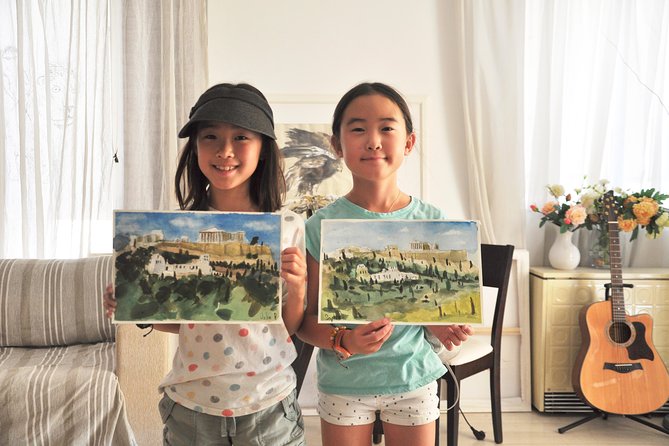
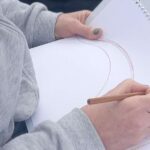
The class begins with the structure of the picture. Before you reach for bright blue or warm ochre, Ioanna shows you how to sketch and compose the scene.
For a beginner, this is the part worth paying attention to. A painting can have beautiful color and still feel awkward if the main subject is too large, too small, or placed badly on the page. Composition is simply the arrangement of shapes, but it controls where your eye goes and whether the picture feels balanced.
A guided sketch also takes some pressure off. You do not have to invent an Acropolis view from memory. You follow the demonstration and build the scene in stages. The process is especially helpful for anyone who has looked at artists in museums or at archaeological sites and wondered how they turn a real place into a picture.
You will work with perspective and the placement of forms. The examples center on Greek subjects such as the Acropolis, whitewashed houses, blue-domed churches, coastlines, olive groves, and sunlit villages. The class can therefore help you beyond this one painting. Once you understand how to arrange a simple group of buildings or a distant ridge, you can use the same ideas in your own holiday sketches.
Watercolor techniques that beginners can actually use
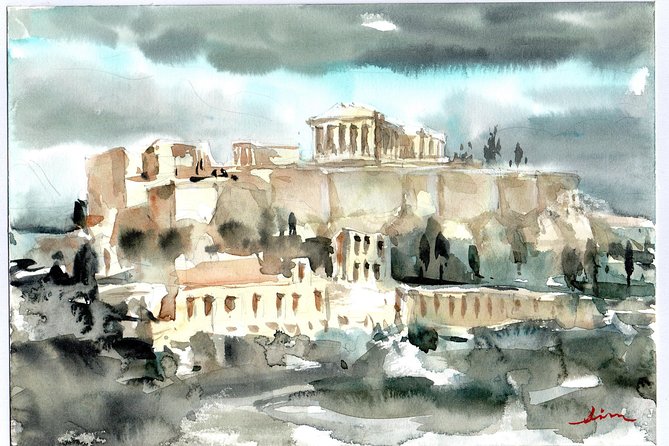
Ioanna covers the basic tools and several core methods. You learn about brushes and paper, then practice washes, wet-on-wet work, layering, and ways to create texture.
A wash gives you a broad area of color. Wet-on-wet lets paint spread softly across damp paper, which can help with hazy skies or gentle changes in tone. Layering lets you build stronger color gradually instead of trying to make everything dark in one pass.
These terms can sound technical, but the value is practical. You learn how to control the amount of water, where to leave paper untouched, and how to add a second layer without losing the freshness of the first. If you have tried watercolor at home and ended up with gray puddles, this kind of guided practice can make the medium less mysterious.
Texture is another useful lesson. Stone, plaster, foliage, and water do not need the same treatment. Small changes in brush pressure and pigment can suggest different surfaces. You will not become a professional painter in two hours, but you can leave with a better sense of how a few simple marks create the feel of a place.
Light, shadow, and the warm Greek mood
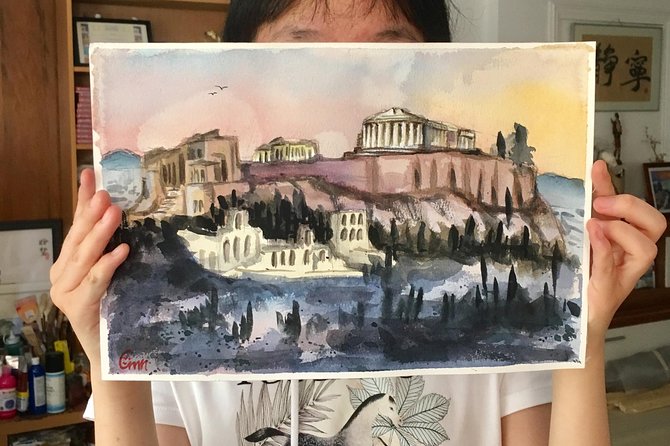
Greek scenery often looks striking because of its strong sunlight. In watercolor, though, bright light is not created only with yellow paint. It also depends on the pale areas you leave on the paper and the darker tones you place beside them.
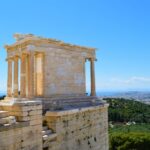
Ioanna focuses on light and shadow, along with the warm Mediterranean feel of a scene. This is a useful lesson for the Acropolis. The ancient stone can appear pale and sunlit, while the spaces between columns and the sides of buildings need darker values to give the image shape.
Tone is the strength or weakness of a color. Learning to control it may be more important than choosing the exact shade. A pale blue can suggest distance. A deeper blue can bring a form forward. A warm shadow can keep a Greek village scene from looking flat and cold.
You will also work on atmosphere. In this setting, atmosphere means the sense of air, distance, and light within the picture. It is what helps a painting feel like a sunny Greek day rather than a collection of colored shapes.
- All Day Cruise -3 Islands to Agistri,Moni, Aegina with lunch and drinks included
★ 5.0 · 4,958 reviews






Following Ioanna’s demonstration from blank page to finished painting
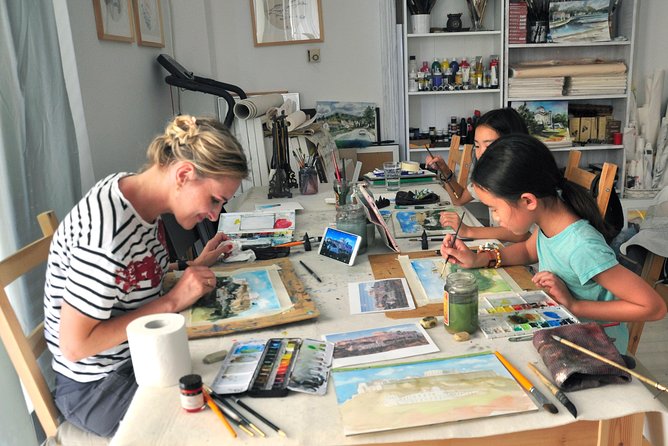
A central part of the workshop is Ioanna’s demonstration. She paints a scene while explaining the process, and you follow along step by step.
This format is particularly friendly to first-time painters. Instead of hearing a long explanation and then being left alone, you can watch a technique, try it, and compare your result with the next stage. If your painting begins to take a different direction, the small group gives you a better chance to ask for help.
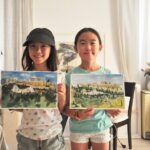
The finished work is described as a small masterpiece ready for framing and hanging. Keep your expectations sensible. Your result will be guided, and the example image or demonstration helps you reach a polished souvenir, but it will still be your first or early watercolor effort if you are new to painting.
That is part of the fun. The painting does not need to fool anyone into thinking it came from a gallery. It needs to remind you where you were and show what you learned. One especially pleasing detail from the class feedback is that a beginner produced an Acropolis painting that impressed friends at home. The useful lesson is not that every painting will look identical. It is that careful guidance can help a novice create something presentable.
Who will get the most from the two-hour format
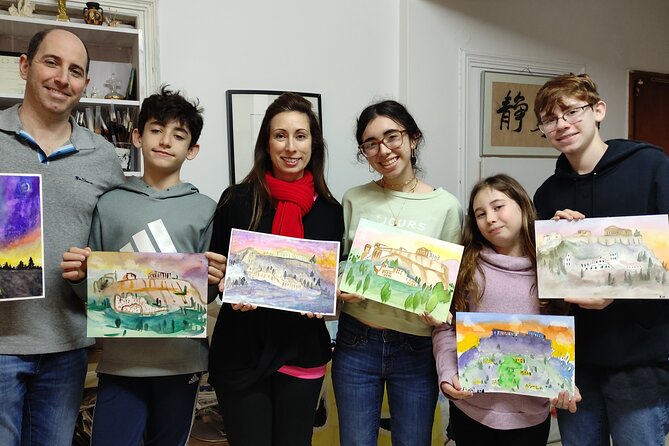
This experience suits you best if you want a creative activity with a clear result. It works well for:
- First-time painters who want patient instruction
- Couples or friends seeking a quieter Athens activity
- Art lovers who enjoy learning how local scenes are made
- Families with older children who can focus for a two-hour class
- Anyone looking for a personal souvenir rather than a shop-bought item
You do not need drawing skills or previous painting experience. That point is stated plainly, and the class feedback backs it up: people with no prior experience were able to sketch and paint the Acropolis with Ioanna’s help.
The class can also suit an experienced painter who wants to study Greek light or pick up a few new watercolor methods. Still, advanced artists should note the short duration and beginner-friendly structure. If you already know washes, wet-on-wet work, layering, and basic composition, the class may feel more like a pleasant guided session than a demanding master class.
Is $78.72 a fair price?
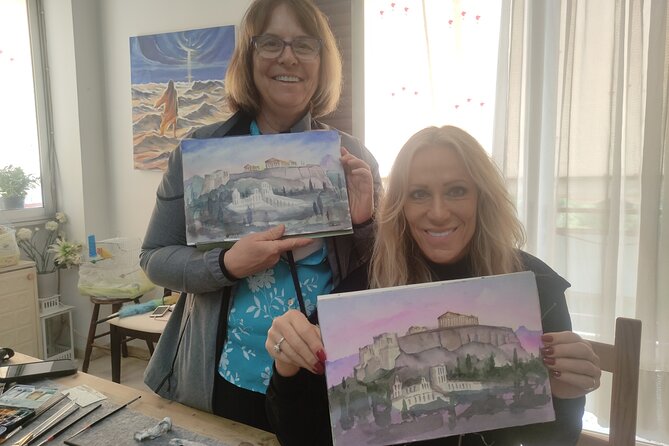
At $78.72 per person, this is not the cheapest two-hour activity in Athens. You are paying for instruction, a small group, a studio setting, painting supplies as described, a drink, and a finished piece of your own work.
The value depends on what you want from the afternoon. If you only want a quick Acropolis souvenir, a postcard costs far less. If you want to learn a skill, receive direct help, and leave with something you made yourself, the price is easier to justify.
The maximum of six is important when judging the cost. A private lesson would normally cost more, while a large group workshop might offer less personal attention. This class sits between those two options. You should book it for the instruction and the experience, not simply for the paper and paint.
It is also worth considering the time saved. You do not have to research a subject, gather art supplies, or plan a route to several sights. The studio gives you a contained two-hour activity that fits neatly into an Athens itinerary.
Timing, transport, and a few practical cautions
The class lasts about two hours and returns you to the starting point because the end location is the same studio. The meeting address is near public transportation, though the exact route and nearest stop are not provided, so check your map before setting out.
The experience is listed as requiring good weather. That may seem unusual for an indoor painting class, but it is part of the stated operating terms. If poor weather causes a cancellation, you will be offered another date or a full refund.
You receive confirmation when you book, and mobile tickets are available. Most people can participate. For cancellation, you can receive a full refund if you cancel at least 24 hours before the start time. Changes or cancellations inside that 24-hour window are not accepted for a refund.
The class is often reserved well ahead, with an average booking time of 61 days. That does not mean you must plan every Athens activity two months early, but it is a useful warning if your dates are fixed. A small class can fill faster than a large bus tour.
The main strengths and the one real limitation
The strongest point is the teaching format. Ioanna does not simply hand you materials and tell you to copy a picture. She covers the building blocks of a painting: sketching, composition, tone, light, shadow, texture, and atmosphere.
The second strength is the beginner-friendly result. The class has a defined project, so you are not left with a few disconnected exercises. You work toward a finished Acropolis or Greek scenery painting that can go home with you.
The main limitation is the short session. Two hours passes quickly once you have sketched, mixed paint, waited for paper to dry, and added final details. You should not expect a full survey of watercolor or time to paint several views. If you want a long, technical art course, look for a longer workshop.
There is also a small uncertainty about the exact materials and studio arrangement. The description covers the tools and techniques, but it does not list every item supplied. That is easy to clarify before booking and should not trouble most beginners.
Should you book this Athens painting workshop?
Book it if you want to slow down, make something with your hands, and take home a personal reminder of Greece. The small group, professional instruction, and step-by-step demonstration make it a sensible choice for beginners who might otherwise feel nervous about watercolor.
I would especially choose it for a free afternoon after several hours of ruins and museums. You get to revisit the Acropolis in a different way, not by reading another plaque, but by deciding which lines, shadows, and colors matter most.
Skip it if you want a fast sightseeing stop, dislike seated creative activities, or already expect advanced watercolor training. For everyone else, $78.72 is a reasonable spend for a focused two-hour lesson and a handmade souvenir, provided you are comfortable with the weather rule and book early enough to secure one of the six places.
FAQ
Where does the watercolor workshop start?
The workshop starts at Ioanna Art Studio, Leof. Vouliagmenis 69A, Athina 116 36, Greece.
Where does the activity end?
The activity ends back at the meeting point, the same studio where the class begins.
How long does the painting class last?
The workshop lasts approximately two hours.
Do I need drawing or painting experience?
No. The class welcomes people with no drawing skills as well as people with some experience.
What will I learn during the workshop?
You will learn watercolor basics, sketching, composition, washes, wet-on-wet painting, layering, texture, light, shadow, tone, perspective, and ways to create atmosphere.
How many people can join the class?
The experience has a maximum of six participants.
Can I cancel for a full refund?
Yes. You can cancel at least 24 hours before the start time for a full refund. Cancellations or changes made less than 24 hours before the experience are not accepted for a refund.