REVIEW · ATHENS
Acropolis & Acropolis Museum (Small Group Morning Walking Tour)
Book on Viator →Operated by Mister Plato · Bookable on Viator
The Acropolis feels calmer with a guide. I love the skip-the-line entry for both the hill and the museum, and I love how the guide connects what you see to the Parthenon and its sculptures. The only catch: entrance fees are extra and paid in cash to the guide.
This is built for a smooth morning, starting at 9:30 am with a small group (up to 10). You’ll climb the south slope, stop often for water and shade, and still make it to the main sights without feeling rushed.
You’ll finish at the Acropolis Museum, so you can keep going after the tour rather than scrambling for transit. If you’re sensitive to heat, plan on wearing breathable layers and taking the breaks the guide suggests.
In This Review
- Key things that make this tour worth your time
- Start at Makrigianni 4: easy meeting, smart timing
- Walking up the Acropolis south slope: theaters, sanctuaries, and first views
- Propylaea to the top: Parthenon and Erectheion explained in plain terms
- The Acropolis Museum walk: ancient neighborhood remains underfoot
- Models first, then originals: how the museum makes sense of the Acropolis
- Parthenon sculptures, archaic statues, and the Caryatids
- The Parthenon’s Gallery: myths and the big picture arrangement
- Small group energy: pacing, photos, and guide style
- Price and real value: what $65 really buys (and what it doesn’t)
- What to expect from the walking: moderate fitness, lots of steps
- Where you end: keep exploring after the tour
- Should you book this Acropolis & Museum morning walk?
- FAQ
- FAQ
- What is the start time and duration?
- Is the Acropolis and museum admission included in the price?
- Does the tour include skip-the-line access?
- Where do I meet the guide, and where does the tour end?
- How big is the group?
- What language is the tour in?
- What if I’m traveling with kids, especially under 18?
- Can I cancel for a full refund?
Key things that make this tour worth your time
- Skip-the-line at both sites so your morning doesn’t leak into slow queues
- Small group size (max 10) for a more conversational pace
- Acropolis storytelling that connects buildings to myth (Parthenon, Erectheion, and more)
- Museum focus on originals and meaning, including traces of color on sculptures
- Practical breaks for water and shade to deal with Athens heat
Start at Makrigianni 4: easy meeting, smart timing
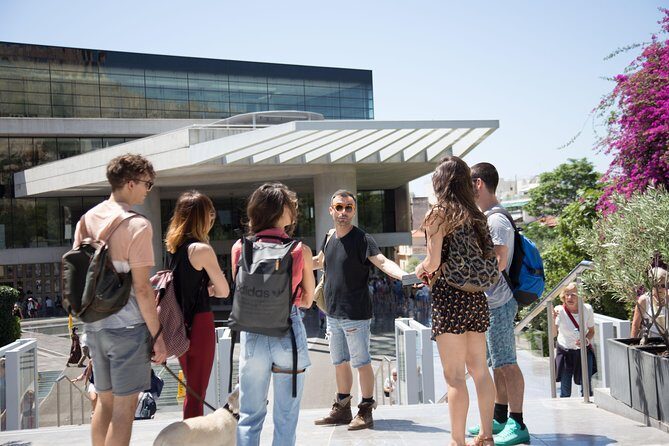
The tour meets at Makrigianni 4 (Athina 117 42), a practical starting point once you get your bearings in central Athens. It’s set for a 9:30 am start, which matters on the Acropolis—early helps, not just for crowds, but for comfort as the day warms up.
Because it’s a small group, you’re not stuck in a long, rigid line of people. I like that you walk as a unit, hear the context clearly, and have moments where the group can spread a bit for photos—without losing sight of the guide.
You can also read our reviews of more walking tours in Athens



Walking up the Acropolis south slope: theaters, sanctuaries, and first views
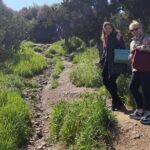
After meeting your guide, you start climbing the south slope of the Acropolis. This route is a good choice because it mixes big landmarks with the slower “walk-and-look” rhythm that makes the whole hill click.
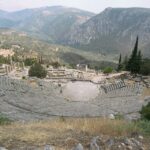
You’ll pass sights tied to different kinds of ancient life and belief, including the Dionysos Theater, the Sanctuary of Asklepios, and the Odeon of Herodes. These aren’t just names on a map; the guide helps you understand what kinds of events and stories each place was designed for.
On the way up, you also reach the Propylaea (the grand gateway), Mars Hill, and the Temple of Athena Nike. The payoff here is that you’re not only headed upward—you’re also getting a guided mental picture of how the Acropolis functioned as both a sacred space and a cultural stage.
One more thing I appreciate: the tour builds in water and shade breaks. Athens can be hot even in mornings, and those short pauses prevent the classic travel-tour problem where you reach the top worn out and photo-tired.
Propylaea to the top: Parthenon and Erectheion explained in plain terms

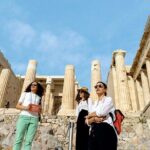
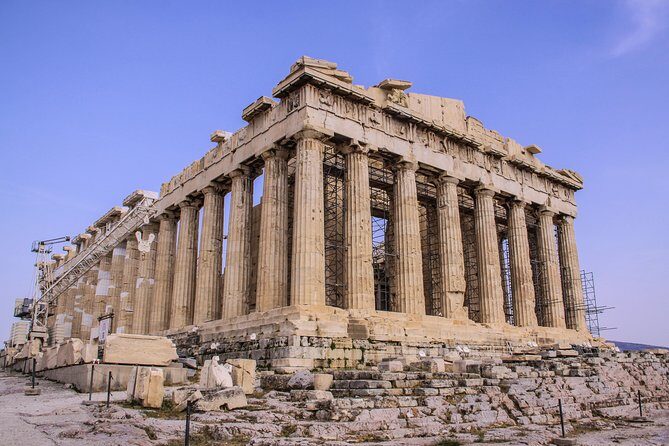
Once you’re nearer the top, the tour tightens around the big two: the Parthenon and the Erectheion. You get a detailed explanation of what you’re looking at, including how the buildings relate to the myths and how the architecture signals power and devotion.
The Parthenon often feels like a “wow, that’s huge” moment from afar. With a good guide, it becomes a “wait, I see the pattern” moment up close—especially once you understand what each sculpted part was meant to communicate.
You also get time at the top to enjoy the views across Athens. That matters because the Acropolis isn’t only an artifact museum in the sky; it’s part of the city’s layout. When you’re standing there, you start noticing how the capital spreads out below and how the hill dominates the landscape.
The Acropolis Museum walk: ancient neighborhood remains underfoot
After the hill, you head to the Acropolis Museum, and the transition is part of the magic. Before you even fully enter, you look at remains of an ancient neighborhood that lie underneath the museum area.
This is a smart move. It keeps the story from turning into “ruins floating in space.” You’re reminded that this hill wasn’t isolated—it was surrounded by everyday Athens life, and archaeology captured layers of that life as the city evolved.
Models first, then originals: how the museum makes sense of the Acropolis
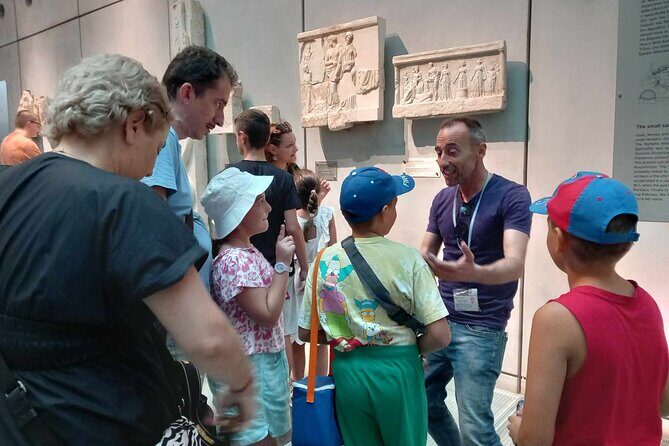
Inside the museum, you start with models of the Acropolis and ancient Athens. I like this because it gives your brain a framework before you start zooming in on sculptures and artifacts.
Then you move to important finds from the slopes of the Acropolis. The guide helps you connect where these pieces came from and why they mattered. One of the most memorable museum details is seeing traces of colors that can still be discerned on sculptures—proof that the “white marble” image is only part of the story.
You can also read our reviews of more museum experiences in Athens

Parthenon sculptures, archaic statues, and the Caryatids
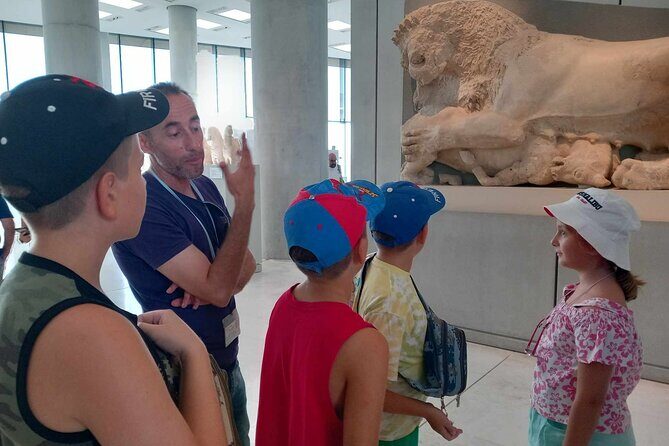
The museum pacing is set up so you stand in front of key sculpture areas rather than speed-walking. On the first floor, you’ll see major sculptures from the Parthenon and learn what to look for as you move between figures.
Then the tour shifts to archaic statues that once decorated the Acropolis, including the famous calfbearer and the child of Kritias. If you’ve ever looked at ancient statues and thought, I don’t know what I’m seeing, this is exactly where a guide helps—shape, pose, and expression become clues.
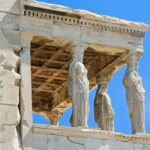
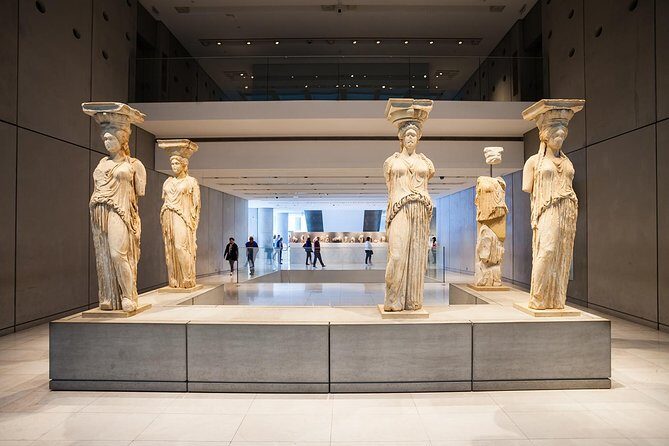
You’ll also encounter the Caryatids (the maidens from the Erectheion). For a lot of visitors, these are emotional pieces, not just decorative ones. Standing with them, you understand why the Erectheion is so famous—and why these sculptures are treated as masterpieces of their era.
The Parthenon’s Gallery: myths and the big picture arrangement
On the third floor, you get to the Parthenon Gallery, where the guide explains the main concept and how the sculptures are arranged. This is where the museum turns from objects into a story you can follow.
You’ll hear myths related to what you see, and you’ll spend time admiring the sculptural quality and overall design. It’s a great finish because it brings you back to the question the Acropolis always raises: why did people build and display this here, and how did they understand it?
Small group energy: pacing, photos, and guide style
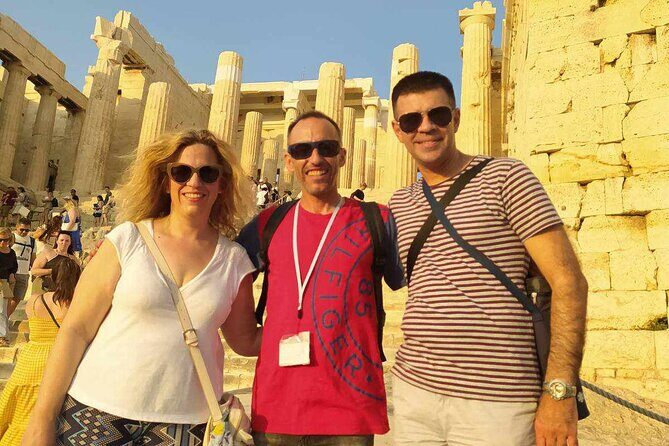
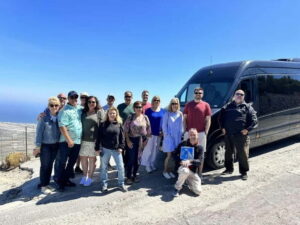
This tour caps at 10 travelers, and that has a noticeable impact on the experience. You’re not fighting for space at every stop, and the guide can respond when someone has a question.
In particular, I think the biggest win is how the guide keeps things moving without turning the day into a race. Many people care about photos at the Acropolis, and the guide’s approach includes stopping at the right angles so you can get pictures without constantly sprinting between viewpoints.
Also, some groups have included families with kids and teens, and the guide approach works well when you want stories explained in a way that holds attention. Names you might encounter include guides like Nicholas and Nikos, both mentioned for being friendly, engaging, and happy to work at the pace your group needs.
Price and real value: what $65 really buys (and what it doesn’t)
The tour price is $65.07 per person, and the big value piece is that skip-the-line service is included for both the Acropolis and the museum. That’s not a small thing in Athens. It’s the difference between starting your day relaxed and starting it frustrated.
However, entrance fees are not included. You’ll pay:
- €30 per person for the Acropolis
- €20 per person for the Acropolis Museum
The total entrance cost is €50 per person, paid in cash to the guide. So your all-in morning budget should be understood as the tour fee plus around €50.
Is it still good value? For me, yes—because you’re paying for two things people often struggle to buy effectively on their own: a guided walkthrough that explains what you’re looking at, and a queue-saving logistics advantage at both sites. If you’re the kind of visitor who wants context (not just photos), the guide portion is usually what turns “I saw ruins” into “I get it.”
What to expect from the walking: moderate fitness, lots of steps
This is a walking tour with a moderate physical fitness requirement. You’ll climb up to the top and move through the museum with enough walking that comfy shoes matter.
Here’s the practical reality: the Acropolis isn’t flat, and heat can make steps feel steeper than they are. The tour helps by building in water and shade breaks, but it’s still wise to dress for warmth, carry a refillable bottle if you like, and avoid heavy boots that trap heat.
Also, the tour duration is about 3 hours 30 minutes. That’s a reasonable window for doing both major sites in one morning, especially with a guide keeping the flow tight.
Where you end: keep exploring after the tour
The tour ends at the Acropolis Museum (Dionysiou Areopagitou 15, Athens). That’s convenient because you’re already in the right area to keep wandering—cafés, viewpoints, and more sites are within easy reach depending on how you plan the rest of your day.
If you’re thinking about adding other museums or neighborhoods later, finishing at the museum is an efficient base. You don’t have to retrace your route back down the hill just to start your next plan.
Should you book this Acropolis & Museum morning walk?
Book it if you want your Athens morning to feel organized and meaningful. I’d especially recommend it if you care about:
- Skip-the-line entry for both sites
- A small group pace
- Getting explanations that connect the Parthenon, Erectheion, and the museum pieces into one story
- A guide who’s good at keeping energy up and stopping for water and shade
I’d think twice if you hate paying entrance fees separately, since you’ll need cash for €30 + €20 at the sites. And if you’re very heat-sensitive, go in planning to take every break the guide recommends.
FAQ
FAQ
What is the start time and duration?
The tour starts at 9:30 am and runs for about 3 hours 30 minutes.
Is the Acropolis and museum admission included in the price?
No. Entrance fees are not included. You’ll pay €30 for the Acropolis and €20 for the Acropolis Museum in cash to the guide.
Does the tour include skip-the-line access?
Yes. Skip-the-line service is included for both the Acropolis and the museum.
Where do I meet the guide, and where does the tour end?
You meet at Makrigianni 4, Athina 117 42, Greece. The tour ends at Acropolis Museum, Dionysiou Areopagitou 15, Athina 117 42, Greece.
How big is the group?
This experience has a maximum of 10 travelers.
What language is the tour in?
The tour is offered in English.
What if I’m traveling with kids, especially under 18?
People under 18 are entitled to a free entrance ticket and must present ID at the entrance.
Can I cancel for a full refund?
Yes. You can cancel up to 24 hours in advance for a full refund.
If you want, tell me your travel dates and whether you’re traveling with kids or anyone who’s heat-sensitive—I can suggest the best way to time the rest of your day around this morning tour.