REVIEW · ATHENS
Athens Highlights: Myths & Philosophers Walking Tour
Book on Viator →Operated by Be a Greek · Bookable on Viator
A philosophy walk through Athens changes your lens.
This is a private Athens stroll that ties myths to the city’s earliest thinkers, with time to ask questions and a route that brushes major landmarks like the Hellenic Parliament and the Areopagus. You’ll hear stories tied to Socrates and Plato, plus pre-Socratics like Thales of Miletus, while walking from Athens’ modern heartbeat into ancient idea-making.
What I like most is the pace and the back-and-forth. I love that it feels like real conversation, not a lecture, and I love the included coffee/tea and bottled water that keep your energy steady mid-walk. A lot of people also call out guides such as Bianca and John for shaping the tour to the group and slowing down where questions pop up.
One thing to consider: the tour is around 4 hours and it’s outdoors, so comfortable shoes and good weather matter. Also, a few stops are listed as admission not included, so you may want to budget a little extra for entry where required (like the Academy of Athens and parts around the Ancient Agora area).
In This Review
- Key takeaways before you book
- Why a myths-and-philosophers walk feels different than a sightseeing loop
- Meeting at Panepistimio and ending above the Areopagus
- The Academy of Athens: ideas, coins, and the birth of schools
- Hellenic Parliament: the Presidential Guard and civic tradition
- National Garden to Ermou Street: ethics, science, and Hermes
- The Church of Pantanassa area: why a name can teach context
- Ancient Agora: where Stoic ideas get a physical address
- Tower of the Winds to Anafiotika: Aiolos, Cynics, and side-street Athens
- Areopagus Hill: the view that turns myths into philosophy
- Price and logistics: is $102.80 good value?
- Who this tour fits best
- Tips to get more out of your private tour
- FAQ
- FAQ
- How long is the Athens Highlights: Myths & Philosophers Walking Tour?
- Is this tour private or shared?
- What’s included in the price?
- Are entrance fees included?
- Where does the tour start and end?
- What is the cancellation policy?
- Should you book this Athens tour?
Key takeaways before you book
- Private Q&A format: Only your group, so you can ask questions as you go.
- Myths meet philosophy: Hermes to Aiolos, plus schools of thought tied to specific places.
- Smart landmark mix: Big sights like the Hellenic Parliament, then quieter philosophical corners.
- Refreshment included: Coffee/tea and bottled water help break up the walk.
- Some entrances cost extra: Admission is not included for select stops.
- View finale at Areopagus: You end with Acropolis views and myth stories on the hill.
Why a myths-and-philosophers walk feels different than a sightseeing loop
Athens has plenty of tours that stack classics: monuments, dates, photos, done. This one takes a different angle. You walk the same city, but you’re not just collecting sights. You’re collecting ideas—how people argued about ethics, nature, justice, and how to live—then watching those ideas get attached to real corners of Athens.
The best part is that the route keeps moving between myth and reasoning. One stop might point you toward civic tradition or science-adjacent thinking, then the next might shift to a god-story—Hermes, or Aiolos keeping track of winds. It trains your brain to see Athens as a place where imagination and argument lived side by side.
If you like philosophy but hate stuff that feels too textbook, you’ll probably enjoy this style. Many people note that guides explain clearly and then invite your questions, often in a way that feels close to a Socratic discussion.
You can also read our reviews of more walking tours in Athens



Meeting at Panepistimio and ending above the Areopagus
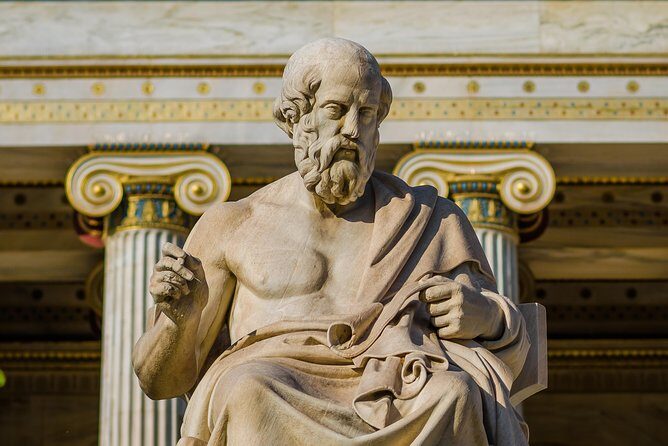
The walk starts at PanepistimioAthens 106 79 and ends at Areopagus Hill (Theorias 21, Athina). The end point matters because Areopagus is a natural “finish high” spot: you’re on a hill with strong views of the Acropolis, and the tour timing lands you there for myth storytelling and wrap-up.
You’ll also appreciate that it’s near public transportation. So if you’re pairing this with other Athens stops, you can usually plug it into a day without a lot of complicated logistics.
This is a private tour for your group, not a crowded shuffle with strangers. That usually makes the tone better: you can ask, react, and adjust your curiosity level without feeling like you’re holding up a huge line.
The Academy of Athens: ideas, coins, and the birth of schools
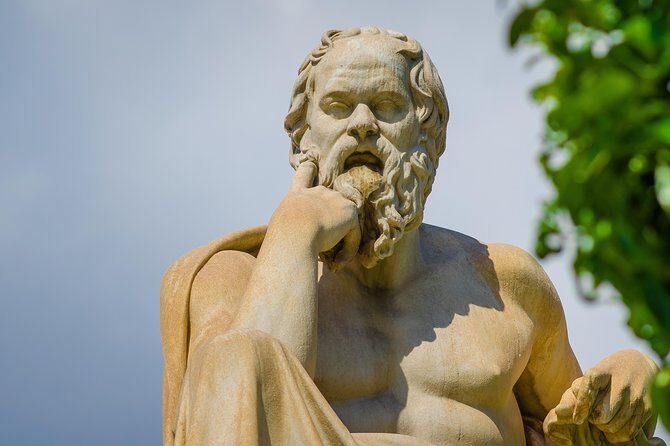
One of the first stops is the Academy of Athens. This area ties into the larger story of Greek philosophy by connecting it to the city’s different philosophical movements—an early “map of ideas” that sets the tone for the whole walk.
On top of that, there’s a museum component that focuses on one of the world’s greatest collections of coins, both ancient and modern. Even if coins aren’t your main interest, the presence of this collection signals something important: Athens’ philosophy didn’t live only in speeches. It traveled through everyday life, trade, politics, and material culture.
Admission here is listed as not included, so you might need to plan for it. If you’re someone who hates surprise fees, check this early and decide whether you want to go all-in.
Hellenic Parliament: the Presidential Guard and civic tradition
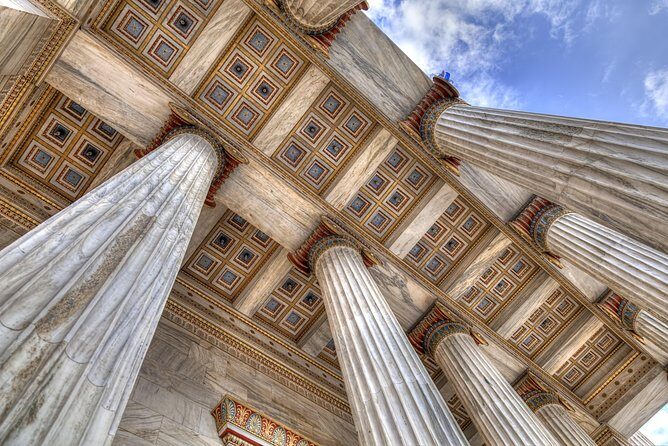
Right outside the Hellenic Parliament, you watch the Changing of the Presidential Guard. That’s not just a show. It’s a built-in chance to talk about how rituals connect power, identity, and public space in Greece.
This stop gives you a shift from ancient schools of thought into how modern Athens still performs tradition in very visible ways. And because it’s a short stop, it works well even if you’re pacing yourself for a 4-hour day.
This part is listed as admission free, so it’s one less thing to worry about.
National Garden to Ermou Street: ethics, science, and Hermes
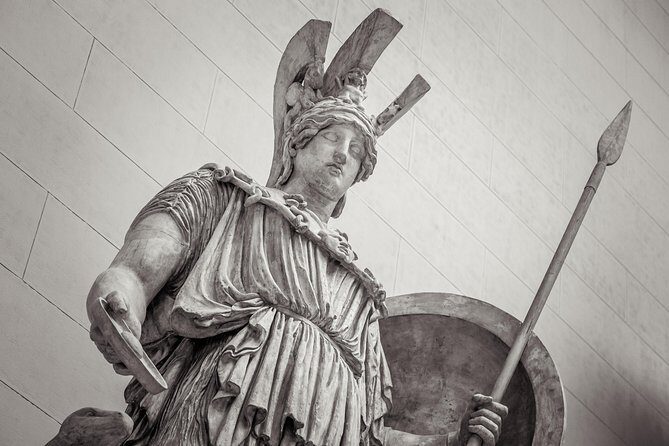
From the Parliament area, you move into the National Garden. This is where the tour leans into applied philosophy: democracy, physics, astronomy, ethics—ideas that sound “academic,” but here they’re framed as practical ways humans organize life and understand the world.
Then you transition to Ermou Street, tied to Hermes, the mischievous god. Hermes shows up in a place like this because he’s the messenger, the connector, the trickster. That lets your guide link myth to everyday behavior: travel, commerce, communication, and curiosity.
These stops are listed as free. They’re also good “breather segments” because you’re not constantly paying attention to ticket lines or large-ticket monuments. It’s walking plus explanation, with enough structure to keep the story moving.
- All Day Cruise -3 Islands to Agistri,Moni, Aegina with lunch and drinks included
★ 5.0 · 4,958 reviews



The Church of Pantanassa area: why a name can teach context

There’s a stop near the square that’s named after the Church of the Pantanassa, which sits inside it. At first glance, that might sound like a minor detail. But Athens naming is never random. Place names tell you what mattered to people at different times.
This is the kind of segment that works especially well during a private tour. If you’re curious about how the city layers older beliefs and later history, your guide can usually translate that into something you can actually see while you’re walking.
Ancient Agora: where Stoic ideas get a physical address
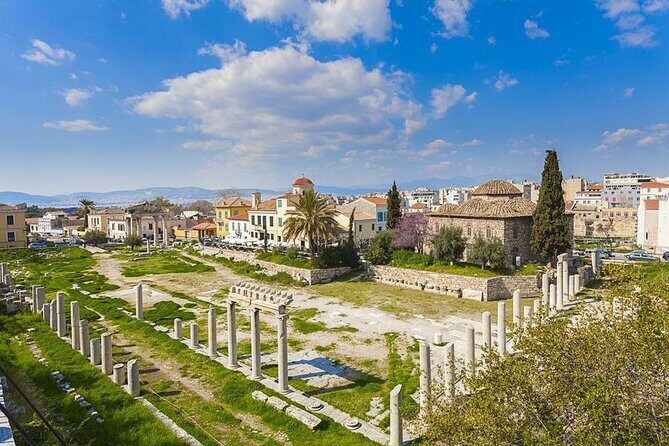
The Ancient Agora stop anchors one of the major philosophical threads: Stoic philosophy is described as born in the Poikile Stoa. This is a powerful move in the tour design because it forces you to stop treating philosophy as abstract. You’re learning that schools of thought were associated with real meeting spaces and public structures.
Admission here is listed as not included, so again, keep an eye on your budget. If you’re trying to keep costs down, you can still benefit from the exterior and surrounding context, but you’ll get the most if you’re open to paying entry where it matters.
A big bonus at this stage: the walking tour format means you can connect what you’ve heard earlier to what you’re seeing now. You’re no longer “collecting facts.” You’re building a story of how different thinkers argued with each other across different locations.
Tower of the Winds to Anafiotika: Aiolos, Cynics, and side-street Athens
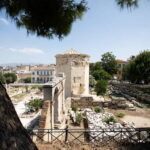
The Tower of the Winds is a fun stop because it blends mythology with a very practical subject: wind. You’ll learn about Aiolos, the keeper of the winds, while admiring the tower itself. It’s a good example of how ancient Greeks used both observation and story to explain nature.
Admission is listed as not included here too, so plan ahead if you want full access.
Then the tour moves into Anafiotika, in the Plaka area near the foot of the Acropolis. This is where the tone often shifts from major “big history” spaces to the feeling of a lived-in neighborhood. The tour connects the area to the Cynic philosophers, which makes sense if your brain is already primed for philosophy-as-action, not philosophy-as-theory.
This stop is listed as free. If you like the contrast between grand monuments and human-scale streets, you’ll likely enjoy it.
Areopagus Hill: the view that turns myths into philosophy
The tour ends at Areopagus hill. The view of the Acropolis is the obvious reason people remember this part. The less obvious reason is how the guide uses the setting to tell myth stories about the Olympian gods—so you’re not just seeing the landscape. You’re hearing the mythic “language” that ancient Greeks used to interpret big forces.
This is also where private tours shine. You’ve spent hours sharpening your attention, and then you get a closing moment that makes the themes stick: reason and story, public life and personal ethics, observation and belief.
This stop is listed as admission free, so you can focus on taking in the atmosphere without checking tickets.
Price and logistics: is $102.80 good value?
At $102.80 per person for about 4 hours, the value depends on what you’re looking for.
If you want a guide who can tailor pace and answer questions, the price starts to make sense fast. A private format is usually more expensive than big group tours, but it pays back in two ways: you don’t lose time to crowd movement, and you can ask follow-ups that would slow down a bus tour.
The included touches help too: coffee/tea and bottled water take the edge off a long walk. A short drink break can feel small, but it can be the difference between “we saw things” and “we actually connected dots.”
Cost heads-up: admission is not included for several stops (like the Academy of Athens and Ancient Agora area, plus the Tower of the Winds). If you add those tickets, your final cost rises. Still, you’re paying for a guided story that ties sites together, not for a collection of disconnected visits.
One more practical note: it’s best to book ahead. The tour is commonly reserved about 53 days in advance, which tells you it’s popular enough that last-minute choices may be limited.
Who this tour fits best
This works best if you’re one of these:
- You care about philosophy or myths and want them connected to real streets and buildings.
- You like asking questions and getting straight answers, not just hearing a script.
- Your group includes both serious history fans and people who need the ideas explained in plain language.
Families often enjoy it too, especially when teens or young adults are curious but not into lectures. Many guide styles are described as engaging and responsive, with pacing that works even when someone in the group knows more or less.
If you’re the type who wants quick stops and lots of free time, a 4-hour tour might feel like a lot. A couple people suggest that a shorter option would suit some groups better. For you, that means: if you’re planning this as your only Athens walking day, be honest about your stamina.
Tips to get more out of your private tour
A few things will make your experience smoother:
- Wear comfortable shoes. The route includes hill country at the end.
- Bring a bottle mindset even though water is included. You’ll still want to hydrate well if the day is warm.
- Come with one or two questions. Ask about how myth and philosophy connect, or how different thinkers argued.
- Pace yourself early. The tour moves through several areas; if you need slower, say so early and your guide can adjust.
Also, check the weather plan. The experience requires good weather, and if it’s canceled for poor conditions, you’ll be offered a different date or a full refund. So keep some flexibility on your schedule.
FAQ
FAQ
How long is the Athens Highlights: Myths & Philosophers Walking Tour?
It lasts about 4 hours.
Is this tour private or shared?
It’s private. Only your group will participate.
What’s included in the price?
Coffee and/or tea and bottled water are included.
Are entrance fees included?
No. Entrance tickets for some points are listed as not included, while others are free.
Where does the tour start and end?
It starts near PanepistimioAthens (PanepistimioAthens 106 79, Greece) and ends on Areopagus Hill (Theorias 21, Athina 105 55).
What is the cancellation policy?
You can cancel for free up to 24 hours in advance for a full refund, based on the local time of the experience. The tour also requires good weather.
Should you book this Athens tour?
Book it if you want Athens to make you think. This isn’t just a route of famous stops. It’s a guided argument with the city, using myths and philosophical schools tied to specific places.
Skip or reconsider if you want a quick highlights hit with lots of your own wandering. And plan a little for entrance fees at the ticketed sites, since not everything is free.
If you do book, I’d focus on one goal: leave with a clearer picture of how Greek thinkers used both reason and storytelling to explain how humans should live. That’s the kind of Athens memory that lasts longer than a photo.