REVIEW · ATHENS
Athens: Horror Mythology Evening Tour with a Guide
Book on GetYourGuide →Operated by Hellas Revival · Bookable on GetYourGuide
Athens turns scary after sunset. This is a small-group walk that pairs horror-style Greek mythology storytelling with dramatic street locations around the Acropolis and beyond. I especially like the mix of chilling tales and dark humor, plus the fact you get to see key sites from the outside without getting bogged down in monument lectures.
One standout for me is how the route is built around real, recognizable landmarks, from Dionysiou Areopagitou to Hadrian’s Library—so the myths feel tied to place. Also, the English guide’s delivery matters here, and the tour’s credited storyteller, Michael, is praised for being engaging, funny, and quick to answer questions.
Main drawback: this isn’t light entertainment. There’s a clear trigger warning for sexual assault themes and body horror, and the experience isn’t suitable for children under 18.
In This Review
- Key Highlights You’ll Actually Notice
- The Real Appeal: Horror Myths With Athens as the Backdrop
- Classic vs Percy Jackson–Inspired: Pick Your Flavor of Fear
- Meeting Point and First Minutes: Where the Story Starts
- Dionysiou Areopagitou: Walking Into Ancient Greece
- Odeon of Herodes Atticus: Theatre Where Tragedy Still Echoes
- Apostolou Pavlou Street and a Myth You Participate In
- Sanctuary of Pan: Fear, Transformation, and Divine Ambiguity
- Statue of Theseus and the Short-Version Finish
- Monastiraki Alleys: Temple of Hephaestus as a Backdrop
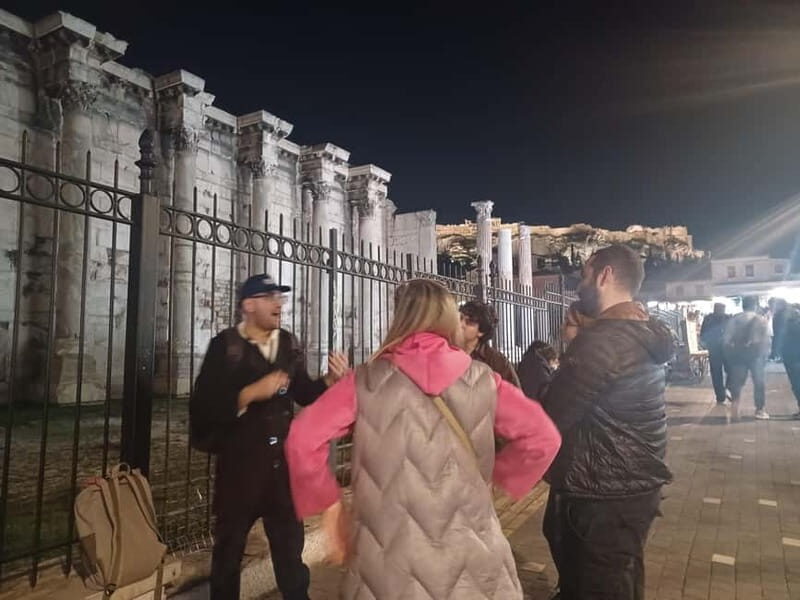
- Hadrian’s Library: Knowledge, Devotion, and a Final Myth
- Monastiraki Square: Closing the Loop With Culture Still Around You
- What You Get by Seeing Sites From Outside
- Distance, Pace, and Weather: How to Prepare
- Content Warning Reality Check: Sexual Assault and Body Horror
- Price and Value: Why $41 Can Make Sense
- Who Should Book This (and Who Should Skip)
- Tips for a Smooth, Scary-But-Fun Evening
- Should You Book This Athens Horror Mythology Tour?
- FAQ
- How long is the Athens Horror Mythology evening tour?
- How far do we walk during the tour?
- Do we enter the monuments during the tour?
- Are there different versions of the tour?
- What content should I know about before booking?
- Is the tour guided in English?
- What should I bring and wear?
- What happens if the weather is bad?
Key Highlights You’ll Actually Notice
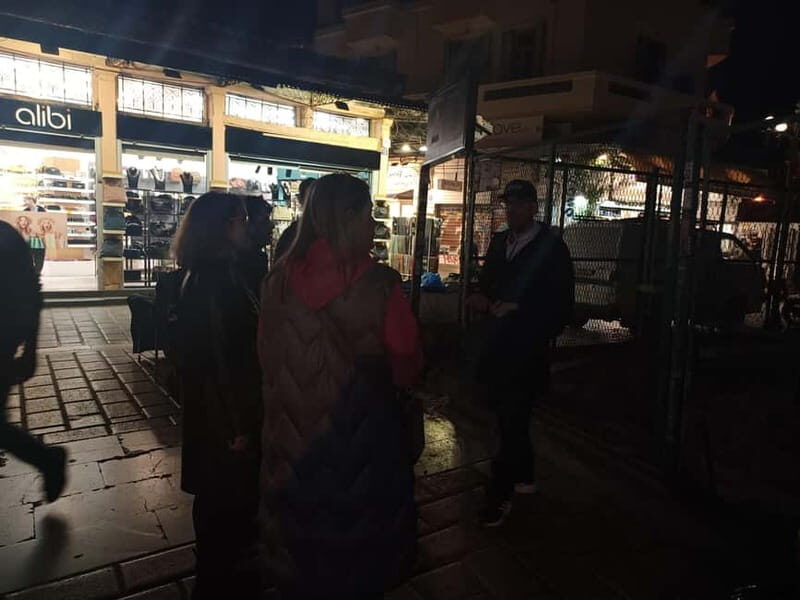
- Two story versions depending on the day: Classic Horror Mythology or a Percy Jackson–Inspired option
- Outside-view route around major landmarks, not a guided entry tour inside monuments
- A short and a long ending, with the short version finishing at the statue of Theseus
- Evening pacing and a walk-friendly distance (about 3 km, or 2 km for the short version)
- A guide-led “game” moment that turns one myth into something you experience, not just hear
- Adult-only and trigger-warning heavy, so you’ll want to know what you’re signing up for
The Real Appeal: Horror Myths With Athens as the Backdrop
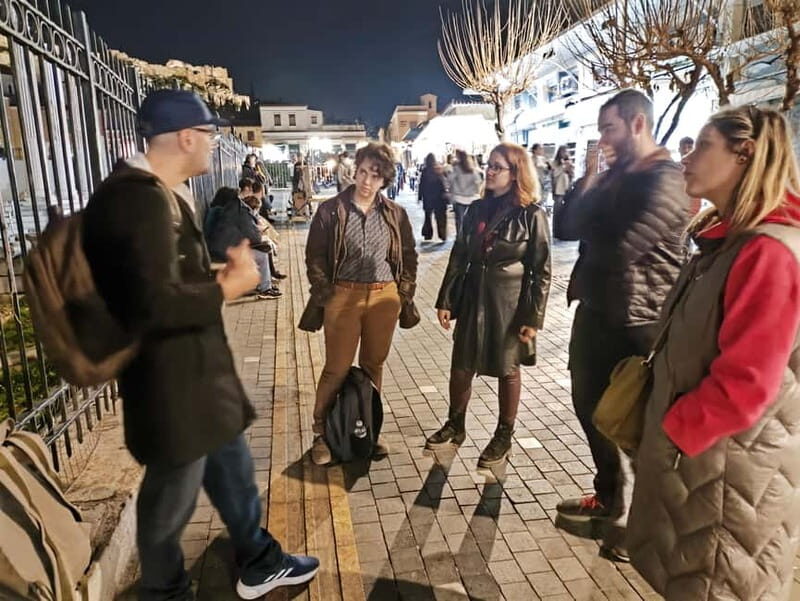
If you only do one “themed” evening in Athens, this is a strong candidate. It’s not a museum tour. It’s a story-walk, where the city’s oldest stones act like props in a horror play.
I like that it keeps the focus where it belongs: ancient gods, monsters, and the kind of fear that comes from humans getting too close to divine power. The guide sets the mood, and the route stays walkable—around the Acropolis hill, down historic streets, and into Monastiraki’s lively maze.
You’ll also appreciate the small group size (limited to 10). In a group that’s this size, it’s easier for the guide to steer the drama, keep everyone together on narrow sidewalks, and field questions without turning it into a lecture.
You can also read our reviews of more guided tours in Athens
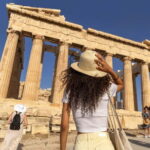

Classic vs Percy Jackson–Inspired: Pick Your Flavor of Fear
Depending on the day of the week, you’ll have two options. There’s the Classic Horror Mythology version, and there’s a Percy Jackson–Inspired option. If you like your mythology straight and grim, Classic is the better fit. If you want something a bit more modern in feel while still centered on Greek monster-myth energy, the Percy Jackson–inspired path can be a good entry point.
This matters because the story tone drives everything. Even with the same route basics, the way the myths are framed changes how scary (or playful) the evening feels. In other words, you’re not just choosing a theme—you’re choosing the story lens.
Meeting Point and First Minutes: Where the Story Starts
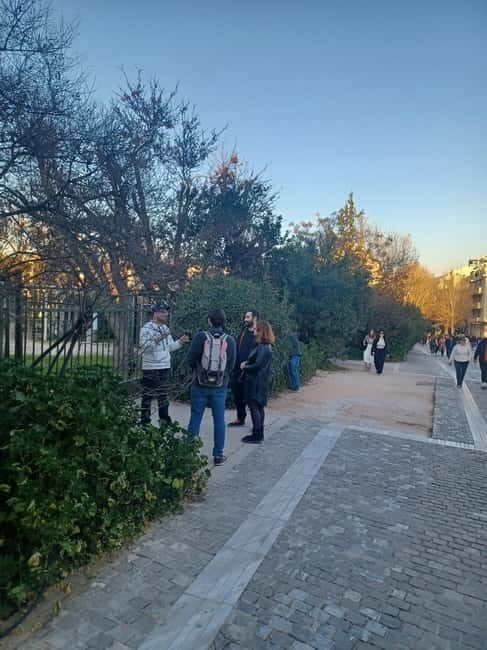
The meeting point is at Athinaiki Skini, Tzireon 13, Athens 11742. The tour begins by connecting you with the “enthusiastic storyteller” who will guide you into the darker side of ancient myths.
In those opening minutes, you’ll get the tone and the rules. This is an adult experience, it runs in all weather except extreme conditions, and the guide stays focused on horror mythology rather than guiding you through museum-style facts. Plan on bringing the basics: comfortable shoes, water, and insect repellent.
One practical note: the tour doesn’t do audio recording, and it doesn’t allow luggage or large bags. That means you’ll travel light, which also helps on crowded sidewalks near the center.
Dionysiou Areopagitou: Walking Into Ancient Greece
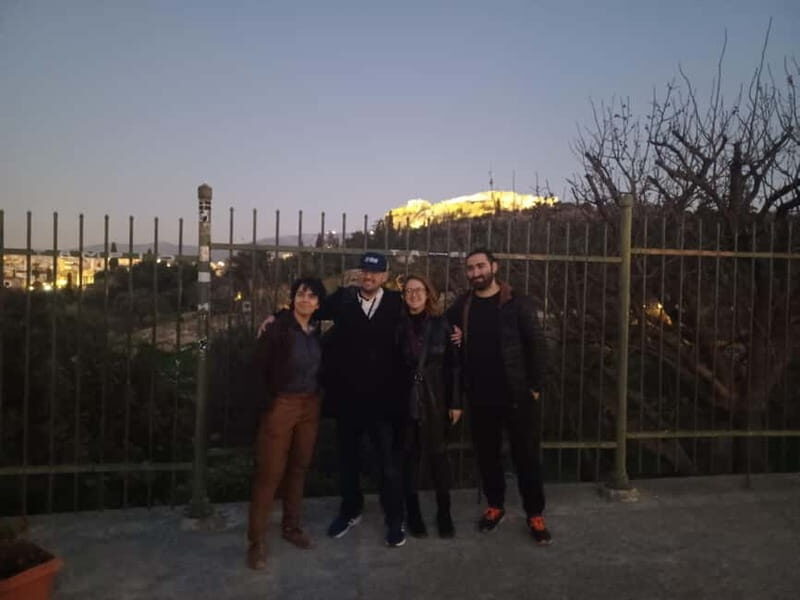
A big reason this tour works is the way it starts with a dramatic walk. You’ll stroll along Dionysiou Areopagitou street, described as one of Athens’ most breathtaking promenades, built right along the Acropolis.
This street is your setup. The guide uses it to launch the first myth of the night, setting up the bigger theme: gods and monsters aren’t separate from daily life here—they spill into it. It’s a simple trick, but it changes the whole evening. Instead of hearing myths in a vacuum, you’re hearing them while looking at the city’s most iconic backdrop.
If you’re sensitive to strong content, this is also where you’ll want to be mentally ready. The tour’s trigger warning isn’t subtle, and the storytelling tone starts early.
Odeon of Herodes Atticus: Theatre Where Tragedy Still Echoes
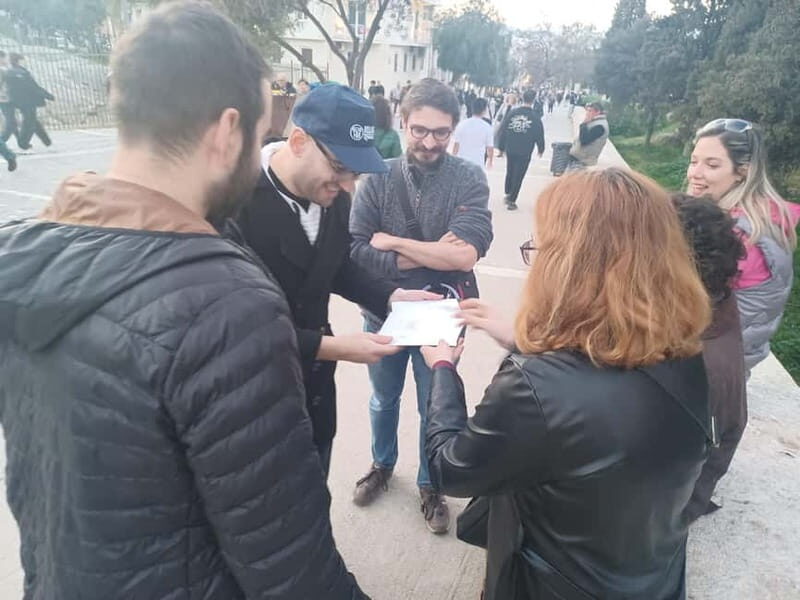
Next you stop outside the Odeon of Herodes Atticus, the ancient theatre that still hosts performances today. Even if you never enter, the exterior context matters. This is a place where stories were once staged for audiences, and the guide taps into that idea.
Here, the myth involves a tragic king meeting a gruesome fate. The tour plays with the horror by making you imagine yourself in the scene—yes, the tour encourages a bit of roleplay. It’s not mandatory, but it’s built into the storytelling style.
This stop is also useful for people trying to orient themselves fast. If it’s your first evening in Athens, you’ll leave with a mental map that connects multiple streets and landmarks.
You can also read our reviews of more evening experiences in Athens



Apostolou Pavlou Street and a Myth You Participate In
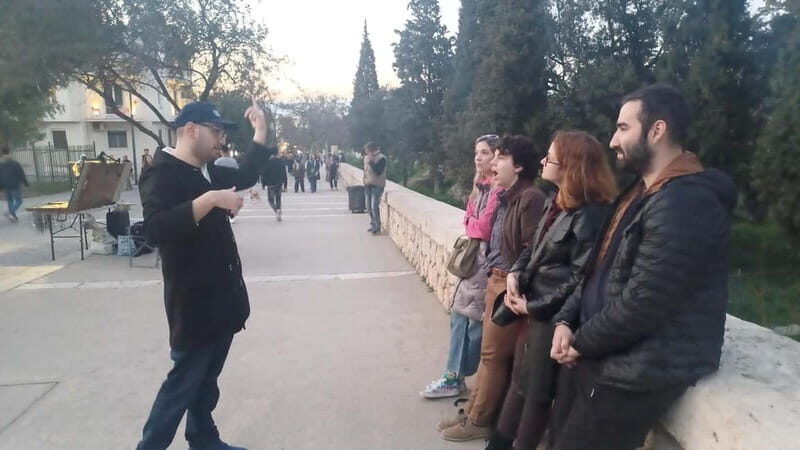
You then follow Apostolou Pavlou street, a scenic street where myth and history feel intertwined. The guide includes a quick game here, tied to a tragic tale of a beautiful maiden transformed into a terrifying monster.
Games are underrated in walking tours. They keep attention from drifting, and they help your brain lock onto the story. For horror mythology, that’s especially helpful because you’re juggling multiple characters, motives, and dark consequences across the evening.
Wear shoes you trust. This is still a walking tour, and the game moment doesn’t stop the need to keep moving with the group.
Sanctuary of Pan: Fear, Transformation, and Divine Ambiguity
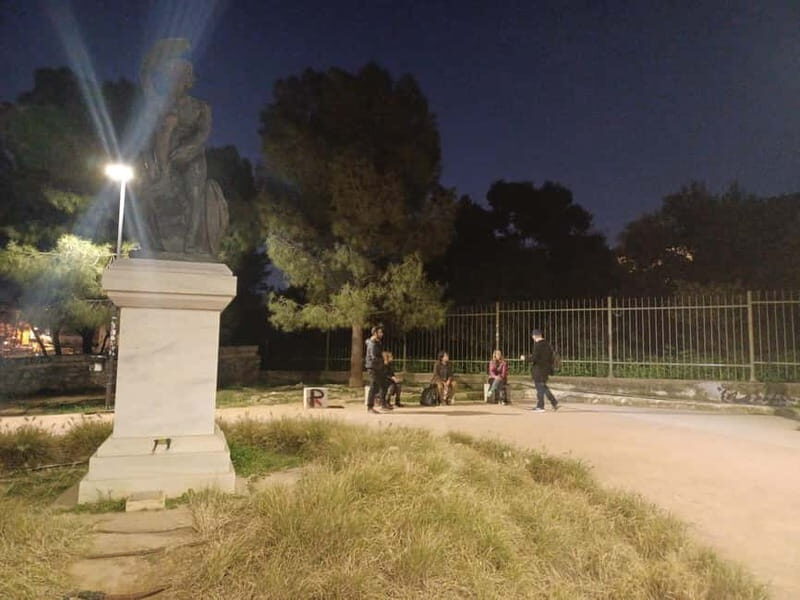
At the Sanctuary of Pan, you’ll hear a tale of fear and transformation, centered on the uneasy relationship between mortals and the divine. The guide sets up a presence that provokes dread—not necessarily because it wants evil outcomes, but because of how it appears.
This is one of the places where I can see the tour earning its horror label. Ancient Greek mythology often carries a kind of cosmic indifference. The story here leans into that. You’re not just dealing with a monster; you’re dealing with reality that doesn’t care whether humans understand it.
If you’re coming from modern stories where evil is clean and simple, this kind of myth can feel more unsettling. The message isn’t that the gods are perfectly cruel—it’s that power changes what counts as mercy.
Statue of Theseus and the Short-Version Finish
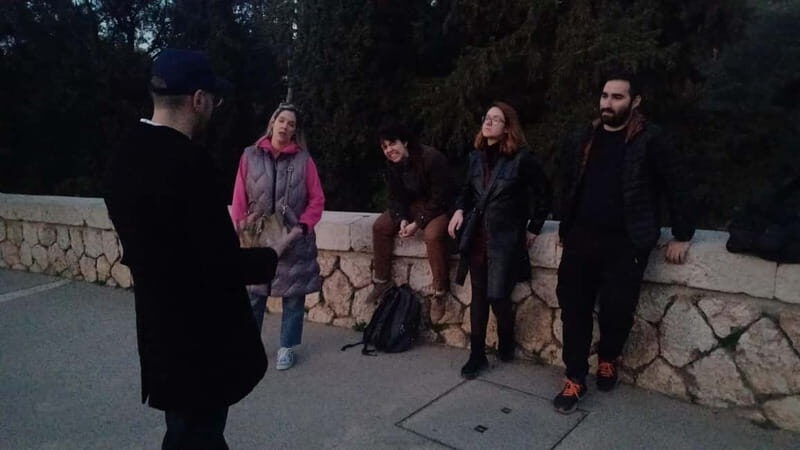
You’ll gather around the statue of mighty Theseus, sculpted by George Vitalis. This stop is tied to the monster Theseus defeated—a beast born of divine defiance.
Here’s also where the short version ends. If you choose (or are scheduled for) the shorter experience, this is the finish point. That makes the short tour a smart option for first-timers who want the core mood without the longer walk through Monastiraki.
If you do the longer tour, you keep going, and the evening broadens from Acropolis-adjacent myths into the busier, layered streets of the city center.
Monastiraki Alleys: Temple of Hephaestus as a Backdrop
As the route shifts into Monastiraki, the feeling changes in a good way. The alleys are busier and more lived-in, with past and present colliding in a very Athens way.
You’ll pass with the Temple of Hephaestus as a backdrop while the guide tells a story involving betrayal, cunning, and punishment. This is where the tour reminds you that “horror” isn’t only monsters in the dark. It can be human trickery with divine consequences—or divine consequences that make you question who really has control.
This stop also helps you connect myth to daily city movement. You’re not only walking past monuments. You’re moving through the same kinds of streets you might roam later for dinner, shopping, or a late drink.
Hadrian’s Library: Knowledge, Devotion, and a Final Myth
The next major stop is outside Hadrian’s Library, built by the Roman Emperor Hadrian in 132 AD. It once held the greatest knowledge of its time, and the guide uses the setting as part of the story beat.
Outside the gates, you’ll hear the final myth of the night, driven by powerful devotion, forbidden acts, and defiance that alters human fate. This is the kind of ending that sticks because it’s not only scary—it’s moral and emotional, tied to love, loyalty, or compassion that crosses a line set by the gods.
If you’ve ever wondered why Greek myth keeps resurfacing in modern books and movies, this kind of story explains it. It’s not just monsters; it’s consequences.
Monastiraki Square: Closing the Loop With Culture Still Around You
Your tour ends at Monastiraki Square. The idea is simple: you finish in a lively place where the city’s multiple eras overlap, so the myths feel like part of Athens’ ongoing life—not a separate “old times” show.
From a practical viewpoint, finishing in Monastiraki is also convenient. It’s a strong base for an after-tour plan—whether that’s grabbing food nearby or using the area to catch transit back to your hotel.
What You Get by Seeing Sites From Outside
This tour does not include guided entry into monuments. You pass incredible historic sites, but the focus stays on chilling horror myths rather than monument walkthroughs.
That works well if you want an evening activity that keeps moving. Inside tours can stretch, especially as you wait for groups and navigate timed entry spaces. Here, the experience is about atmosphere, story, and location.
The tradeoff: if you want deep architectural details or museum-level context, you’ll probably want to pair this with another daytime visit. Think of this as the “mood setter,” not the only learning stop.
Distance, Pace, and Weather: How to Prepare
Plan for about a 3 km (1.9 miles) walk for the full version, or about 2 km (1.2 miles) for the short version. The total duration runs 100 to 130 minutes, so it’s long enough to feel like an experience, not so long that it drains your whole night.
The tour runs in all weathers except extreme conditions. That means you’ll be outside for much of the time, so bring water and protect your feet. In warm months, insect repellent is explicitly suggested; in cooler or wetter conditions, you’ll still want comfortable shoes you can handle on uneven pavement.
Also note what’s not allowed: high-heeled shoes, bare feet, intoxication, alcohol and drugs. The guide can remove disruptive participants without a refund, so keep the evening respectful and in-scope.
Content Warning Reality Check: Sexual Assault and Body Horror
This is the part you should take seriously. The tour includes themes of sexual assault and body horror, and there’s a trigger warning given for that reason. It also isn’t suitable for children under 18.
If you know certain topics reliably spoil your night, don’t gamble. Choose a different kind of Athens tour and keep your energy for calmer experiences. If you’re okay with intense storytelling and you want myths that are darker than the kid-friendly retellings, this is right in its lane.
Price and Value: Why $41 Can Make Sense
At $41 per person for about 100–130 minutes, this sits in the mid-range for a guided evening activity. The value comes less from “sites” and more from what the guide is doing: structured storytelling, a walking route that links multiple landmarks, and a small-group format that supports interaction.
You’re not paying for monument entry tickets or indoor guides. You’re paying for a designed narrative evening around the Acropolis and central Athens, plus the convenience of having someone else handle the pacing and story flow.
If you’re visiting Athens for the first time and you want an easy way to connect major landmarks into a single memorable evening, this price can feel fair. If you already know the myths well and prefer museum-depth information, it might feel more like entertainment than education. In that case, you’d likely do better combining a classic daytime history tour with a calmer evening activity.
Who Should Book This (and Who Should Skip)
This is ideal if you:
- Want a first-evening activity that orients you around the Acropolis and central streets
- Like mythology and specifically want the darker, scarier versions
- Enjoy guided storytelling, comedy edges, and interactive moments like the game
- Prefer small groups (max 10)
Skip it if you:
- Need a family-friendly outing (it’s not suitable for children under 18)
- Are uncomfortable with sexual assault themes or body horror
- Want an inside-monument tour with architectural focus rather than story-led stops
Tips for a Smooth, Scary-But-Fun Evening
A few small things can make a big difference:
- Wear comfortable shoes you can walk on for about 3 km.
- Bring water even if you think you won’t need it.
- Use insect repellent, especially during warmer months.
- Travel light since luggage and large bags aren’t allowed.
- Go in knowing you’re there for horror-myth storytelling, not a comprehensive monument tour.
And when you hit a story-heavy moment, lean in. The guide’s whole style is about tone and timing, so your attention pays off.
Should You Book This Athens Horror Mythology Tour?
Yes, if you want an atmospheric evening that turns central Athens into a stage for ancient horror myths. The small-group format, the outside-pass landmark route, and the strong emphasis on guided storytelling make it a memorable way to spend 100–130 minutes—especially if you’re pairing it with daytime sightseeing.
No, if you’re not up for the content warning. The sexual assault and body horror themes are part of the design, not an edge case. Also skip it if you mainly want museum-grade history or monument entry.
If you do decide to book, aim for a night when you can fully settle in. This isn’t a grab-and-go tour. It works best when you let the city get a little strange.
FAQ
How long is the Athens Horror Mythology evening tour?
The duration is listed as 100 to 130 minutes, depending on the version and the day.
How far do we walk during the tour?
You’ll walk about 3 km (1.9 miles) for the longer version, or about 2 km (1.2 miles) for the shorter version.
Do we enter the monuments during the tour?
No. The tour includes historical sites around the Acropolis, but you view them from outside. There is no guided entry into the monuments.
Are there different versions of the tour?
Yes. Depending on the day of the week, you can choose between the Classic Horror Mythology version or a Percy Jackson–Inspired option.
What content should I know about before booking?
There is a trigger warning. The experience includes themes of sexual assault and body horror, and it is not suitable for children under 18.
Is the tour guided in English?
Yes. The tour provides a live guide in English.
What should I bring and wear?
Bring comfortable shoes, water, insect repellent, and any personal medication you need. High heels, luggage or large bags, audio recording, bikes, alcohol and drugs, and bare feet are not allowed.
What happens if the weather is bad?
The tour runs in all weathers except extreme conditions. If an extreme forecast comes up, the provider will try to talk to you 1–2 days before to find a different date or hour.