REVIEW · ATHENS
Athens: The Acropolis and Greek Food Private Guided Tour
Book on GetYourGuide →Operated by ATHENS WALKING TOURS · Bookable on GetYourGuide
Athens reveals two of its best sides on this five-hour walk: the Acropolis monuments and the food stalls, bakeries, spice shops, and specialty stores around the city market. You move from ancient stone to olives, honey, cheese, sweets, and local drinks, with one private guide connecting the two.
I like the way the route pairs major sights with everyday Athenian life. I also like that the guide handles the archaeological explanation and food tastings, so you get more than a quick photo stop. The main drawback is the pace: five hours on foot, often in the sun, is a lot for anyone with limited mobility.
In This Review
- Key points at a glance
- From Dionysus Theater to the Acropolis
- Seeing the Acropolis monuments in one visit
- Crossing Plaka toward Monastiraki
- Tasting Greek food at the Athenian Market
- Why a private archaeology and food guide matters
- Is $360 per person good value?
- Timing, clothing, and practical limits
- Who should book this Athens tour?
- Final call: book it for context, not just access
- FAQ
- How long does the Athens Acropolis and food tour last?
- What monuments are included?
- What food and drinks are included?
- Is the Acropolis admission ticket included?
- Where does the tour meet and finish?
- Is the tour suitable for wheelchair users or people with mobility impairments?
Key points at a glance
- Ancient Athens first: Visit the Dionysus Theater, Acropolis, Parthenon, Temple of Athena Nike, Propylaea, and Erechtheion.
- Food with context: Taste Greek olives, honey, cheese, sweets, traditional products, and local beverages.
- Private guiding: You have a licensed English-speaking guide focused on both archaeology and food.
- Strong city views: Look across Mars Hill, the Ancient Agora, the Temple of Hephaestus, and central Athens.
- Five hours of walking: Comfortable shoes and a sun hat are essential.
- Market finish: The route ends near Monastiraki after passing through Plaka and the Athenian Market area.
From Dionysus Theater to the Acropolis
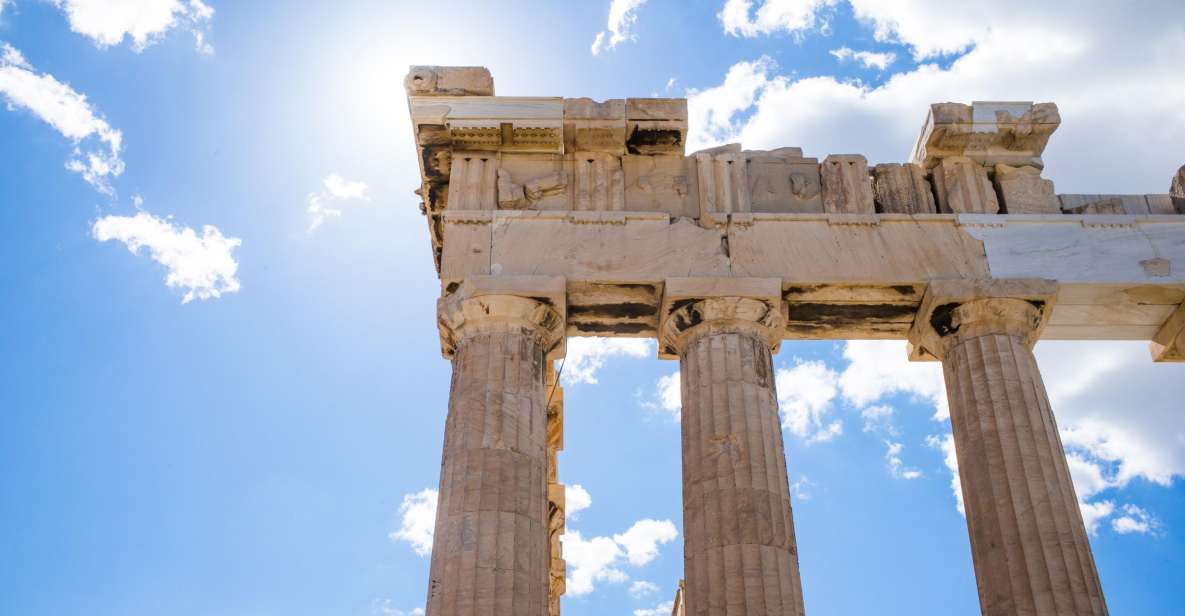
The tour begins at 3 Dionyssiou Areopagitou Street, near the pedestrian approach to the Acropolis and Hadrian’s Arch. Look for the orange Athens Walking Tours sign. This is a useful meeting point because the walk starts close to the ancient theater and avoids wasting time on a hotel transfer.
Your first stop is the Theater of Dionysus, described as the oldest theater in Greece. It sits on the southern slope of the Acropolis and gives you an immediate sense of how public life worked in ancient Athens. This is not just a quick view of old seats. Your guide can explain the theater’s place in Greek drama and help you understand why this slope mattered long before the Parthenon became the city’s symbol.
From here, you walk uphill toward the Acropolis. The approach is part of the experience, but it also sets the physical tone for the day. You will be walking for about five hours, with uphill sections, uneven surfaces, and exposure to the sun. I would not book this as a relaxed, sit-down excursion.
As you climb, the views open toward the Herodes Atticus Odeon, the Philopappos Monument, the Observatory, and other Athenian landmarks. These views help you read the city from above. Your guide can point out the major monuments before you enter the main Acropolis area, giving you a better sense of how the hill relates to the neighborhoods below.
You can also read our reviews of more food & drink experiences in Athens



Seeing the Acropolis monuments in one visit
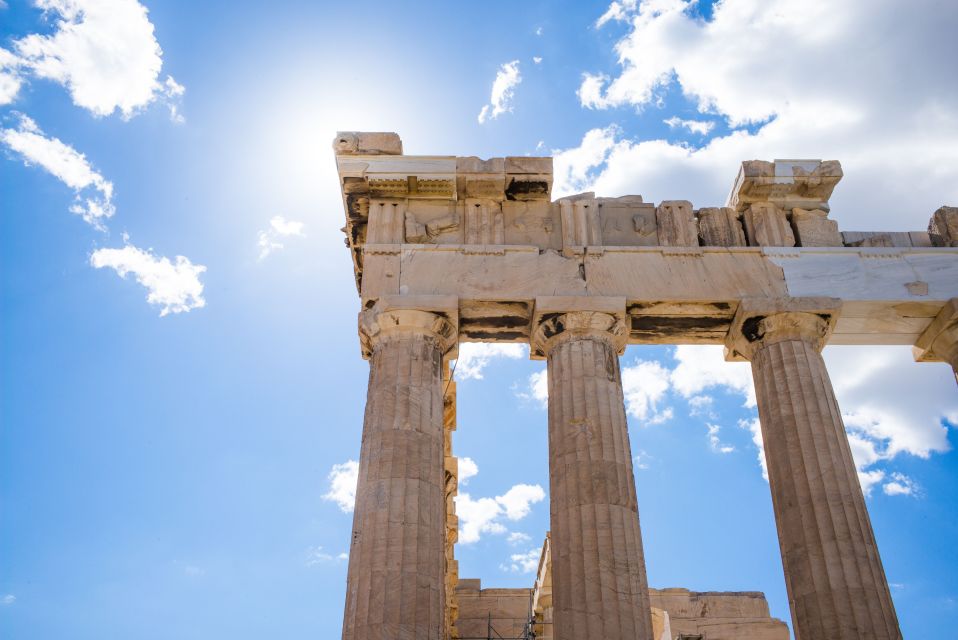
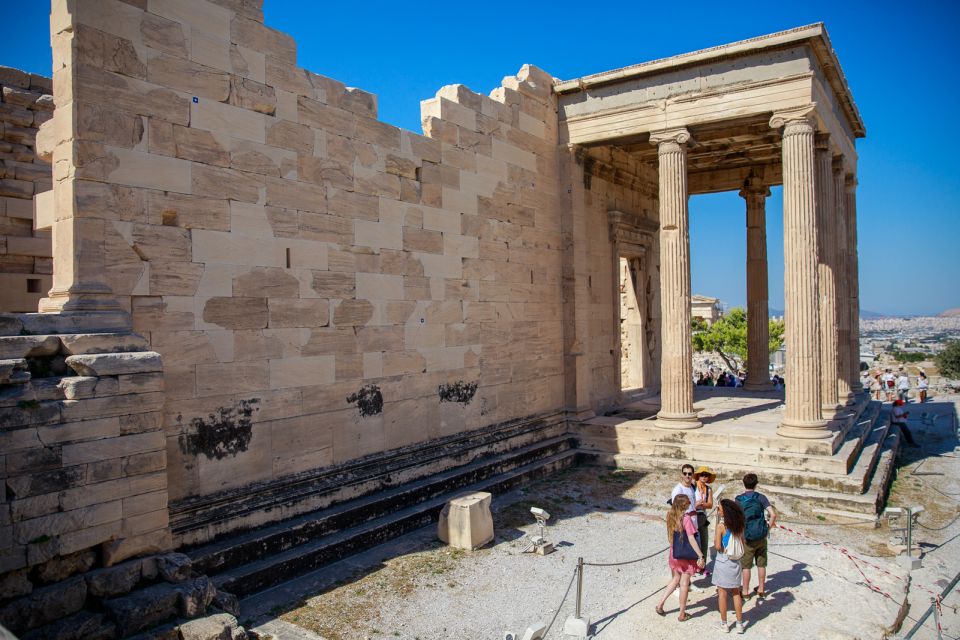
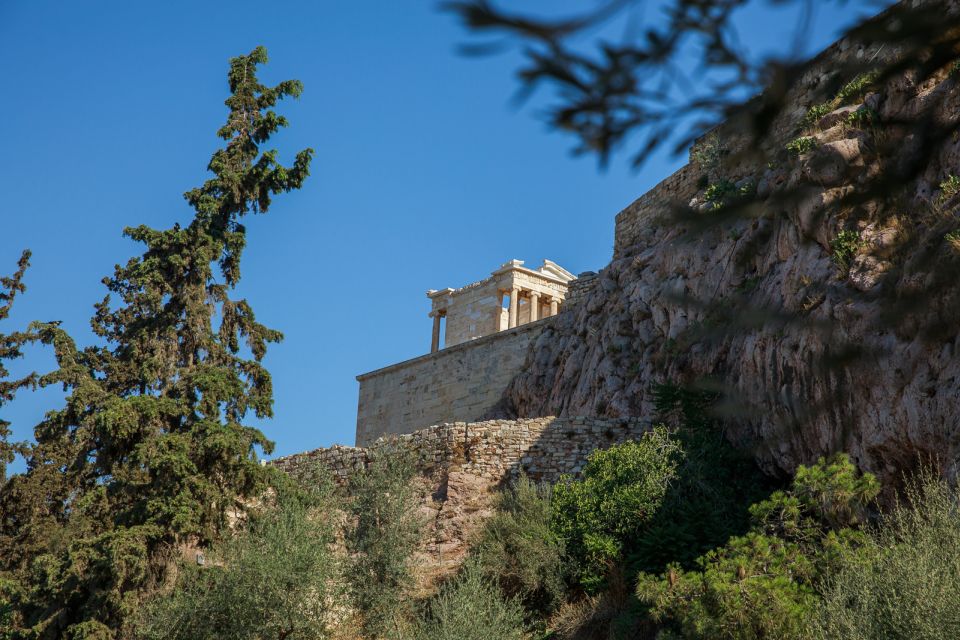
The Acropolis portion is the centerpiece. You visit the Temple of Athena Nike, the Propylaea gateway, the Erechtheion, and the Parthenon. Each building tells a different part of the story, and a private guide has the time to explain construction details, religious purpose, and changes over the centuries.
The Propylaea serves as the grand entrance. Its scale makes the climb feel worthwhile, though the approach can be crowded and slow. Entry is tied to a strict time slot, so you must arrive on time. The tour cannot wait for late arrivals, and there are no refunds for missed entry.
The small Temple of Athena Nike sits near the entrance. Its position gives it both religious and visual importance. The Erechtheion is known for its unusual design and the famous Caryatid figures. Your guide can help you distinguish the building’s separate spaces and explain why it does not look as straightforward as the Parthenon.
Then comes the Parthenon. You will hear about its design, construction, and role in ancient Athens rather than simply walking up for a photograph. The building has suffered damage and alteration over time, so the explanation matters. Without context, it can be easy to see only columns and scaffolding. With a guide, you can better understand the choices behind the structure and the role it played in the city.
The Acropolis is also a place for wide city views. From the hill, you can look toward Mars Hill, the Ancient Agora, and the Temple of Hephaestus. You will have plenty to photograph, but keep your attention on your footing too. The ground is not suited to a rushed walk or casual footwear.
Security is another timing issue. Everyone passes through airport-style checks, and during the busiest season waits can reach more than 30 minutes. The tour includes skip-the-ticket-line access, but that does not mean you bypass all security procedures.
Crossing Plaka toward Monastiraki
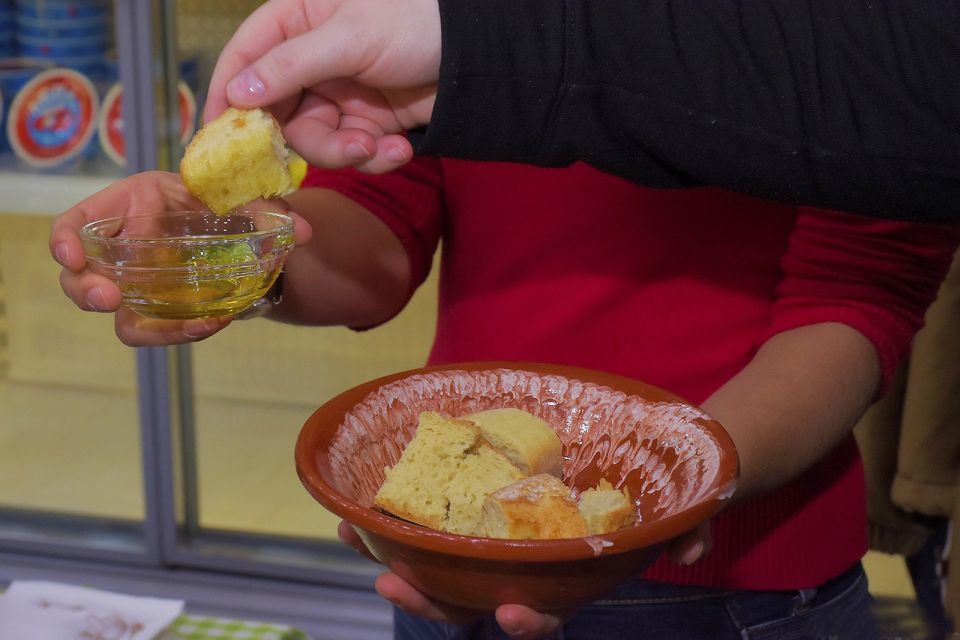
After the Acropolis, the route leads through Plaka, Athens’ old town. This change of setting is one of the strongest parts of the experience. You move from the formal world of temples and sanctuaries into streets lined with shops, cafés, and neighborhood life.
Plaka is attractive, but it can also feel busy and commercial in places. The value here comes from the guide’s direction. Instead of simply wandering without a plan, you cross the area on your way to Monastiraki and the market district. The walk creates a link between Athens as an ancient capital and Athens as a living city.
Monastiraki is a practical transition point. From there, the tour turns toward a less familiar side of central Athens, the Athenian Market area. You will see producer stalls, spice shops, sweet shops, bakeries, and specialty food stores. The route is designed around tasting, so this is when the second half of the tour begins to take over.
I like this structure because it prevents the food portion from feeling detached from the monuments. Greek food is presented as part of the culture you have just been studying, not as a separate restaurant stop added at the end.
Tasting Greek food at the Athenian Market
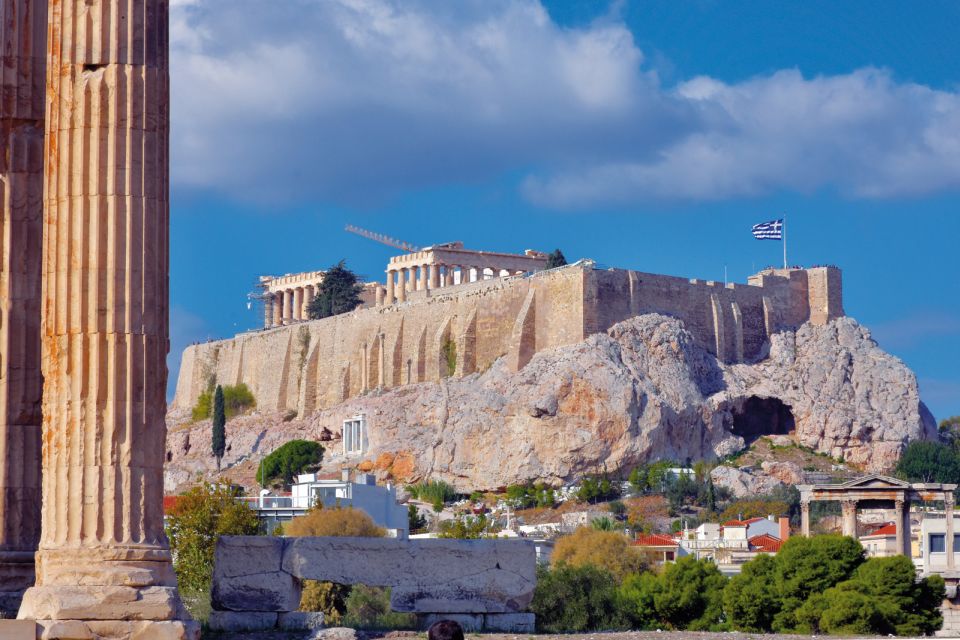
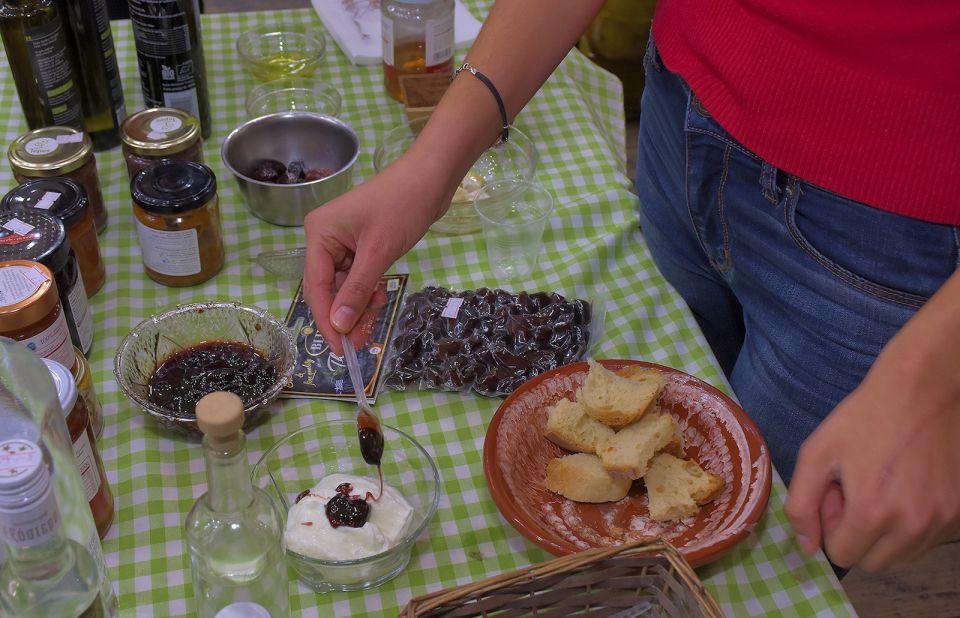
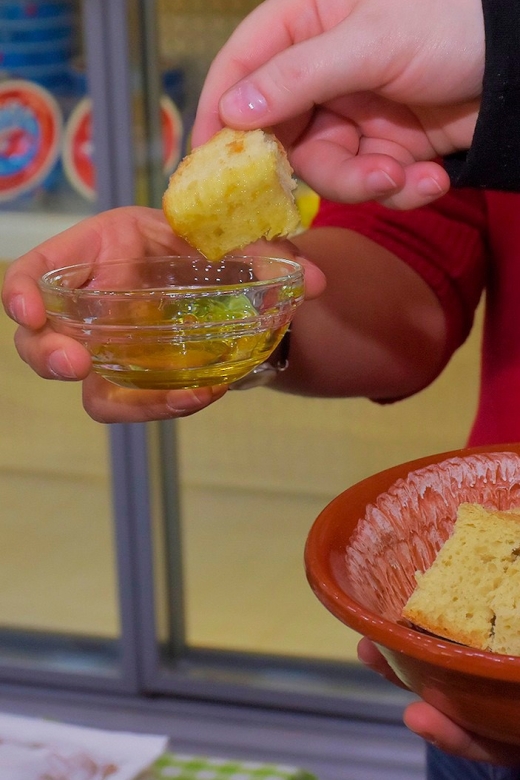
The food portion includes samples of traditional Greek products, with examples such as olives, honey, cheese, sweets, and local beverages. The exact selection may vary, but the point is variety. You are led through several small food shops and market stalls rather than being confined to one meal.
That makes this a good introduction to Greek ingredients. Olives and cheese show up in familiar forms, while honey, sweets, spices, and baked goods give you a broader view of the country’s food traditions. You might find a product you want to seek out later during your trip, or simply gain a better idea of what to order in a taverna.
The guide also explains the Mediterranean diet and the culinary traditions behind the food. That context is important. A tasting can be pleasant but forgettable when you do not know what you are eating. Here, the guide’s role is to explain how ingredients fit into Greek food culture and daily life.
Do not think of this as a full restaurant lunch. It is a walking tasting experience, with free samples in several shops and market settings. If you need a substantial meal, plan one separately before or after the tour. The five-hour schedule includes both sightseeing and food stops, but the supplied details do not promise a sit-down meal.
The Central Food Market of Athens is another key part of the route. It gives you a look at the city’s working food trade, with stalls, smells, colors, and textures that differ from the polished streets near the Acropolis. You may find the market lively and crowded, especially at busy times, so keep your belongings secure and stay close to your guide.
Why a private archaeology and food guide matters
The guide is the main reason this tour can cover such different subjects without feeling disconnected. You are not simply joining a monument visit followed by random snacks. The same guide is a licensed local guide and food specialist, able to explain both the Acropolis and the products in the market.
A private format also gives you more room to ask questions. If you want extra detail about the Parthenon, you can spend more time there. If you are curious about Greek cheese, honey, or the Mediterranean diet, you can take the food portion at a pace that suits your group, within the fixed five-hour schedule.
Guides named Niobe and Katerina have been singled out for being on time, kind, attentive, and clear in their explanations. Those are useful qualities on a day with a strict Acropolis entry time. A guide who keeps the group organized matters just as much as one who knows the monuments.
The language offered is English. A private group is available, which is especially useful for families, couples, and small groups with shared interests. You should confirm the format and group details when booking if the private option is important to you.
A few more Athens tours and experiences worth a look






Is $360 per person good value?
At $360 per person, this is not a budget walking tour. The price makes more sense if you value a private guide, structured access to the Acropolis, food samples, and a full half-day of personal explanation.
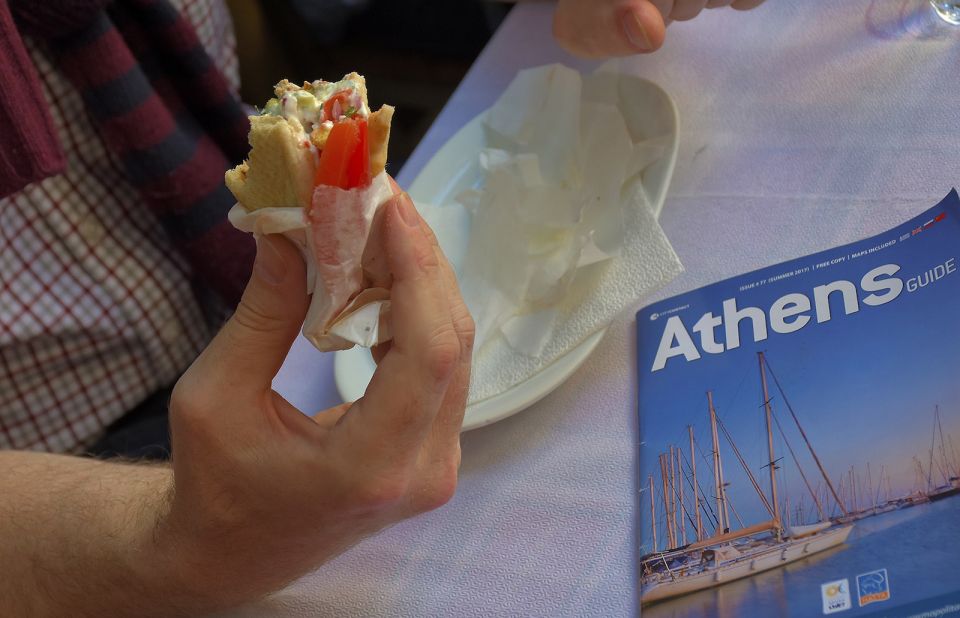
The listed inclusions cover the licensed guide, food and beverage samples, an Athens Guide magazine, an Athens map, and entrance tickets valued at 20 euros. You must pay the admission ticket in cash at check-in, even though the ticket is part of the tour arrangement. Build that cash payment into your arrival plan.
You are paying for convenience as well as information. The operator secures an Acropolis time slot, and the guide leads you through several central areas without requiring you to plan the route yourself. That can be worthwhile on a first visit, particularly if you have only a short time in Athens.
The value is weaker if you mainly want a quick Acropolis visit or prefer to choose your own food stops. You can also find less expensive group walks. The private format is the main price difference, so book it for the personal attention, not simply for entry to the Parthenon.
Hotel pickup and drop-off are not included unless arranged separately. Since the meeting point is central, you need to make your own way there and leave from near Monastiraki at the end.
Timing, clothing, and practical limits
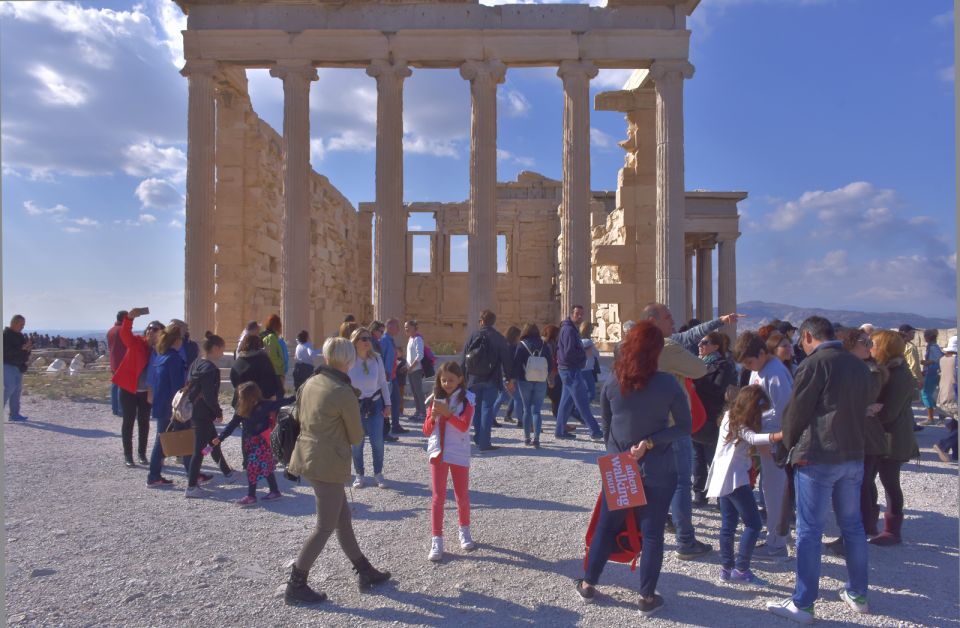
Five hours of walking requires sensible preparation. Wear comfortable shoes with a secure grip, and bring a sun hat. Central Athens can be hot, and the Acropolis offers limited shade. Water is a sensible addition, even though it is not specifically listed among the required items.
Do not bring luggage or large bags. Baby strollers are not allowed, and the tour is not suitable for wheelchair users or people with mobility impairments. Uneven ground, uphill walking, security checks, and the Acropolis terrain all make this a demanding route for anyone who has trouble walking.
Citizenship details matter at booking. You must select EU or non-EU status correctly and carry a valid passport for verification. An incorrect selection can lead to an extra charge or loss of the tour fee.
You also need to protect the fixed start time. Arrive early at the orange sign on Dionyssiou Areopagitou Street. The guide cannot hold the group for late arrivals because Acropolis admission is time controlled.
Cancellation is flexible only if you act early. You can cancel up to three days in advance for a full refund. During the off-season, a minimum number of participants may be required for the tour to operate.
Who should book this Athens tour?
I would choose this experience if you want your first Athens day to combine the city’s famous monuments with its food culture. It suits an active couple, a small family with older children, or friends who prefer a private guide to a large group.
It is especially useful if you want the Acropolis explained in detail rather than photographed quickly. The food route also gives you an introduction to central Athens beyond the main archaeological sights, with Plaka, Monastiraki, and the market district all connected in one walk.
I would hesitate if you dislike long walks, have mobility limits, or want a leisurely meal. The route is active, the schedule is fixed, and summer heat can make the Acropolis portion tiring. I would also compare prices carefully if you are traveling alone, since $360 per person is a serious expense.
Final call: book it for context, not just access
Book this tour if you want a well-organized, private introduction to Athens that connects the Parthenon with the food on local market shelves. The combination of archaeology, city views, Plaka streets, and Greek tastings gives you a useful first look at the capital.
Skip it if you only need entry to the Acropolis or would rather explore food markets at your own speed. For everyone else, the strongest reason to book is the guide. A careful guide such as Niobe or Katerina can make the strict schedule, ancient monuments, and unfamiliar food much easier to understand.
FAQ
How long does the Athens Acropolis and food tour last?
The tour lasts five hours and is conducted on foot through the Acropolis, Plaka, Monastiraki, and the Athenian Market area.
What monuments are included?
The route includes the Theater of Dionysus, the Acropolis, the Temple of Athena Nike, the Propylaea, the Erechtheion, the Parthenon, and views toward sites such as the Herodes Atticus Odeon, Mars Hill, the Ancient Agora, and the Temple of Hephaestus.
What food and drinks are included?
You can sample Greek delicacies and beverages, including products such as olives, honey, cheese, sweets, and other traditional Greek foods. The exact selection may vary.
Is the Acropolis admission ticket included?
Yes. Entrance tickets valued at 20 euros are included, but you must pay the admission amount in cash at the check-in location before the tour.
Where does the tour meet and finish?
The meeting point is at 3 Dionyssiou Areopagitou Street, by the orange Athens Walking Tours sign near the pedestrian walkway to the Acropolis. The tour finishes near Monastiraki.
Is the tour suitable for wheelchair users or people with mobility impairments?
No. The tour is not suitable for wheelchair users or people with mobility impairments. Comfortable shoes and a sun hat are recommended because the experience involves extensive walking.