REVIEW · ATHENS
Exploring Corinth: In the Footsteps of the Apostle Paul
Book on Viator →Operated by Colours of Greece · Bookable on Viator
The most compelling part of this private Athens excursion is its focus on Paul the Apostle in Corinth, not just on old stones. You trace the setting of Acts 18, see the port linked to Paul’s journey toward Ephesus, and stand among the streets and monuments of the city where he formed an early Christian community.
I like the private vehicle and flexible questions, especially for a subject that can raise plenty of historical and religious questions. I also like the hotel or apartment pickup, onboard Wi-Fi, bottled water, and the chance to see both the Corinth Canal and Acrocorinth in one day. The main drawback is that your driver is not a licensed guide inside the archaeological sites, and entrance fees are extra.
In This Review
- Key points to know before booking
- Why Corinth makes a strong day trip from Athens
- The Corinth Canal and the narrow Isthmus
- Diolkos, the ancient route for moving ships
- Cenchreae, the port linked to Paul
- Ancient Corinth and the places Paul knew
- The Archaeological Museum of Corinth
- Acrocorinth, the high point of the day
- Saint Paul’s Church and a modern expression of faith
- What the $171.52 price really covers
- Who will get the most from this Corinth tour
- Should you book Exploring Corinth?
- FAQ
- How long does the Corinth tour last?
- Where does pickup take place?
- Can I be picked up at a port?
- Is this a private tour?
- Is an English-speaking guide included?
- Are entrance fees included?
- What is included in the vehicle?
- Is a child seat available?
- Can I cancel for a full refund?
Key points to know before booking
- Paul-centered route: Connect Acts 18 and the Corinthian letters with the places around Ancient Corinth.
- Private Athens pickup: Your group travels alone, with collection at a hotel, apartment entrance, or port gate.
- Seven distinct stops: The route combines engineering, ancient transport, Christian history, archaeology, and mountain views.
- Acrocorinth adds the drama: The hilltop citadel gives you a sweeping view and a change from the flatter ruins below.
- Museum entry costs extra: Budget separately for the Archaeological Museum of Corinth and archaeological-site admissions.
- A useful six to seven hours: The day is long enough for a solid Corinth visit without turning into an overnight trip.
Why Corinth makes a strong day trip from Athens
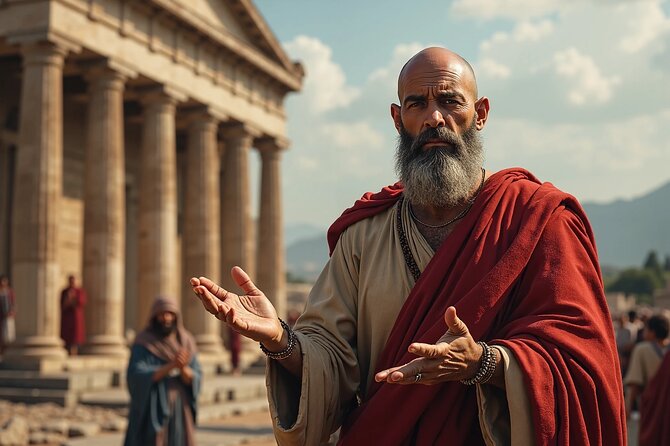
Corinth is not simply a smaller version of Athens. Its importance came from location. The narrow Isthmus of Corinth links mainland Greece with the Peloponnese, while the city’s ports connected routes across the Ionian and Aegean seas.
That location explains why Paul came here and why Corinth mattered to merchants, sailors, Roman officials, and early Christian communities. It also explains the route’s variety. In one outing, you see the canal cut through the isthmus, an ancient ship-hauling road, a former harbor, city ruins, a museum, a hilltop fortress, and a modern church dedicated to Paul.
The experience begins with pickup across Athens. Your driver waits at the entrance of a hotel or apartment. If you arrive by ship, the meeting point is the port gate, where the driver holds a sign with your name. That arrangement is simple, but confirm the exact pickup details when you book, particularly if you are staying in an apartment or arriving at a port.
Because this is a private tour, only your group participates. That matters here. You can ask questions about Paul, Roman Corinth, Greek archaeology, or the modern sites without trying to keep up with a large group. The vehicle is air-conditioned, which is useful during Greece’s warmer months, and Wi-Fi lets you sort out plans for the rest of your Athens stay while you ride.
You can also read our reviews of more tours and experiences in Athens.



The Corinth Canal and the narrow Isthmus
The first stop is the Isthmus of Corinth, with about 30 minutes set aside. The canal is the immediate visual prize. It cuts through the narrow land bridge and gives ships a shorter route between the Gulf of Corinth and the Saronic Gulf.
I like starting here because the canal gives you a quick geography lesson. Look at a map before the trip and the reason for the canal becomes clear: without this shortcut, ships had to travel around the Peloponnese. The waterway you see today is modern engineering, but the basic problem is ancient.
Do not expect a long canal tour or a museum visit at this stop. It is a short orientation point, best used for photographs and for understanding why Corinth became powerful. Your driver can help connect the view to the rest of the day.
Diolkos, the ancient route for moving ships
The 20-minute stop at Diolkos adds a surprising piece of engineering. This sixth-century BC paved trackway crossed the isthmus and allowed ships or their cargo to be hauled overland rather than sent around the Peloponnese.
That detail changes how you read Corinth. The city was not important only because it sat near the sea. It controlled a practical crossing point between two waters, and Diolkos shows the scale of the effort involved. Ancient transport was slow and demanding, yet people built systems to save time and reduce the risks of a long sea passage.
This is a brief stop, and the remains may not deliver the visual impact of a temple or fortress. I would treat it as a context stop. If you enjoy ancient technology and trade routes, it may be one of the day’s most memorable details. If you mainly want grand ruins, keep your expectations in check.
Cenchreae, the port linked to Paul
The ancient port of Cenchreae sits on the Saronic Gulf and was one of Corinth’s two main harbors. The tour allows about 35 minutes here, enough to consider the port’s role in trade and its connection to Paul’s movements.
Cenchreae is especially important for visitors interested in the New Testament. It is identified as the place where Paul set out for Ephesus, giving the stop a direct link to Acts. That connection makes the site feel less abstract than a general ancient harbor. You can picture Corinth as a working port city, not merely as a collection of temples and stones.
The remains here are not presented as a full city visit, so this stop works best for its setting and historical meaning. The short visit also keeps the day moving. Bring water and sensible shoes, since you will be moving through several outdoor areas before reaching the main ruins.
Ancient Corinth and the places Paul knew
The longest ruin stop lasts about 1 hour and 30 minutes. You pass the Glauke Fountain, Temple of Apollo, Ancient Theatre, Roman Odeon, Temple E, Bema, and Peirene Fountain.
The Temple of Apollo is the visual anchor. Its surviving columns remind you that Ancient Corinth was already an important Greek city before Roman rule reshaped it. The later Roman remains show another layer of the city, one tied to administration, public entertainment, and commerce.
For Paul, the Bema is the key point. It was a public platform associated with civic authority, and Acts 18 places Paul in Corinth during a period of conflict and legal scrutiny. Standing near it helps connect the biblical account to the political setting of a Roman city. This is one reason I would choose this route over a general sightseeing drive if Paul’s life is central to your trip.
The Ancient Theatre and Roman Odeon show how public life worked here. The fountains, including Peirene, point to the practical systems that supported a large urban population. The route gives you a broad look rather than a single monument in isolation.
Keep in mind that the driver does not accompany you into the archaeological sites as a licensed guide. You can ask questions during the drive and at the stops, but the actual ruin visit may not include formal site interpretation. If you want detailed archaeological commentary at every monument, arrange a licensed guide separately and confirm the added cost.
The Corinthian letters also give this stop extra weight. First Corinthians and Second Corinthians are not tourist brochures. They deal with disagreements, morality, identity, leadership, and the pressures facing an early Christian community. Seeing the city helps you place those letters in a real urban setting.
- All Day Cruise -3 Islands to Agistri,Moni, Aegina with lunch and drinks included
★ 5.0 · 4,958 reviews





The Archaeological Museum of Corinth
The Archaeological Museum receives about 40 minutes. Admission is not included, so set aside extra money for entry to the museum and the archaeological sites.
This stop is useful because outdoor ruins can leave you with only fragments. The museum brings together pottery, jewelry, and other objects that show Corinth’s cultural and economic importance. These objects can help explain how people lived, traded, worshiped, and displayed status.
Forty minutes is enough for a focused visit, but not for a slow reading of every display. I would use the museum to reinforce what you saw outside. Look for objects that make the city feel occupied by ordinary people, not just famous rulers and religious figures.
The extra entrance fees are the clearest cost issue on the tour. The advertised price is $171.52 per person, but that does not cover food, snacks, museum admission, or archaeological-site entry. Ask for the current total before departure so you can judge the final value accurately.
Acrocorinth, the high point of the day
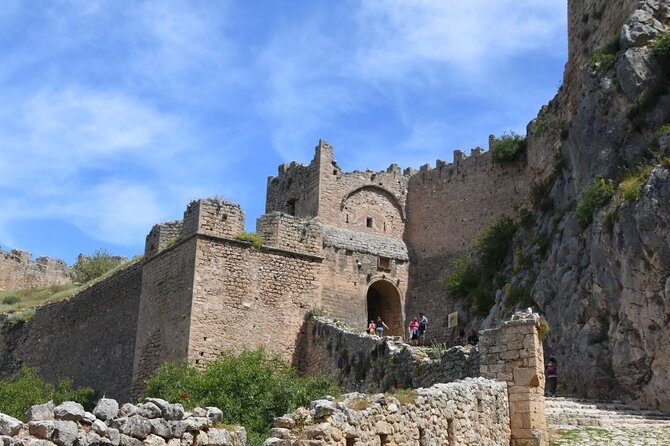
Acrocorinth gets about one hour and is likely to be the day’s most dramatic stop. This towering citadel rises above Ancient Corinth and contains ancient fortifications, with broad views over the surrounding area.
The contrast is strong. Below, you have the orderly remains of a city. Above, you get defensive walls and a high position chosen for control and protection. The climb and uneven ground may require more effort than the lower archaeological area, so wear shoes with a firm grip.
The hour gives you time to take in the fortifications and views without rushing through the entire site. Still, this is not a passive viewpoint. You should expect walking over historic surfaces and allow extra care on uneven sections.
Acrocorinth also helps explain why Corinth mattered for so long. Control of the high ground meant control of movement around the isthmus. Even if your main interest is Paul, this stop adds the political and military side of Corinth to the day.
Saint Paul’s Church and a modern expression of faith
The final stop is Apostolos Pavlos Church, located in the heart of Ancient Corinth. The visit lasts about 20 minutes and centers on a mosaic by Pastorutti and Tsotsonis depicting Paul’s journey.
This is a different kind of stop from the ruins and museum. You are not looking at an ancient building from Paul’s lifetime. Instead, you are seeing how his story is remembered in modern Corinth. The mosaic gives the day a personal and religious closing point.
The brief visit suits the church well. You can pause, look at the artwork, and connect the places you saw with the tradition that grew around Paul’s time in the city. If your interest is mainly classical archaeology, this will be a quieter and less essential stop. If you are following Paul’s life, it provides a fitting final reflection.
What the $171.52 price really covers
At $171.52 per person, this is not the cheapest way to reach Corinth. You are paying for a private vehicle, Athens pickup and drop-off, an English-speaking tour driver, air conditioning, onboard Wi-Fi, and bottled water.
The value improves when you are traveling as a small private group and want a direct route without arranging transport yourself. A private vehicle also saves you from coordinating buses, transfers, and separate stops at the canal, ports, ruins, and Acrocorinth. The ability to ask questions throughout the day adds value, especially if your group has a strong interest in Paul.
The price is less attractive if you expect a full guided archaeological tour. A licensed guide is not included, and admissions are extra. Food and snacks are also your responsibility, so plan ahead for the six to seven-hour outing.
I would compare the final price with a private transfer plus separate guide fees, not with the cost of a basic bus ride. For a group that values convenience and a custom conversation, the arrangement can make sense. For a solo visitor focused only on the ruins, a less costly shared option may be more efficient.
Who will get the most from this Corinth tour
I would recommend this experience to you if Paul’s life, the early church, or biblical geography is a major reason for visiting Greece. It also suits history fans who want to connect Greek, Roman, maritime, and Christian stories in one route.
Families may appreciate the private format, and a child seat is available upon request. The day includes outdoor walking and a hilltop citadel, so make sure everyone in your group is comfortable with that pace.
The tour is also a good fit if you have limited time in Athens. Six to seven hours is a substantial outing, but it leaves you with the evening back in the city. Pickup and drop-off reduce the mental work of planning.
You may want a different arrangement if you need a formally guided archaeological lecture at every stop. Since the driver is not a licensed guide inside the sites, the experience depends partly on your own interest, questions, and preparation. If Theodore is assigned as your driver, he has been specifically praised for his English, answers, and detailed knowledge of Paul’s time in Corinth. Driver assignments should be confirmed before booking.
Cancellation is flexible if your plans change early: you can receive a full refund by canceling at least 24 hours before the start time. Changes or cancellations inside that window are not accepted for a refund.
Should you book Exploring Corinth?
Book it if you want a private, Paul-focused day from Athens with strong geographic context and a mix of ancient and Christian sites. The route is thoughtfully varied, and the private vehicle lets you ask questions instead of simply following a flag through ruins.
Think twice if you want entrance fees included, a licensed guide inside the monuments, or a low-cost transport-only trip. The $171.52 starting price is best justified by convenience, privacy, and the number of places covered. For a group with a serious interest in Paul, Corinth, and the ancient movement of people and ships, it offers a useful and well-shaped day outside Athens.
FAQ
How long does the Corinth tour last?
The experience lasts approximately six to seven hours.
Where does pickup take place?
Pickup is offered from hotels and apartments across Athens. The driver waits at the entrance.
Can I be picked up at a port?
Yes. At a port, the driver waits at the gate holding a sign with your name.
Is this a private tour?
Yes. Only your group participates in the activity.
Is an English-speaking guide included?
An English-speaking tour driver is included. A licensed guide to accompany you inside archaeological sites is not included.
Are entrance fees included?
No. Entrance fees for archaeological sites and the Archaeological Museum of Corinth are extra.
What is included in the vehicle?
The tour includes an air-conditioned vehicle, onboard Wi-Fi, bottled water, and hotel or Airbnb pickup and drop-off.
Is a child seat available?
Yes. A child seat can be provided upon request.
Can I cancel for a full refund?
Yes, if you cancel at least 24 hours before the experience start time. Cancellations made less than 24 hours in advance are not refunded.