REVIEW · KALABAKA
Meteora: Easy Hiking Adventure
Book on GetYourGuide →Operated by Meteora Rocks · Bookable on GetYourGuide
Meteora’s most rewarding sights are not always found at the monastery door. This 8-kilometer walk follows old footpaths through the forest, past abandoned religious sites, rebel history, and the strange rock towers that make this corner of Greece feel almost unreal. I like the small group size, capped at 12, and the ride from your Kalambaka or Kastraki hotel.
I also like that local guides such as Christos, Harry, Georgia, and Chris have brought strong regional knowledge to this route, including stories tied to their own childhoods. The main caution is the word easy: the path is manageable for many people, but uphill sections and rough trekking can feel closer to light or moderate hiking if you rarely walk.
In This Review
- Key things to know before you book
- Why this walk shows you a different Meteora
- From Kalambaka to the Kastraki trailhead
- Through the forest to Ypapanti
- Rebel stories at Papathymios Vlahavas
- Climbing toward Great Meteoron and Varlaam
- St George Mandilas Cave and a living tradition
- How hard is the 8-kilometer hike?
- What to wear for the monasteries
- What the $49 price really covers
- Who will enjoy this experience most?
- Practical booking advice
- Should you book the Meteora Easy Hiking Adventure?
- FAQ
- How long does the Meteora hiking tour last?
- How far is the walking route?
- Is the hike suitable for families?
- Where does pickup take place?
- Is transportation included?
- What language is the tour conducted in?
- Are monastery entrance fees included?
- What should I wear to enter the monasteries?
- Can I cancel the booking?
Key things to know before you book
- The route is about 8 km: Expect a real half-day walk, not a short stroll between viewpoints.
- Old paths lead into Meteora’s past: Carved and wooden steps once carried people and supplies to the monasteries.
- You see more than the usual road views: The route includes Ypapanti, St Dimitrios, rebel sites, and St George Mandilas Cave.
- The group is limited to 12 people: That gives your guide more room to explain the area and adjust the pace.
- Monastery entry costs extra: Budget €5 for the entrance fee, and bring cash because cards are not accepted there.
- Dress rules matter: Men need trousers and a sleeved shirt. Women need a long skirt for monastery visits.
Why this walk shows you a different Meteora
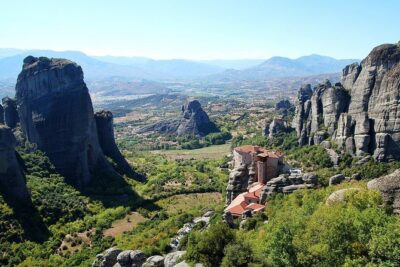
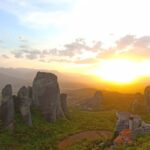
Meteora is famous for monasteries perched on narrow rock pillars, but the roads and parking areas can make the place feel like a sightseeing circuit. This outing takes you onto the routes people used long before minibuses and tour coaches arrived.
From the trail, you see how the monasteries fit into the rock formations. You also notice the practical side of religious life here: steps cut into stone, wooden stair sections, and paths built to move food, tools, and other daily supplies.
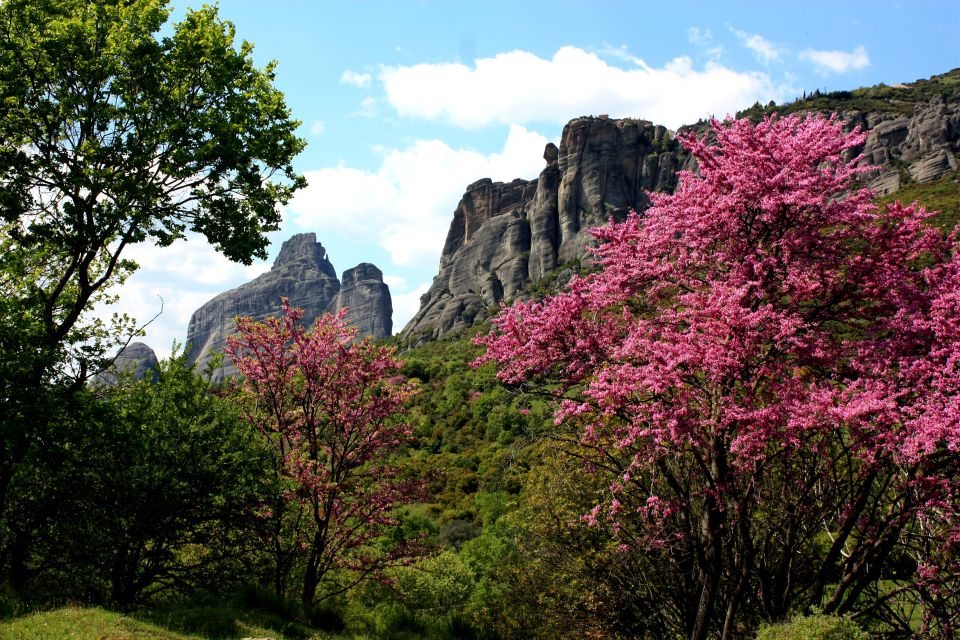
The forest adds another layer. Instead of spending the whole morning in exposed sun beside a road, you pass through wooded sections beneath the cliffs. The route still includes climbs, but the setting changes often enough to keep the walk interesting.
I especially like the balance between nature and human history. You are not simply walking to a viewpoint. You are following a network of paths tied to monks, local resistance fighters, and traditions that are still visible today.
You can also read our reviews of more hiking tours in Kalabaka
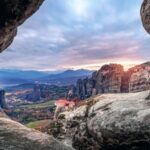
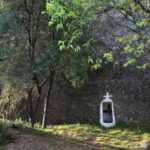
From Kalambaka to the Kastraki trailhead
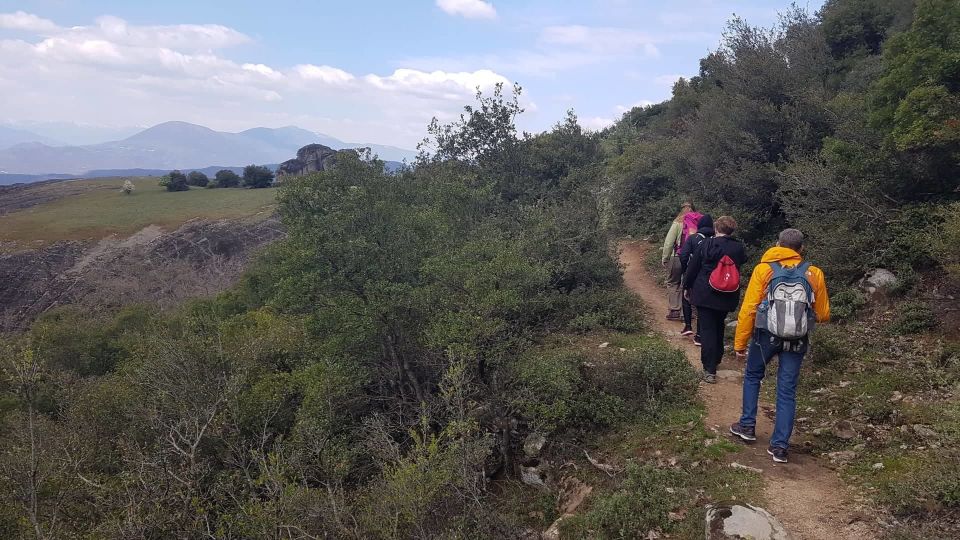
The day begins with pickup from your accommodation in Kalambaka or Kastraki. The list of pickup points is broad, covering hotels and guesthouses throughout both towns, but you should be ready in the reception area at least 10 minutes before the stated meeting time.
The drive to Kastraki takes about 20 minutes in a luxury minibus. Wi-Fi is available onboard, and bottled water is included. This short transfer matters because it saves you from arranging a taxi to the trailhead and leaves the walking time for the actual Meteora route.
The group limit of 12 is useful here. You are not joining a large coach group that must keep everyone packed together. A smaller party also makes it easier to ask questions about the rock formations, local customs, and the buildings you pass.
The activity is offered in English, with a certified mountain guide. Several guides associated with this route, including Christos and Harry, have been praised for combining local stories with geology, history, and art. Harry has also led tours in Italian and Spanish, although the advertised tour language is English.
Through the forest to Ypapanti
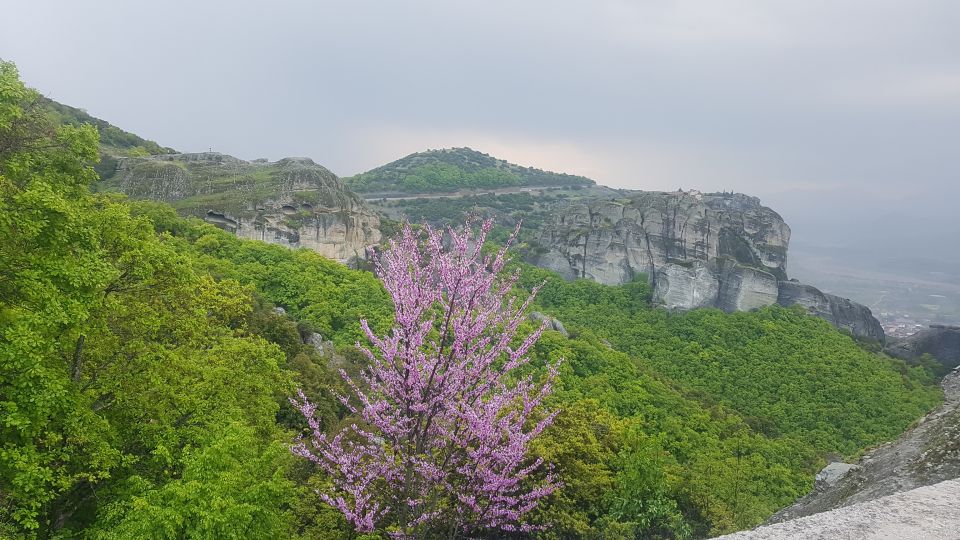
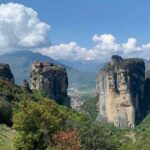
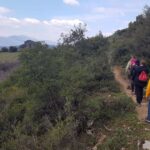
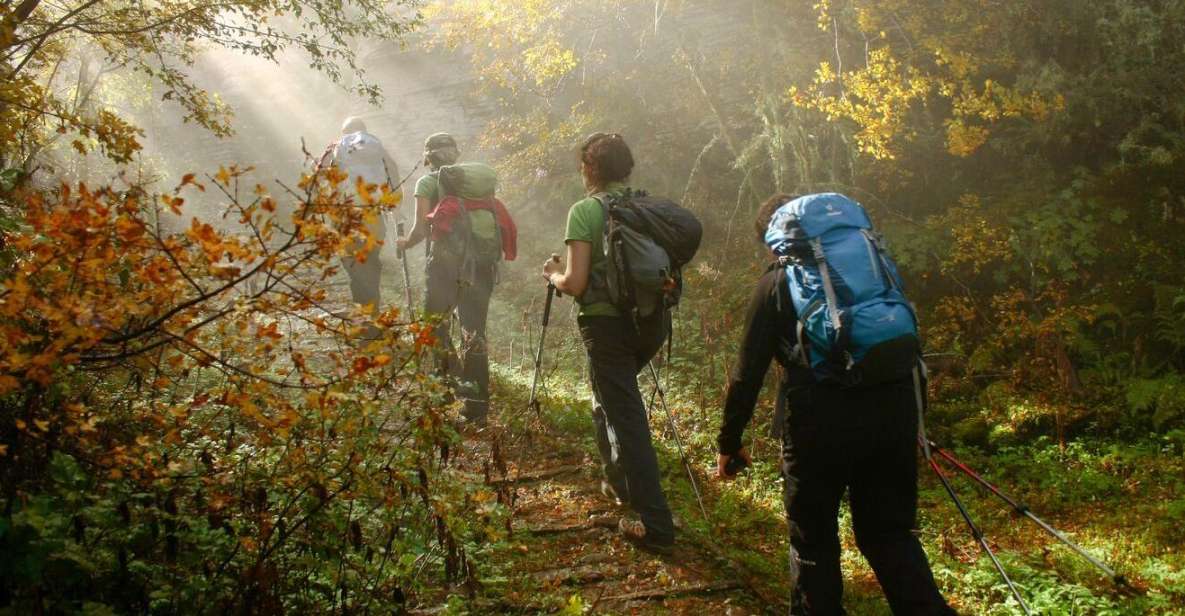
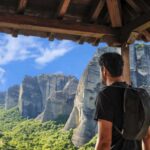
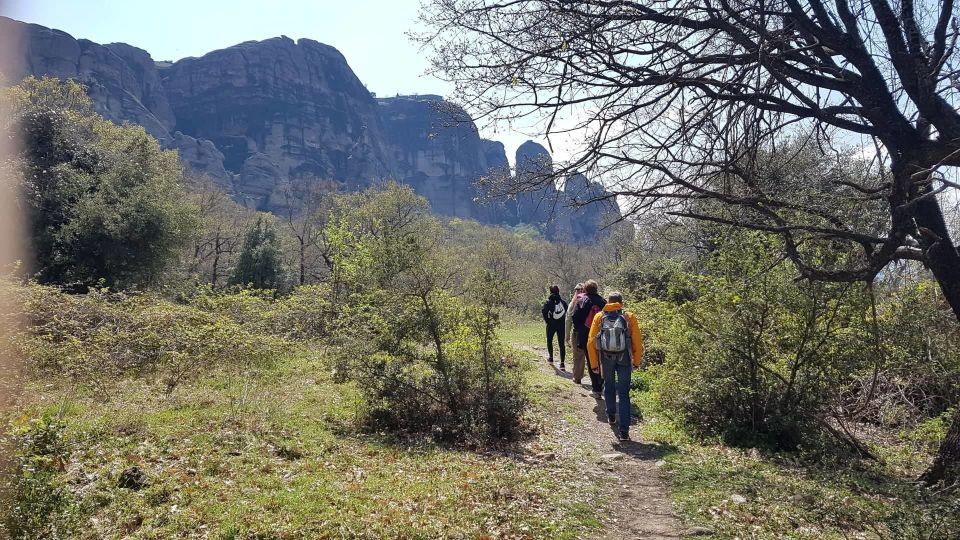
Once the hike begins, the path enters the forest below the Meteora rocks. This first section gives you a useful sense of scale. From below, the stone towers rise sharply above the trees, and the monasteries can appear tucked into places that seem difficult to reach.
The route leads to the Monastery of the Visitation of Jesus, also known as Ypapanti. It was abandoned and later restored, giving the stop a different feel from the larger monasteries higher on the rocks. You get a look at a religious site that is quieter and less polished than the main attractions.
This is one of the strongest reasons to choose the hike. The standard road route takes you toward the famous monasteries, but it does not offer the same contact with the old approach paths. Here, your guide can explain how people once reached these buildings without modern roads.
The path includes human-made features such as carved stairs and wooden stairs. They are not decorative additions. They show how the community adapted the rock to make transport possible. You may also find uneven footing and uphill stretches, so comfortable shoes are essential.
Rebel stories at Papathymios Vlahavas
The walk continues to the statue of Papathymios Vlahavas, a fighter during the rebellion against Ottoman rule. This stop brings local political history into a setting that can otherwise seem focused only on monks and monasteries.
Your guide provides the context, helping you connect the monument with the wider struggles of the region. The value here is not a long formal lecture. It is the way the story appears along the path, tied to a real place rather than presented as an isolated museum fact.
You then reach St Dimitrios Church. The church was used as a headquarters by rebels during the Greek-Turkish war and was destroyed by the Ottomans in the early 18th century.
Do not expect a perfectly preserved building. Its damaged state is part of what makes the stop meaningful. The remains show that Meteora was not only a place of retreat and worship. It was also part of the military and political life of Thessaly.
Climbing toward Great Meteoron and Varlaam

From the lower sites, the route climbs toward the upper rocks and the impressive monasteries of Great Meteoron and Varlaam. This is where the word easy needs a little explanation.
The activity is officially rated easy and is designed for families, but two important details soften that claim. The distance is about 8 km, and the route includes uphill walking and some trekking sections. People who walk regularly may find it comfortable. If you are not used to hiking, you could find it light to moderate instead.
The pace can vary with the group and the guide. One particularly useful aspect of a small guided outing is the chance to discuss the route according to your ability. That does not remove the climbs, but it can make the experience less hurried.
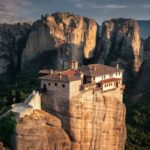
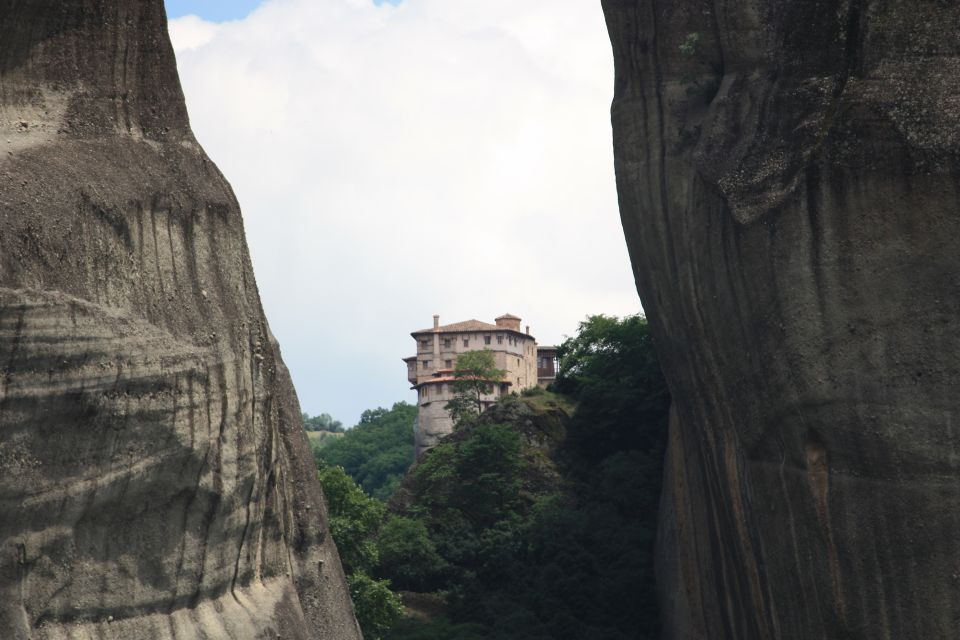
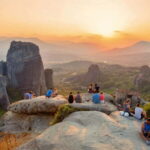
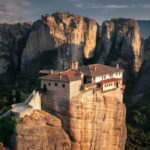
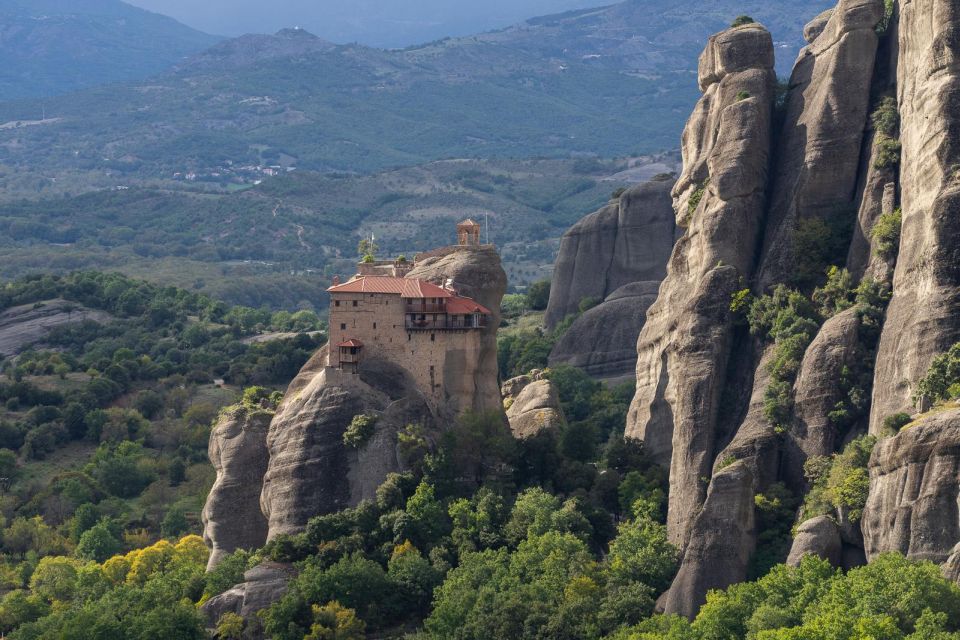
The approach to the monasteries is the visual high point. Great Meteoron and Varlaam show why these sites were placed so high above the surrounding area. You see the buildings in relation to the cliffs, not just as isolated entrances reached by road.
Keep in mind that the €5 monastery entrance fee is not included. The supplied information does not promise an interior visit to both monasteries, so you should confirm the exact visiting plan at booking or with your guide. If you do enter, monastery dress rules apply and payment must be made without a credit card.
St George Mandilas Cave and a living tradition
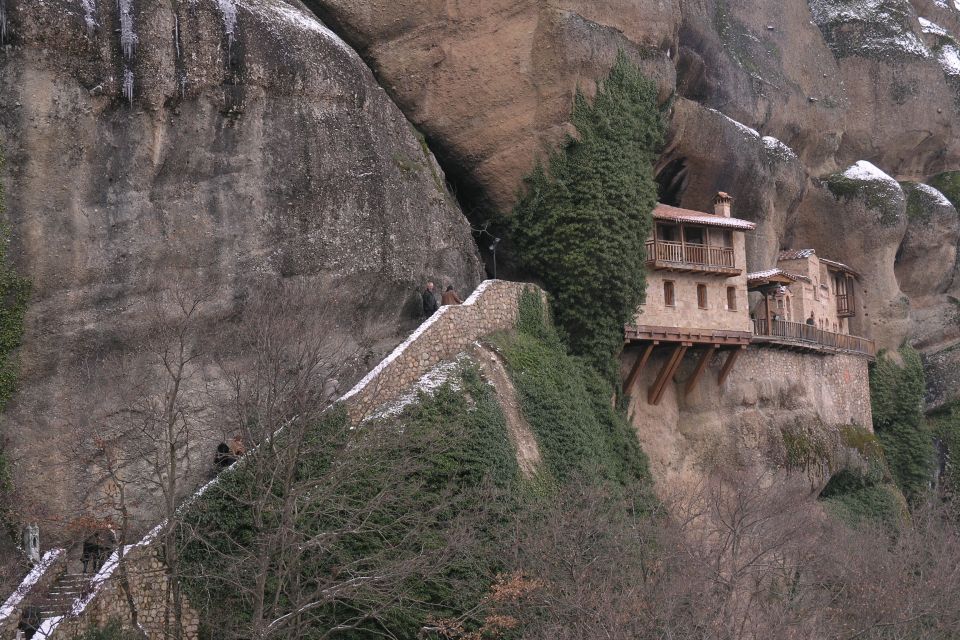
The descent toward Kastraki takes you near the cave of St George Mandilas. This is one of Meteora’s most distinctive stops because of the yearly tradition connected with it.
People climb to the cave to hang handkerchiefs, following a custom that remains part of local religious life. The handkerchiefs add a small, human detail to the severe rock setting. It is the sort of sight you would likely miss if you only visited the main monastery courtyards.
The cave also gives the guide a chance to explain how local belief, physical courage, and the shape of the rocks come together. You are not expected to make the difficult climb to hang a handkerchief yourself. The route passes near the cave as it descends toward Kastraki.
After this section, the walk returns to Kastraki, where the minibus takes you back to your accommodation. The full guided activity lasts 4.5 hours, including the planned transfer and walking program.
How hard is the 8-kilometer hike?
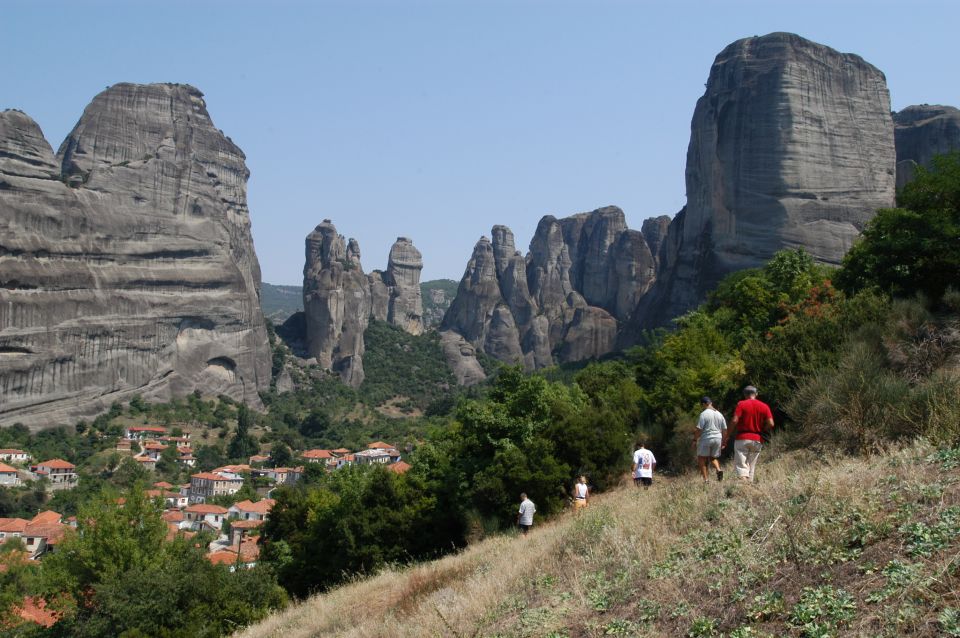
I would not book this as a casual sightseeing outing. It is family-friendly in the sense that it does not require advanced mountaineering skills, but you still need to walk for several hours and handle uphill ground.
The surface can include old paths, carved stairs, and wooden stair sections. These features are part of the appeal, but they can also make the route feel less predictable than a paved promenade.
You should be reasonably comfortable with:
- Walking about 8 km
- Climbing uphill sections
- Using uneven historic paths
- Spending several hours outdoors
- Managing warm or damp conditions
The activity is not suitable for wheelchair users or people with back or heart problems. If you have limited walking ability, ask the provider for a precise description of current trail conditions before booking.
Wear sturdy, comfortable shoes and light, comfortable clothing. A raincoat and hat are recommended, and a second change of clothes makes sense if you expect to sweat. Bring a small backpack and water, even though bottled water is supplied.
What to wear for the monasteries
Meteora’s monasteries follow a strict dress code. Men must wear trousers and a shirt or T-shirt with sleeves. Women must wear a long skirt.
This rule is easy to overlook because the hike itself calls for practical outdoor clothing. Plan an outfit that works for both. A long skirt can be carried in your backpack and put on before entering a monastery, but the information provided does not guarantee that every stop will offer clothing for visitors.
You should also bring a hat or skullcap for sun protection. Animals are not allowed inside the monasteries.
Because the entrance fee is €5 and credit cards are not accepted for it, carry enough cash. The tour price includes taxes and services, but not monastery entry or travel insurance.
What the $49 price really covers
At $49 per person, this is a fair price if you want transport, a certified guide, and a planned route without hiring a private taxi or working out the old paths yourself.
The price includes round-trip transportation from your Kalambaka or Kastraki accommodation, the English-speaking mountain guide, bottled water, onboard Wi-Fi, taxes, and services. For a 4.5-hour outing, the transport and guiding make the cost easier to justify than a simple self-guided walk.
You are paying mainly for access and interpretation. The guide knows how the paths connect, where the lesser-known sites are, and how to explain the area beyond the postcard views. That matters at Meteora, where a rock, ruined church, or stairway can have a story that is easy to miss.
The value is lower if your priority is a long interior visit inside several monasteries. The tour focuses on the route and outdoor sights, and the €5 entrance fee is separate. For a first look at Meteora that combines walking, history, and scenery, the price is sensible.
Who will enjoy this experience most?
I would choose this hike if you want to see Meteora at walking pace and prefer local stories to a quick sequence of roadside stops. It suits families with active older children, couples, solo visitors, and anyone who wants a small group rather than a full coach.
It is also a good choice if you are staying overnight in Kalambaka or Kastraki. The pickup service keeps the morning simple, and the 4.5-hour schedule leaves time for another activity or a relaxed meal afterward.
I would be more cautious if you dislike climbs, have health concerns, or want a fully accessible route. The label easy should not be treated as a promise of flat ground. One departure had to change plans because of rain, replacing the walk with a minibus outing that visited three monasteries in about three hours. That shows the provider can adapt, but weather can change the character of the day.
Practical booking advice
Free cancellation is available up to 24 hours before departure, and you can reserve now and pay later. Starting times vary, so check availability for your date.
Pickup is included from accommodation in Kalambaka or Kastraki. Be ready at reception at least 10 minutes early, since the route uses multiple pickup points.
The experience has a 4.9 rating from 16 reviews, with especially strong praise for the guides and the less crowded route. The most useful takeaway is not simply that the activity is popular. It is that the guide can make a major difference, particularly at places such as Ypapanti, St Dimitrios, and St George Mandilas Cave.
Should you book the Meteora Easy Hiking Adventure?
Book it if you want Meteora’s old footpaths, local history, forest walking, and unusual sites in one half-day outing. The small group, hotel pickup, and guide make it a practical choice at $49.
Do not book it expecting a flat family stroll or a guaranteed interior visit to several monasteries. Bring proper shoes, cash, weather protection, and clothing that meets monastery rules. If you accept the uphill sections, this is a strong way to see Meteora as a lived-in historic place rather than only a row of famous buildings.
FAQ
How long does the Meteora hiking tour last?
The activity lasts 4.5 hours, including transportation and the guided Meteora experience.
How far is the walking route?
The walking distance is about 8 km.
Is the hike suitable for families?
It is described as suitable for the whole family and has an easy difficulty rating. However, the route includes uphill sections, and some people may find it closer to light or moderate hiking.
Where does pickup take place?
Pickup is available from your accommodation in Kalambaka or Kastraki. You should wait at the reception area at least 10 minutes before the meeting time.
Is transportation included?
Yes. Round-trip transportation from accommodation in Kalambaka or Kastraki is included, with about 20 minutes of travel to the Kastraki trailhead.
What language is the tour conducted in?
The live tour guide speaks English.
Are monastery entrance fees included?
No. The monastery entrance fee costs €5 and must be paid separately.
What should I wear to enter the monasteries?
Men must wear trousers and a shirt or T-shirt with sleeves. Women must wear a long skirt. Comfortable walking shoes and clothes are also recommended.
Can I cancel the booking?
Yes. You can cancel up to 24 hours in advance for a full refund. Reserve now and pay later is also available.