REVIEW · ATHENS
Morning Walking Tour to the Acropolis and Acropolis Museum
Book on Viator →Operated by Keytours - Greece · Bookable on Viator
The best part of this four-hour Athens tour is the pairing of the Acropolis hill and Acropolis Museum. You first see the monuments in their dramatic setting, then examine ancient sculptures and objects indoors, where the details make much more sense. I like the personal audio device, which helps you hear the guide over city noise, and I like the small-group format, listed at no more than 18 people, though the booking details also mention a possible maximum of 20.
I also like that the tour gives you a clear morning plan and covers the essential monuments with a licensed guide. Maria and Nikos receive special praise for warm, clear storytelling. The main concern is the climb: reaching the Acropolis can be hard work, especially in summer, and one serious complaint involved a last-minute schedule change that was not properly communicated.
In This Review
- Key points at a glance
- Why the Acropolis and museum belong together
- Starting at Athanasiou Diakou 26
- Walking up the Acropolis hill
- The Parthenon, Athena Nike, and the Erechtheion
- A useful pause from the ancient stones
- What $35.39 really buys you
- Timing, heat, and the physical effort
- The communication issue to take seriously
- Who will get the most from this tour
- Should you book the Acropolis and museum tour?
- FAQ
- How long does the tour last?
- Where does the tour begin?
- Where does the tour finish?
- Are entrance tickets included?
- What monuments are visited on the Acropolis?
- Is the tour physically demanding?
- Can I cancel for a full refund?
Key points at a glance
- Two major sights in four hours: The tour links the Acropolis and Acropolis Museum without making you arrange separate visits.
- A strong guide-led format: Maria and Nikos are praised for clear explanations, useful detail, humor, and answers to questions.
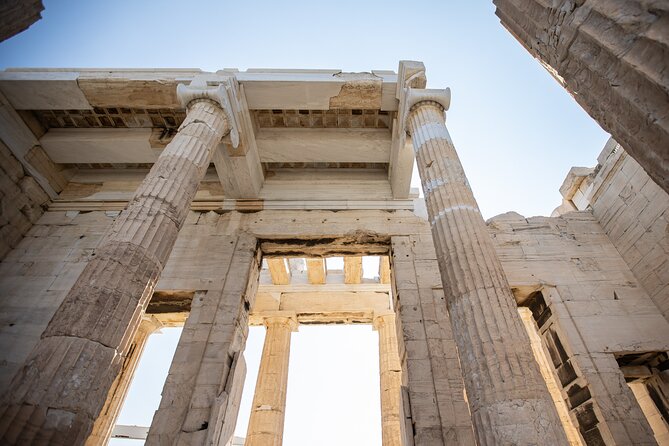
- The Acropolis takes 2.5 hours: You see the Parthenon, Propylaea, Erechtheion, and Temple of Athena Nike.
- The museum takes 90 minutes: The guide uses the exhibits to explain daily life and art in ancient Athens.
- Budget carefully: The advertised tour price is $35.39 per person, while admission may cost another $35 if you choose the option without tickets.
- Expect a demanding walk: The uphill route is not recommended for people with mobility impairments and requires moderate physical fitness.
Why the Acropolis and museum belong together

The Acropolis can look simple from a distance: white marble, broken columns, and a famous temple above Athens. On the hill, though, the site is full of separate buildings, old religious traditions, political meaning, and architectural details that are easy to miss when you walk alone.
That is where a guide earns the fee. You do not just look at the Parthenon and take a photo. You get help sorting out what each structure was for, how the monuments relate to one another, and why the Acropolis mattered to ancient Athenians.
The museum completes the picture. After seeing the monuments outside, you can look closely at sculpture and archaeological finds in a calmer setting. The outdoor site gives you scale and setting. The museum gives you detail and context.
I consider this pairing a smart use of a morning in Athens, especially if you have limited time. Four hours is long enough to go beyond a quick photo stop, but not so long that the day becomes a history lecture with no breathing room.
You can also read our reviews of more walking tours in Athens



Starting at Athanasiou Diakou 26
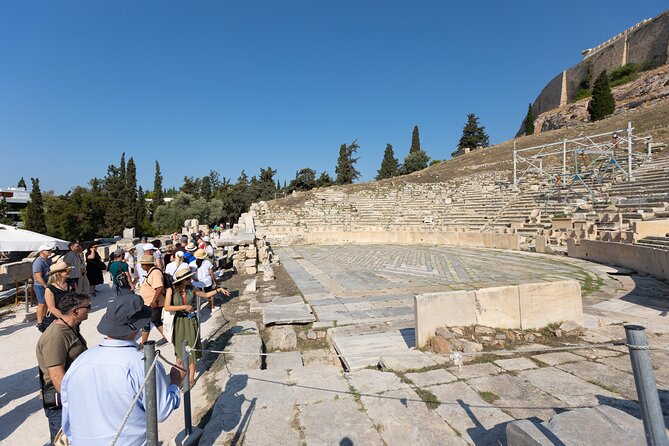
The tour begins at Athanasiou Diakou 26 in Athens, near public transportation. That is useful because you can reach the meeting point without arranging a private transfer. Hotel pickup and drop-off are not included, so you are responsible for getting there on time.
The meeting point matters more than usual here. The tour has a fixed departure and enters the Acropolis as a group. One booking went badly after the start time was moved 30 minutes earlier without proper notice, leaving the customer behind. The lesson is simple: check your messages and booking details shortly before the tour, and confirm the departure time directly if anything looks unclear.
The published start time can vary by booking date, but the experience is described as a morning tour. Arrive early. Ten minutes may not be enough if the meeting point is busy or if the group has already gathered.
Walking up the Acropolis hill
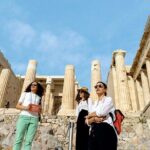
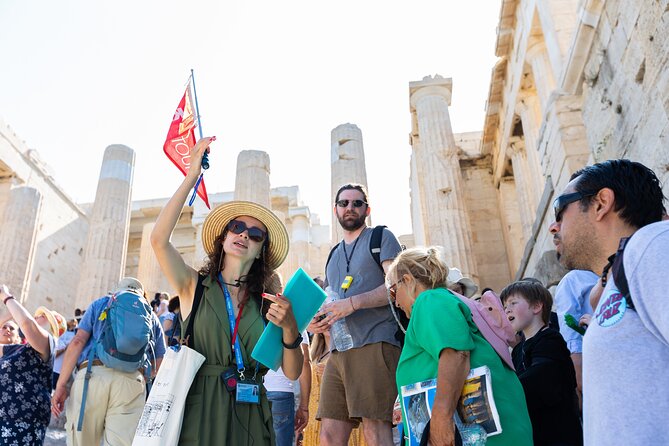
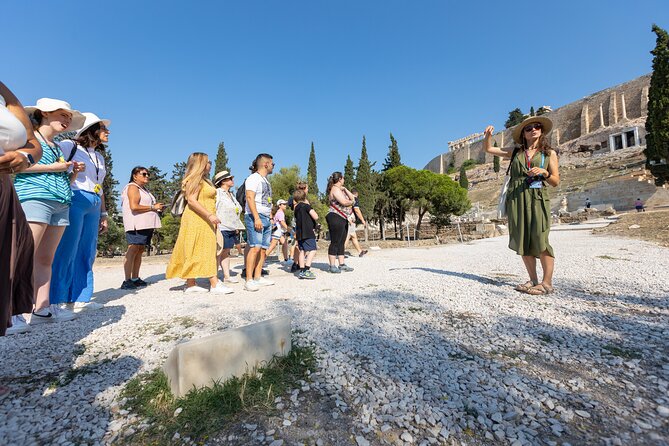
The first section lasts about 2 hours and 30 minutes. You walk up the Acropolis hill with the guide and visit the main monuments, including the Propylaea Gate, Temple of Athena Nike, Erechtheion, and Parthenon.
This is not a flat city stroll. The climb can be strenuous, especially under the summer sun. The description calls for moderate physical fitness and says the ascent may require intense effort. You should be ready for uphill walking, uneven surfaces, and time spent standing.
The reward is the setting. The Acropolis is not a collection of objects behind glass. It is a high sacred site overlooking Athens, and the view helps explain its importance. One family particularly enjoyed the broad view from the Parthenon area, including a 360-degree look over the city.
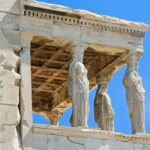
Your guide can also help you read the hill as a connected place rather than a series of famous names. The Propylaea frames the approach. The Temple of Athena Nike occupies a smaller but striking position near the entrance. The Erechtheion is known for its unusual design and sculpted female figures. The Parthenon dominates the hill, but it is only one part of the larger complex.
A personal audio device is supplied so you can hear the narration while walking. This is a practical feature in a group. You do not have to press close to the guide or worry as much about losing the explanation when the group spreads out.
The Parthenon, Athena Nike, and the Erechtheion
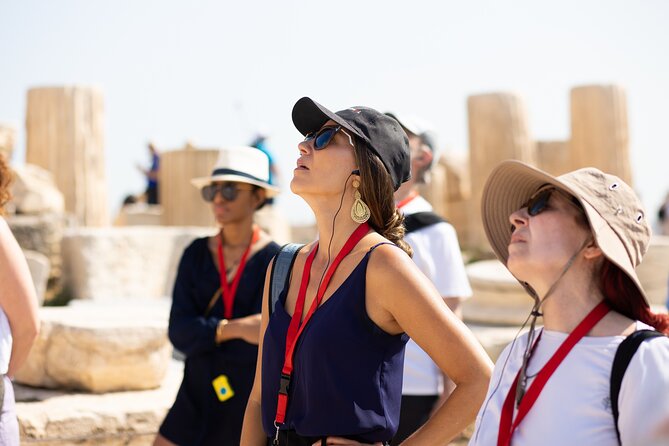
The Parthenon is the obvious star, but a good visit should not stop at its facade. The guide’s role is to point your attention toward the design, the surrounding structures, and the meaning of the hill as a whole.
The Temple of Athena Nike is smaller, but its position near the entrance makes it an important part of the approach. The Erechtheion adds another layer, with its distinctive form and famous sculpted figures. The Propylaea Gate gives the route a grand entrance before you reach the central monuments.
The supplied information does not promise a private route or special access, so you should expect to visit the public areas with your group. The benefit is interpretation rather than exclusivity. You are paying for a guide who can connect what you see with stories and facts that are easy to miss on your own.
The guide quality matters here. Nikos is praised for careful explanations and for answering questions. Another guide, Maria, is singled out for making the experience especially informative and enjoyable. A separate account describes a guide who balanced detail with humor and anecdotes. Those comments suggest the best part of the tour is likely to be the human explanation, not simply admission to the site.
A useful pause from the ancient stones
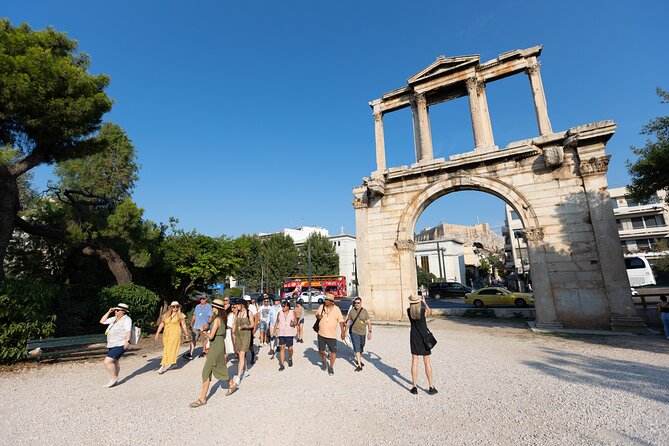
The Acropolis section is active and exposed. The museum gives you a change of pace. It follows the hill visit and lasts about 1 hour and 30 minutes.
Inside, the guide discusses the collections and the lives of ancient Athenians while taking you through a large number of exhibits. The museum is not treated as an afterthought. That matters because the outdoor monuments are incomplete, weathered, and often difficult to interpret from ground level.
The museum also lets you look at sculpture more closely. You can study details that are easy to miss outside, compare objects, and see how ancient art fits into the wider story of Athens. One family especially enjoyed the ancient sculptures and the Lego model in the museum. That last detail makes the visit appealing for children, since a model can make the Acropolis easier to understand than another long explanation.
The museum section may suit you if you want more than postcard views. It is also a good reason to choose this tour over an Acropolis-only walk. The hill provides the grand experience. The museum helps fill in the missing pieces.
Still, 90 minutes is not enough for every room and every exhibit. You will get an organized introduction rather than unlimited time for independent study. If you are an art specialist or want to examine the collection at your own pace, you may prefer to return on your own after the guided visit.
You can also read our reviews of more museum experiences in Athens

What $35.39 really buys you
The advertised price is $35.39 per person. At first glance, that is a reasonable fee for four hours of guided sightseeing in Athens, particularly with a licensed guide and audio equipment.
Pay close attention to the ticket option, though. Admission is not automatically included in every version. The information provided lists the Acropolis and Acropolis Museum admission fee at $35 per person, and says entrance fees are included only if that option is selected.
If you choose the option without tickets, your combined cost could be about $70.39 per person before any other applicable charges. You also need to purchase the Acropolis ticket before the activity at the tour’s departure time slot so you can enter with the group. This is not a detail to leave until the last minute.
The value depends on what you want from the visit. If you are comfortable reading signs, planning the route, and managing timed entry on your own, a guide may not be essential. If you want the major monuments and museum explained in one morning, the fee buys structure, local interpretation, and less guesswork.
The small group adds value too. A maximum of 18 people is advertised, while the additional details allow up to 20. That is still more manageable than a large coach group, but you should not expect a private tour.
Timing, heat, and the physical effort
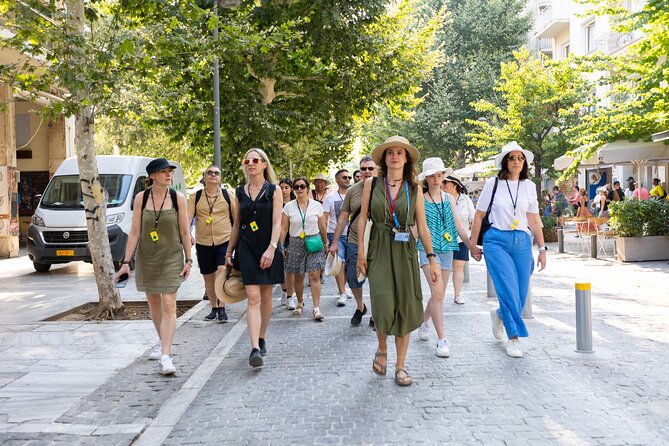
A morning departure is the right choice for this site. The climb is demanding, and summer heat can make it harder. Starting early gives you a better chance of doing the uphill section before the day becomes most tiring.
Wear practical walking shoes and plan for a morning on your feet. The tour is described as moderate difficulty, and it is not recommended for people with mobility impairments. The information does not promise special assistance, an accessible route, or hotel transport.
You should also keep your schedule flexible after the tour. The planned duration is about four hours, but busy sites and group movement can affect the finish time. The official endpoint is the Acropolis Museum at Dionysiou Areopagitou 15, so you finish in a useful central location rather than returning to the starting point.
Because the tour ends at the museum, you may want to remain in the area afterward if your schedule allows. The experience itself includes a guided museum visit, but the supplied details do not state that you receive extra free time inside afterward.
The communication issue to take seriously
Most of the available feedback is strongly positive about the guides and the content. The one major negative experience concerns scheduling, not the Acropolis or museum themselves.
In that case, the departure was moved earlier by half an hour, and the person at the meeting point said the group had already left. The customer reported that the operator had not sent notice despite having a phone number, and that the response afterward was dismissive. A refund was eventually provided, but the lost morning was the real cost.
I would not ignore this point. Tour operators sometimes adjust departure times, and a missed Acropolis entry can ruin a day because timed access matters. Check your confirmation carefully, monitor messages before the tour, and contact the operator if you see any change. If you are arriving from a cruise, airport, or another morning activity, leave a generous buffer.
This issue does not erase the strong feedback about Maria, Nikos, and the other guides. It does mean that communication deserves the same attention as the itinerary when you decide how much risk you are willing to take with a tightly scheduled visit.
Who will get the most from this tour
I would choose this tour if you are visiting Athens for the first time and want the two essential Acropolis stops handled in one morning. It suits you especially well if ancient sites make more sense when someone explains the stories, buildings, and objects as you see them.
Families may also like the format. The walk is demanding, but the museum adds visual variety, and the Lego model was a clear hit with at least one family. The audio device should help children and adults follow along without standing shoulder to shoulder with the guide.
This is less suitable if you have mobility limits, dislike uphill walking, or want a slow museum visit with lots of independent time. It is also not ideal if you need a guaranteed private experience or cannot tolerate any uncertainty around a fixed morning departure.
For solo visitors and couples, the small group can be a good middle ground. You get a guide and a social setting without the scale of a big bus excursion. For serious archaeology fans, I would treat the tour as an introduction, then consider returning to the museum or Acropolis independently if your schedule permits.
Should you book the Acropolis and museum tour?
Book it if you want clear guidance, two major sights, and a well-planned morning rather than a self-guided visit. The strongest reasons are the guide-led storytelling, the personal audio device, and the smart progression from monuments to museum objects.
Before paying, confirm whether your selected option includes both entrance fees. Also check the exact start time on the day before departure and arrive early at Athanasiou Diakou 26.
I would pass if the uphill climb is a serious concern or if you need full control over your pace. For most reasonably fit first-time visitors, though, this is a practical way to make sense of Athens’ most important ancient site, provided you handle the ticket and timing details carefully.
FAQ
How long does the tour last?
The experience lasts approximately four hours. About 2 hours and 30 minutes are planned for the Acropolis, followed by about 1 hour and 30 minutes at the Acropolis Museum.
Where does the tour begin?
The meeting point is Athanasiou Diakou 26, Athina 117 43, Greece. The area is near public transportation.
Where does the tour finish?
The tour ends at the Acropolis Museum, Dionysiou Areopagitou 15, Athina 117 42, Greece.
Are entrance tickets included?
Entrance fees are included only if you select the option with tickets. If you choose the option without tickets, the listed admission fee for the Acropolis and Acropolis Museum is $35 per person.
What monuments are visited on the Acropolis?
The route includes the Parthenon, Temple of Athena Nike, Erechtheion, and Propylaea Gate, along with the other monuments on the Acropolis hill.
Is the tour physically demanding?
Yes. The ascent to the Acropolis is described as moderate difficulty and especially demanding in summer. You should have a moderate level of physical fitness. The tour is not recommended for people with mobility impairments.
Can I cancel for a full refund?
You can cancel for a full refund up to 24 hours before the experience begins. Cancellations or changes made less than 24 hours before the start time are not accepted for a refund.