Athens feels different when you think while you walk. This philosophical walking tour uses the city’s key landmarks to connect ancient ideas with modern psychology—guided by Lampros. You’ll hear speakers and see multimedia as you move, so it’s more than statues-at-a-distance.
I especially love two things. First, the tour does a rare job of making sites like the Theatre of Dionysus and the Prison of Socrates feel like living ideas, not dead facts. Second, it’s built for conversation in a private group up to six, with pacing that doesn’t ignore comfort in hot weather. One heads-up: if you only want quick photo stops, this will feel more like a thinking class than a sightseeing checklist.
In This Review
- Quick Key Points Before You Go
- Philosophy in the Streets: How Lampros Turns Athens Into a Thinking Exercise
- Route Highlights From Dionysus to Anafiotika: The Athens Stops With Real Meaning
- Theatre of Dionysus Eleuthereus: Tragedy as a Mental Reset
- Herod Atticus Odeon: Personality Masks and the Theater of Self
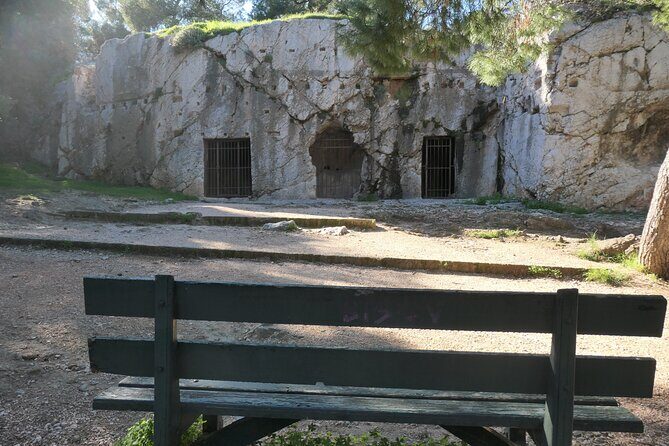
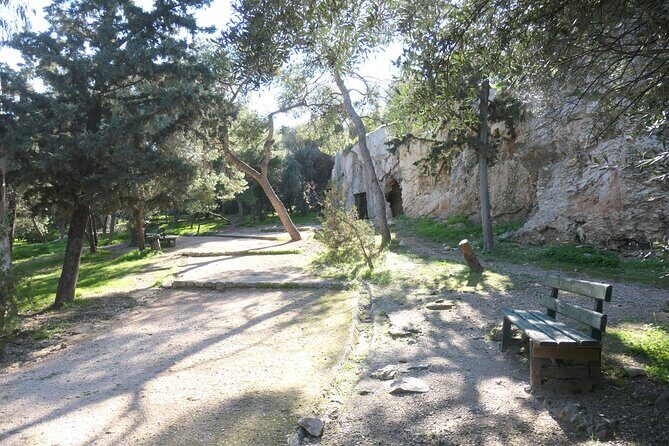
- Prison of Socrates: Plato’s Cave and the Way We See Reality
- Eglise D’Agios Dimitrios Loumbardiaris: A Democracy Thread in Unexpected Places
- Philopappos Monument: Happiness Lessons With a View That Stops You
- Pnyx: Aristotle, Eudaimonia, and the Secret Spot of Socrates
- Keramikos Archaeological Site: Epicurean Happiness and the Garden Mindset
- The Stoicism Place and the “Most Beautiful Street in Athens”
- Roman Agora: Stoicism as Daily Life, Plus a Meteorology Footnote
- Lysikratous Square and Anafiotika: Apollo, Dionysus, and the Cycladic Feeling
- Views, Comfort, and Pacing: What 2 Hours 30 Minutes Really Means
- Price and Value: Is $90.11 Worth a Private Athens Philosophy Walk?
- Language, Tickets, and Where to Meet (So You Don’t Waste Time)
- Who Should Book This Tour in Athens?
- Should You Book This Philosophical Tour in Athens?
- FAQ
- FAQ
- How long is the Philosophical Tour in Athens?
- What time does the tour start, and where does it begin?
- How much does it cost per person?
- Is this tour private, and how many people are in a group?
- What language is the tour offered in?
- Is a mobile ticket used?
- Are admission tickets needed for the stops?
- Are service animals allowed?
- What happens if the weather is poor?
- What is the cancellation policy?
Quick Key Points Before You Go
- Lampros connects philosophy to modern mind-set using psychology-style framing and short videos.
- You move site-to-site on foot, standing in places tied to tragedy, democracy, and daily ethics.
- Big viewpoints are part of the lesson, especially from Philopappos Monument and the Pnyx.
- It’s private for groups up to six, so you get more back-and-forth than a large bus tour.
- Breaks and shade matter here, which makes a 2.5-hour walk more doable in Athens heat.
- You get multiple schools of thought on happiness, from Plato and Socrates to Epicurus and the Stoics.
Philosophy in the Streets: How Lampros Turns Athens Into a Thinking Exercise
This tour has a simple idea: walk the city like it’s a philosophy text. Not in a stuffy way. More like, stand where the questions were asked, then ask new ones using the way your mind works today.
Lampros runs it with the kind of energy that makes you pay attention. In real-world terms, that matters. Athens is big, hot, and easy to wander through on autopilot. Here, you get prompted to think—then you get a view, a story, and a reason to remember what you just heard.
You’re also not stuck with one learning style. The route uses multimedia presentations along the way, and the talk isn’t only verbal. That helps if you’re someone who absorbs better by seeing an idea mapped out rather than just hearing it once.
You can also read our reviews of more tours and experiences in Athens.


Route Highlights From Dionysus to Anafiotika: The Athens Stops With Real Meaning
The best part is how each location supports a specific theme. You’re not just collecting names. You’re building a mental map of how ideas spread through public life—plays, politics, education, and ethics.
Theatre of Dionysus Eleuthereus: Tragedy as a Mental Reset
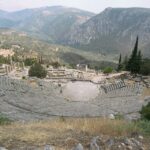
You start outside the Theatre of Dionysus Eleuthereus, described as the birthplace of tragedy. The focus isn’t only on theater history. The talk frames tragic plays as a kind of cure for “easy judgment”—a prompt to slow down and see complexity instead of snapping to conclusions.
This is where the tour stretches into modern thought. You’ll hear Carl Jung mentioned in connection with how tragedy can help people become more their best selves. The guide also brings in ideas tied to Buddhism and evolution psychology to the theme of how we think and judge.
Even if you’re not a philosophy person, it works because it’s practical: you’re watching for how your mind reacts—before you have the words to describe it.
Herod Atticus Odeon: Personality Masks and the Theater of Self
Next comes the Herod Atticus Odeon, famous as one of the most well-known open-air theaters. The message here leans into personality: persona, animus, and anima—using a personality lens to talk about how identity shifts depending on role, context, and relationship.
The setting matters. When you stand in an old performance space, it’s easier to accept that “self” can be acted, practiced, and interpreted. That theme carries through the rest of the walk.
Prison of Socrates: Plato’s Cave and the Way We See Reality
At the Prison of Socrates, the tour pivots to Plato’s philosophy and the allegory of the cave. This is one of the stops where the tour feels like it’s training your attention.
You’ll be encouraged to think about what you treat as real, what you ignore, and how comfort can turn into a cage. That’s a big ask for a 20-minute segment—but the payoff is that you leave with a tool you can use the rest of your trip (and after it).
- All Day Cruise -3 Islands to Agistri,Moni, Aegina with lunch and drinks included
★ 5.0 · 4,958 reviews




Eglise D’Agios Dimitrios Loumbardiaris: A Democracy Thread in Unexpected Places
The route then includes Eglise D’Agios Dimitrios Loumbardiaris, framed around the birth of democracy. It’s a reminder that Athens wasn’t only monuments and official ruins. Ideas like democracy lived in a living city, with layers of history stacked over time.
This stop is also a good example of how the tour handles transitions. You go from philosophy to civic life without it turning into a lecture that forgets you’re standing outside in real weather.
Philopappos Monument: Happiness Lessons With a View That Stops You
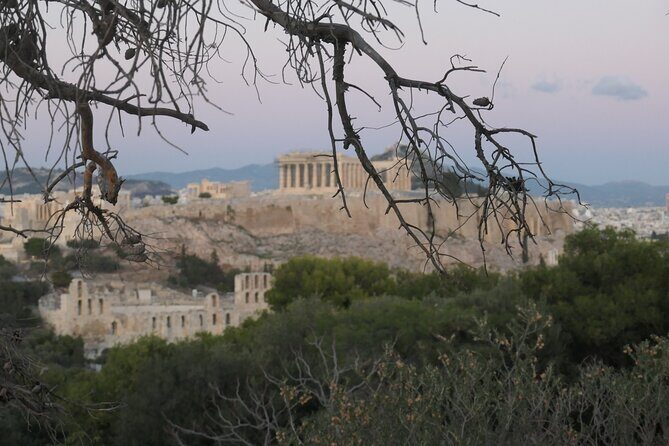
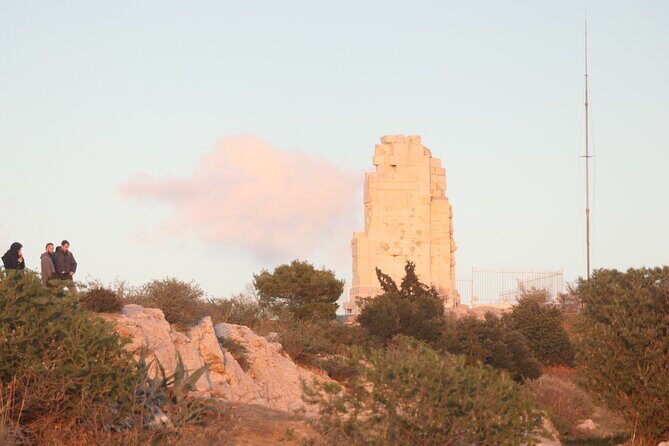
At Philopappos Monument, you get one of the best perks: a viewpoint that frames the Parthenon and the Acropolis. It’s a “stop, breathe, look, then think” moment.
The tour ties the view to a recipe of happiness attributed to Plato and Socrates. The practical effect is that the lesson sticks better because your brain already attached it to a strong visual memory.
Pnyx: Aristotle, Eudaimonia, and the Secret Spot of Socrates
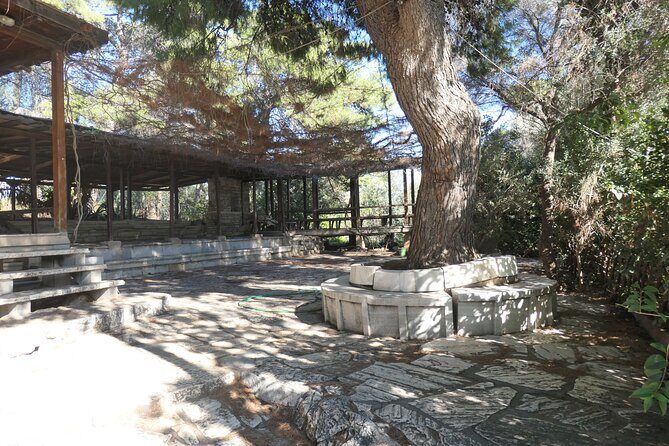
Then it’s Pnyx, described as the assembly area of Athenian citizens and one of the best views in Athens. The tour connects the place to Aristotle’s perspective of eudaimonia—blissful well-being—and again brings up Socrates via a described secret place.
This is also where you feel the civic weight of Athens. Even if you don’t know the details, standing on a place meant for public speech makes the idea of living in dialogue feel concrete.
Keramikos Archaeological Site: Epicurean Happiness and the Garden Mindset
At Keramikos Archaeological Site, the mood shifts. It’s the ancient cemetery of Athens, and the tour links it to Epicurean ideas—an Epicurus recipe of happiness connected to a notion of Epicurus’s garden.
This part works for people who like philosophy that isn’t only about big ideals. The Epicurean angle nudges toward how you build a calmer life: your habits, your attention, your relationships with the world.
The Stoicism Place and the “Most Beautiful Street in Athens”
Between stops, the walk includes a thematic area where the tour points to the place stoicism was born, plus the idea that philosophy, theater, and democracy all took shape in Athens and were put into practice.
There’s also a stop described as the most beautiful street in Athens. It might sound poetic, but it’s doing real work for the tour. It breaks up the heavier intellectual moments with atmosphere—so your brain doesn’t just grind through concepts.
Roman Agora: Stoicism as Daily Life, Plus a Meteorology Footnote
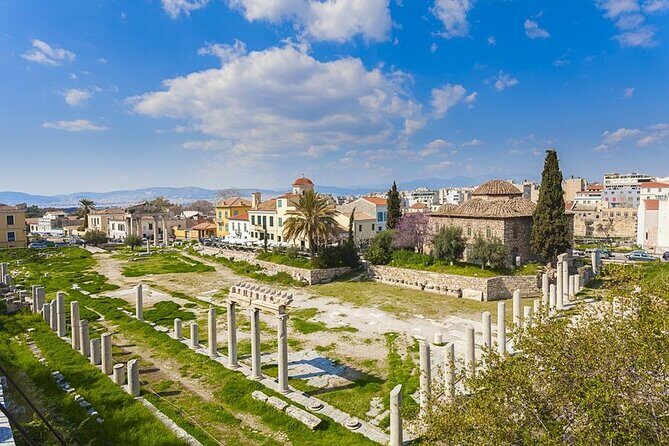
In the Roman Agora, the tour frames stoicism as a philosophy of life—less theory, more how you behave.
You also hear about the first meteorological station in the world, and you’ll get a philosophical discussion point tied to the atmosphere of the Mnisikleous stair. The guide even flags this as one of the best places for lunch.
That matters. It means you get a built-in “where should we eat?” moment that fits the tour’s flow instead of forcing you to figure it out while hungry.
Lysikratous Square and Anafiotika: Apollo, Dionysus, and the Cycladic Feeling
At Lysikratous Square, the tour ties the location to the Apollonian and Dionysian side of Athens—linked to the way Nicze conceived the dual nature of art and life.
Then you end with Anafiotika, described as a second energetic point where it feels like a Cycladic island. Even if you’re skeptical of “feels like” descriptions, this neighborhood-style finish is smart for energy levels: you finish the tour in a place that looks and sounds different from the main tourist spine.
Views, Comfort, and Pacing: What 2 Hours 30 Minutes Really Means
The tour is about 2 hours 30 minutes. That’s long enough to shift from “I’m learning” to “I’m thinking differently,” but short enough that you won’t feel trapped.
The route is walking-heavy, so comfort matters. The guidance includes planning for the heat—one review specifically notes Lampros choosing shady spots and making sure people felt comfortable. In warmer months, regular breaks are part of how it stays enjoyable.
A practical tip: wear comfortable shoes. You’ll be standing in sun and shade, and you’ll want your body to keep up with your brain.
Also, the tour isn’t aimed at one level. You can come in with zero background and still follow the main ideas. If you already know philosophy, you’ll likely find the conversation more engaging because Lampros adjusts how deep the talk goes.
Price and Value: Is $90.11 Worth a Private Athens Philosophy Walk?
At $90.11 per person, you’re paying for three things that usually cost more separately in Athens:
- A private tour format with a group cap of up to six, which keeps the experience personal.
- A guide (Lampros) who connects philosophy to psychology and current questions, not just to ancient dates.
- A route that includes major landmarks and strong viewpoints without making you buy a stack of tickets.
Many listed stops are marked as admission ticket free on the tour route. That lowers the “hidden costs” feeling, compared with tours that pile on extra site entry fees.
The value question really comes down to how you like to travel. If you love museums but also like walking, this is a good match. If you want only quick, surface-level sightseeing, you may feel it’s more cerebral than you expected.
Language, Tickets, and Where to Meet (So You Don’t Waste Time)
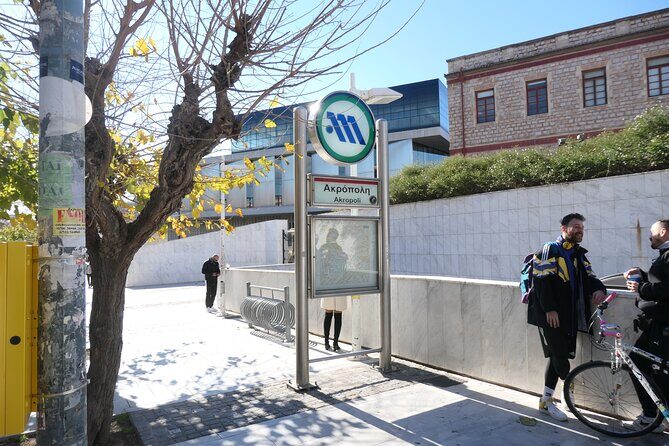
This tour is offered in English and uses a mobile ticket. You’ll meet at 11:00 am near the Acropolis area (listed as Acropoli Athens 117 42, Greece), and the walk ends back at the meeting point.
It’s described as near public transportation, which helps if you’re combining it with other sights later that day.
One more practical point: confirmation is received at booking, and service animals are allowed.
Who Should Book This Tour in Athens?
Book this if you want Athens to do more than impress you. You’ll like it if you enjoy walking tours that ask questions, not just point at buildings.
It’s also a strong fit if you like conversations that connect ancient ideas to your modern life—especially topics like judgment, identity, happiness, self-awareness, and how to live well.
If your group includes kids or mixed-interest travelers, the private format and interactive pacing can help keep everyone engaged. One review even mentions Lampros helping children in wheelchairs along the way, which hints at a guide who watches the group’s needs rather than forcing one pace for everyone.
Should You Book This Philosophical Tour in Athens?
Yes, if you want your Athens day to feel like more than photos. The biggest reason to book is the combination: key Athens landmarks plus a guide who turns those places into a practical thinking exercise.
Do consider skipping if you’re not into discussion and reflection. This isn’t only a “see and go” tour. It’s a “stand, listen, and think” tour.
FAQ
FAQ
How long is the Philosophical Tour in Athens?
It’s about 2 hours 30 minutes.
What time does the tour start, and where does it begin?
It starts at 11:00 am. The meeting point is listed as Acropoli Athens 117 42, Greece.
How much does it cost per person?
The price is $90.11 per person.
Is this tour private, and how many people are in a group?
It’s private, with only your group participating. The group size is up to six people.
What language is the tour offered in?
The tour is offered in English.
Is a mobile ticket used?
Yes, the tour uses a mobile ticket.
Are admission tickets needed for the stops?
The stops listed on the route are marked as admission ticket free.
Are service animals allowed?
Yes, service animals are allowed.
What happens if the weather is poor?
If it’s canceled due to poor weather, you’ll be offered a different date or a full refund.
What is the cancellation policy?
Free cancellation is available if you cancel up to 24 hours in advance for a full refund. If you cancel less than 24 hours before the start time, the amount you paid is not refunded.