REVIEW · ATHENS
The Best of 12-Day Tour, Athens, Delphi-Meteora, Santorini, Crete
Book on Viator →Operated by Private Tours Greece · Bookable on Viator
This 12-day Greek vacation links the country’s biggest sights with remarkably little planning on your part. You move from the Parthenon and Delphi to Meteora’s cliff-top monasteries, then trade the mainland for Santorini’s volcanic beaches and Crete’s Minoan ruins.
I like the private airport, port, and hotel transfers, especially on ferry days when luggage and unfamiliar terminals can eat up your morning. I also like the strong mix of famous sights and local stops: an olive-oil tasting, a pottery village, Arachova, and a traditional lunch in Kalambaka.
The catch is pace. Several days begin early, include long drives or ferry rides, and pack multiple stops into one outing. You get an excellent first look at Greece, but you will have little spare time for unplanned wandering.
In This Review
- Key points to know before booking
- Athens begins with the Acropolis
- Delphi and Meteora bring Greece’s mainland into focus
- Santorini starts with a long ferry day
- Santorini’s ruins, beaches, wine, and sunset
- Crete combines Knossos with everyday food traditions
- Gramvousa and Balos bring a full day at sea
- Rethymnon, Arkadi, and Margarites finish the route
- What $4,845 buys you
- Who this Greece itinerary suits best
- Should you book this tour?
- FAQ
- How long is the tour?
- Where does the tour begin?
- Are airport and port transfers included?
- Are hotel stays and breakfast included?
- Is the Santorini caldera cruise included?
- Are entrance fees to the archaeological sites included?
- Is the tour private?
- Is the flight from Crete to Athens included?
- What is the cancellation policy?
Key points to know before booking
- The route covers four very different parts of Greece: Athens, mainland archaeological sites, Santorini, and Crete.
- Private transfers remove much of the travel stress: drivers meet you at airports, ports, and hotels and help with luggage.
- Athens includes a licensed guide: the Acropolis and Acropolis Museum receive the attention they deserve.
- Santorini mixes scenery with substance: you visit Akrotiri, a black-sand beach, a cave wine museum, traditional villages, and Oia.
- Crete adds serious archaeology and coastal scenery: Knossos, the Heraklion museum, Gramvousa, Balos, Rethymnon, and Arkadi are all included.
- The $4,845 price covers much more than sightseeing: 11 hotel nights, breakfasts, ferries, a domestic flight, and private transport are included, but many entrance fees and one optional Santorini cruise cost extra.
Athens begins with the Acropolis
Your first day is deliberately light. A driver meets you at Athens International Airport and takes you to your hotel, leaving the rest of the day open. After a long flight, that breathing room is useful. You can sleep, walk around your neighborhood, or simply adjust to Greek time.
Day two brings a private city tour and a guided visit to the Acropolis. The panoramic portion passes the Panathenaiko Stadium, the Zappeion, the Temple of Olympian Zeus, Hadrian’s Arch, Parliament, the Tomb of the Unknown Soldier, and several notable churches and civic buildings.
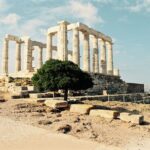
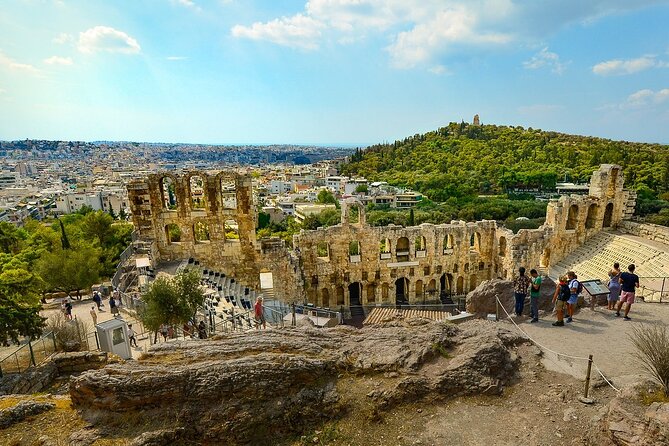
The Panathenaiko Stadium deserves more than a quick photograph. Built entirely of white marble, it hosted the first modern Olympic Games in 1896. You then continue to the Acropolis, where the Theatre of Dionysus, the Caryatids, and the Parthenon form the center of the visit.
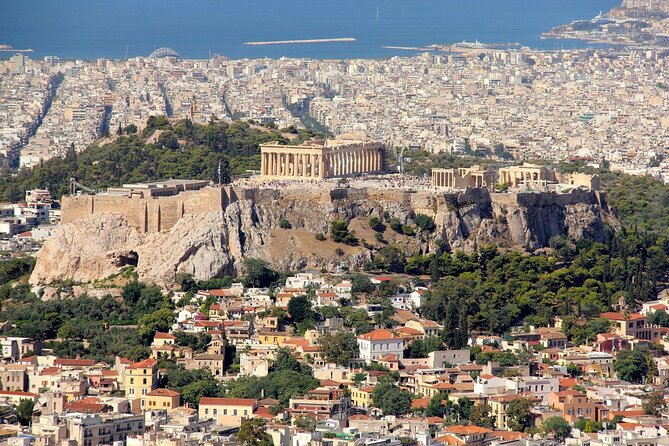
Plan for uneven stone, stairs, and strong sun. The Acropolis admission fee is not included, nor is entry to the Acropolis Museum. That museum is essential, not an afterthought. Its statues and everyday objects help explain what you saw above, and its setting below the ancient citadel gives you a close look at the sculptures and architectural details.
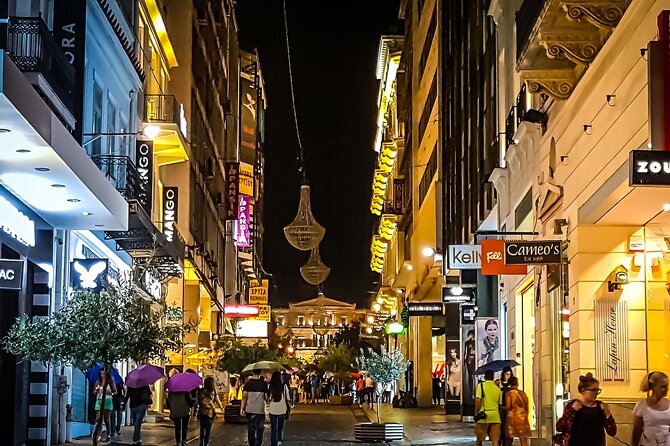
The day ends in Plaka and Monastiraki, two of the easiest places in Athens for a casual meal or walk. You can try souvlaki, browse small shops, and see older houses along narrow streets. The schedule gives you a good introduction, though the listed time for Plaka is extremely brief, so treat it as a general area for free time rather than a structured walking tour.
You can also read our reviews of more tours and experiences in Athens.



Delphi and Meteora bring Greece’s mainland into focus
The trip to Delphi takes about two and a half hours from Athens. That means an early departure and a substantial day in the vehicle, but Delphi is one of Greece’s most rewarding archaeological stops.
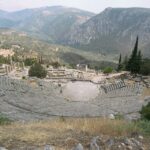
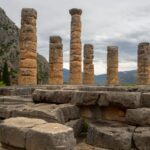
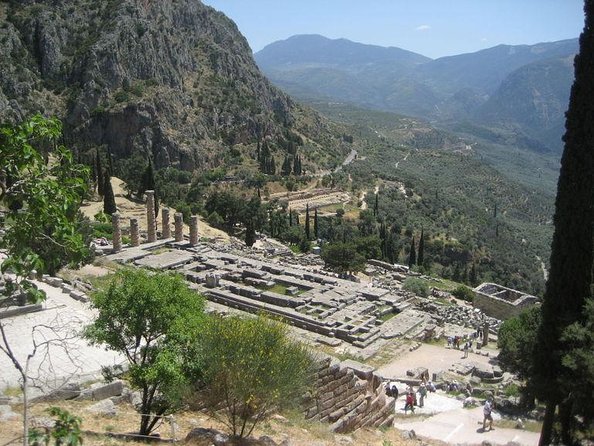
The site was once regarded as the center of the world by ancient Greeks. You walk past the Castalia Spring, the Treasury of the Athenians, the Athenian Stoa, the Polygonal Wall, and the Temple of Apollo, where the famous oracle gave advice wrapped in mystery and politics.
The Archaeological Museum of Delphi adds the pieces that are difficult to understand outdoors. It contains sculpture and objects tied to the sanctuary, allowing you to connect the surviving ruins with the ceremonies and offerings once made there. Admission is extra, so keep entrance costs in your budget.
A short stop in Arachova breaks up the day. At about 1,000 meters above sea level, this mountain village is known as a winter resort. You can look for handmade pastries, cheeses, spices, and other local products, and the schedule allows time for lunch at a Greek taverna.
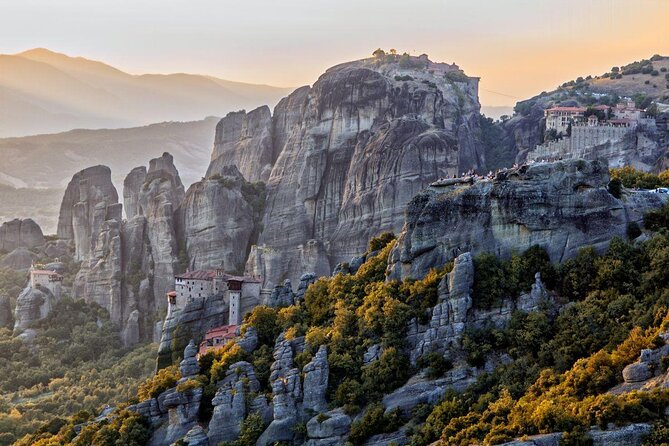
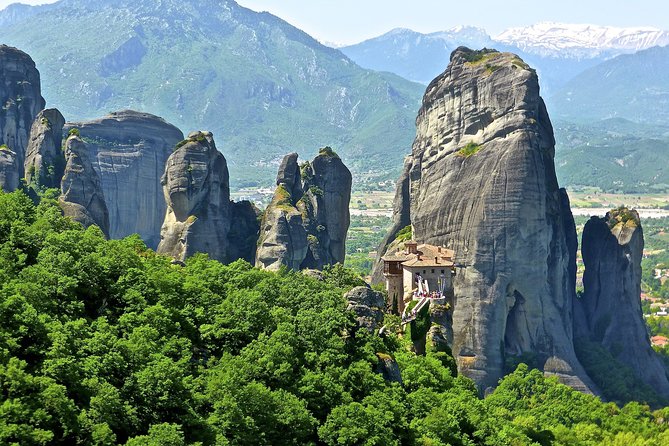
Day four focuses on Meteora, a dramatic change from the open ruins of Delphi. Monasteries sit on enormous rock formations above Kalambaka, creating one of Greece’s most striking settings. The Holy Monastery of Great Meteoron is the largest and oldest monastery in the group. Saint Stephen’s is smaller and rests on the plain rather than high on a cliff.
The visit is special because the setting and buildings work together. You are not simply viewing medieval religious art in a museum. You are seeing monasteries built in places chosen for isolation and defense, with views that explain why the site feels so unusual.
Meteora also requires steps and firm footing. Entrance fees are not included, and religious sites may have clothing expectations, so practical, modest clothing is wise. Lunch in Kalambaka gives the day a welcome pause before the drive back toward Athens.
A stop at Thermopylae on the return trip adds a small but worthwhile historical note. The statue of Leonidas marks the battlefield associated with the 300 Spartans and the Persian invasion. The stop lasts only about 15 minutes, so expect a quick photo and orientation rather than a full museum visit.
Santorini starts with a long ferry day
Day five begins early, with pickup at about 5:30 a.m. for the transfer to Piraeus Port. The fast ferry is scheduled to leave at 7 a.m. Santorini is famous for its caldera views, but reaching it is not a relaxed morning. Pack what you need at hand, keep your documents accessible, and expect the ferry portion to take much of the day.
On arrival, a local driver takes you to your hotel. The rest of the day is free, which is a sensible design after the early start. You can settle in, find a meal, and enjoy the island without another scheduled stop.
Day six offers an optional semi-private caldera cruise with a barbecue. You visit the thermal waters at Palea Kameni and have time for a swim. The route also includes views of Aspronisi, the Ancient Lighthouse, Akrotiri, and Indian Rock, plus stops near Red Beach and White Beach.
The barbecue includes seafood, grilled meats, salads, and desserts. The cruise finishes with sunset views toward Oia, when the caldera and village take on warm evening colors. This is a full six-hour outing, and it is not part of the included core package, so confirm the extra cost before you commit.
The hot springs are warm rather than a full spa treatment, and swimming conditions can vary. Bring swimwear, sun protection, and a towel if the operator does not provide one. The cruise is best for you if you want a day on the water and a broad view of Santorini’s volcanic coast. If you prefer quiet village time, keep the day free instead.
Santorini’s ruins, beaches, wine, and sunset
Day seven is the island’s most varied sightseeing day. At Akrotiri, you see the remains of a prehistoric settlement built around 2,000 BC and destroyed by the Theran eruption around 1,610 BC. The site is important because it gives you a picture of Bronze Age life preserved beneath volcanic material.
The visit lasts about an hour, and admission is extra. Akrotiri is not the same kind of attraction as the Acropolis. You will see an ancient town and its structures rather than a single dominant monument, so the guide or museum displays matter.
Next comes Perissa or Perivolos, where black volcanic sand meets clear water and beach facilities. The schedule gives you about an hour for lunch and free time. That is enough for a taste of the coast, but not a full beach day.
Megalochori offers a quieter side of Santorini. Look for cave houses, colorful doors, old mansions, and earthquake-damaged homes from 1956. The village stop is a useful counterpoint to Oia, where the crowds and postcard views dominate.
At the Koutsogiannopoulos Wine Museum, the collection is set eight meters underground in a 300-meter cave. The family spent 21 years completing the museum, which explains why the visit feels more like a specialty attraction than a standard winery tasting. Admission is not included.
The final stop is Oia, with about two hours for the village and sunset. Oia is undeniably beautiful, but sunset viewing is popular, and streets, stairs, and rooftops can become tightly packed. You will get the famous view, but you should not expect solitude. Wear comfortable shoes and stay aware of the meeting instructions, since the evening schedule has to keep the group moving.
Crete combines Knossos with everyday food traditions
The ferry to Crete leaves Santorini at about 5:45 p.m. and arrives in Heraklion around 7:40 p.m. A local driver meets you at the port and takes you to your hotel. This is another transfer-heavy day, but the evening arrival lets you avoid losing a full sightseeing day.
Day nine begins at the Heraklion Archaeological Museum. Its collection covers more than 5,500 years, from the Neolithic period through Roman times, with particular strength in Minoan art. The museum helps you understand the objects and symbols connected with Knossos, so seeing both places on the same day makes sense.
The Palace of Knossos is the main archaeological visit. The site flourished for roughly 2,000 years and included palace buildings, workshops, tombs, and a complicated social system. It can be tempting to focus only on the famous throne room or colorful reconstructions, but the larger value is seeing the scale of the settlement and considering how organized Minoan life must have been.
The listed visit time for Knossos is only two minutes, which is clearly not enough for a meaningful visit. In practical terms, expect the palace to be part of the guided day, but confirm the actual time allocation before booking. Entrance fees for both the museum and site are extra.
After Knossos, an olive-oil farm introduces a living Cretan tradition. Staff explain production from grove to finished oil, then offer three oils with Cretan foods and balsamic vinegar. This is one of the tour’s better local touches because it connects agriculture, food, and daily life without requiring a long detour.
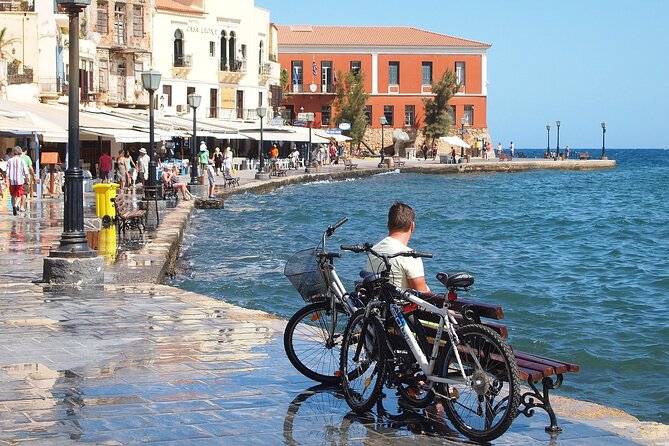
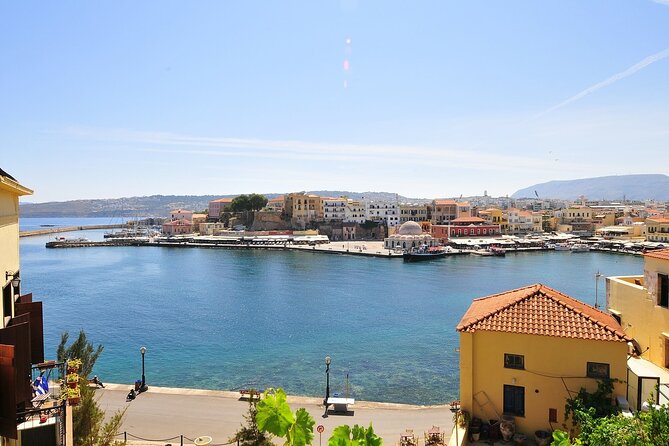
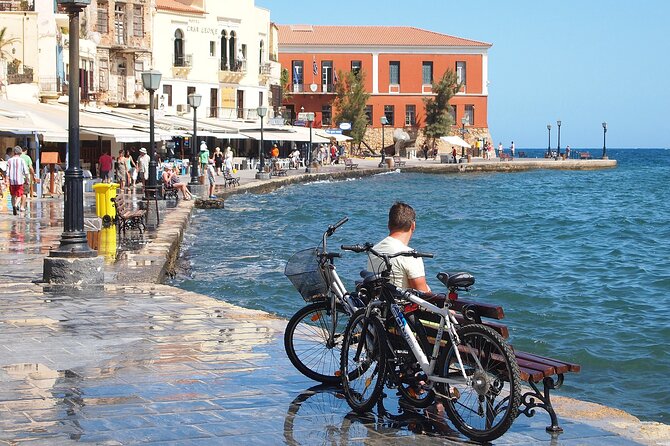
The day continues to Chania for an overnight stay. You get about two hours in town, enough to walk around the old harbor area and see the city’s Venetian and Ottoman influences. It is a short introduction, not a full exploration.
- All Day Cruise -3 Islands to Agistri,Moni, Aegina with lunch and drinks included
★ 5.0 · 4,958 reviews





Gramvousa and Balos bring a full day at sea
Day ten takes you west from Chania to the port of Kastelli. A boat carries you to Gramvousa, a small island topped by a Venetian fortress. The climb and the heat can be demanding, but the views reward the effort. Admission is extra.
The cruise then continues to Balos Lagoon, known for pale sand and clear water in shades of blue and green. You have about two hours there. Boat access is a major advantage because it avoids relying on a road transfer to the beach, though boat schedules and conditions shape the day.
Bring water, sun protection, sturdy footwear for Gramvousa, and shoes that can handle sand and shallow water. This is a long excursion, so it suits you if you want a full day outdoors. It is less suitable if you prefer museums, cafés, or a slow afternoon in Chania.
Rethymnon, Arkadi, and Margarites finish the route
Day eleven shifts back to culture and villages. In Rethymnon, you begin at the Venetian Fortezza, then walk downhill through the old town. The route includes the Venetian Loggia, Rimondi Fountain, Arkadiou Street, Vernardou Street, and the former Nerantze Mosque, now an art gallery.
This is a good walking day for seeing how Venetian and Ottoman influences overlap in Crete. The listed time is short, so you should expect an orientation walk rather than time to visit every shop or building in detail.
The Arkadi Monastery is tied to Cretan resistance against Ottoman rule and has been designated a European Freedom Monument. Built in the 12th century and developed in later periods, it sits among olive groves, vineyards, pines, cypress, and oak trees. Admission is extra.
Margarites is known for pottery. You can watch local potters work and buy handmade pieces, giving the final sightseeing stop a practical souvenir option rather than another major ruin.
The day ends with a flight from Chania to Athens, scheduled to depart at 5:40 p.m. A driver meets you at Athens Airport and transfers you to your hotel. The final morning is reserved for your airport transfer according to your flight time.
What $4,845 buys you
At $4,845 per person, this is not a budget tour. Its value depends heavily on what you would otherwise spend arranging hotels, private airport transfers, port transportation, ferries, a domestic flight, guides, and several full-day excursions.
The package includes 11 nights of accommodation, 11 breakfasts, private transfers in each area, a private Athens tour with a guide, a private Knossos and olive-oil visit, fast ferry tickets from Piraeus to Santorini and Santorini to Crete, the Chania to Athens flight, and a welcome bag.
It does not include many archaeological admission fees, hotel city tax, gratuities, or optional island tours. City tax is listed as 1.50 euros per room per night at a three-star hotel or 3 euros per room per night at a four-star hotel. Rooms are arranged for two people sharing, with triple rooms for three, while other room arrangements cost extra.
That mix of private and shared touring matters. Your transfers and selected sightseeing are private, but the Akrotiri, villages, wine tour, and Oia sunset portion is described as a group tour. Ask how many people will be on those outings and which hotel category is included before paying.
The strongest value is convenience. You are not left to solve each port transfer, ferry connection, or airport pickup alone. The weak point is control: you give up some flexibility and pay for a fixed route that may move faster than your preferred pace.
Who this Greece itinerary suits best
I would consider this package for a first trip to Greece when you want the major sights but do not want to rent a car or coordinate several islands yourself. It also suits families and small groups who value private transfers and can share rooms.
You should be comfortable with early mornings, long road transfers, stairs, ferry travel, archaeological sites, and several changes of hotel. The itinerary is not designed for a slow beach holiday or a single-city stay.
If you can add extra nights, Santorini, Meteora, and Crete deserve them. One extra low-key day in each place would reduce the pressure and give you time to enjoy local food, weather-dependent ferry changes, or simple walks. One past booking had to be rearranged around weather and an unexpected holiday, so flexibility in your personal schedule is wise.
The operator has a strong record of professional communication and organized transport. Private Mercedes service has also been arranged around specific needs in Crete. No individual guide names are provided, so if a particular guide matters to you, request that information before booking.
Should you book this tour?
Book it if you want a carefully connected introduction to mainland Greece and the islands, with transport and hotels handled for you. The route is ambitious, but it includes an unusually broad range of sights: classical Athens, Delphi, Meteora, Santorini’s volcano country, Minoan Crete, Venetian towns, and beaches.
Do not book it if you want long stays, spontaneous changes, or low daily costs. Before committing, confirm the hotel star level, all entrance fees, the price of the optional caldera cruise, the size of group outings, and the actual time planned at Knossos. With those details clear, this is a practical, high-coverage Greece trip for an energetic first visit.
FAQ
How long is the tour?
The package lasts approximately 12 days and includes 11 nights of accommodation.
Where does the tour begin?
The tour begins with pickup at Athens International Airport, at Attiki Odos in Spata.
Are airport and port transfers included?
Yes. Private transfers from and to airports, ports, and hotels are included in each area.
Are hotel stays and breakfast included?
Yes. The package includes 11 nights of accommodation and 11 breakfasts.
Is the Santorini caldera cruise included?
No. The semi-private cruise to the caldera, hot springs, beaches, barbecue, and Oia sunset is optional and costs extra.
Are entrance fees to the archaeological sites included?
No. Admission to several sites and museums, including the Acropolis, Acropolis Museum, Delphi, Akrotiri, Knossos, Heraklion Archaeological Museum, Meteora monasteries, Gramvousa, and Arkadi Monastery, is not included.
Is the tour private?
The activity is described as private for your group, but some Santorini sightseeing is identified as a group tour. Confirm the group size for those outings before booking.
Is the flight from Crete to Athens included?
Yes. A domestic flight from Chania Airport to Athens is included, with a scheduled departure on day eleven at 5:40 p.m.
What is the cancellation policy?
You can receive a full refund if you cancel at least six full days before the start time. Cancellations two to six full days ahead receive a 50 percent refund, while cancellations less than two full days before the start time are nonrefundable.