REVIEW · ATHENS
The Best of Athens Tour: Top Sights and Attractions
Book on Viator →Operated by Truevoyagers · Bookable on Viator
Athens can feel like several cities at once: grand government buildings, shady gardens, ancient stone, lively Plaka lanes, and wide views from Pnyx. This 2.5-hour small-group walk gives you a useful first look without asking you to spend a full day on one theme.
I like the route for two reasons. It links major sights that are easy to scatter across separate walks, and it ends by the Acropolis Museum, where you can keep sightseeing on your own. Guides named Katerina, Penelope, Lucas, Victor, and Gregory have been praised for clear stories, patience, local suggestions, and the ability to adjust the pace.
The main tradeoff is time. Twenty minutes at each major stop is enough for an introduction, not a full visit, and admission to the Acropolis Museum is not included. You will also want good shoes, water, and a plan for Athens heat.
In This Review
- Key points to know before booking
- Why this Athens route works as a first look
- Syntagma Square and the Hellenic Parliament
- The National Garden and a quieter side of central Athens
- The Presidential Mansion and Athens’ formal avenue
- Panathenaic Stadium and the return of the Olympic Games
- Zappeion, architecture, and a brief indoor-looking pause
- Plaka’s lanes and the most atmospheric part of the walk
- Pnyx and the best view on the route
- Finishing beside the Acropolis Museum
- What the guides add to the experience
- Who will get the most from this tour
- Price, timing, and practical planning
- Should you book the Best of Athens Tour?
- FAQ
- How long does the Best of Athens Tour last?
- How much does the tour cost?
- What language is the tour offered in?
- Where does the tour begin?
- Where does the tour end?
- Is admission to the Acropolis Museum included?
- What is the maximum group size?
- Is hotel pickup or drop-off included?
- Can I cancel the tour for a refund?
Key points to know before booking

- A city overview in 150 minutes: The route covers government buildings, gardens, Olympic history, Plaka, a hilltop viewpoint, and the Acropolis area.
- A maximum of 15 people: The group size keeps the walk more personal than a large coach tour and helps the guide answer questions.
- No major entrance tickets included: The stops are viewed from outside or explored as public spaces, with the Acropolis Museum visit ending at the entrance area.
- Guides add practical help: Food and entertainment suggestions are included, and the named guides have been praised for history, mythology, patience, and flexibility.
- A useful arrival-day route: Start at Syntagma Square and finish near the Acropolis, making it a good way to get oriented early in your stay.
- Free cancellation up to 24 hours ahead: Changes or cancellations made inside the final 24 hours are not refundable.
Why this Athens route works as a first look
At $48.16 per person, this is priced as an affordable guided introduction rather than a full archaeological tour. You are paying for a local guide, a planned route, historical context, and practical advice, not for museum entry or a long stop at any one monument.
That distinction matters. If you want to go inside the Acropolis Museum, you will need a separate ticket and extra time after the walk. If you want to see the main parts of central Athens before deciding where to spend your next day, the price makes good sense.
The route begins at the Nike Store on Ermou Street by Syntagma Square and finishes at the Acropolis Museum on Dionysiou Areopagitou Street. Those start and end points are useful because they place you near major sights and public transport at both ends.
The advertised timing adds up to about 150 minutes. The schedule is fairly brisk, but it is not built around racing from one photo stop to the next. The small group, capped at 15 people, allows a guide to pause for questions and make sensible adjustments.
You can also read our reviews of more tours and experiences in Athens.



Syntagma Square and the Hellenic Parliament
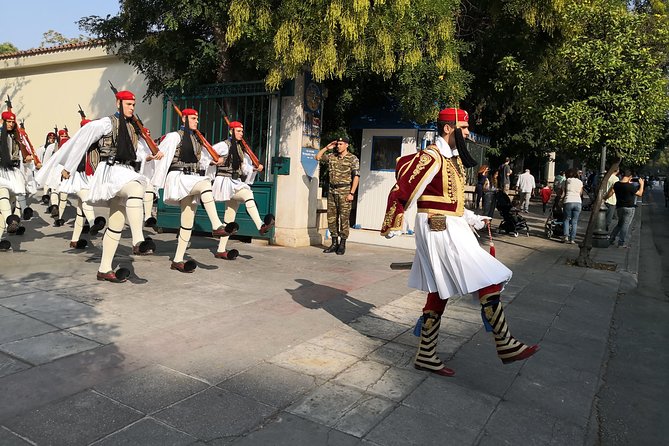
Your first stop is the Hellenic Parliament, one of the clearest symbols of modern Greek government. The guide explains the building and the role of the Greek evzones, the ceremonial guards whose uniforms and precise movements have become part of Athens’ public identity.
You have about 20 minutes here. That is enough to understand why the parliament matters and to take in the guards, but it is not a formal inside visit. The stop works best as an introduction to modern Greek public life before the route shifts toward gardens, royal residences, and ancient sites.
Starting at Syntagma is practical. It gives you a central reference point early in your visit, and the nearby Ermou shopping street makes the meeting location easy to identify. Arrive with a little time to spare so you are not trying to find the group at the last minute.
The National Garden and a quieter side of central Athens
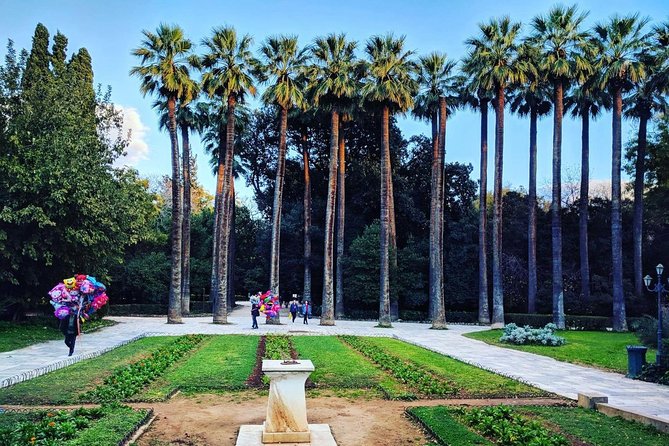
The National Garden provides a change of mood after the open square. This green public park is described as the largest and likely the best in Athens, and the 20-minute stroll lets you see why it is valued as a break from stone streets and traffic.
The guide can give the garden a place in the city’s story rather than treating it as a simple shortcut. You get a short walk through one of central Athens’ main breathing spaces, then continue toward the streets around the Presidential Mansion.
Do not expect a long park visit. Twenty minutes passes quickly, especially if you want photographs or prefer to walk slowly. Still, this is a smart inclusion because it shows you a side of Athens that can be missed if you focus only on ancient ruins.
The Presidential Mansion and Athens’ formal avenue
The next stop takes you along one of Athens’ most notable streets, where the residences of the prime minister and the President of the Hellenic Republic are located. The buildings are presented as architectural highlights, giving you a look at the city’s formal government quarter.
Again, the point is orientation rather than entry. The 20-minute stop helps connect the parliament, the presidential residence, and the modern Greek state. It also breaks up the ancient-site focus that many first visits to Athens tend to have.
I like this part of the route because it gives context to the city beyond mythology and ruins. You see Athens as a living capital, not only as a museum spread across a hill.
Panathenaic Stadium and the return of the Olympic Games
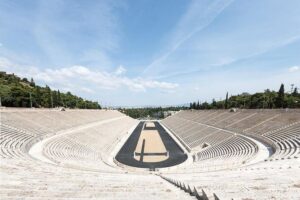
The Panathenaic Stadium is one of the strongest stops on the route. It is tied to the revival of the modern Olympic Games in 1896, making it a natural meeting point between ancient Greek ideals and the modern sporting world.
The schedule allows about 20 minutes. That gives you time to appreciate the stadium’s shape and hear how its Olympic role fits into Athens’ story. It is not enough for an extended stadium visit, and admission is not part of the tour, so treat this as an informed exterior stop unless your guide explains otherwise.
The value here comes from the explanation. Without context, a stadium can be just another impressive structure. With a guide, you get a clearer sense of why this particular site matters and how Athens became linked to the modern Olympics.
- All Day Cruise -3 Islands to Agistri,Moni, Aegina with lunch and drinks included
★ 5.0 · 4,958 reviews





Zappeion, architecture, and a brief indoor-looking pause
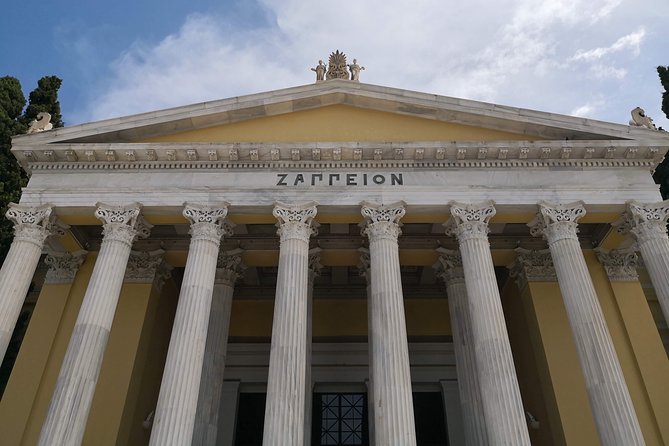
The Zappeion Conference and Exhibition Center adds another architectural stop. The guide points out the building’s design and the colorful ceiling frescoes, along with facts that are easy to miss when you pass by independently.
You have around 20 minutes. This keeps the route moving, but it also means you should not expect a full building tour or a long art discussion. The stop is best for people who enjoy seeing how Athens’ public buildings combine civic purpose with decoration.
Placed after the stadium, Zappeion also gives the middle of the tour some variety. You move from politics to parkland, then Olympic history and architecture, rather than spending the entire walk among ruins.
Plaka’s lanes and the most atmospheric part of the walk
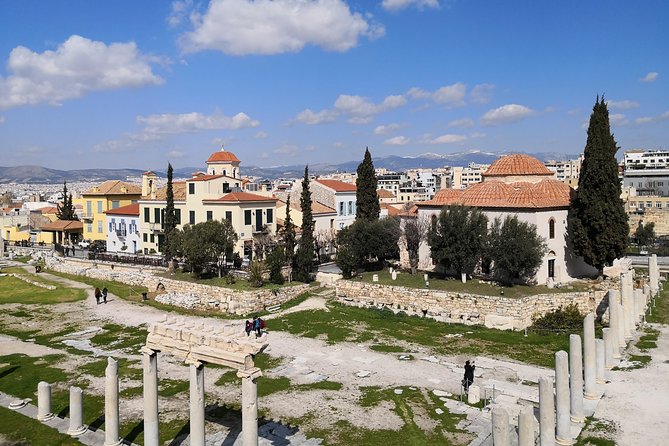
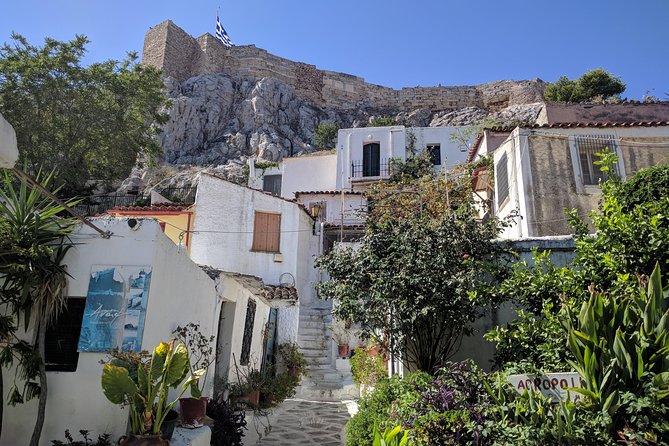
Plaka receives the longest stop, about 30 minutes, and that makes sense. This old neighborhood is known for picturesque lanes and blue-and-white houses, and it offers a more intimate view of Athens than the broad government avenues.
You can expect a guided stroll rather than a dedicated food tour or shopping excursion. The guide’s local tips become especially useful here, since the included recommendations cover food and entertainment. Katerina, for example, was praised for suggesting neighborhoods and restaurants, giving the walk value beyond the scheduled stops.
Plaka can be busy, and 30 minutes will not cover every lane. But it is enough to get your bearings and decide if you want to return later for a slower wander or a meal. Keep in mind that the route is an introduction, not a substitute for spending an evening in the neighborhood.
Pnyx and the best view on the route
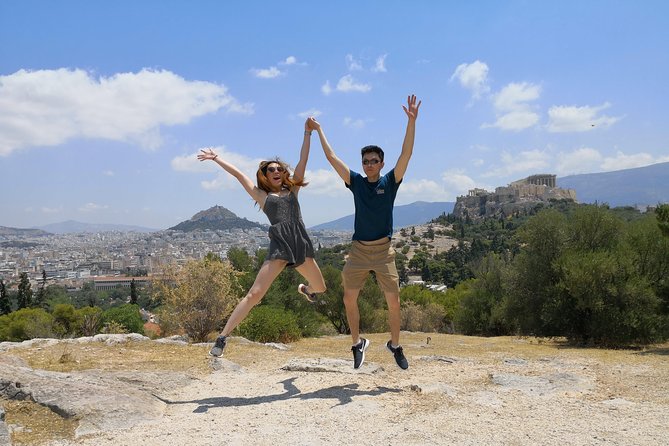
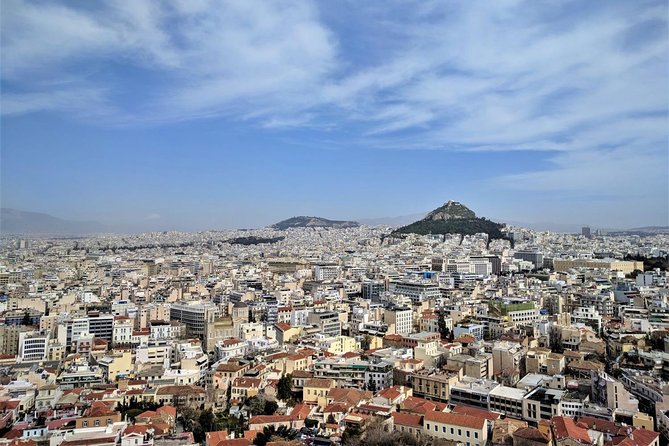
Pnyx is a short stop, only about 10 minutes, but it may give you the most useful photograph of the day. The hill offers bird’s-eye views across Athens and helps you understand how the city’s major areas relate to one another.
The brief timing is the obvious limitation. You will not have much time to linger, and the stop is more about the view and the setting than a long historical talk. Still, even a short pause here can make the rest of your sightseeing easier to picture.
This is also one of the places where comfortable shoes matter. The route includes several outdoor stops, and Athens can be hot. The guide may set a sensible pace, but you should still arrive ready for a city walk rather than a seated bus excursion.
Finishing beside the Acropolis Museum
The tour ends in front of the Acropolis Museum, one of Athens’ best-known museums. The endpoint is a strong practical choice because you can continue directly into the museum if you have a ticket, or use the location to plan your next stop around the Acropolis.
The museum admission is not included. That keeps the tour price down, but you need to budget separately if you want to go inside. The 10-minute finish is mainly an orientation point, not a museum visit.
Ending here also gives you flexibility. You can visit the museum, continue toward the Acropolis, stop for food, or return to Plaka. Unlike a tour that ends far from the historic center, this one leaves you in a useful place for independent sightseeing.
What the guides add to the experience
The strongest part of this experience is the guide-led interpretation. Katerina is described as bringing together history, mythology, and practical Athens suggestions. Penelope is noted for being informative and flexible, while Lucas is praised for his patience and pleasant manner.
Victor handled a group that included children tired after an early flight and adjusted to their needs. Gregory and Greg are also praised for making the walk educational and relaxed. One booking became a private tour when another family cancelled, and Gregory continued with the solo participant rather than cancelling.
That last detail is useful because it shows a willingness to adapt, though you should not book expecting a private tour. The normal arrangement is a small group of up to 15 people. The more personal atmosphere is one of the reasons this tour costs more than simply walking the same streets with a guidebook.
The guide’s value also appears when conditions change. During one tour, heavy rain, thunder, and lightning forced the group to cover only part of the route. Katerina offered to reschedule, then continued with photos and explanations while the group waited under cover. Athens weather can change your plans, so this sort of flexibility is worth noting.
Who will get the most from this tour
I would choose this tour early in an Athens visit if I wanted a quick map of the city and help deciding what deserved more time. It is especially suited to first-time visitors, couples, families, and anyone who prefers a relaxed small group over a large organized crowd.
It can also work well after an early flight. Victor’s willingness to adjust for tired children suggests that the route is not rigid, though the full distance and outdoor heat still require reasonable energy.
You may want something else if your main goal is the Acropolis itself. This route finishes near the Acropolis Museum but does not replace a dedicated Acropolis or museum visit. It also may not suit you if you dislike walking, need long stops, or want detailed archaeological discussion at each site.
Price, timing, and practical planning
At $48.16, the tour offers fair value for a guided overview with a small maximum group. The fee includes a local expert and food and entertainment recommendations, but not hotel pickup, hotel drop-off, or museum admission.
The tour is offered in English and uses a mobile ticket. Confirmation is provided at booking, and the meeting point is near public transportation. Most people can take part, according to the supplied activity information, but the outdoor route and short stops make good footwear and water sensible choices.
The experience is often booked 27 days ahead on average. That does not guarantee that every date sells out, but it is a useful hint to reserve ahead if your Athens schedule is fixed.
You can cancel for a full refund up to 24 hours before the local start time. Inside that 24-hour window, the amount paid is not refunded, and changes are not accepted.
Should you book the Best of Athens Tour?
Book it if you want a guided first look at central Athens, especially one that mixes modern government, public gardens, Olympic history, Plaka, a city view, and the Acropolis area. The small group and strong guide feedback add real value, and the endpoint makes it easy to continue on your own.
Skip it if you want a deep visit inside the Acropolis Museum, a long archaeological lecture, or a slow half-day route with time to linger at every stop. For most first-time visitors with limited time, though, $48.16 is a sensible way to get oriented before choosing where to spend the rest of your Athens days.
FAQ
How long does the Best of Athens Tour last?
The tour lasts approximately 2 hours and 30 minutes.
How much does the tour cost?
The listed price is $48.16 per person.
What language is the tour offered in?
The tour is offered in English.
Where does the tour begin?
It begins at the Nike Store on Ermou Street, at Ermou, Pl. Sintagmatos 1, Athens 105 63, Greece.
Where does the tour end?
It ends in front of the Acropolis Museum at Dionysiou Areopagitou 15, Athens 117 42, Greece.
Is admission to the Acropolis Museum included?
No. The tour ends in front of the museum, but museum admission is not included.
What is the maximum group size?
The tour has a maximum of 15 participants.
Is hotel pickup or drop-off included?
No. Hotel pickup and drop-off are not included.
Can I cancel the tour for a refund?
Yes. You can cancel at least 24 hours before the experience start time for a full refund. Cancellations or changes made less than 24 hours before the start time are not accepted for a refund.