REVIEW · ATHENS
The original Christian tour on Paul’s footsteps in Athens and ancient Corinth
Book on Viator →Operated by Athens Tours Greece · Bookable on Viator
Follow Paul through two ancient powerhouses. This full-day private route links Athens and Corinth with a Christian-themed lens, starting high on the Acropolis and ending at the ruins of Ancient Corinth. You’ll ride in comfort, stop at the big monuments, and hear how the sites connect to the story people associate with Paul.
What I like most is the setup for a personal day: you get a dedicated vehicle and a professional English-speaking driver who can explain before you go in. The other big win is the pairing of the theological stop at the Areopagus with the architectural highlights of the Acropolis, so it’s not just ancient stones—it’s the context behind why certain places mattered.
One heads-up: the driver can’t accompany you inside archaeological sites or museums. You may feel a bit more like you’re doing self-guided exploring at some stops, especially compared with tours that include a licensed guide for every building. Also, entrance tickets and lunch are not included, so budget time to handle those.
In This Review
- Key things to love about this Paul-to-Corinth route
- What this private Athens + Corinth day really gives you
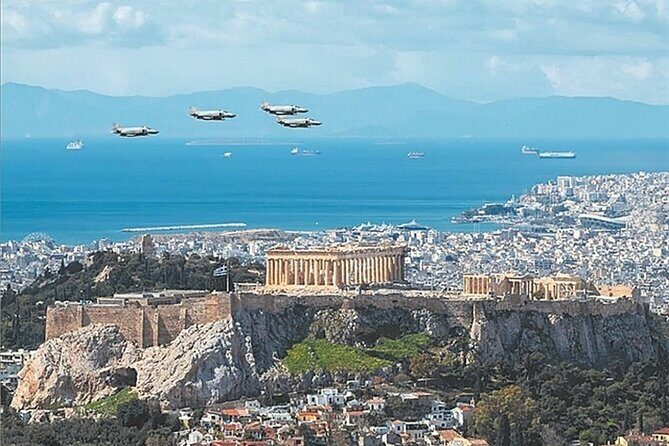
- Acropolis monuments that set the stage for Paul’s context
- Areopago (Mars Hill): where the Paul story lands
- Propylaea and the gate-to-temple flow
- Temple of Athena Nike: small temple, strong symbolism
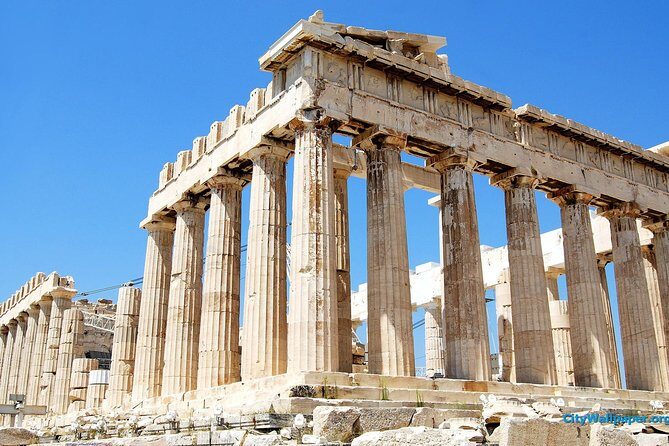
- Parthenon: the day’s anchor monument
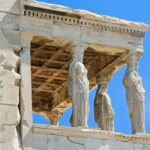
- Erechtheion: the caryatids and the controversy
- Ancient Agora: the city’s center after the hilltop
- Peloponnese drive and the Corinth Canal moment
- Corinth Canal: a 19th-century cut with a 2000-year idea
- Lunch in Ancient Corinth and the way to time your day
- Ancient Corinth’s strategic crossroads (and why it fits Paul’s story)
- Driver vs licensed guide: why some days feel guided, others feel self-paced
- Price and what you’re really paying for
- Who this tour suits best
- Should you book this Athens to Corinth Paul footsteps tour?
- FAQ
- FAQ
- How long is the Athens and Ancient Corinth tour?
- Is this tour private or shared?
- Do I need to speak Greek?
- Do you pick up from hotels and cruise ships?
- Are entrance fees included?
- Is lunch included in the price?
- Can the driver guide me inside museums and archaeological sites?
- Is there a vehicle provided?
- Do I need formal clothing?
- What if I’m booking from a cruise?
Key things to love about this Paul-to-Corinth route
- Areopagus stop (Mars Hill) with a clear Paul connection to the Sermon on an Unknown God setting, plus a bronze plaque you can see at the rock’s foot
- Acropolis core in one sweep: Propylaea, Parthenon, Temple of Athena Nike, and Erechtheion, all organized so you get the “why” behind each structure
- Flexible private pacing: you’re not stuck with the pace of a big group, and you can roll with weather and timing
- Corinth Canal as a modern-feeling spectacle with the long history of the canal idea stretching back around 2000 years
- Ancient Corinth’s location story: built on strategic routes and trade crossroads that helped make it powerful in the ancient Mediterranean world
What this private Athens + Corinth day really gives you
This is an 8-hour, private experience designed for small groups (up to 3). You’ll typically book it about 60 days in advance on average, and it runs in English with a professional, English-speaking tour driver plus a private, air-conditioned vehicle.
The value here is less about ticking every site and more about linking places. Athens starts with the world-famous Acropolis precinct, then shifts down the hill to the Areopagus and the Ancient Agora, and only after that do you move toward the Peloponnese and Corinth. If you’re traveling with a Christian or biblical-history interest, that sequence helps the day feel like a narrative, not a random checklist.
You’ll also want to plan for the practical stuff. Entrance fees are not included, and there’s a lunch window with free time at a traditional restaurant in Ancient Corinth—just not included in the price. In real terms, that means you’ll want a bit of cash or card ready, and you should plan for some walking at the sites.
Finally, a small but notable detail: the dress code is formal. It’s not usually a deal-breaker, but it’s smart to pack something you can wear comfortably while still meeting the guideline.
You can also read our reviews of more tours and experiences in Athens.

Acropolis monuments that set the stage for Paul’s context
The day begins with a drive from Piraeus along the Saronic Gulf coastal road, so you get a sense of the modern coastline right away. From there, it’s straight into the spiritual and political center of ancient Athens.
Areopago (Mars Hill): where the Paul story lands
One of the best parts of the itinerary is the Areopagus stop. This hill—also called the Hill of Ares—was tied to councils and courts in classical times. The site also carries the tradition that it’s where Saint Paul delivered the famous Sermon on an Unknown God after seeing an altar dedicated to the unknown.
There’s a practical bonus here: the itinerary specifically notes a bronze plaque at the foot of the rock you can see on-site. Even if you’re not a history nerd, that kind of physical marker helps your brain connect the Bible reading to the geography.
Propylaea and the gate-to-temple flow
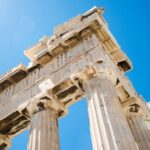
Next comes the Propylaea, the monumental gateway system for the Acropolis. The details matter: the earlier propylon and later Periklean building phases show how the site evolved through Persian destruction and repairs. If you like architecture, this stop is more than a photo-op, because it explains why the “big entrance” ended up the way it did and why it was part of a larger grand building program.
Temple of Athena Nike: small temple, strong symbolism
Then you hit the Temple of Athena Nike, a compact Ionic temple on the edge of the Acropolis. The tour description highlights its relief-carved frieze and the thematic scenes—gods, wars, and victories—plus the idea that it’s connected to key historical moments like battles involving Greeks and Persians.
Even with limited time at the stop, the way the information is framed helps you understand why people cared about this place beyond worship. It was basically Athens broadcasting its identity in stone.
- All Day Cruise -3 Islands to Agistri,Moni, Aegina with lunch and drinks included
★ 5.0 · 4,958 reviews




Parthenon: the day’s anchor monument
No surprise, the Parthenon is the centerpiece. Built in the mid-5th century BCE and dedicated to Athena, it’s described as the culmination of Doric order development. The tour ties it to the Periklean rebuilding program after the sack during the Greco-Persian Wars, along with its role as chief shrine and treasury for the Delian League.
Here’s the practical value for you: if you’re visiting for the first time, the Parthenon is where you want to slow down mentally. Even if you can’t stay long, understanding it as both a shrine and a political financial hub gives you a better read on what you’re seeing.
Erechtheion: the caryatids and the controversy
The Erechtheion stop includes the famous caryatids. The information points out that pollution damaged originals, so some figures were removed to the Acropolis Museum in 1978 and replaced with replicas. It also notes the controversy around Lord Elgin and the British Museum holding other pieces removed from the ruins.
You don’t need to have a strong opinion going in, but you will leave with more to think about once you see these statues in context. It’s a reminder that history doesn’t just stay in the ancient past—it gets carried into modern institutions.
Ancient Agora: the city’s center after the hilltop
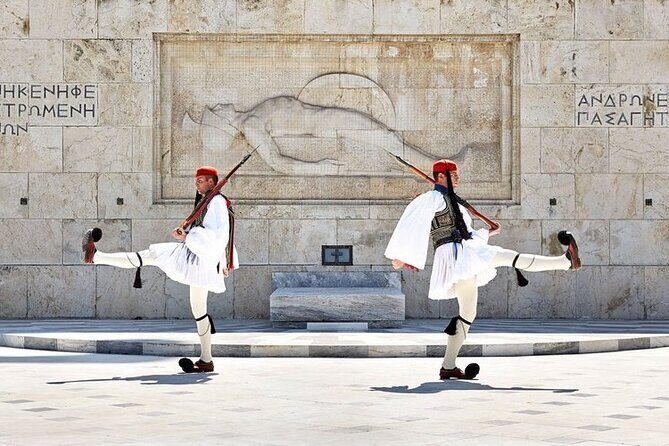
After the Acropolis, you move to the Ancient Agora of Athens, about a 20-minute travel segment after the Acropolis visit.
This stop is worth it because it adds a different kind of Athens. The word “agora” originally meant an assembly, and by extension a gathering place, and the tour description makes the point that this space has been used for thousands of years—remaining in use in different forms for roughly 5000 years.
Today, the value is in the layers. Excavations distill strata from Archaic through Greco-Roman and Byzantine times, so it feels less like one “moment” and more like continuous civic life.
If the Acropolis is Athens’ high drama, the Agora is where the day-to-day civic pulse shows up.
Peloponnese drive and the Corinth Canal moment
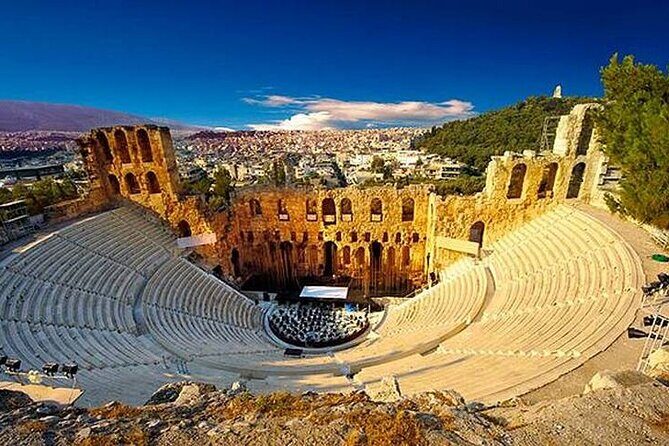
There’s a transition period as you move from Athens toward the Peloponnese. The itinerary includes scenic travel along the Saronic Gulf coastal road and then time described as part of the Peloponnese route—paired with an interesting bit of regional wine knowledge (Moschofilero-Mantinia, Agiorgitiko-Nemea, and Mavrodafni dessert wine are specifically mentioned).
This matters because it helps the drive feel connected to place, not just a route between stops. You’re also separating the Athens ruins from the Corinth ruins so you don’t feel like you’re rushing through everything back-to-back.
Corinth Canal: a 19th-century cut with a 2000-year idea
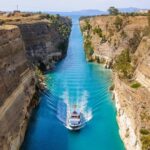
The highlight here is the Corinth Canal, which links the Gulf of Corinth to the Saronic Gulf by cutting through the narrow isthmus. The tour gives you key dimensions (about 6.4 km long, only 25 meters wide), and it explains how it effectively separates the Greek mainland from the Peloponnese.
The real story that makes it stick: ships used to avoid the canal by going around the Peloponnese, adding a long detour. Before the canal was dug in the late 19th century, the idea is described as a 2000-year-old dream. Periander is even mentioned as a person thought to have first conceived the project, while the alternative diolkós system (moving ships over a stone road) is part of that long engineering arc.
Even if you don’t geek out on water routes, this is one of those places where the scale feels real fast.
Lunch in Ancient Corinth and the way to time your day
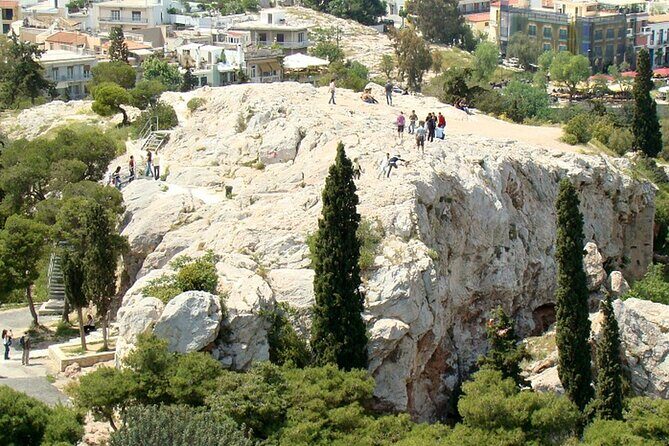
Once you reach the Ancient Corinth area, the itinerary includes time for lunch in a traditional restaurant with free time. Lunch itself is not included, so you’re responsible for ordering and paying.
I like this approach because it lets you adjust to your appetite and energy level. If your morning at the Acropolis ran long, you can take it easier here. If you’re feeling good, you can choose a quick meal and keep moving.
Just remember: you’ll likely have some walking and sun exposure. One of the reviews you shared praises a driver for making sure the car was cool during an over-100-degree day, which is exactly the sort of comfort detail that can make or break the pacing.
Ancient Corinth’s strategic crossroads (and why it fits Paul’s story)
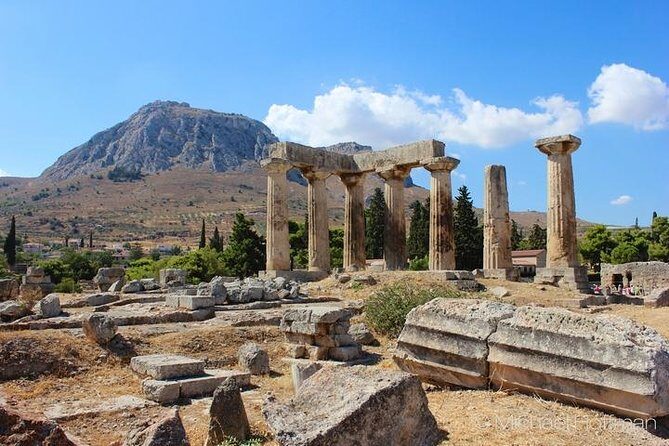
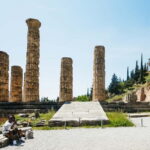
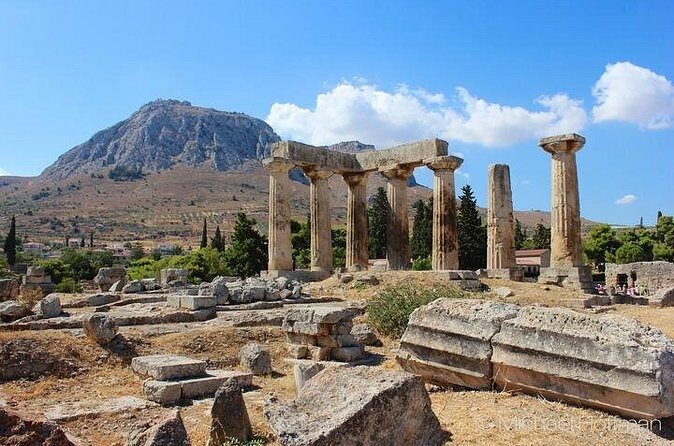
The Ancient Corinth stop is where the day becomes most directly “Paul’s footsteps.” The tour description focuses on why Corinth mattered: it was first inhabited in the Neolithic period, and later Corinth grew on fertile soil plus, above all, strategic location at the intersection of major land routes and sea-facing waterways connecting the western Mediterranean to the east.
It specifically notes strong agricultural output that fueled trade activity, and in the 8th century BCE, Corinthian colonies were founded across the Mediterranean, including Corfu and Syracuse. The takeaway for you: Corinth wasn’t just a town with ruins. It was an engine of communication and movement, which is exactly the kind of setting where religious ideas could spread and take root.
The stop length is about 1 hour 20 minutes. That’s enough time to orient yourself and see the main areas without feeling like you’re on a rushed conveyor belt.
Driver vs licensed guide: why some days feel guided, others feel self-paced
This is the part you should read twice, because it explains both the magic and the frustration.
You get a professional English-speaking tour driver who can guide you with historical and cultural context until you enter archaeological sites and museums. But drivers are not licensed to accompany you inside. If you want someone licensed to walk you through inside the sites, the provider says they can arrange it for an additional cost, subject to availability.
That difference shows up in the experiences shared: one positive account praises a guide named Danai, described as an archaeologist with impressive knowledge of Greek and religious history, plus a driver Spyros who stayed attentive and provided water during the day. Another positive review highlights a driver named Michael as awesome and points out the comfort of the car, including cooling during extreme heat.
A separate, more critical note points out that the guide felt more like someone explaining while driving and then dropping the group off to explore, with less storytelling during the on-site time. That’s not necessarily a bad tour—just a mismatched expectation. If you want constant narration while you walk through every stop, plan to add a licensed guide for the key sites if the option is available.
For many people, the “drive + orientation + self-explore” format works well. For others, it can feel like you’re paying mainly for transportation. Your best bet is to decide what kind of history you want: quick orientation and freedom, or guided walking and interpretation everywhere.
Price and what you’re really paying for
The tour price is listed as $445.77 per group (up to 3), with a day length of about 8 hours. That’s not “cheap,” but it’s also not trying to be. You’re paying for private logistics: pickup from your Athens hotel or the Piraeus cruise pier, plus an air-conditioned vehicle, plus a professional English-speaking driver.
Where the value shifts is in what’s not included. Entrance tickets and museum fees are not included, and lunch isn’t included. So your total cost in the end depends on how many sites you choose to enter and what you order for lunch.
If you already know you’ll want paid entries at places like the Acropolis precinct sites and Ancient Corinth areas, I’d budget extra and buy tickets early if possible. One practical suggestion from the provided info is to pre-purchase admission tickets, because availability can be tight.
Who this tour suits best
This experience fits best if you want:
- A small-group private day connecting Athens and Corinth with a Christian history lens
- An Acropolis-first itinerary that includes the Areopagus and a clear sermon connection
- Comfortable transportation and orientation before you walk on your own
- A flexible pace that can work even if your group includes kids (one review mentions a toddler and notes accommodating, flexible behavior)
It may not be ideal if you:
- Expect a fully guided experience inside every archaeological site without any extra arrangements
- Want nonstop narration during your entire time in each building
- Prefer a trip that includes included lunch and included entry fees
Should you book this Athens to Corinth Paul footsteps tour?
I’d book it if you want a private, efficient, story-linked route with real focus on the big Athens monuments and the biblical geography you came for. The strongest part is the match between the Acropolis sights and the Areopagus stop tied to Paul’s sermon tradition.
Before you book, just calibrate your expectations about guidance inside sites. If you’re the type who wants someone beside you while you read inscriptions and walk through galleries, consider arranging a licensed guide for the interior parts. If you’re happy getting strong context from the driver and then exploring on your own, this format can feel like the sweet spot.
FAQ
FAQ
How long is the Athens and Ancient Corinth tour?
It runs for approximately 8 hours.
Is this tour private or shared?
It’s private, and only your group participates. The group size is up to 3.
Do I need to speak Greek?
No. The experience is offered in English.
Do you pick up from hotels and cruise ships?
Yes. Hotel pickup and drop-off in Athens are offered, and there is also pick-up/drop-off at the cruise ship pier at Port of Piraeus.
Are entrance fees included?
No. Entrance fees to archaeological sites and museums are not included.
Is lunch included in the price?
No. Lunch includes free time in a traditional restaurant in Ancient Corinth, but food and drinks are not included.
Can the driver guide me inside museums and archaeological sites?
The driver can provide guidance until you enter sites, but the tour data says drivers are not licensed to companion you inside archaeological sites and museums. A licensed guide can be arranged for an extra cost, subject to availability.
Is there a vehicle provided?
Yes. You travel by private air-conditioned vehicle appropriate for your group size.
Do I need formal clothing?
The dress code is listed as formal.
What if I’m booking from a cruise?
Cruise passengers need to provide the ship name and docking, disembarkation, and re-boarding times at the time of booking.