REVIEW · ATHENS
8 Days Apostle Paul tour/Neapolis, Philippi, Veria,Thessaloniki, Athens,Corinth
Book on Viator →Operated by GREECE TAXI · Bookable on Viator
Paul’s route through Greece is only part of the story here. This private eight-day journey also reaches Meteora’s cliff monasteries, Alexander the Great’s Macedonian world, Delphi, Mount Olympus, Corinth, and the Acropolis. It is a long road trip with serious historical range, not a simple Bible-sites outing.
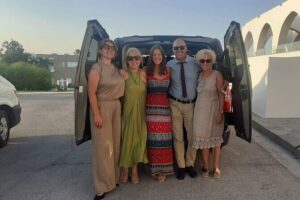
I like two things right away: the flexible schedule lets you stop for photographs, meals, and small towns, and Nikolaos, also called Nikos, is a driver who knows how to handle narrow village roads and mountain terrain. The spacious, clean car and restaurant suggestions add comfort. The catch is the pace. Eight days cover a huge stretch of Greece, and lodging, entrance fees, and an archaeological guide cost extra.
In This Review
- Key points to know before booking
- What kind of Greece trip is this?
- Day 1: Thermopylae, Trikala, and the first Meteora sunset
- Day 2: Vergina, Veria, Aristotle, and hot springs
- Day 3: Pella and Thessaloniki’s Christian landmarks
- Day 4: Philippi, Lydia, and Kavala
- Day 5: Amphipolis, Dion, and Mount Olympus
- Day 6: Delphi and the road through Parnassus
- Day 7: Livadia and Paul’s Corinth
- Day 8: The canal, Acropolis, and Areios Pagos
- Price, lodging, and the real value
- Who should book this private Pauline road trip?
- Should you book it?
- FAQ
- How long is the Apostle Paul tour?
- Where does the tour start?
- What time does the tour begin?
- Is transportation included?
- Are hotels included in the price?
- Are entrance fees included?
- Is Nikolaos a licensed archaeological guide?
- Is this a private tour?
Key points to know before booking
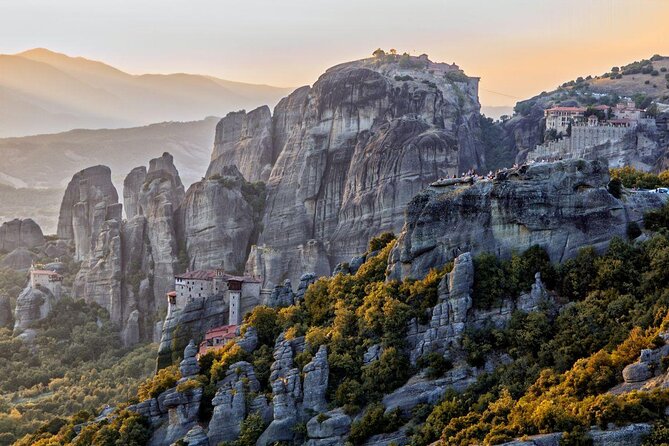
- Meteora begins the trip in dramatic fashion, with monastery visits, sunrise light, and a sunset photography drive around the rocks.
- Paul’s Macedonian route is unusually complete, linking Neapolis, Philippi, Lydia’s baptismal site, Veria, Thessaloniki, and Amphipolis.
- Ancient Macedonia gets proper attention, including Vergina, Pella, the School of Aristotle, and Dion.
- The trip mixes Christian history with classical Greece, from Delphi and Thermopylae to Corinth and the Acropolis.
- Nikos drives, but he is not a licensed archaeological guide, so plan ahead if you want guided walks inside museums and ruins.
- The advertised price of $2,961.45 per person does not cover everything, especially hotels and site admissions.
What kind of Greece trip is this?
Think of this as a private mainland road trip built around the Acts of the Apostles, with plenty of ancient Greece folded in. You start and finish in Athens, but much of the value comes from the long northern loop through Central Greece, Thessaly, and Macedonia.
The route covers roughly the places connected with Paul’s arrival in Europe and his work in Macedonia and Corinth. It also adds major sites that explain the political and religious world Paul entered: Aigai, the first Macedonian capital; Pella, Alexander’s birthplace; Philippi, a Roman colony; and Thessaloniki, a major city of the early Christian era.
You ride in an air-conditioned private vehicle with pickup and drop-off available at your Athens or Piraeus hotel or apartment. The schedule is described as flexible, which matters because the days include several long drives and many short visits. You can ask to stop for scenery, photographs, local food, and wine rather than being locked into a bus timetable.
Still, flexibility does not make the route short. Some days combine three or four major stops, and the overnight locations change often. You need to be comfortable sitting in a car, walking over uneven archaeological ground, climbing monastery steps, and starting at 8 a.m.
You can also read our reviews of more tours and experiences in Athens.



Day 1: Thermopylae, Trikala, and the first Meteora sunset
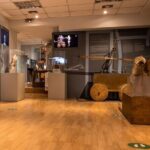
The first morning heads north from Athens to Thermopylae, the famous pass associated with Leonidas and the Spartan defense against Persia in 480 BC. The stop lasts about 30 minutes, enough for the Leonidas monument and a quick look at the interactive museum if you pay the small admission fee of €3, or €1 at the reduced rate.
Thermopylae works well as an opening stop because it puts Greece’s geography to work. This narrow passage has mattered for military movement for centuries, and you can see why a route between northern and southern Greece would be so important.
Next comes Trikala, an old city built near ancient Trikka. Its river, Lithaios, runs through the center, crossed by ten bridges. The town is also tied to Asclepius, the ancient healing god, and once had an important healing sanctuary.
The Trikala stop is less famous than Meteora, but that is part of its appeal. You get an hour to walk and drink in the town rather than simply racing from one headline site to another. The supplied plan does not promise a museum visit or a formal city tour, so think of this as a local pause.
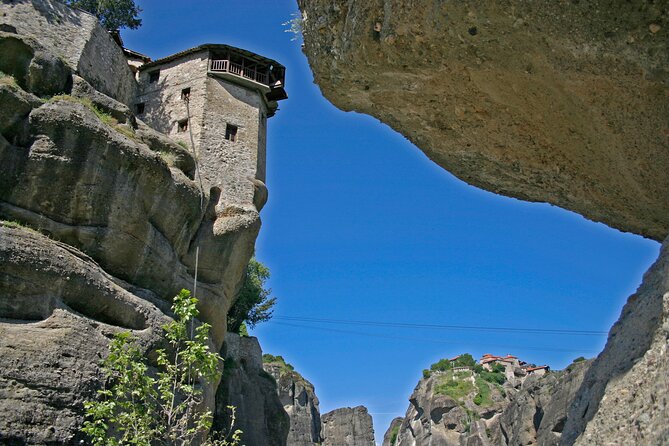
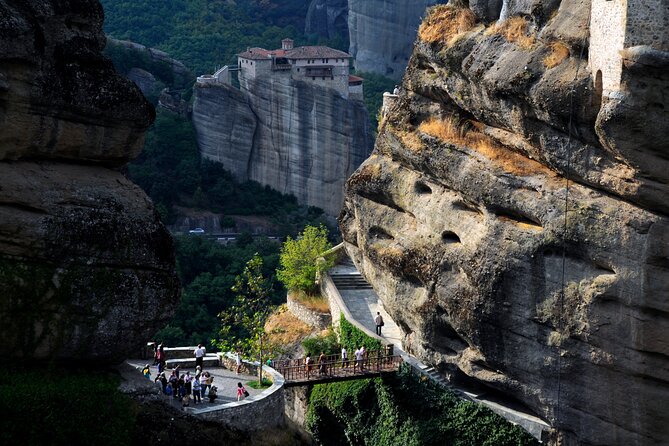
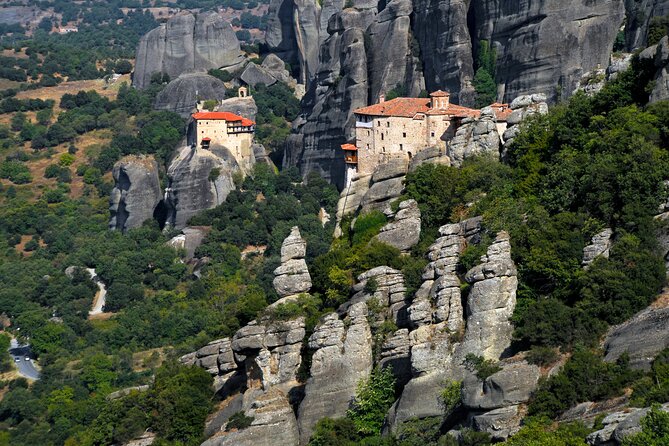
By afternoon, the road reaches Meteora. The sight is unforgettable: huge stone pillars rising above the Thessalian plain, topped by Orthodox monasteries that seem to cling to the rock. Six monasteries remain from an original twenty-four, and the area is protected as a UNESCO World Heritage site.
The plan calls for a drive around the rocks and visits to at least two monasteries. Admission is generally €3 per monastery, not included in the tour price. You should allow time for steps and uneven surfaces. Modest clothing is also a practical concern at Orthodox religious sites.
You sleep in Kastraki, a quiet village beneath the rocks. The evening photography drive is one of the smartest parts of the schedule. The driver takes you to scenic and less obvious viewpoints for sunset, then the next morning offers a second look in softer early light.
Day 2: Vergina, Veria, Aristotle, and hot springs
Meteora gets another morning drive, this time with different light and, potentially, fewer people. I like this repeat visit because a one-hour afternoon glimpse can feel too brief for such an unusual place.
The route then turns toward Vergina, ancient Aigai, the first capital of Macedon. The Museum of the Royal Tombs is one of the strongest archaeological stops in Greece. In 1977, archaeologists found royal burial sites, including the undisturbed tomb identified as that of Philip II, father of Alexander the Great.
The museum is built over the tombs, creating a powerful visit rather than a standard display of objects in glass cases. You see the finds in the setting where they were discovered. Admission is listed as €6 in winter and €12 in summer, separate from the tour.
This is a key stop for anyone interested in Alexander. In Aigai, Philip II was assassinated in 336 BC, and Alexander was proclaimed king. The site helps you understand that Alexander’s empire began with Macedonian royal power, not simply with the young conqueror’s later campaigns.
In Veria, known in the Bible as Berea, you visit the Vima Apostolou Pavlou, associated with Paul’s preaching after he left Thessaloniki. The visit is brief, about 20 minutes, but it has clear importance for a faith-based itinerary.
The School of Aristotle at Mieza shifts the story back to the fourth century BC. Here Aristotle taught Alexander between 343 and 340 BC, in an area associated with the Sanctuary of the Nymphs. The archaeological remains are open without a listed admission charge, and the stop lasts about an hour.
End the day at Loutra Pozar, a thermal spring area near the foot of Mount Kaimaktsalan. The water emerges at about 37 degrees Celsius, and the baths have long been linked with rest and recovery. This is a welcome change after two days of ruins, roads, and climbing.
Accommodation near Pozar is extra. The exact cost changes by season and room count, so get a full lodging quote before paying. That advice matters because the headline tour price does not include your overnight stays.
Day 3: Pella and Thessaloniki’s Christian landmarks
Pella was the capital of ancient Macedonia and the birthplace of Alexander the Great. The archaeological museum and site together give you a clearer view of daily Macedonian life than a single monument can.
The museum includes mosaics, sculptures, maps, models, and objects from the palace and houses. The entrance fee for the museum and site is listed as €8, or €4 at the reduced rate. Allow about 90 minutes.
Pella is not just an Alexander stop. Its broad planning and house remains show the wealth and confidence of a Macedonian capital before the Roman period. If you want time to read displays carefully, tell Nikos in advance because the rest of the day moves on to Thessaloniki.
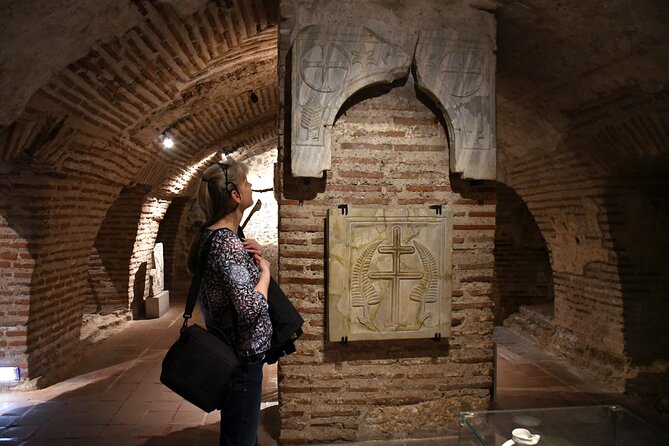
In Thessaloniki, the Church of Saint Demetrius connects ancient martyrdom with a living Orthodox tradition. The church’s crypt is associated with the imprisonment and death of Demetrius in 303 AD. It is a free stop and takes about an hour.
The White Tower is the city’s best-known symbol. Built on an older Byzantine fortification and altered under Ottoman rule, it later served as a prison and execution site. The €6 admission includes access to the museum and the top, where you get a 360-degree view over Thessaloniki.
The Rotunda adds another layer. Built around AD 304 under Galerius, it was intended as a mausoleum, then converted into a Christian church. Its mosaics and massive circular interior show how Roman buildings were adapted for Christian worship.
The Rotunda admission is not included. The itinerary lists about an hour here, but the day already has several stops, so ask how much time is planned inside each monument. Thessaloniki deserves more than a drive-by, but this schedule gives you a useful first look.
Day 4: Philippi, Lydia, and Kavala
Philippi is the heart of the Pauline route in northern Greece. Paul, Silas, and Timothy reached the city around AD 49 or 50, and the ancient ruins make the biblical account easier to place in a real Roman setting.
The Archaeological Museum of Philippi covers the city before and after it became a Roman colony. After the battle of Philippi in 42 BC, Roman veterans settled here, and the city gained new importance. Paul’s visit took place in that Roman world.
Allow 90 minutes for the museum and archaeological remains. Admission is extra, and the schedule does not give a combined price. You will see a forum, streets, early Christian remains, and other traces of a city that sat on an important route.
Nearby, Saint Lydia’s Baptistery marks the traditional site connected with Lydia of Thyatira. She is described in Acts as a merchant and the first documented convert to Christianity in Europe. The stop lasts about an hour and has no listed admission charge.
This is one of the most meaningful pauses for a religious group because it links a named person in the New Testament with a specific place. It is also a good reminder that Paul’s work depended on local people who offered hospitality and carried the new faith forward.
The day ends in Kavala, ancient Neapolis, where Paul is traditionally remembered as arriving in Europe. A monument outside the Church of Agios Nikolaos marks the connection. Kavala also has a castle, old neighborhoods, and Ottoman and Byzantine remains.
The plan treats Palea Kavala as an overnight stop, with the accommodation cost separate. You have a chance to eat local food here, and the company places strong emphasis on regional restaurants and wine. Ask Nikos to explain the meal choices rather than assuming every recommendation fits your budget or dietary needs.
- All Day Cruise -3 Islands to Agistri,Moni, Aegina with lunch and drinks included
★ 5.0 · 4,958 reviews




Day 5: Amphipolis, Dion, and Mount Olympus
Amphipolis fills in the road between Philippi and Thessaloniki. It was an Athenian colony, later an important Macedonian city, and a place tied to both the Peloponnesian War and Alexander’s campaigns.
The archaeological museum covers the city’s long story. Paul and Silas passed through Amphipolis on their way toward Thessaloniki, so this is another stop where the road itself becomes part of the biblical story.
Dion brings you back to the religious world of ancient Macedon. Its sanctuary of Zeus was a major center, and Philip II and Alexander celebrated victories here. Alexander also gathered his army and offered sacrifices at Dion before his campaign in Asia in 334 BC.
Admission to the site and museum is listed as €6 in winter and €12 in summer. The scheduled visit is one hour, which is enough for highlights but not a slow archaeological study.
The overnight stop is on the slopes of Mount Olympus, Greece’s highest mountain, rising to 2,917 meters at Mytikas. You are not signing up for a climb. The plan is a scenic overnight in the mountain area, with boutique or three- and four-star lodging available at extra cost.
This is another day when driving time and visit time need careful discussion. Amphipolis, Dion, and Olympus are spread across northern Greece. The private format helps, but the route remains ambitious.
Day 6: Delphi and the road through Parnassus
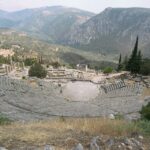
The itinerary turns south toward Delphi, one of Greece’s essential ancient sites. The Sanctuary of Apollo was home to the Pythia, the oracle consulted by ancient rulers and city-states. The Greeks considered Delphi the center of the world, marked by the omphalos stone.
The combined ticket for the archaeological site and museum is listed as €12 in summer and €6 in winter, with reduced rates for some younger visitors. The main site takes about two hours, while the museum receives another hour.
You will see the remains of treasuries, temples, athletic buildings, and monuments set against the slopes above the Gulf of Corinth. Delphi is visually impressive, but the terrain is uneven and sloped. Wear shoes with good grip and do not treat this as a quick photo stop.
The Tholos of Athena Pronaia lies less than a mile from the main ruins. Its round form is one of Delphi’s most recognizable structures, and the stop is free. The itinerary gives it about 30 minutes.
The road then crosses Mount Parnassus, a mountain linked in Greek mythology with Apollo and the Muses. You spend the night in a traditional village on the slopes, with lodging and breakfast arranged for an extra charge.
A practical warning: the listed sequence from Mount Olympus to Delphi involves a substantial transfer. Ask for the exact driving plan before booking, especially if you are traveling with children, older relatives, or anyone who dislikes long car days.
Day 7: Livadia and Paul’s Corinth
The route continues through Boeotia, past Thebes and into Livadia. The planned stop is beside the Karya River, where you can pause for a drink near the springs.
Ancient tradition connected these springs with the Oracle of Trophonios and with the waters of remembrance and forgetfulness. You get an hour here, which offers a gentler break after the major archaeological sites.
The drive through Mount Kithaeron follows an old road between Athens and Thebes. The area includes ancient Eleutherai, a border settlement associated with Dionysus and an old fortress. The plan describes this as a scenic drive rather than a full archaeological visit.
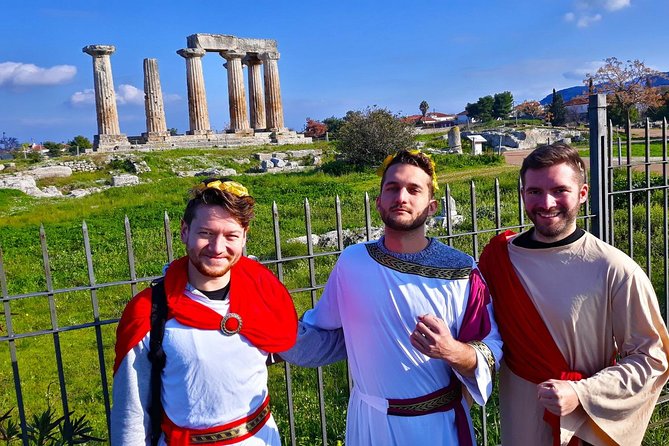
Ancient Corinth is the main event. The city was one of the largest in ancient Greece and later became central to Paul’s missionary work. The Acts of the Apostles places Paul here, and the two letters to the Corinthians remain among the best-known books of the New Testament.
The archaeological site includes the ancient agora and the Bema, or tribunal platform, associated with Paul. A combined site and museum ticket costs €8 in summer or €4 in winter. Allow two hours.
Corinth works for both faith-focused and classical interests. You see the Roman city, the older Greek setting, and the strategic position that made Corinth wealthy and important. Afterward, you continue to Nafplio for the night.
Nafplio was the first capital of modern Greece and is a fine place to end the road portion of the trip. Accommodation with breakfast is extra, listed at a higher rate than some earlier stops. You can book your own hotel, but then you must reserve a separate room for the driver.
Day 8: The canal, Acropolis, and Areios Pagos
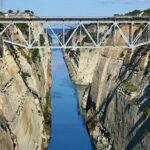
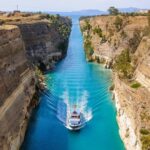
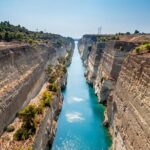
The Corinth Canal is a short but worthwhile stop. Workers cut 6.4 kilometers of canal between 1881 and 1893, linking the Aegean and Ionian seas. You can walk across a pedestrian bridge and look down from about 80 meters above the water.
Back in Athens, the Acropolis provides the grand final chapter. The hill gathers several major monuments, but this itinerary also emphasizes Areios Pagos, or Mars Hill, where Paul preached to Athenians around AD 51.
Areios Pagos is a useful stop for understanding Paul’s approach in Athens. Instead of visiting a Jewish community as he did in several Macedonian cities, he addressed an audience shaped by Greek philosophy and civic debate.
The Acropolis visit lasts about 90 minutes, followed by an hour at the Acropolis Museum. Entrance fees are not included. The museum focuses on finds from the Acropolis and gives essential context for the monuments above.
You then visit Athens highlights before hotel drop-off. The final day packs a lot into a small window, so do not expect a full city tour. If the Acropolis and museum matter most to you, confirm entry times and how much independent time you will have.
Price, lodging, and the real value
The listed price is $2,961.45 per person. That sounds high until you account for private transportation, eight days of driving, hotel pickup and drop-off, an air-conditioned vehicle, and a dedicated driver for your group.
But the price is not an all-inclusive total. Hotels are extra, with rates changing by city, season, weekends, holidays, and the number of rooms. Entrance tickets are also extra, often around €6 to €12 per major site in summer. Food, drinks, and any separate licensed guide are additional.
The value is strongest for a small group that wants control over the route. Four friends or a family can split the vehicle cost while enjoying stops that would be difficult on a standard group coach. A solo client may find the per-person price harder to justify.
Nikos is a driver rather than a licensed archaeological guide. He provides an audio documentary during the journey and shares historical information, but he cannot accompany you as an official guide inside sites and museums. If detailed interpretation is important, arrange an archaeologist guide in advance.
Who should book this private Pauline road trip?
I would choose this experience if you want a faith-centered route but also care about Macedonian kings, Roman cities, Orthodox monasteries, Greek mythology, and local meals. It is especially suitable for private groups that value a clean, spacious vehicle and the freedom to pause in small towns.
The trip also suits people who prefer mainland Greece to a beach holiday. You spend nights in Kastraki, near Pozar, near Olympus, on Parnassus, and in Nafplio, so you see mountain areas that a short Athens visit misses.
I would hesitate if you want slow mornings, one hotel base, or long independent visits at every museum. The schedule is ambitious, and some stops are short. Summer heat, crowded monuments, and extra fees also make spring, autumn, or winter worth considering, provided you check opening days and reduced winter hours.
The tour is private, and most people can participate, but the ruins, monasteries, and hills require walking. Tuesday closures affect some archaeological sites and museums, while winter opening hours can end as early as 3:30 p.m. Confirm the calendar before fixing your dates.
Should you book it?
Book it if you want Paul’s Greek route with far more than Paul, and you are happy to trade a relaxed pace for a wide sweep of the mainland. The strongest reasons are the private vehicle, flexible stops, careful mountain driving, and the way the route joins Philippi, Lydia, Veria, Thessaloniki, Corinth, and Athens.
Before paying, request a written total showing hotels, room arrangements, admissions, meal expectations, and any licensed guide fees. If that final figure fits your group budget, this is a rewarding way to connect the New Testament with the older Greek and Roman world around it.
FAQ
How long is the Apostle Paul tour?
The experience lasts approximately eight days, beginning and ending in Athens.
Where does the tour start?
Pickup is available from your hotel or apartment in Athens or Piraeus. Another pickup location may be requested.
What time does the tour begin?
The stated start time is 8:00 a.m.
Is transportation included?
Yes. Private transportation in an air-conditioned vehicle is included, along with pickup and drop-off.
Are hotels included in the price?
No. Accommodation is arranged at an additional cost. You may also make your own hotel reservations, but you must reserve an extra room for the driver.
Are entrance fees included?
No. Site and museum admissions are paid separately. Listed summer prices commonly range from €6 to €12, depending on the site.
Is Nikolaos a licensed archaeological guide?
No. Nikolaos, also called Nikos, is the tour driver and provides historical information and an audio documentary during the drives. A licensed archaeological guide must be hired separately and arranged in advance.
Is this a private tour?
Yes. Only your group participates, and the schedule can be adjusted to suit your needs and interests.