REVIEW · ATHENS
Acropolis Mythology & Food Tour
Book on Viator →Operated by Alternative Athens · Bookable on Viator
Myth and lunch in Athens, on one walk. This tour strings together key ancient sights and real-life food stops, so you’re not just checking boxes. I love the small-group pace and the way the guide ties stories you hear to places you can actually see and taste, from the Acropolis area down through the market streets. One possible drawback: archaeological site entry fees aren’t included (you’ll need to plan for that, typically €30 per person).
You’ll start in the morning and cover a tight loop with smart timing: big landmarks first, then neighborhoods where the city feels lived-in. The route is built for getting oriented fast, with enough stops to feel like a mini adventure rather than a long lecture.
If you’re sensitive to stairs and crowds, note that you’ll be moving through busy areas and you can’t bring strollers or big bags to the Acropolis. It’s still very doable for most people—just pack light and keep expectations realistic for a morning in central Athens.
In This Review
- Key Highlights at a Glance
- Price and Value: Is This a Good Deal?
- Meeting Point at the Arch of Hadrian: Start Where Athens Makes Sense
- Temple of Olympian Zeus: Big Scale, Easy Context
- Acropolis Time: What to Watch For (and What Not to Carry)
- Syntagma Square: The Busy Athens Moment Between Ancient and Modern
- Plaka: The Old Streets Part (and Its Honest Tradeoffs)
- Monastiraki: Flea-Market Energy and the Stuff You Can Actually Eat
- Psiri: Street Art Meets Evening-Food Energy
- Varvakios Central Municipal Market: Where Athens Shops for Dinner
- Food Tastings: How to Use Them Smartly
- Group Size and Pace: Why It Matters on a Walking Tour
- Who This Tour Fits Best
- Should You Book? My Practical Recommendation
- FAQ
- Is the tour in English?
- Where do I meet the guide?
- What time does the tour start, and how long is it?
- Is the tour ticket mobile?
- Are entrance fees included?
- How big is the group?
- Are there restrictions on bags or strollers at the Acropolis?
- What if I cancel?
Key Highlights at a Glance

- Small group (max 15): easier questions, better walking pace, less time lost
- Acropolis time (about 2 hours): enough for a guided walkthrough without rushing
- Food stops in real neighborhoods: Plaka, Monastiraki, Psiri, plus a major municipal market
- Varvakios Market experience: see how locals shop for produce, meats, and fish
- Mobile ticket + English guide: simple logistics once you’re at the meeting point
Price and Value: Is This a Good Deal?
The listed price is $138.55 per person for about 5.5 hours. That sounds like more than a basic city stroll, and it is. But you’re paying for three things that matter in Athens: a professional guide, a small group (15 max), and multiple food tastings tied to the route.
On top of that, you’ll usually need to budget for archaeological site entry. The tour notes that entrances to the archaeological sites aren’t included and that you can often pre-purchase tickets for €30.00 per person if you let the operator know. If you already plan to buy those tickets yourself, you’re not losing money—this option just reduces friction on your end.
So the value question comes down to this: do you want help making sense of the Acropolis area and myth connections, plus structured food stops, all in one go? If yes, the price usually feels fair. If you’re the type who prefers solo wandering with zero guidance, you might find the cost harder to justify.
You can also read our reviews of more food & drink experiences in Athens



Meeting Point at the Arch of Hadrian: Start Where Athens Makes Sense
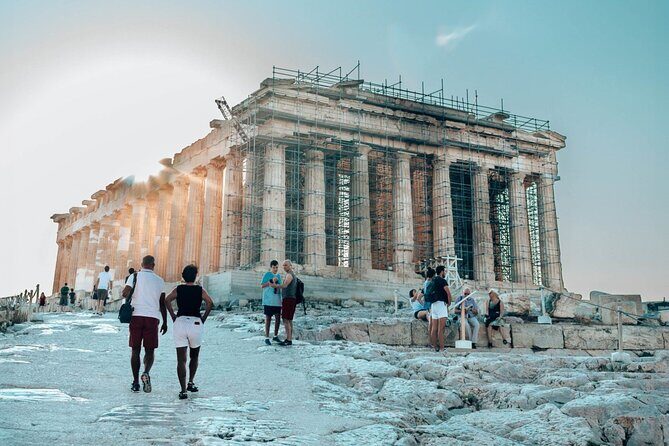
You meet near the Arch of Hadrian on Leof. Vasilisis Amalias 50, starting at 8:00 am. That early start helps. Athens gets busy, and the morning light makes stone landmarks look better than late-day glare.
This is also a good sign for practical travelers: the tour description says you’re near public transportation, so you’re not stuck figuring out a private transfer or taxi plan. You’ll end at Monastiraki Square (Apollonos 21), which is handy because it drops you near some of the city’s most convenient wandering zones after the tour.
Bring a realistic expectation: you’ll be walking through central Athens where people are going places. Good shoes matter more than fancy plans.
Temple of Olympian Zeus: Big Scale, Easy Context
Your first stop is the Temple of Olympian Zeus (Olypeion), between the Acropolis and the Ilissos river area. You’ll view it from the outside and hear stories about the temple and its role in ancient Athens.
This early stop works because it sets scale. Even without paying for a long inside visit, the temple area helps you understand why the Greeks built monumental stone pieces meant to impress. It also gives you myth context before you get to the Acropolis proper—so when you see the hill fortress later, it lands with more meaning.
Time on this stop is about 15 minutes, so it’s not a slow scenic moment. The benefit is that you won’t waste half your morning standing around before the main sights.
Acropolis Time: What to Watch For (and What Not to Carry)
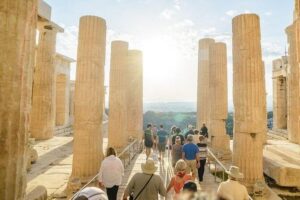
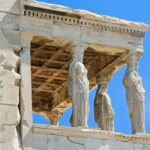
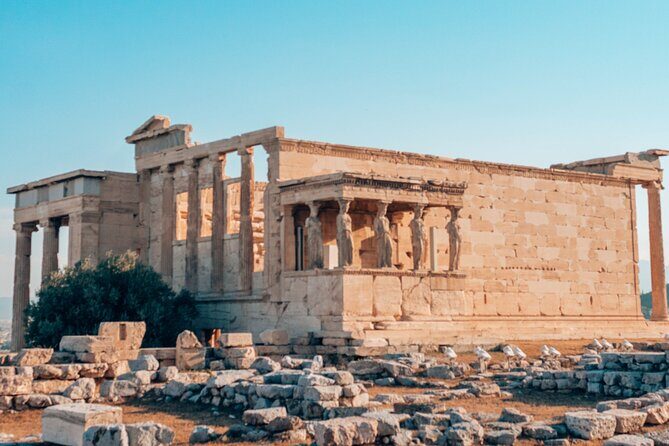
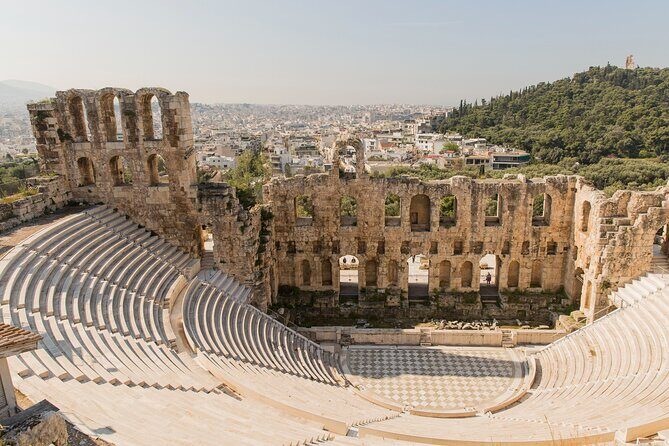
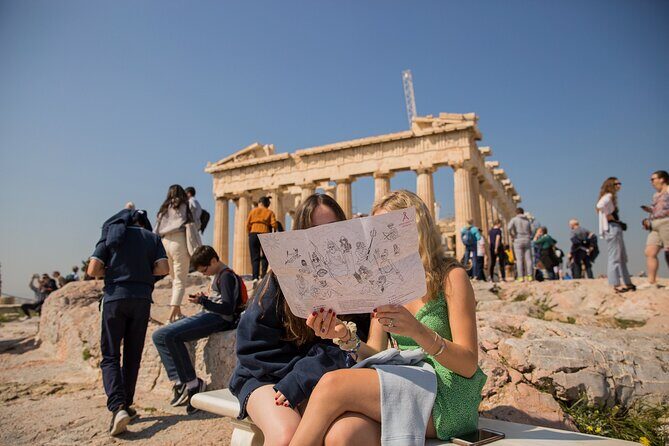
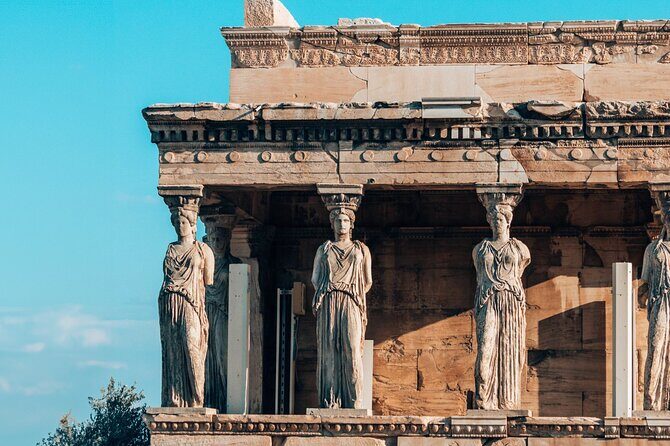
The heart of the tour is your Acropolis visit (about 2 hours). You’ll focus on the sanctuary dedicated to Athena, plus major monuments in the area such as the Parthenon, Temple of Athena Nike, Erechtheion, Propylaea, and the Theater of Dionysus.
Two hours is a smart length. It’s long enough to hear the why behind the structures, not just the what. And it’s short enough that you can still enjoy the views without feeling drained.
Practical note: the tour specifically warns that strollers, backpacks, and big bags are not allowed at the Acropolis. So pack light. If you’re planning a day bag, keep it compact. This matters because a “quick bag-check issue” can turn into a lost chunk of your experience.
If you’re under 25 and want possible discount pricing on archaeological sites, have your ID card or passport with you, as the tour information notes this requirement for eligible discounts.
Syntagma Square: The Busy Athens Moment Between Ancient and Modern
After the Acropolis, you pass through Syntagma, Athens’ central square. The guide keeps this stop practical: you’ll see the Greek Parliament area and learn how the square functions as a high-traffic hub.
This is one of those stops that feels small until you realize why it’s included. After ancient monuments, Syntagma brings you back to modern Athens energy. It’s also a useful waypoint for understanding the city’s layout, because everything else you’ll walk through afterward connects to these central streets.
This stop is about 40 minutes, including time for orientation and discussion. It’s not museum time, but it is time that helps you connect the dots.
A few more Athens tours and experiences worth a look






Plaka: The Old Streets Part (and Its Honest Tradeoffs)
Next comes Plaka, the area just below the Acropolis with narrow lanes, souvenir shops, and old-city atmosphere. The tour gives you about 45 minutes here, letting you get a feel for the “picture postcard” Athens vibe—while still keeping the focus on the meaning of the place.
Plaka can be tourist-heavy. That’s not a flaw; it’s the deal. The value of this stop is that it’s not just “walk past shops.” It’s part of a bigger route that uses Plaka as a bridge between ancient sites and neighborhood food culture.
If you want to photograph, this is where you’ll have plenty of angles. If you want peace and quiet, you’ll need to pick your moment—morning will help.
Monastiraki: Flea-Market Energy and the Stuff You Can Actually Eat
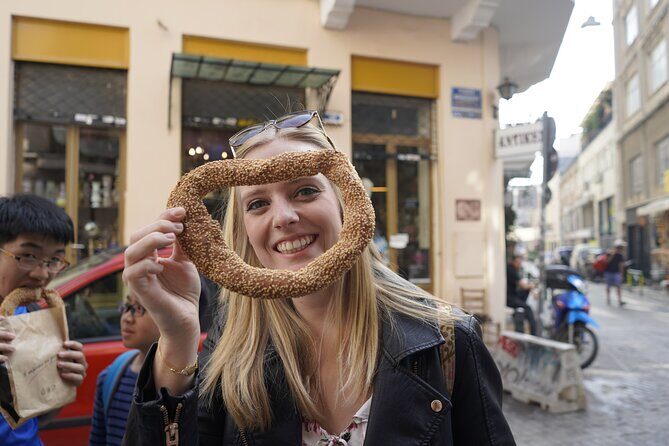
You then move to Monastiraki (about 40 minutes). This area sits near sites like Hadrian’s Library, and it’s also known for street food and bargain hunting.
One reason this stop is useful is that it helps you understand Athens as a city where food is part of daily life, not just a planned restaurant event. You’ll also learn about a few notable layers here, including mention of one of the city’s surviving Ottoman mosques.
This is a “look around, ask questions, and taste something” kind of neighborhood. If you’re the type who likes to browse markets but hates getting lost, Monastiraki is a great place to do it with a guide.
Psiri: Street Art Meets Evening-Food Energy
Your next neighborhood stop is Psiri (about 30 minutes). The tour frames it as an area where craftsmen once worked out of small shops, and now it’s popular for evening food and drink—plus street art.
Even though your tour is happening in the morning, Psiri’s vibe is still visible in the walls and the layout. This stop is shorter, but it’s a good palate cleanser between market-heavy segments.
If you like cities that show you their present day as well as their past, Psiri is a nice reminder that Athens doesn’t stop at the Acropolis.
Varvakios Central Municipal Market: Where Athens Shops for Dinner
The finale food stop is Varvakios Central Municipal Market. You get about 15 minutes here, and the focus is simple: this is where locals shop for produce, meats, and fish.
This is one of the most authentic-feeling parts of the tour because it’s not designed mainly for tourists. The description emphasizes that despite the bustle, it reflects real daily life and the city’s culinary culture.
Can you do more here on your own afterward? Yes—if you enjoy markets. But even in a short time, you’ll get the sensory contrast that makes the whole “mythology and food” concept click. You’re moving from stone gods to real ingredients.
Food Tastings: How to Use Them Smartly
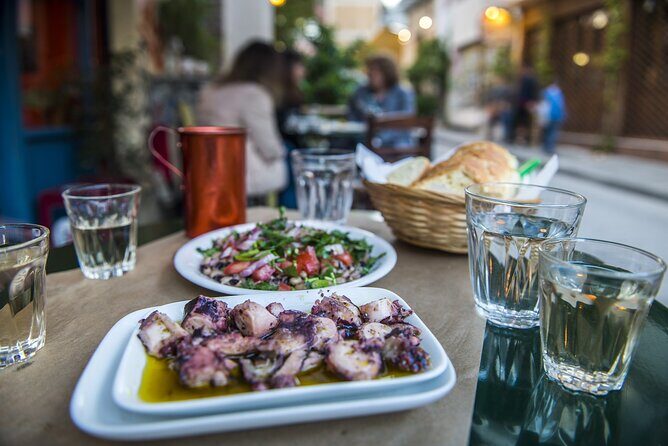
The tour includes food tastings as described in the tour, and the route is arranged so you taste in the neighborhoods where those foods belong. I like this approach because it avoids the common problem of guided food tours where tastings feel random.
Still, think about how you handle tasting. If you’re sensitive to spicy food, ask the guide how bold the options are before you take the first bite. If you’re hungry (likely), pace yourself so you don’t run out of energy before the market stop.
Because the tastings are part of a guided route, you’ll also learn what to notice while you’re eating: what a vendor is known for, or what locals look for when they shop.
Group Size and Pace: Why It Matters on a Walking Tour
With a maximum of 15 travelers, this doesn’t feel like a big-vehicle bus tour pretending to be personal. It’s small enough that you can ask questions without shouting, and the guide can adjust timing if a street gets crowded.
The route is also structured with short stops followed by moving time. That reduces “dead time” and helps you cover a lot without feeling like you’re sprinting nonstop.
Who This Tour Fits Best
This works especially well if you want:
- A fast way to learn the Acropolis area without a separate guide or museum strategy
- Food tastings that connect to neighborhoods you might otherwise skip
- A morning start so you still have energy for the rest of Athens
It may be less ideal if you:
- Hate walking and crowded central streets
- Need lots of time in each single site (this tour is built for a well-paced loop)
- Travel with bulky bags or strollers you can’t leave behind for the Acropolis (the tour notes they’re not allowed)
Should You Book? My Practical Recommendation
I’d book this if your goal is “see the sights, understand the stories, and eat like you’re in the city” without overplanning. The combination of Acropolis focus, neighborhood variety (Plaka, Monastiraki, Psiri), and a real market stop at Varvakios makes the $138.55 price feel more grounded than a generic walking tour.
Book it with one adjustment: plan for archaeological entry fees (often €30 per person, with pre-purchase possible) and pack light for the Acropolis rules. If you do those two things, you’ll get a clear route, good context, and food stops that actually match what you’re seeing.
FAQ
Is the tour in English?
Yes. The tour is offered in English.
Where do I meet the guide?
You start at the Arch of Hadrian, Leof. Vasilisis Amalias 50, Athina 105 58, Greece.
What time does the tour start, and how long is it?
The tour starts at 8:00 am and runs for about 5 hours 30 minutes.
Is the tour ticket mobile?
Yes. The tour includes a mobile ticket.
Are entrance fees included?
No. The archaeological site entrance fees are not included. You can pre-purchase tickets for €30.00 per person.
How big is the group?
The tour has a maximum of 15 travelers.
Are there restrictions on bags or strollers at the Acropolis?
Yes. Strollers, backpacks, and big bags are not allowed at the Acropolis and should not be taken on the tour.
What if I cancel?
Free cancellation is available if you cancel at least 24 hours before the experience’s start time for a full refund. Tickets can also be refundable up to 30 days prior to the tour’s starting time.