REVIEW · ATHENS
Ancient Athens Ayo’s E-Bike Trike Tour
Book on GetYourGuide →Operated by AYO TOURS ATHENS · Bookable on GetYourGuide
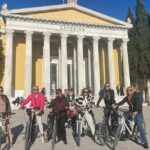
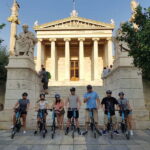
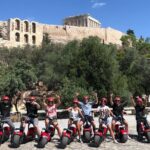
Athens reveals itself quickly from an electric trike. In two hours, you roll from Plaka past the Acropolis Museum, Odeon of Herodes Atticus, Mars Hill, Pnyx Hill, Kerameikos, Monastiraki, and the Roman Forum. The high point is the view-rich route, not a long museum visit.
I like the easy three-wheel design, especially for visitors who want more ground covered without a hard climb. I also like the mix of big ancient landmarks and ordinary city scenes, from Dionysiou Areopagitou Street to the Monastiraki market. The main consideration is simple: this tour does not enter archaeological sites, so it works best as an overview and orientation ride, not as a substitute for visiting the Acropolis or Agora.
In This Review
- Key points at a glance
- Why an electric trike makes sense in Athens
- Starting in Plaka and reaching the Acropolis Museum
- Dionysiou Areopagitou Street and the Odeon
- Mars Hill: a short climb with a wide view
- Pnyx Hill and the birthplace of democracy
- Thiseio and the city between the ruins
- Kerameikos, where Athens meets its past
- Monastiraki and the modern Athenian pulse
- The Roman Forum and the return toward Makrygianni
- What the guides add to a fast route
- The $65 price and what you receive
- Who should book this Athens trike ride
- Should you book Ayo’s E-Bike Trike Tour?
- FAQ
- Where does the Athens trike tour start?
- How long does the tour last?
- Does the tour enter the Acropolis or other archaeological sites?
- What languages are available?
- What is included in the price?
- Who can ride the electric trikes?
Key points at a glance
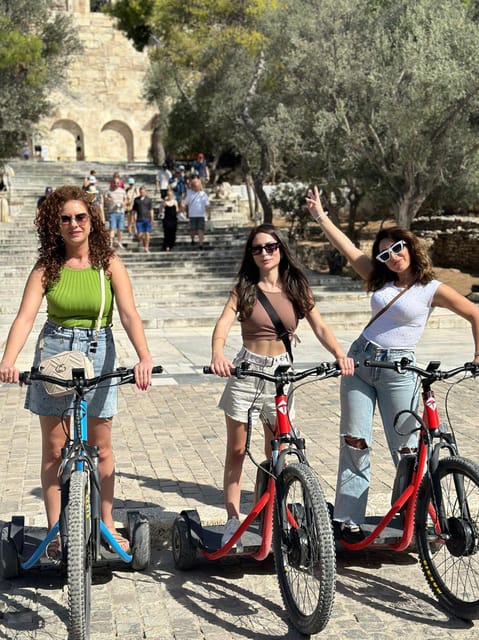
- Mars Hill and Pnyx Hill views: Short walks bring you to two of Athens’ best open-air viewpoints.
- A gentle first lesson: You receive training before setting off, and one rider found the trike took about five to seven minutes to get used to.
- A compact ancient Athens route: The ride links the Acropolis area, Kerameikos, Ancient Agora, Monastiraki, and the Roman Forum in two hours.
- Strong guide feedback: Yana, Kevin, and Dmitry are specifically praised for help, photos, flexibility, and clear explanations.
- Small-group or private format: You can choose a more personal ride instead of a large group experience.
- Important limits: Riders must be at least 10, under-18s need an adult, and riders over 220 pounds or 100 kilograms are not accepted.
Why an electric trike makes sense in Athens
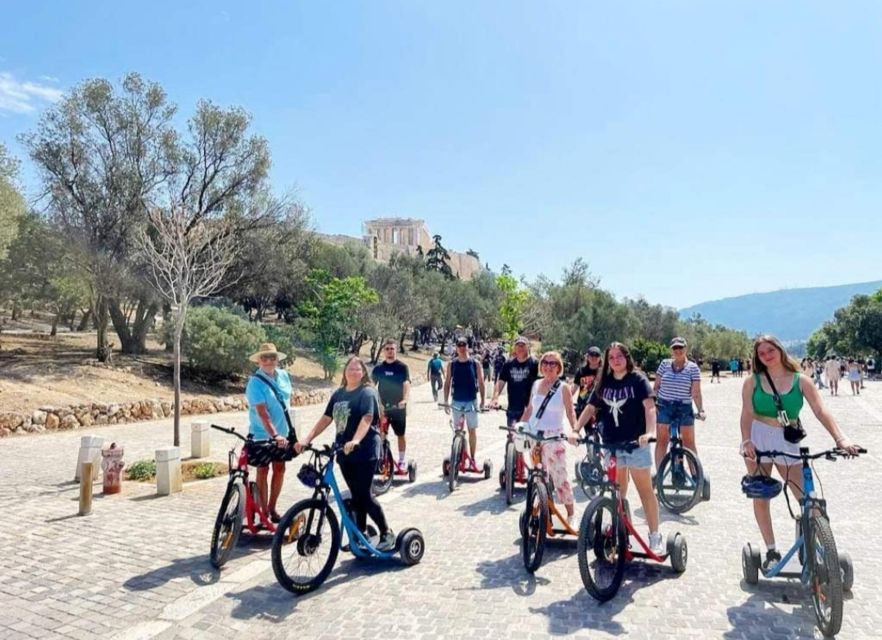
Athens is compact on a map but tiring on foot. Ancient sites spread across several districts, and the route between them can involve traffic, crowds, uneven paving, and steep streets. An electric trike gives you a seat, a motor, and a broad three-wheel base, so you can see more without turning the outing into a workout.
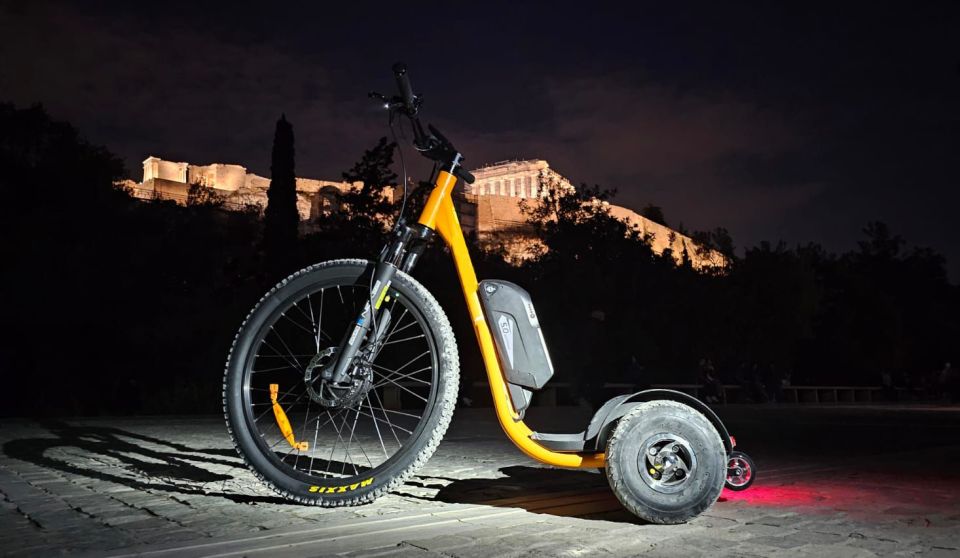
The trike is not a bicycle replacement for speed or exercise. It is closer to a small, easy-to-handle sightseeing vehicle. Training is included at the Ayo Tours ground-floor office shop on Leoforos Andrea Siggrou 22, and the guide helps you get comfortable before the ride begins.
One useful detail comes from the ride itself: you may need about five to seven minutes to get used to steering and braking. After that, you still need to maneuver carefully around people, especially in busy pedestrian areas. This is not a reason to avoid the tour, but it is a reason to pay attention during the introduction and resist the urge to rush.
The tour includes a helmet and a bottle of water. Wear comfortable shoes, since several stops include walking or standing away from the trike. Leave large bags behind if you can. The tour is not recommended for pregnant women, and riders must weigh no more than 220 pounds, or 100 kilograms.
You can also read our reviews of more cycling tours in Athens


Starting in Plaka and reaching the Acropolis Museum
The ride starts near Plaka, Athens’ old neighborhood below the Acropolis. This is a useful starting point because you are close to the city’s main ancient sights from the first minute. Your guide gives a basic lesson, checks that you can operate the trike, and gets the group moving.
The first named stop is the Acropolis Museum, where you have a photo stop and roughly ten minutes of riding time in the area. You do not go inside. That distinction matters if you are hoping to see the museum’s sculptures, glass floor, or Acropolis Gallery. Plan a separate visit if those interiors are on your list.
Even without entering, the museum helps you understand the setting. It anchors the modern side of the Acropolis district, while the ruins and slopes rise directly beyond it. Your guide can point out the relationship between the museum, the hill, and the ancient performance spaces nearby.
Dionysiou Areopagitou Street and the Odeon
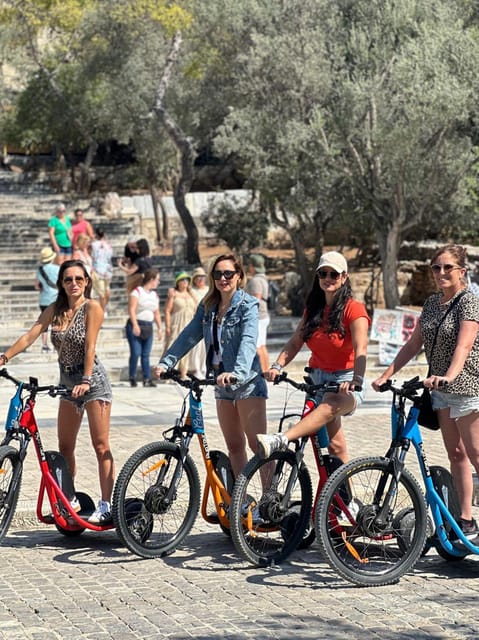
From the museum, the trikes follow Dionysiou Areopagitou Street, one of the most attractive pedestrian roads in Athens. This is one of the tour’s strongest stretches because the Acropolis remains in view along much of the route. You also see the Acropolis Museum, the Theater of Dionysus, and the Odeon of Herodes Atticus.
The Odeon is a particularly good photo stop. Its curved stone seating and tall rear wall still frame performances today, giving you a glimpse of how ancient architecture continues to serve the city. The stop allows free time for sightseeing, but the tour does not provide an extended archaeological visit.
This portion is also where the trike’s practical value becomes clear. On foot, you might pause often for photographs and spend energy navigating the pedestrian road. From the trike, you can keep a steady pace and save your legs for the hills and short walks ahead.
Mars Hill: a short climb with a wide view
The ride then reaches Areopagus, usually called Mars Hill. You leave the trike for a short walk and photo stop. The rocky surface can be uneven, so comfortable shoes matter here more than they do on the smoother streets.
Mars Hill offers a broad view over central Athens, with the Acropolis close by and the city spreading beyond it. It is one of those places where the geography of Athens becomes clear. You can see how the Acropolis rises above the older neighborhoods and how the modern city has grown around the ancient core.
The guide adds context about the hill and its role in Athenian history. The stop is listed at about 15 minutes, so expect a focused look rather than a long pause. That suits the tour’s purpose: you get the view, hear the key story, take photographs, and keep moving.
Pnyx Hill and the birthplace of democracy
Pnyx Hill follows, with about 13 minutes assigned to the stop and riding time. Like Mars Hill, Pnyx requires some walking away from the vehicle. The open setting gives you another angle on the Acropolis and a quieter break from the streets.
Pnyx is linked with the development of Athenian democracy and public speaking. It is a valuable stop because the place itself helps explain the idea. This was not an abstract political system discussed in a textbook. Public decisions and speeches were tied to a real hillside overlooking the city.
The tour information allows for a sunset stop here when the timing works. Starting times vary, so sunset is not guaranteed on every departure. If that light matters to you, check the available start time before booking instead of assuming the tour will finish at sunset.
A few more Athens tours and experiences worth a look

Thiseio and the city between the ruins
Thiseio brings you back into the lived-in part of Athens. The stop lasts about seven minutes and combines a photo opportunity with a short look around. It is not a major site visit, but it helps connect the ancient hills to the cafes, streets, and daily movement of the city.
I appreciate this transition. A tour made only of famous ruins can make Athens feel like an outdoor museum. Thiseio shows you the city as a place where ancient stones and modern life share the same blocks.
The timing is brief, so do not expect a long meal break or an unplanned wander here. Food and drinks are not included, and the tour keeps a fairly brisk pace to fit many locations into two hours.
Kerameikos, where Athens meets its past
Kerameikos receives about ten minutes. The area was an ancient cemetery and neighborhood outside the old city walls, and it offers a different kind of archaeological setting from the Acropolis. Instead of a hilltop monument, you get remains tied to burial customs, roads, and the edge of the ancient city.
Again, the trike tour stays outside the archaeological site. Entry tickets are not included because the route does not take you inside. If you want to study the remains at length, plan a separate visit and allow more time than this stop provides.
As a quick orientation, Kerameikos is worthwhile. It broadens your sense of ancient Athens beyond temples and famous viewpoints. You see that the city’s past also includes neighborhoods, boundaries, cemeteries, and the practical spaces that supported urban life.
Monastiraki and the modern Athenian pulse
Monastiraki is the liveliest urban stop on the route. You pass through the district near its famous flea market, where shops, food stalls, souvenirs, and everyday city traffic fill the streets. The mood shifts from quiet archaeological ground to a busy public square and commercial quarter.
This is a good place to keep your attention on the guide and the route. The rider who reviewed the experience specifically noted the need to maneuver carefully among people, and Monastiraki is the clearest example of why. The three-wheel trike is stable, but stability does not remove the need for slow, careful steering.
The stop lasts about 15 minutes and includes time to walk and look around. You pass Hadrian’s Library and the Roman Agora nearby, giving you a quick sequence of ancient structures within a very modern neighborhood. It is a fine example of Athens’ unusual rhythm: a market street, a Roman monument, a cafe, and a souvenir shop can all appear within a few minutes.
The Roman Forum and the return toward Makrygianni
The Roman Forum, also called the Roman Agora, receives about five minutes. This is a short photo and orientation stop rather than a full visit. You can take in the location and hear the basic story, but you should not expect time to inspect every remaining structure.
The route then continues toward Makrygianni, with around ten minutes for riding and another photo opportunity. Makrygianni sits beside the Acropolis Museum and brings you back toward the starting area. It is a sensible final section because you finish near the same part of Athens where the tour began.
The ride returns to Leoforos Andrea Siggrou 22. Since hotel pickup and drop-off are not included, you need to make your own way to and from the office. The location is central, but check your route in advance if you are staying outside the historic center.
What the guides add to a fast route
A two-hour route covering this many locations depends heavily on the guide. The ride is not designed for long lectures at each stop. It works best when the guide gives short explanations while you move, then adds a clear story at the viewpoints and ancient sites.
Yana is specifically praised for explaining, helping, and taking photos. That last detail has real value on a trike tour. At Mars Hill and Pnyx, you may want photographs without asking a stranger to handle your phone, and a guide who is willing to help can make the stops easier.
Kevin is praised for being flexible and informed about the sights. Flexibility matters in Athens, where pedestrian traffic and street conditions can affect the pace. Dmitry is praised for explaining nearly everything the group saw, and a Russian-language tour was singled out as an especially strong experience.
Guides can lead tours in English, Hebrew, Russian, Spanish, or Greek. Private and small-group options are available, which should appeal to couples, families with eligible children, or anyone who prefers a less crowded ride.
The $65 price and what you receive
At $65 per person, this is not the cheapest way to move around Athens. You are paying for a two-hour guided route, the electric trike, training, helmet, water, and a local guide who handles the path and the commentary.
The value depends on your plans. If you already intend to walk the Acropolis district, Ancient Agora, Monastiraki, and Kerameikos over several days, you may prefer to spend the money on site admissions and a longer visit inside each place. The trike tour will not replace those visits.
If your time is limited, the price is easier to justify. You see many major areas in one short outing, get useful orientation, and avoid spending your first afternoon figuring out how the neighborhoods connect. The tour can also suit anyone who finds Athens’ hills or long walking routes tiring.
Tickets, meals, drinks, and hotel transfers are extra. Since the tour stays outside the archaeological sites, you should budget separately for any museums or ruins you plan to enter.
Who should book this Athens trike ride
I would recommend this for first-time Athens visitors who want a broad look before choosing which sites deserve a longer visit. It is also a good match for couples, families with children aged 10 and older, and people who enjoy sightseeing but do not want a long walking tour.
It suits older children who can follow safety instructions and stay alert around pedestrians. Anyone under 18 must be accompanied by an adult. The stated information also says children aged 0 to 7 are free, but it separately sets the minimum riding age at 10 and says children under 10 are not suitable. That is a direct conflict, so contact Ayo Tours before booking for a child under 10.
I would be more cautious about booking this if your main goal is detailed archaeology. The stops are short, the route is active, and the tour does not enter the sites. It is best viewed as a lively overview, not a scholarly tour or a replacement for the Acropolis, Acropolis Museum, Ancient Agora, or Kerameikos on foot.
Free cancellation is available up to 24 hours before the tour, and you can reserve now and pay later. Starting times vary, so check the schedule carefully, especially if you want the Pnyx stop near sunset.
Should you book Ayo’s E-Bike Trike Tour?
Book it if you want an easy, cheerful way to connect Athens’ main ancient districts in two hours. The best parts are the Acropolis views along Dionysiou Areopagitou Street, the open outlooks from Mars Hill and Pnyx, and the contrast between archaeological ground and Monastiraki’s street life.
Skip it if you want to go inside the monuments or spend quiet, unhurried time at each site. At $65, the tour earns its price through convenience, route planning, and guide support. For a first look at Athens, especially with limited time or limited stamina, it is a practical choice. Just arrive in comfortable shoes, bring a small bag, listen closely during the training, and expect to steer carefully around pedestrians.
FAQ
Where does the Athens trike tour start?
The meeting point is the Ayo Tours ground-floor office shop at Leoforos Andrea Siggou 22. The tour returns to the same address.
How long does the tour last?
The tour lasts two hours. Check availability for the specific starting times.
Does the tour enter the Acropolis or other archaeological sites?
No. The route stops outside the sites for photos, sightseeing, and explanations. Entry tickets are not included.
What languages are available?
The tour can be conducted in English, Hebrew, Russian, Spanish, or Greek.
What is included in the price?
The price includes an experienced local tour leader, basic trike training, a helmet, and a bottle of water. Food, drinks, hotel transfers, and archaeological entry tickets are not included.
Who can ride the electric trikes?
The minimum riding age is 10. Anyone under 18 must ride with an adult. The activity is not recommended for pregnant women or people over 220 pounds, or 100 kilograms.