REVIEW · ATHENS
Ancient Corinth Half-Day Private Tour from Athens
Book on Viator →Operated by LS Tours · Bookable on Viator
Corinth is the shortcut from Athens to Paul’s world. This private half-day tour mixes Corinth Canal engineering, the ancient ruins of Corinth, and the big views from Acrocorinth, all with a driver who talks history without making it feel like homework. The timing is built for a relaxed hit of key sights without a full day on the road.
I especially like the hassle-free pickup and drop-off plus the comfort extras: air-conditioning, onboard WiFi, and bottled water. I also like the private pacing—when you’re not sharing space with a busload, you can spend your time the way you actually want it.
One consideration: the main sites involve walking, and Acrocorinth requires a real climb, so bring good shoes and plan for some effort if you want to reach the fortress viewpoints.
In This Review
- Key things to know before you go
- Private pickup in Athens: comfort, WiFi, and a driver-guide who explains
- Corinth Canal: a 30-minute engineering stop with big context
- Ancient Corinth: Paul’s city-state in one satisfying hour
- Corinth Archaeological Museum: 30 minutes that explain what the ruins can’t
- Acrocorinth: the fortress climb and why the views are worth it
- Price and logistics: what you’re really paying for at $174.21 per person
- Who this half-day private Corinth tour is best for
- Should you book this Ancient Corinth half-day from Athens?
- FAQ
- What is included in the tour price?
- Are entrance fees included for the museum and ruins?
- Does the driver-guide enter the archaeological sites with you?
- Is a licensed tour guide available?
- How long is the tour, and how much driving is involved?
- Is this a private tour?
- Where will the driver meet me in Athens?
Key things to know before you go
- Private pickup in Athens (and at Piraeus, too): your driver meets you at your exact location and returns you there.
- Corinth Canal is a true engineering moment: sea-level cut, no locks, and now mostly a tourist stop.
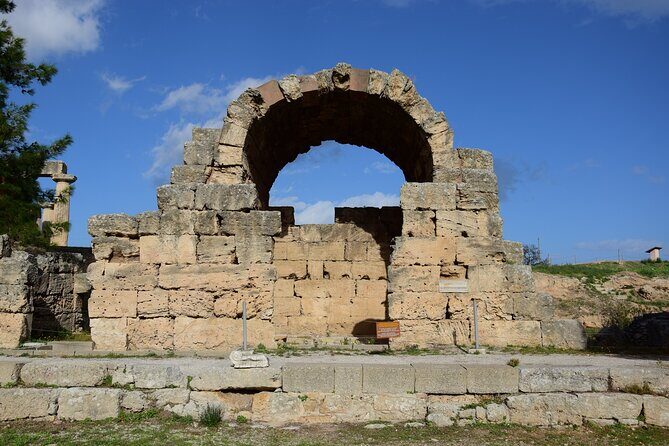
- Ancient Corinth plus museum in one flow: you get context at the museum before you wander the ruins.
- Acrocorinth is the view payoff: a fortress on a monolithic rock with strategic history.
- Driver-guides in fluent English: they won’t enter ruins with you, but they do explain what you’re seeing.
- Entrance fees are extra: expect to pay for the archaeological site and the museum.
Private pickup in Athens: comfort, WiFi, and a driver-guide who explains
This tour starts the way you want most day trips to start: your personal driver meets you at your place in Athens, not at some distant pickup point. If you’re staying in a hotel, they’re in the lobby. If you’re in an apartment, they wait at the building entrance. If you’re arriving via Piraeus Port, the driver meets you at the gate holding a sign with your name.
Once you’re in the car, you’ll enjoy the practical perks that make the road portion easier: air-conditioned vehicle, WiFi onboard, and bottled water. It sounds small, but it helps on a half-day outing because you can keep mapping, messaging home, and generally staying comfortable instead of just bracing for the next stop.
The other major win is the style of guiding. The driver is not an official archaeological guide who accompanies you inside sites, but they’re fluent in English and provide fascinating commentary during the drive and at the stops. In other words: you get the stories and context while still keeping you independent inside the ruins and museum. Some of the standout driver-guides you might encounter include Alex, George, Stephanos, Nikos, Themos, Dimitri, Vasilis, and Apostoles—names that show up often for being prompt, friendly, and genuinely easy to talk with.
Practical tip: this tour is private, so if you have specific questions—about Paul, Roman Corinth, or why Acrocorinth mattered—you’ll get time to ask. If you hate being rushed, this is a good match.
You can also read our reviews of more private tours in Athens



Corinth Canal: a 30-minute engineering stop with big context
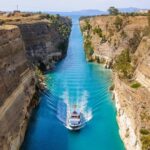
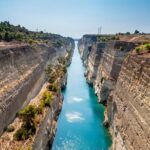
The first true sight stop is the Corinth Canal, a narrow waterway that connects the Gulf of Corinth (Ionian Sea side) to the Saronic Gulf (Aegean side). It’s one of those places where the history isn’t just plaques—it’s the landscape itself, shaped by 19th-century engineering.
Here’s what makes the canal interesting, even if you only have half an hour:
- It cuts through the narrow Isthmus of Corinth at sea level
- It has no locks
- It’s about 6.4 km long
- At its base it’s only about 21.4 meters wide, which limits modern ship access
- It effectively separates the Peloponnese from mainland Greece, making the peninsula function like an island
Today, the canal has little economic importance compared to the past, but it’s a great visual “reset” before you hit the ancient sites. Also, it’s quick: you get in, take photos, and move on without burning half your morning.
A small comfort note: some driver-guides come prepared with extras like umbrellas for quick showers, and a few keep items like snacks or extra water in the car. You don’t need to rely on this, but it’s the kind of thoughtful touch that makes the day feel smoother.
Ancient Corinth: Paul’s city-state in one satisfying hour
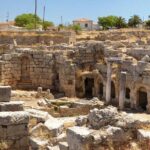
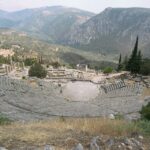
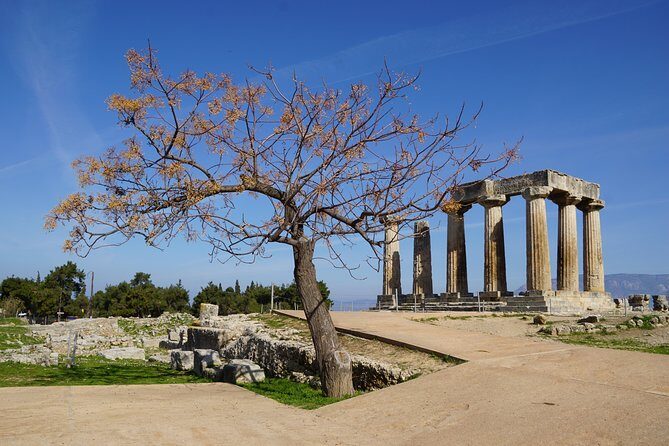
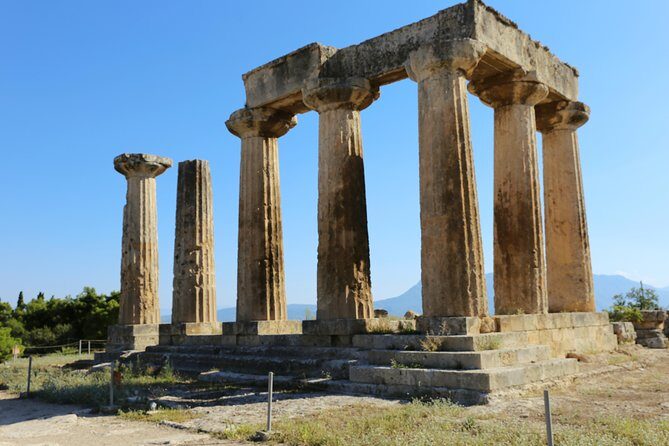
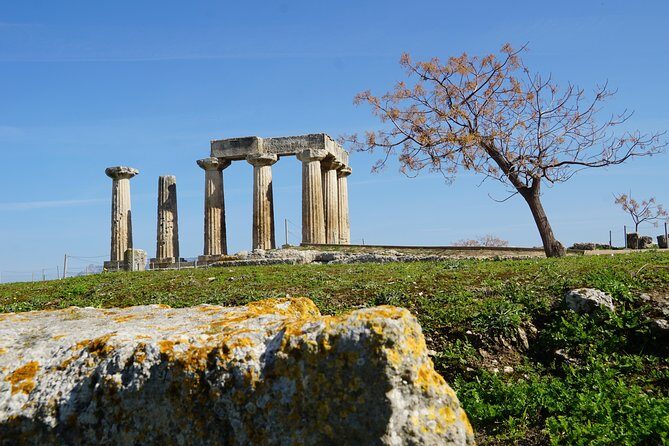
Then you head to Ancient Corinth (Archaia Korinthos). This is the real core of the trip, and it hits two big themes: ancient urban life and Paul’s connection to the area.
Corinth was a city-state on the Isthmus of Corinth—halfway between Athens and Sparta in the bigger Greek story. It sat at a crossroads, and its control of movement through the region mattered. The modern city is a few kilometers away, so you’re seeing the ancient footprint rather than a living streetscape.
For Christians, Corinth is well known because of Saint Paul. You’re in the region mentioned through Paul’s letters—First and Second Corinthians—and also through Acts as part of Paul’s missionary journeys. If you’ve read those passages and wondered what the setting actually looked like, this is where you can connect the words to stone.
A few historical anchor points help you make sense of what you’re seeing:
- Corinth’s population was around 90,000 in 400 BC
- The Romans destroyed Corinth in 146 BC
- Romans rebuilt it in 44 BC
- It became a provincial capital later on
Time matters here. You’ll have about one hour at the archaeological site. That’s not enough to “study” the whole place like a scholar, but it’s enough to get your bearings fast and walk through the most meaningful sections.
How to get more out of that hour (without getting overwhelmed):
- Use the site boards as your quick guide. You don’t need a formal lecture to spot the big ideas.
- Pick one or two areas to focus on rather than trying to see everything.
- If you want to connect to Paul, ask your driver-guide a couple of direct questions before you enter. Then you’ll be looking for the right kinds of details while you walk.
One subtle benefit: with a smart half-day schedule, you can often avoid the heaviest bus crowd pressure. That means you’ll have a calmer pace for photos and reading the information boards.
Entrance fee note: the archaeological site entrance is not included, so plan for the additional cost.
Corinth Archaeological Museum: 30 minutes that explain what the ruins can’t
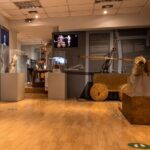
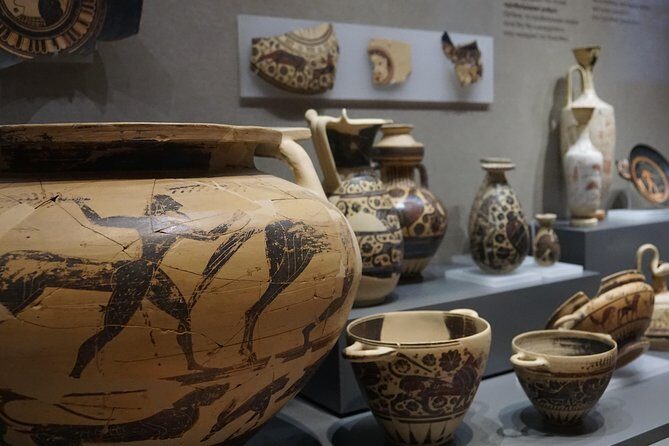
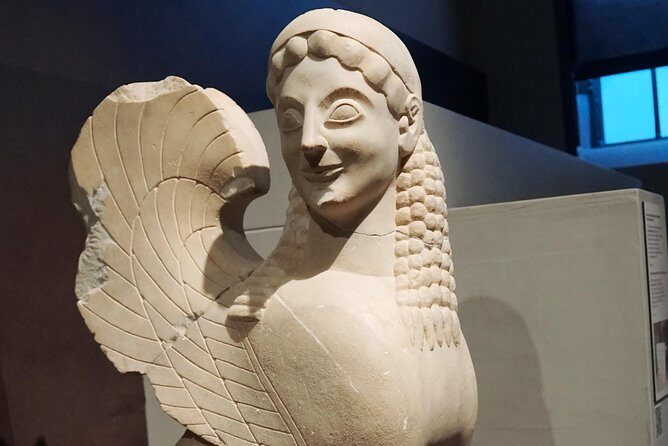
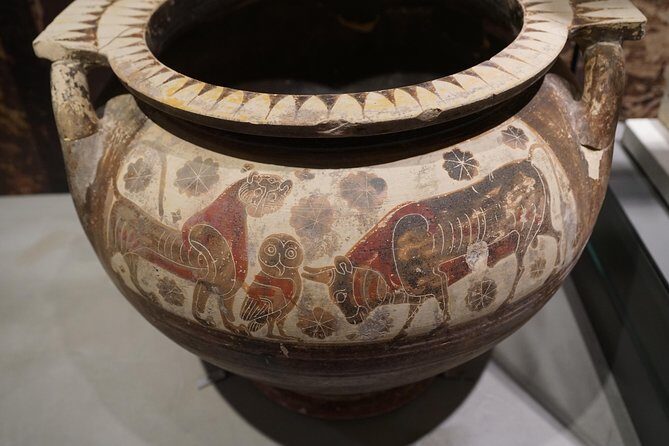
After Ancient Corinth, you’ll visit the Archaeological Museum of Ancient Corinth, located within the broader archaeological area. It’s designed to show results from excavations, and it’s especially useful because museums translate fragments into a clearer story.
The museum building dates to 1931–1932, built with the goal of displaying finds from the site. One detail I like is that it sits under the jurisdiction of the 37th Ephoreia of the Greek Archaeological Service, which is a small reminder that this place is part of Greece’s active archaeological work, not just a showpiece.
You’ll have about 30 minutes inside. That’s the right amount if you treat it as a context stop, not a whole separate visit. This is where you’ll often understand the daily-life side of Corinth—the kind of objects that make the ancient world feel less abstract.
In past experiences with this tour style, people consistently mention enjoying the museum because it’s packed with everyday items rather than only big dramatic sculptures. That’s exactly why you want it after—or alongside—your walk through the ruins. The museum helps you identify what you’re looking at later in the day, especially when you reach Acrocorinth.
Entrance fee note: the museum entrance is also not included.
Acrocorinth: the fortress climb and why the views are worth it
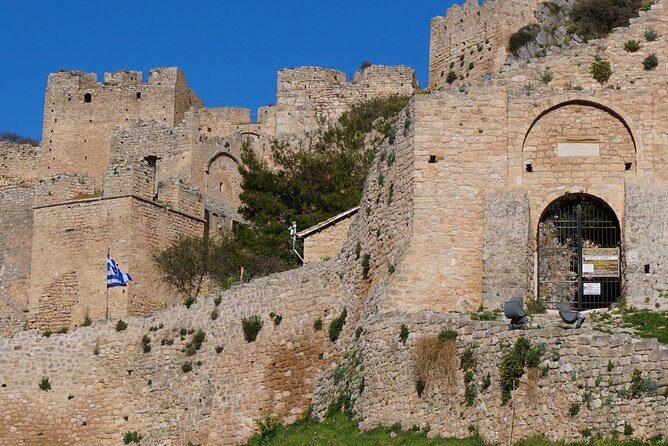
If there’s one moment that turns this half-day into a real memory, it’s Acrocorinth, the so-called Upper Corinth and the ancient acropolis overlooking the old city.
It’s built on a monolithic rock—one of those “you can see why they chose this spot” places. The fortress history isn’t just dramatic; it’s practical. Acrocorinth had a secure water supply, and because it commands the Isthmus of Corinth, it was repeatedly used as a last line of defense. If you’ve ever wondered how defensive architecture shaped politics, this is where you can feel it.
You’ll have about one hour here, and it’s the stop that most strongly tests your stamina. Some guests mention that the walk and climb can be strenuous depending on how far you go and what you choose to see. So my advice is simple:
- wear shoes you trust
- give yourself time to stop and catch your breath
- if you’re not up for the hardest climb, still go for the best viewpoints you can reach comfortably
The reward is the payoff: the fortress perspective. From up here, you understand why Corinth mattered in the first place. The region isn’t huge, but it’s strategic—and Acrocorinth turns that strategy into a view you can actually grasp.
This stop also tends to be where driver-guides shine with photo help. Some guides take guests to angle for the best scenes, and a few even suggest additional viewpoint spots just off the main route.
A few more Athens tours and experiences worth a look





Price and logistics: what you’re really paying for at $174.21 per person
At $174.21 per person, the headline price can look steep until you break down what’s included—and what isn’t.
Included:
- private transportation in an air-conditioned vehicle
- WiFi onboard
- bottled water
- a driver-guide for commentary and navigation
- hotel or port pickup and drop-off
Not included:
- entrance fee for the archaeological site and museum: €20.00 per person
- a licensed tour guide (optional, extra cost)
So your all-in day cost will be roughly the tour price plus the site/museum fee, depending on how you handle the optional licensed-guide add-on.
Where the value shows up is time and stress. Ancient Corinth isn’t far from Athens, but doing it on your own involves figuring out transport schedules, handling ticket lines, and coordinating getting to multiple sites in a single half-day. With private pickup, you’re spared that mental math. Also, the driver-guide can help you interpret what you’re seeing without requiring you to hire separate people for every stop.
One more value angle: flexibility. Because it’s private, you can spend more time at the spots you care about and cut back elsewhere. Some driver-guides have even adjusted the plan if a specific monument was closed, offering alternative nearby points of interest so the day still feels full.
Who this half-day private Corinth tour is best for
This tour fits best if you want a clear hit of the highlights without committing to a full day.
You’ll likely enjoy it if:
- you’re into Paul’s connection to Corinth
- you want engineering plus ancient sites in one outing
- you prefer a private pace over crowded group tours
- you don’t want to spend your morning managing transport and tickets
- you like getting historical context while you explore independently
It might be less ideal if:
- you want a fully licensed guide walking you through every ruin in detail (you can request one for an extra cost)
- you don’t handle hills and climbs well, because Acrocorinth requires real walking
If your group includes people with mixed walking ability, the solution is to plan your Acrocorinth expectations: some will push farther for maximum viewpoints, while others can stay at a comfortable level and still enjoy the big picture.
Should you book this Ancient Corinth half-day from Athens?
Yes—if you want an efficient, meaningful half-day that turns Corinth into more than just a name. The combination of Corinth Canal, Ancient Corinth, the museum, and Acrocorinth is a smart sequence. You get context first, then you see the ancient footprint, and finally you end where the views explain the region’s importance.
Book it now if:
- you want private pickup and a smooth experience with comfort extras like WiFi and bottled water
- you’re okay paying the €20 entrance fee for the site and museum
- you can handle a climb at Acrocorinth or at least enjoy the best viewpoints you can reach
Skip it (or plan for alternatives) if you need a fully accompanied archaeological walk-in explanation throughout every site, since the driver-guide won’t enter the archaeological areas with you as a licensed guide would.
FAQ
What is included in the tour price?
The tour includes private transportation in an air-conditioned vehicle, onboard WiFi, bottled water, and hotel or port pickup and drop-off with a driver-guide who provides commentary in fluent English.
Are entrance fees included for the museum and ruins?
No. The entrance fee for the Archaeological Site and the Museum is €20.00 per person and is not included in the tour price.
Does the driver-guide enter the archaeological sites with you?
No. The driver-guides are not official tour guides, so they do not enter the archaeological sites with you. They can still answer questions about the places you visit and provide commentary.
Is a licensed tour guide available?
A licensed tour guide can be provided as an optional extra cost.
How long is the tour, and how much driving is involved?
The tour is about 5 hours total. It includes about one hour of driving each way between Athens and the Corinth area, plus time at each stop.
Is this a private tour?
Yes. It’s a private tour/activity, and only your group participates.
Where will the driver meet me in Athens?
If you’re in a hotel, the driver waits at the hotel lobby. For an apartment, the driver waits at the building entrance. If you’re arriving via Piraeus Port, the driver meets you at the gate as you disembark, holding a sign with your name.