REVIEW · ATHENS
Athens: Acropolis Museum Private Guided Tour
Book on GetYourGuide →Operated by Guide me in Greece Tours · Bookable on GetYourGuide
The Acropolis Museum makes ancient Athens easier to understand because you see its art in the place where the city’s story still unfolds. In 90 minutes, your private English-speaking guide leads you from early statues to Parthenon sculptures, explaining the myths, political ideas, and daily life behind the stone.
I like the private format, which lets you focus on the questions that matter to your group. I also like the included skip-the-line ticket, since it removes one small but annoying task from a busy Athens day. The main drawback is the short running time: 90 minutes can give you a strong introduction, but not a slow look at every gallery.
In This Review
- Key points to know before you book
- Why the Acropolis Museum works so well with a guide
- Meeting at the museum entrance
- The 90-minute route through Athenian art
- Early figures: Koures and Kores
- Sculptures from the Parthenon
- Myths, people, and daily life
- What the private format adds
- Why the 90-minute length can be an advantage
- Guide quality and what to expect
- Best for first-time visitors and short Athens stays
- Accessibility and simple planning details
- Is the Acropolis Museum private tour worth $352?
- Should you book this tour?
- FAQ
- Where does the Acropolis Museum tour begin and end?
- Are Acropolis Museum entrance tickets included?
- How long does the private guided tour last?
- What language is the tour offered in?
- Is the tour wheelchair accessible?
- What should I bring to the museum?
Key points to know before you book
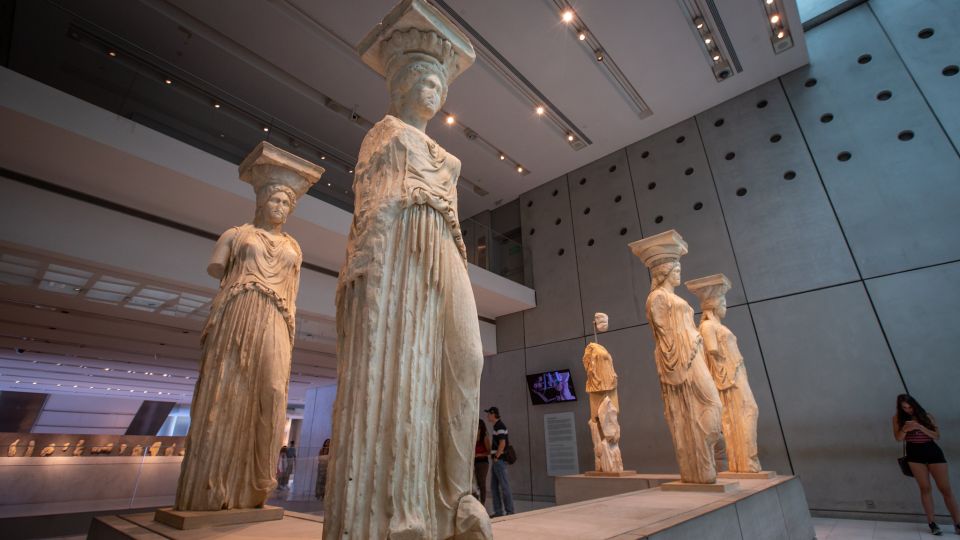
- See Parthenon sculptures and pediments up close: Your guide connects the museum pieces to the famous temple above.
- Private tour for up to two people: You get a focused visit rather than a large-group lecture.
- Tickets are included: Skip the ticket line and meet at the museum entrance.
- English commentary brings myths to life: Expect stories about legendary figures, ancient art, and Athenian ideas.
- A useful choice for a short visit: One and a half hours gives you a clear overview without taking over your whole day.
- Wheelchair accessible: The activity is listed as accessible for wheelchair users.
Why the Acropolis Museum works so well with a guide

The Acropolis Museum is not simply a room full of old statues. It is a place where objects, buildings, religion, politics, and artistic skill fit together. Without context, you can admire a marble figure and move on. With a good guide, you begin to see why it was made, where it belonged, and what it meant to people in ancient Athens.
That context matters most with Greek sculpture. The human figures may look familiar from books or museums, but their original setting changes the picture. Your guide helps connect the statues to the Acropolis, the Parthenon, Greek myths, and the development of Athenian art.
I would especially value this tour if you are seeing the Acropolis Museum for the first time. The museum can feel manageable at a glance, yet its objects cover a long stretch of Athenian history. A guide gives you a route through the collection instead of leaving you to sort out the main story on your own.
The tour is also private, with a maximum of two people in the listed price. That is a major difference from a standard group visit. You can ask about a statue, pause when something catches your eye, or request more explanation about the Parthenon without waiting for a group to move along.
You can also read our reviews of more guided tours in Athens



Meeting at the museum entrance

The tour begins at the entrance of the Acropolis Museum and ends there as well. This simple arrangement is useful because you do not need to find a separate office, board transportation, or follow a guide through several Athens neighborhoods.
Plan to arrive with your passport or identity card. The activity includes the museum entrance ticket, but the required identification is still something you should carry.
The guide speaks English, and bottled water is included. Food and drinks are not allowed inside, so have any snacks or coffee before entering. Meals and other personal spending are also outside the tour price.
The museum is in central Athens, near the Acropolis area, so you can pair this visit with other sightseeing. The tour itself does not include transportation or a visit to the Acropolis archaeological site. It focuses on the museum, which means you should plan the hilltop monuments separately if they are part of your day.
The 90-minute route through Athenian art
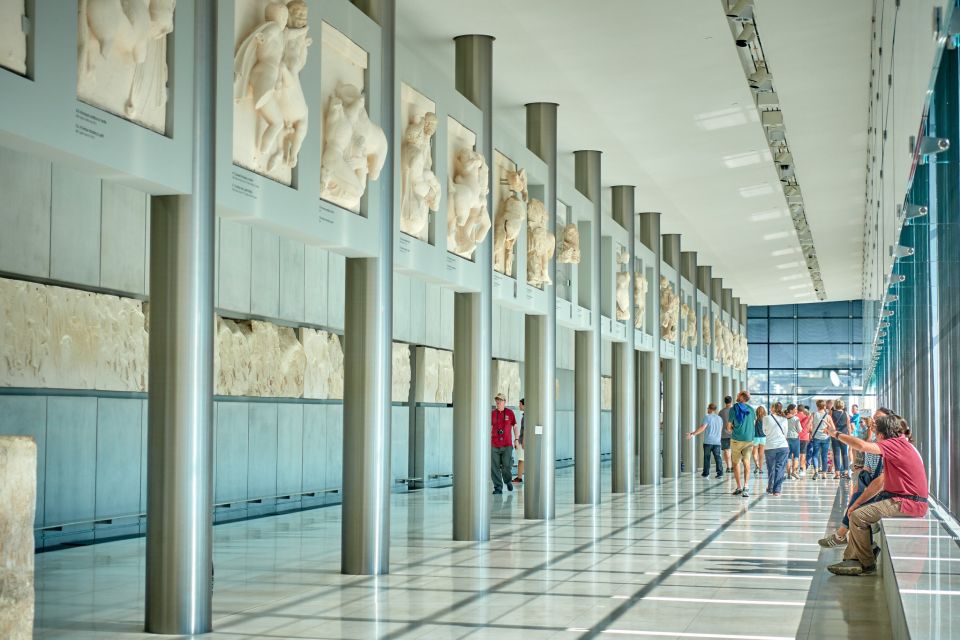
The experience is one guided museum visit lasting about an hour and a half. That sounds brief, but it can work well when your goal is to understand the main works rather than inspect every display.
Your guide brings the collection together through stories. You can expect explanations of ancient Greek myths, legendary figures, major historical events, and the influence of Athenian art and philosophy on Western civilization.
The exact order of objects may depend on the guide and the pace of your group. Still, the main subjects are clear: early statues, major architectural sculpture, the Parthenon, and the way these pieces reflect life and ideas in ancient Athens.
Early figures: Koures and Kores
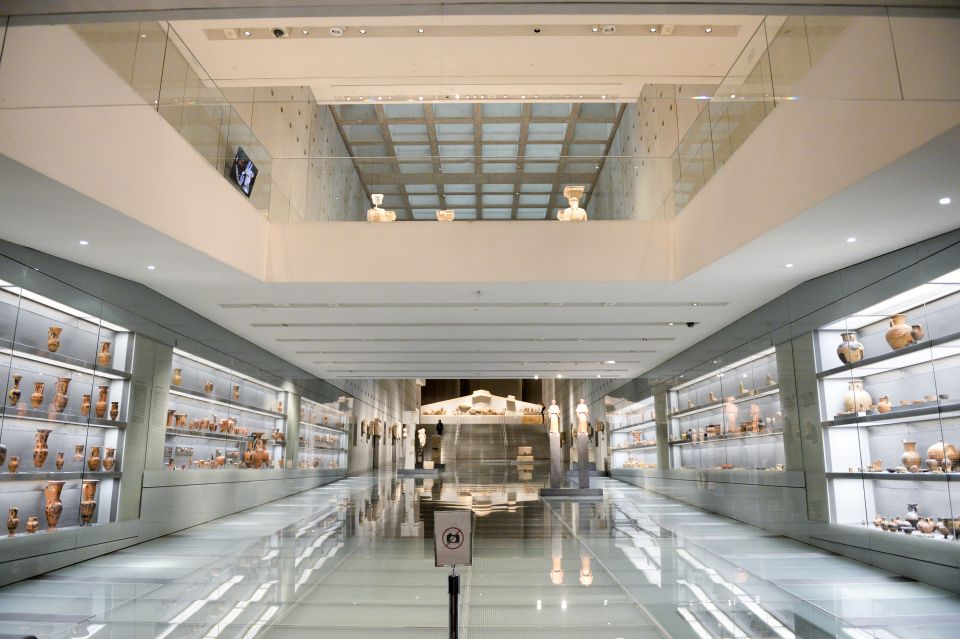
Among the objects highlighted are the statues of Koures and Kores. These early figures are important because they show how Greek artists represented the human form before the more natural-looking sculpture associated with later periods.
Your guide can explain what the statues reveal about clothing, posture, decoration, and the changing aims of Greek artists. Even a short explanation can help you notice details that are easy to miss when you are looking only for famous names.
This part of the visit gives the tour a useful starting point. You are not dropped immediately into the Parthenon story. Instead, you see that Athenian art developed over time, with artists testing ways to show the body, movement, identity, and ideal beauty.
If you enjoy art, this section may be one of the most rewarding parts of the tour. If you mainly want the Parthenon pieces, it is still worth paying attention because it shows how the larger story began.
Sculptures from the Parthenon
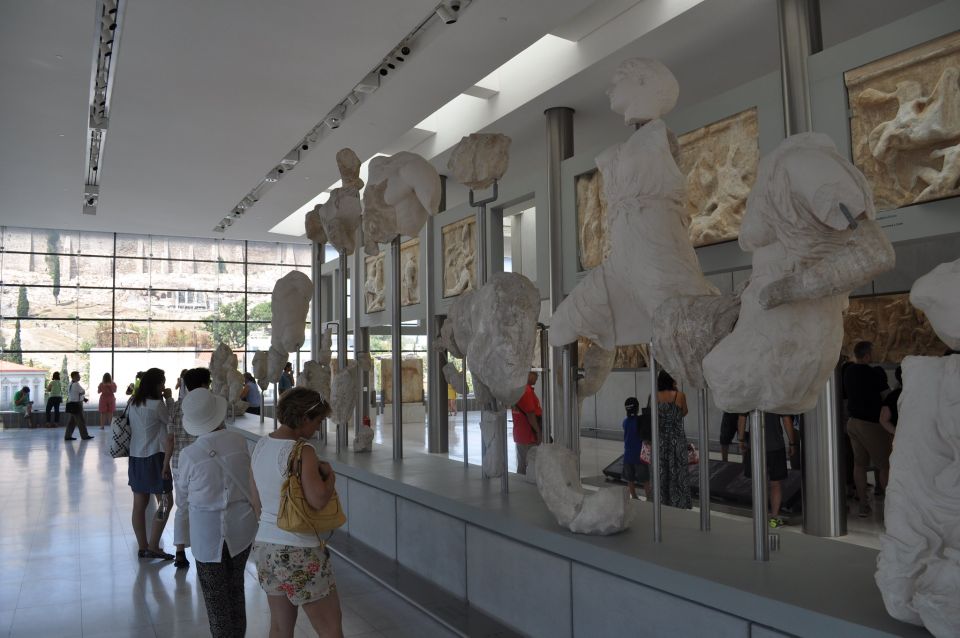
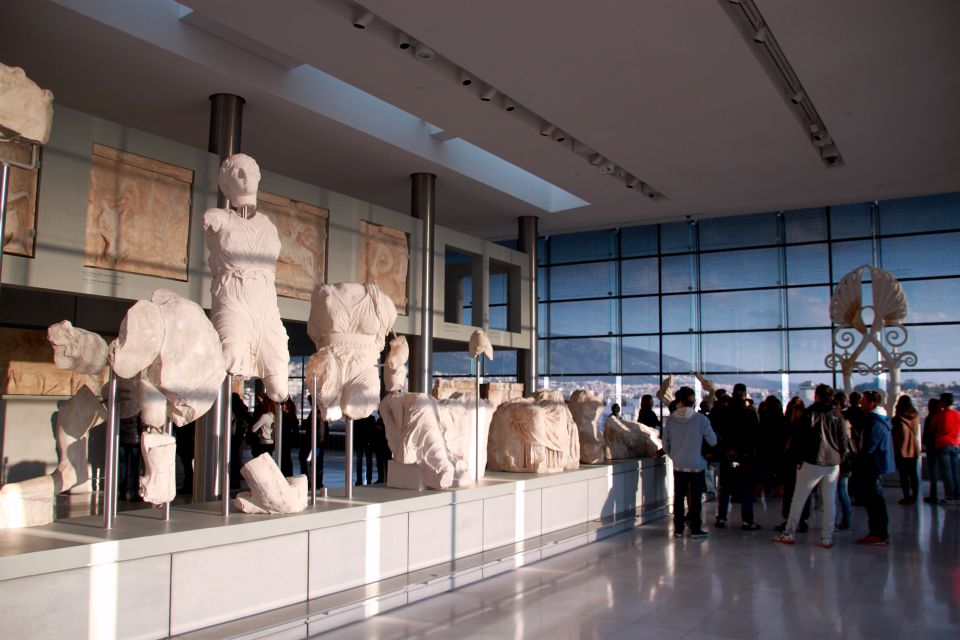
The Parthenon material is the natural centerpiece. The museum lets you look closely at sculptures and architectural pieces connected to the temple, including its impressive pediments.
Your guide explains the Parthenon’s construction, its role as a symbol of Athenian democracy, and its lasting place in the story of high art. This is more useful than simply hearing that the building is famous. You learn how the temple carried religious, civic, and artistic meaning at the same time.
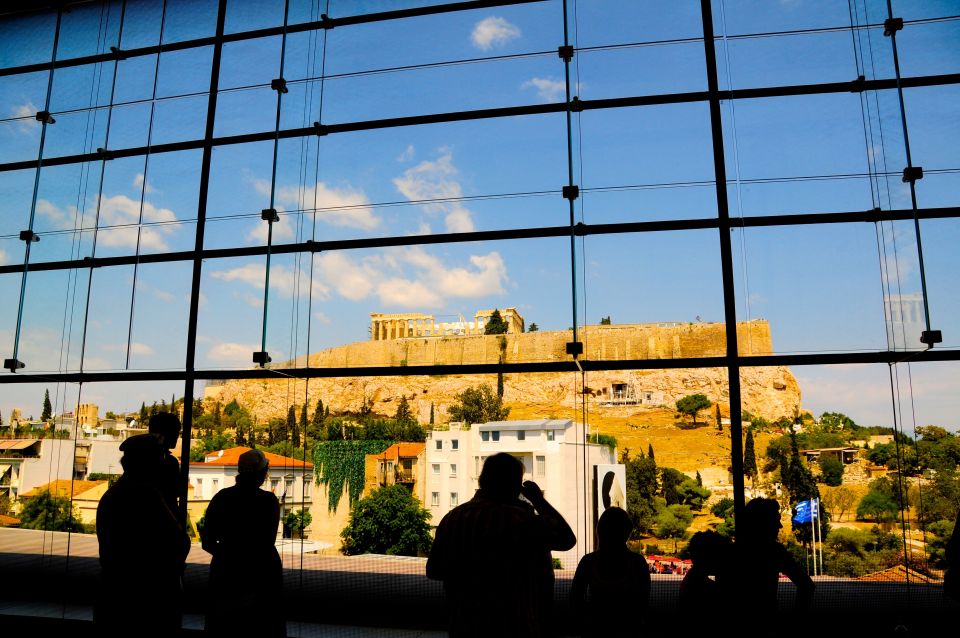
The sculptures also make the connection between the museum and the Acropolis above it. As you look at pieces from the Parthenon, you can think about the building they came from and the city that commissioned them.
The guide’s role is especially helpful here because the sculptures can raise difficult questions. Myths and figures may be unfamiliar, and the meaning of a pediment is not always obvious from its shape alone. A clear explanation turns a formal display into a story about gods, heroes, civic identity, and Athenian ambition.
You can also read our reviews of more private tours in Athens






Myths, people, and daily life
The museum’s objects offer more than a lesson in artistic style. They also provide a window into ancient Athenian life. Your guide explains how objects connect to historical events and legendary figures, giving you a better sense of the world that produced them.
I like this approach because mythology is easier to remember when it is tied to physical objects. A statue, relief, or architectural fragment gives the story a place and a purpose. Instead of treating Greek myths as a list of names, you can see how they shaped public art and religious life.
The same applies to history. The pieces are not isolated decorations. They relate to the city’s political development, its values, and its view of itself. The guide’s commentary helps you see Athenian art as part of a living society, not just a collection of beautiful remains.
What the private format adds
The private setup is the strongest practical feature of this experience. The price is $352 per group of up to two people, not per person. For two people, that works out to $176 each. It is a significant cost compared with entering a museum independently, so you should book it for the guide rather than for the ticket alone.
The ticket is useful, but the real value comes from the concentrated attention. You are paying for someone to select the key works, organize the story, answer questions, and help you make sense of unfamiliar material in a limited amount of time.
For a couple, parent and adult child, or two friends with a strong interest in Greek history, that can be worthwhile. You get a private English-language visit without a large group setting. If you already know the museum well or prefer to read every label at your own pace, the added cost may be harder to justify.
The small group also helps if your interests differ from the standard route. You can ask for more mythology, more sculpture, or more discussion of the Parthenon. The supplied information does not promise a fully customized itinerary, so I would not assume the guide can cover every specialized subject. Still, a private tour normally gives you more room to ask than a large public visit.
Why the 90-minute length can be an advantage
A museum this important can easily consume half a day. That is not always what you want in Athens. The 1.5-hour format gives you a firm shape to the visit and leaves room for the rest of your plans.
One verified booking described the guide as filling the hour and a half with a great deal of history and culture, especially useful when time was limited. That is a good way to think about the schedule. You should expect a focused overview, not a leisurely inspection of every room.
The short format also demands a brisk pace. If you like lingering in front of one sculpture for ten minutes, you may feel pressed. Tell your guide early if there is a subject you care about most. That gives the visit a better chance of matching your interests.
I would choose this timing before an Acropolis visit if I wanted the museum’s story first. It can provide the background that makes the hilltop monuments easier to read. I would also consider it after the Acropolis, when the museum’s sculptures can help explain what you have just seen outdoors.
Guide quality and what to expect
The experience is operated by Guide me in Greece Tours and includes a professional guide. The guide names are not provided, so you should not book expecting a particular individual. What is clear is that the tour is conducted in English and centers on live commentary rather than an audio guide.
The available feedback is very positive, with a 4.8 rating from five reviews. The strongest praise concerns the guide’s ability to teach. One booking from Belgium praised the guide as amazing, while a United States booking described the guide as excellent and said the visit taught the group a lot.
That praise points to the main question you should ask yourself: Do you want interpretation, or only entry? If you want someone to explain the objects and keep the story moving, this tour fits. If you simply need access to the museum, buying a ticket and exploring alone may offer better value.
Because the tour lasts only 90 minutes, a strong guide matters. The visit depends on clear explanations and good choices about what to cover. The high rating is encouraging, but the small number of reviews means I would keep expectations sensible. The experience has a good record, yet no short review can guarantee that every guide’s style will suit every person.
Best for first-time visitors and short Athens stays
I would recommend this tour most to first-time visitors who want a clear introduction to ancient Greek art. It is also a good match for people with limited time, since the route is concentrated and the museum entrance is already arranged.
Families may appreciate the private format, especially if children need questions answered in plain language or cannot manage a long, unstructured museum visit. The supplied information does not describe a children’s program, so I would not expect games or a special family curriculum.
Art students, history fans, and anyone curious about the Parthenon should also find plenty to discuss. The guide covers the relationship between Athenian art, philosophy, democracy, and Western civilization, rather than focusing only on visual beauty.
I would be less likely to recommend it to a solo visitor on a tight budget. The $352 group price is designed to make more sense when shared by two people. It is also not the right choice if you want to combine the museum with the Acropolis archaeological site in one guided itinerary, since this activity begins and ends at the museum.
Accessibility and simple planning details
The activity is listed as wheelchair accessible. That is helpful, but the supplied information does not describe specific gallery routes, seating, or restroom arrangements. If you need particular assistance, confirm those details before booking.
Free cancellation is available up to 24 hours before the tour for a full refund. You can also reserve now and pay later, which helps if your Athens schedule is still shifting. Starting times vary, so you need to check availability for the date you want.
Bring your passport or ID card. Do not bring food or drinks into the museum, and remember that meals, beverages, and personal expenses are not included.
There is no transportation component. You meet at the museum entrance and return there after the guided visit. That makes the tour easy to place between other central Athens plans, but you should allow your own time to reach the museum.
Is the Acropolis Museum private tour worth $352?
This is a premium museum visit, and I would judge it by the guide’s value rather than by the ticket. For two people, the price buys private attention, included entrance, skip-the-line access, bottled water, and a structured English-language explanation of the museum’s most important art.
The strongest case for booking is simple: you have only a short time in Athens and want the Parthenon, Koures and Kores, myths, and Athenian ideas explained without doing the research yourself. The private setting also helps if you want to ask questions and keep the visit focused.
The main case against booking is the cost. You can visit a museum independently for less, and 90 minutes may feel too short if you prefer a slow, detailed look. The tour also does not include meals, transportation, or the Acropolis site itself.
Should you book this tour?
Book it if you are two people who value a private guide, want a strong introduction to the Acropolis Museum, and have limited time. The excellent feedback centers on clear, substantial teaching, and that is exactly where this experience earns its price.
Skip it if your budget is tight, you already understand Greek art, or you want to explore every gallery without a schedule. For everyone else, this offers a practical way to turn a famous museum into a readable story about sculpture, myth, democracy, and the people of ancient Athens.
FAQ
Where does the Acropolis Museum tour begin and end?
You meet your English-speaking guide at the entrance of the Acropolis Museum. The tour returns to the Acropolis Museum after the 1.5-hour visit.
Are Acropolis Museum entrance tickets included?
Yes. The tour includes skip-the-line entrance tickets to the Acropolis Museum.
How long does the private guided tour last?
The guided museum visit lasts 1.5 hours.
What language is the tour offered in?
The live tour guide conducts the experience in English.
Is the tour wheelchair accessible?
Yes. The activity is listed as wheelchair accessible.
What should I bring to the museum?
Bring your passport or ID card. Food and drinks are not allowed, and meals, beverages, and personal expenses are not included.