REVIEW · ATHENS
Athens City Game: The Journey through Time
Book on Viator →Operated by Culture Hunters · Bookable on Viator
Athens reveals itself here as a giant history puzzle. You move from stories about Phidias and the Acropolis to Queen Amalia, Greek independence, and the first modern Olympics, solving clues as you walk. I like the variety of puzzles and the way each stop connects to a different period. I also like having a live game master by message, so you are not left stuck with a cryptic clue and a hot Greek afternoon.
The main tradeoff is the walking. This is not a seated sightseeing activity, and it is not a good fit if you have difficulty walking. You also need decent weather, though flexible departure times make it easier to avoid the worst heat.
In This Review
- Key things to know before you book
- Athens told through clues, not a lecture
- Starting near the Acropolis at Acropoli
- Plaka: Athens turns into a puzzle board
- The Choragic Monument of Lysicrates and ancient Athens
- Syntagma and the making of modern Greece
- The National Garden and Queen Amalia
- Zappeion and the first modern Olympics
- Why the private format matters
- Price, timing, and the value of two and a half hours
- Who should book this Athens game
- What the strongest praise tells you
- Final decision: book it if you want to play Athens
- FAQ
- Where does the Athens City Game begin?
- Where does the activity end?
- How long does the experience last?
- How much does the experience cost?
- Is the activity private?
- What language is offered?
- Which places are included on the route?
- Is a game master available during the activity?
- Can I choose the departure time?
- What happens if bad weather cancels the experience?
Key things to know before you book
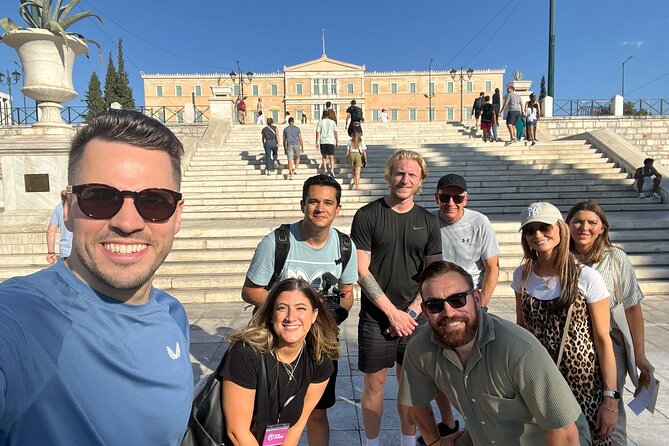
- You follow Athens through five central stops: Plaka, the Choragic Monument of Lysicrates, Syntagma, the National Garden, and Zappeion.
- The history moves across centuries: ancient sculpture, royal Athens, independence from the Ottoman Empire, and the first modern Olympic Games all enter the story.
- You solve the game with your own group: this is a private activity, not a mixed tour with strangers.
- A live game master can help by message: hints are available throughout the day if a puzzle slows you down.
- Plan for about two and a half hours: choose from departure times and consider starting early or later in the day during hot weather.
- The price is $34.92 per person: group discounts may improve the value for families or friends booking together.
Athens told through clues, not a lecture
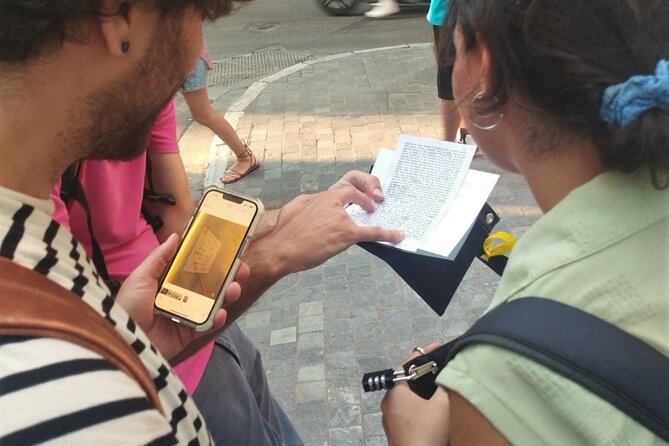
The best idea here is simple: instead of listening to a guide explain Athens from one fixed spot, you use the city itself as your game board. Each location gives you another piece of the story, and the challenges ask you to look more closely at places you might otherwise pass with a quick photograph.
That format changes your pace. You are not rushing from monument to monument while trying to remember a string of dates. You are discussing clues with your companions, checking details around you, and making connections between ancient Athens and the modern capital.
The experience is offered in English and lasts about 2 hours and 30 minutes. Since only your group participates, you can work at your own rhythm within the activity. That makes it a good choice for friends, couples, families with older children, or any group that enjoys a little friendly competition.
It is not the same as having a guide explain every stone and inscription. The game asks you to take part. If your group likes puzzles, that is the point. If you want a traditional, fact-heavy walking tour with a guide speaking throughout, this may feel less direct.
You can also read our reviews of more city tours in Athens



Starting near the Acropolis at Acropoli
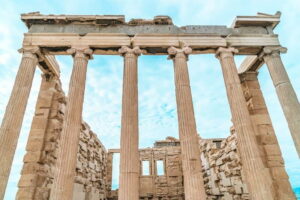
The meeting point is in the Acropoli area at Acropoli, Athens 117 42. That puts you close to the city’s most famous ancient landmark and gives the game a fitting starting point: Athens at the height of its classical age.
The opening story reaches back to the sculpting of the Acropolis and the work of Phidias. You are not simply told that Athens produced great art. The game uses that period as the first chapter in a longer journey, setting up the idea that the city has repeatedly changed its identity.
You should arrive ready to walk and use your phone. A mobile ticket is provided, and the game’s clues and communication with the game master depend on having access to your mobile device. The activity is near public transportation, which is useful for reaching the start and returning to other parts of central Athens afterward.
The start may also be the most crowded-feeling part of your route simply because the Acropolis area is one of Athens’ busiest sightseeing zones. That is not a flaw in the game, but it is worth knowing. You may need a moment to get oriented before your group settles into the first challenge.
Plaka: Athens turns into a puzzle board
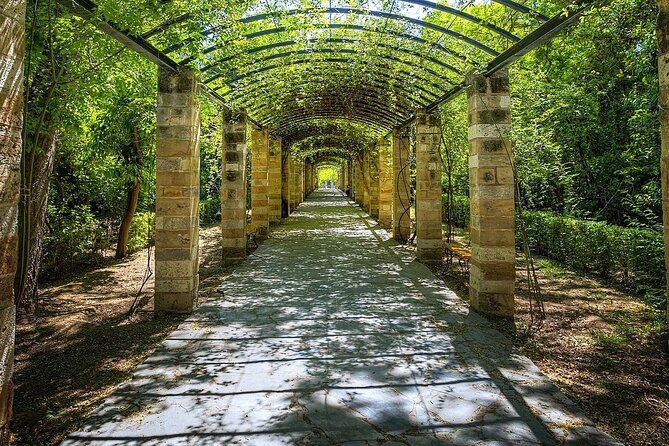
From the Acropolis area, the route moves into Plaka, the old neighborhood below the Acropolis. Plaka gives the game a more intimate setting than the large archaeological sites. Its narrow streets and layers of older buildings make it a natural place to begin looking for small details.
Here, the activity shifts from grand ancient history to the texture of central Athens. You may find yourself paying attention to features you would normally overlook, since the clue may depend on the setting rather than on a standard sightseeing fact.
This is where the private format helps. You can stop to compare answers, let one person read the clue while another looks around, and keep the group involved instead of having one guide set the pace. The activity is designed for bonding, and Plaka is well suited to that kind of shared discovery.
Do not expect a quiet museum-style environment. Plaka is a working city neighborhood as well as a sightseeing area. Streets can be lively, and your group will need to stay aware of pedestrians while solving its challenges.
The Choragic Monument of Lysicrates and ancient Athens
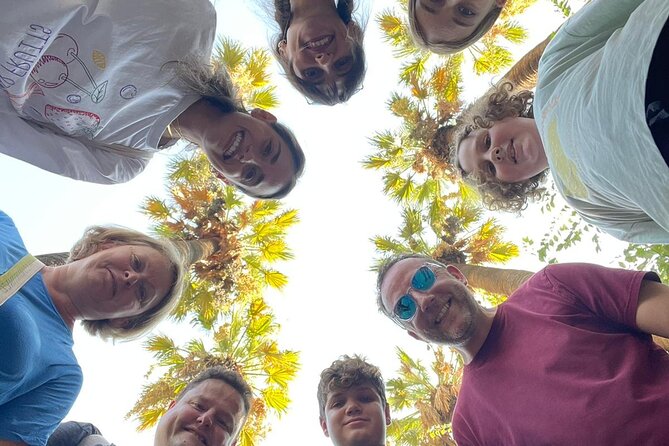
The next stop is the Choragic Monument of Lysicrates, one of the route’s most distinctive ancient landmarks. It gives the game a chance to focus on a specific object rather than treating Athens as one giant archaeological zone.
The monument connects to the world of ancient performance and civic competition. That makes it a strong stop for a clue-based activity, since the site already has a story built around achievement, public recognition, and the culture of classical Athens.
I like this part of the route because it narrows the historical lens. The Acropolis introduces the scale of ancient Athens, while the Lysicrates monument brings the story down to one carefully chosen place. A well-made city game needs that variety. If every stop were a major landmark, the walk could become a checklist. This stop gives the route a more focused pause.
Your group may also appreciate the different puzzle styles here. The experience uses several kinds of challenges rather than repeating one basic format. That variety was one of the strongest features associated with the activity, and it matters during a walk lasting more than two hours. A single type of puzzle would become tiring.
Syntagma and the making of modern Greece
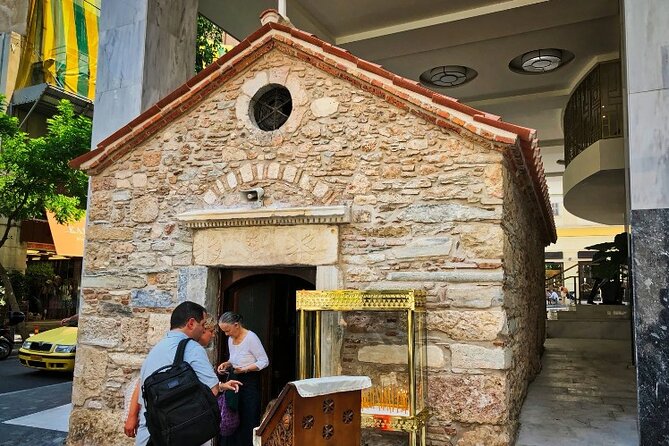
At Syntagma, the story moves firmly into modern Greek history. This is where you encounter the struggle for independence from the Ottoman Empire and the formation of the modern Greek state.
That change in subject is one of the tour’s biggest strengths. Athens is often presented as an ancient city with a modern layer added afterward. This route makes you notice that the city has a much longer modern story too, shaped by independence, monarchy, public life, and national identity.
Syntagma is also a major city square, so it gives you a useful contrast with Plaka and the monument near Lysicrates. You move from smaller streets and ancient remains to a broad civic space tied to present-day Athens.
The setting can make concentration harder. Traffic, people, and city activity are part of the experience here. You will need to keep your attention on both the clue and your surroundings. That is a fair exchange for using a real public square as part of the game, but groups hoping for a calm, private setting should keep it in mind.
- All Day Cruise -3 Islands to Agistri,Moni, Aegina with lunch and drinks included
★ 5.0 · 4,958 reviews






The National Garden and Queen Amalia
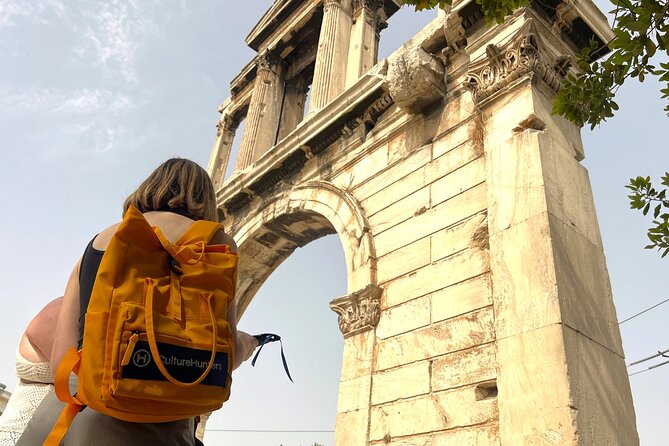
The route then enters the National Garden, where the historical focus turns to Queen Amalia and nineteenth-century Athens. This section gives you a change of pace after the harder urban edges of Syntagma.
The garden is a natural place for a story about the royal period. Its greenery and paths create a different mood, and the game can use that change to show how Athens developed beyond its ancient center. The city is no longer only about temples and ruins. It is also about the people and institutions that shaped the capital after independence.
This stop may be especially welcome on a warm day because a garden generally offers a more sheltered walking environment than a broad paved square. Still, do not assume the entire activity takes place in shade. The route includes several outdoor stops, and you should plan for Athens’ weather.
The National Garden also helps break up the historical chapters. You are not simply moving from one monumental site to another. The route uses streets, squares, a monument, and a garden, giving the game more physical variety and keeping the walk from feeling repetitive.
Zappeion and the first modern Olympics
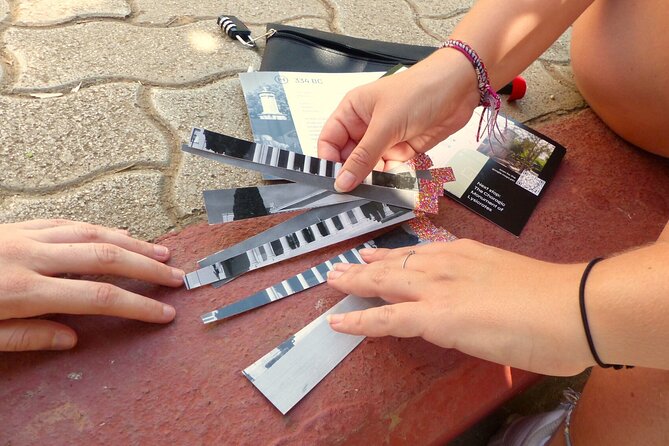
The final listed stop is Zappeion, where the story reaches the first modern Olympic Games. This is a fitting closing chapter because it links ancient Greek ideals with the modern international image of Greece.
The Olympic connection gives the game a clear sense of movement through time. You begin with the classical world associated with Phidias, pass through independence and royal Athens, and finish with the revival of an ancient tradition in the modern era.
Zappeion also helps the experience end on a forward-looking note. Athens is not presented as a city frozen in antiquity. Its story continues through public events, national projects, and modern ambitions.
After Zappeion, the activity ends back at the original meeting point. That makes the route easier to plan than an activity that leaves you across town. You can continue sightseeing nearby, find a meal, or use public transportation from the central area.
Why the private format matters
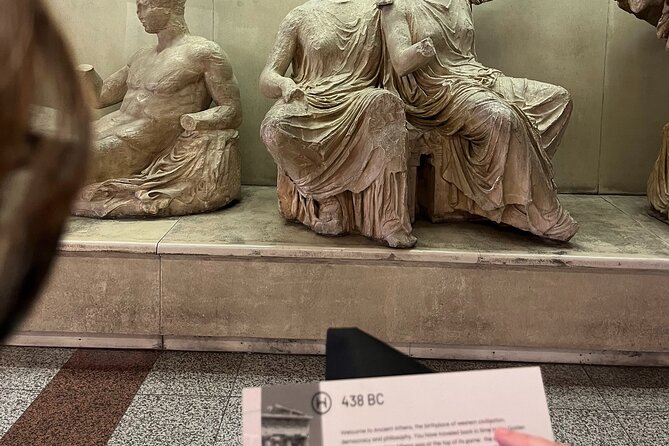
This is a private activity, so only your group takes part. That detail has real value. A puzzle can lose its fun if one large group races ahead, another waits, and the loudest person gives every answer. With your own companions, you can decide how seriously to treat the competition.
The format also suits different group types. A family can divide clues among adults and children. Friends can compete for bragging rights. Couples can solve together without needing to perform for strangers.
The experience still has support. A live game master is available by message for hints throughout the day. That gives you independence without making you feel abandoned. You get time to think, but help is available if the group reaches a dead end.
One practical point: the game depends on cooperation. If one person insists on solving every clue alone, others may become spectators. The activity will work best if you share the phone, read clues aloud, and give everyone a job.
Price, timing, and the value of two and a half hours
At $34.92 per person, this costs more than wandering through central Athens with a guidebook, but you are paying for a designed activity rather than simple access to public places. The value comes from the route, the puzzle preparation, the historical storytelling, the private format, and the game master’s help.
For a group that enjoys challenges, that can be a fair price. You receive a structured way to spend half a day while seeing several important parts of central Athens. The group discount may make the cost more attractive when several people book together.
For a solo visitor, the value is less obvious because the activity is built around teamwork. The supplied format is private, and the strongest appeal comes from sharing the clues and decisions with companions.
You can choose from departure times, which is useful in Athens. Starting earlier can help you avoid the strongest heat. A later departure may work better if you have spent the morning at the Acropolis, though you should leave enough room in your day for the full 2 hour 30 minute experience.
The game is booked, on average, 17 days ahead. That does not mean you must book exactly that far in advance, but it is a useful planning signal if your Athens schedule is tight.
Who should book this Athens game
I would point this activity toward people who enjoy learning by doing. You should be comfortable walking through central Athens, reading clues on a phone, and working with your companions to reach an answer.
It is especially suitable for:
- Friends who like puzzle games and friendly competition
- Families seeking something more active than a standard walking tour
- Couples who want a shared activity tied to Athens’ landmarks
- Repeat visitors who want a new way to see familiar central sites
- First-time visitors who enjoy history but do not want a lecture-only format
I would think twice if you have walking difficulties, since the activity is not recommended for people who struggle with walking. It is also a poor choice if bad weather would ruin your day, since the experience requires good weather and may be canceled if conditions are unsuitable.
Service animals are allowed, and most people can participate. The activity is offered in English, so you should be comfortable following English clues and messages from the game master.
What the strongest praise tells you
The most enthusiastic response centers on preparation, organization, the stories at each place, and the range of puzzles. Those are exactly the areas that determine whether a city game feels polished or like a phone scavenger hunt made in an afternoon.
The personal connection matters too. Maelle is specifically associated with the experience, and the account of meeting her gives the activity a human touch beyond its digital clues. You should still think of this as a game with remote help rather than a conventional guided tour with a guide beside you for every step.
The overall rating is 5 out of 5 from nine ratings. That is a small sample, so I would not treat it as proof that every group will have the same experience. It does, however, support the idea that the activity succeeds for people who value well-prepared puzzles and place-based storytelling.
Final decision: book it if you want to play Athens
Book the Athens City Game: The Journey through Time if you want history with movement, teamwork, and a few moments of head-scratching. You will see Plaka, the Lysicrates monument, Syntagma, the National Garden, and Zappeion while moving from ancient Athens to the modern Olympic era.
Skip it if you want a quiet, fully guided walk, if you dislike solving puzzles, or if walking for about two and a half hours will be difficult. For the right group, the price buys more than sightseeing: it gives you a shared reason to look closely, talk, laugh, and remember the city’s story after the walk is over.
FAQ
Where does the Athens City Game begin?
It begins at Acropoli, Athens 117 42, Greece.
Where does the activity end?
The activity ends back at the meeting point.
How long does the experience last?
It lasts approximately 2 hours and 30 minutes.
How much does the experience cost?
The listed price is $34.92 per person. Group discounts are available.
Is the activity private?
Yes. Only your group participates in the activity.
What language is offered?
The experience is offered in English.
Which places are included on the route?
The route includes Plaka, the Choragic Monument of Lysicrates, Syntagma, the National Garden, and Zappeion.
Is a game master available during the activity?
Yes. A live game master is available by message for hints throughout the day.
Can I choose the departure time?
Yes. A choice of departure times is available.
What happens if bad weather cancels the experience?
If the activity is canceled because of poor weather, you will be offered a different date or a full refund.