REVIEW · ATHENS
Athens Historical Center: Explore by Bike
Book on GetYourGuide →Operated by Flat Tyres Psycling Club · Bookable on GetYourGuide
Athens makes sense from a bike. In 2.5 hours, you move from the ancient cemetery at Kerameikos through the food market, Monastiraki, Plaka, Syntagma, the National Garden, and the Acropolis area without spending the day underground or stuck in traffic. I especially like the small group of up to 10 people and the route’s variety: ruins, working neighborhoods, grand civic buildings, and a hilltop view all fit into one ride.
I also like that the tour uses an easy pace and includes a short walk to Pnyx, rather than treating the whole outing as a race between monuments. Guide Stavros is praised for his patient answers and strong storytelling. The main consideration is simple: you need to know how to ride a bike, and heavy rain cancels the outing. Some stops are photo stops from outside, not long archaeological visits.
In This Review
- Key things to know before you book
- Why a bicycle works so well in central Athens
- Kerameikos and the first turn into old Athens
- The municipal market, Monastiraki, and the Ancient Agora
- Plaka, Syntagma, and the Evzones
- Zappeion and the Panathenaic Stadium
- The Temple of Zeus and Hadrian’s Arch
- The Acropolis area and the walk to Pnyx
- What the $39.52 price really covers
- Who will enjoy this ride most
- My take on the guide and the overall pace
- Should you book the Athens historical bike tour?
- FAQ
- Where does the bike tour start?
- Where does the tour finish?
- How long does the experience last?
- What is included in the price?
- Do I need to know how to ride a bike?
- What happens if it rains heavily?
- How many people are in the group?
Key things to know before you book
- Kerameikos begins the story: You start beside one of Athens’ important ancient burial grounds before moving into the modern city.
- The route covers many central districts: Psirri, the municipal market, Monastiraki, Plaka, Syntagma, and the Acropolis area each feel different from the saddle.
- You see the Evzones at Parliament: The ride includes Syntagma Square and the Greek Parliament, where the ceremonial guards serve as a living part of Athens today.
- The 1896 Olympic site is on the route: You stop at the Panathenaic Stadium, built in white marble and tied to the first modern Olympic Games.
- Pnyx supplies the breathing space: A short walk on Filopappou Hill leads to a panoramic view of Athens.
- The practical package is tidy: A 28-inch Trekking bike, helmet, half-liter bottle of water, guide, and taxes are included for $39.52 per person.
Why a bicycle works so well in central Athens
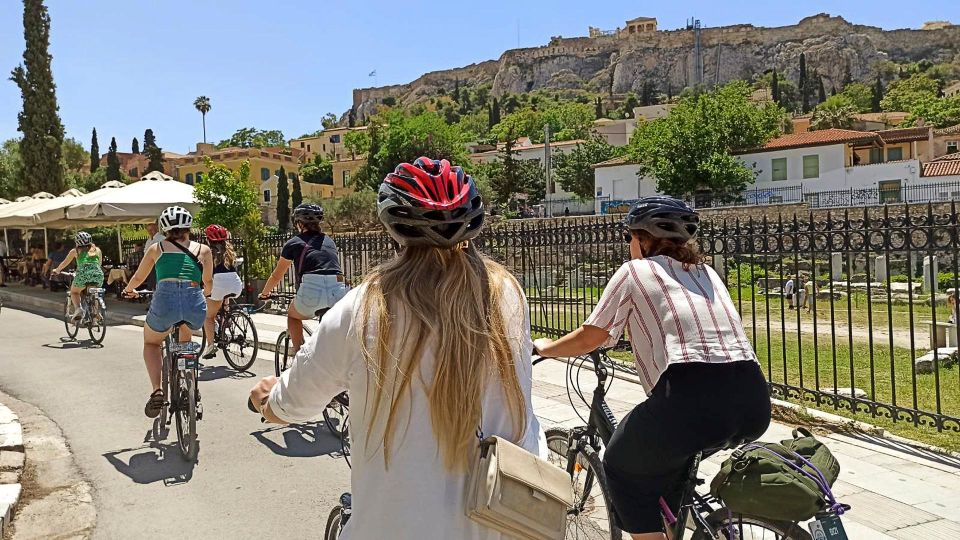
Athens’ sights are spread across a compact but busy center. On foot, you can cover much of this route, but the distances add up. A bicycle lets you connect the districts quickly while still moving slowly enough to notice street life, shopfronts, market stalls, and changes in the city’s architecture.
This is not a mountain-bike trip or a long ride into the countryside. It is an urban sightseeing circuit on a 28-inch Trekking bike, with a guide leading the way. The advertised pace is easy, which matters when the point is to listen and look around rather than chase a fast rider.
The group limit of 10 is another practical advantage. You are less likely to lose the guide at a crossing, and it is easier to ask questions. Stavros receives particularly warm praise for being patient, friendly, and willing to answer repeated questions about Athens and Greece. That can make a real difference on a history-heavy route, where a good explanation brings a stone wall or old street to life.
You meet at Thessalonikis 140, at the Flat Tyres Psycling Club shop. The tour finishes at the same place. A Metro station is about 150 meters away, so you have a simple onward connection after the ride. Hotel pickup and drop-off are not included, so allow time to reach the shop on your own.
You can also read our reviews of more cycling tours in Athens
Kerameikos and the first turn into old Athens
Kerameikos is the first ancient site on the route. It was Athens’ cemetery, and beginning here gives the ride a quieter opening than starting in the middle of Monastiraki’s crowds. You should expect a photo stop and an explanation from outside or along the route, rather than a long visit inside the archaeological area.
From Kerameikos, the ride heads toward Psirri. This is where the tour begins to shift between ancient Athens and the city people live in now. You may feel as if you are getting briefly lost among the district’s streets, but the guide keeps the group moving toward the central market and Monastiraki.
That change of scene is one of the route’s strengths. You are not being taken from one isolated monument to another. Instead, the ride shows how ancient remains sit beside ordinary city blocks, shops, cafés, and public spaces.
The municipal market, Monastiraki, and the Ancient Agora
The Central Municipal Athens Market, also called Varvakios, is the city’s traditional and largest food market. The tour passes by for a photo stop. Since food and drinks are not included, do not expect a market tasting or a planned meal break, but the stop helps you see a working side of Athens rather than only its famous ruins.
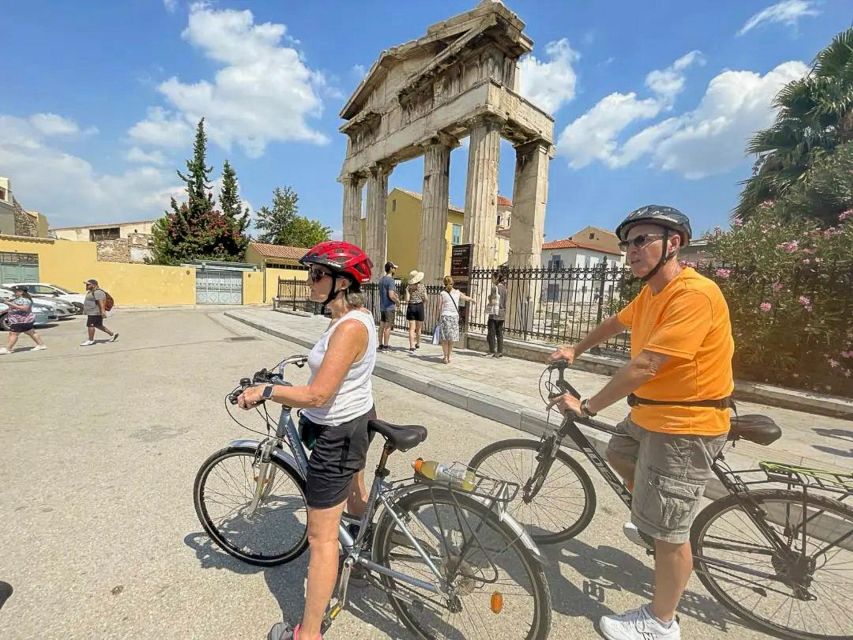
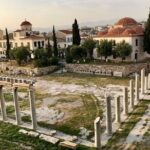
Monastiraki Square follows. This is one of the city’s key meeting points, and it puts you close to the Ancient Agora and Roman Agora. From a bike, you can take in the setting without committing to a long museum visit. The route is designed for orientation and views, so anyone hoping to explore every archaeological site indoors will need to return later.
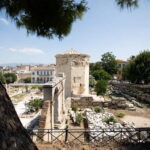
Cycling beside the Ancient Agora gives you a useful sense of scale. The Agora was the civic heart of ancient Athens, while nearby Monastiraki is a modern center of movement and shopping. The Roman Agora adds another layer, with the Tower of Winds as its most recognizable feature.
The guide’s role matters here. Without context, a quick pass by columns and stone walls can blur together. Stavros is praised for explaining the places with passion and patience, so this part should feel more like a guided introduction than a simple ride past ruins.
Plaka, Syntagma, and the Evzones
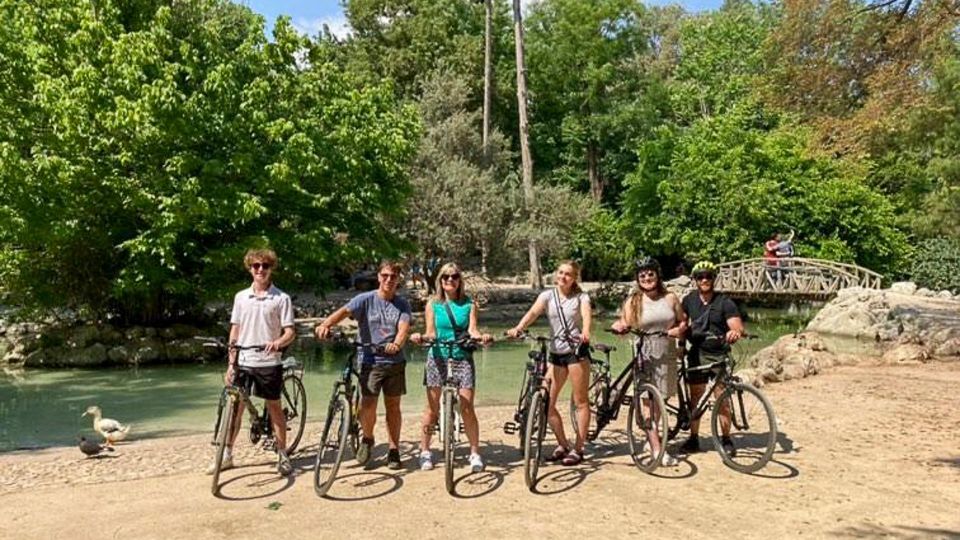
The route then moves into Plaka, often called the Neighborhood of the Gods. Its narrow, picturesque paths create a sharp contrast with the wider streets around the market and Syntagma. You will pass through rather than settle in for a long café stop, but Plaka is a good place to appreciate Athens’ older street pattern.
Syntagma Square brings you to the Greek Parliament. The Evzones, Greece’s ceremonial guards, are stationed here. The stop is listed as a short break and photo opportunity, so you can pause, look toward the Parliament, and watch the guards without building your whole day around a formal ceremony.
I like this part because it joins national history with modern public life. The archaeological sites tell you about ancient Athens, while Parliament and the Evzones show the capital as a present-day seat of government and national tradition.
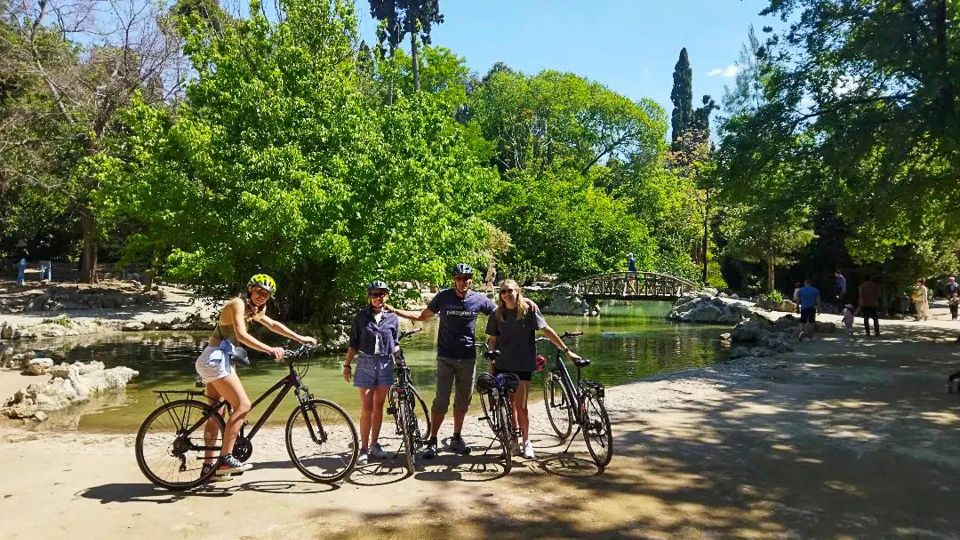
The ride continues into the National Garden. This is one of the route’s calmer stretches, and it gives you a welcome change after the hard surfaces and traffic of the central districts. The planned visit is brief, but it breaks up the sightseeing and keeps the ride from feeling like a nonstop list of monuments.
Zappeion and the Panathenaic Stadium
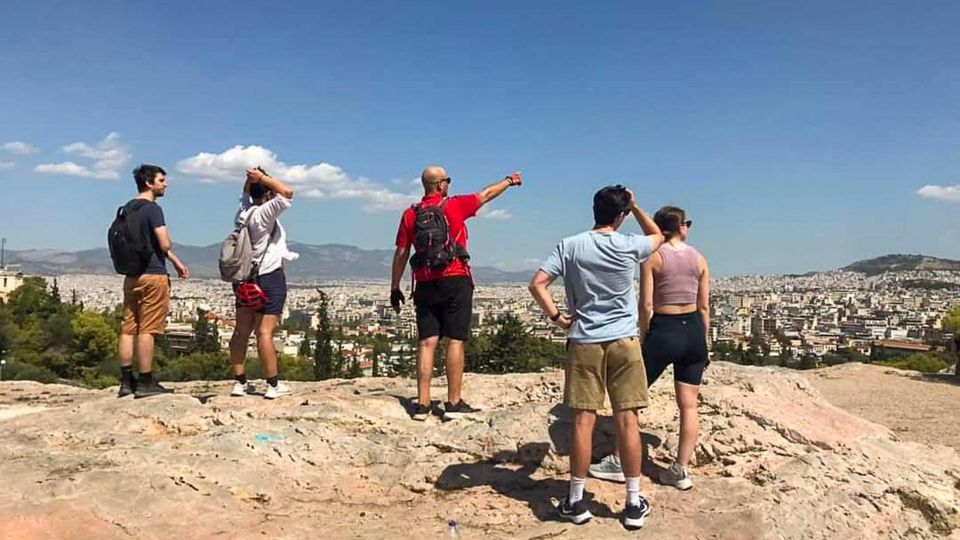
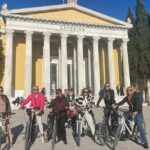
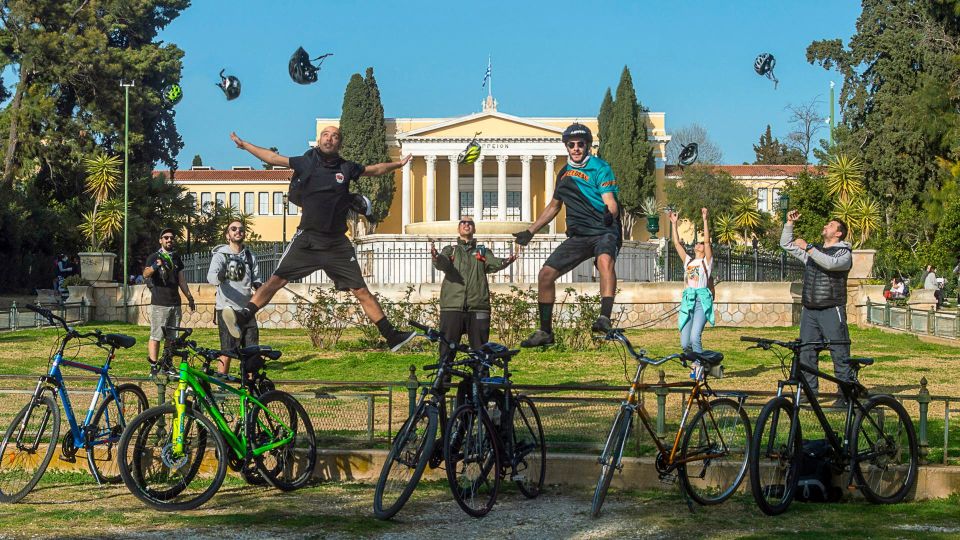
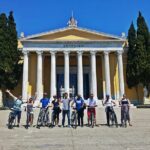
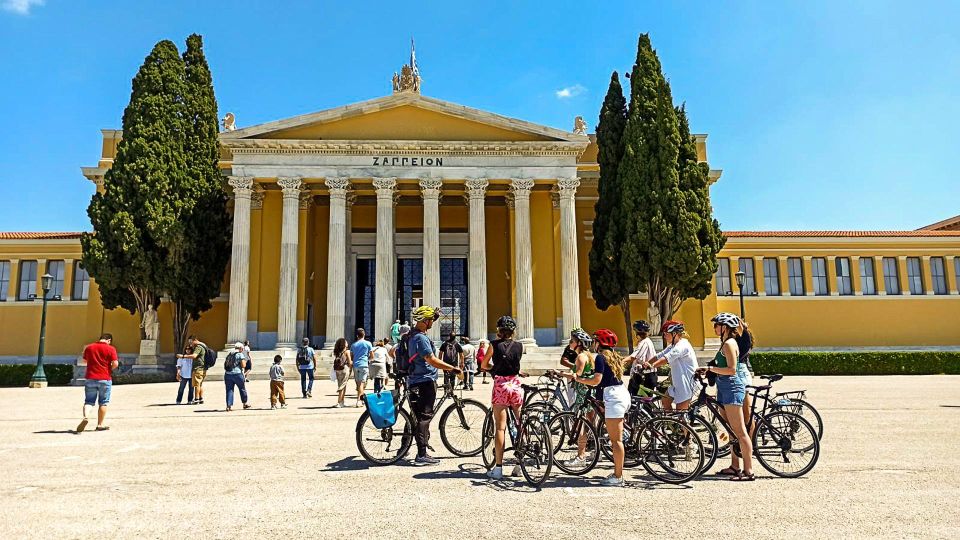
A few turns bring you to Zappeion Hall and the Panathenaic Stadium. The stadium is one of Athens’ most memorable sights because it was used for the first modern Olympic Games in 1896. Its long white-marble form is easy to appreciate even during a short stop.
The itinerary lists the stadium as a visit and photo stop, but the tour’s overall design remains a cycling tour, not a full stadium tour. Ask your guide what time is available at the stop, and plan a separate return if you want a detailed look inside.
This is also a useful point for understanding the city’s connection between ancient and modern Greece. The stadium echoes the ancient athletic tradition while belonging to the modern Olympic era. You get that connection without leaving the central route.
You can also read our reviews of more historical tours in Athens


The Temple of Zeus and Hadrian’s Arch
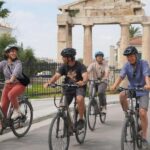
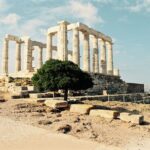
The Temple of Olympian Zeus comes next, with Hadrian’s Arch nearby. The tour passes by for photographs rather than offering an extended archaeological visit. Even from outside, the scale of the remaining columns makes this a worthwhile pause.
The temple’s location also shows how close Athens’ major sights are to one another. In a short stretch, you move from the stadium and National Garden to monumental ruins and then toward the Acropolis pedestrian area. That compact route is one reason the bike format offers good value.
You should keep your expectations clear. This tour gives you a guided look at many places, not admission and detailed time at each one. If you want to study the Temple of Zeus, the Agora, Kerameikos, or the Acropolis Museum, save those for separate visits.
The Acropolis area and the walk to Pnyx
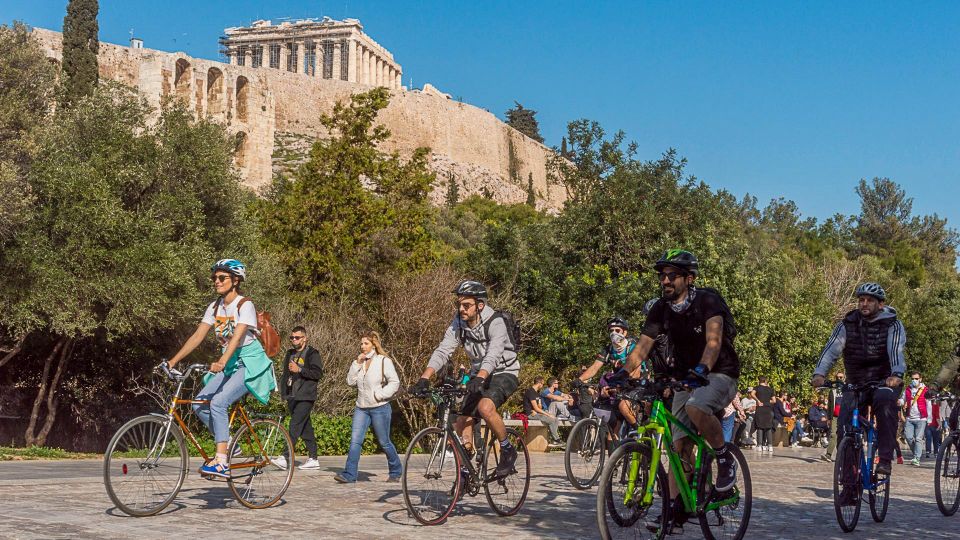
The route reaches the most famous pedestrian road in Athens, where you see the Acropolis Museum beneath the sacred rock of the Parthenon. The ride offers scenic views along the way, but it does not include admission to the museum or the Acropolis.
That distinction is important when comparing this tour with a dedicated Acropolis visit. You get a useful first look, a sense of how the monuments fit together, and a guide’s explanation. You do not get the time needed for the Acropolis site itself, the museum galleries, or a close inspection of the Parthenon.
The bike is left for a short walk through Filopappou Hill to Pnyx. This is the tour’s best pause for taking in Athens as a whole. Pnyx provides a panoramic view, and the walk gives your legs a short change of pace after cycling through the center.
I like this design choice. A ride packed with stops can become tiring and hurried. The Pnyx break lets you stop moving for a few minutes and see the city from above before cycling down the pedestrian road toward the starting point.
What the $39.52 price really covers
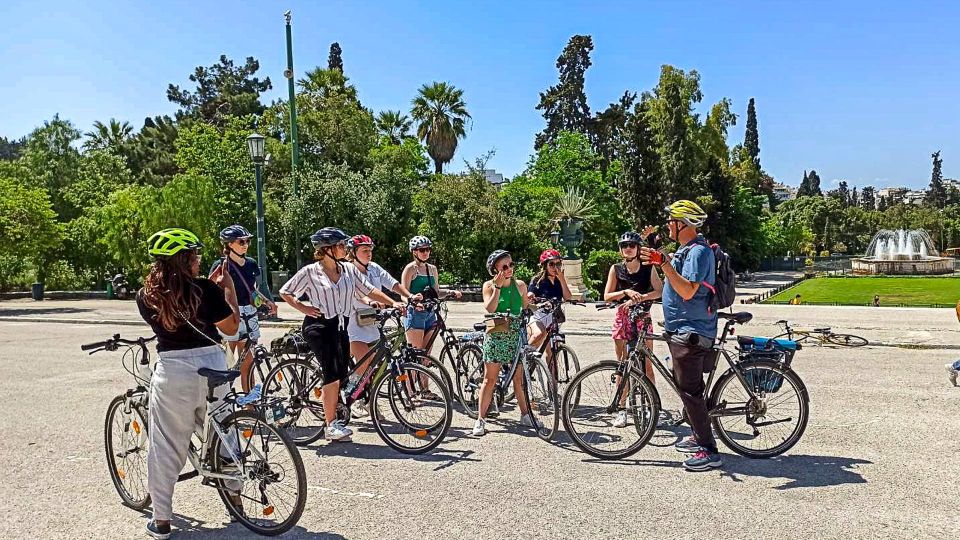
At $39.52 per person, the cost is reasonable for a 2.5-hour guided introduction to central Athens. You are paying for the bike, helmet, half-liter bottle of water, English-speaking guide, and the work of linking a long list of sights into one practical route.
The value is strongest if you have limited time in Athens or want an overview before choosing which sites deserve a longer visit. You can see the main central districts, hear the basic story of their importance, and avoid arranging separate transport between them.
The value is weaker if you mainly want archaeological access. Entry fees, food, drinks, and hotel transfers are not included. Several locations are photo stops or pass-bys, so compare this with a walking tour or museum visit if your priority is time inside the monuments.
Free cancellation is available up to 24 hours before the start for a full refund. You can also reserve and pay later, which helps if your arrival plans are still shifting. Heavy rain cancels the activity, so keep a little flexibility in your schedule.
Who will enjoy this ride most
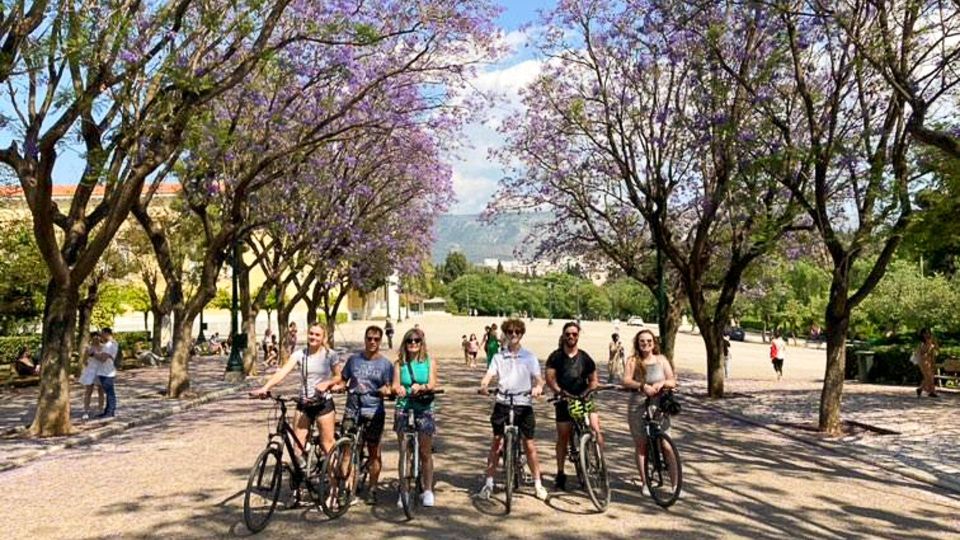
I would recommend this tour to first-time visitors who want a quick, well-organized introduction to the center. It also suits anyone who likes hearing the story of a place while moving through it, rather than spending an entire morning inside one museum.
The ride is a good fit for couples, families with older children who can ride confidently, and solo visitors who like the security of a small guided group. The English-language format keeps the information straightforward, and the limited group size should make it easier to stay connected.
You should choose something else if you do not ride regularly or feel uneasy cycling in a city. Every participant must know how to ride a bike. You should also avoid booking it as your only fixed activity on a day when heavy rain is likely.
The route may also feel too quick for serious archaeology fans. Kerameikos, the Agora, the Temple of Zeus, and the Acropolis area deserve more time than this schedule allows. Think of the ride as a city orientation with historical stops, not a substitute for visiting Athens’ major sites properly.
My take on the guide and the overall pace
The strongest personal detail attached to this experience is the guide, especially Stavros. He is described as a patient, friendly storyteller who answers questions rather than rushing through a script. That is exactly the sort of guide you want on a compact Athens route, where the difference between a good stop and a forgettable one is often the explanation.
The pace also receives clear approval. It is described as easy, making the ride accessible to people who want to enjoy the city rather than train for a cycling event. Still, easy does not mean effortless. You will be riding for 2.5 hours, stopping, turning, and managing an urban route, so wear comfortable clothes and shoes suitable for both cycling and the short walk to Pnyx.
The supplied bike and helmet remove some of the usual hassle. Bring your own sense of balance, water if you prefer more than half a liter, and a plan for eating before or after, since food is not included.
Should you book the Athens historical bike tour?
Book it if you want to connect many central Athens sights in one outing, value a patient English-speaking guide, and are comfortable on a bicycle. The combination of Kerameikos, the market, Monastiraki, Plaka, Parliament, the Olympic Stadium, the Temple of Zeus, the Acropolis area, and Pnyx is a lot of ground for $39.52.
Skip it if you want long visits inside archaeological sites, museum entry, or a completely vehicle-free experience. For the right rider, though, this is a practical first look at Athens, with enough history to guide the rest of your sightseeing and enough city life to keep the ride from feeling like a parade of ruins.
FAQ
Where does the bike tour start?
It starts at Thessalonikis 140. Look for the Flat Tyres Psycling Club shop.
Where does the tour finish?
The activity ends back at the meeting point at Thessalonikis 140. A Metro station is about 150 meters away.
How long does the experience last?
The bike tour lasts 2.5 hours. Starting times depend on availability.
What is included in the price?
The price includes an English-speaking bike leader or tour guide, a 28-inch Trekking bike, a helmet, a 0.5-liter bottle of water, and all taxes.
Do I need to know how to ride a bike?
Yes. Every participant must know how to ride a bike.
What happens if it rains heavily?
The tour will not take place in heavy rain.
How many people are in the group?
The tour is limited to 10 participants and is conducted in English.