REVIEW · ATHENS
Athens: National Archaeological Museum Private Guided Tour
Book on GetYourGuide →Operated by Christos Theodoropoulos · Bookable on GetYourGuide
One museum, 6,000 years.
This private guided tour at Athens National Archaeological Museum is one of the fastest ways to make sense of ancient Greece, because you don’t just look—you’re guided through the big ideas. I like that it centers on standout objects such as the Antikythera mechanism, plus it’s taught by an experienced licensed archaeologist.
I especially appreciate the way Christos Theodoropoulos keeps things organized inside a museum that’s huge—more than 11,000 exhibits across multiple collections. You’ll get a tight 2-hour tour that helps you choose what matters, then you can slow down afterward if you want more time.
One consideration: the museum entry ticket is not included (10 €), so your total cost won’t be only the tour price. Also, no hotel transfer is included, so you’ll want to plan getting to the meeting spot yourself.
In This Review
- Key highlights to look forward to
- Why the National Archaeological Museum feels different in person
- Meeting at the main entrance, then getting your bearings fast
- Antikythera mechanism: why that stop is worth centering
- How the tour handles the museum’s five big collections
- Prehistory to early Greece: the first chapter you shouldn’t skip
- Sculpture collection: tracing how style actually changes
- Vases and minor objects: pottery as everyday culture
- Bronze collection: small objects, big presence
- Egypt and the Near East: the international room in Greece
- What makes the guided format feel like value
- Pacing and language: how it affects your experience
- Who should book this tour (and who might not need it)
- After the 2 hours: how to keep your momentum
- Should you book this private guided tour?
- FAQ
- What’s included in the Athens National Archaeological Museum private guided tour?
- How long is the guided tour?
- Is the tour private, and what group size is it for?
- Where do we meet the guide?
- What does the museum entry cost?
- Does the tour include the Antikythera mechanism?
- Which languages are available for the live guide?
Key highlights to look forward to

- Licensed archaeologist guide who explains what you’re seeing in plain language
- Antikythera mechanism view included, a famous scientific artifact often called the world’s oldest analogue computer
- Five major permanent collections covering Greek civilization from prehistory to late antiquity
- Museum scale, managed: more than 11,000 exhibits, but you get a curated route for only 2 hours
- Private group (up to 6) so your pace and questions matter
- Christos Theodoropoulos brings a lively, responsive style that works for mixed ages
Why the National Archaeological Museum feels different in person

The National Archaeological Museum is Athens’ “big canvas” for ancient Greece. The building itself is a statement—neoclassical, from the end of the 19th century, designed by L. Lange and remodeled by Ernst Ziller—so you start with a sense that this place takes its mission seriously.
Inside, it’s not a small collection you can wander through casually. The museum spans about 8,000 square meters with many galleries, and it holds more than 11,000 exhibits. That’s exactly why a private guided tour works so well here: you get direction through a lot of material that could otherwise turn into random walking.
The tour is built to cover the museum’s main permanent collections. You’ll see a panorama of Greek civilization, from the earliest Aegean cultures all the way to late antiquity—so instead of collecting dates, you come away with a clearer “story.”
You can also read our reviews of more guided tours in Athens



Meeting at the main entrance, then getting your bearings fast
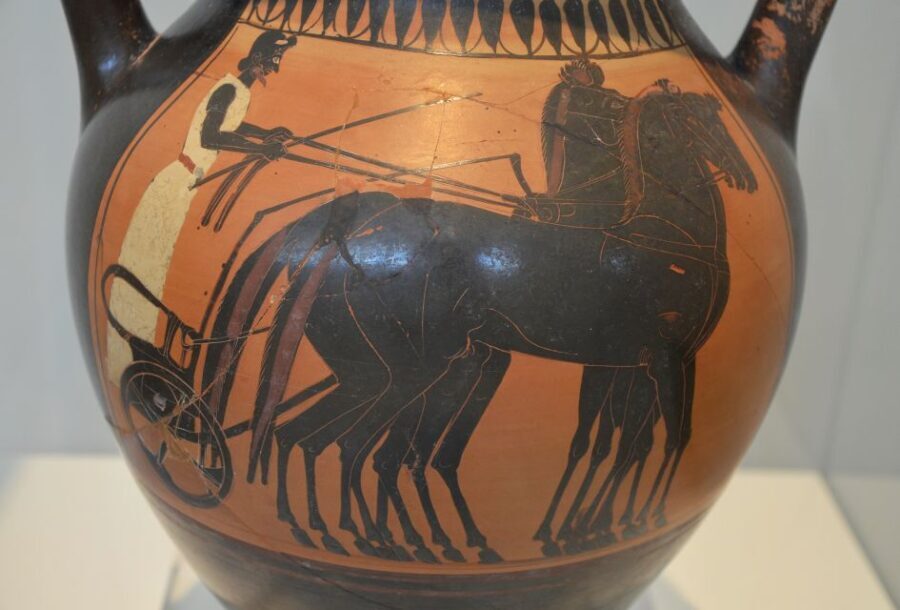
Your meeting point is outside the museum at the steps in front of the main entrance, 44 Patission Street (10682). The tour is a private group, and it lasts 2 hours, which is a helpful constraint in a museum this size.
Because hotel transfer isn’t included, I’d plan to arrive a little early and take a moment to orient yourself at street level. Neoclassical buildings can look similar once you’re inside, and the museum’s scale makes it easy to lose time if you start chasing rooms before you know the route.
The guide’s job is to get you oriented quickly—what to look for first, how the collections fit together, and where the key objects are. With a group size up to 6, you’re not waiting behind a crowd, and you’re more likely to get real answers to questions instead of a running commentary you can’t hear.
Antikythera mechanism: why that stop is worth centering
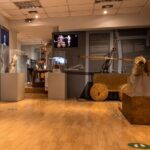
One artifact can change your whole visit. That’s the Antikythera mechanism, and it’s included in the highlights of this tour.
Even if you’ve only heard a short description before, the museum stop helps you connect it to the larger theme: ancient Greek achievement wasn’t one-dimensional. You’ll spend time with one of the museum’s most discussed objects, then you’ll link it back to how Greek culture developed across centuries.
Here’s what I like about making this a core moment rather than a quick glance. When you see the Antikythera mechanism with context, it stops being a “cool thing I saw” and becomes a clue to how advanced the ancient world could be—then the rest of the museum reads more clearly.
How the tour handles the museum’s five big collections
The museum’s permanent collections are what make it feel like a real education, not just sightseeing. Your guide will steer you through the major areas that represent different periods and types of art, so you’re not stuck reading every label on your own.
Prehistory to early Greece: the first chapter you shouldn’t skip
One of the largest galleries focuses on prehistoric antiquities. You’ll see works tied to the Aegean civilizations from the 6th millennium B.C. to 1050 B.C., including Neolithic, Cycladic, and Mycenaean cultures.
You’ll also encounter finds connected to the prehistoric settlement at Thera. This matters because the museum isn’t only “classical Athens.” It’s showing where Greek civilization grew from earlier cultures, so you get context for later pottery, sculpture, and objects.
In a quick visit, prehistory is the area most people skip. Don’t. Prehistory is where the building blocks show up—materials, styles, and ideas before they become the famous Greek look.
You can also read our reviews of more private tours in Athens






Sculpture collection: tracing how style actually changes
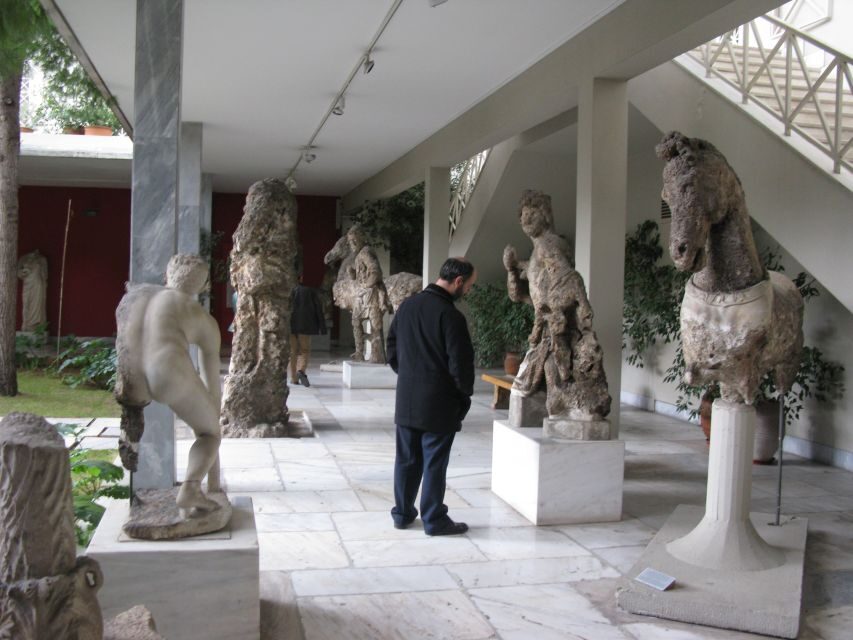
The sculpture collection highlights development in ancient Greek sculpture, especially from the 7th to the 5th centuries B.C. You’re not just seeing statues; you’re seeing a timeline of change.
A guide helps here because sculpture can look “similar” when you don’t know what to compare. With a guided route, you learn what to notice—how artists shifted form and approach over time. That makes the statues feel like progress, not just objects behind glass.
Vases and minor objects: pottery as everyday culture
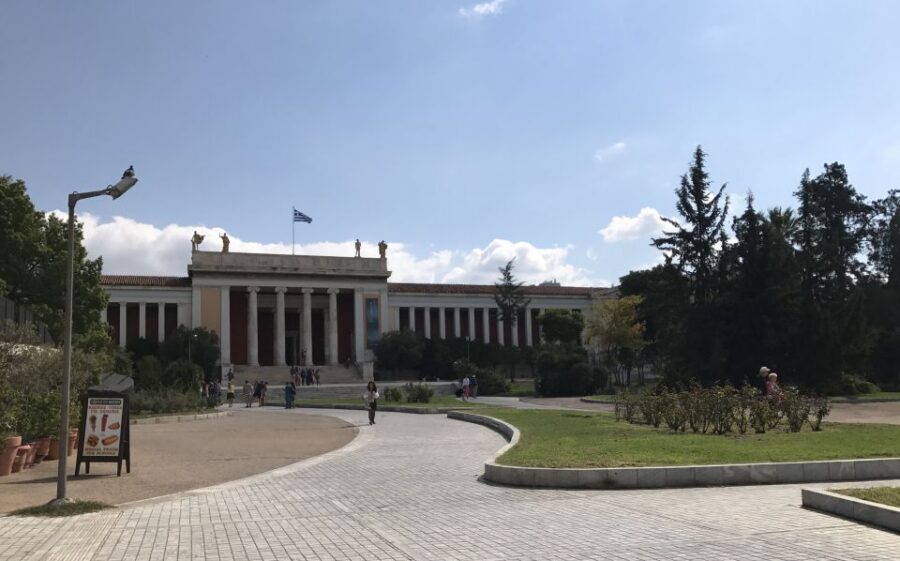
The vase and minor objects collection covers Greek pottery from the 11th century B.C. to the Roman period, plus the Stathatos Collection—a corpus of minor objects from all periods.
This is where the museum often surprises people. Pottery isn’t just decoration; it’s a record of taste, daily life, and craft traditions. With guidance, you’ll understand why these pieces sit in the museum’s story rather than being treated as background.
If you have a special interest—like jewelry or small-scale objects—ask the guide. In real visits, Christos has shown guests a private look at areas that are usually locked during certain seasons, depending on timing. That kind of flexibility is one reason a private tour can feel worth it.
Bronze collection: small objects, big presence
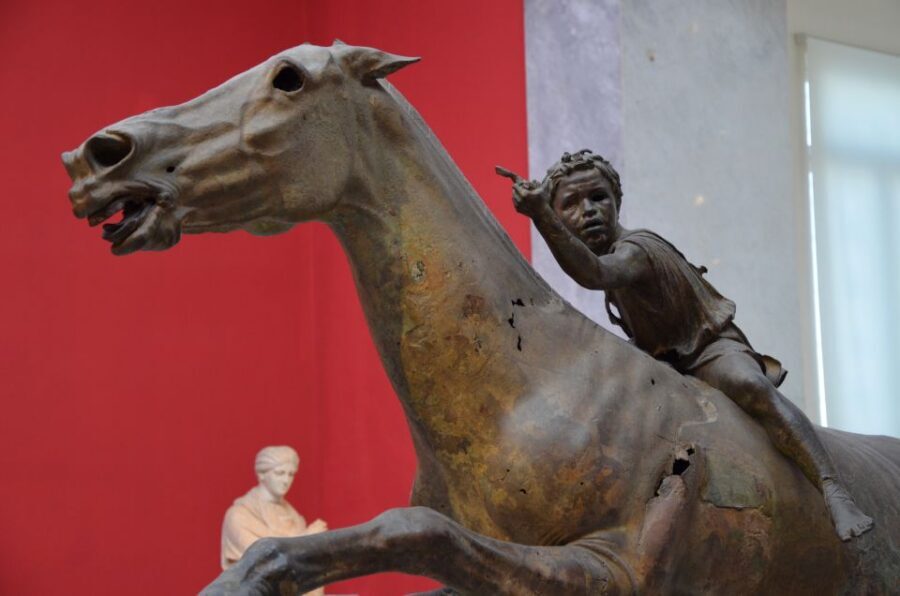
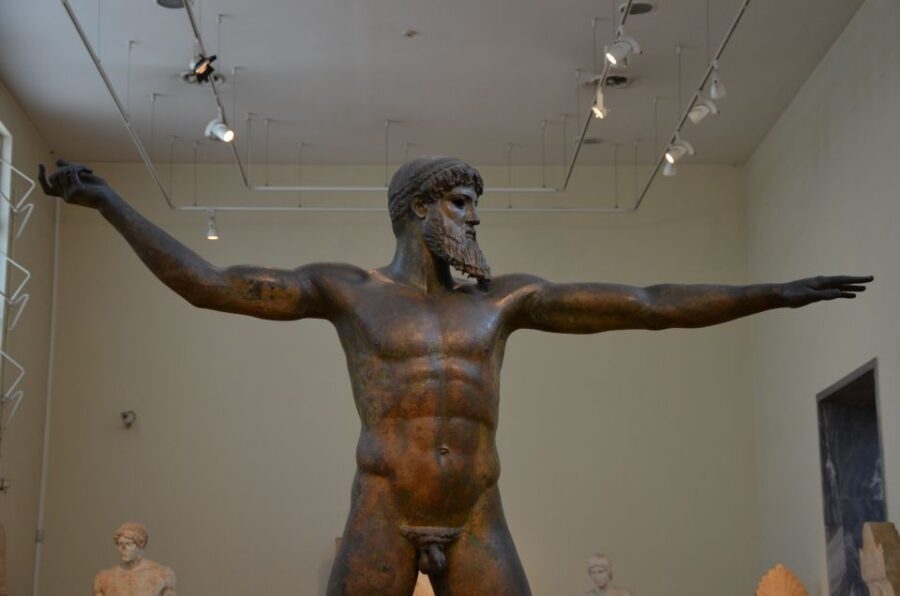
In the bronze collection, you’ll find statues, figurines, and minor objects. This section can feel “dense” because bronze works vary in scale and detail.
A good guide matters here because the museum’s layout can make it hard to compare objects. With a focused route, you’ll see key examples without turning the experience into a scavenger hunt.
Egypt and the Near East: the international room in Greece
Finally, there’s the only Egyptian and Near Eastern Antiquities collection in Greece. The range is huge, from the pre-dynastic period (5000 B.C.) to the Roman conquest.
This area is valuable because it reminds you that Greece didn’t develop in a vacuum. You’ll see how Mediterranean cultures intersected, and you’ll gain a broader sense of what “ancient world” meant beyond one country’s borders.
What makes the guided format feel like value
This tour is $400 per group up to 6 for 2 hours. That price reads high if you compare it to buying a ticket and wandering. But it changes when you compare it to what you get: direction through a museum this large, a licensed archaeologist guide, and a curated selection of highlights.
Let’s do simple math. If your group is full (6 people), the tour cost comes out to about $66.67 per person, before museum entry. Add the 10 € per person entry ticket, and you can see how this often becomes a smart choice for families, friends, or anyone who wants a guided “orientation” instead of spending hours trying to figure out what matters.
A quick, honest note: you won’t cover everything. The museum is too big for that. But that’s not the problem. The real goal of this tour is to help you see the key artifacts and understand the overall timeline so the rest of your visit becomes easier and more enjoyable.
Pacing and language: how it affects your experience
The tour is offered with a live guide in Turkish, English, German, and Greek. When you can ask questions in a comfortable language, you’ll retain more. Art history isn’t only visual—it’s interpretation, and interpretation is easiest when it’s explained in a way you can follow.
The tour runs 2 hours, and that time constraint shapes the pacing. It can feel quick, but it’s also what keeps the visit from dragging. With so much to see, moving at a deliberate pace helps you hit the important rooms without turning the visit into fatigue.
I also like that the guide’s style tends to be interactive—answering questions and adapting to what your group wants to prioritize. That’s especially useful if you’re traveling with teenagers, young adults, or mixed interests, because everyone gets a version of the story that feels relevant.
Who should book this tour (and who might not need it)
This private guided tour is a great fit if:
- You want the museum’s main story in a short time
- You prefer explanations over self-directed label reading
- Your group includes different ages or interests and you want everyone to stay engaged
- You’re the kind of visitor who will return for extra time afterward, now that you know what you’re looking at
You might skip the private tour if:
- You’re very happy walking through large museums on your own and don’t need help prioritizing
- You’re planning a longer, unstructured visit and you want to spend hours per section
But if you’re time-limited in Athens, this tour is one of the most practical ways to get real value from the National Archaeological Museum.
After the 2 hours: how to keep your momentum
Once the guided portion ends, you’re in a better position to explore on your own. You’ll know which collections you care about most—prehistory, sculpture, pottery and minor objects, bronze, or Egyptian/Near Eastern antiquities—and you can choose where to linger.
A useful strategy is to pick just one or two collections to extend. Don’t try to “catch up” on everything. The museum is built to reward focus, and your guide’s route will have given you a mental map.
If the timing works out and your guide has bandwidth, you may also be pointed toward additional rooms or allowed extra time for questions and follow-ups. That kind of flexibility is where a private experience can feel noticeably better than a fixed group tour.
Should you book this private guided tour?
Yes—if you want a fast, guided “orientation” that turns the museum into a story rather than a maze. The combination of a licensed archaeologist guide, a private group size up to 6, and highlights that include the Antikythera mechanism makes this a strong value for the time you have.
One more reason I’d book: the museum is genuinely intimidating if you walk in cold. A guide helps you choose your path, understand what you’re seeing, and leave with context you’ll carry into the rest of Athens.
If you’re going as a small group or you care about getting the most out of limited museum time, this is an easy yes.
FAQ
What’s included in the Athens National Archaeological Museum private guided tour?
The tour includes an experienced licensed archaeologist guide for a guided visit lasting 2 hours. Museum entry tickets are not included.
How long is the guided tour?
The duration is 2 hours.
Is the tour private, and what group size is it for?
It’s a private group experience, priced for up to 6 people.
Where do we meet the guide?
Meet at the steps in front of the main entrance of the National Archaeological Museum of Athens, at 44 Patission Street, 10682.
What does the museum entry cost?
The museum entry ticket costs 10 € and is not included in the tour price.
Does the tour include the Antikythera mechanism?
Yes. The Antikythera mechanism is listed as one of the tour highlights.
Which languages are available for the live guide?
Live guided tours are available in Turkish, English, German, and Greek.