REVIEW · ATHENS
Biblical Corinth Taste Faith & History with wine & Oil Tasting
Book on Viator →Operated by Yomadic.Tours & Transfers · Bookable on Viator
Corinth tastes like faith and waterfront history. This small-group ride out of Athens threads together ancient Corinth’s drama and Paul’s connections, then tops it off with optional wine and oil tasting. I also like the logistics: pickup and drop-off, modern private vehicle, WiFi, A/C, and water, so you spend less time wrangling transport and more time looking at stone.
Two things I really like are the way the day mixes big-name sights with lesser-known layers, and how the drive often turns into a moving history lesson (drivers mentioned in reviews include Nikos, Panos, Periklis, Andreas, and Christos). One possible drawback: entrance fees and the tasting add-ons aren’t included, so your final spend will be higher than the base tour price.
In This Review
- Key Highlights You’ll Actually Care About
- Corinth Canal to Acrocorinth: How This 5-Hour Day Flows
- Price and What You’ll Pay Beyond the $190.46 Base
- The Corinth Canal View: Where Trade Got a Shortcut
- Diolkos Trackway: Ancient “Rail” for Ships
- Isthmia and the Isthmian Games: Paul’s Mentioned Presence
- Isthmia Archaeological Museum: The Artifacts That Explain the Harbor World
- Ancient Corinth (Archaia Korinthos): Paul’s City and the Roman Reset
- A practical caution about closures
- Archaeological Museum of Corinth and the Built-Over City
- Temple of Apollo: A Quick Look at an Early Doric Landmark
- Acrocorinth Fortress Views: Why This Rock Controlled the Isthmus
- Wine and Oil Tasting: Turning History into Something You Can Remember
- Who This Tour Fits Best (and Who Might Want Another Option)
- Should You Book This Biblical Corinth Taste Faith & History Tour?
Key Highlights You’ll Actually Care About
- Private pickup in Athens plus a luxury mini van (up to 7 people) means a calmer, more flexible day.
- Corinth Canal + Diolkos lets you connect geography, trade, and the ancient workaround to avoid sailing around the Peloponnese.
- Isthmia and Paul tie archaeology to the New Testament story about the Isthmian Games.
- Acrocorinth views put you on the “upper” fortress above the city, with a clear sense of why it mattered defensively.
- Optional wine and oil tasting can turn the day from visuals into something you can taste and remember.
Corinth Canal to Acrocorinth: How This 5-Hour Day Flows
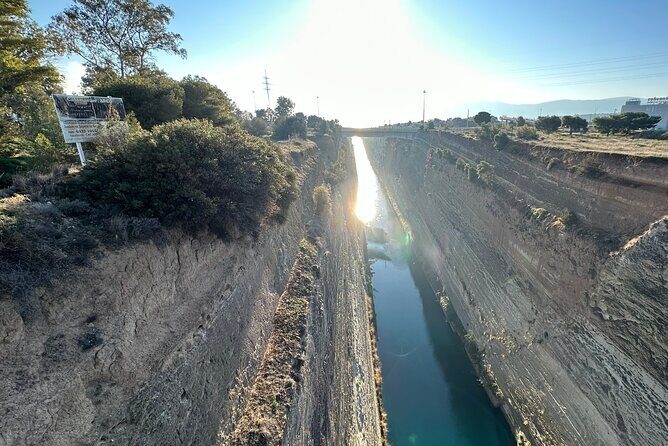
This is built as a “get the essentials without rushing” kind of outing. You’ll be picked up in Athens (hotel, Airbnb, port gate, or airport arrival hall) and whisked by modern private vehicle to the Corinth area, with A/C, WiFi, and bottled water on board. It’s about 5 hours, so it’s long enough to feel like you escaped the city, but not so long you melt.
The pace is driven by quick-but-meaningful stops. Some parts are short (canal views, temple photo time), while others slow down (Ancient Corinth and Acrocorinth). The value here is not only the sites, but also how your driver uses the drive time to explain what you’re seeing and why it mattered.
And because it’s only your group, you’re not stuck listening to 30 sets of questions at once. If your group likes history and photos, you’ll probably feel like you’re touring with a friend who knows the background.
You can also read our reviews of more food & drink experiences in Athens



Price and What You’ll Pay Beyond the $190.46 Base
The listed price is $190.46 per person for the 5-hour experience. What that covers is the transportation, pickup/drop-off, and the English-speaking driver support.
What’s not included can change your final total:
- Entrance fees for attractions are listed as €15 per person, and Ancient Corinth’s archaeological site is also listed as €15 per person.
- The oil tasting (finger food) is listed as €80 per person.
- Wine tasting is listed as €15 per person.
- A licensed tour guide is optional for an extra €140 per person.
So here’s the practical math: if you do only the base tour and handle site tickets on arrival, you’ll still want to budget the €15-ish archaeological admissions that are explicitly not included. If you add the tasting elements, you’re paying for a more “food-focused” version of the day, not just a snack.
Is it “worth it”? For many people, yes—especially because you’re not taking a bus and you’re getting a private, narrating driver. If you’re trying to travel ultra-budget, the optional tasting options are where costs can climb quickly.
The Corinth Canal View: Where Trade Got a Shortcut
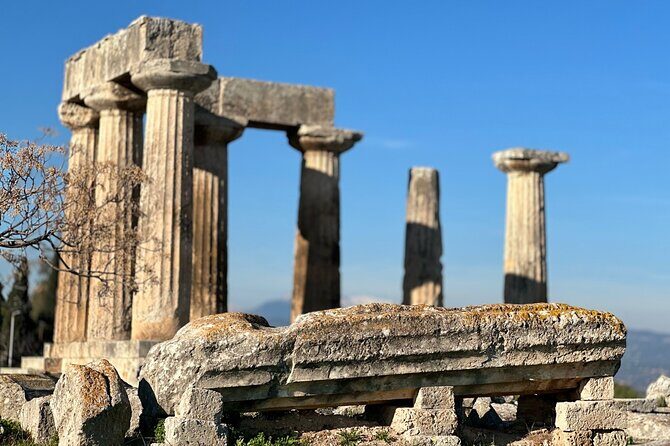
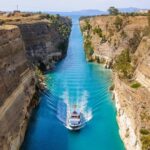
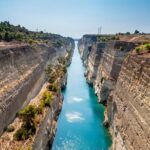
You start with the Corinth Canal, the waterway cut across the narrow isthmus between mainland Greece and the Peloponnese. Even though the canal itself is a late-19th-century project, the whole idea is ancient in spirit: a dream for moving ships without making that long, punishing trip around the peninsula.
This stop is a clean “wow” moment because you immediately see the geography doing the talking. When you look at the canal from the land side, it’s easier to understand how Corinth became wealthy—water routes shaped everything from exporting goods to controlling movement.
One especially cool historical detail connected to this theme: the tyrant Periander is believed to have conceived the idea of cutting the canal in 602 BC. When the technology didn’t exist for the canal, the solution became the Diolkos, the overland trackway that transferred boats—more on that next.
Diolkos Trackway: Ancient “Rail” for Ships
After the canal, you move to the Diolkos, a paved transfer route near Corinth used to move vessels over land across the isthmus. The goal was simple: avoid the long sailing route around the Peloponnese that added both distance and danger.
This part matters because it’s the behind-the-scenes version of how empires move. Ships weren’t just “transport”—they were logistics, power, and profit. The Diolkos operated from around 600 BC until the middle of the 1st century AD, and the route length is given as roughly 6 km to 8.5 km.
If you like language and culture as evidence, there’s also the phrase as fast as a Corinthian, attributed to Aristophanes. The point isn’t that you can quote it later at dinner. The point is that locals treated speed here like a known reputation.
Isthmia and the Isthmian Games: Paul’s Mentioned Presence
Next comes Isthmia, close to the canal area, where the story gets biblical. Isthmia was tied to the Isthmians, major ancient games considered second in importance only to the Olympics at Olympia.
The connection that makes this stop feel more than just a ruin is the presence of the Apostle Paul in the Isthmian region. The materials you’re given highlight that this is referenced in the Bible and tied to his role as a tent maker around the games—bringing Christianity into a public sporting setting.
Whether you’re coming from a faith angle or a history angle, this stop helps you picture how ancient events worked. Athletes and visitors gathered, support staff moved in, commerce followed, and messages traveled with people.
You can also read our reviews of more historical tours in Athens


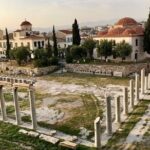
Isthmia Archaeological Museum: The Artifacts That Explain the Harbor World
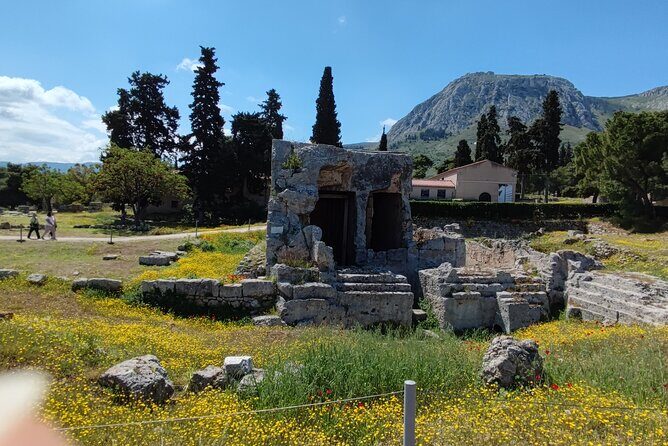
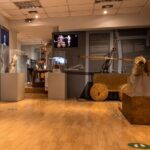
You’ll also get time at the Archaeological Museum of Isthmia, which is smaller than some big-city museums but packed with specific “how did people live” objects.
A few of the items highlighted include:
- an Archaic marble pediment dating to the end of the 7th century BC
- colored glass panels from Kechreon, said to have arrived packed in twos from Alexandria and found submerged near the Temple of Isis on the harbor
- an imperial statue type of Zeus (mid 2nd century BC)
- an epinician stele featuring a portrait of the Corinthian musician Lefkios Cornelius (150 AD)
- golden figurine of a bull connected to a vow to the sanctuary (6th century BC)
- commercial amphorae and votive offerings, plus objects connected to cemeteries (Mycenaean and Roman)
This museum works well because it doesn’t just show “pretty things.” It’s tied to harbor life, trade, worship, sports culture, and imported materials. If you’ve ever wondered why an ancient port city could feel cosmopolitan, these objects are a direct answer.
Note: museum time here is short, and admission is not included, so focus on the artifacts that connect the dots—harbor, games, and belief.
Ancient Corinth (Archaia Korinthos): Paul’s City and the Roman Reset
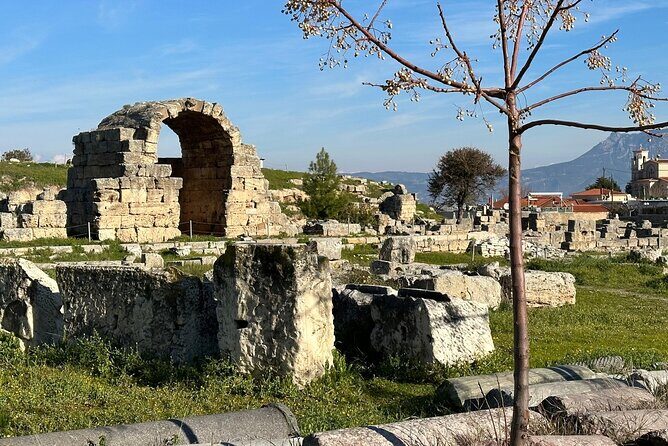
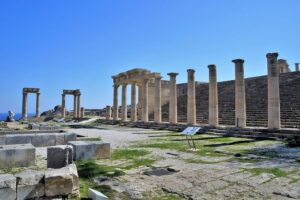
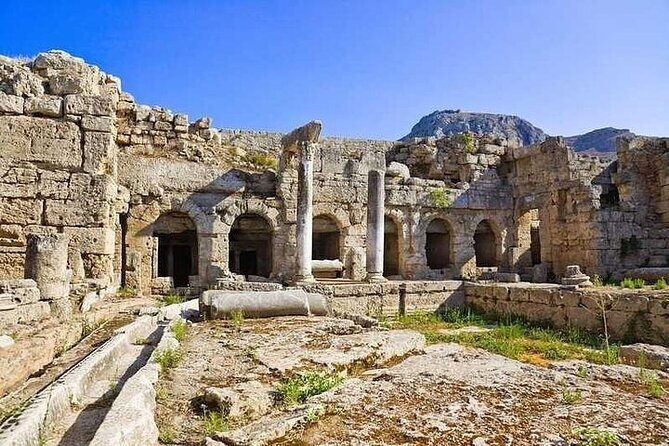
Then you get to the core name on the tour: Ancient Corinth, tied to both mythology and early Christian history. Corinth was a city-state on the isthmus, positioned roughly halfway between Athens and Sparta, and it became a major commercial center thanks to water routes and fertile land.
For the Paul connection, Corinth is well known through the New Testament letters: First and Second Corinthians, plus references in Acts as part of Paul’s missionary travels. You also get a sense of how later writers framed the city, including Pausanias’ work that includes Corinth.
Historically, the city’s big timeline is clear:
- Ancient Corinth rose to major status (population cited as 90,000 in 400 BC)
- Romans destroyed it in 146 BC
- Romans rebuilt in 44 BC
- it later became the provincial capital of Greece
That Roman “reset” matters. You’ll often see older structures beneath later layers, which is why Corinth can feel both familiar and confusing at first glance. A good driver helps you orient yourself fast.
A practical caution about closures
There’s an important consideration: the big Ancient Corinth site can be closed at times, including for filming and safety reasons. In one case tied to production activity, the closure wasn’t announced far in advance. The takeaway is simple: if your visit matters to you, I’d plan a little flexibility and keep expectations realistic for a few days around known events.
Archaeological Museum of Corinth and the Built-Over City
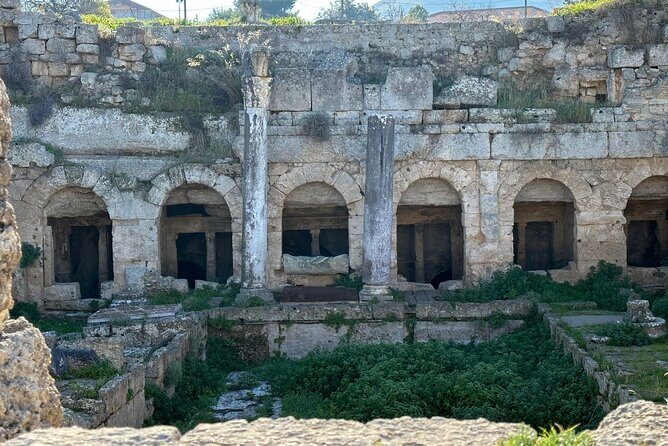
Near Ancient Corinth, you may also visit the Archaeological Museum of Corinth. This museum was constructed between 1931–1932, aimed at showcasing archaeological finds from recent excavations.
What makes this museum worth your time is that it matches the “city under the city” feeling. The site areas connected to the museum include places you might encounter on your walk around Corinth:
- Hadgimoustafa spring
- the Lechaion Road
- Basilica
- Fountain of Peirene
- Stoa and Agora
- Odien
You’ll get a snapshot of how daily life, politics, worship, and commerce arranged themselves. Even if you only have a short visit window, this museum helps you stop guessing and start understanding what those ruins were for.
Admission is not included, so treat it as optional prioritization—if your group wants museum time, it’s a strong add-on. If you want more outdoor viewpoints, you might focus more on Acrocorinth.
Temple of Apollo: A Quick Look at an Early Doric Landmark
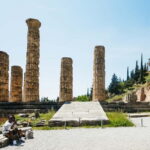
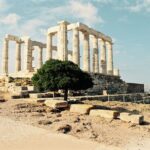
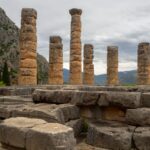
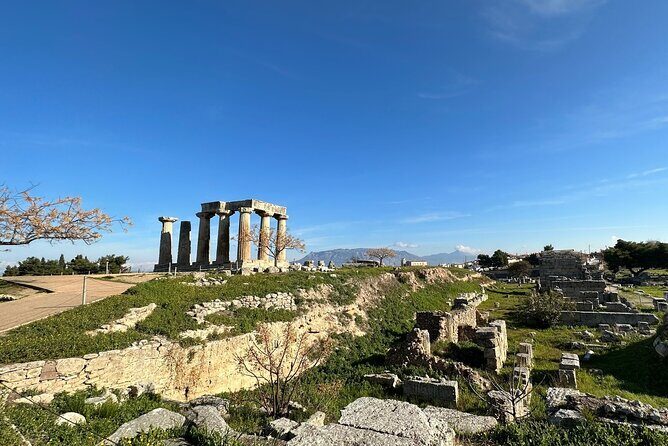
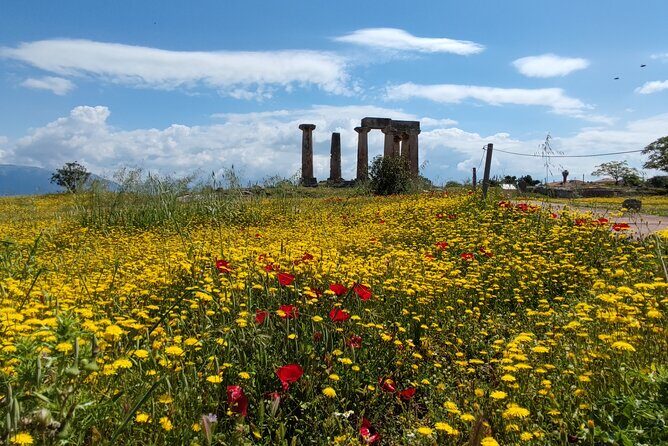
You also stop at the Temple of Apollo, constructed around 550 BC. It’s described as one of the earlier Doric temples in the Peloponnese and the Greek mainland, built with monolithic columns that are rare in the ancient world.
This is a short stop, so don’t over-plan your expectations. Think of it as a visual “anchor” in your mind: the shapes, the style, and the scale that help you recognize what you’re looking at when you see other ruins later.
If you love architectural details, this is the part where you can slow down and study column style and proportions without feeling like you need an archaeology degree.
Acrocorinth Fortress Views: Why This Rock Controlled the Isthmus
Finally, you go up to Acrocorinth, the acropolis of Corinth perched on a monolithic rock above the ancient city. The big idea is defensive: secure water supply and repeated use as a last line of defense because it controlled access through the Isthmus of Corinth into the Peloponnese.
Even with a relatively short visit window, the payoff is the viewpoint. From up here, the terrain makes sense: you understand how someone could monitor movement and how a fortress position could discourage invasion.
If you’re sensitive to heat or steep walking, plan accordingly. This is not a “flat museum hallway” situation. Wear comfortable shoes and pace yourself so you can enjoy the views instead of fighting the climb.
Wine and Oil Tasting: Turning History into Something You Can Remember
This tour’s name includes tastings, but the costs are listed as add-ons: oil tasting with finger food is €80 per person, and wine tasting is €15 per person. So you’ll want to decide early if the food part is a core goal for your day or an optional bonus.
Why this can be a smart move: olive oil and wine aren’t just souvenirs. They connect to daily life, trade, and ritual. When you’ve been walking through port-town artifacts and thinking about exports, tasting oil and wine helps your brain keep the whole day together as one story.
Just keep it practical. If you add tasting, pace your drinking and plan to enjoy the final viewpoints with a clear head—because you’re still in the middle of a guided outing and you’ll be traveling back to Athens afterward.
Who This Tour Fits Best (and Who Might Want Another Option)
This is a strong fit if you want a private, small-group day that mixes Paul’s Corinth, major ancient ruins, and a modern driver who actually helps you connect the dots. It also works well if you care about efficiency: you get pickup, WiFi/A/C comfort, and a plan that doesn’t rely on your ability to navigate intercity transport.
It may not be the best match if your entire budget is built around the base price. Entrance fees and optional tasting add-ons can push the day higher, and the Ancient Corinth site may sometimes face closures for safety or production activity.
It’s also a good choice for people who don’t want a full-day marathon but still want meaningful stops. You’ll leave with the major “Corinth story beats” without needing a second day.
Should You Book This Biblical Corinth Taste Faith & History Tour?
I think you should book if you want a calmer alternative to a bus day, you enjoy history with biblical context, and you’d likely add at least one tasting option. The private vehicle and small-group format are the big value lever, and Acrocorinth’s views make the effort feel worthwhile.
Don’t book it expecting everything to be included for one flat price. Build a realistic budget for entrance fees and decide if oil and wine tasting are your must-haves or optional extras.
If you’d like, I can help you estimate your total cost based on whether you’ll add wine, oil tasting, both, and whether you plan to use any optional licensed guide time.