REVIEW · ATHENS
Discover Cycladic Art and Carve Your Own Marble Piece
Book on GetYourGuide →Operated by MarbleArt Athens · Bookable on GetYourGuide
Carve ancient marble in the heart of Athens. It’s a hands-on workshop where you turn Greek marble into a Cycladic-style idol-relief using traditional tools and step-by-step guidance.
I especially love the small group setup (up to four), because it means your guide can correct your grip and technique without rushing you. I also like that you start with cultural context—Cycladic art, symbols, and the way marble gets treated—before you ever touch the stone.
One thing to consider: carving is slow work. Expect a bit of physical effort and dust, so bring a particle mask if you’re sensitive, and don’t plan a tight schedule right after.
In This Review
- Key things I’d highlight before you go
- MarbleArt Athens: carving Cycladic art with your own symbol
- What you’ll create: an idol-relief you can take home
- The 135 minutes: how the session actually moves
- 1) Cycladic art context before the first cut
- 2) Understanding marble (and what can enrich it)
- 3) Getting familiar with the hand tools
- 4) Draw your subject, then transfer it onto marble
- 5) Traditional carving in a relief-like style
- 6) Engrave letters for your signature
- 7) Color, patina look, and the final surface treatments
- Tools, technique, and what beginners should expect
- The Athens side: a short cultural walk to spot sculpture details
- Price and value: is $88 worth it?
- What to pack and how to plan your evening
- Who should book MarbleArt Athens (and who might not)
- Should you book this marble carving workshop?
- FAQ
- How long is the marble carving workshop in Athens?
- How much does it cost?
- Will I take my artwork home?
- Do beginners need prior experience?
- What languages are available?
- How big are the groups?
- Is there a cultural component in Athens?
- Cancellation and booking flexibility
Key things I’d highlight before you go
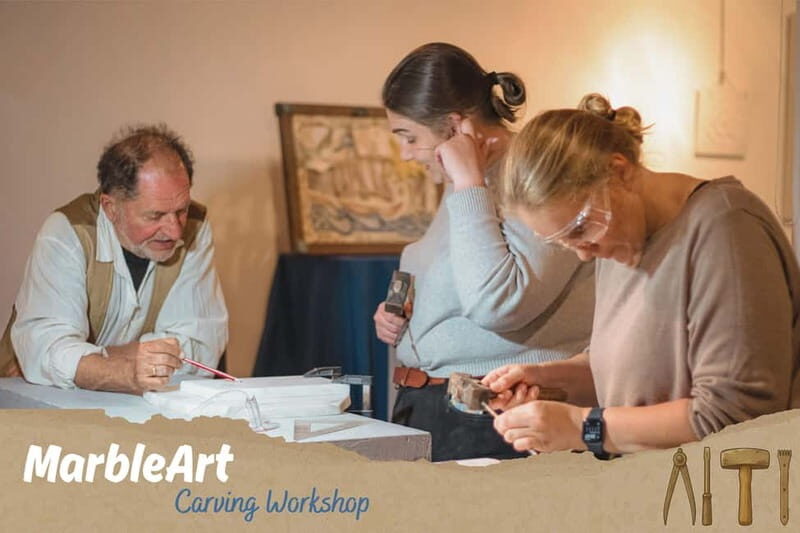
- Small groups (up to 4) mean you get real attention while you carve
- You pick your own symbol/theme—no cookie-cutter patterns
- Traditional hand tools teach the method Ancient Greek sculptors used
- Patina coloring plus liquid glass coating helps your finished look last
- A cultural walk in Athens lets you seek out sculptures nearby for photos
- PhD-level art history context is built into the class, not added as an afterthought
MarbleArt Athens: carving Cycladic art with your own symbol
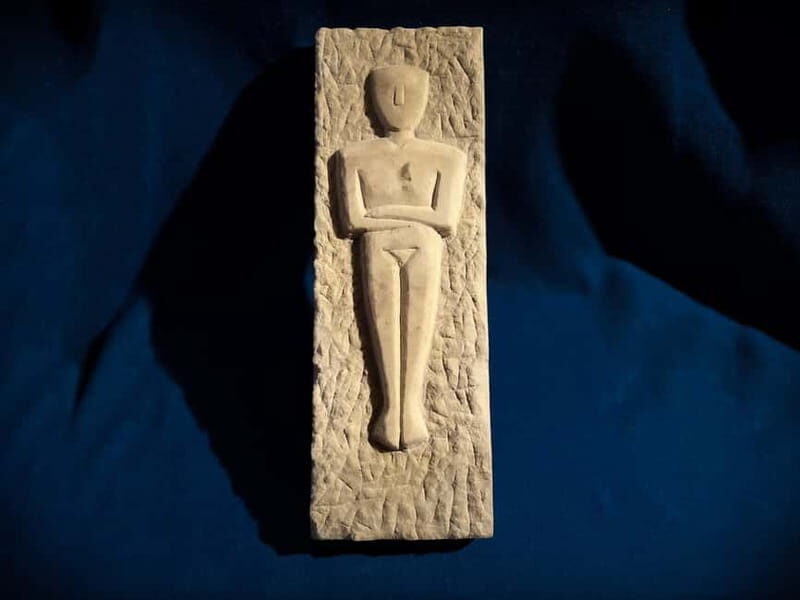
MarbleArt Athens is a boutique studio and marble-focused space where stone carving isn’t treated like a souvenir factory. You’re doing sculpture-making. The emphasis is on Greek marble and on the idea of making an artwork that points back to ancient forms—especially the Cycladic-inspired style.
What makes this experience interesting (and genuinely different from the typical Athens evening) is the balance. You get a guided talk with historical context, then you put that context to work in your own piece. One session stays calm and personal, since the group is capped at four. That small size changes everything. You’re not watching someone else carve while you wait your turn.
Also, you’re not limited to one “model” to copy. The workshop includes discussion about your chosen personal symbol. That means your piece ends up feeling like your artistic choice, even if you’re a total beginner.
You can also read our reviews of more tours and experiences in Athens.


What you’ll create: an idol-relief you can take home
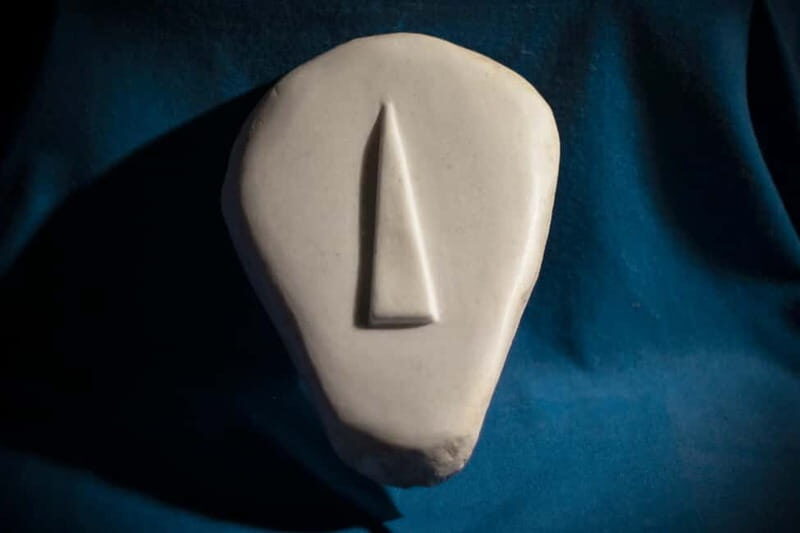
The goal is not a functional object. It’s an original sculpture-idol relief inspired by ancient Greek sculpture and the symbolism of marble as a material. You’ll carve a design that reads in light and shadow—think engraved lines and raised or stepped relief-like forms.
The class also builds in finishing steps that matter visually:
- Multi-level carving so details catch light
- A signature engraved into the piece
- Coloring with a patina-like effect
- Shadow highlighting and perforation of details (tiny depth changes that make the relief pop)
- Final coating with liquid glass
So even if your carving skills are brand new, you’re still making something that finishes like a real artwork. You’ll leave with your marble piece in-hand, which is a big part of why this is good value for the money.
The 135 minutes: how the session actually moves
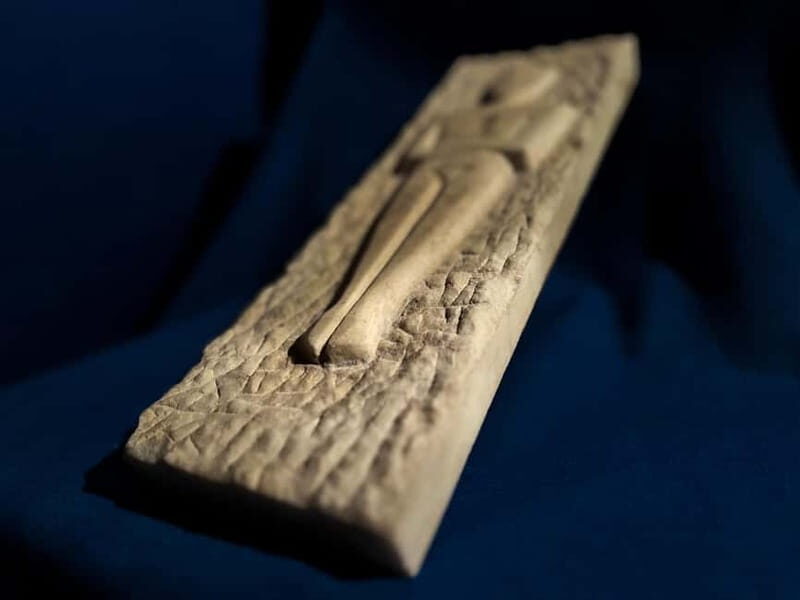
The workshop is about 135 minutes, and it’s structured so you’re not dropped into carving immediately. The session builds from ideas → tools → drawing/transfer → carving → finishing.
Here’s the flow you can expect:
1) Cycladic art context before the first cut
At the start, you’ll get historical information on marble art and stone carving, along with cultural context connected to Cycladic civilization. The class frames marble and stone not just as a material, but as part of how ancient sculpture communicated meaning.
There’s also a presentation about Aegean Cycladic art, using real sculptures and digital examples. This is useful because it gives you visual targets for how reliefs and engraved motifs tend to look when the light hits.
2) Understanding marble (and what can enrich it)
You’ll learn about the structure of materials—rocks, marble, crystals—and how marble art historically can involve enriching elements such as metals or fossils (in the broader context of the material story). It’s not just trivia. It helps you understand why finishing choices—color, contrast, and surface treatment—affect how the piece reads.
- All Day Cruise -3 Islands to Agistri,Moni, Aegina with lunch and drinks included
★ 5.0 · 4,958 reviews




3) Getting familiar with the hand tools
Next comes hands-on tool training. You’ll learn how to use the hand tools for engraving and the basic movement patterns needed for stone. This is where beginners usually feel the biggest change: you’re not doing “quick carving,” you’re learning control.
Guidance here is critical. In the workshop, your teacher can show what to correct—angle, pressure, and how to approach the line or edge you’re trying to create.
4) Draw your subject, then transfer it onto marble
You choose a theme or symbol, and then you work on drawing it. After that, the design gets transferred onto the marble surface so you have a guide for carving.
This part matters more than it sounds. A lot of people assume carving is about force. It’s actually about planning. Getting the design onto the stone in a clear way helps your later carving look intentional, not accidental.
5) Traditional carving in a relief-like style
Then you move into the main carving stage using hand tools—matching the traditional approach used in ancient Greece. Your carved theme appears as engraved and relief-like forms with depth.
This workshop also notes that themes are typically rendered with multi-level deepening for light and shadow. In exceptional cases, you might also see the class discuss or include more 3D effects, but the core is still idol-relief style carving.
6) Engrave letters for your signature
After carving the main design, you’ll engrave letters for your signature. It’s a small step that adds a lot of closure. It makes the piece feel finished and personal, like you’ve formally claimed the work.
7) Color, patina look, and the final surface treatments
Coloring is where your relief begins to look “sculptural” instead of “stone-only.” You’ll apply color to create a patina-like effect, using a hagiography enrichment technique. You’ll also do shadow highlighting and perforation for extra detail definition.
Finally, you’ll coat the piece with liquid glass—an end step intended to protect and bring the surface together visually.
Tools, technique, and what beginners should expect
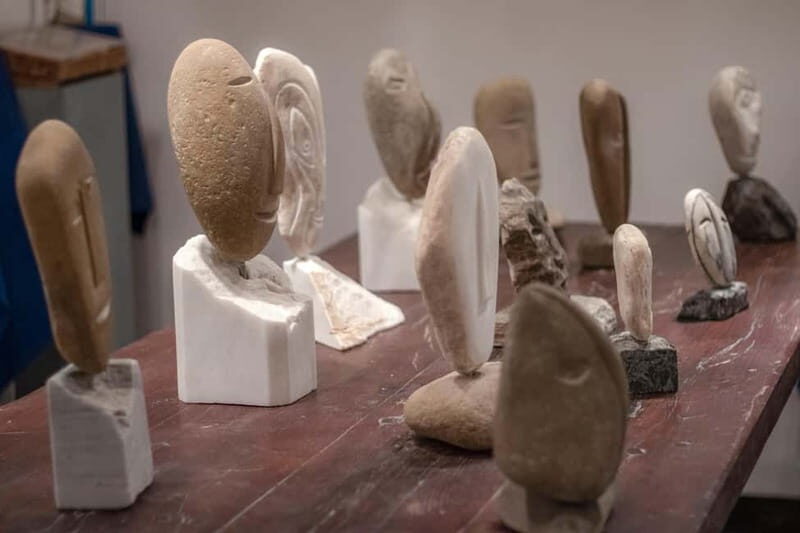
If you’re picturing a class where you tap a stone and magically get an antique-looking idol—don’t. This is real carving. It’s also real instruction, and the instructor team gives support while you learn.
The vibe is patient and practical. In several accounts of the experience, Dimitri/Dimitrios is named as the guide, with assistant Jimmy also mentioned. That matters because it suggests hands-on help is available while you’re figuring things out, especially when the carving feels harder than expected.
Here’s what you should plan around:
- You’ll need steady technique, not speed
- Mistakes can happen in stone work, and the team helps you steer the process back into something you’ll be proud to take home
- Dust control matters. One participant specifically recommended a particle mask and noted dust during carving; eye protection goggles are provided
You don’t have to be an artist. But you should be the type who likes working with your hands, watching your design appear slowly, and taking direction.
The Athens side: a short cultural walk to spot sculpture details
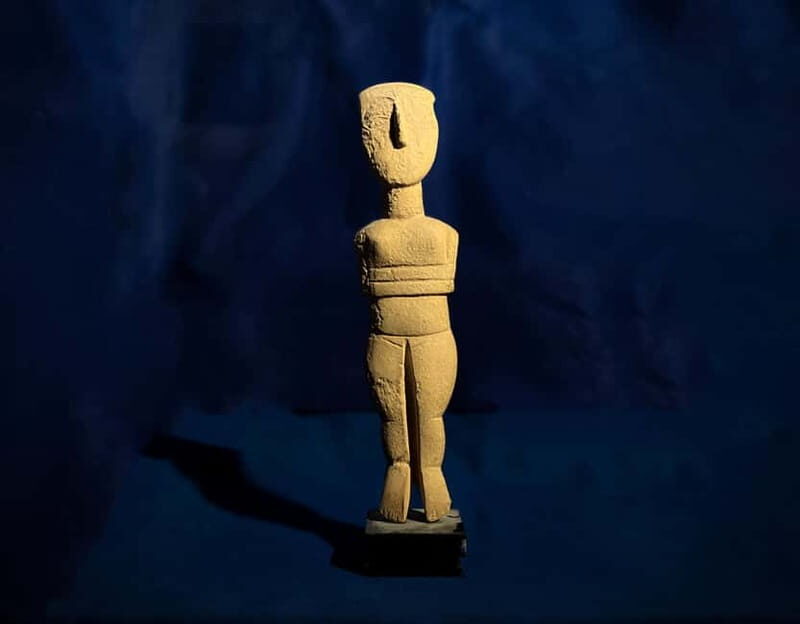
This workshop isn’t only “work at the studio.” It includes a cultural component tied to Athens. If you’re interested, you can walk around the area near the workshop to explore and photograph sculptures you’ll find in the historical center.
That’s a smart addition. It turns your class into a two-way experience:
- You learn why stone reliefs and carved details work a certain way
- Then you can look at real sculptures around Athens with a new set of eyes
It also makes a nice evening rhythm: history and symbolism in the studio, then your own “spot-the-details” walk outside.
Price and value: is $88 worth it?
At $88 per person, the workshop isn’t cheap in the way a basic museum ticket is cheap. But it’s also not priced like a luxury art retreat.
What you’re paying for, in plain terms:
- a small-group session (up to four)
- hands-on guidance while you carve and finish
- genuine cultural context on Cycladic art and marble carving traditions
- a take-home artwork (original marble relief)
- multiple steps that go beyond raw carving—color, patina effect, shadow work, and liquid glass coating
If your goal is a hands-on craft you can’t easily replicate at home, this looks like good value. You’re buying instruction and materials work and finishing, then leaving with a physical piece.
Where it’s less of a bargain is if you only want something scenic and low-effort. This is creation, not just viewing.
What to pack and how to plan your evening
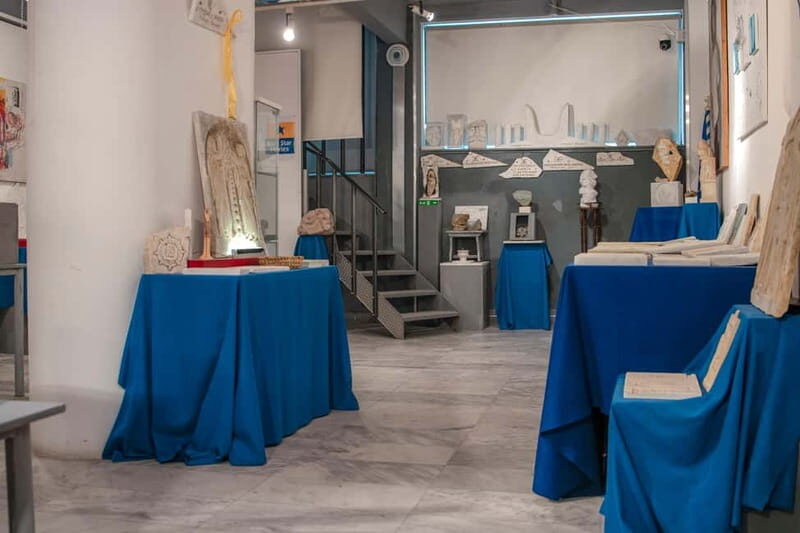
The workshop runs about 135 minutes, but pacing can vary because carving takes time and each person’s starting design and comfort level differ. If you’re planning dinner right after, aim for a little breathing room.
For practical comfort:
- Wear clothes you don’t mind getting dusty
- Bring a particle mask if dust bothers you
- Use the goggles provided, and keep them on during carving steps
- Expect the session to feel technical at first (tools and technique), then more rewarding once your relief starts reading clearly
If you’re coming from sightseeing earlier in the day, this is a good “switch gears” activity. After time at major monuments, your brain will like the direct, tactile work.
Who should book MarbleArt Athens (and who might not)
This workshop is a great fit if you:
- want a meaningful souvenir that’s actually made by your hands
- like art history when it has a practical outcome
- enjoy slow, focused work and don’t mind a bit of effort
- are traveling as a couple or small group and want a calmer evening
- are returning from the Cyclades and want to connect the dots back to Aegean art
You might skip it if:
- you want a quick photo stop only
- you don’t like dust or physical work (even with masks and goggles)
- you’re hoping for a fully guided “copy this exact pattern” experience instead of personal symbolism
Should you book this marble carving workshop?
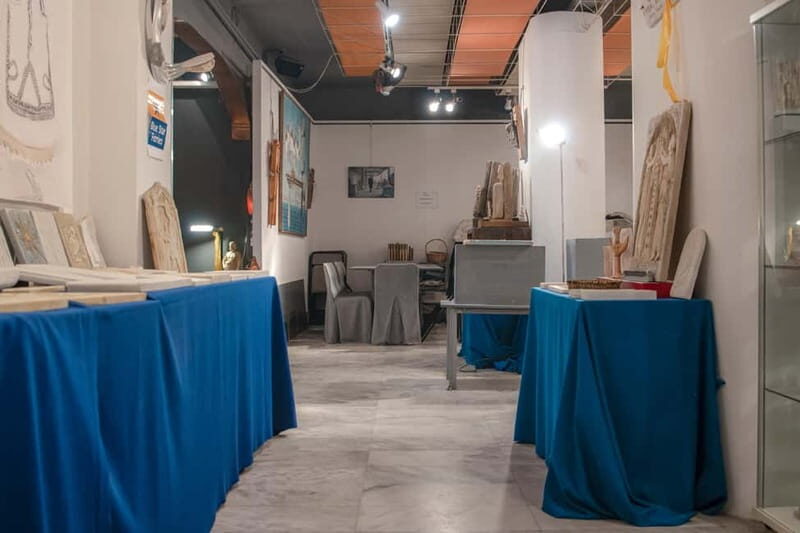
I’d book it if you want an Athens experience with two ingredients that don’t always meet: real creative work and real cultural context. The small-group setup, the choice of your own symbol, the traditional hand-tool method, and the take-home finished piece are the winning combination.
Also, it’s one of those rare activities where you get to understand how ancient-looking details are actually built—one controlled cut, one relief step, one surface finish at a time.
If you’re deciding between a museum evening and something hands-on, this is the option that pays off later when you look at marble sculptures around Athens and see the technique behind the beauty.
FAQ
How long is the marble carving workshop in Athens?
The experience runs for 135 minutes.
How much does it cost?
The price is $88 per person.
Will I take my artwork home?
Yes. You create a sculpture idol-relief in Greek marble and you take your final artwork with you.
Do beginners need prior experience?
No. The workshop is aimed at beginners and includes support on drawing your subject, transferring it to the marble, and carving.
What languages are available?
The live tour guide speaks Greek and English.
How big are the groups?
The workshop is offered to small groups of up to 4 people. An extra workshop can be done for larger groups of 7+.
Is there a cultural component in Athens?
Yes. In addition to the studio work, there’s a cultural tour element in Athens, and if you’re interested you can walk to explore and photograph sculptures in the nearby historical area.
Cancellation and booking flexibility
Free cancellation is available up to 24 hours in advance for a full refund, and there’s a reserve now & pay later option to keep plans flexible.