REVIEW · ATHENS
From Athens: Ancient Sparta and Mystras Private Day Trip
Book on GetYourGuide →Operated by Olive Sea_Travel · Bookable on GetYourGuide
Getting from Athens to both Mystras and Sparta in a single day is the main magic here. I love how this trip links Ancient Greece (hello, Leonidas) with Medieval Byzantine life (churches, palaces, monasteries) in the same outing. I also like the way the stop at the Corinth Canal breaks up a long travel day with a real sense of place and scale. One possible drawback: the day is packed, and since the sites are mostly self-guided, you’ll feel the difference if you want a lot of on-the-ground guiding inside each ruin.
In This Review
- What Makes It Worth the Time
- Key Points You Should Know Before You Go
- A Private Van Ride from Athens: How the Day Really Feels
- Corinth Canal Stop: The Photo Bridge and the Engineering Story
- Mystras: Byzantine “Ghost City” Life on Hillside Streets
- The walk is part of the history
- St. Demetrios chapel and the two-headed eagle
- Monasteries are still part of the scene
- The “castle” time
- Leonidas Monument and Sparta’s Ruins: Where the Story Gets Tougher
- Leonidas and the Spartathlon clue
- Museum time in Sparta (and the self-guided vibe)
- Olive Oil and the Museum of Olive & Greek Olive Oil: A Clever Ending
- Price and Logistics: Is $566 per Person Good Value?
- Who Should Choose This Trip, and Who Might Want a Different One
- Should You Book This Sparta and Mystras Day Trip?
- FAQ
- How long is the day trip?
- Do I get pickup from my hotel in Athens?
- Is this a private tour?
- Are entrance fees included in the price?
- Do I get a licensed guide during site visits?
- How much time do I spend at Mystras?
- Is the Corinth Canal stop long?
- Is food included on the tour?
What Makes It Worth the Time
This is the kind of route you choose when you want “big history” without planning a second trip to the Peloponnese. In practice, the driving is long, but it’s the pay-off that matters: Byzantine Mystras, the Leonidas monuments, and Sparta’s archaeological core. If you’re the type who needs lots of interpretive signage, budget time for the optional licensed guide.
Key Points You Should Know Before You Go
- Private van from Athens means door-to-door pickup and drop-off, plus a calmer pace than group tours
- Mystras is still alive: monasteries are in use, and monks may show you around their small world
- Konstantine Palaiologos connection: a floor plaque in the St. Demetrios chapel with the two-headed eagle ties to the last Byzantine emperor
- Sparta can feel minimalist: great ruins, but some areas rely on you to interpret what you’re seeing
- Olive oil is built in: a guided visit at the Museum of Olive & Greek Olive Oil gives a practical, local ending
- Entrance fees are extra: plan on paying site entry (€34 per person), even though your tickets are handled via skip-the-line access
You can also read our reviews of more private tours in Athens


A Private Van Ride from Athens: How the Day Really Feels
This is a one-day, private day trip using an airconditioned van, with pickup and drop-off at your Athens accommodation. The private format matters because it lets your driver keep things smooth when you have the kind of day where timing can make or break your experience.
The trade-off is distance. You’re covering the Peloponnese in a single day, so you won’t have the luxury of slow wandering everywhere. What makes it work is that the itinerary is built around “high-impact stops” with defined chunks of time—so you’re not constantly wondering when the next real sight begins.
Corinth Canal Stop: The Photo Bridge and the Engineering Story
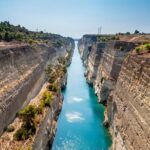
You start with a coastal drive, with roadside glimpses of Greek seaside villages and the mention of Salamis Island, tied to the famous Athenian vs. Persian naval battle context. Then you roll into your first big landmark break at the Corinth Canal.
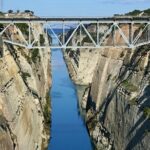
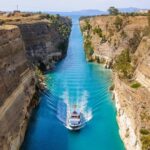
Your canal time is short—about 15 minutes—so treat it like a photo-and-perspective stop. Walk across the pedestrian bridge and take a hard look at the waterway’s narrow, purposeful cut through the peninsula. The canal’s long operating history matters here: it has connected the Saronic Gulf and the Corinthian Sea since 1892, and the whole point is separation and connection at the same time.
One small practical note: on some days, bungee jumping can be an option. Even if you’re not doing it, it’s a reminder this isn’t a dusty ruin—it’s a working piece of modern engineering in a dramatic setting.
Mystras: Byzantine “Ghost City” Life on Hillside Streets
If you want one place on this trip that can seriously surprise you, it’s Mystras.
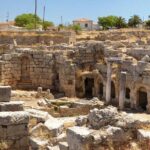
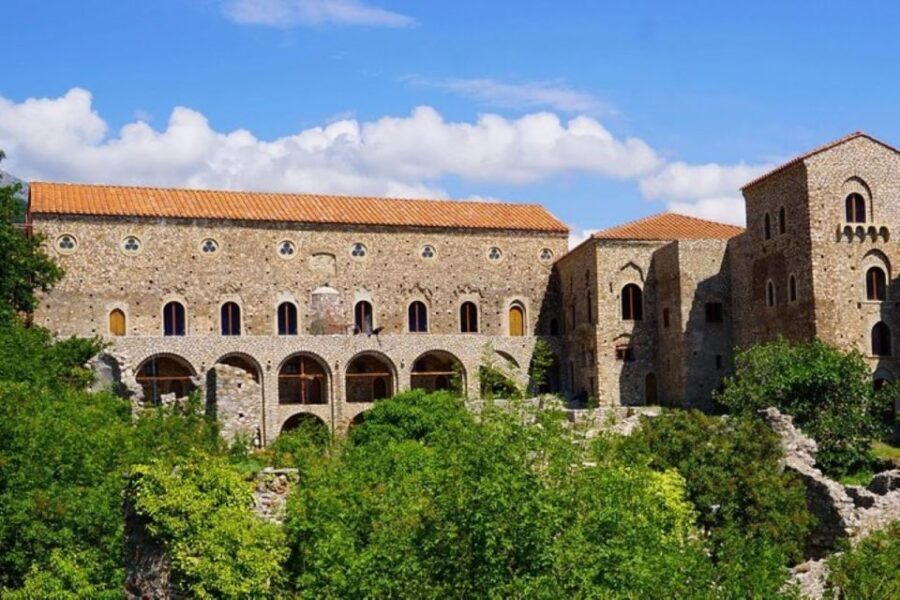
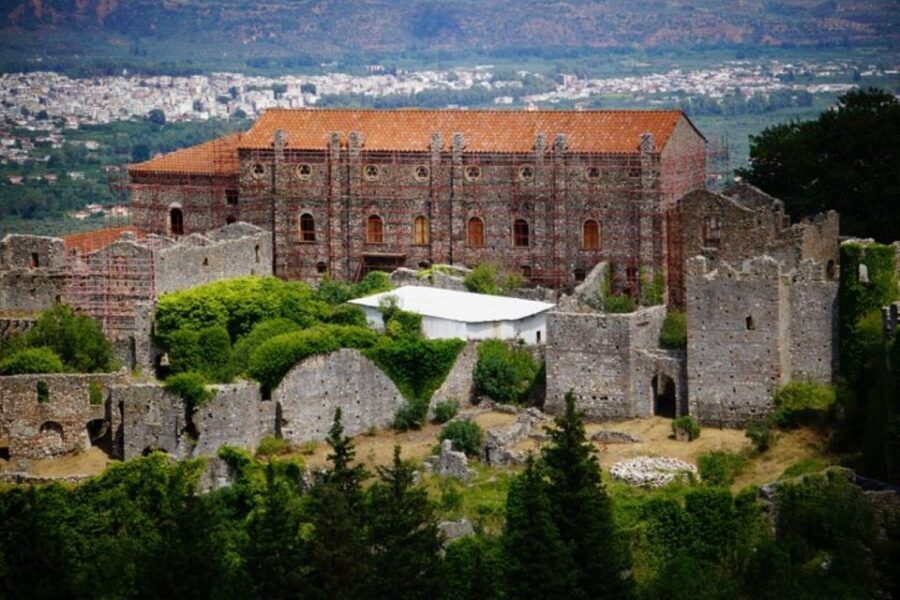
You’ll spend about 1.5 hours exploring the site on your own, which is exactly the right amount of time for a place built on layered stories. Mystras is often called a ghost city, because it preserves Byzantine-era churches and also everyday houses, mansions, and palaces—plus Frankish elements—within a fortified citadel setting. In plain terms: you get to see how power and daily life overlapped on the same hill.
The walk is part of the history
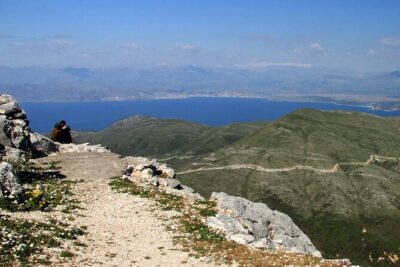
Mystras is set up so you naturally move from higher ground down toward palaces and royal courtyards. Starting at the upper point gets you that “how is this still here?” feeling, especially with views over the surrounding area. Then the downhill route helps you understand how the different areas relate—citadel first, then the places where administration and elite life happened.
Because your time is self-guided, I strongly suggest you do two things before you go: wear grippy shoes and expect to do real walking. This isn’t a flat museum floor.
A few more Athens tours and experiences worth a look




St. Demetrios chapel and the two-headed eagle
Near the end of the Mystras visit, look out for the chapel of St. Demetrios. A major detail here is that on its floor survives a plaque showing a two-headed eagle, the Byzantine symbol. The site also connects to Konstantine Palaiologos, who kneeled there before being crowned as the last Byzantine emperor.
If that sentence means a lot to you, Mystras is going to feel personal. If not, it’s still worth going because you’re reading history with your eyes: architecture, church spaces, and a whole preserved hill city.
Monasteries are still part of the scene
One of the most meaningful aspects is that although people call it a ghost city, monasteries are still in use. That means the site isn’t only about past life—it’s still connected to current routine. If monks are available, they may show you around their small society, which can make the visit feel more grounded than a purely archaeological stop.
The “castle” time
You also get a separate block for Mystras Castle (about 30 minutes). It’s short, but it’s enough to make the citadel feel like the strategic center it was. Since you’re already hiking around, this helps reinforce the “fortified hill” story.
Leonidas Monument and Sparta’s Ruins: Where the Story Gets Tougher
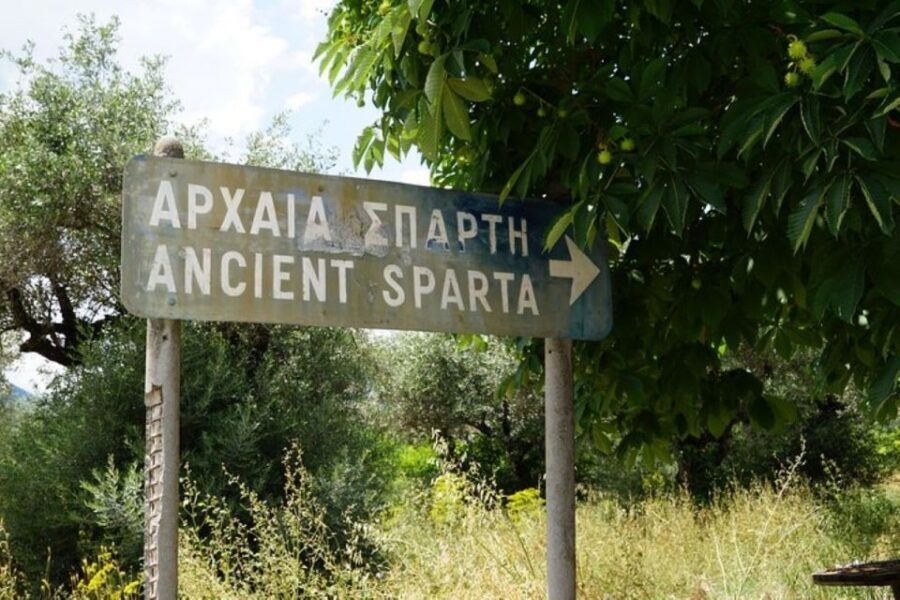
After Mystras, the tour continues onward to Sparta, a city tied to Ancient Greece’s military identity. It’s also framed as Athens’s historic rival, and it’s explained through the idea of a society organized around military discipline and leadership by two kings (as described in the tour background).
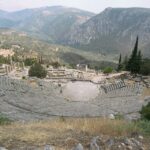
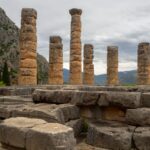
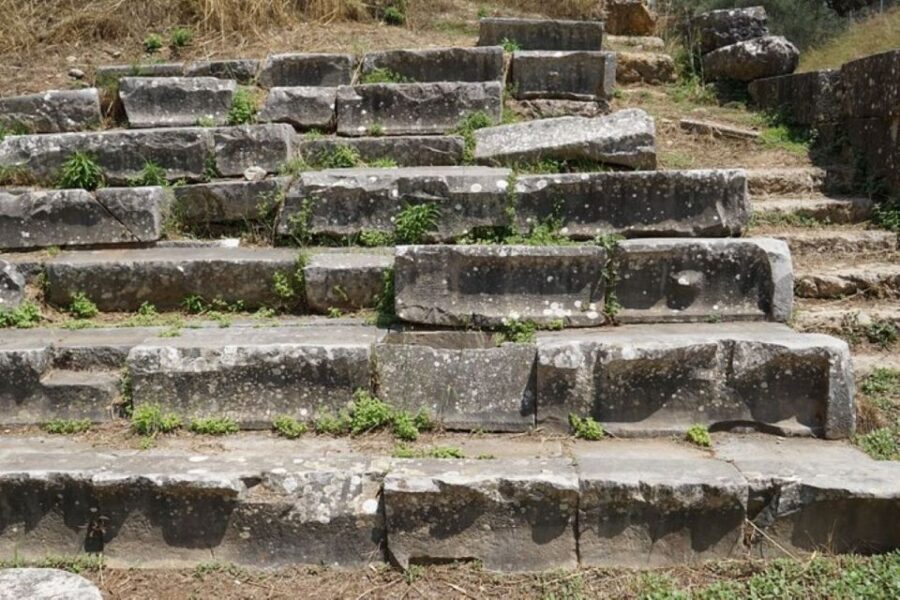
You’ll start in Sparta with a visit to the ancient citadel area, where the theater view can be revealed gradually as you move. That “slow reveal” effect works well because it gives you a sense of scale without needing an indoor exhibit.
Leonidas and the Spartathlon clue
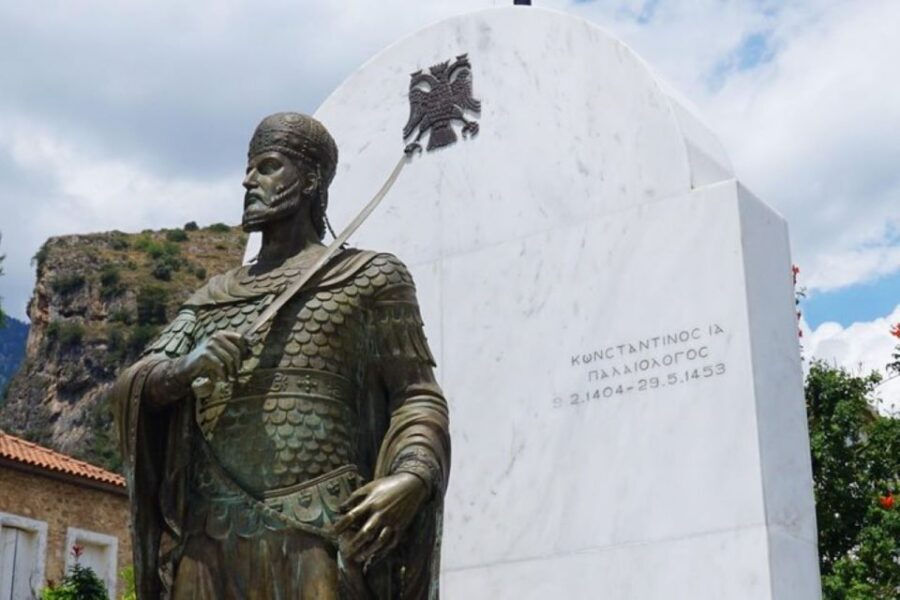
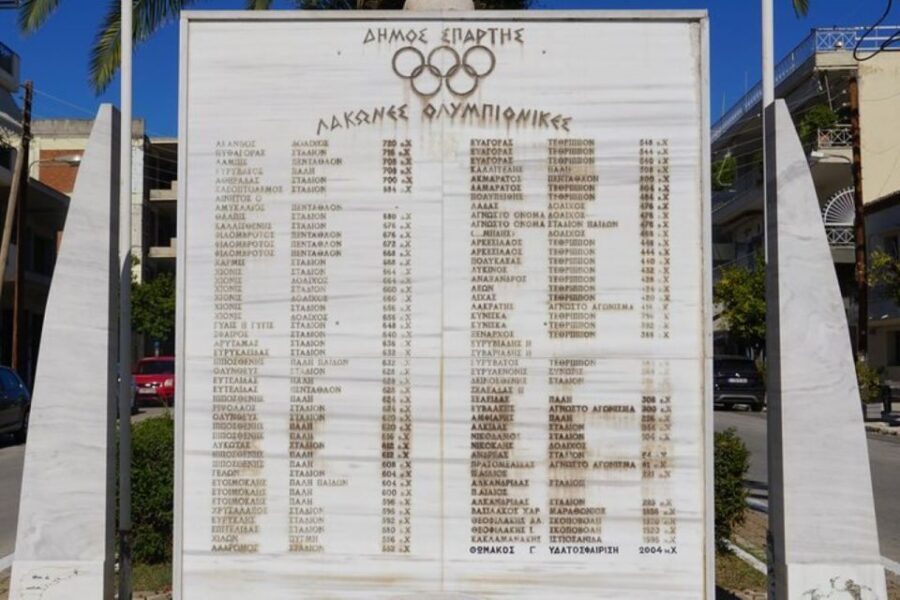
A practical moment on the ground is the Leonidas Monument stop (about 10 minutes). If you’re even slightly into modern Greek sports culture, the Spartathlon detail adds a fun thread. The statue of King Leonidas marks the ending point of the Spartathlon race route (Athens–Sparta, 245.3 km), so you’re connecting ancient geography to a living event.
Museum time in Sparta (and the self-guided vibe)
The tour includes the archaeological museum of Sparta, though the exact emphasis you’ll get depends on how you spend your time. The overall style here is self-guided, and that can be a make-or-break factor.
I’d be honest: Sparta can feel minimalist, and in some areas signage may not do much heavy lifting. If you want more explanation and fewer unanswered questions, this is where an optional licensed guide becomes more valuable. It’s not required, but it can help turn “beautiful ruins” into “I understand what I’m looking at and why it mattered.”
Olive Oil and the Museum of Olive & Greek Olive Oil: A Clever Ending
Most day trips end with a bus ride and a shrug. This one gives you a structured finishing stop at the Museum of Olive & Greek Olive Oil with a guided visit (about 30 minutes).
Even if you’re not a museum person, this is a smart fit for the region because olive cultivation isn’t just a backdrop in Greek life—it’s an economy and a tradition. A guided segment also means you’re less likely to feel like you’re wandering through labels.
There’s also a quick timing lesson here. One trip report noted a closure timing issue for this museum, so treat the final museum stop as a “time-aware” moment. If you’re relying on it, it’s worth checking with your driver on the day about access time (especially if your visit runs ahead or behind schedule).
Price and Logistics: Is $566 per Person Good Value?
At $566 per person for a private, one-day itinerary, the price isn’t “cheap.” But it can be good value if you compare it to what you’re actually buying.
You’re paying for:
- Private transportation (door-to-door pickup and drop-off in Athens)
- An airconditioned van for a long day out in the Peloponnese
- A driver plus bottled water
- Skip-the-ticket-line handling
- A mix of self-guided site time and a guided museum stop
What’s not included:
- Entrance fees (listed as €34 per person)
- Food and drinks
- An optional licensed guide (listed as €380)
So the real math is: private convenience + time-saving logistics + curated stops. If you’re traveling as a couple or small group and you don’t want to coordinate rental car parking and intercity driving, this price can make sense. If you’re solo and feel comfortable driving yourself, you might look for a cheaper option. But if you want the day to run smoothly from Athens, private often wins.
Who Should Choose This Trip, and Who Might Want a Different One
This is a strong match for you if you like both:
- Ancient Greece with named historical figures (Leonidas, Thermopylae context)
- Byzantine-era architecture and lived-in religious spaces (Mystras churches, palaces, monastery life)
In real trip experiences, drivers such as Giannis and Panos (and also Manos) have been singled out for being helpful and for adding context during the drive. That matters because this tour’s success depends a lot on interpretation, given that several stops are self-guided.
You might reconsider if:
- You want deep guidance at every site. Your driver isn’t licensed to accompany you inside sites, so you’ll rely on signage and your own pace unless you add the licensed guide.
- You prefer museum-heavy days over ruin wandering. Sparta, in particular, can feel less interpretive depending on what you’re ready to read on your own.
Should You Book This Sparta and Mystras Day Trip?
Book it if you want a one-day combo of Mystras and Sparta that doesn’t ask you to plan your own logistics from Athens. If your history interests lean Byzantine as much as Ancient Greek, Mystras gives you the kind of walking experience where details (like the St. Demetrios plaque) can genuinely stick.
Skip or modify it if you’re mostly looking for a guided “explainer” in every site. In that case, budget for the optional licensed guide, because Sparta’s ruins and self-guided format may otherwise leave you with more impressions than answers.
Either way, do one thing that will make the day better: plan your energy for walking. Wear good shoes, accept that it’s a full day, and focus on letting the sites connect in your mind—Ancient power, then Byzantine life, both under the same broader Peloponnese story.
FAQ
How long is the day trip?
It lasts one day.
Do I get pickup from my hotel in Athens?
Yes. Hotel pickup and drop-off are included, and your driver waits outside your accommodation.
Is this a private tour?
Yes, it’s a private group tour.
Are entrance fees included in the price?
No. Entrance fees are listed as €34 per person, and food/drinks are also not included.
Do I get a licensed guide during site visits?
A licensed guide is not included by default. You can request one for €380. Your driver is not licensed to accompany you into sites.
How much time do I spend at Mystras?
You have self-guided time at Mystras for about 1.5 hours, plus an additional self-guided block for Mystras Castle of about 30 minutes.
Is the Corinth Canal stop long?
No. It’s about a 15-minute photo/scenic stop, including time to walk across the pedestrian bridge.
Is food included on the tour?
No. There is a stop at a traditional Greek tavern at Mystras, but food and drinks are not included.