REVIEW · ATHENS
Glorious Sparta & Mystras Private Sightseeing
Book on Viator →Operated by Enjoy Greece Tours · Bookable on Viator
Sparta and Mystras make an unlikely but rewarding pair: one recalls a hard-edged warrior society, the other a Byzantine city of palaces, churches, and hilltop defenses. This private day trip also gives you the Corinth Canal, a useful first stop on the long road south.
I like the door-to-door pickup and the chance to reach places that are awkward without a car. I also like the private format, which lets you spend more time at Mystras or request an unusual detour, as Tasos did for one guest visiting Agia Theodora. The main drawback is distance: you will spend many hours in the vehicle, and Sparta itself has fewer surviving remains than its fame might suggest.
- The Corinth Canal provides a quick, photogenic break between Athens and the Peloponnese.
- Sparta is best for historical atmosphere and context, not a grand field of intact ruins.
- Mystras is the day’s major sight, with a fortress, palaces, monasteries, and painted church interiors.
- The private car suits independent visitors who do not want to drive in Greece.
- Your driver handles transport, not site guiding, so a licensed guide costs extra if you want detailed explanations at the ruins.
- The $636.25 group price covers up to three people, making the cost easier to justify when shared.
In This Review
- A long road from Athens to the world of Sparta
- The Corinth Canal makes a smart first stop
- Ancient Sparta asks you to adjust your expectations
- Mystras is the day’s main event
- Lunch in the village of Mystras keeps the day grounded
- The private format is most useful for independent visitors
- Who will enjoy this 11-hour outing
- Small details that will make the day easier
- Should you book Glorious Sparta and Mystras?
- FAQ
- How long does the Sparta and Mystras tour last?
- Where can pickup take place?
- Is the tour private?
- Is a licensed tour guide included?
- Are entrance fees included?
- Is lunch included?
- What is included in the price?
- Can the itinerary include an extra stop?
- What happens if bad weather cancels the tour?
A long road from Athens to the world of Sparta
This is an ambitious 11-hour outing, not a quick side trip. You leave Athens for the Peloponnese, cross into a different part of Greece, and return the same day after seeing two very different historic sites.
The private arrangement matters here. You are not waiting for a large bus to collect people from several hotels, and the vehicle comes to a central Athens hotel, port, or the airport. Air-conditioning and bottled water are included, which are small comforts on a full day of road travel.
The driver is described as English-speaking and well informed about Greek history and culture, but that does not make the driver a licensed site guide. You will be driven to each place and can receive general information along the way, yet formal tours inside the museums and monuments are not included.
That distinction should shape your expectations. If you enjoy reading signs, walking at your own pace, and taking in ruins without constant commentary, this setup may suit you very well. If you want every church, column, and artifact explained, request a licensed guide in advance and budget for the added fee.
Past bookings identify Tasos and George by name. Tasos is praised for careful driving and for adjusting the route to include Agia Theodora, an out-of-the-way stop. George is praised for his grasp of Greek history and historic places. These names are useful when you contact the operator, but you should not assume one of them will be assigned to your group.
The Corinth Canal makes a smart first stop
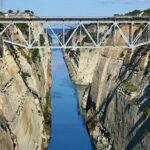
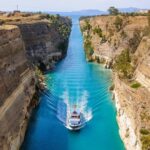
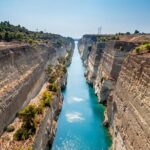
The Corinth Canal is the first break after leaving Athens. The canal cuts across the narrow Isthmus of Corinth and links the Saronic Gulf with the Gulf of Corinth. Its purpose was discussed in ancient times, but the modern channel opened in 1893.
You get about 15 minutes here, with no admission charge. That is enough for a rest, a few photographs, and a look down at the narrow waterway from above. The scale is striking, especially when you compare the vertical walls with the small vessels below, if boats are passing during your visit.
Do not expect a long visit or a full historical presentation. This is a scenic pause that breaks up the drive. It also gives you your first taste of the Peloponnese before the longer run toward Sparta.
I would treat the canal as a useful bonus rather than the reason to book the trip. The stop is short, and the main value comes from stretching your legs and seeing a famous piece of engineering on the route.
You can also read our reviews of more private tours in Athens


Ancient Sparta asks you to adjust your expectations
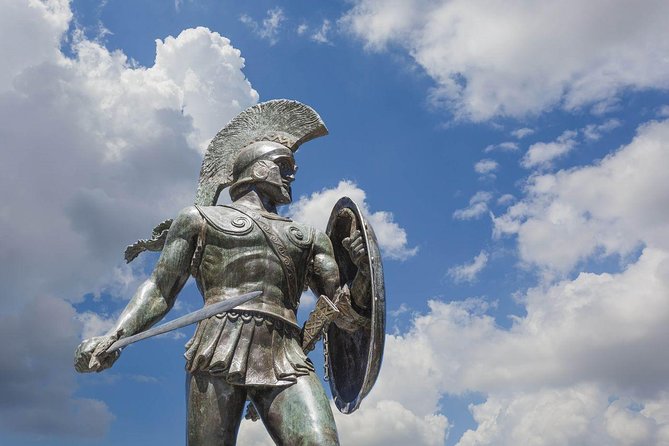
Sparta carries a huge reputation, built around the disciplined soldiers who fought under King Leonidas at Thermopylae. The modern visit is more restrained. You will not find a vast, intact ancient city waiting behind the entrance.
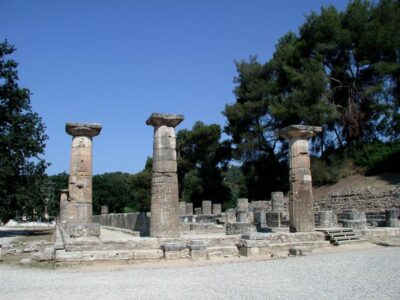
The surviving remains include the ancient acropolis, scattered architectural pieces, olive trees, and columns. The site gives you a sense of the city’s position and scale, but much of the ancient fabric has disappeared or survives only at ground level.
That gap between legend and remains is important. Sparta invested heavily in military training rather than monumental display. The agogi system trained boys from about age seven, preparing them for a soldier’s life through early adulthood. The result was a society famous for military discipline, but not one that left behind the grand civic remains you may associate with Athens.
A statue of Leonidas provides the most direct connection to the popular image of Sparta. It is a natural place for photographs and a useful reminder that the historical figure was part of a much larger society, not simply a character from a battle story.
The visit to Sparta includes the archaeological site, the Archaeological Museum of Sparta, and the Museum of the Olive and Greek Olive Oil. The supplied timing allows about 90 minutes for the Sparta portion, so you should keep moving if you want to cover all three areas.
The Archaeological Museum contains material from the area and helps fill in what the open-air remains cannot show. The olive museum adds a different angle, linking local culture and agriculture with daily life. Admission is not included, so plan to pay the entrance fees yourself.
I like this stop for the contrast between expectation and reality. Sparta is worthwhile if you want to understand the place behind the military legend. It may disappoint you if you expect a preserved ancient city with towering temples and broad avenues.
Mystras is the day’s main event
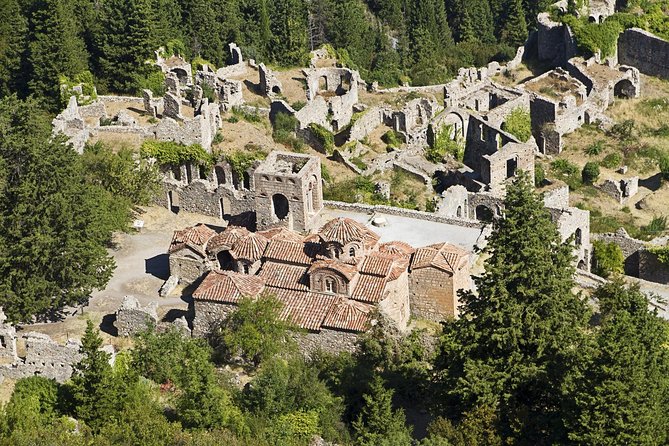
From Sparta, the route continues to Mystras, a fortified Byzantine settlement on Mount Taygetos. This is the point where the outing shifts from classical Greece to the Byzantine world.
Mystras served as the capital of the Byzantine Despotate of Morea during the 14th and 15th centuries. Constantine Palaiologos, the last Byzantine emperor, lived here before Constantinople fell. The site’s location above the plain was practical as well as dramatic, giving the settlement strong natural defenses and wide views toward the Sparta area.
You enter through the Fortress Gate and walk through the remains toward the Main Gate. The route includes the palace complex and monasteries, along with defensive structures and churches. The settlement is spread across a slope, so this is not a flat museum visit. Wear sturdy shoes and expect uphill and downhill walking.
The churches are especially important. Painted wall decoration remains visible inside some of them, and the combination of stone buildings, hill views, and medieval religious art gives Mystras a very different mood from Sparta. One part of the site feels like a ruined fortress; another feels like a deserted Byzantine town.
The visit is listed at about three hours. That is a useful amount of time, but it can pass quickly if you stop often for photographs or read every sign. I would enter with a simple plan: see the fortress area, allow time for the palaces and churches, and pause when you find a good view rather than rushing from gate to gate.
Mystras is also the place where a licensed guide would add the most value. Without one, you can still appreciate the buildings and setting, but the political story of the Despotate of Morea, the purpose of the churches, and the role of Constantine Palaiologos may remain less clear.
The tour does not include admission to Mystras. Entrance fees are also not included at Sparta’s museums or archaeological areas. Carry a payment method for the sites, and remember that the tour price is for transport and the driver’s service, not a bundled admission package.
Lunch in the village of Mystras keeps the day grounded
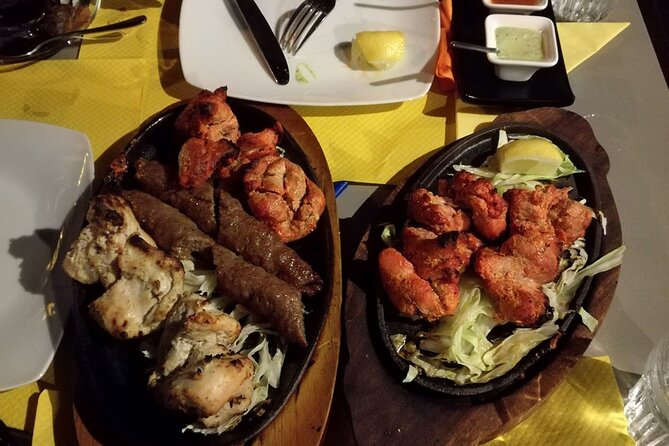
Before or around the Mystras visit, the route includes lunch at a traditional tavern in the small village of Mystras. You choose from familiar Greek dishes, making this a more personal part of the day than a fixed meal included in the package.
Lunch is at your own expense. That gives you control over how much time and money you spend, but it also means the final price of the excursion is not the full cost of the day.
I like having lunch in the village rather than treating the entire outing as a chain of roadside stops. It gives you a chance to sit down, eat local food, and reset before walking through the hillside ruins. Still, this is a long schedule, so do not linger too long if you want the full three hours at Mystras.
The private format is most useful for independent visitors

A private tour for up to three people costs $636.25 per group. For one person, that is a steep day-trip price. Split between three people, it becomes much more reasonable, especially since it includes private transportation from Athens and removes the need to rent a car.
The value is not in low cost. The value is in convenience, control, and access. You avoid navigating Greek roads yourself, you can leave from a hotel, port, or airport, and the group can travel without strangers. If the driver can adjust the route, as Tasos did for Agia Theodora, the private format becomes more useful than a rigid group excursion.
The tradeoff is that you pay extra for anything outside the core transport service. Entrance fees, lunch, and a licensed guide are separate. Ask for the total expected cost before booking if you want an all-in budget.
The advance booking pattern also tells you something practical. This experience is booked about 176 days ahead on average, so popular dates may disappear well before a Greece trip begins. The operator confirms within 48 hours, subject to availability. I would not leave this until the final day if your schedule depends on it.
- All Day Cruise -3 Islands to Agistri,Moni, Aegina with lunch and drinks included
★ 5.0 · 4,958 reviews






Who will enjoy this 11-hour outing
I would recommend this experience most strongly to three kinds of people:
- Small groups sharing the price, especially couples, families, or friends with up to three people.
- Independent visitors who do not want to self-drive, but still want a private route and flexible pace.
- History-minded visitors who value contrast, moving from classical Sparta to medieval Mystras in one day.
You should think twice if you dislike long road journeys or want a slow, detailed visit at each site. The distance from Athens is considerable, and the itinerary covers several stops before the return drive.
This is also not the best match for anyone expecting the driver to provide a full guided tour. The driver can share historical and cultural information, but the stated service does not include a licensed guide at the archaeological sites. You can request one for an additional fee, which may be worthwhile at Mystras.
Most people can participate, and service animals are allowed. The experience requires good weather, since much of the day involves outdoor walking and exposed ruins. If poor weather forces cancellation, you can choose another date or receive a full refund.
Small details that will make the day easier
Start with sensible footwear. Mystras is spread across a fortified hillside, and the route from the Fortress Gate to the Main Gate involves uneven ground and changes in elevation.
Keep water with you even though bottled water is supplied. The vehicle is air-conditioned, but the sites themselves are outdoors, and your time on the hill can feel more demanding than the mileage suggests.
Think about the order of your priorities. If Sparta matters most to you, ask how the 90-minute allocation will be divided between the archaeological site and the two museums. If Mystras is your main goal, protect the full three-hour visit and keep the Corinth Canal stop brief.
Use the private setting to ask for practical adjustments. The Agia Theodora detour shows that an unusual request may be possible, but you should arrange it before the day rather than assume every side trip can be added on the road.
Cancellation is free up to 24 hours before the local start time. Changes made inside that window are not accepted, and a late cancellation is not refunded. Those rules are fairly flexible for a full-day private booking, but check the weather forecast before the cutoff.
Should you book Glorious Sparta and Mystras?
Book it if you want to see Mystras without renting a car, have a small group to share the $636.25 price, and accept that Athens is a long way from Sparta. The combination of the canal, Spartan remains, museums, and Byzantine ruins gives you a broad look at the Peloponnese in one demanding day.
I would book a licensed guide as an extra if Mystras is your main reason for going. I would also ask about the assigned driver, possible detours, entrance fees, and the exact lunch plan before confirming.
Skip it if you want a relaxed schedule, a low-cost group outing, or a complete guided explanation at every monument. For the right small group, though, private transport and the chance to tailor the day can make this one of the more practical ways to reach a difficult but rewarding corner of Greece.
FAQ
How long does the Sparta and Mystras tour last?
The tour lasts approximately 11 hours, including the drive from Athens, sightseeing stops, lunch, and the return journey.
Where can pickup take place?
Private pickup is offered from central Athens hotels, ports, or the airport.
Is the tour private?
Yes. Only your own group participates, with a maximum of three people for the stated group price.
Is a licensed tour guide included?
No. The driver speaks English and can provide information about Greek history and culture, but is not a licensed guide and cannot lead formal site tours. A licensed guide can be requested for an extra charge.
Are entrance fees included?
No. Entrance fees for the archaeological sites and museums are paid separately by you.
Is lunch included?
No. Lunch at a traditional tavern in the village of Mystras is part of the planned route, but the meal is at your own expense.
What is included in the price?
The price includes an English-speaking tour driver, private transportation, an air-conditioned vehicle, and bottled water.
Can the itinerary include an extra stop?
The private format may allow adjustments. Tasos arranged a visit to Agia Theodora for one booking, but you should request any added stop in advance and confirm whether it affects the schedule or cost.
What happens if bad weather cancels the tour?
The experience requires good weather. If the operator cancels because of poor weather, you will be offered another date or a full refund. You can cancel yourself for a full refund up to 24 hours before the start time.