REVIEW · ATHENS
Philosophy Experience at Plato’s Academy Park – basic version
Book on Viator →Operated by Hellas Revival · Bookable on Viator
The best part of this Athens experience is not a lecture about Plato. It is the chance to sit on the ruins of the ancient Gymnasium and test his ideas against modern life. You visit the digital museum first, then join a guided discussion in the park with a group capped at 10 people.
I like the hands-on debate format and the setting under shaded trees, where philosophy feels less like schoolwork and more like a shared conversation. I also like that you do not need previous study, since the facilitator uses plain English and keeps everyone involved. The main drawback is that this is an outdoor workshop, not a conventional tour, and the museum can sometimes be closed or have faulty screens.
In This Review
- Key Points
- Plato’s Academy Park Makes Philosophy Feel Physical
- The Digital Museum Gives You a Short Plato Primer
- The Allegory of the Cave Becomes a Modern Question
- A Junior Facilitator Leads the Basic Version
- Why the Debate Format Matters
- What the Two-Hour Schedule Feels Like
- The $495 Price Needs Careful Consideration
- Outdoor Conditions and Site Etiquette Matter
- The Museum May Not Be Perfect, and That Is Useful to Know
- Who Will Get the Most From This Athens Activity?
- Should You Book the Plato Academy Workshop?
- FAQ
- How long does the Philosophy Experience at Plato’s Academy Park last?
- Where does the experience begin and end?
- Is entrance to the Plato’s Academy Digital Museum included?
- Is this a guided tour of Plato’s Academy Park?
- Who leads the Basic Version?
- Do I need previous knowledge of philosophy?
- Can teenagers join the workshop?
- What happens if the weather is bad?
Key Points
- Discuss Plato on the ruins of his ancient Academy: The workshop takes place near the remains of the ancient Gymnasium, where young people once trained and philosophers gathered.
- Use the Allegory of the Cave in modern life: Socratic questions lead you from Plato’s famous story toward real-world examples, beliefs, and choices.
- Start with the Plato Digital Museum: Entrance is free, and the exhibits use screens, wall displays, and videos to introduce Plato and his methods.
- Keep the group small: A maximum of 10 participants gives the junior facilitator room to draw quieter people into the discussion.
- Expect participation, not sightseeing: This is an educational workshop with no traditional guided tour of the archaeological site.
- Plan for weather and site changes: Poor weather can cancel the activity, and excavation work may move the discussion to another place in the park.
Plato’s Academy Park Makes Philosophy Feel Physical
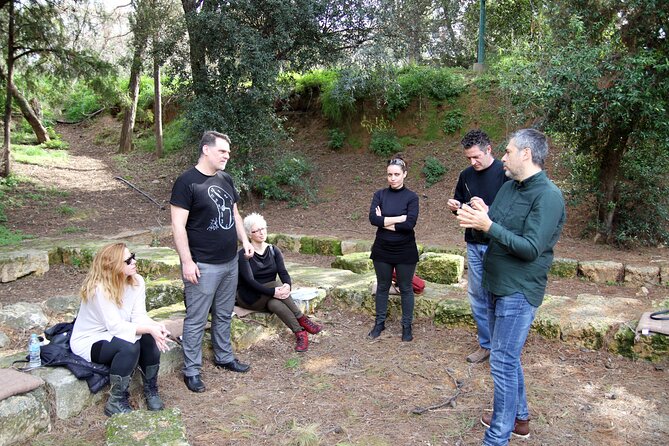
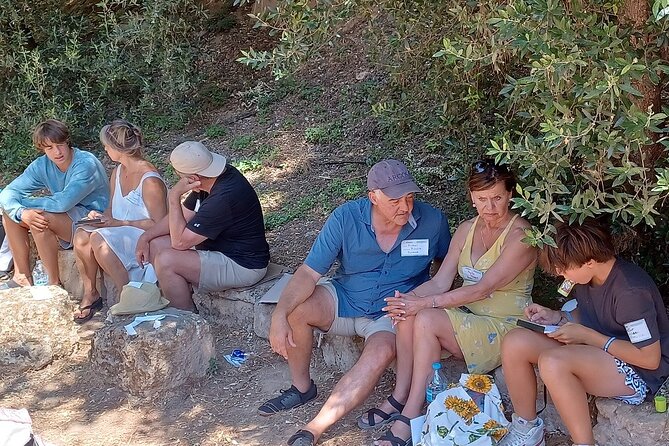
Many Athens history tours ask you to look, listen, and move on. This one asks you to think. The setting helps: instead of discussing Plato in a classroom, you sit on foundation stones near the remains of the ancient Gymnasium at Plato’s Academy Park.
The walk from the meeting point to the workshop area is about 300 meters. It is short, but it shifts the experience from museum introduction to open-air conversation. You are surrounded by an archaeological site connected with one of the most influential schools of thought in the ancient world.
The park is not presented as a fully reconstructed classical complex. You will see ruins and foundations, not grand columns or restored halls. That may disappoint you if you want a dramatic ancient monument. The reward is subtler. The stones, trees, and open setting give the discussion a direct connection to the place where young people trained and philosophers taught.
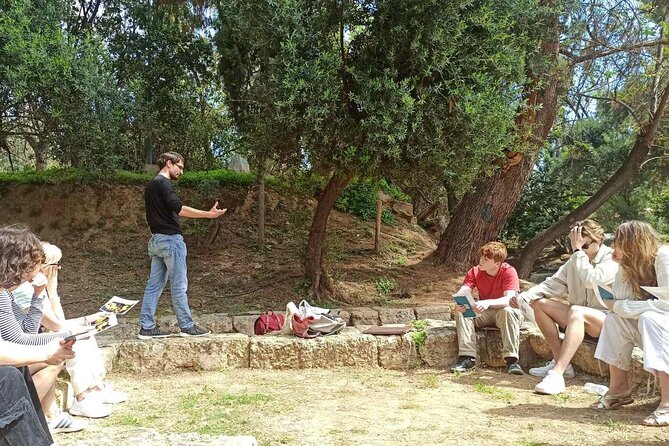
The workshop usually takes place under shaded trees. You should still dress for Athens weather, since this is an outdoor activity and the exact location may change if archaeological excavation is taking place. In that case, you may view the Gymnasium remains from nearby and settle elsewhere in the park.
You can also read our reviews of more tours and experiences in Athens.



The Digital Museum Gives You a Short Plato Primer
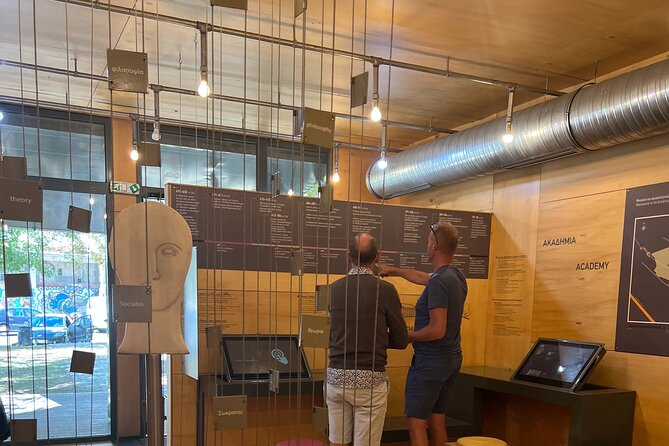
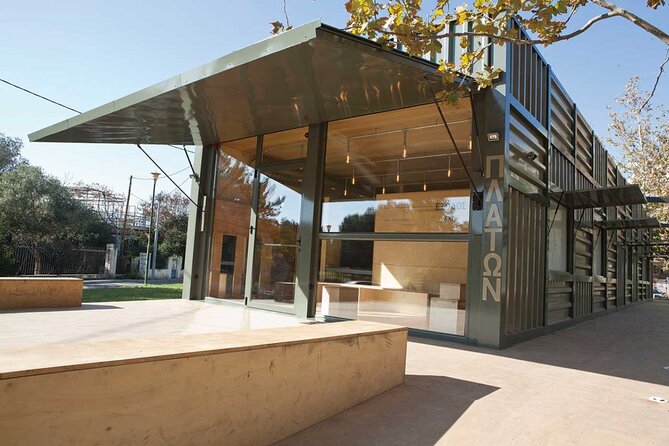
The experience begins at the Plato’s Academy Digital Museum on Alkmeonos 1. Entrance is free, and the museum uses screens, wall information, and videos to introduce Plato’s work and philosophical methods.
This opening matters because the workshop is designed for people without previous knowledge. You do not need to arrive knowing the difference between Plato and Socrates, or with a background in ancient Greek philosophy. The museum helps establish the basic ideas before the group begins its discussion.
Keep your expectations realistic. The museum is a preparation stop, not the main event. Some displays may not be working, and the museum’s operating hours can change without notice. It can also close for technical reasons. If that happens, the facilitator can still take you into the park and continue with the workshop, but you may lose part of the visual introduction.
The museum experience is therefore a useful extra rather than the reason to book. If you have already studied Plato, you may find it familiar. If the subject is new to you, even a short visit can make the later discussion easier to follow.
The Allegory of the Cave Becomes a Modern Question
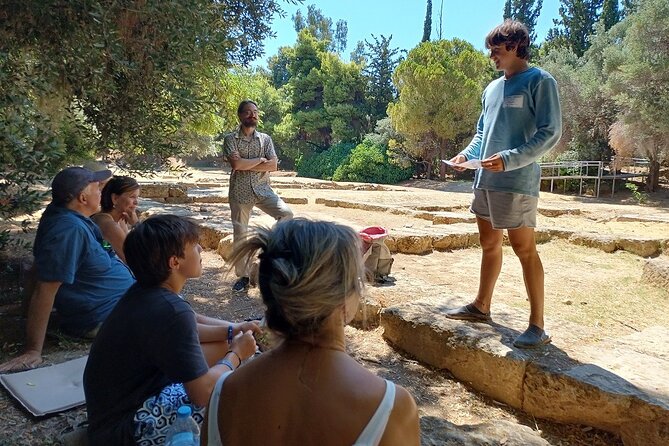
The central subject is Plato’s Allegory of the Cave. In simple terms, the allegory asks what happens when people mistake limited appearances for the full truth, and what it takes to change how they see the world.
The facilitator does not simply explain the allegory and move on. Instead, you work through its meanings by answering questions, comparing views, and considering modern situations. This is where the activity earns its place in an Athens itinerary.
You may be asked to examine a belief you hold, consider how people form opinions, or weigh a modern case against Plato’s ideas. The exact examples can vary, but the method stays active. You are not expected to recite a philosophical definition. You are asked to say what you think and explain why.
That process is based on Socrates’ maieutic method, sometimes described as the art of the midwife. The idea is that the teacher does not simply hand you answers. Instead, careful questions help you bring your own reasoning into the open.
For some people, this is the strongest part of the experience. It turns a famous ancient text into a tool for examining everyday assumptions. For others, it may feel demanding because you cannot sit quietly at the back and let the guide do all the work.
A Junior Facilitator Leads the Basic Version
The Basic Version is led by a junior facilitator. That is an important detail to weigh before booking. You are choosing an interactive educational session, not a premium lecture led by a senior academic.
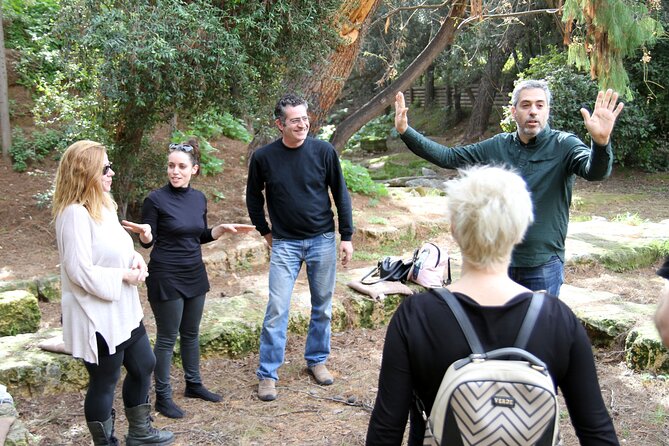
The facilitator’s job is to guide the discussion, explain the ideas in plain English, ask useful questions, and make sure everyone has a chance to take part. The group size of no more than 10 supports that format. In a large group, a debate can become a few confident voices talking over everyone else. Here, the smaller setting should make it easier to contribute.
Olga has led sessions in which the discussion moved from Plato’s ideas to a modern case scenario. Her approach, based on the available experience details, shows what the activity aims for: clear explanations, active debate, and room for comparisons with present-day life.
Do not treat the named facilitator as a guaranteed guide for every departure. The booking information specifies a junior facilitator for the Basic Version, but it does not promise that Olga will lead your particular session.
The language is intended to be accessible. You should not need specialist vocabulary or prior reading. Still, the experience works best if you are willing to speak, listen carefully, and let your views be tested in a friendly way.
Why the Debate Format Matters
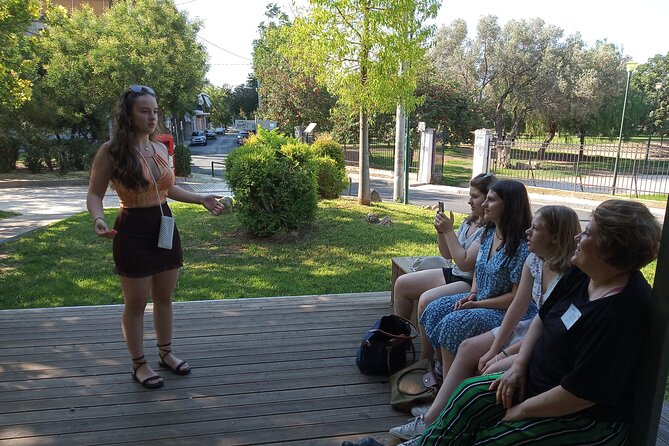
A standard guided tour can tell you that Plato valued reason, education, and the search for truth. This workshop asks you to practice those ideas. That difference is the main reason to choose it.
You will exchange opinions, beliefs, experiences, and views rather than simply receive information. The facilitator acts as another Socrates, using questions to guide the group instead of giving a long speech.
I like this because it gives the ancient material a personal edge. You may leave remembering not only what the Allegory of the Cave means, but also the point at which your own thinking changed or became less certain.
The tone is intended to be productive and joyful, but a debate is still a debate. You should be comfortable expressing an opinion in front of other people. If you prefer a quiet historical walk with dates, buildings, and a fixed script, this will not be your best Athens activity.
The workshop is family-friendly for adults and teenagers over 15. An underage participant cannot book alone, and an adult must book and supervise them. That makes it a good option for a parent and older teenager who want an activity they can discuss together after leaving the park.
- All Day Cruise -3 Islands to Agistri,Moni, Aegina with lunch and drinks included
★ 5.0 · 4,958 reviews





What the Two-Hour Schedule Feels Like
The full session lasts about two hours. It begins at the digital museum, then continues with the short walk into Plato’s Academy Park.
The museum portion prepares you for the subject. The park portion carries most of the intellectual weight. You sit at or near the ancient Gymnasium ruins, listen to the facilitator’s introduction, and take part in the questions and debate around the Allegory of the Cave.
Because the schedule is built around conversation, the exact rhythm may depend on the group. A lively group may spend more time comparing opinions. A quieter group may need more prompts from the facilitator. That flexibility is useful, but it also means you should not expect a tightly timed sequence of attractions.
The activity ends back at the meeting point. It does not take you across central Athens or combine the park with the Acropolis, the Ancient Agora, or another major sight. You will need to arrange your own transport to and from Plato’s Academy Digital Museum.
The meeting point is near public transportation, which helps, though the available details do not specify a particular bus or metro route. Check your route before setting out and allow time to find Alkmeonos 1.
The $495 Price Needs Careful Consideration
At a listed price of $495, this is not a low-cost way to see Athens. Its value depends on what you want from a tour and how the price applies to your booking.
You are paying for a small-group educational experience, a facilitator, the museum entrance, liability insurance, and local VAT. The group limit of 10 is useful because the discussion needs personal attention. You are not paying for a long sightseeing route, multiple monuments, transport, meals, or a full archaeological tour.
If you want an unusual activity built around discussion, the price may make sense for your group. The value comes from the format and setting, not from the number of sights covered. You should think of it as a structured philosophy workshop in an archaeological park rather than a typical Athens tour.
Before booking, confirm the total pricing details shown for your selected date and party. The supplied information gives a price of $495 but does not explain whether that figure is calculated per person or for a particular group arrangement. That point matters a great deal.
For a visitor who wants a quick introduction to Plato, the cost may feel high. For a family, school-style group, or small party that wants a shared intellectual activity, the price may be easier to justify. You should not book it simply because the location is historic. Book it because you want to participate.
Outdoor Conditions and Site Etiquette Matter
This workshop takes place in a historical site and requires respectful conduct. You are expected to remain sober, clean, polite, and properly dressed, and to follow rules about noise and photography or video.
That is reasonable in an archaeological park, but it is worth knowing in advance. The facilitator can end your participation without a refund if your behavior is disrespectful toward the place or other people.
Weather is another practical concern. The activity requires good conditions, and poor weather can lead to cancellation. If the operator cancels, you will be offered another date, a similar workshop, or a full refund. Notification is promised at least three hours before the start time.
There is also a photo and video consent condition because the workshop takes place in a public space. Images may be taken during the session and used later by the operator or other participants. You can withdraw your consent in writing, but the operator does not accept responsibility for images taken and used by other people.
Service animals are allowed, and most people can participate. The information does not provide detailed accessibility guidance for the ruins, seating, or walking surface, so contact the provider if you need specific mobility arrangements.
The Museum May Not Be Perfect, and That Is Useful to Know
The digital museum is a promising introduction, but you should not build your decision around it. Its screens may be unavailable, and operating dates and hours can change without warning.
That weakness does not necessarily ruin the experience. The central activity is the discussion in the park, and the facilitator can adapt if the museum is partly closed or technical problems affect the displays. Still, you may want to check the museum status close to your visit if seeing it is important to you.
The mixed quality of the museum and the strength of the discussion make the priorities clear. Think of the museum as a bonus orientation stop. Think of the park conversation as the main product.
Who Will Get the Most From This Athens Activity?
I would recommend this workshop to you if you enjoy asking why, comparing viewpoints, and connecting old ideas to current life. It is especially suitable for adults and teenagers over 15 who want to do something beyond standard monument viewing.
It can work well for:
- A parent and older teenager looking for a shared activity
- Friends who enjoy debate and discussion
- Visitors with an interest in philosophy but no formal background
- People who have already seen Athens landmarks and want a different kind of cultural experience
- Small groups who value conversation over a packed sightseeing schedule
I would be cautious if you want a conventional guided tour. There is no promise of a detailed archaeological explanation, a long site walk, or a senior academic guide. The Basic Version is led by a junior facilitator, and the success of the session depends partly on how willing the group is to participate.
The park is also outside the main concentration of central Athens sights. Since the activity lasts about two hours and ends where it starts, you should plan it as its own outing rather than assume it will fit neatly between two central monuments.
Should You Book the Plato Academy Workshop?
Book it if you want to sit near ancient ruins, think through Plato’s Allegory of the Cave, and test your ideas in a small, friendly discussion. The setting is unusual, the format is active, and the plain-English approach makes it accessible without prior study.
Skip it if you are looking for a bargain sightseeing tour or a traditional guide who does most of the talking. At $495, the price requires a clear interest in the workshop format, and the museum’s uncertain operation is a minor risk.
My practical advice is simple: confirm the price basis, check the weather, wear suitable outdoor clothing, and arrive ready to participate. If those conditions suit you, this can turn Plato from a name in a textbook into a question you are still thinking about on the way home.
FAQ
How long does the Philosophy Experience at Plato’s Academy Park last?
The activity lasts approximately two hours, including the museum visit, the 300-meter walk through the park, and the interactive workshop.
Where does the experience begin and end?
It begins at Plato’s Academy Digital Museum, Alkmeonos 1, Athens 104 42, Greece, and ends back at the same meeting point.
Is entrance to the Plato’s Academy Digital Museum included?
Yes. Entrance to the digital museum is free, though the museum can sometimes be closed for technical reasons or have changing operating hours.
Is this a guided tour of Plato’s Academy Park?
No. This is an educational interactive workshop, not a conventional guided tour of the archaeological site.
Who leads the Basic Version?
The Basic Version is led by a junior facilitator. Olga has led some sessions, but the available information does not guarantee that she will lead every departure.
Do I need previous knowledge of philosophy?
No. The workshop is designed for people without previous knowledge and uses plain English without difficult terminology.
Can teenagers join the workshop?
Yes. It is suitable for adults and teenagers over 15. An underage participant cannot book alone, and an adult must book and supervise them.
What happens if the weather is bad?
Because the workshop takes place outdoors, it may be canceled in poor weather. You will be notified at least three hours beforehand and offered another date, a similar workshop, or a full refund.