REVIEW · ATHENS
Private Luxury Tour: Ancient Corinth, Mycenae, Epidaurus, Nafplio
Book on Viator →Operated by Pericles Century · Bookable on Viator
The best thing about this private tour is its sweep: in one long day, you move from the Corinth Canal and the world of Saint Paul to the Bronze Age citadel of Mycenae, the healing sanctuary at Epidaurus, and the seaside streets of Nafplio. It is a big day, but it links several of southern Greece’s most important ancient sites without making you arrange a car or navigate the roads yourself.
I like the easy pickup from a hotel, cruise port, or other designated location, and I like having an air-conditioned private vehicle between sites. The driver can also offer historical background and suggest places to see or eat in Nafplio. The main consideration is time: with roughly 10 to 11 hours on the road, each archaeological stop is fairly brief, and the driver is not a licensed guide who accompanies you inside the sites.
In This Review
- Key points
- A Private Route From Athens Into the Peloponnese
- The Corinth Canal Makes a Strong Opening
- Ancient Corinth Connects Trade, Myth, and Saint Paul
- Mycenae Brings the Bronze Age to Life
- Epidaurus Shows Ancient Healing and Perfect Acoustics
- Palamidi and Nafplio End the Day on a Human Scale
- What the $303.72 Price Really Covers
- Timing, Comfort, and What to Pack
- Who Will Get the Most From This Tour
- Should You Book This Private Corinth and Mycenae Tour?
- FAQ
- How long does the private tour last?
- Where can pickup take place?
- Is transportation private?
- Are entrance fees included?
- Is lunch included?
- Is a licensed guide included?
Key points
- Four major Peloponnese stops in one day: Corinth, Mycenae, Epidaurus, and Nafplio form a full historical arc.
- Private transport for your group: One to four people ride in a luxury sedan, while five to seven use a minivan.
- The price is transport-focused: Air conditioning, WiFi, bottled water, pickup, and an English-speaking driver are included, but entrance fees and lunch are extra.
- Mycenae gets the mythic spotlight: Walk through the Lion Gate and see the Treasury of Atreus near the ancient citadel.
- Epidaurus combines medicine and theater: The sanctuary of Asklepios and its famous theater reveal two sides of ancient Greek life.
- Nafplio gives the day a softer finish: You get time for the old town, a meal, and, if timing permits, views from Palamidi Fortress.
A Private Route From Athens Into the Peloponnese
This is not a quick sightseeing loop around Athens. It is a full-day excursion across the Corinth Canal and into the northeastern Peloponnese, with substantial driving between sites. The payoff is variety. You see ancient trade, Bronze Age kings, classical theater, ancient medicine, Venetian military design, and modern Greek café life in a single outing.
Pickup is available from hotels, apartments, and selected cruise ports. At a port, the driver meets you in the arrival area with a sign showing your name. Airport pickup is possible for an extra charge. At the end, you return to the original meeting point, so this works best when Athens is your base or when your cruise schedule allows a long shore excursion.
The vehicle setup is sensible for a private trip. Groups of one to four use a luxury sedan, and groups of five to seven use a comfortable minivan. You also get bottled water and WiFi on board. Those details matter more than they may sound after several hours in the Greek sun and on roads between widely spaced archaeological sites.
You can also read our reviews of more private tours in Athens



The Corinth Canal Makes a Strong Opening
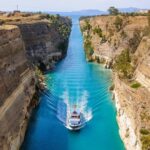
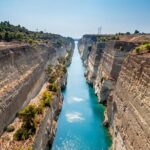
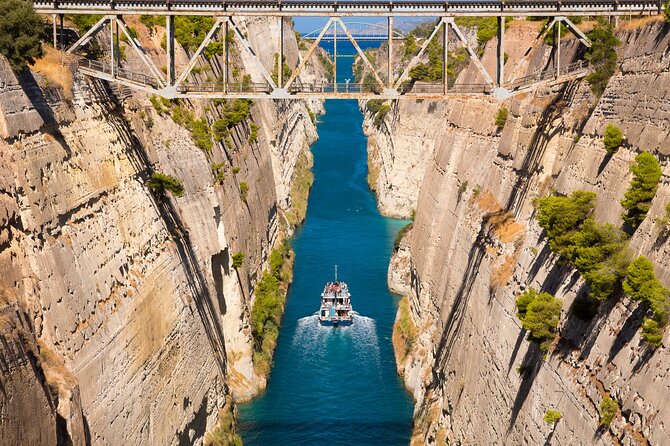
The first stop is the Isthmus of Corinth, where a narrow strip of land joins mainland Greece to the Peloponnese. The modern canal cuts through the rock and gives ships a shortcut between the Gulf of Corinth and the Saronic Gulf.
You have about 20 minutes here, with no admission charge. That is enough for a look at the channel, photographs, and a quick explanation of why this crossing has mattered for so long. I appreciate this as an opening stop because it gives you a clear sense of geography before the ancient sites begin.
Do not expect a long walk or a full canal tour. This is a viewpoint-style pause, not a major attraction in itself. Still, the scale of the cut through the land makes it a useful first glimpse of the engineering and geography that shaped the region.
Ancient Corinth Connects Trade, Myth, and Saint Paul
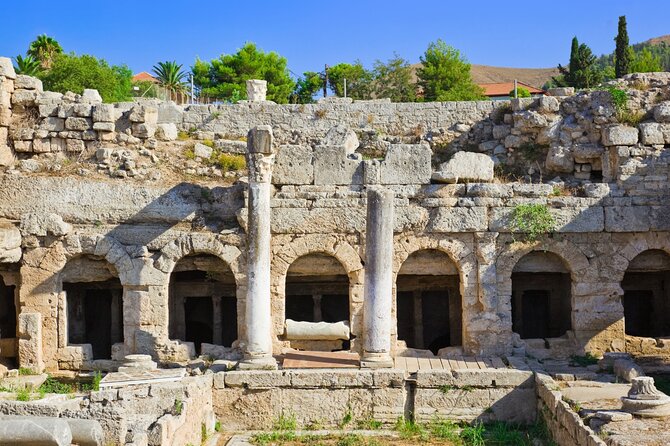
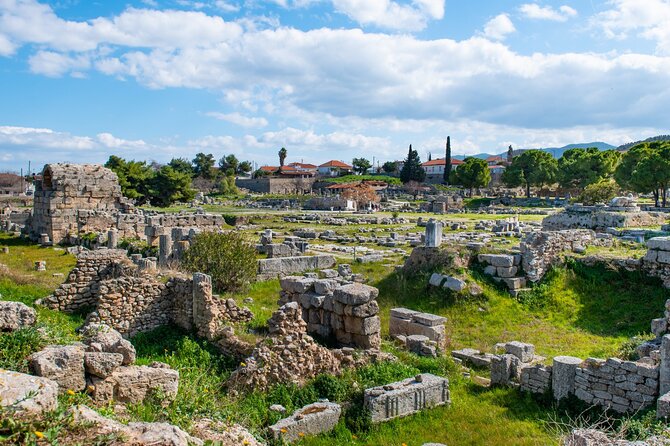
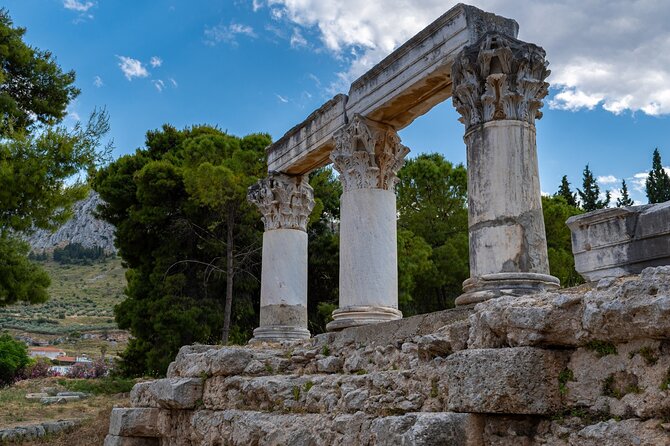
Ancient Corinth is more than a pile of columns. Its position between mainland Greece and the Peloponnese helped it become a major center of trade, culture, and religion. At the site, you can see the ancient Agora, the Temple of Apollo, the Bema of Apostle Paul, and the Glauke Fountain.
The Bema is especially meaningful for Christian history. It is identified as the platform where Paul addressed the people of Corinth, giving the stop a connection to the first-century world as well as to classical Greece. The Glauke Fountain adds a mythic touch, while the marketplace helps you picture Corinth as a working city rather than a silent ruin.
The schedule lists about 20 minutes for Ancient Corinth, followed by 10 minutes at the Temple of Apollo and 30 minutes in the Archaeological Museum of Corinth. That is enough for a focused introduction, but not enough for a leisurely archaeological study. If Corinth is your main interest, a licensed guide or a separate visit would give you more time and explanation.
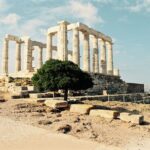
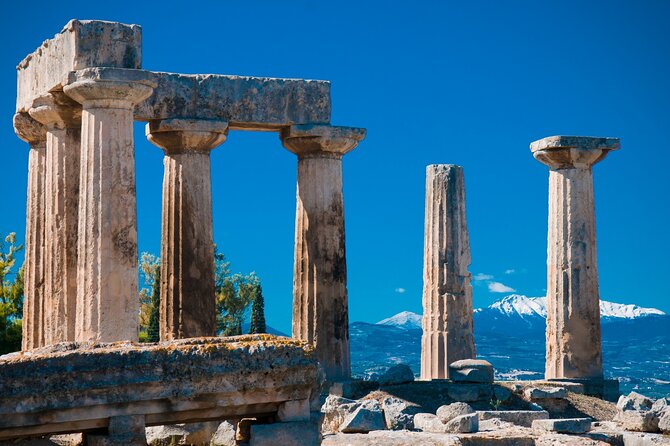
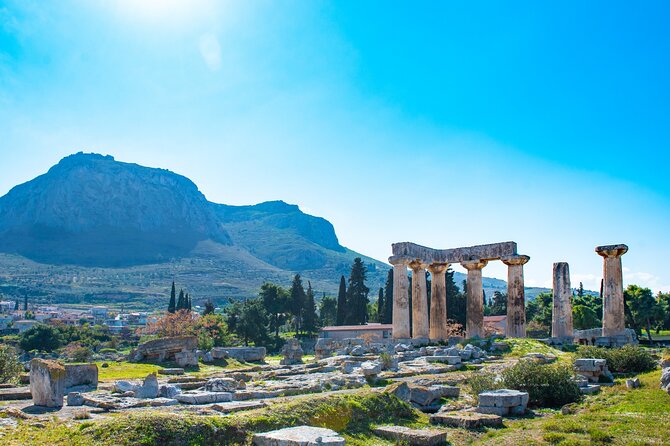
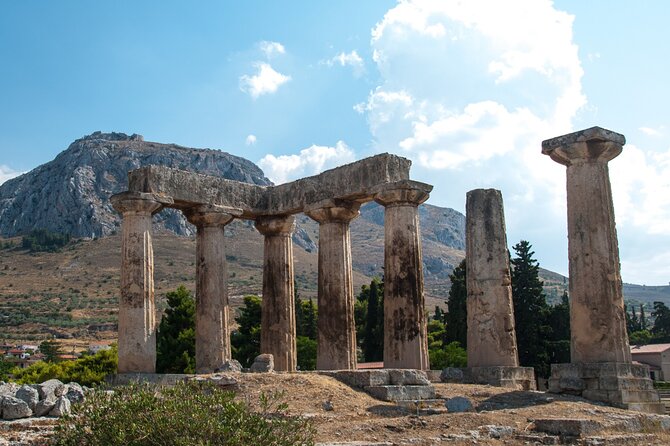
The Temple of Apollo is one of the site’s most recognizable features. Built in the sixth century BC, it is among Greece’s oldest Doric temples. Its limestone columns are framed by the Acrocorinth, the high fortified hill behind the ancient city, which creates one of the strongest photo settings of the day.
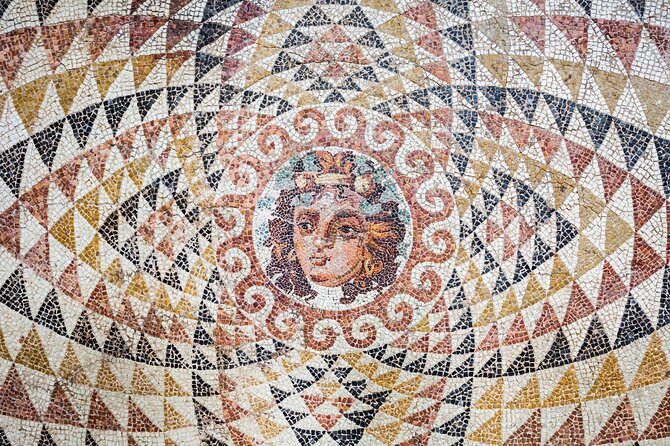
Inside the museum, statues, pottery, prehistoric objects, Roman-era pieces, and finds from the Sanctuary of Asklepios help fill in the gaps left by the ruins. This indoor stop is also welcome during hot weather. The museum makes the carved stone and broken foundations easier to understand, especially if your driver has already provided some background.
Mycenae Brings the Bronze Age to Life
Mycenae is likely to be the emotional high point for anyone drawn to Greek mythology. The citadel is associated with King Agamemnon, the Trojan War, and the Homeric epics, but the stones themselves are the real reason to come. Cyclopean walls, royal graves, ancient paths, and palace remains show the power of a Bronze Age society that flourished long before classical Athens.
The most famous entrance is the Lion Gate, dated to the 13th century BC. Two lions carved in relief face one another above the gateway, creating a symbol of strength over the entrance to the citadel. Walking through it is a simple act, but the setting makes it memorable. You are passing through the oldest surviving monumental sculpture in Europe, according to the tour information.
The site visit is scheduled at about 30 minutes, with separate 10-minute stops for the Citadel and Treasury of Atreus and another 10 minutes for the Lion Gate. In practice, these times are short for a place with several important features. You should wear shoes with a firm sole and keep your camera ready, since the route includes uneven archaeological ground and open-air walking.
The Treasury of Atreus, also called the Tomb of Agamemnon, is outside the main citadel. It is a large tholos tomb with a carefully built stone entrance, a huge lintel, and a domed interior. The structure shows how advanced Mycenaean builders were at moving and placing massive stones.
The separate Archaeological Museum of Ancient Mycenae gets about 30 minutes. Golden jewelry, pottery, fresco fragments, and other objects give you a look at daily life, religious practice, and artistic skill. I find the museum important because the citadel can otherwise feel like a dramatic but incomplete shell. The objects help explain who used the buildings and what they valued.
Again, the driver offers historical knowledge, but the service does not include a licensed guide inside the archaeological sites. You can explore at your own pace within the available time, yet you will need to read the signs and make your own connections. That is a fair arrangement for independent-minded visitors, but less ideal if you want a detailed lecture at every monument.
Epidaurus Shows Ancient Healing and Perfect Acoustics
Epidaurus changes the mood. The sanctuary was dedicated to Asklepios, the ancient god of medicine, and drew people seeking physical and spiritual healing. The complex included temples, fountains, the Tholos, and the Abaton, where patients rested while awaiting healing guidance.
The Sanctuary of Asklepios receives about 15 minutes in the schedule, while the Epidaurus Archaeological Museum gets 20 minutes. The museum contains statues, inscriptions, and architectural fragments from the sanctuary and theater. Together, the ruins and objects show that ancient healthcare involved medical practice, religious ritual, rest, and the arts.
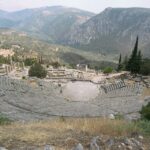
The Ancient Theatre of Epidaurus is the star attraction. Built in the fourth century BC, it is celebrated for its graceful design and remarkable acoustics. The theater holds about 14,000 people, and a sound from the stage can carry clearly to the upper rows.
You get about 30 minutes at the theater. Sit in the stone seats, look down toward the circular orchestra, and test the acoustics if conditions allow. The natural setting adds to the calm of the place, but do not mistake this for a performance tour. Cultural events are held there today, yet this excursion is a sightseeing visit.
The short schedule at Epidaurus is the clearest compromise in the entire day. The sanctuary is broad, and the theater deserves time to sit, look, and understand. If ancient medicine or theater is your priority, you may wish you had more than the allotted 65 minutes across the sanctuary, museum, and theater.
A few more Athens tours and experiences worth a look




Palamidi and Nafplio End the Day on a Human Scale
After so much ancient stone, Nafplio feels refreshingly lived-in. The town is known for Venetian-style architecture, cobblestone streets, neoclassical buildings, bougainvillea, cafés, boutiques, and small squares. You get about an hour here, and lunch is scheduled, though the meal is not included.
This is the part of the tour where you can slow down. I would use the time for a short walk through the old town, a Greek meal, and a little window-shopping rather than trying to cover every lane. The driver can suggest places to see and eat, which is useful when you have only a limited amount of free time.
Palamidi Fortress sits high above Nafplio and offers broad views across the town, the Argolic Gulf, and the surrounding countryside. Its bastions, walls, stairways, and chambers reflect its Venetian military design and later importance during Venetian and Ottoman rule.
The schedule allows about 20 minutes at Palamidi. That is enough for a quick visit and the views, but it is not enough to inspect the fortress thoroughly. The climb and uneven surfaces also make comfortable footwear important. If you have mobility concerns, ask about the practical walking demands before booking, since the day includes several open-air ruins and historic steps.
What the $303.72 Price Really Covers
At $303.72 per person, the tour is not an inexpensive sightseeing outing. Its value depends heavily on how many people share the vehicle and how much you value private transport.
The price includes an air-conditioned vehicle, private transportation, WiFi, bottled water, pickup and drop-off, and an English-speaking tour driver with historical knowledge. For a group of four, the cost buys a full day of transport and a private schedule without the work of renting a car. For a solo visitor, the per-person cost is harder to justify unless convenience and privacy matter greatly.
You must budget another €56 per person for entrance fees to the archaeological sites and museums. Lunch in Nafplio is also extra, as are gratuities. Airport pickup costs more, while hotel and selected port pickup are included.
The driver is not a licensed guide accompanying you into the sites. That distinction matters. You receive useful historical context during the drive and between stops, but not the same depth of interpretation you would get from a licensed archaeologist or site guide. I see this as a transport-led private tour with commentary, rather than a full guided archaeological tour.
Group discounts are available, and the private format means only your party participates. This is a strong choice for families, couples, or friends who want to set the rhythm themselves. It is less compelling for budget-minded solo visitors who are comfortable joining a larger group.
Timing, Comfort, and What to Pack
The stated duration is approximately 10 to 11 hours, including driving. That is a long day, and the route covers several destinations. The air conditioning, bottled water, and breaks at museums and Nafplio make the pace more manageable.
Wear comfortable shoes with good grip. Corinth, Mycenae, Epidaurus, and Palamidi all involve walking across archaeological surfaces, stone paths, or steps. Bring a hat and sunscreen, since Greece can be hot and sunny, particularly when you are exposed among open ruins.
I would also carry a small day bag with space for water, a phone charger, and anything needed for a full day away from your hotel. The tour includes WiFi on board, but you should not count on every archaeological site offering shade or convenient places to rest.
The experience requires good weather. If poor weather causes cancellation, you are offered another date or a full refund. For a full refund under normal circumstances, cancel at least 24 hours before the start time. Changes made inside that window are not accepted.
Who Will Get the Most From This Tour
I would recommend this route to you if you have limited time in Athens but want to see more than the capital. It is especially good for first-time visitors who want the major sights of the northeastern Peloponnese without renting a car.
Families may appreciate the private vehicle and the ability to regroup between stops. Couples and small groups can make better use of the flexible format, while cruise passengers can benefit from port pickup if the timing fits their ship schedule.
History lovers should know that the route favors breadth over depth. You see Corinth, Mycenae, Epidaurus, Palamidi, and Nafplio, but most site visits are short. If you want long museum visits, detailed architectural study, or a slow meal, this schedule will feel rushed.
Christian pilgrims may find the Bema of Apostle Paul at Ancient Corinth particularly meaningful. Fans of Greek mythology will likely prefer Mycenae, while architecture and theater enthusiasts will want more time at Epidaurus. Nafplio provides the best pause for anyone who wants a little town life after the ruins.
Should You Book This Private Corinth and Mycenae Tour?
Book it if you want an efficient, private day from Athens and value the comfort of a dedicated vehicle. The route gives you an impressive range of places, from the canal and Temple of Apollo to the Lion Gate, the Treasury of Atreus, Epidaurus Theater, and Nafplio’s old town.
Before booking, add the €56 entrance fee, lunch, and any tip to the advertised price. Also decide if a driver with historical knowledge is enough for you, or if you would rather hire a licensed guide for deeper site interpretation.
My practical verdict is positive for small groups with limited time. The private pickup, air-conditioned transport, and ability to travel only with your own party solve the hardest parts of seeing these scattered sites. Just approach the day as a fast, well-organized overview, not as a slow archaeological study.
FAQ
How long does the private tour last?
The tour lasts approximately 10 to 11 hours, including the time spent traveling between locations.
Where can pickup take place?
Pickup is available from designated hotel, apartment, and port locations. Airport pickup is also available for an additional cost.
Is transportation private?
Yes. Only your group participates. Groups of one to four people use a luxury sedan, while groups of five to seven use a comfortable minivan.
Are entrance fees included?
No. Entrance fees for the archaeological sites and museums cost €56 per person and are not included in the tour price.
Is lunch included?
No. A lunch stop is scheduled in Nafplio, but the cost of the meal is not included.
Is a licensed guide included?
No. The tour includes an English-speaking driver with historical knowledge, but a licensed guide to accompany you inside the archaeological sites is not included.