REVIEW · ATHENS
Private tour from Athens to Marathon with a pickup
Book on Viator →Operated by Visit Greece with a private tour · Bookable on Viator
Marathon is more than a race name. It is an ancient battlefield, a modern Greek engineering project, and the place where a famous military message became an Olympic event. This private day trip from Athens brings those threads together, with Ilias handling the driving and adjusting the pace to your group.
I like the private pickup and the chance to spend more or less time at each stop. I also like the range of sights, from the Pentelic marble-faced dam to the quiet burial mound and the Olympic running museum. The main consideration is that Ilias is a driver-guide, not a licensed archaeologist, so detailed indoor guiding costs extra.
In This Review
- Key points before you book
- Why Marathon makes a worthwhile day outside Athens
- Marathon Lake and the Pentelic marble dam
- The Marathon Tomb and the battle of 490 BCE
- Brauron’s Temple of Artemis and ancient women’s rituals
- The Archaeological Museum of Marathon
- The Marathon Run Museum and the modern race
- What the private vehicle adds
- Price, admissions, and overall value
- Who will get the most from this day
- Should you book the Marathon tour?
- FAQ
- How long does the private Marathon tour take?
- What sights are included in the route?
- Is pickup available from an Athens hotel or apartment?
- Can I be picked up at the airport or port?
- Are entrance tickets included?
- Is a licensed archaeologist included?
Key points before you book
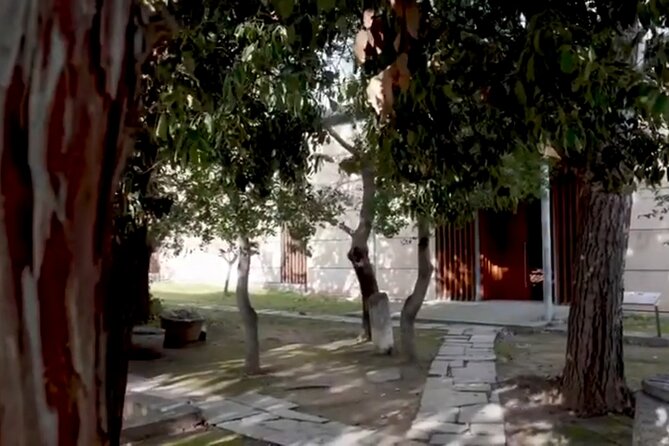
- Marathon Lake connects modern Athens with ancient Greece: The dam is faced with the same Pentelic marble used for the Parthenon.
- The Marathon Tomb is a solemn battlefield stop: The mound holds the cremated remains of 192 Athenian soldiers killed in 490 BCE.
- Brauron adds a different side of ancient life: The Temple of Artemis reveals religious rites tied to women, childbirth, and the transition from girlhood to adulthood.
- The private format keeps the day flexible: Pickup time is arranged around your plans, and only your group takes part.
- Running fans get a personal pilgrimage: The Marathon Run Museum traces the race from Pheidippides to modern Olympic champions such as Spyros Louis.
- The price works best for a small group: At $428.91 for up to four people, the per-person cost drops sharply when shared.
Why Marathon makes a worthwhile day outside Athens

The drive from Athens takes you into a quieter part of Attica, where the famous name of Marathon becomes a real place rather than a word on a race bib. The area holds several stories at once: the Persian invasion of 490 BCE, ancient religious practice, modern water engineering, and the birth of the Olympic Marathon.
I find this mix more satisfying than a day devoted to only one archaeological site. You get a battlefield, a museum, a sanctuary, a reservoir, and a sports collection. None of these stops alone fills an entire day, but together they create a clear picture of why Marathon matters.
The private setup also changes the mood. You do not have to wait for a large group, follow a fixed pace, or spend the day figuring out connections between scattered sites. Ilias can collect you at your hotel, apartment, airport, or port, then return you to the same place or another preferred point.
The tour lasts about eight hours, with the listed stops adding up to roughly seven hours before driving and any meal. That leaves a little breathing room, though a long lunch or extra time at the museums could stretch the day. One past itinerary included a seaside lunch, and Ilias recommended a place serving kebabs and gyros, but lunch is not included in the price.
You can also read our reviews of more private tours in Athens


Marathon Lake and the Pentelic marble dam
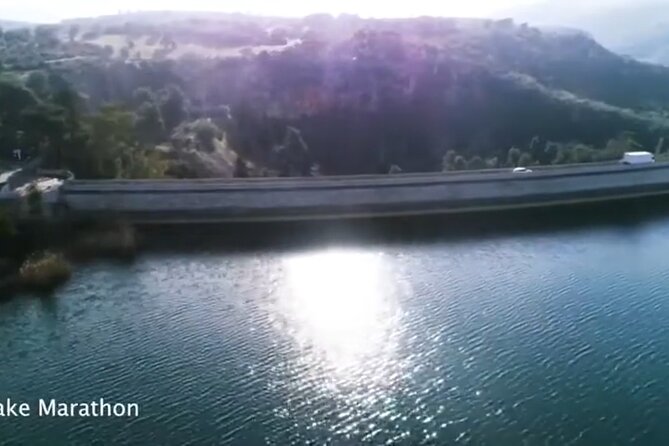
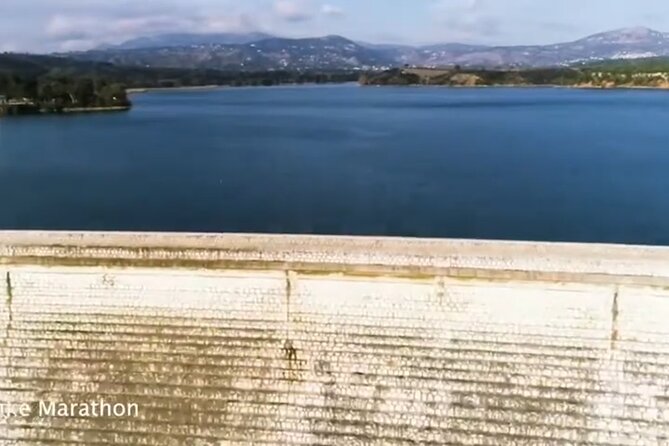
The first stop is Marathon Lake, created by a dam built between 1926 and 1929. Athens needed a dependable water supply as the city grew, and this project became one of the first large modern infrastructure works in Greece.
The dam is 54 meters high and 285 meters long. Its most memorable feature is the outer facing of Pentelic marble, the same pale stone associated with the Parthenon. That choice was not simply practical. It gave a modern public works project a visible link to ancient Greek achievement.
You have about 30 minutes here, and admission is free. That is enough for a look at the dam, the reservoir, and the surrounding setting, but not a long nature walk. The stop works best as an introduction to the region and a chance to see how modern Greece presented itself as heir to its ancient past.
I like this opening because it avoids making Marathon only about war. The dam tells you about twentieth-century Athens, public health, and national ambition before the tour turns to the battlefield.
The Marathon Tomb and the battle of 490 BCE
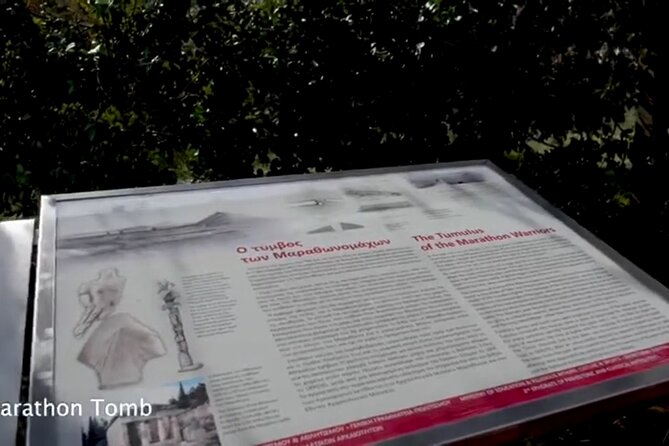
The Marathon Tomb, called the Tymvos, is the emotional center of the day. This 9-meter-high earthen mound marks the burial place of 192 Athenian soldiers who died fighting the Persian army in 490 BCE.
The Athenians buried their dead on the battlefield rather than taking them back to the Kerameikos cemetery in Athens. That was an unusual honor, generally connected with heroic status. Excavations later found cremated remains and grave offerings inside the mound.
Give yourself about an hour here. The site is not a collection of grand ruins. Its force comes from the simple mound, the open plain, and the knowledge that the battle took place nearby. Ilias can point out the lay of the land from different locations, which helps you understand why the site mattered. This is one place where a driver who can put the geography into words adds real value.
The Athenian victory had consequences far beyond one battlefield. The army was heavily outnumbered, yet it defeated the invading Persians. The result helped preserve the independence of the Greek city-states and the political culture associated with Athens.
A useful tip is to treat the tomb as a place for quiet attention, not a quick photo stop. If you enjoy military history, ask for help connecting the mound with the surrounding plain. If you mainly want ancient columns, this stop may feel spare.
Brauron’s Temple of Artemis and ancient women’s rituals
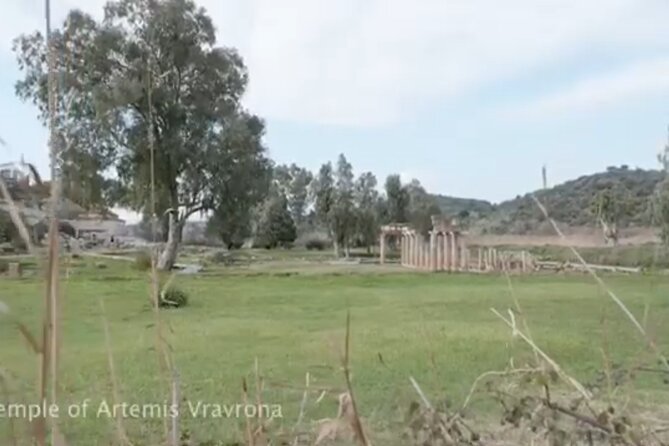
The visit to the Temple of Artemis at Brauron, also called Vravrona, shifts the focus from soldiers to religious life. The sanctuary honored Artemis Brauronia, a goddess linked with nature, hunting, childbirth, and the protection of young women.
The site was founded near the Erasinos River in the sixth century BCE. Its remains include a Doric temple, a sacred spring, a stoa, and an unusual L-shaped building used for festivals and ceremonies. You have around three hours here, making it the longest stop on the schedule.
Brauron is especially useful for understanding parts of ancient Greek society that are easy to miss at larger, more famous sites. Young girls took part in the Arkteia, a rite in which they symbolically played the bear for Artemis as they prepared for adulthood. Women also dedicated clothing after giving birth safely.
The sanctuary was not just a temple for public worship. It was tied to family, childbirth, female identity, and the movement from childhood into adult life. That gives the ruins a human scale, even when the surviving stones are incomplete.
Admission is not included. The listed fee for the Archaeological Museum of Vravrona is €5 per person, and a licensed professional archaeologist can accompany you inside the sites for an additional fee. Since the driver-guide is permitted to provide exterior insights only, this is the stop where paying for specialist guidance may make the biggest difference if you want close archaeological interpretation.
Flooding and later Roman influence contributed to the sanctuary’s decline after the third century BCE. Today, the site rewards patience. Allow time to look at how the buildings relate to the river and the setting rather than rushing from one fragment to the next.
The Archaeological Museum of Marathon
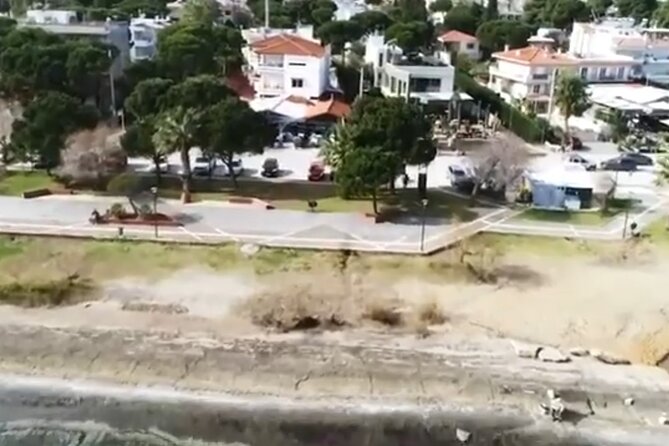
The Archaeological Museum of Marathon gives the battlefield and the wider region a much-needed indoor context. Its collection covers the area from prehistoric times through late antiquity, showing that Marathon mattered long before the Persian invasion.
The museum has five rooms with pottery, sculpture, inscriptions, grave offerings, and objects connected with the Marathon Tomb. Finds from the Neolithic settlement at Tsepi and an early cemetery show how long people lived and worshipped in this part of Attica.
The highlight for many people is the Marathon Boy, a bronze statue recovered from the sea. Classical funerary stelae also help put faces and social details onto the ancient world. The museum’s objects are not just decoration. They explain daily life, burial customs, religious practice, and the material culture behind the famous battle.
The planned visit is two hours, though your actual time can depend on your interests and the tour’s schedule. Admission is listed at €5 per person. If you want a full explanation of the objects inside, remember that the included guide provides exterior commentary only. You can add a licensed archaeologist at extra cost.
I would not skip this museum. The tomb outside can feel abstract until you see the grave goods and archaeological evidence connected with it. The museum also prevents Marathon from becoming a single-event story.
- All Day Cruise -3 Islands to Agistri,Moni, Aegina with lunch and drinks included
★ 5.0 · 4,958 reviews






The Marathon Run Museum and the modern race

The Marathon Run Museum brings the day into the modern era. It follows the transformation of an ancient messenger story into the Marathon race known around the world.
According to tradition, Pheidippides ran from the battlefield to Athens to announce the Greek victory. The modern Olympic Marathon took shape in connection with the first modern Olympic Games in Athens in 1896. The museum, opened in 2004, traces that story through more than 4,000 objects.
You might see medals, uniforms, documents, and memorabilia from Olympic and international races. Greek running history gets special attention, including Spyros Louis, the winner of the first modern Olympic Marathon.
The visit is scheduled for about 30 minutes, with an admission fee of €5 per person. That is a short stop, but it is enough to connect the ancient battlefield with the sport that now carries its name. If someone in your group runs marathons, this may be the most personal part of the day. It also works for non-runners because the collection explains how a local legend became an international symbol of endurance, peace, and friendship.
Do not expect a large athletics complex or a full training experience. This is a compact cultural museum, best used as the final chapter of the story rather than the main event.
What the private vehicle adds
The included transportation is one of the strongest practical reasons to book this outing. The sights are spread across the Marathon area, and private transport cuts down on walking, transfers, and the mental work of building the route yourself.
You get an air-conditioned vehicle, WiFi, and bottled water. Pickup is arranged at a time you request. At a hotel, Ilias waits in the lobby. At an apartment, he waits at the building entrance. Airport pickup takes place in the arrivals hall with a sign bearing your name, while port pickup is at the gate as you disembark.
That flexibility matters if you are fitting Marathon around a short stay in Athens, an arrival day, or a cruise stop. The tour can also return you to the original pickup point or another place you prefer.
Ilias is repeatedly praised for being punctual, warm, funny, and flexible. More important for this route, he explains the wider Greek setting as he drives and can help you understand the battlefield’s geography. You should view him as a capable driver-guide who offers historical background and exterior interpretation, not as a substitute for an archaeologist inside every museum.
The private format lets you set the rhythm. You can linger at the tomb, move briskly through the running museum, or give Brauron more attention. Still, do not assume unlimited time. The day includes long visits at several sites, and adding a full lunch or specialist guide could push the schedule beyond eight hours.
Price, admissions, and overall value
The cost is $428.91 per group of up to four people. For four people, that works out to about $107.23 each before admission fees. For two people, it is about $214.46 each, so the value is much better for a family or small group than for a solo visitor.
Three admissions are listed separately:
- Marathon Run Museum: €5 per person
- Archaeological Museum of Marathon: €5 per person
- Archaeological Museum of Vravrona: €5 per person
The Marathon Tomb and Marathon Lake do not list an admission charge. Lunch is also extra, as is a licensed professional archaeologist to accompany you inside the archaeological sites.
For a group of four, the price is reasonable when you count the private vehicle, hotel or port pickup, driver, water, WiFi, and a full day outside Athens. You are paying for convenience and route planning as much as for commentary. Public transport or a self-drive plan might cost less, but it would require more effort and could make it harder to connect all five stops in one day.
The value drops for one person or a couple who want only a single museum. It improves if you care about the Marathon story, need transport, or want a relaxed private schedule without joining strangers.
Who will get the most from this day
This tour suits runners, history fans, families, and anyone who wants a countryside day beyond central Athens. It works especially well for a runner visiting Greece with a non-running partner, since the day includes athletic history without turning into a workout or race-focused excursion.
It also fits people who prefer conversation and flexibility to a large bus tour. Ilias can discuss Greek life and history during the drive, and your group can decide how long to stay at each stop.
You should think twice if your priority is intensive archaeological instruction at every site. The included guide cannot lead inside as a licensed archaeologist. You should also be comfortable with a long day that includes several historical stops rather than one major monument.
Confirmation is provided when you book, and most people can take part. Free cancellation is available up to 24 hours before the start time. Changes or cancellations inside that window are not accepted for a refund.
Should you book the Marathon tour?
Book it if you want to understand Marathon as a place, not just a race. The strongest parts are the private transport, the battlefield geography, the contrast between the tomb and Brauron, and the final link to Olympic running.
For the best value, share the vehicle with three other people and consider adding the licensed archaeologist if the sanctuary and museum details matter to you. If you mainly want a quick photo at the tomb, the tour includes more museums and ancient sites than you need.
For runners, this is an easy choice. For everyone else, it is a well-rounded day outside Athens with enough variety to keep the ancient story from becoming a string of ruins. Ilias’s flexible style makes the schedule feel personal, while the separate admission fees and extra guide cost give you control over how much you spend.
FAQ
How long does the private Marathon tour take?
The experience lasts approximately eight hours. The listed visits total about seven hours, with the remaining time used for driving between Athens and the sites and any other stops.
What sights are included in the route?
The route includes Marathon Lake, the Marathon Tomb, the Temple of Artemis at Brauron, the Archaeological Museum of Marathon, and the Marathon Run Museum.
Is pickup available from an Athens hotel or apartment?
Yes. Pickup is available from a hotel lobby or the entrance of an apartment building. The tour can return you to the same place or another point you prefer.
Can I be picked up at the airport or port?
Yes. Airport pickup takes place in the arrivals hall, where the driver waits with a sign showing your name. Port pickup takes place at the gate as you disembark.
Are entrance tickets included?
No. The listed fees are €5 per person for the Marathon Run Museum, €5 per person for the Archaeological Museum of Marathon, and €5 per person for the Archaeological Museum of Vravrona. Marathon Lake has free admission, and no admission fee is listed for the Marathon Tomb.
Is a licensed archaeologist included?
No. The included professional driver-guide can provide historical information from outside the sights. A licensed professional archaeologist can accompany you inside for an additional fee.