REVIEW · ATHENS
Private Tour of Ancient Corinth, Mycenae and Nafplio
Book on Viator →Operated by Colours of Greece · Bookable on Viator
Three ancient stops, zero driving stress. I love the private setup for a calmer pace through Corinth and Mycenae, and I love the onboard Wi‑Fi so you can stay connected without hopping onto roaming data all day. This is a long day with big payoff: Paul’s Corinth, UNESCO-listed Mycenae, and a relaxing finish in Nafplio.
One thing to budget for: entrance fees to archaeological sites and museums are not included (listed at €35 per person), and there is no licensed guide who accompanies you inside the sites, so you’ll rely on the driver’s history talk and your own eyes.
In This Review
- Key things to know before you go
- Why Corinth, Mycenae, and Nafplio work as one full day
- Price and what $226.99 actually buys
- Pickup from Athens, the Riviera, and Piraeus Port
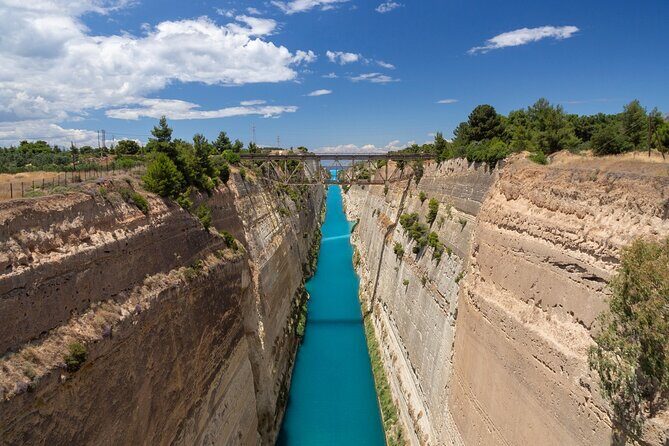
- Isthmus of Corinth: the canal you can actually picture
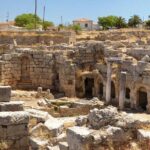
- Ancient Corinth: Paul’s setting and the main ruins
- The Corinth Archaeological Museum: how artifacts make ruins click
- Mycenae on UNESCO time: walls, gate, and royal sites
- The Mycenae museum: gold masks and everyday context
- Treasury of Atreus: the fast hit of a true showstopper
- Nafplio and Palamidi Fortress: views, stairs, and an old defense line
- Comfort and timing: how to survive a 9–10 hour day
- The “licensed guide” detail you should not ignore
- What the best days feel like on this route
- Who this private tour is best for
- Should you book this private Corinth–Mycenae–Nafplio tour?
- FAQ
- How long is the Private Tour of Ancient Corinth, Mycenae and Nafplio?
- Is this tour private or shared?
- What does the tour price include?
- Are entrance fees included for the archaeological sites and museums?
- Is there a licensed guide inside the archaeological sites?
- Where can the driver pick you up?
- Is onboard Wi‑Fi available?
- FAQ
- Is the tour flexible if weather is bad?
- What’s the cancellation policy?
- Can children join, and is a child seat available?
- What should I wear or bring?
Key things to know before you go
- Private, door-to-door pickup from Athens, the Riviera, or Piraeus Port, with waiting time if you’re late.
- Onboard Wi‑Fi on the vehicle, useful for maps, messaging, and avoiding roaming charges.
- Corinth Canal engineering at the Isthmus, including the shortcut saved for shipping (131 nautical miles).
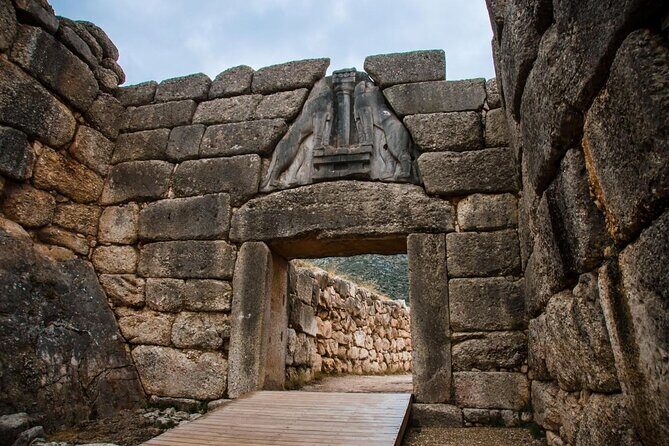
- Mycenae highlights in one sweep: Cyclopean Walls, Lion Gate, Grave Circle A, the palace remains, plus the fountain tunnel dating to 1225 BC.
- A very practical museum rhythm: you’ll see the ruins, then get the artifacts context right after.
- Nafplio views from Palamidi Fortress, a Venetian stronghold with ramparts and staircases up high.
Why Corinth, Mycenae, and Nafplio work as one full day

This tour is built like a story with three acts: the Peloponnese gateway, Late Bronze Age power, then a modern town perched above the sea. Corinth gives you the bridge between ancient Greece and early Christianity, then you jump to Mycenae for the legendary civilization tied to Agamemnon. Finally, Nafplio slows you down with fortress views and an easy place to wander.
The practical win is that you’re not trying to coordinate buses, tickets, and parking. It’s one vehicle, one plan, and your driver handles the timing so you can focus on the sites instead of the logistics.
You can also read our reviews of more private tours in Athens



Price and what $226.99 actually buys
At $226.99 per person, you’re paying for more than transportation. You’re paying for a private day (only your group), air-conditioned comfort, bottled water, and an English-speaking driver with in-depth historical context. For couples, small families, or friends, that often ends up feeling like better value than piecing together separate group tours.
Two costs to keep in mind:
- Entrance fees are not included and are listed at €35 per person.
- If you want airport pickup, it’s optional and costs €50 per booking.
So think of the price as: private guided day + transport + history talk, plus you’ll add the site/museum admission on top.
Pickup from Athens, the Riviera, and Piraeus Port
If you’re staying in Athens (or along the Riviera), you’ll get hotel pickup and drop-off. For Piraeus Port, the driver meets you at the arrival area holding a sign with your name—handy if you’re trying to get out of the port area smoothly.
The small details matter here. The driver waits outside for hotel or apartment pickups, and waiting time is built in rather than making you chase down a van. That helps on a day where you’ll be hopping from site to site, sometimes quickly.
Also, this tour is private. For groups of 1 to 4 people, the provider uses sedan vehicles, which usually means easier door-to-door positioning than a big van.
Isthmus of Corinth: the canal you can actually picture
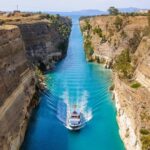
You start at the Isthmus of Corinth, the narrow land bridge between the Peloponnese and mainland Greece. Even on a short stop, the point is to give your brain a clear visual anchor before you start reading the ruins.
The big engineering moment here is the Corinth Canal. You’ll get to see the canal as a 19th-century link between the Aegean and Ionian Seas, and the tour highlights why it mattered for shipping: it saved ships 131 nautical miles. That shipping detail turns what could be a quick roadside stop into something you can connect to ancient trade and movement.
It’s also a good warm-up for the rest of the day. The views from the area help you understand why people cared so much about this spot for centuries.
Ancient Corinth: Paul’s setting and the main ruins
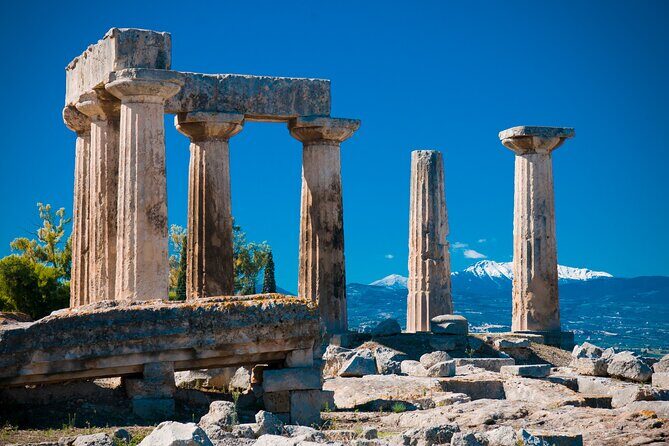
At Ancient Corinth, you’re looking at one of the strongest “layers of time” stops on the route. This is where the tour focuses on the city’s power in ancient Greek culture and early Christianity—especially the place associated with Apostle Paul preaching and early Christian letters.
You’ll visit key areas like:
- the Archaic Temple of Apollo
- the Roman Forum
- ancient public baths and fountains
A useful mindset: expect to see multiple eras touching the same ground. The Roman Forum and baths tell you this place didn’t stop being important after the Greek period. Then Paul’s connection reminds you that the story continues into early Christianity.
One drawback to plan for: the admission ticket for the site is not included, so you’ll want to budget time and money for tickets before you arrive.
- All Day Cruise -3 Islands to Agistri,Moni, Aegina with lunch and drinks included
★ 5.0 · 4,958 reviews




The Corinth Archaeological Museum: how artifacts make ruins click
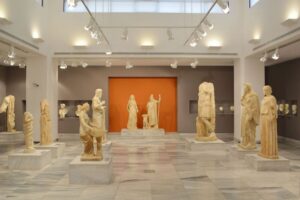
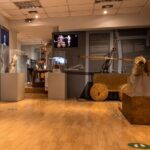
Right after the outdoor site, you’ll have time at the Archaeological Museum of Corinth. This is the kind of stop that makes the ruins easier to understand, because you’re not just looking at walls and structures—you’re looking at objects.
The museum is described as covering artifacts from the Greek, Roman, and Byzantine periods. That range is a big deal. It helps you place what you just saw in Corinth into a longer timeline, rather than treating each stop like a separate world.
You can expect to see things such as statues, mosaics, pottery, and ancient sarcophagi. The best part of this museum moment is that it gives you details you can carry into Mycenae, where you’ll see wealth, power, and ceremonial architecture.
Mycenae on UNESCO time: walls, gate, and royal sites
Mycenae is the headline. It’s UNESCO World Heritage–listed, and the tour focuses on the major features that signal Late Bronze Age authority.
You’ll explore the hilltop area overlooking the Argolic Gulf, then move through the key named points:
- the Cyclopean Walls
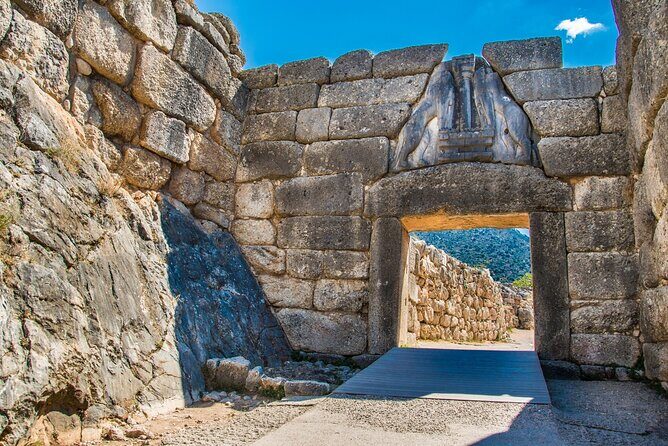
- the Lion Gate
- Grave Circle A
- remains of the palace
- the Cult Center
- the subterranean fountain tunnel dating to 1225 BC
If you like feeling like you’re inside a legend, this is the place. The architecture is big and memorable, and the named features make it easy to keep track of what you’re seeing.
Plan on this being the most physically active segment of the day. Even without a ton of walking distance spelled out, you’re on an archaeological hill and you’ll likely move between several different zones. Comfortable shoes matter.
And again: the site admission is not included, while the tour still schedules a full hour here so you can take your time rather than rushing.
The Mycenae museum: gold masks and everyday context
After the ruins, you’ll stop at the Archaeological Museum of Ancient Mycenae. This is where Mycenae becomes more human. You’re not only looking at structures; you’re seeing what was found at the site.
The museum’s collection is described as including gold masks, weapons, pottery, and jewelry. That mix matters. It’s a shift from stone monuments to objects that suggest ceremony, status, and daily life.
A practical tip: if you tend to get museum-fatigued, concentrate on the items that match what you saw outside. When your brain links the objects to the spaces on the hill, the museum stop feels shorter and smarter.
Treasury of Atreus: the fast hit of a true showstopper
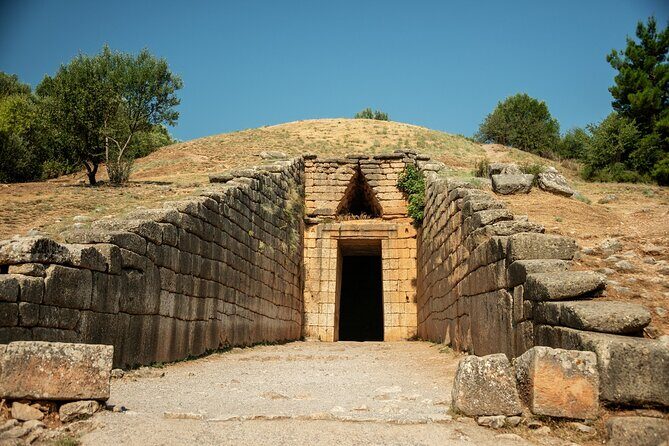
Between the museums and the main ruins experience, you’ll visit the Citadel and Treasury of Atreus, also known as the Tomb of Agamemnon.
This stop is short, but it’s packed with the features that make Mycenae famous:
- a tholos tomb dating to around 1250 BC
- a massive stone doorway
- an expert corbelled dome
- the beehive-shaped structure that gives it that instantly recognizable form
This one is included for free on the tour’s schedule, so you’re not juggling another ticket cost on top of the Mycenae admission.
Nafplio and Palamidi Fortress: views, stairs, and an old defense line
The day ends in Nafplio, described as a blend of Mycenaean roots, Venetian charm, and modern Greek history—and it’s also known as the first capital of Greece. The point of this finish is balance: after archaeology, you get a town where wandering feels natural.
Before you settle in, you climb up to Palamidi Fortress, an 18th-century Venetian stronghold with panoramic views over the Argolic Gulf and surrounding mountains. You’ll be able to walk ramparts and use winding staircases to reach strategic bastions that were once key to defending the region.
This part is where you should slow down and take pictures you’ll actually look at later. Fortress views have a way of making the geography click, and the Gulf shots give you a real sense of where the ancient cities were aiming their eyes and power.
Comfort and timing: how to survive a 9–10 hour day
This tour runs about 9 to 10 hours, and that includes transportation time. That matters because it changes how you plan your day before and after. If you’re trying to cram dinner reservations or another activity right after, you might feel rushed.
You get a few comfort upgrades:
- an air-conditioned vehicle
- bottled water
- a driver who keeps the history narrative moving in English
- Wi‑Fi on board, which is genuinely useful during long rides
Bring a hat and sunscreen and wear comfortable shoes. The day is set up with outdoor ruins and museum time, so you’ll want to be ready for hot, sunny weather.
The “licensed guide” detail you should not ignore
One important expectation-setting item: the tour includes an English-speaking driver with in-depth historical knowledge, but it does not include a licensed guide who accompanies you inside the archaeological sites.
For many people, that’s fine—especially if you enjoy learning through conversation and you’re happy to take your own time at the ruins. But if you strongly prefer a formal inside-site guide at every stop, you’ll want to plan around that.
What the best days feel like on this route
This tour’s reputation seems built on smooth handling and a friendly, flexible guide style. In particular, one host named Giannis has been highlighted for being kind, helpful, informed, and entertaining, plus for adapting when timing or energy levels change.
You can also expect the tour approach to focus on minimizing hassle: pickup that matches your requested times, and drop-offs that put you near the entrances rather than far away. That cuts down the awkward time where you’re stuck coordinating parking and walking from random corners of ancient sites.
If you want this day to feel easy, it helps to be clear when you request pickup times and to be ready when the driver arrives—then you get the benefit of less time lost to traffic and transfers.
Who this private tour is best for
This is a strong fit if you:
- want a private day without self-driving stress
- like structured stops with a driver who connects the dots between sites
- want Mycenae and Corinth without juggling multiple public transport legs
- are traveling in a small group (especially 1–4 people)
It’s also a good match for first-time Peloponnese visitors who want major landmarks in one day rather than spreading it over several trips.
Should you book this private Corinth–Mycenae–Nafplio tour?
Book it if you want three major historical settings handled in one calm, private package: Corinth for Paul and early Christianity, Mycenae for UNESCO-level monuments, and Nafplio for a scenic finish. The door-to-door pickup, air-conditioned ride, onboard Wi‑Fi, and history-focused driver are the kind of “small conveniences” that make a long day feel manageable.
Pass or reconsider if:
- the extra €35 per person in entrance fees would make this too tight on budget
- you strongly prefer a licensed guide inside every archaeological site
- you know you won’t enjoy hills, stairs, and outdoor walking in warm weather
If you’re aiming for maximum value in one day without a rental car, this is an easy choice to lean toward.
FAQ
How long is the Private Tour of Ancient Corinth, Mycenae and Nafplio?
It runs about 9 to 10 hours, and that duration includes transportation time.
Is this tour private or shared?
It’s a private tour/activity. Only your group participates, and for groups of 1 to 4 people, the tour uses sedan vehicles.
What does the tour price include?
Included features are bottled water, Wi‑Fi on board, an air-conditioned vehicle, an English-speaking tour driver with in-depth knowledge of history, and hotel pick-up/drop-off.
Are entrance fees included for the archaeological sites and museums?
No. Entrance fees to archaeological sites and museums are listed as €35 per person.
Is there a licensed guide inside the archaeological sites?
No. The tour includes an English-speaking tour driver, but it does not include a licensed guide to accompany you into the archaeological sites.
Where can the driver pick you up?
Pickup is available from Athens or the Riviera address, or from Piraeus Port. Airport pick-up is optional and costs €50 per booking.
Is onboard Wi‑Fi available?
Yes. Wi‑Fi is provided on the vehicle.
FAQ
Is the tour flexible if weather is bad?
The experience requires good weather. If it’s canceled due to poor weather, you’ll be offered a different date or a full refund.
What’s the cancellation policy?
You can cancel for a full refund up to 24 hours in advance of the experience start time.
Can children join, and is a child seat available?
Most travelers can participate, and a child seat is available upon request.
What should I wear or bring?
Wear comfortable shoes for walking and bring a hat and sunscreen since Greece can be hot and sunny.