REVIEW · ATHENS
Ancient Corinth, Isthmus/ Kechries Private biblical tour from Athens or Nafplion
Book on Viator →Operated by GREECE TAXI · Bookable on Viator
The most interesting part of this day is how much Corinth you can see beyond the famous ruins. You cross the Corinth Canal, trace Saint Paul’s connection to Kechries, climb to Acrocorinth, visit modern Corinth, and finish with Loutraki and local olive oil.
I like the private pickup and the freedom to shape the day around your interests. I also like the practical vehicle setup: air conditioning, WiFi, parking, tolls, and fuel are covered. The main catch is important: your driver is not an archaeological guide, so Ancient Corinth is largely a self-guided visit unless you hire a licensed archaeologist.
A few drivers have made a strong impression, including Nikolai and Mike. Still, the experience can feel more like private transportation with historical commentary than a traditional guided tour. Know that before you book, and you will have a much clearer idea of what you are buying.
In This Review
- Key points to know before booking
- What this private Corinth day really offers
- The westward ride from Athens
- Corinth Canal: a short stop with a big view
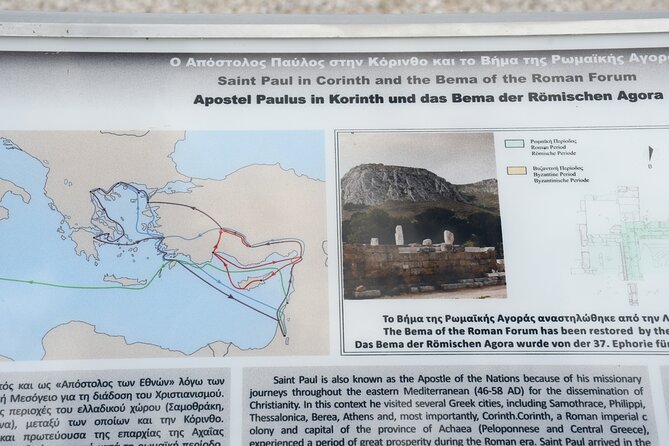
- Kechries and Saint Paul’s second journey
- Ancient Corinth and the Roman Agora
- Acrocorinth, Corinth’s hilltop fortress
- Modern Corinth and Saint Paul’s cathedral
- The Diolkos and the old overland route
- Loutraki: swimming, seafood, and olive oil
- Driver-guide service and the most important limitation
- Timing, group size, and practical value
- Who should book this Corinth experience?
- Should you book it?
- FAQ
- How long does the Corinth tour last?
- Where can pickup and drop-off take place?
- Is transportation included?
- Which vehicle types are available?
- Is the Ancient Corinth entrance fee included?
- Does the driver guide visitors inside Ancient Corinth?
- Are the Corinth Canal, Kechries, the cathedral, and Diolkos free to visit?
- Can the tour be extended beyond eight hours?
- What is the cancellation policy?
Key points to know before booking
- The Corinth Canal is a quick photo stop, usually from the bridge at the canal’s highest point.
- Kechries connects directly with Saint Paul, who stopped here during his second missionary journey.
- Ancient Corinth and its museum require a separate ticket, priced at €10 in winter and €20 in summer.
- Acrocorinth adds a hilltop castle, but comfortable shoes matter for uneven ground and uphill walking.
- Loutraki combines swimming, seafood, and olive oil tasting, giving the day a more local, relaxed finish.
- The driver provides historical audio commentary, but a licensed archaeologist must be booked separately for detailed site guiding.
What this private Corinth day really offers
This is an eight-hour private outing from Athens, with pickup and drop-off at your hotel or apartment. You travel in an air-conditioned sedan, SUV, minivan, or minibus, depending on your group size and booking choice.
That private format changes the feel of the day. You are not tied to a large group, fixed commentary, or a rigid pace. You can spend longer at Acrocorinth, shorten the swim stop, or ask to focus more closely on Saint Paul and early Christianity.
I see the best value here for families, couples, and small groups who want a full day outside Athens without arranging a rental car. Fuel, toll roads, parking, and transportation are included, which removes several small costs and practical headaches.
The listed price begins at about $191.17 per person, but the final cost varies with the vehicle and group size. A sedan suits up to three adults or a family of four with two children. Larger groups can choose a minivan for up to seven people or a minibus for up to fourteen.
For a full private vehicle, that price can make sense when shared across a group. For one or two people, you should compare it with a regular shared excursion or public transport. The private service buys you comfort and flexibility, not a full archaeological lecture at every ruin.
You can also read our reviews of more private tours in Athens


The westward ride from Athens
The trip begins with pickup in Athens, Piraeus, or another agreed location. From the city, the vehicle heads west along the Saronic Gulf, passing through areas linked with Elefsis, Megara, and Kineta.
Your driver provides historical audio material and commentary during the drive. This helps turn the road time into part of the experience, though the amount of live explanation may depend on the individual driver.
The vehicle has WiFi, a useful touch for checking maps, messages, or opening background information as you go. Air conditioning matters too, especially during the warmer months when the exposed ruins of Corinth can feel hot.
If you are picked up more than seven kilometers from central Athens, a €15 charge applies each way. Piraeus has an additional charge of €15 each way, while airport and Lavrio Port pickups require a prior agreement and cost more. Confirm the pickup point and fee before paying.
Corinth Canal: a short stop with a big view
The first main stop is the Corinth Canal. The road reaches the bridge, described as the highest point of the canal, where you pause for photographs.
This is not a long visit. Think of it as a scenic introduction rather than a museum stop or boat ride. From above, you can see the narrow waterway cut through the Isthmus of Corinth, separating mainland Greece from the Peloponnese.
The canal’s importance is easy to understand from this viewpoint. Ships could avoid sailing around the Peloponnese, whose southern capes were known for rough conditions. The passage also shortened the route between the Ionian and Aegean seas.
I like this stop because it gives you a clear sense of place before the ancient sites begin. The drawback is that the visit is brief, so you should not book this tour expecting an extended canal experience.
Kechries and Saint Paul’s second journey
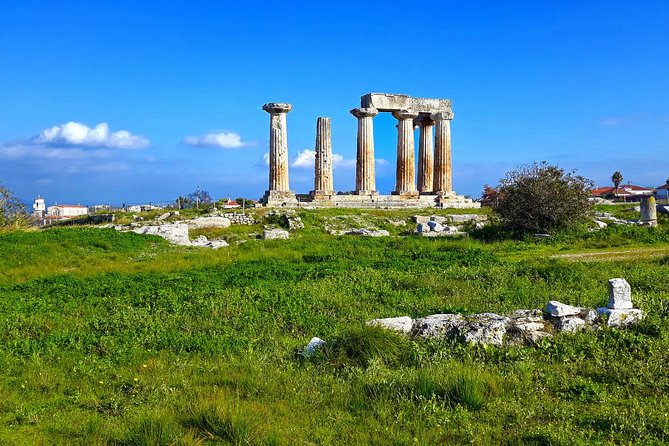
Kechries, also written as Kenchreai, was Corinth’s eastern port. Ships arrived from the Saronic Gulf, while the port of Lechaion handled routes toward Italy and the western Mediterranean.
The site also has a direct link to Saint Paul. According to Acts 18:18, Paul stopped at Kechries during his second missionary journey and had his hair cut after making a vow. That small detail gives the otherwise quiet coastal stop a strong biblical connection.
You have about 30 minutes here, with no admission fee. The short visit works well for anyone interested in early Christianity, biblical geography, or the way ancient ports shaped Corinth’s power.
Do not expect a large, fully reconstructed harbor complex. The value comes from the setting and the historical connection. I would read the relevant passage beforehand, since the driver is not expected to accompany you through the site as an archaeologist.
Ancient Corinth and the Roman Agora
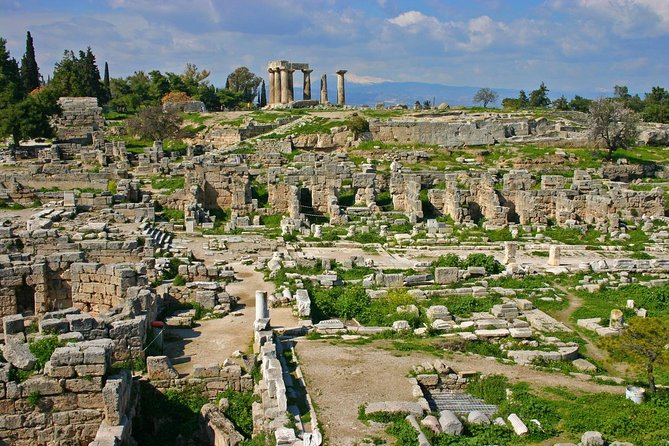
Ancient Corinth receives about an hour and a half. This is the central archaeological stop, and your admission ticket covers the site and museum only in the sense that you must purchase that combined ticket separately.
The fee is €10 from November 1 through March 31, and €20 from April 1 through October 30. Budget for this cost when comparing the tour price.
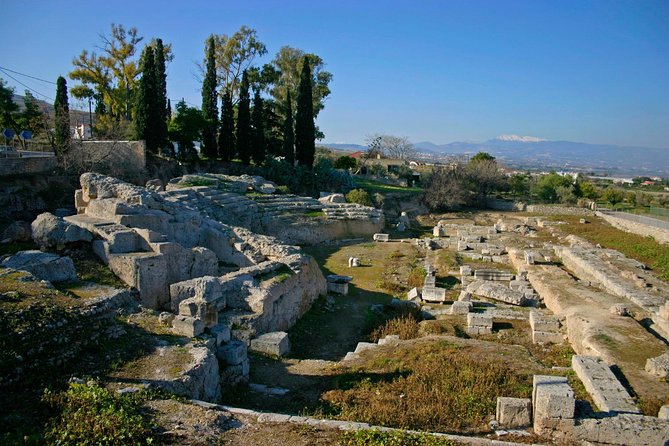
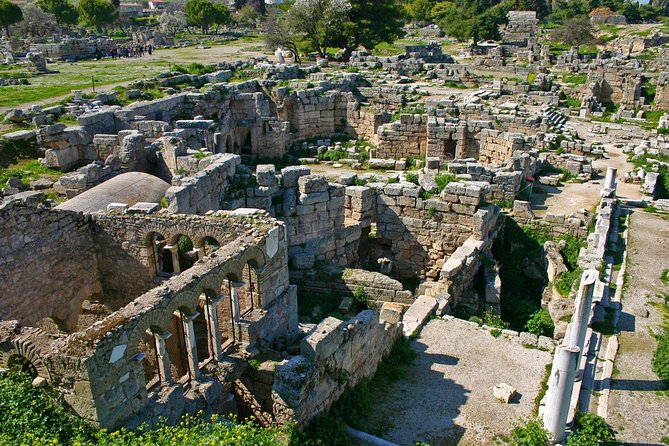
Inside, you can see the Roman Agora, including the famous Bema, or speaker’s platform, along with the Temple of Apollo and the museum. These remains show Corinth as a major city shaped by Greek, Roman, commercial, and early Christian forces.
The Bema is especially important for visitors following Saint Paul’s story. It is traditionally associated with the place where Paul faced accusations before the Roman authorities. The stop becomes much more meaningful when you connect the stones with the biblical account rather than simply walking among columns.
Here is where the guide arrangement matters most. Your driver can explain history while you travel, but the driver does not accompany you on the archaeological walk or museum visit as a licensed site guide. If you want detailed explanations of architecture, inscriptions, excavation layers, and religious history, arrange an archaeologist separately through a licensed guide service.
Without that addition, use the 90 minutes to explore at your own pace. The freedom is pleasant, but visitors who prefer continuous explanation may find the site less satisfying than expected.
- All Day Cruise -3 Islands to Agistri,Moni, Aegina with lunch and drinks included
★ 5.0 · 4,958 reviews






Acrocorinth, Corinth’s hilltop fortress
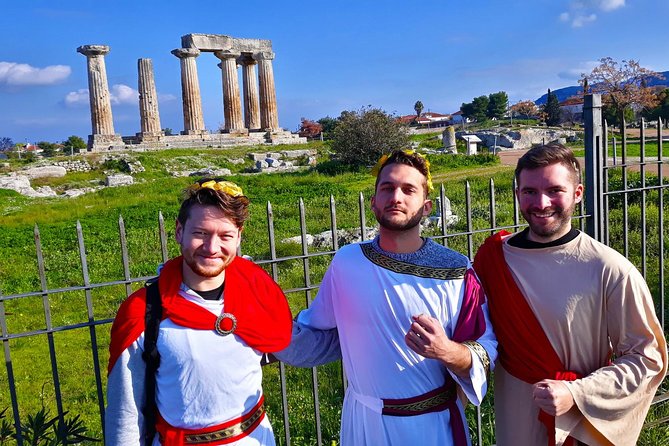
After the lower archaeological site, the vehicle climbs toward Acrocorinth. The castle occupies the top of the hill above Ancient Corinth and gives the day its most dramatic change of scale.
You have about an hour here. The site is free from the tour description, but uneven surfaces, stone paths, and uphill walking are likely, so sturdy shoes are sensible. The climb and open setting can also make this a demanding stop in hot weather.
Acrocorinth is valuable even if you are not focused on military history. From the high position, you can understand why this place controlled movement through the Isthmus. It also helps you see how the ancient city, ports, canal route, and surrounding territory fit together.
I would not rush this stop. If the day runs late, it is a better place to preserve time than the quick cathedral visit. Ask your driver how much walking is involved before you begin, especially if anyone in your group has difficulty with uneven ground.
Modern Corinth and Saint Paul’s cathedral
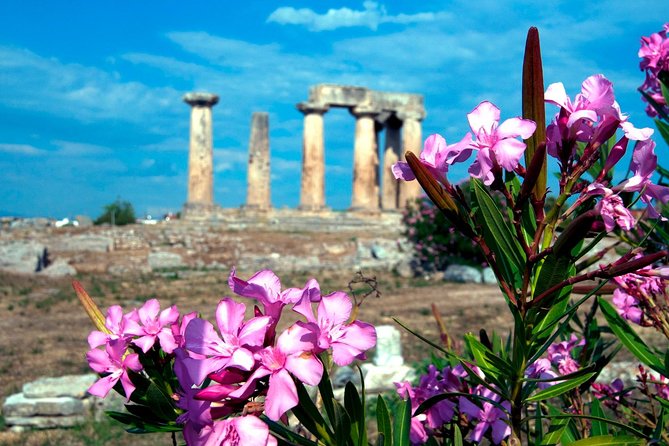
The Greek Orthodox Cathedral of Saint Paul in modern Corinth is a short, 15-minute stop. It serves as the seat of the bishop of modern Corinth and is dedicated to Saint Paul, who spent four years in ancient Corinth.
This visit gives the biblical theme a modern continuation. You move from the ancient city where Paul preached and faced legal trouble to a living church dedicated to him.
The time is brief, so treat it as a quiet look rather than a full church tour. Dress and behave respectfully in this active religious setting. The cathedral admission is free.
The Diolkos and the old overland route
The Diolkos stop lasts about 15 minutes and is also free. This ancient route allowed ships and goods to cross the narrow Isthmus overland instead of sailing around the Peloponnese.
The passage was about 6.4 kilometers wide at its narrowest point. The route saved ships from the difficult waters around Cape Matapan and Cape Malea, both known for severe winds and storms.
The Diolkos had a commercial role as well. Goods moved across the Isthmus, and lighter ships may have been transported overland during wartime. Very little is known about the full scale of its trade, but the fact that the route lasted so long suggests it served a useful purpose.
This is a small stop, not a sprawling archaeological park. Its value comes from helping you understand Corinth as a transport crossroads. I would pay close attention to the driver’s explanation here, since the physical remains alone may not tell the whole story.
Loutraki: swimming, seafood, and olive oil
The final part of the day shifts from ruins to the coast at Loutraki. You have time for a swim in the Corinthian waters and an optional seafood lunch by the sea.
The lunch is not included, so you should ask about the timing and expected cost before settling in. This is a good place to slow down after the sun and stone of Ancient Corinth, but it also creates a trade-off. More time at lunch or on the beach means less flexibility elsewhere.
The olive oil visit adds a useful local food stop. You taste regional products, learn how olives become oil, and see how olive oil soap is made. The explanation focuses on how this soap differs from ordinary soap and why it is considered gentle on the skin.
I like this ending because it connects history with daily life. Instead of spending all eight hours among ruins, you get a look at a familiar Greek product in a practical setting. The visit is free, but purchases are not included, so buy only if you genuinely want the products.
Driver-guide service and the most important limitation
The company provides an English-speaking driver throughout the day, and the vehicle includes historical audio material. Drivers such as Nikolai and Mike have been singled out for being kind, helpful, and attentive, with Mike receiving especially strong praise for the itinerary and overall service.
At the same time, you should separate good driving service from archaeological guiding. The driver may offer useful background during the road sections, but the official terms clearly say that the driver is not an archaeological guide for Ancient Corinth or the museum.
This distinction explains why the experience can feel excellent for one group and disappointing for another. If you mainly want comfortable transport, flexible stops, and a friendly local escort, the arrangement fits. If you expect a guide beside you explaining every column and inscription, add a licensed archaeologist.
The extra guiding cost is not supplied, so you will need to arrange it separately. Ask for the total price before confirming, and clarify whether the archaeologist will join the full day or only the Ancient Corinth visit.
Timing, group size, and practical value
The tour is private and flexible for up to eight hours. An extension costs €30 per hour for a sedan, €45 for a minivan, or €60 for a minibus. Agree on extra time and cost with the driver before the original eight hours end.
The schedule has many stops, so pacing matters. The canal and Diolkos are quick looks. Kechries and the cathedral are also short. Ancient Corinth and Acrocorinth deserve the most attention, while Loutraki gives you the chance to rest.
Families may find the vehicle choices useful, especially because up to two children aged ten or younger can travel free under the stated conditions. Confirm how the child policy applies to your selected vehicle and group size.
Free cancellation is available up to 24 hours before the start time. Changes made inside that window are not accepted, and poor weather can lead to a new date or a full refund. Since the tour includes an outdoor castle, ruins, and a swim option, the weather rule is worth keeping in mind.
Who should book this Corinth experience?
I would choose this tour if you want a private day with broad coverage and minimal planning. It suits people staying in Athens who want the canal, biblical sites, ancient ruins, a fortress, modern Corinth, and the coast in one outing.
It also works well for small groups that can share the vehicle cost. Pickup, parking, tolls, and fuel are already handled, and the itinerary can be adjusted to suit your interests.
I would hesitate if your main goal is expert archaeology. In that case, arrange the licensed guide from the start rather than assuming the driver will lead you through Ancient Corinth.
Should you book it?
Book this experience if you value private transportation, flexible timing, and a wide mix of Corinth sights. The combination of Kechries, Saint Paul’s cathedral, the Diolkos, and Loutraki gives you more than a standard ruins visit.
Before booking, confirm four things: your pickup location, vehicle type, archaeological entrance fees, and whether you want to pay for a licensed guide. With those expectations set, this can be a comfortable and efficient way to see Corinth in one long day. Without them, you might mistake a well-organized private driving service for a fully guided archaeological tour.
FAQ
How long does the Corinth tour last?
The tour lasts approximately eight hours and is described as private and flexible within that time.
Where can pickup and drop-off take place?
Pickup and drop-off are available from hotels or apartments in Athens and from Piraeus. Another location, including Nafplion by arrangement, may be possible with the provider.
Is transportation included?
Yes. Private transportation includes fuel, toll roads, and parking fees. Vehicles are air-conditioned and equipped with WiFi.
Which vehicle types are available?
You can choose a sedan or SUV for up to three adults or a family of four with two children, a minivan for up to seven people, or a minibus for up to fourteen people.
Is the Ancient Corinth entrance fee included?
No. The combined ticket for Ancient Corinth, the archaeological site, and museum costs €10 from November 1 through March 31, and €20 from April 1 through October 30.
Does the driver guide visitors inside Ancient Corinth?
The driver provides historical information during the journey but is not an archaeological guide who accompanies you through Ancient Corinth or the museum. A licensed archaeologist can be hired separately.
Are the Corinth Canal, Kechries, the cathedral, and Diolkos free to visit?
The tour information lists admission as free for the Corinth Canal, Kechries, the Saint Paul cathedral, and the Diolkos.
Can the tour be extended beyond eight hours?
Yes. Extra time costs €30 per hour for a sedan, €45 for a minivan, and €60 for a minibus. Arrange the extension with the driver.
What is the cancellation policy?
You can cancel at least 24 hours before the start time for a full refund. Cancellations or changes made less than 24 hours before the start time are not accepted for a refund. Poor weather may result in a different date or a full refund.