REVIEW · ATHENS
Athens City of Rebellion Private Walking Tour
Book on Viator →Operated by Culture Hunters · Bookable on Viator
Athens’ famous sights tell only part of the story. This private walk connects Monastiraki, Syntagma Square, the university district, and Exarchia through stories of revolt, occupation, student action, and social justice. You’ll see how ordinary Athenians pushed back against power, from Ottoman rule to present-day struggles.
I like the clear connection between past and present, and I like the small private format, which gives you room to ask questions. Maëlle brings warmth and real enthusiasm to the subject, while the route adds context to places you might otherwise pass without a second thought. The main drawback is that this is a serious walking tour, not a gentle sightseeing stroll. It is not recommended if you have walking difficulties, and Exarchia’s political story may feel intense for some visitors.
In This Review
- Key points to know before booking
- Athens beyond the postcard
- Monastiraki opens the story
- The Ottoman past at Tzisdarakis Mosque
- A hidden resistance story at Ayìa Dynami
- Syntagma Square and the weight of occupation
- Grande Bretagne, the Unknown Soldier, and the old palace
- Students and civil liberties at the University
- Navarinou Park and the right to public space
- Exarchia, Athens’ present-day argument
- Why the private format matters
- Price, timing, and practical value
- Who should book this Athens walk?
- Should you book the City of Rebellion tour?
- FAQ
- Where does the Athens City of Rebellion tour start?
- Where does the walking tour end?
- How long does the tour last?
- Is this a private tour?
- Who operates the tour?
- Is transportation included?
- Is the tour suitable for children?
- Is the tour accessible for people with walking difficulties?
- Can I cancel for a refund?
Key points to know before booking

- Monastiraki to Exarchia: The route crosses central Athens, ending at Exarchia Square rather than returning to the starting point.
- Resistance across centuries: You’ll cover Ottoman rule, the Greek Revolution, Nazi occupation, student activism, police violence, and social justice movements.
- Private experience: Only your group takes part, making it easier to discuss sensitive subjects and shape the conversation.
- Guide Maëlle: Her energetic, personal approach is a strong part of the experience, especially if you enjoy history told through individual stories.
- No museum admissions required: The tour visits public places and includes fees and taxes, but private transportation is not included.
- Plan for 2.5 hours on foot: Wear comfortable shoes and expect the time between stops to make up a large part of the tour.
Athens beyond the postcard
If you come to Athens expecting only ancient temples, this walk gives you a useful correction. The Acropolis still hovers over the city, but the focus here shifts to streets, squares, churches, public buildings, and neighborhoods shaped by resistance.
The tour does not treat rebellion as a single event. It follows a long line of pressure and response. You’ll hear about Greek opposition to Ottoman rule, resistance during the Nazi occupation, student campaigns for civil liberties, and current arguments over police violence, gentrification, refugees, queer rights, and public space.
That approach makes the route valuable early in your stay. It can help you read Athens more clearly afterward. A square becomes more than a meeting place, a university becomes more than an impressive facade, and a spray-painted wall becomes part of a continuing argument about who has a right to the city.
Maëlle is the guide named in the tour information, and her style comes across as conversational rather than formal. You can expect an educational walk, but not a dry lecture. The subject is political and sometimes painful, so the experience suits you best if you want to ask questions and consider several sides of modern Greek life.
You can also read our reviews of more walking tours in Athens



Monastiraki opens the story
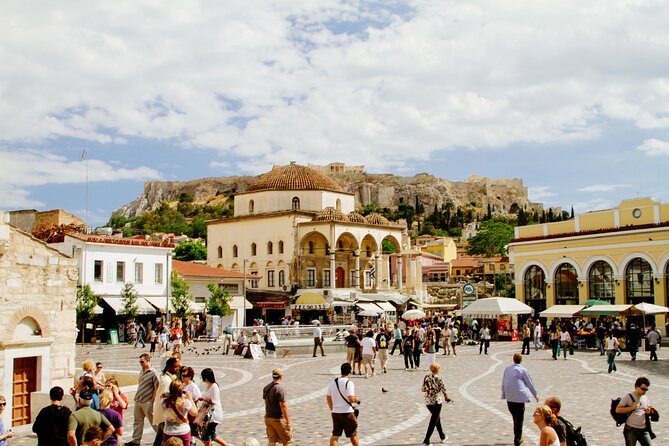
The meeting point is Pl. Monastirakiou 2, in the center of Athens. Your guide welcomes you here and uses the square as the first setting for the tour.
Monastiraki is a practical starting point because it is familiar, central, and easy to reach by public transportation. It also puts you in a part of Athens where different eras sit close together. Ancient remains, Ottoman traces, modern commerce, and political life all meet within a short walk.
You spend about 10 minutes here. That is enough to get oriented without using too much of the tour on general sightseeing. The focus is not simply on what the square looks like, but on how a public place can carry layers of power, trade, religion, and protest.
If you have just arrived in Athens, arrive a little early. The square can be active and crowded, and finding the exact meeting point is easier before the tour begins.
The Ottoman past at Tzisdarakis Mosque
The next stop is Tzisdarakis Mosque, also known as the Mosque of the Lower Fountain. You do not need an admission ticket for the visit, and the stop lasts about 10 minutes.
Here, the tour turns to the Ottoman past of Greece and the beginnings of the Greek Revolution. One especially striking idea is the imagined skyline of Athens with a minaret rising from the Acropolis. That image helps you picture a city very different from the one presented in modern postcards.
The value of this stop is its reminder that Athens was not always framed mainly as a symbol of classical Greece. Ottoman rule shaped the city, and the struggle for independence grew from real political, religious, and social tensions.
You’ll get more from this stop if you resist treating the Greek Revolution as a simple story of heroes and villains. The tour’s larger theme is how resistance forms over time, and this early stop sets up that idea.
A hidden resistance story at Ayìa Dynami
The Holy Church of the Sacred Power, or Ayìa Dynami, offers a smaller and more intimate setting. The stop takes around 10 minutes and focuses on how the church was used by members of the Greek resistance during the Ottoman occupation.
This is the kind of place that can disappear into the city unless someone points out its role. The building is not presented only as a religious site. It becomes evidence of how small, familiar spaces could support people resisting a much larger authority.
I like this part of the route because it moves away from grand monuments. Rebellion is often remembered through battles and famous leaders, but the story here is tied to a modest place and the people who used it.
The stop also balances the more public locations that follow. After seeing resistance in a church, you move toward Athens’ main political square, where the scale of protest becomes much larger.
Syntagma Square and the weight of occupation
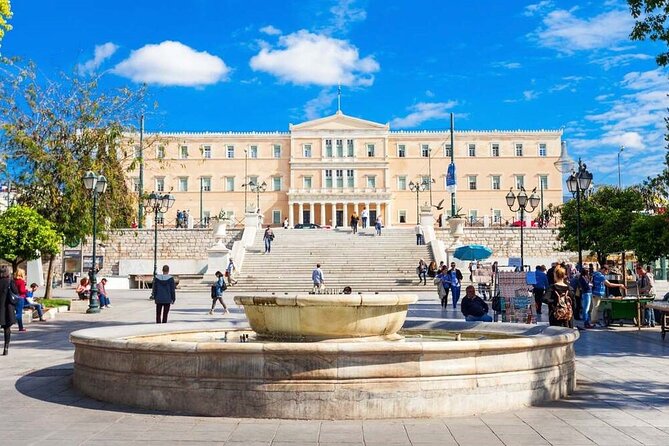
Syntagma Square is the central political stop on the route, with about 15 minutes devoted to it. You’ll see the former royal palace, the Tomb of the Unknown Soldier, and the buildings connected to the modern Greek state.
The square is presented as a symbol of resistance. Its stories range from the Greek monarchy and the formation of the modern state to the Nazi occupation and the many demonstrations that have taken place here.
This is where the tour’s time-jumping method works well. You are standing in one place, but the meaning of that place changes depending on the era. A palace can represent royal authority. A military guard post can recall national sacrifice. A public square can become a place where citizens challenge their government.
The route also discusses the Nazi headquarters that once operated nearby and the resistance connected with Athens during the occupation. That part of the story gives the square a darker dimension. It is easy to look at the ceremonial buildings and miss the fear, control, and defiance that shaped the area in the 20th century.
You can also read our reviews of more city tours in Athens




Grande Bretagne, the Unknown Soldier, and the old palace
The Hotel Grande Bretagne is now a luxury hotel, but the tour asks you to look past its polished present. The building witnessed darker moments when the Nazis held power in Athens.
You do not enter the hotel as part of the experience, and no admission is required. Instead, the guide uses the building as a visible reminder that places associated with wealth and ceremony can also be tied to occupation and political power.
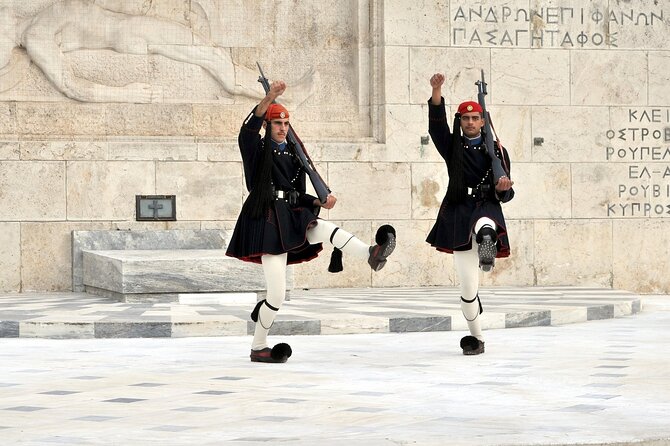
Nearby, you spend about five minutes at the Tomb of the Unknown Soldier. This is a brief stop, but it adds a strong visual element. You’ll see the Evzones, the ceremonial soldiers who guard the tomb, and learn about their distinctive uniforms.
The tour then continues to the Hellenic Parliament, located in the old palace built for the first king of Athens after the Greek Revolution. Here, the subject returns to the early modern state and the question of who held authority after independence.
These three stops work together. You see a hotel linked with occupation, a national memorial guarded by soldiers, and a former royal residence now used as the seat of Parliament. If you prefer ancient ruins, this section may feel less immediately dramatic. If you want to understand modern Athens, it is essential.
Students and civil liberties at the University
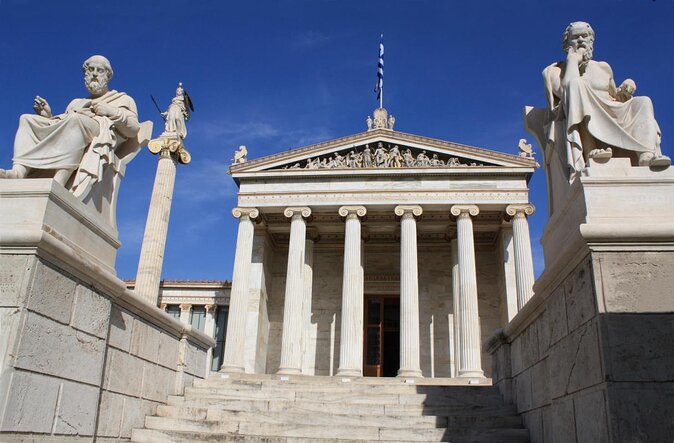
At the National and Kapodistrian University of Athens, the tour examines the role of students and universities in campaigns for citizens’ liberties. The stop lasts about 10 minutes.
The university matters here not just as an academic institution, but as a place where political ideas gained force. Students became an important part of struggles for freedom, and the campus connects education with public action.
This stop helps explain why Athens’ political life often feels so visible. Universities can become places where wider grievances gather, especially when younger citizens challenge state power. The guide connects these actions to the city’s broader tradition of resistance rather than treating them as isolated episodes.
I find this section particularly useful if you want context for present-day demonstrations and political debate. It does not reduce activism to spectacle. Instead, it asks what civil liberties mean in daily life and why public institutions can become focal points for conflict.
Navarinou Park and the right to public space
The route then heads toward Navarinou, a small park created through a citizen initiative in Exarchia. The stop lasts about 10 minutes.
Its story shifts the focus from national events to local action. A citizen-created park raises practical questions: Who controls public space? Who decides how a neighborhood changes? What happens when residents organize outside formal government structures?
This is a helpful bridge to the rest of Exarchia. The neighborhood’s political identity is not only about confrontation with police or the state. It also includes attempts to create alternatives, protect shared areas, and build community projects.
The stop may appeal to you if you like seeing how political ideas become physical places. A park is a simple thing, but its creation can express a larger demand for participation and local control.
Exarchia, Athens’ present-day argument
The final part takes place at several points around Exarchia and ends at Exarchia Square, near Themistokleous 68. About 20 minutes is listed for the stop itself, with additional time spent walking between locations.
Exarchia is known as a center of activism and opposition in Athens. The tour discusses the neighborhood’s connections with anarchists, refugees, queer communities, and artists, along with the effects of the economic crisis, police violence, and gentrification.
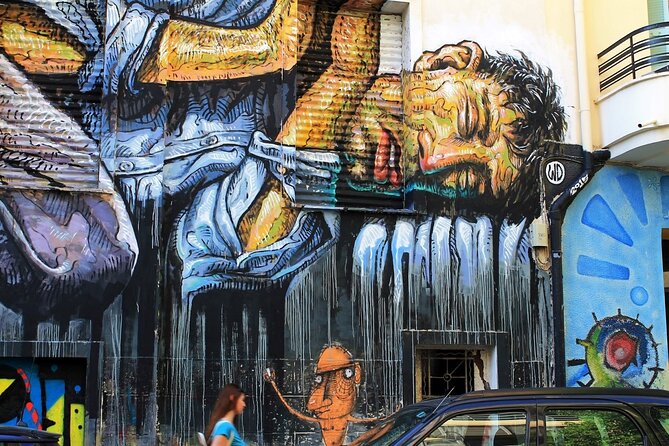
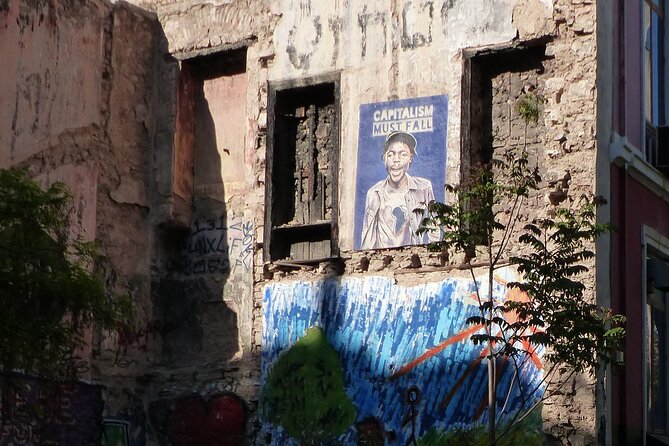
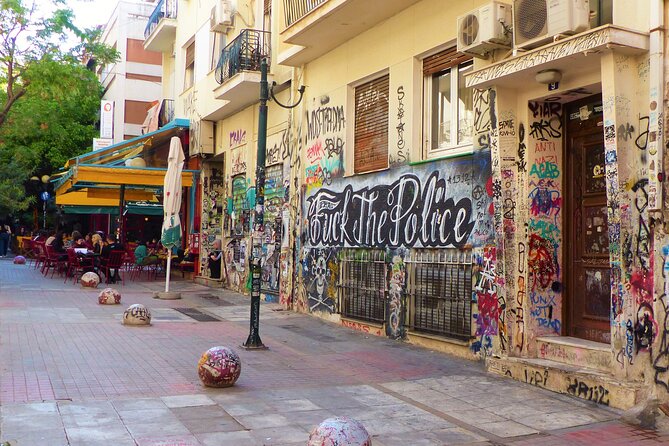
You’ll see expressive street art and citizen initiatives, but the point is not simply to photograph colorful walls. The guide places the art within the neighborhood’s political life. Some murals make claims about justice, identity, state power, or solidarity. Others may reflect anger and grief.
This is also the least polished part of the route, and that is part of its character. Exarchia can feel politically charged. The tour presents it as a living community with competing pressures, not as a themed attraction designed for easy consumption.
You should come with an open mind. The area welcomes groups and identities that have often faced exclusion, but the tour does not pretend that all of its conflicts are solved. If you want a tidy final message, you may find the ending unsettled. If you want to understand why Athens still argues about power in public, Exarchia is the right place to finish.
Why the private format matters
This is a private tour, so only your group participates. That matters more here than it would on a standard route through major monuments.
The subjects include occupation, anarchism, police violence, state authority, social justice, and gentrification. You may want to ask questions or discuss points that would be difficult to raise in a large group. A private format also lets Maëlle adjust the conversation to your interests.
The tour has been described as suitable for people over age 10, but parents should consider the subject matter. The history includes fascism, violence, oppression, and political conflict. Older children and teenagers with an interest in history or social issues may follow it well, while younger children may find the discussion demanding.
The route is conducted on foot for roughly two and a half hours. The listed stop times add up to less than the full duration because the rest is walking between locations. Wear shoes that can handle central Athens streets, and do not book it if walking for that length is difficult.
Price, timing, and practical value
The price is $86.82 per person. That is not the cheapest way to spend two and a half hours in Athens, but the comparison should be made with a private guide, not a large general walking tour.
Your fee covers all fees and taxes. There are no paid admissions listed, so you are paying mainly for the guide’s time, research, route design, and conversation. The value is strongest for a small group that wants a focused interpretation of modern Athens rather than a quick list of landmarks.
The tour is often booked about 88 days in advance, which suggests you should reserve early if your dates are fixed. Group discounts are available, so the per-person cost may make more sense when shared among several people.
No private transportation is included. That is not a serious issue for this route because the experience is designed around walking from Monastiraki to Exarchia. It does mean you should arrange your own way to the meeting point and from the ending point.
The tour requires good weather. You can cancel for a full refund up to 24 hours before the start time. If poor weather causes the operator to cancel, you are offered another date or a full refund.
Who should book this Athens walk?
Book it if you want to understand the city beyond ancient Greece. It is a particularly good fit for you if you enjoy political history, social movements, street art, local activism, or stories about how ordinary people respond to power.
It also works well as one of your first Athens activities. The route gives you context for public squares, universities, political demonstrations, and neighborhood change, which can make the rest of your stay more readable.
You may want to skip it if you want a relaxed walk focused on temples, food, shopping, or classic architecture. The subject is serious, and the route involves steady walking. It is also not the best choice if you want private transportation or a tour with very little discussion.
The rating is listed as five out of five from six reviews, and the repeated strengths are clear: Maëlle’s enthusiasm, the small-group conversation, and the way the tour connects modern Athens with its difficult past. The strongest praise focuses on the tour as a starting point for understanding the city, not just as another sightseeing stop.
Should you book the City of Rebellion tour?
Yes, if your idea of a good Athens experience includes questions as well as photographs. This walk gives you a clear route through resistance from Ottoman rule to Exarchia’s current struggles, with Maëlle providing the human connection between the places.
At $86.82 per person, it is best value for a private group that wants a thoughtful guide and is willing to walk for two and a half hours. Choose it early in your visit if you want political and social context for the rest of Athens. Skip it only if you prefer a lighter sightseeing tour or cannot manage the walking.
FAQ
Where does the Athens City of Rebellion tour start?
The tour starts at Pl. Monastirakiou 2, Athina 105 55, Greece.
Where does the walking tour end?
The tour ends at Themistokleous 68, Athina 106 81, Greece, near Exarchia Square.
How long does the tour last?
The tour lasts approximately 2 hours and 30 minutes.
Is this a private tour?
Yes. Only your group participates in the activity.
Who operates the tour?
Culture Hunters operates the Athens City of Rebellion Private Walking Tour.
Is transportation included?
No. Private transportation is not included. The experience is a walking tour between central Athens and Exarchia.
Is the tour suitable for children?
The tour is adapted for anyone over 10 years old. The topics include resistance, fascism, violence, police action, and social justice, so parents should consider whether those subjects suit their children.
Is the tour accessible for people with walking difficulties?
The tour is not recommended for people with walking difficulties because it involves walking between several stops for about two and a half hours.
Can I cancel for a refund?
Yes. You can cancel at least 24 hours before the start time for a full refund. If poor weather causes the tour to be canceled, you are offered a different date or a full refund.