REVIEW · ATHENS
Athens: Exarcheia Walking Tour
Book on GetYourGuide →Operated by Exarchia Uncovered: Athens' Alternative Heartbeat · Bookable on GetYourGuide
Exarchia feels like a secret you can walk into. This Athens neighborhood tour trades statues and photo ops for real street culture, starting at Klafthmonos Square and heading into the places locals talk about when they mean it. You’ll hear political and cultural stories tied to the walls, the squares, and the people who still live here.
I especially love the small-group format (up to 8), because it keeps the walk human and the conversation flowing. I also like that there’s a live traditional song built into the experience, so it’s not just talk-on-the-move. It’s the kind of Athens moment that feels like it was made for your senses, not your passport.
One thing to consider: the route includes uneven surfaces, and the guide may talk while walking, which can make it harder to hear if you’re stuck a few steps back.
In This Review
- Key highlights you should care about
- Why this Exarchia walk feels more like Athens than Athens
- Meeting at Klavthmonos: the best kind of warm-up
- Academy of Athens and library-adjacent stops: where big institutions meet street truth
- The Alexandros Grigoropoulos memorial and the Exarchia story behind it
- Exarchia Square: spirit you can spot even behind fences
- Kallidromiou street and the farmers market: real routine, not staged food
- Strefi Indoor Stadium and the Strefi Hill finish: why people stay
- Price and value: is $70 for 1.5 hours worth it?
- Who should book, and who should skip it
- What to do before and after your Exarchia walk
- Should you book the Athens Exarchia Walking Tour?
- FAQ
- How long is the Athens Exarchia walking tour?
- Where does the tour start?
- What languages are offered?
- What is the group size?
- What’s included in the price?
- Is food and drinks included?
- What should I bring for the walk?
- Is the tour suitable for wheelchair users or reduced mobility?
- Do I have to pay right away?
- Is free cancellation available?
Key highlights you should care about
- Klafthmonos Square’s memorial energy: a starting point with meaning, not just a landmark.
- Academy of Athens + Library area: big institutions used as contrast to street truth.
- Exarchia Square behind metal fences: you see how a neighborhood’s spirit survives restrictions.
- Kallidromiou farmers market stop: a practical break with real local life and shopping.
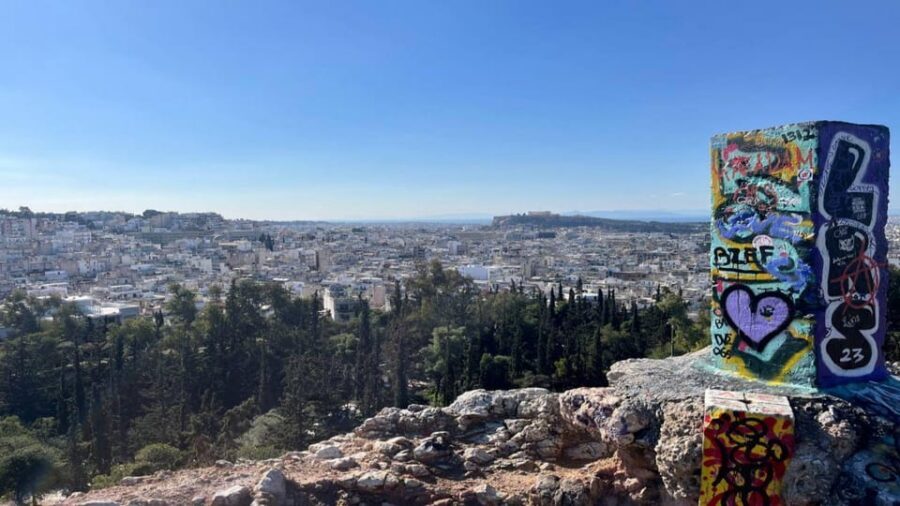
- Strefi Hill finale with baglamas music: panoramic views paired with a street-level sound.
Why this Exarchia walk feels more like Athens than Athens
If Athens is mostly temples and marble for you, this tour is the counterweight. It’s built around Exarchia’s anarchist roots, street art, and political expression—so instead of learning Athens only through ancient dates, you get a sense of how people argue, organize, and create right now.
I like that the vibe is clear from the start: no statue-hunting circuit and no museum-style “look but don’t touch” energy. You’re walking in streets where people live their real routines, where walls carry messages, and where the neighborhood’s identity shows up in details like what’s printed on T-shirts and what’s painted on building fronts.
You also get a strong local-feeling structure. The walk goes from the center toward Exarchia, then works outward into smaller, moodier streets—so the change in atmosphere is part of the experience, not an afterthought. Expect a storytelling pace, with short photo stops and breaks so you can actually absorb what you’re seeing.
You can also read our reviews of more walking tours in Athens



Meeting at Klavthmonos: the best kind of warm-up
The tour starts at Πλατεία Κλαυθμώνος (Platia Klavthmonos)—a central square that makes it easy to begin before your Athens day gets swallowed by traffic and museum lines. This is good if you’re staying somewhere central and don’t want a complicated ride just to get to a different side of the city.
From here, you’re not asked to “perform” curiosity. You just move with the group and let the guide frame what you’re looking at. That matters, because Exarchia can feel like visual noise at first—graffiti, posters, symbols—but a good guide helps you read the street like a language, not like clutter.
Bring the basics: comfortable walking shoes and water. The walk is short at 1.5 hours, but that time is on foot, and the neighborhood has uneven spots. Also bring a camera if street art and walls are your thing.
Academy of Athens and library-adjacent stops: where big institutions meet street truth

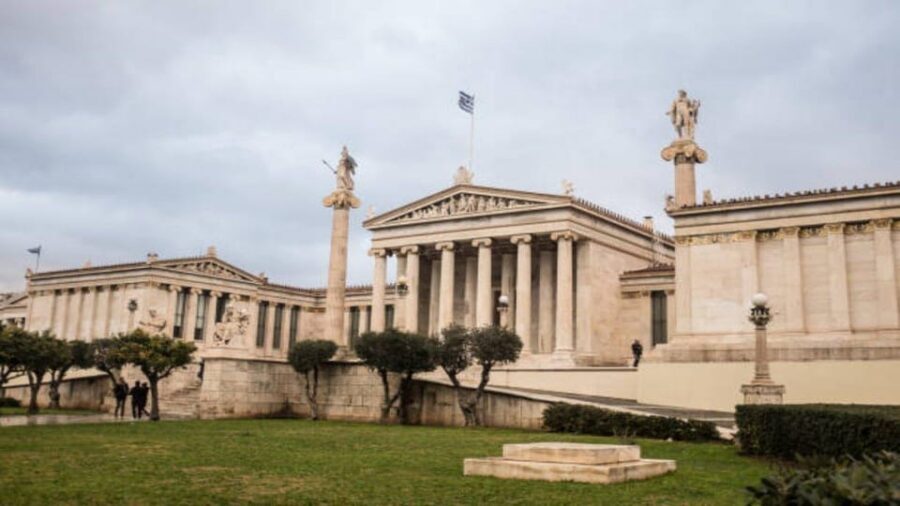
One of the smartest parts of this walk is the contrast. You move from central Athens toward the Academy of Athens area and the nearby library space, places that signal tradition, structure, and official culture. Then, as you keep walking into Exarchia, those signals start to feel like a backdrop for something more confrontational.
The guide’s job here is to help you connect dots: why a city can honor scholars and still produce neighborhoods that speak with protest, satire, and defiance. Even if you’re not a politics nerd, you’ll probably enjoy this portion because it helps you understand Athens as a living argument between different ideas of truth.
Expect a photo stop and a break time around this area. It’s not just “walk past it” sightseeing. The whole point is to put your eyes in the right place before the story gets more intense.
The Alexandros Grigoropoulos memorial and the Exarchia story behind it
At the heart of the tour is the story of Alexandros Grigoropoulos, told at the relevant memorial stop. The neighborhood’s identity is tied to that kind of memory—what a community chooses to remember, and how those memories stay present in public space.
This part matters for a practical reason: without it, Exarchia can look like a generic street-art zone. With it, you start seeing what the art and politics have in common: identity, grief, anger, hope, and a refusal to go silent.
The guide also brings up other Greek counterculture icons, including Nikolas Asimos, Panos Sidiropoulos, and Katerina Gogou. Names like these turn the walk from vibes into context, so you know you’re not just seeing symbols—you’re seeing references to real people and real currents of underground culture.
Exarchia Square: spirit you can spot even behind fences
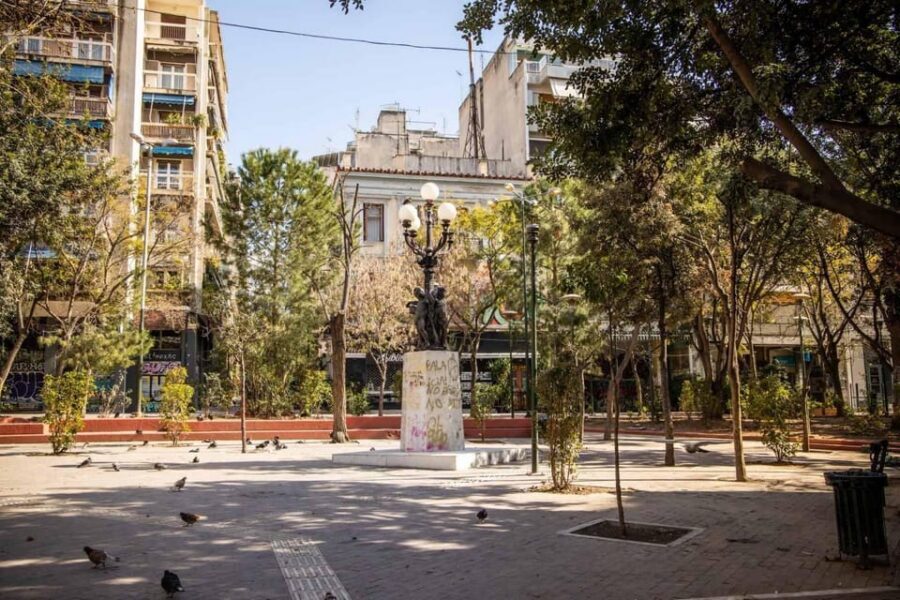
You’ll pass Exarchia Square, and the guide sets it up as a place where the neighborhood’s energy is visible even when it’s physically contained. The tour notes that the square can be hidden behind metal fences, which is a strong visual cue: the city tries to control space, but community culture still pushes through.
Here’s what you should watch for. Don’t just glance at the fences—look at what surrounds them. People’s behavior, the street art nearby, and the way the area feels at ground level often tell the story better than any lecture ever could.
There’s also a photo stop and sightseeing time here. Take that moment seriously. Stand still for a minute. Let your eyes adjust. Exarchia rewards slow attention, because the meaning is layered across surfaces and street corners.
- All Day Cruise -3 Islands to Agistri,Moni, Aegina with lunch and drinks included
★ 5.0 · 4,958 reviews



Kallidromiou street and the farmers market: real routine, not staged food
On Kallidromiou, the tour shifts gears into something more everyday. You’ll reach the Kallidromiou farmers market area for a visit that includes time to browse and shop. This is one of the best breaks in a walking tour like this, because it adds a practical human layer: you see how locals pick produce, move through stalls, and spend time outside.
The experience also makes a point about the street as text. The walls and street details on Kallidromiou are described as like lyrics—plus you’ll likely notice fashion and symbols that feel more personal than official. That combination—market life plus visual messaging—helps you understand Exarchia as a place where culture isn’t only performance. It’s daily.
Just plan smart: food and drinks are not included, so if you want snacks or a drink, bring cash or plan to buy on your own. The good news is you’ll be in an area where it makes sense to eat, not in a random tourist dead zone.
If you’re a photographer, this is also a great time. Markets give you motion, faces, and color that look better in photos than static murals.
Strefi Indoor Stadium and the Strefi Hill finish: why people stay

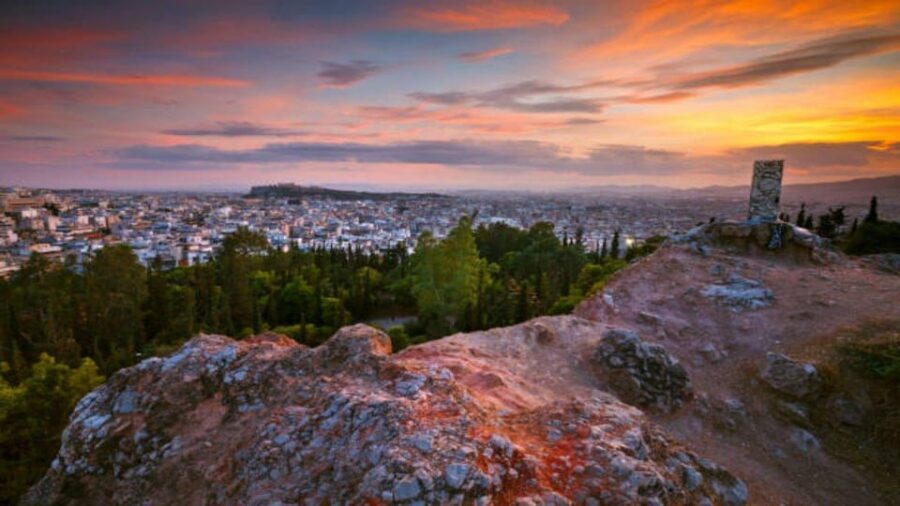
The walk ends at Λόφος Στρέφη (Strefi Hill) after you pass by Strefi Indoor Stadium. This is where the tour leans into a different kind of storytelling: less about names and events, more about what keeps a community rooted.
At the hilltop, you get panoramic views, yes—but the guide’s framing is more emotional than postcard. The tour leans into the idea of seeing the city through understanding, not just looking at it. It’s the moment where the walk starts to feel like a conversation about why people continue to live here even as the neighborhood changes.
You’ll also hear music: the guide includes a taste of sound from a baglamas, the small Greek bouzouki-style instrument tied to tradition. Since a live performance of a traditional song is included, this finale is often the part people remember most, because it turns the street story into something you can feel through sound.
Give yourself a minute at the viewpoint before you rush back down. If you do, you’ll probably find the neighborhood’s contrast—street politics below, open city view above—becomes clearer.
Price and value: is $70 for 1.5 hours worth it?
At $70 per person for 1.5 hours, this isn’t a budget “quick hit” tour. But it’s also not a long, complicated day of transportation and museum fees. What you’re paying for is concentrated local storytelling, a small group capped at 8, and included live music.
This kind of tour can feel like great value if you care about Athens beyond the ancient sites. It’s also better value for people who like discussion and context, because the format is personal rather than lecture-style. If you want marble monuments and official plaques only, you’ll feel the price tag more strongly—because this experience isn’t built to satisfy that specific itch.
My take: $70 makes sense when you treat it like cultural access. You’re not just walking; you’re learning how locals read their own streets. And the live traditional song and music on the baglamas are real add-ons, not just a claim on a webpage.
Who should book, and who should skip it
This tour is a strong match if you want modern Athens, street art with meaning, and a guided walk that connects politics, memory, and daily life. It’s also ideal for people who enjoy walking interviews—watching the city as it shifts from center to neighborhood, while someone frames what you see in plain language.
It’s less suitable if you have mobility limitations. The tour specifically notes it’s not suitable for people with mobility impairments or wheelchair users, and you’ll be on uneven surfaces. It’s only 1.5 hours, but it still demands real footwork.
Also consider your comfort level with intense topics. The guide includes the story around Alexandros Grigoropoulos and discusses counterculture figures, so this is not a “light and fluffy” neighborhood stroll.
What to do before and after your Exarchia walk
Do a tiny bit of prep so you get more out of the streets. Wear shoes with traction, bring water, and keep your phone charged—street art photography can burn battery fast. A sun hat is smart, especially if you’re going in warmer months.
After the tour, I’d suggest planning something calm. Exarchia can leave you thinking, not just sightseeing. If you’re pairing it with ancient sites later, give yourself at least a few hours of breathing room so your brain doesn’t have to swap from protest stories to Parthenon facts instantly.
If you want to find the provider beforehand, they’re listed on Instagram as exarcheia_tour.
Should you book the Athens Exarchia Walking Tour?
Book it if you want a local-feeling Athens in a small group, with street-level storytelling and music. If you’re tired of the same ancient sights rhythm and you want to understand what Athens looks like when the city is living through its own arguments, this is a smart choice.
Skip it if you mainly want polished, official sightseeing or if uneven walking is a problem for you. And if you’re sensitive to hearing challenges, try to stay near the guide during moving segments so you don’t miss the details.
Overall, the best reason to book is simple: this is Athens through people and streets, not Athens through posters. In 1.5 hours, you’ll leave with a different set of eyes.
FAQ
How long is the Athens Exarchia walking tour?
The tour lasts about 1.5 hours.
Where does the tour start?
It starts at Πλατεία Κλαυθμώνος (Platia Klavthmonos).
What languages are offered?
The tour is offered in English and Greek.
What is the group size?
The group is small, limited to 8 participants.
What’s included in the price?
You get a guided walking tour through Exarchia with stops at key historical and cultural sites, plus a live performance of a traditional song.
Is food and drinks included?
No, food and drinks are not included.
What should I bring for the walk?
Bring comfortable shoes, a sun hat, a camera, and water.
Is the tour suitable for wheelchair users or reduced mobility?
No. It is not suitable for people with mobility impairments or wheelchair users.
Do I have to pay right away?
You can reserve now and pay later.
Is free cancellation available?
Yes, you can cancel up to 24 hours in advance for a full refund.