REVIEW · ATHENS
Athens: Full-Day Private Tour
Book on GetYourGuide →Operated by Enjoy Greece tours · Bookable on GetYourGuide
The best thing about this private Athens tour is how much ground you can cover without spending the whole day figuring out buses, taxis, and directions. You move from the Acropolis to the Panathenaic Stadium, Syntagma Square, Plaka, Monastiraki, and a major museum with your own driver and room to adjust the pace.
I like the small private group and the chance to choose between the Acropolis Museum and the National Archaeological Museum. I also like the practical rhythm: important ruins first, a Greek lunch in the middle, then more sightseeing when your feet need a break from walking.
The main catch is cost. At $530 for up to seven people, the per-person price can be sensible for a full group, but it is much harder to justify for one or two people. Tickets and lunch are extra, and you must arrange your own Acropolis admission ahead of time.
In This Review
- Key points to know before booking
- Why this eight-hour format works in Athens
- Starting at the Acropolis and Parthenon
- Olympian Zeus, the Panathenaic Stadium, and Syntagma
- The Trilogy and Lycabettus Hill
- Plaka and Monastiraki for shopping and atmosphere
- The Ancient Agora or Roman Agora if time allows
- Choosing a traditional Greek lunch
- Ending at the Acropolis Museum or National Archaeological Museum
- What the private car and guide add
- Is $530 good value for your group?
- Who should book this Athens tour?
- Should you book it?
- FAQ
- How long does the Athens private tour last?
- How many people can join the private group?
- What language is the tour offered in?
- Is transportation included?
- Are sightseeing tickets included?
- Do I need to buy Acropolis tickets in advance?
- Is lunch included?
- Which places are visited during the tour?
- Which museum can I visit at the end?
- Can I cancel the booking?
Key points to know before booking

- The Acropolis leads the day: See the Parthenon, Erechtheion, Caryatids, Propylaia, Temple of Athena Nike, Dionysus Theater, Odeon of Herodes Atticus, and Mars Hill.
- A private car saves energy: Your driver handles the road connections between major sights, a welcome relief in hot weather.
- You can shape the day: The pace and some stops can be adjusted for your group, subject to time.
- Plaka and Monastiraki add local color: Browse handmade crafts, gifts, and flea-market goods after the major monuments.
- Lunch is flexible: Choose dishes at a traditional Athens restaurant or taverna, but pay separately.
- Your guide makes a difference: George, Tasos, and Dimitris are named by past guests as friendly, attentive, and good at explaining the city.
Why this eight-hour format works in Athens
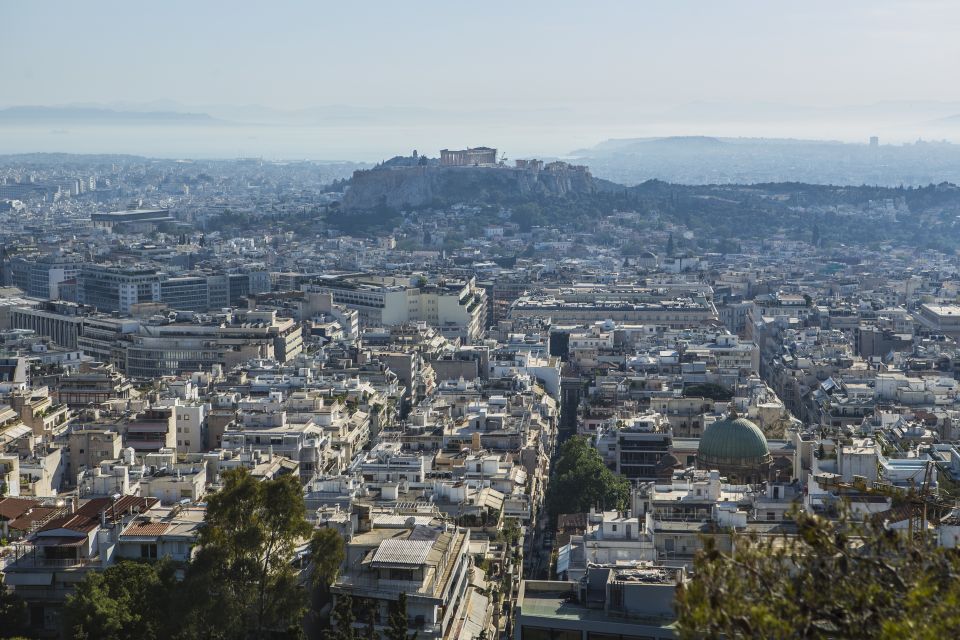
Athens is not a compact museum town. The Acropolis sits above the center, the Panathenaic Stadium lies to the east, Lycabettus Hill rises in another part of town, and the museums and markets spread across the central districts. You can walk between some sights, but not all of them comfortably in one hot afternoon.
This tour uses a private car for the longer hops while leaving you time to walk around the archaeological sites and neighborhoods. That division is the key benefit. You are not trapped in a vehicle all day, but you are also not asked to solve every transfer yourself.
You get eight hours with an English-speaking live guide and an English audio guide. The driver is part of the experience, but do not assume the price includes a separate specialist archaeologist at every stop. The day is designed as a broad Athens introduction, with historical explanation along the way and flexibility for your own interests.
The private format matters most if your group includes children, older relatives, or people with different energy levels. George was praised for being patient with tired children, and Dimitris was described as attentive to personal requests and willing to let the pace breathe. Those details are useful because Athens sightseeing can become tiring long before the monuments lose their appeal.
You can also read our reviews of more private tours in Athens


Starting at the Acropolis and Parthenon
The Acropolis is the natural first stop. It gives you the central story of classical Athens in one place, but it is also the part of the day that needs the most planning.
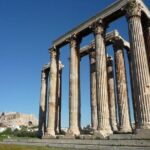
The Parthenon is the main temple and the best-known example of fifth-century BC classical architecture. You will also see the Erechtheion, recognized for its six female figures, the Caryatids, which serve as architectural supports. The Temple of Athena Nike is a smaller shrine dedicated to the wingless goddess, while the Propylaia forms the monumental entrance to the hilltop complex.
Below and around the Acropolis are the Odeon of Herodes Atticus and the Theater of Dionysus. The theater is tied to the early development of Greek drama, while the Odeon is a Roman-era performance building still used for events. The exact time available at each point depends on your entry slot and the rest of the day, so it helps to tell your driver what matters most to you.
Mars Hill, also called Areios Pagos, is another memorable stop. It was the first ancient court and is associated with St. Paul’s first preaching of Christianity in Athens. It also offers a different angle on the Acropolis, with exposed rock and a strong connection between ancient civic life and later religious history.
You need to buy Acropolis tickets separately. The tour information specifically advises prebuying them through the official ticket site, choosing both your date and preferred entrance time: hhticket.gr. This is not a minor detail. Arriving without a timed ticket can work against the carefully planned schedule, especially during busy periods.
The Acropolis requires walking on uneven ancient surfaces, and the hill is exposed. Plan your shoes and pace accordingly. The car can deliver you to the area, but it cannot remove the uphill walking once you enter the site.
Olympian Zeus, the Panathenaic Stadium, and Syntagma
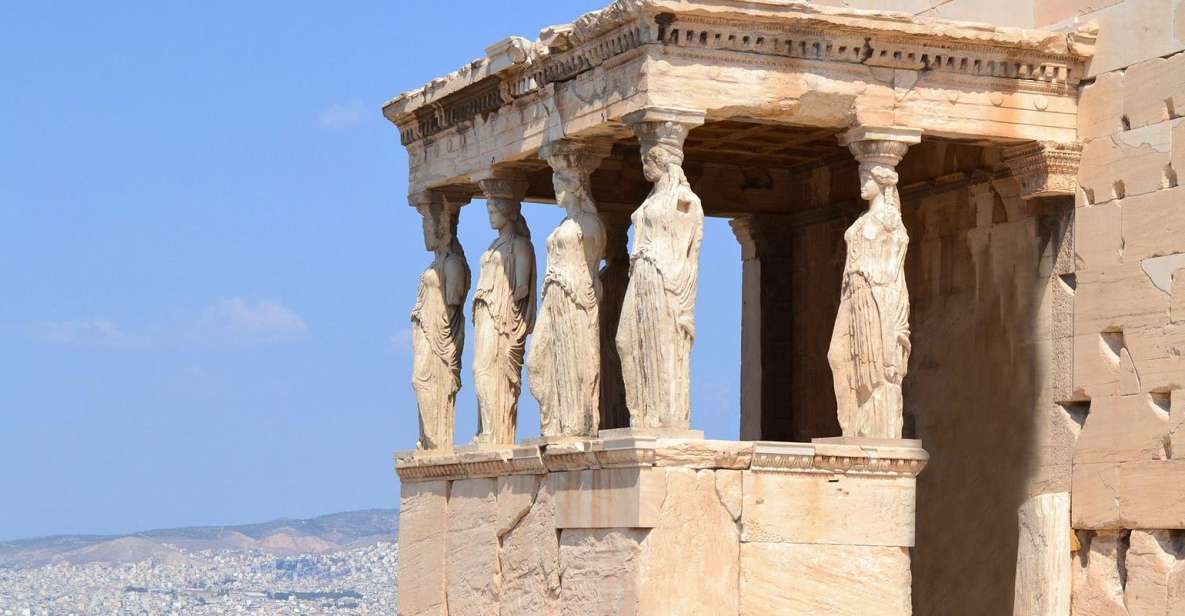
After the Acropolis, the route continues to the Temple of Olympian Zeus. This was the largest temple in the Greek and Roman periods, and its remaining columns give you a clear sense of the scale intended by its builders. The site is easier to understand after seeing the Acropolis because you can compare the restrained proportions of the Parthenon with a much larger imperial project.
The Panathenaic Stadium brings the story forward to modern times. Built in marble, it hosted the first Olympic Games of the modern era in 1896. It is a quick but worthwhile stop, particularly if you enjoy the link between ancient athletic contests and the modern Olympic movement.
At Syntagma, or Constitutional Square, you will see the Greek Parliament, the Memorial of the Unknown Soldier, and the changing of the guards by the Evzones. The ceremony is one of Athens’ most recognizable public traditions. Timing matters here. The tour can show you the square and guard post, but the exact changing ceremony depends on when you arrive.
This part of the tour works well for first-time visitors because it connects three different Athens stories: temple worship, athletic competition, and the modern Greek state. You are not looking at ruins in isolation. You are watching the city move from ancient religious power to national identity.
The Trilogy and Lycabettus Hill
The Trilogy of Athens is made up of the Academy, the First University of Athens, and the National Greek Library. These neoclassical buildings line Panepistimiou Street and offer a change of mood after the archaeological sites.
You may spend only a short time here, but the stop helps show that Athens is more than ancient stone. Its nineteenth-century institutions reflect the city’s role as the capital of the modern Greek state. If you care more about the Acropolis or the markets than architecture, this is one of the stops you might ask to keep brief.
Lycabettus Hill is the highest point in Athens and gives you a broad view over the city. Bring your camera, but also allow a moment to simply look. After several hours of examining individual monuments, the hill lets you understand Athens as a whole.
The view is one reason a private vehicle is useful. You can reach a high viewpoint without spending extra time working out the route yourself, though the amount of time at the hill depends on traffic, ticket queues, lunch, and museum choices.
Plaka and Monastiraki for shopping and atmosphere
The drive through Plaka takes you into the oldest neighborhood in Athens. Its small shops sell handmade crafts and gifts, making it a better place for browsing than for a tightly timed shopping mission. You can ask to pause here if local crafts and souvenirs matter to you.
Plaka is also a useful reset between monuments. The streets and shopfronts feel less formal than the Acropolis grounds, and you can begin to see how Athens works as a living city rather than an outdoor archaeology lesson.
Monastiraki brings the flea-market element. You can walk, browse, and shop for goods to take home. The tour does not promise a set shopping allowance, so be clear with your driver if you want time to inspect stalls instead of simply passing through.
I would treat both neighborhoods as places for a short wander, not as guaranteed long shopping sessions. Athens traffic, Acropolis entry, lunch, and the museum can easily use the eight-hour window. The private setup gives you more control, but it does not create extra hours.
A few more Athens tours and experiences worth a look
- All Day Cruise -3 Islands to Agistri,Moni, Aegina with lunch and drinks included
★ 5.0 · 4,958 reviews




The Ancient Agora or Roman Agora if time allows
If the schedule permits, you may visit either the Ancient Greek Agora or the Roman Agora. This wording matters: neither is guaranteed, and you should not book the tour assuming both will fit.
The Ancient Agora was a center of public life. The Temple of Hephaestus is especially important because it is described as the best-preserved temple in Greece. The Stoa of Attalos gives the area another strong architectural feature and helps explain how public gathering places functioned in ancient Athens.
The Roman Agora shows a later phase of the city’s development. The nearby St. Catherine Orthodox Church adds a much later religious layer to the area. This combination makes the optional stop worthwhile if you want to see Athens across several periods rather than focus only on the Acropolis.
If you are traveling with young children or anyone who tires quickly, I would not force this stop. The Acropolis already carries the heaviest historical load of the day. The Agora is a good bonus, not a reason to rush lunch or the museum.
Choosing a traditional Greek lunch
Lunch is not included, and the tour takes you to a traditional Athens restaurant or taverna where you choose from well-known Greek dishes. This arrangement is useful because it lets you decide what and how much you want to eat instead of accepting a fixed menu.
Ask for help if you want to try dishes beyond the familiar choices. A shared table of Greek specialties can turn lunch into one of the most personal parts of the day, while a quicker meal may be wiser if you want more time at the museum.
One particularly strong account of the tour described a meal in an authentic restaurant away from the main tourist areas, with home-cooked food. You should not treat that exact restaurant as guaranteed, but you can tell the driver that a local-style meal matters to you.
Lunch timing also affects the rest of the itinerary. A long meal may mean less time at the Agora, Plaka, or museum. Since the tour is private, discuss those tradeoffs rather than assuming every listed stop will receive equal time.
Ending at the Acropolis Museum or National Archaeological Museum
The final museum choice is a major decision. The New Acropolis Museum is the more focused option. It displays Parthenon sculptures and artifacts found during excavations on the Acropolis, making it a natural follow-up to the morning visit.
I like this pairing because the hilltop ruins show you the buildings in their setting, while the museum lets you examine objects and architectural pieces at close range. If the Parthenon is the main reason you came to Athens, this is likely the better museum choice.
The National Archaeological Museum is much larger, almost twice the size of the Acropolis Museum according to the tour information. Its collection covers important finds from across Greece as well as the Middle East and the Balkans, from prehistory through late antiquity.
Choose the National Archaeological Museum if you want a wider view of the ancient world and have enough energy for a large collection. Choose the Acropolis Museum if you prefer a tighter story and a direct connection to what you saw earlier.
Museum tickets are not included, so add that cost to your budget. Also ask how much time remains before deciding. A rushed museum visit can feel like checking a box, while a shorter visit to the museum that matches your interests can be far more satisfying.
What the private car and guide add
The car expenses, driver expenses, tolls, and fees are included in the $530 group price. You get a private group of up to seven, an English-speaking live guide, and an English audio guide.
The strongest practical benefit is rest. One account specifically valued having an air-conditioned car and cold water available during a hot Athens day. The included vehicle lets you cool down between sites instead of walking every connection, and that can make a big difference in summer.
The human side of the service also matters. George is described as kind and patient with tired children. Tasos is remembered for combining detailed explanations with a warm, family-like manner. Dimitris is described as attentive, comfortable to spend the day with, and willing to adjust the route and stopping times.
Those names are useful to know, but the guide assigned to your booking may differ. The important point is to speak up early. Tell the driver if your group wants more archaeology, more shopping, a longer lunch, a shorter museum visit, or extra time at a viewpoint.
Is $530 good value for your group?
For seven people, $530 works out to about $76 per person before admission tickets and lunch. That is a reasonable way to buy private transportation, a full day of guiding, and a route covering much of central Athens.
For four people, the base price is about $133 per person. For two people, it is $265 each before extras, which makes the tour a much more expensive choice than using public transportation and visiting fewer sites independently.
The value is not simply the number of stops. You are paying for control over the day, direct transport, less route planning, and the ability to slow down when children or tired adults need a break. You are also paying for convenience in a city where traffic and heat can make a packed schedule tiring.
Remember the extra costs: Acropolis admission, other sightseeing tickets, museum admission, and lunch. The official Acropolis ticket site is the place to choose your date and entrance time. Add those items before comparing the total with other Athens options.
Free cancellation is available up to 24 hours before the activity for a full refund, and you can reserve now and pay later. The tour lasts eight hours, with starting times based on availability.
Who should book this Athens tour?
I would choose this tour for a family, a group of friends, or a multigenerational party that wants to see the major sights without managing transport. It also suits first-time visitors who want a broad introduction in one day.
It is especially useful if your group has limited time in Athens or prefers a car between walking stops. The private arrangement lets you adjust the pace, and the patient approach described by George is a good sign for families with tired children.
I would think twice if you are traveling alone or as a couple on a tight budget. Athens’ central sights can be explored independently, and the $530 base price becomes heavy once tickets and food are added.
I would also avoid treating the tour as a guaranteed checklist. The Acropolis, city traffic, lunch, shopping, optional Agora, and museum choice all compete for the same eight hours. You will get more from it if you decide in advance which two or three parts matter most.
Should you book it?
Book this private Athens tour if your priority is a comfortable, flexible day that joins the Acropolis with the city’s modern center, old neighborhoods, museums, and food. It earns its price when you fill most or all of the seven available places and value an air-conditioned vehicle, direct transfers, and personal attention.
Before booking, budget for every admission and lunch, buy the Acropolis ticket with a timed entry, and choose your museum preference. If you do that planning first, the tour can give you a clear, well-paced first look at Athens without making you carry the whole day on your own.
FAQ
How long does the Athens private tour last?
The tour lasts eight hours.
How many people can join the private group?
The price covers a private group of up to seven people.
What language is the tour offered in?
The live tour guide and audio guide are in English.
Is transportation included?
Yes. Car expenses, driver expenses, tolls, and fees are included.
Are sightseeing tickets included?
No. Tickets for the Acropolis, museums, and other sightseeing stops are not included.
Do I need to buy Acropolis tickets in advance?
Yes. You are advised to prebuy Acropolis tickets through the official site, choosing your date and preferred entrance time.
Is lunch included?
No. Lunch is paid separately, and you choose from dishes at a traditional Athens restaurant or taverna.
Which places are visited during the tour?
The route includes the Acropolis, Temple of Olympian Zeus, Panathenaic Stadium, Parliament and Syntagma Square, the Trilogy of Athens, Lycabettus Hill, Plaka, and Monastiraki. If time allows, you may also visit the Ancient Greek Agora or Roman Agora.
Which museum can I visit at the end?
You can choose between the New Acropolis Museum and the National Archaeological Museum of Athens.
Can I cancel the booking?
Yes. You can cancel up to 24 hours in advance for a full refund. You can also reserve now and pay later.