Athens gives you a lot in a small area, and this two-hour walk aims to connect the big sights with the city streets between them. You move from Syntagma Square and the Tomb of the Unknown Soldier to the National Garden, Zappeion, the Panathenaic Stadium, the Temple of Olympian Zeus, Plaka, Mars Hill, the Roman Agora, Hadrian’s Library, and Monastiraki.
I like the private, customizable format, which lets you ask for local food tips, family-friendly pacing, or a closer look at the places that matter most to you. I also like the route’s mix of famous monuments and everyday Athens, especially the National Garden and the lanes around Plaka.
The main caution is time. Two hours is short for this many sights, and admission tickets are not included. One Italian booking received only three stars after a late guide caused the group to miss the changing of the guard, so confirm your priorities and meeting time clearly before setting out.
In This Review
- Key points to know before you book
- What this Athens walking tour is really like
- Meeting at Amalia Hotel and Syntagma Square
- The National Garden and Zappeion Hall
- The Panathenaic Stadium and Olympic Athens
- The Temple of Olympian Zeus
- The Acropolis area, Plaka, and Mars Hill
- Roman Agora, Hadrian’s Library, and Monastiraki
- How the guides affect the experience
- Is $35 good value for two hours?
- Who should book this Athens walk?
- Should you book it?
- FAQ
- Where does the Athens walking tour start?
- How long is the walking tour?
- What sights are included on the route?
- Are entrance tickets included?
- Is the tour private?
- Which languages are available?
- Can I cancel or pay later?
Key points to know before you book
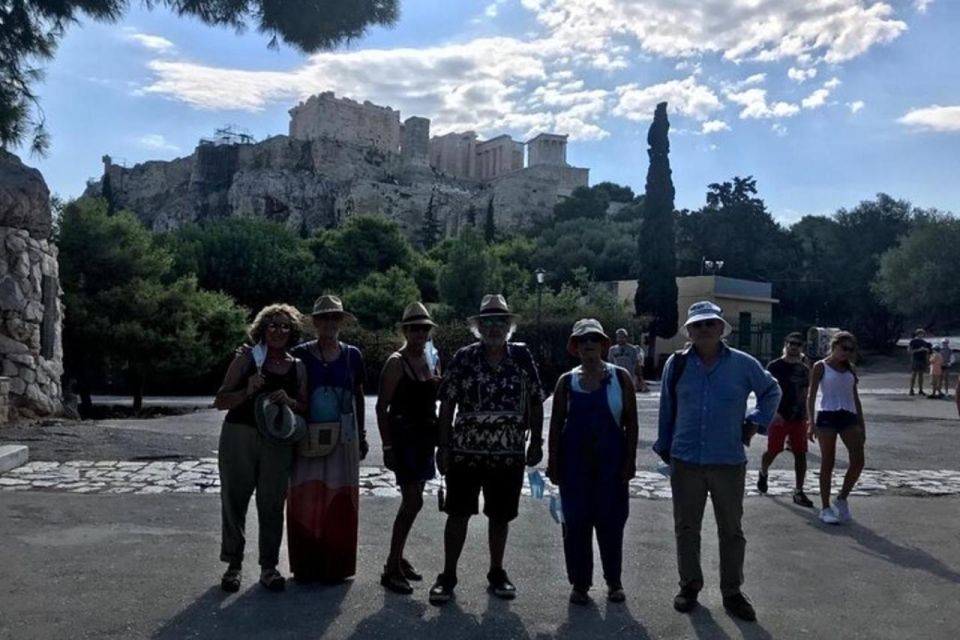
- A fast introduction to central Athens: The route links Syntagma, the National Garden, Olympic landmarks, the Acropolis area, Plaka, and Monastiraki.
- Private and adjustable: The tour is described as exclusive, with a private group option and a route that can be adapted to your interests.
- Mostly an outdoor walk: Expect guided explanations, sightseeing, and photo stops. Entrance tickets are extra.
- Several guides have earned strong praise: Georges kept children interested and made time for shade, while Effie received especially warm feedback.
- Good value at $35: You are paying for a local guide and planning help, not monument admission or food.
- Set your priorities early: The changing of the guard and Acropolis access need special attention because the basic two-hour route is packed.
What this Athens walking tour is really like

At $35 per person, this is priced as an affordable orientation walk rather than a full archaeological tour. You get a guide, a planned route, help arranging tickets for visits you want, and advice for the rest of your stay.
The wording around group size needs a little care. The experience is described as private and exclusive, while the included information also uses the phrase small group walking tour. A private group is available, but I would confirm exactly what your booking includes if having only your own party matters.
The walk is offered in English, French, Italian, and Spanish. It is listed as wheelchair accessible, and public transport may be used unless you choose an option that specifies otherwise. Food, drinks, and admission fees are not included.
The best way to view this experience is as a first look at Athens. It can help you understand how Syntagma, the Acropolis, Plaka, Monastiraki, and the ancient sites fit together. It is less suitable if you want long indoor visits or detailed time at every monument.
You can also read our reviews of more walking tours in Athens



Meeting at Amalia Hotel and Syntagma Square

The meeting point is at Leof. Vasilisis Amalias 10, beside the central Amalia Hotel Athens area. This is a practical place to begin because Syntagma Square, cafés, shops, public transport, and several major sights are close by.
Your first stop is Plateia Syntagmatos, better known as Syntagma Square. This is where modern Athens comes into focus. The guide explains the square’s civic role and takes you to the Tomb of the Unknown Soldier, where the presence of the National Guards gives the setting a formal, living quality.
If seeing the changing of the guard is important to you, say so before the walk begins. One booking specifically requested it but missed the event after the guide arrived late. The group then tried again an hour later and became confused while finding its way around Athens. That is a useful warning: special timing requests should be confirmed at the start, not left to chance.
The square is also a good place to ask for practical help. You can use the guide’s local advice to plan later visits, meals, or additional sights. The tour promises recommendations for other things to do, which may be as useful as the first round of facts.
The National Garden and Zappeion Hall

From Syntagma, the route moves into the National Garden. This change of scene is one of the walk’s appealing features. Within a short distance of the city’s main square, you reach paths, trees, and traces of older Athens.
I like this section because it breaks up the monuments. A walk made only of marble facades can become tiring, especially in warm weather. The garden gives you a quieter stretch and may help children or older walkers keep their energy for the Acropolis area.
The tour also passes Zappeion Hall, a neoclassical building used as a conference and exhibition center. Here, the guide can connect the modern city with the ceremonial and public buildings that shaped central Athens.
Each listed stop allows about 24 minutes, though that figure appears to be a rough schedule rather than a promise of equal time at every place. With five listed locations, walking between them, and the broader route through Plaka and Monastiraki, the pace must be brisk. You should expect an overview and photo opportunities, not a slow study of every building.
The Panathenaic Stadium and Olympic Athens
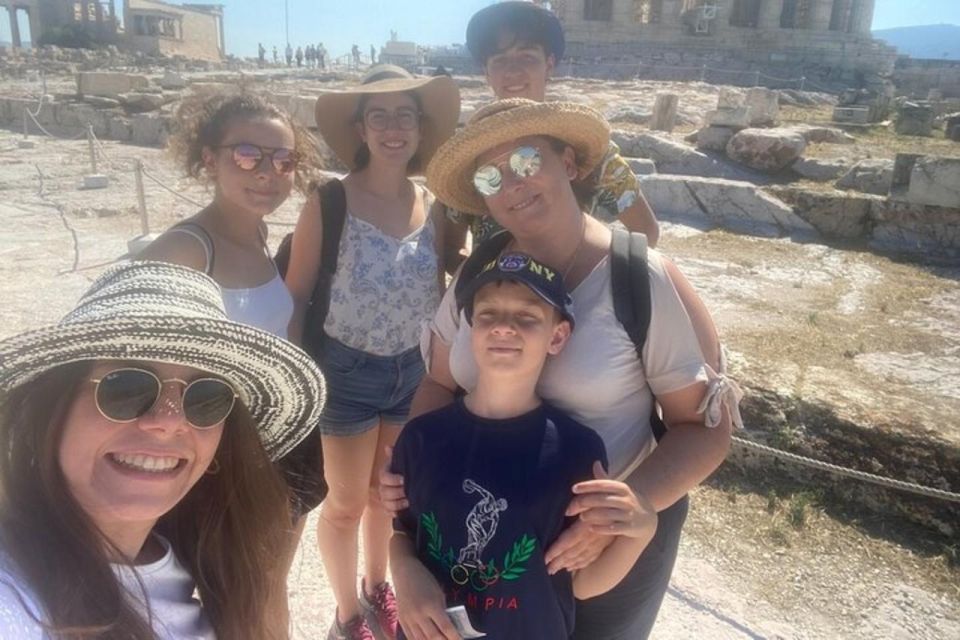
The Panathenaic Stadium is one of the walk’s strongest stops. Its white marble form gives you an immediate visual link to the modern Olympic Games, and the guide explains its place in Olympic history.
The stop is listed as a photo stop, visit, guided tour, sightseeing, and walk. That does not mean admission is included. Since entrance tickets are excluded, ask whether the tour remains outside or whether you need to buy a ticket if you want to go in.
This distinction matters when comparing the price with other Athens tours. A $35 walk can be good value if you want context, orientation, and a few strong views. It becomes less of a bargain if you expect included entry to the stadium, the Acropolis, or other archaeological sites.
Families may find this section easy to enjoy because the stadium is visually clear even without a long explanation. One five-star booking praised Georges for keeping children interested across the full two hours, stopping in shaded spots, and allowing enough time to look around. That kind of pacing can make a real difference in Athens, where sun and uneven streets can wear you down.
The Temple of Olympian Zeus
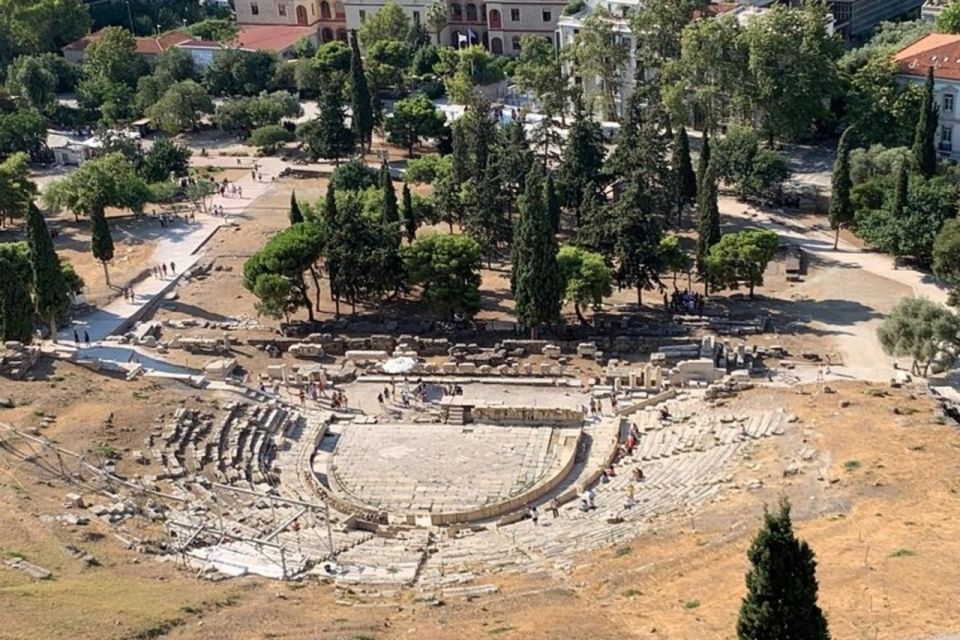
The Temple of Olympian Zeus adds scale to the route. Even in its ruined condition, the surviving columns show the size and ambition of the ancient project.
The tour allows a short guided visit and photo stop here. You can expect the guide to explain what you are seeing and place the temple within the city’s older story, but you should not assume that the ticket is included or that you will have a long archaeological visit.
This is also a point where a guide earns their fee. Without context, a few giant columns can become just another picture. With a good explanation, you can better understand why the site matters and how it relates to the Acropolis and the Roman-era remains nearby.
The route’s strength is the connection between sites. You are not simply dropped at the most famous monument. You see how open public spaces, ancient remains, neoclassical buildings, and working city streets sit close together.
- All Day Cruise -3 Islands to Agistri,Moni, Aegina with lunch and drinks included
★ 5.0 · 4,958 reviews





The Acropolis area, Plaka, and Mars Hill
The broader walk includes the Acropolis, Plaka, and Mars Hill. These are among the most appealing parts of the experience, but the practical details deserve attention.
The information provided does not specify Acropolis admission, a timed entry, or a full interior visit. Entrance tickets are clearly not included, so do not treat this two-hour walk as a substitute for an Acropolis ticket. Instead, think of the guide’s Acropolis section as an introduction to the hill and its surrounding viewpoints.
Plaka brings a different mood. Its streets offer a chance to see the older neighborhood character around the Acropolis, with cafés, shops, and lanes that reward a slower look after the larger monuments. The guide’s local advice may be especially useful here because you can ask where to return later, rather than trying to choose a place while tired and hungry.
Mars Hill, also called the Areopagus, is included for its view. The outlook helps you read Athens from above and connect the ancient center with the city around it. Be careful on this section. The route information does not describe the exact surface or conditions, but Mars Hill is a natural rock viewpoint, so sensible footwear and attention to footing are wise.
Because this section combines walking, views, and ancient sites, it may be the most memorable part of the tour. It is also where the short duration becomes most obvious. If the Acropolis is your main reason for booking, tell the guide at the beginning so the route can be adjusted.
Roman Agora, Hadrian’s Library, and Monastiraki
The walk continues past the Roman Agora and Hadrian’s Library, two sites that help fill in the story between classical Athens and the later Roman period.
The Roman Agora shows the practical side of ancient city life, while Hadrian’s Library points to the importance of study, books, and public learning. Both are easy to appreciate more when someone explains what their remains once did. As with the other archaeological places, admission is extra.
The final stop is Monastiraki Square. This is a fitting finish because it brings ancient remains, shops, cafés, and modern street life into the same view. The square gives you a useful starting point for exploring on your own after the guide leaves.
You may also find Monastiraki a handy place to continue your day. The tour does not include food or drinks, but the central location means you can stop afterward without making a separate trip across Athens. Ask the guide for suggestions before saying goodbye.
How the guides affect the experience
Guide quality matters a great deal on a short walking tour. There is no time for a weak explanation to recover, and the tight schedule means delays affect the whole route.
The strongest feedback names Georges and Effie. Georges was praised for interesting stories, detailed explanations, shade breaks, and keeping children engaged for the complete two hours. Effie received very warm praise for explaining Athens in detail and adding local anecdotes that you might miss when walking alone.
Andrea received a mixed assessment. The booking described him as pleasant, but the group felt his preparation was not strong enough and was unhappy about missing the changing of the guard after a delay. That single account does not define every departure, but it gives you a sensible booking tip: confirm the guide’s name if possible, explain your must-see items, and allow extra time if a scheduled ceremony matters.
The average rating is 4.2 from five ratings. That is a positive result, though the small number of ratings means you should read it as an early signal rather than a final verdict.
Is $35 good value for two hours?
For $35, I see the value in the planning and local direction. You receive a route that would take some effort to assemble yourself, plus a guide who can explain the sites and suggest what to do next.
The price is strongest for a first day in Athens. You can learn the shape of central Athens, spot places to revisit, and avoid spending your whole morning trying to find the right streets. It is also sensible for families, couples, and solo visitors who prefer questions and conversation over a recorded audio guide.
The price is less attractive if you expect admission to the Acropolis, stadium, Temple of Olympian Zeus, Roman Agora, or Hadrian’s Library. Those fees are separate, as are food and drinks. You are buying guidance and access to local knowledge, not a ticket bundle.
Since the tour may use public transport, ask how much of the route is on foot and whether your chosen option changes the transport arrangements. The activity is listed as wheelchair accessible, but a private booking may still be useful if you need a slower pace or route changes.
Who should book this Athens walk?
I would choose this tour if you have only a short time in Athens, want to see the city center with a local guide, or need help deciding which sites deserve a longer visit. It suits families particularly well when the guide is as attentive as Georges was, since shade stops and simple stories can keep the day manageable.
It also works for visitors who enjoy a broad sweep rather than a single monument. You get modern civic Athens, gardens, Olympic sites, ancient remains, neighborhood streets, viewpoints, and a lively central square in one compact outing.
I would hesitate if your main goal is a detailed Acropolis visit. Two hours cannot provide extended time at every listed stop, and ticket costs are separate. I would also be cautious about booking around the changing of the guard unless the timing is confirmed directly.
Free cancellation up to 24 hours before the start and the reserve-now, pay-later option make the booking flexible. The guide languages are English, French, Italian, and Spanish, and private groups are available.
Should you book it?
Book this walk if you want an affordable Athens orientation with a flexible route and the chance to ask a local guide what to do next. The best parts are the range of sights, the useful neighborhood connections, and the potential for lively storytelling, especially with a guide such as Georges or Effie.
Skip it if you want included tickets, long visits inside the monuments, or a carefully timed guard ceremony without confirming the details first. At $35, it is a practical starting point, not the complete Athens experience. Use it to get your bearings, then return to the places that deserve more time.
FAQ
Where does the Athens walking tour start?
It starts at Leof. Vasilisis Amalias 10, near Amalia Hotel Athens in central Athens.
How long is the walking tour?
The tour lasts two hours.
What sights are included on the route?
The route includes Syntagma Square, the Tomb of the Unknown Soldier, the National Garden, Zappeion Hall, the Panathenaic Stadium, the Temple of Olympian Zeus, the Acropolis area, Plaka, Mars Hill, the Roman Agora, Hadrian’s Library, and Monastiraki Square.
Are entrance tickets included?
No. Entrance tickets are not included in the tour price. The tour team can help you book tickets for visits you want.
Is the tour private?
A private and exclusive tour is offered, and a private group option is available. The included details also describe it as a small group walking tour, so confirm the exact group arrangement when booking.
Which languages are available?
The live guide can conduct the tour in English, French, Italian, or Spanish.
Can I cancel or pay later?
You can cancel up to 24 hours in advance for a full refund. A reserve-now, pay-later option is also available.