REVIEW · ATHENS
Athens Social and Political Walk
Book on GetYourGuide →Operated by Planetwonk Experiences · Bookable on GetYourGuide
Politics has a street address in Athens. This walk turns the headline story of Greece into something you can see in the buildings and neighborhoods, with documentary-style analysis led by political scientist Isaac. It’s a social and political history lesson you don’t have to sit through; you experience it as you move.
I especially like how it connects big events to everyday Greek life, linking religion, language, Europe, and the economy to what happens in classrooms, streets, and institutions. And I love the fact that you get real decision-makers’ locations along the way, from places tied to government power to sites tied to Greece’s 20th-century struggles.
One consideration: this is ideas-heavy. If you prefer pure sightseeing with minimal politics talk, you may find the themes intense for a short 2.5 hours, even though Isaac keeps it funny and easy to follow.
In This Review
- Key takeaways
- Why the Athens story turns political fast
- Meet Isaac: politics explained with street-level clarity
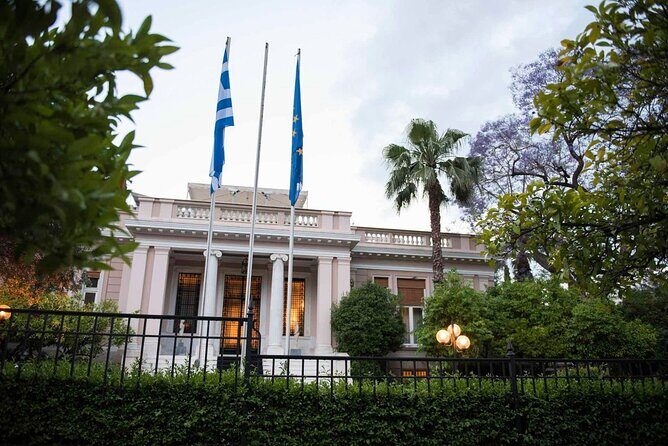
- Maximos Mansion to the Presidential Palace: where power lives
- The National Garden and Parliament: democracy as a daily negotiation
- National Historical Museum: ideology meets lived experience
- Korai 4 (1941–1944): remembering the human cost
- Panepistimiou and National Metsovio Polythechnic: students, ideas, change
- Two lesser-known street stops that keep the story grounded
- The slideshow: keep your notes without juggling facts
- Price and value: is $47 worth 2.5 hours of politics?
- What this tour covers, in plain language
- Accessibility and practical pacing you should know
- Who should book this Athens Social and Political Walk
- Where the walk starts and ends
- Should you book this Athens Social and Political Walk?
- FAQ
- How long is the Athens Social and Political Walk?
- What is the price per person?
- What languages are available for the guide?
- Who leads the tour?
- What topics does the tour cover?
- Is anything included besides the walk itself?
- Where does the tour start?
- Where does the tour end?
- Is the tour wheelchair accessible?
- Can I get a full refund if I cancel?
- Does it offer reserve now & pay later?
Key takeaways

- Isaac, a political scientist, leads the story with clear, current-to-historical connections
- Documentary-style storytelling pairs analysis with street-level exploration
- You pass key institutions tied to Greek state power and political debate
- WWII memory and later political turning points show up in the route’s stops
- A slideshow with photos and extra context helps you keep track after the walk
- Wheelchair accessible and offered in English and Spanish
Why the Athens story turns political fast
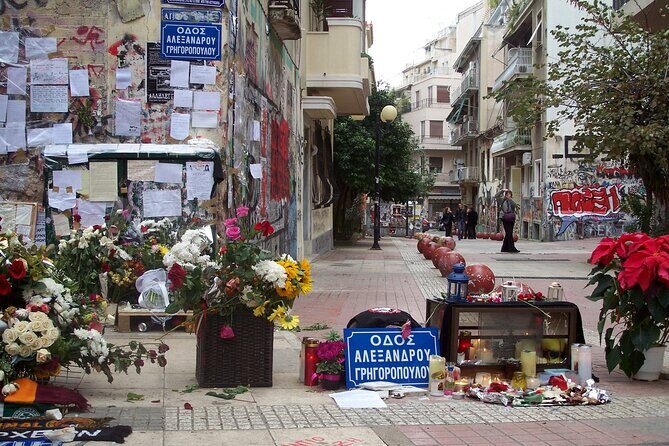
Greece markets itself as the cradle of democracy. The rest of the world often replies with the basket case label, especially after the 2008 financial crisis. This tour doesn’t ask you to pick one slogan. It shows you how you get from one narrative to the other—and why people inside Greece talk about politics with both passion and frustration.
The trick is that it treats politics as social life, not just party names and election dates. You’ll hear how the modern Greek state took shape, how major shocks (war, dictatorship legacies, economic crises) changed public trust, and how institutions gained and lost credibility over time. The result is a view of Athens that makes the news easier to understand, without turning it into a lecture that forgets human stakes.
You can also read our reviews of more walking tours in Athens


Meet Isaac: politics explained with street-level clarity
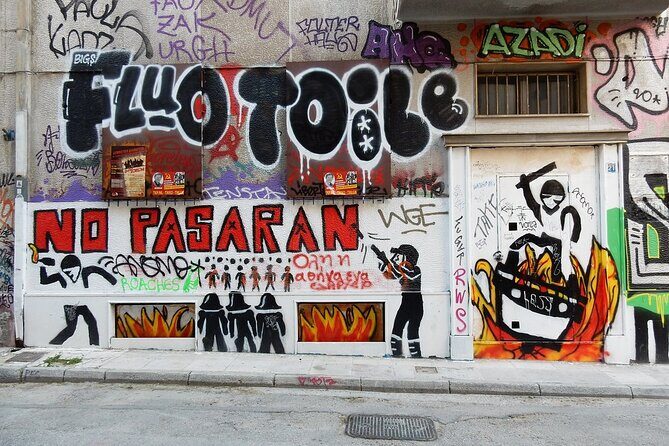
A big reason this tour earns top marks is Isaac’s approach. He’s described as political-expert level, but the delivery stays accessible, with humor and a knack for linking Greece to other countries. That matters because modern Greek politics can feel weird from the outside—full of historical baggage and current headlines that don’t connect cleanly.
On this walk, the goal is to help you build your own opinions. That means you get context without being forced into one talking point. You’re encouraged to connect dots: how religion and language shape identity, how Europe entered the conversation, how economic ideas changed public expectations, and how those changes played out in institutions you can actually see.
If you like tours that answer real questions like why something keeps happening, this is your kind of experience. If you want quiet archaeology, it’s not that.
Maximos Mansion to the Presidential Palace: where power lives
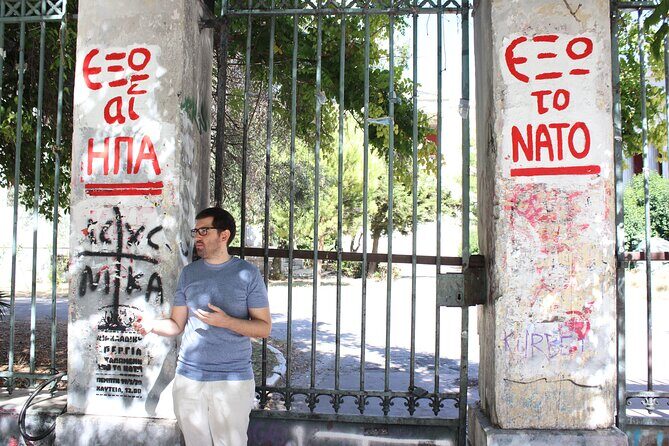
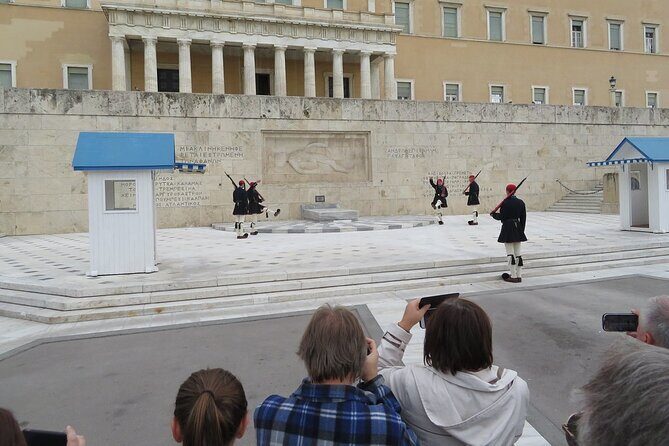
The route starts by heading toward some of the most recognizable power-adjacent landmarks in central Athens. Maximos Mansion is tied to Greece’s executive branch—so it’s the kind of place that makes the word government feel concrete. The Presidential Palace adds another layer: not just policy, but symbolism, state continuity, and the way authority is displayed.
What you get here is a practical lesson in how states communicate. Greece’s political story isn’t only about laws and votes. It’s also about legitimacy—how people decide whether the state feels like theirs. Standing near the seats of power helps you understand why political debates in Greece often feel personal, not abstract.
A nice detail: you’re not just told that institutions matter. You’re shown why they matter, with commentary that connects building and history. That’s the difference between memorizing facts and understanding the system.
The National Garden and Parliament: democracy as a daily negotiation
From government symbolism, you move into the heart of legislative space. The Hellenic Parliament stop matters because it’s where political tension becomes public routine. Around it, you can feel how democracy works as a process: arguments, compromises, and the constant friction between what people want and what the state can deliver.
Right nearby, the National Garden gives you a contrast that makes the political story easier to digest. It’s one of those places where people can pause, and that pause is useful. You can mentally switch from building-as-symbol to building-as-institution: who passes what, who delays what, and why public confidence rises and falls.
The tour’s pacing helps too. It doesn’t rush from one idea to the next. You’ll get analysis that explains different political tensions and puts them in context for foreigners trying to make sense of a place they only partially know. The end result is that Parliament stops being a landmark and becomes part of a bigger story about Greece’s modern identity.
National Historical Museum: ideology meets lived experience
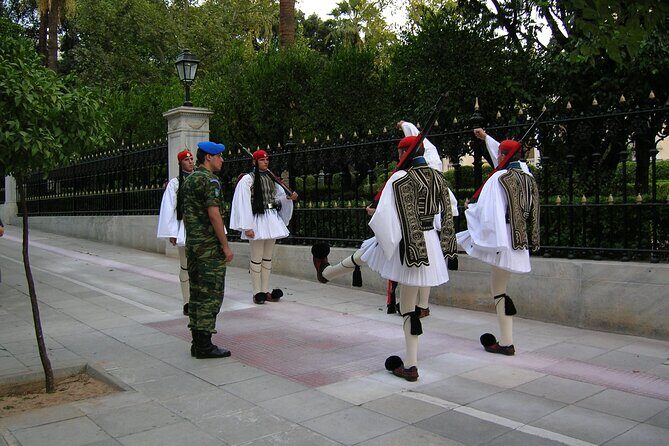
Not every stop has to be a government building to explain politics. The National Historical Museum stop brings you back to the wider sweep: the long arc from major historical periods into how people understand the present.
This is where the tour’s theme—how the modern state formed and evolved—starts to feel less abstract. When you pair institutional locations with museum-style context, it becomes easier to see that today’s arguments grew out of yesterday’s fractures: war and occupation, post-war change, and later political shifts.
One of the strongest review themes is the way Isaac links big periods into a coherent line, including the transition into independence, the WWII era, and the decades that followed. You also get coverage of later party politics and economic thinking, plus references that help you follow complicated issues without needing a degree in political theory.
- All Day Cruise -3 Islands to Agistri,Moni, Aegina with lunch and drinks included
★ 5.0 · 4,958 reviews



Korai 4 (1941–1944): remembering the human cost
Some stops on this walk carry weight in a way that reshapes how you interpret everything else. Korai 4, a memorial site for 1941–1944, is one of those moments where politics stops being debate and becomes memory.
This is where the tour’s documentary-style tone really earns its keep. The point isn’t to turn Athens into a museum of suffering. The point is to connect why certain political instincts exist. When people lived through occupation, repression, and violence, political institutions and ideologies don’t arrive into a neutral world. They arrive after trauma.
If you care about how history affects today’s culture of politics, this stop will land. It’s also a reminder that the term democracy has a cost—and that the road to normal life wasn’t smooth.
Panepistimiou and National Metsovio Polythechnic: students, ideas, change
Education and politics share a special relationship in Greece. The route includes stops along Panepistimiou and the National Metsovio Polythechnic area, places associated with student life and public debate.
This matters because student movements show you what a society thinks is worth fighting for. The tour’s coverage reaches topics like the student massacre and later political developments, and you’ll see why those events remain part of public memory and political identity. It also connects to later shifts involving neoliberalism, which is discussed in a way that helps you connect economic policy to social consequences.
And yes, it helps that you’re not learning this from a textbook page. You’re learning it in the city where the institutions sit and where people still walk past them every day. That makes the political timeline feel more real.
Two lesser-known street stops that keep the story grounded
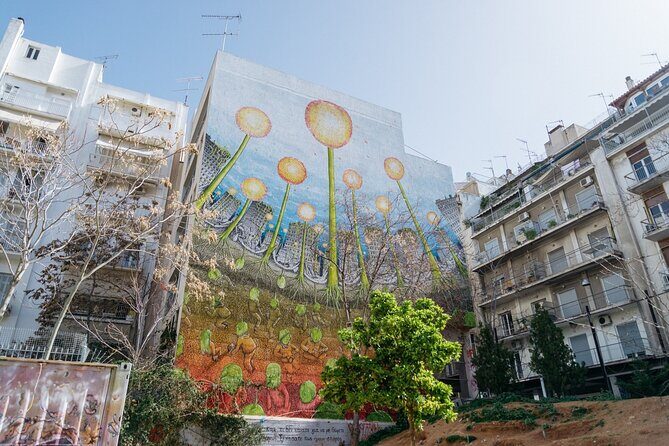
Between the major named landmarks, the walk includes a couple of shorter stops that aim to show you how Greece’s social and political themes show up on ordinary streets. You won’t get a list of museum artifacts here. You’ll get street-level context—small moments that help you understand how the city’s layers overlap.
This is one of the reasons the experience feels like more than a route of photos. Athens is full of history, but not all tours explain how that history influences social attitudes. These in-between moments help keep the story grounded while Isaac builds the bigger argument piece by piece.
The slideshow: keep your notes without juggling facts
One included extra that I think is genuinely useful is the slideshow with photos and extra information on the issues discussed. A political walking tour can cover a lot fast. The visuals help you remember what you just heard and how the pieces connect.
You also don’t have to rely only on your phone notes while walking. After the walk, the slideshow acts like a cheat sheet for the themes you care about most—economy, Europe, identity, religion, and the long political arc from state formation to modern crises.
Price and value: is $47 worth 2.5 hours of politics?
At $47 per person for about 2.5 hours, you’re paying for a guided explanation of modern Greece that you usually only get by reading a stack of sources. What makes this feel like value is the combination of:
- a live guide with political science framing
- a route that uses real institutions as teaching tools
- extra support via a slideshow afterward
If your goal is to leave Athens understanding how Greek political debates became what they are today, this is an efficient use of time. You’re not spending half a day in a single museum room; you’re using the city itself as the textbook.
Still, it’s not a deal if you hate political discussion. This is a political learning walk. It just happens to be outdoors and moving.
What this tour covers, in plain language
The tour is built around one big question: how the cradle of democracy turns into the basket case label people throw around, especially after the euro crisis. The way it answers that question is by tracing change over time—from early state formation (linked to independence in the early 1800s) through WWII, the post-war era, and modern party politics.
You can expect themes like:
- religion and language as identity drivers
- Greece’s relationship with Europe and shifting economic ideas
- major political shocks, including the WWII period and later unrest tied to students
- the era of financial crises, immigration, and gentrification as social turning points
This isn’t a list of dates. It’s a guided map that helps you interpret what you see on the news and what you sense in conversations.
Accessibility and practical pacing you should know
The tour is wheelchair accessible, and it’s offered with live guidance in English and Spanish. That combination is a plus if you want historical and political context without missing it due to language barriers or mobility limits.
Since it’s a walking experience, you’ll want to plan for street walking across central Athens. The duration is short enough to fit into a busy day, but the content is dense. Give yourself a little time before or after to let the ideas settle.
Who should book this Athens Social and Political Walk
Book it if you want:
- an Athens intro that explains the politics behind the headlines
- a guide who can connect Greece to other countries
- a walking tour that treats institutions and memory as part of modern identity
- documentary-style analysis that keeps moving instead of sitting still
It’s also a good option if you’ve already seen the classic sites and you’re ready for the Athens that helps you understand the country’s internal logic.
Skip it if you prefer low-content sightseeing or if politics, economics, and ideology make you tune out quickly. Even then, you might still enjoy the human and street-level parts, but don’t expect it to be light.
Where the walk starts and ends
The meeting point is listed as Athens Social and Political Walk – Planetwonk. The walk finishes at 28is Oktovriou 42, Athina 106 82, Greece. That end point is in the central Athens area, convenient for continuing on foot or by transit, depending on your schedule.
Should you book this Athens Social and Political Walk?
Yes—if your trip includes the question Why is Greece political in this specific way right now?—this tour answers it with both history and city context.
It’s also an especially smart buy when you want a political introduction in one shot. Isaac’s teaching style seems to be the core strength: he connects time periods, keeps it funny and understandable, and handles questions openly. Add the included slideshow and the route-based teaching (Parliament, executive power areas, WWII memory, and university-linked civic debate), and the $47 price feels like practical value.
If you want a relaxing wander with minimal theory, save your energy and pick a lighter walk. But if you want to understand modern Greece as more than a headline, this one is hard to beat.
FAQ
How long is the Athens Social and Political Walk?
The tour lasts 2.5 hours.
What is the price per person?
The price is $47 per person.
What languages are available for the guide?
The live tour guide is available in English and Spanish.
Who leads the tour?
It is led by a live guide described as a political scientist, who provides an interactive storytelling approach to social and political history.
What topics does the tour cover?
It traces Greece’s social and political evolution from the inception of the modern state to the present, including issues like religion, language, Europe, and the economy, plus major historical periods such as independence and WWII.
Is anything included besides the walk itself?
Yes. You get a slideshow with photos and extra information on the issues discussed during the experience.
Where does the tour start?
The starting location is listed as Athens Social and Political Walk – Planetwonk.
Where does the tour end?
The finish point is 28is Oktovriou 42, Athina 106 82, Greece.
Is the tour wheelchair accessible?
Yes, it is listed as wheelchair accessible.
Can I get a full refund if I cancel?
You can cancel up to 24 hours in advance for a full refund.
Does it offer reserve now & pay later?
Yes. You can reserve your spot and pay nothing today.