REVIEW · ATHENS
Corinnt Canal, Epidaurus, Nafplio and Mycenae, Private Day Tour
Book on Viator →Operated by Private Greece Tours · Bookable on Viator
Corinth Canal and Mycenae in one day? That’s the winning trick here. This private 8–9 hour Peloponnese tour strings together two UNESCO sites plus the port-town beauty of Nafplio, with hotel or Piraeus pickup and driver commentary along the way.
I love how the schedule gives you real time to walk, not just stand beside a bus. Epidaurus is treated like the main event—an actual 30 minutes in the theatre—then you switch gears to Mycenae’s cyclopean walls and the Treasury of Atreus without feeling rushed.
One thing to consider: entrance fees and site tickets are not included, and your driver can’t go into the archaeological sites. You can add a licensed guide for the sites for an extra cost, which is worth it if you want deeper explanations at Epidaurus and Mycenae.
In This Review
- Key things to know before you go
- Private logistics from Athens and Piraeus: how the day actually works
- Corinth Canal: quick stop, big numbers, useful perspective
- Epidaurus theatre: the acoustics are the main show
- Sanctuary of Asklepios and the Epidaurus museum: healing meets art
- Nafplio: the hour where your feet get a break
- Mycenae and the Treasury of Atreus: where Bronze Age power shows up fast
- Driver-guide style matters: what to watch for in English commentary
- Price and value: what you’re really paying for
- Who this tour suits best (and who should rethink it)
- Should you book this Corinth–Epidaurus–Nafplio–Mycenae day trip?
- FAQ
- What locations does the tour pick up from?
- What time does the tour start?
- How long is the day trip?
- Is the tour private?
- What language is used during the tour?
- Are entrance fees included in the price?
- Can a licensed guide enter the archaeological sites with you?
- Is food included?
- Are child seats and family-friendly adjustments available?
Key things to know before you go
- Private pacing: your group gets the time you need for photos, walking, and rest stops.
- Two UNESCO stops that matter: Epidaurus (theatre and healing sanctuary) and Mycenae (powerful Bronze Age remains).
- Skip-line ticket help: your vehicle setup includes advance ticket handling, though you still pay entrance fees.
- Comfort-first transportation: A/C, insured vehicles, and parking fees are included.
- English commentary en-route: the driver covers history while you travel between sites.
Private logistics from Athens and Piraeus: how the day actually works
This is a true private day trip. That means you’re not sharing the ride or the timing with strangers, and you’re not stuck waiting for other groups to finish a viewpoint. Pickup is offered from Athens hotels and the Piraeus ferry port, and the tour starts at 8:00 am, which helps you beat the worst crowds at the big sites.
The driving setup is also practical. You’re in an A/C vehicle (taxi, sedan, SUV, van, or minibus depending on group size) and you get bottled water for the day. Parking fees are included, so you’re not paying random extras just to move between stops.
A key detail: the driver provides commentary in fluent English while you’re on the road, but they can’t enter the archaeological sites with you. If you want a full-on guide experience inside Epidaurus and Mycenae, you can arrange a private licensed guide for an additional cost (listed as 350€). If you’re the type who reads every sign, this add-on can turn a good day into a memorable one.
Timing-wise, the plan is built around about 8 to 9 hours, but it can run a bit long depending on how long you linger at Nafplio and how site entry lines play out. That’s not a flaw—these places reward walking. Just plan to keep your evening flexible.
You can also read our reviews of more private tours in Athens


Corinth Canal: quick stop, big numbers, useful perspective
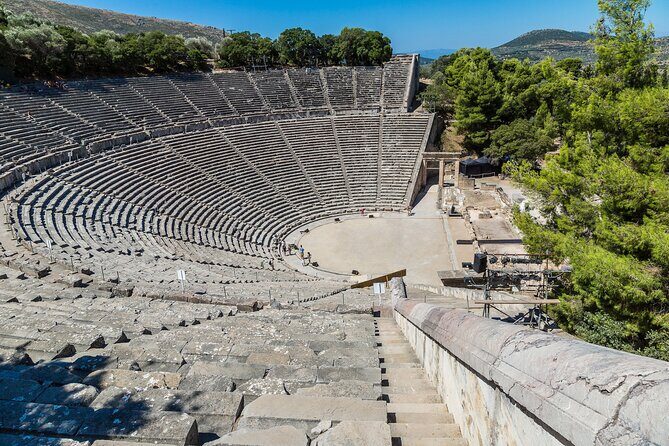
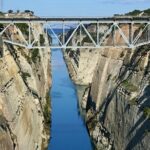
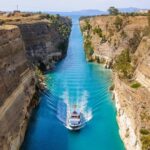
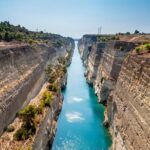
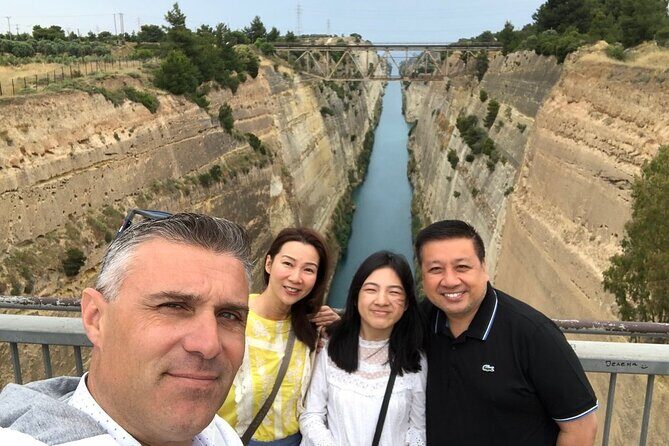
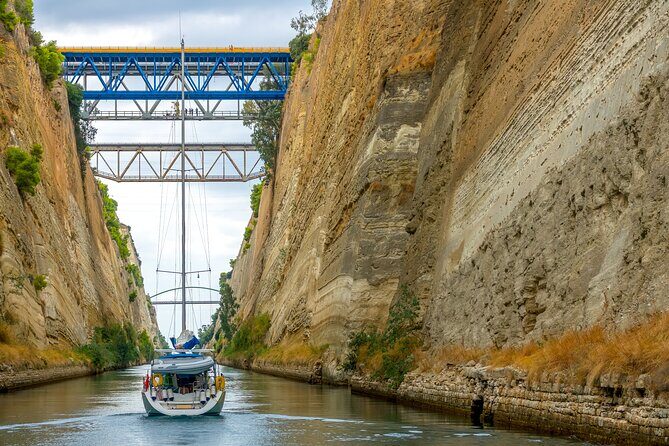
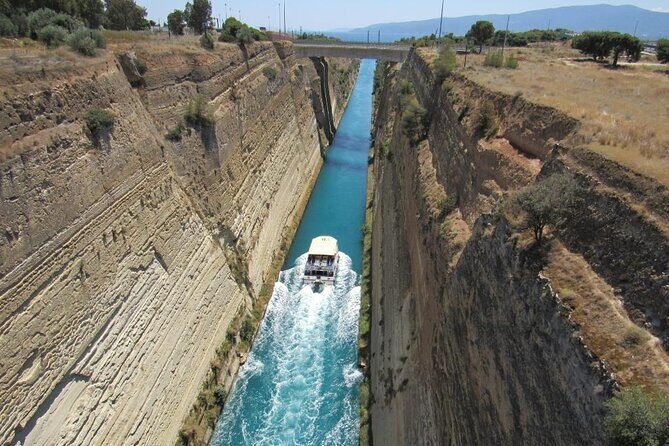
Corinth Canal is the kind of stop that feels short, but the scale sticks. You get about 30 minutes, and that’s usually enough for photos, a quick walk, and the wow factor of seeing this narrow cut in the rock.
Here’s what makes it interesting: Corinth Canal is one of the oldest man-made canals still in use, connecting the Gulf of Corinth with the Saronic Gulf. It slices through the Peloponnese and turns it into what’s basically an island for shipping routes. The canal is only 6.3 km long, but it matters because it saves ships 185 nautical miles.
The numbers are wild in a good way:
- Depth around 26 feet
- Width changing from roughly 69 feet (bottom) to 82 feet (surface)
- Walls rising about 170 feet
If you’re someone who loves infrastructure and how it shapes travel, this stop hits the sweet spot. If you hate quick photo breaks, treat it like a quick reset before the archaeology starts.
Also note the entry at Corinth Canal is listed as free, which keeps the cost simple for this leg of the day.
Epidaurus theatre: the acoustics are the main show
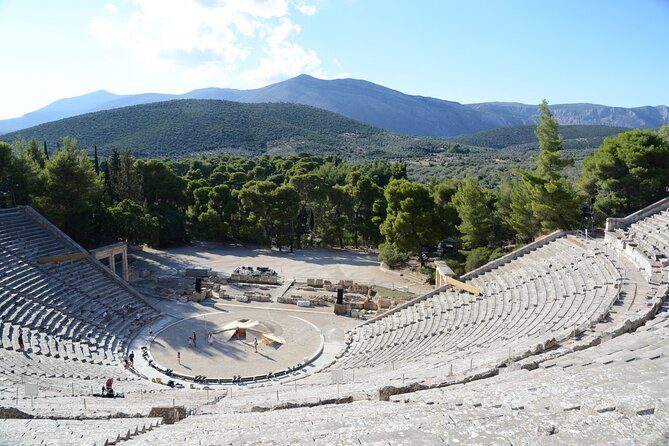
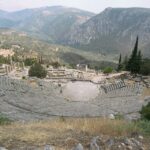
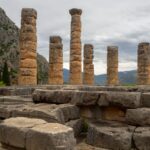
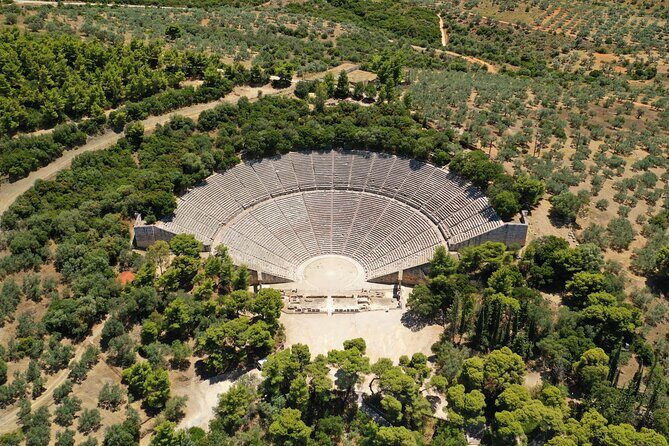
Stop 2 is The Ancient Theatre of Epidaurus, and you get about 30 minutes there. This is one of those places where the building isn’t just pretty—it works. Epidaurus is famous for its acoustics, and the layout is part of the trick.
The theatre was built around 330–20 BC and later enlarged in the mid-2nd century AD. You’ll see 55 rows of seats set on a natural slope, facing the stage. Even if you don’t care about the history lesson, you’ll likely notice that sound carries in a way you don’t expect from an open-air theatre.
During your visit, try this simple approach:
- Walk partway up and find a spot where you can hear spoken words clearly.
- Spend a few minutes just watching how people react when someone speaks or laughs on the stage area.
It’s a hands-on kind of wonder without needing any special trick. If you’ve ever watched a silent stage scene and thought, That would never work outside—this proves you wrong.
One practical note: the theatre admission isn’t included. Budget for the entrance ticket costs on the day, and rely on the tour’s ticket handling help to reduce hassle.
Sanctuary of Asklepios and the Epidaurus museum: healing meets art
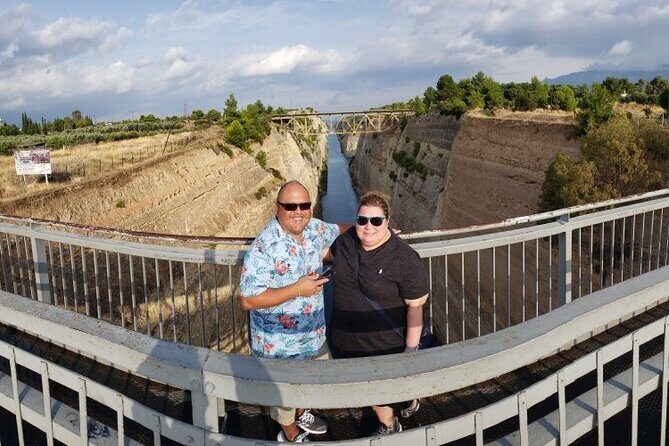
Next comes the Sanctuary of Asklepios, also about 30 minutes. This is a quieter stop than the theatre, but it has its own power. In ancient times, Asklepios was the god-physician, and this sanctuary became the best-known healing center in the Greek and Roman world.
The site is tied to the small coastal town of Epidaurus, but its reputation spread across the region. It’s often described as the birthplace of medicine in the Greek and Roman imagination, and the sanctuary is said to have inspired or supported hundreds of dependent spas across the eastern Mediterranean.
What you’ll notice during your walk is the shift from theatre-as-entertainment to theatre-as-part-of-a-culture of belief and health. You’re seeing how ancient Greeks thought about illness: at first as something tied to the divine, then gradually as something treated through experience and records.
After that, you can add the Epidaurus Archaeological Museum (also listed at about 30 minutes). This museum sits right on the sanctuary complex, so you’re not losing time traveling. Inside, the collection focuses on architectural pieces and medical-related artifacts—things like inscribed columns and votive offerings, plus bronze medical equipment and tablets associated with the sanctuary.
If you want a slightly calmer pace, this is the part of the day that can slow your mind down. If you only have a short attention span for museums, at least go in for a quick scan of the medical objects and sculpted offerings—those give you a “what did people believe and touch?” kind of connection.
Neither the sanctuary nor the museum is included in the entrance fees, so plan to pay for those site entries.
Nafplio: the hour where your feet get a break
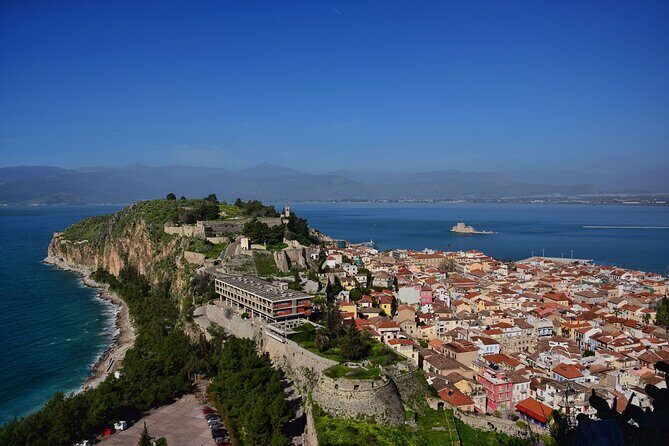
After the two Epidaurus stops, the day pivots to Nafplio, and you get about 1 hour. This is the most human, least ancient-feeling part of the itinerary—and it’s the right move.
Nafplio is described as one of the most beautiful towns in the Argolis region, and it has that easy “romantic” vibe because the architecture mixes eras. You’ll see ancient walls, medieval castles, Ottoman fountains, and Venetian or neoclassical buildings. It was also the first capital of the modern Greek state between 1823 and 1834, which adds another layer beyond myth.
You’ll also find that the hour is best used for a simple loop: walk out, stop for a view, then back toward where you started. Don’t try to “cover” the whole town in 60 minutes. You won’t. Instead, use the time to reset after the archaeological focus.
Food tip: this is also a great moment for lunch. One restaurant that came up as a favorite is Mitato. Even if you don’t choose it, ask your guide or driver for a practical suggestion based on where you want to wander. The goal is a sit-down meal without losing your place for the next site.
Admission at Nafplio is listed as free, which helps you spend time (and money) on food and strolling instead of ticket lines.
- All Day Cruise -3 Islands to Agistri,Moni, Aegina with lunch and drinks included
★ 5.0 · 4,958 reviews




Mycenae and the Treasury of Atreus: where Bronze Age power shows up fast
Then you jump to Mycenae, the legendary kingdom associated with the Atreides. You get about 1 hour at the archaeological site, followed by the Citadel and Treasury of Atreus (about 30 minutes), and then the Archaeological Museum of Ancient Mycenae (about 30 minutes).
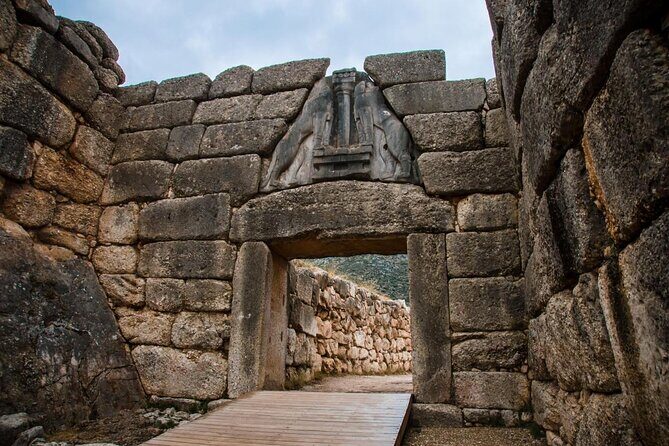
Mycenae sits on a hilltop, with habitation starting as early as Neolithic times (around 4000 BC) and peaking in the Late Bronze Age (1350–1200 BC). The site is famous for massive cyclopean walls, built in stages. You’ll also see defensive design details like the steep ravine on one flank.
If you like big, clear visuals, Mycenae delivers. The walls are huge and you can trace their logic without a PhD. The biggest gate features, including the Lion Gate, and the Grave Circle A burial ground of Mycenaean royalty, are the kind of highlights where your camera will want a lot more than your hands will allow.
Then comes the Treasury of Atreus, sometimes called the Tomb of Agamemnon. It’s a tholos (beehive tomb) on Panagitsa Hill, built around 1250 BC. The famous detail is the enormous lintel above the doorway, weighing about 120 tons, with dimensions listed at roughly 8.3 x 5.2 x 1.2 meters.
That number alone is worth the stop, because it forces you to picture ancient engineering without modern machinery. Even if you just take a quick look inside or around the entrance area, the scale hits.
Finally, the Mycenae museum is built into the archaeological site area, which is convenient. You’re already “there,” so you don’t lose half your time relocating. If you want one museum that helps connect the dots between walls and everyday life, this is a solid capstone.
None of these Mycenae entries are included in the ticket pricing, and there’s a stated entrance fee for Mycenae sites of €20 per person. Budget for that day total.
Driver-guide style matters: what to watch for in English commentary
For a private tour, the driver experience can be the difference between a “see it” day and a “you’ll remember it” day. Your vehicle driver can’t guide you inside sites, but they can set context on the road, point out what to focus on, and help you avoid wasting minutes.
I’ve seen a wide range of guide personalities attached to this kind of tour, and you’ll get the best day when the person behind the microphone turns facts into stories. Names that have stood out in past tours include Apostle, Vasilis, Dominik, Sakis, and Spyros.
Here’s how to translate that into action for you: if you care about myths vs. history, or you want more than a quick run-through, ask for the “science vs. legend” framing early in the drive. If your driver tends to talk more about modern Greek life as they go, that can also be a real bonus—it makes the day feel less like a checklist.
Also, heads-up: one experience described poor match with a site guide choice. The lesson for you is simple: if you’re paying for a licensed guide upgrade, make sure it’s the kind of guide who can keep your interest and explain clearly.
Price and value: what you’re really paying for
At $312.38 per person, this isn’t a budget impulse buy. The value comes from the bundle: private transportation, A/C vehicle, insured certified tourism vehicles, parking fees, bottled water, and pickup from Athens hotels or the Piraeus port.
The tour also includes skip-the-line ticket handling, which can save time and reduce stress. That said, entrance fees are not included. You’ll pay:
- Epidaurus entrance fee listed at €20 per person
- Mycenae entrance fee listed at €20 per person
Other stops have additional site admissions listed as not included (and some are free, like Corinth Canal and Nafplio).
So the real decision isn’t just the cost. It’s whether you want:
- A full day that combines two UNESCO sites + Nafplio
- The convenience of pickup and private pacing
- The chance to add a licensed guide inside sites if you want more depth
If you’re traveling as a couple or small group and you hate public bus transfers, the private format becomes easier to justify. If you’re solo and on a tight budget, it may feel expensive versus doing parts independently.
Who this tour suits best (and who should rethink it)
This day trip is ideal for you if:
- You want UNESCO hits without splitting your time across multiple days
- You value convenience (pickup, parking, A/C, ticket handling)
- You like a mix of walking, photos, and short museum moments
It may not fit as well if:
- You dislike spending long stretches in a car (even with A/C)
- You prefer deep archaeological explanations without adding the licensed guide option
- You want a fully relaxed day with long lunch breaks (the schedule is built around multiple sites)
Kids can work well too. The tour is listed as family friendly, with the ability to modify for children and child seats available on request. Just remember the site walking is outdoors and can be hot in summer.
Should you book this Corinth–Epidaurus–Nafplio–Mycenae day trip?
I’d book it if you’re in Athens and you want one strong day that covers major Peloponnese highlights with minimal friction. The mix is smart: Corinth Canal for scale, Epidaurus for the theatre and the healing sanctuary, Nafplio for a human break, then Mycenae for Bronze Age power.
Before you hit the button, do two quick checks:
1) Confirm how you want to handle site guidance. If you want more than general context, plan for the licensed guide add-on inside Epidaurus and Mycenae.
2) Budget for entrances (especially the €20 per person fees listed for Epidaurus and Mycenae) and choose lunch timing with the understanding that the itinerary is fairly packed.
If you like the idea of a day where you can go from awe at engineering to awe at ancient performance to awe at Bronze Age walls, this tour is a strong match.
FAQ
What locations does the tour pick up from?
Pickup is offered from Athens hotel areas and from the Piraeus ferry port. Travelers are also told to provide the exact address if they’re being picked up from an Airbnb or other location.
What time does the tour start?
The start time is listed as 8:00 am.
How long is the day trip?
It’s listed as about 8 to 9 hours.
Is the tour private?
Yes. It’s a private tour/activity, and only your group participates.
What language is used during the tour?
English is provided, including en-route commentary from the driver.
Are entrance fees included in the price?
No. Entrance fees to the sites are not included. Epidaurus and Mycenae each have an entrance fee listed at €20 per person.
Can a licensed guide enter the archaeological sites with you?
The driver cannot enter the archaeological sites, but a private licensed guide can be arranged for you in the sites for an additional cost (listed as 350€) depending on availability.
Is food included?
No. Food and drinks are not included unless specified.
Are child seats and family-friendly adjustments available?
Child seats are available upon request, and the tour can be modified for family groups to fit the needs of children.