REVIEW · ATHENS
Athens Private Tours: Acropolis and Acropolis Museum
Book on GetYourGuide →Operated by Key Tours · Bookable on GetYourGuide
The best part of this five-hour Athens tour is the way it connects the ancient hilltop Acropolis with the city around it. You do not simply arrive at the Parthenon, take photos, and leave. You see the stadium, Parliament, Roman ruins, National Gardens, and Acropolis Museum, which gives the day a useful sense of place.
I like the private guide and the small group limit of eight. I also like the mix of short drives, outdoor sights, and museum time, especially since guides such as ViVi and Matina have been praised for adjusting the pace for families. The main drawback is the $438 per person price, which is a serious splurge, and the tour is not suitable for wheelchair users.
In This Review
- Key points to know before booking
- Why this five-hour route works well for a first day in Athens
- Starting at the Panathenaic Stadium
- Syntagma Square, Parliament, and the Evzones
- Zappion and the National Gardens
- Roman Athens at Olympian Zeus and Hadrian’s Arch
- Passing Athens’ neoclassical and religious landmarks
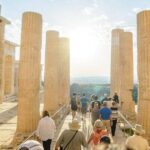
- Entering the Acropolis through the Propylaea
- The Parthenon, Athena Nike, and the Erechtheion
- Walking past the Theater of Dionysus and Herodion
- The Acropolis Museum makes the ruins clearer
- What the guide and vehicle add to the day
- Is $438 per person a fair price?
- Who should book this Acropolis tour?
- Practical tips for getting the most from the five hours
- Should you book Athens Private Tours: Acropolis and Acropolis Museum?
- FAQ
- How long does the Athens private tour last?
- What sites are included?
- Are entrance fees included?
- Is hotel pickup available?
- What type of transportation is used?
- How large is the group?
- What language is the tour offered in?
- Is the tour suitable for wheelchair users?
Key points to know before booking
- The Acropolis is the main event: Visit the Propylaea, Parthenon, Temple of Athena Nike, and Erechtheion with a guide beside you.
- The route covers modern and ancient Athens: See the Panathenaic Stadium, Syntagma Square, Parliament, National Gardens, Hadrian’s Arch, and the Temple of Olympian Zeus.
- The Acropolis Museum adds essential context: Its galleries hold Caryatids, archaic statues, votive offerings, daily-life objects, and Parthenon sculpture.
- You get hotel pickup in central Athens: Transportation is in a deluxe air-conditioned vehicle, with the exact vehicle based on group size.
- The pace can be tailored: Past guide Matina and guide ViVi received special praise for being kind, flexible, and attentive to children.
- The tour ends at the museum: You can continue exploring there on your own or request a ride back to your hotel.
Why this five-hour route works well for a first day in Athens
Athens can feel scattered at first. The Acropolis rises above the center, ancient ruins appear among busy streets, and modern squares connect areas that do not always make sense on a map. This tour gives you a quick orientation before settling into the big sights.
You begin with pickup from most centrally located Athens hotels. From there, a private guide and driver take you through a route that mixes famous monuments with useful city landmarks. It is not a slow neighborhood walk, but it is an efficient way to understand how ancient Athens and modern Athens sit side by side.
The tour has a private feel, though the group can include up to eight participants. That distinction matters. You get more personal attention than on a large coach tour, but you should not assume the guide will be exclusively yours if several places are booked together.
The five-hour length is also practical. You see the central highlights without giving up an entire day, though the schedule is full. The Acropolis itself requires walking over uneven historic surfaces, and the museum deserves time if you enjoy archaeology. You may want a quieter second visit to either site if ancient history is a major interest.
You can also read our reviews of more private tours in Athens


Starting at the Panathenaic Stadium
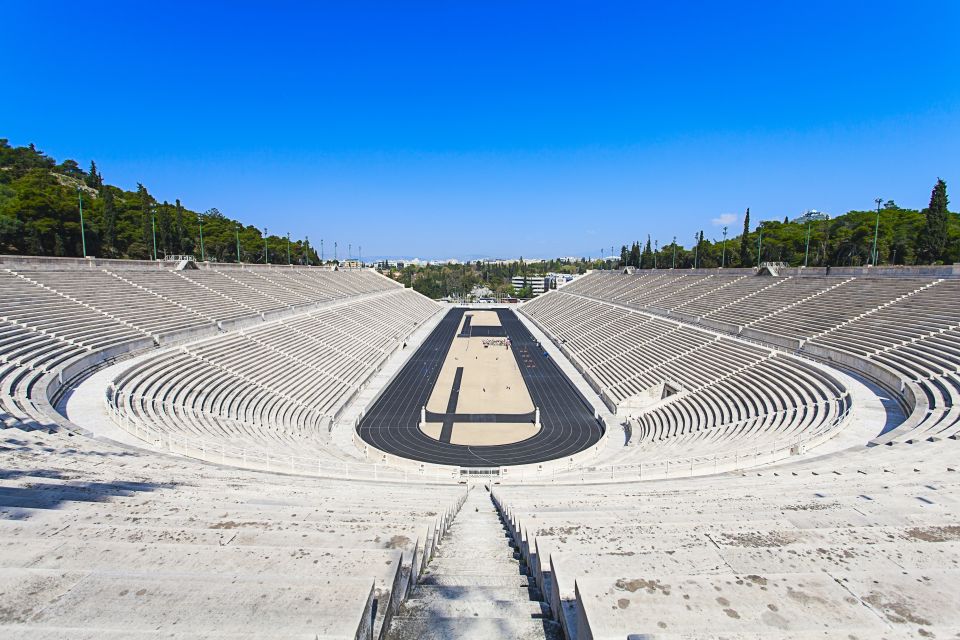
The first major stop is the Panathenaic Stadium, the white marble arena associated with the first modern Olympic Games in 1896. It is often called the cradle of the modern Olympics, and the setting gives that phrase real weight. This is not just another photo stop. It links ancient Greek athletic traditions with the international sporting event revived in the modern era.
The stadium is a strong opening because it places Athens in a wider timeline. Before you reach the ancient temples, you see how Greece used its past to shape a modern national identity.
The available information does not specify how long you spend inside the stadium or whether every visit includes a full interior circuit. Your guide can provide the historical explanation, while the vehicle keeps the stop easy to fit into the larger route.
Syntagma Square, Parliament, and the Evzones
The vehicle continues toward Syntagma Square, Athens’ Constitution Square and one of the city’s central public spaces. Here you pass the former Royal Palace, now home to the Greek Parliament, and the Tomb of the Unknown Soldier.
The Evzone Guards are one of the most memorable visual details on the route. Their ceremonial uniforms include amber-colored tunics, and their formal presence gives the square a distinctly Greek character. You may see more guards at the Tomb of the Unknown Soldier, where their duty connects modern Greece with national remembrance.
This stop is brief compared with the Acropolis, but it matters because it introduces the modern Greek state. The tour does not treat Athens as an open-air museum filled only with ruins. You see government buildings, public squares, and living civic traditions along with the ancient monuments.
Exact ceremony times are not provided, so do not book this tour solely to catch a particular guard change. Think of the Evzones as part of the city route, not a guaranteed timed performance.
Zappion and the National Gardens
The route passes the Zappion Conference Center and the National Gardens of Greece. Zappion is a stately neoclassical building near the city center, while the gardens offer a greener break from Athens’ stone and traffic.
This portion of the drive helps you connect Syntagma Square with the archaeological area near the Acropolis. You will not spend the entire tour inside gardens, but the passage adds variety and keeps the day from becoming a nonstop sequence of temples.
The route is also useful for first-time visitors because your guide can point out how the central districts fit together. If you are staying in Athens for several days, these early landmarks can help you decide where to return for a longer walk.
Roman Athens at Olympian Zeus and Hadrian’s Arch
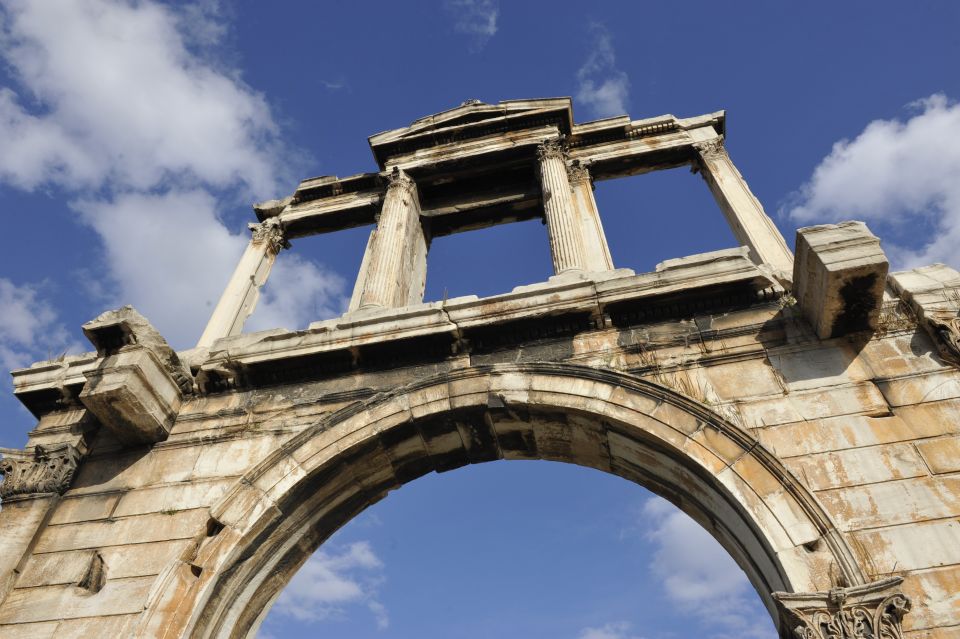
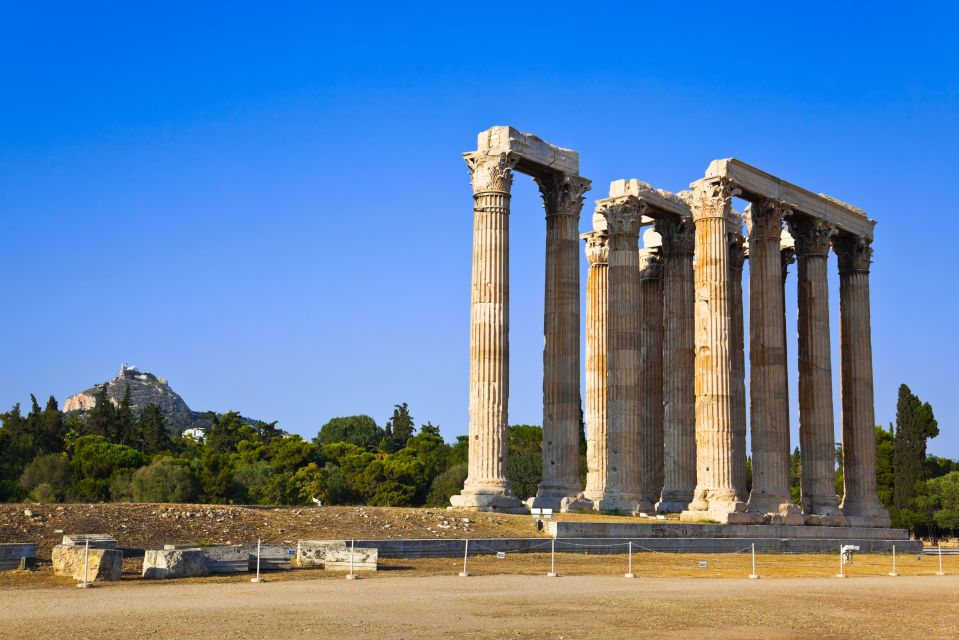
Near the Acropolis, you pass the Temple of Olympian Zeus, one of Athens’ great Roman-era monuments, and Hadrian’s Arch. These sites remind you that Athens was not frozen in the fifth century BC. Roman emperors reshaped the city, and Hadrian’s connection with Athens is visible in the arch that marked a boundary between older and newer parts of the city.
You should not expect a full guided visit to every site passed by the vehicle. The itinerary describes these as part of the city overview, while the Acropolis and Acropolis Museum receive the main entrance time.
That is a sensible choice for a five-hour tour. A full visit to every monument would turn the day into a race. Seeing the major Roman landmarks from the route gives you context without taking precious time from the Acropolis.
You can also read our reviews of more museum experiences in Athens



Passing Athens’ neoclassical and religious landmarks
The drive also includes the Numismatic Museum in Schliemann’s House and the Catholic Cathedral of Saint Dionysius the Areopagite. These are smaller pieces of the city’s story, but they show a side of Athens that many short sightseeing tours skip.
The Numismatic Museum is housed in the former home of Heinrich Schliemann, the archaeologist associated with excavations at Troy and Mycenae. The tour does not include admission to this museum, so you should treat it as an exterior landmark unless your guide says otherwise.
The Catholic cathedral adds another layer to the city’s religious history. Again, this is a pass-by sight rather than a listed interior visit. Its value lies in the range of Athens you see during the drive: ancient Greek, Roman, royal, civic, archaeological, and religious landmarks all appear within a compact central area.
Entering the Acropolis through the Propylaea
The Acropolis is where the tour shifts from city orientation to concentrated ancient monuments. You enter through the Propylaea, the monumental marble gateway to the sacred hill.
The climb and surfaces require steady footing. This is not a flat museum visit, and you should wear practical shoes. The provided information does not give a precise walking distance or a specific accessibility route, but the tour is clearly not suitable for wheelchair users.
Once on the plateau, your guide can place the temples in their religious and civic setting. The Acropolis was not built as a single isolated building. It was a major sacred complex, and the Propylaea establishes that sense of arrival before the temples come into view.
The Parthenon, Athena Nike, and the Erechtheion
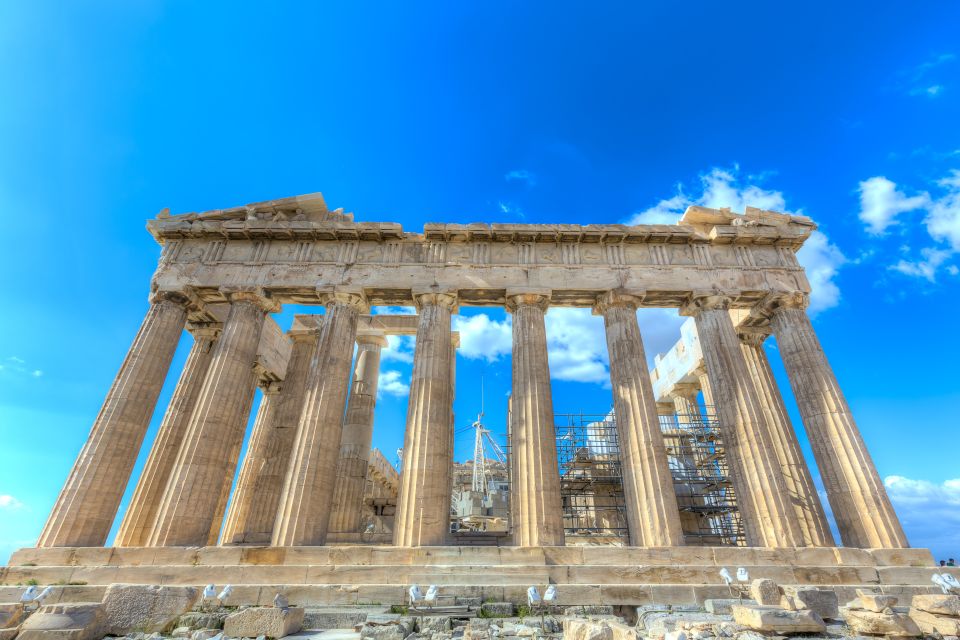
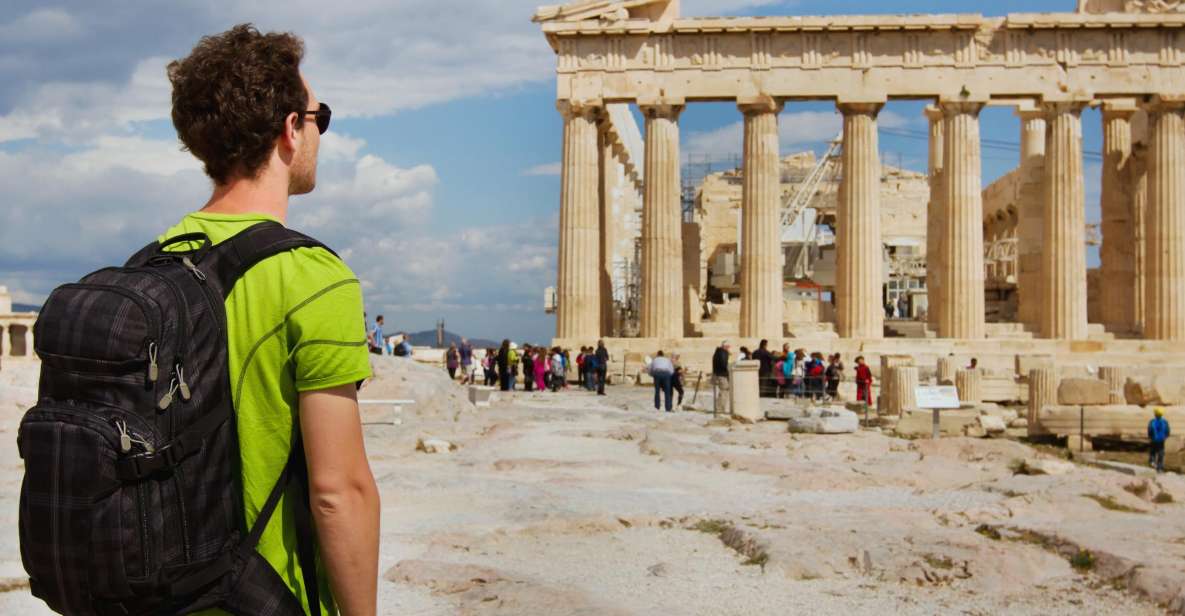
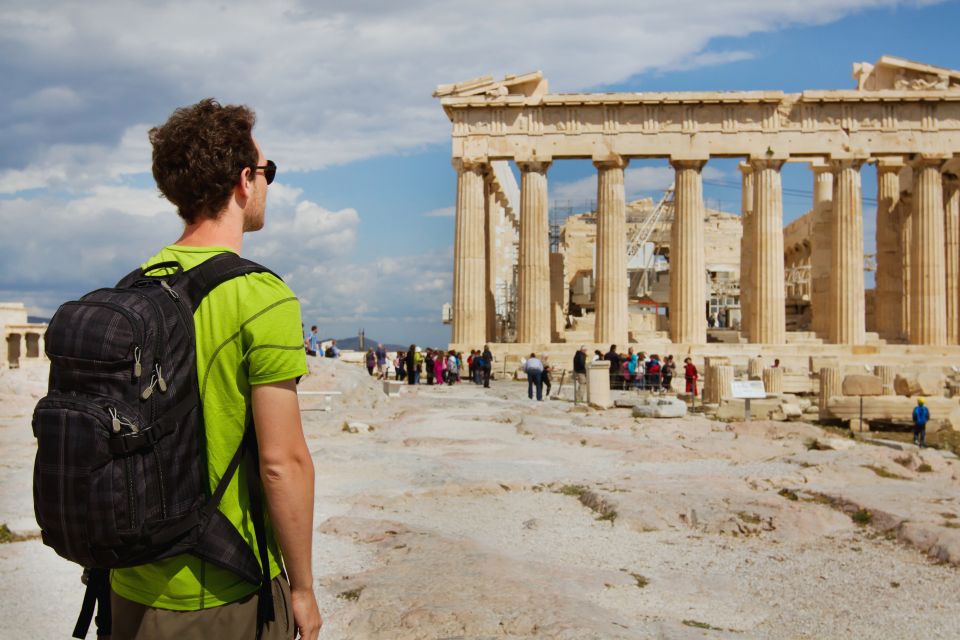
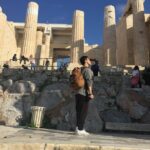
The Parthenon is the headline sight, and it deserves the attention it gets. Its scale, marble construction, and damaged but still commanding form make it one of the most important monuments in Europe. A private guide can help you notice details that are easy to miss when you are focused only on getting the classic photograph.
You also visit the Temple of Athena Nike, a smaller temple with an important position near the entrance. Its location and name connect the Acropolis to Athena’s role as a protector and bringer of victory.
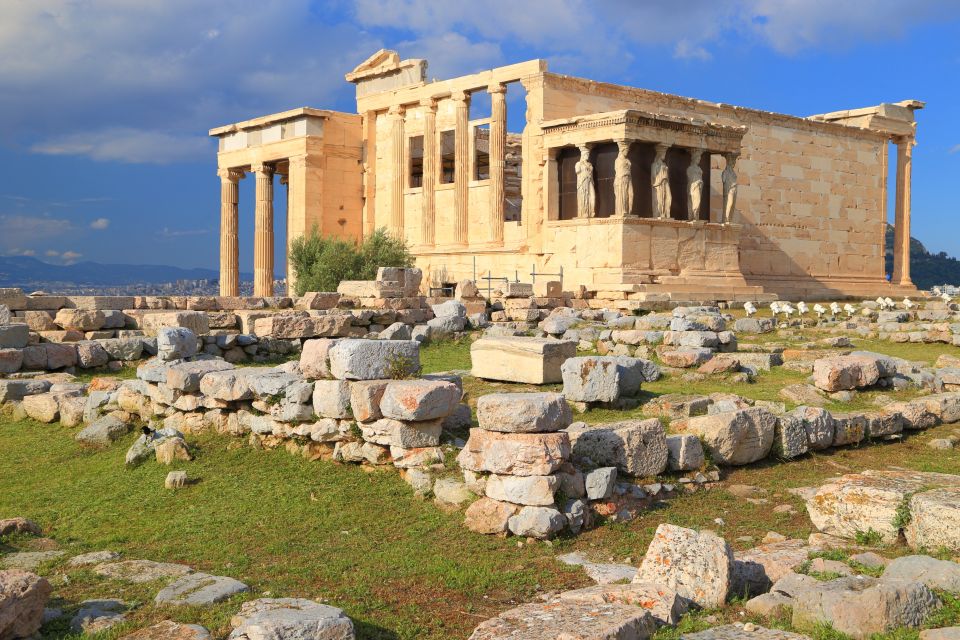
The Erechtheion is best known for the Porch of Maidens, where the Caryatids serve as architectural supports. These sculpted female figures are among the most recognizable images from the Acropolis. The tour later continues that subject in the museum, where you can see the archaeological material with better explanation and protection from the weather.
Your guide’s role is especially valuable here. The site is visually powerful, but the ruins do not explain themselves. The commentary can help you understand what you are seeing rather than treating the hill as a collection of famous names.
Walking past the Theater of Dionysus and Herodion
After the Acropolis, the route includes a short walk past the Theater of Dionysus and the Herodion, also called the Odeon of Herodes Atticus. These performance spaces connect the Acropolis to the beginnings of Greek theater and to the continuing cultural use of the area.
The walk is described as pleasant and short, but it still adds more uneven ground and outdoor exposure. If you are traveling with children, the ability to adjust the pace is useful. One guide, Matina, was specifically praised for letting a family tour at its own speed without skipping the main sights.
The tour does not list an interior performance or event at either theater. You see them as part of the archaeological zone while moving toward the museum.
The Acropolis Museum makes the ruins clearer
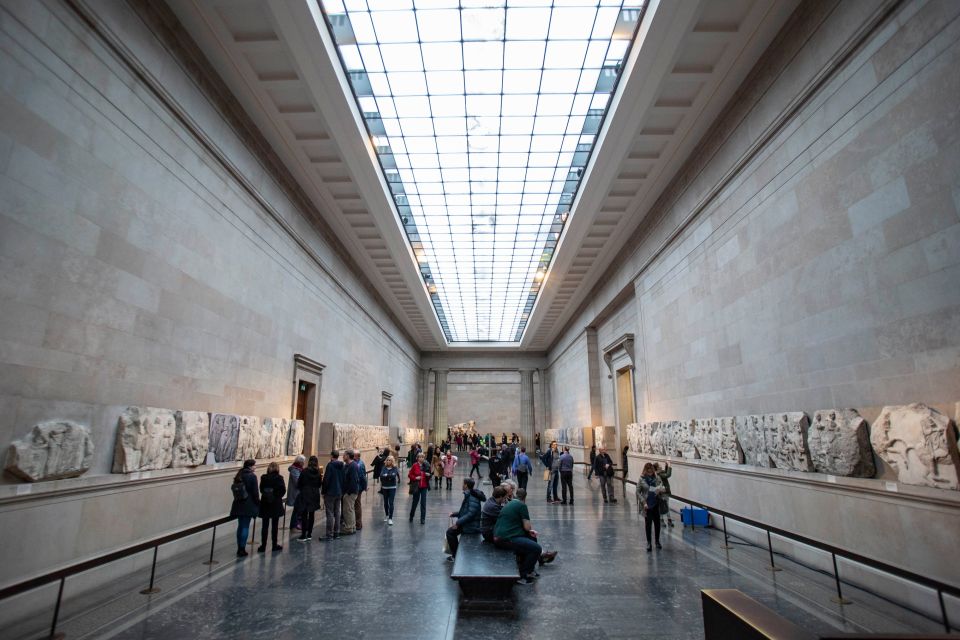
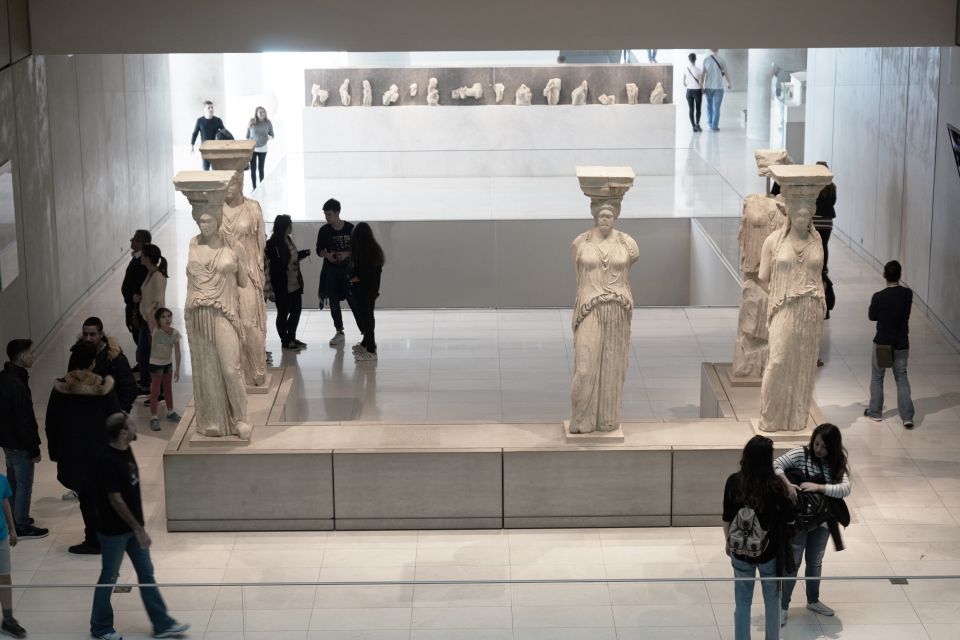
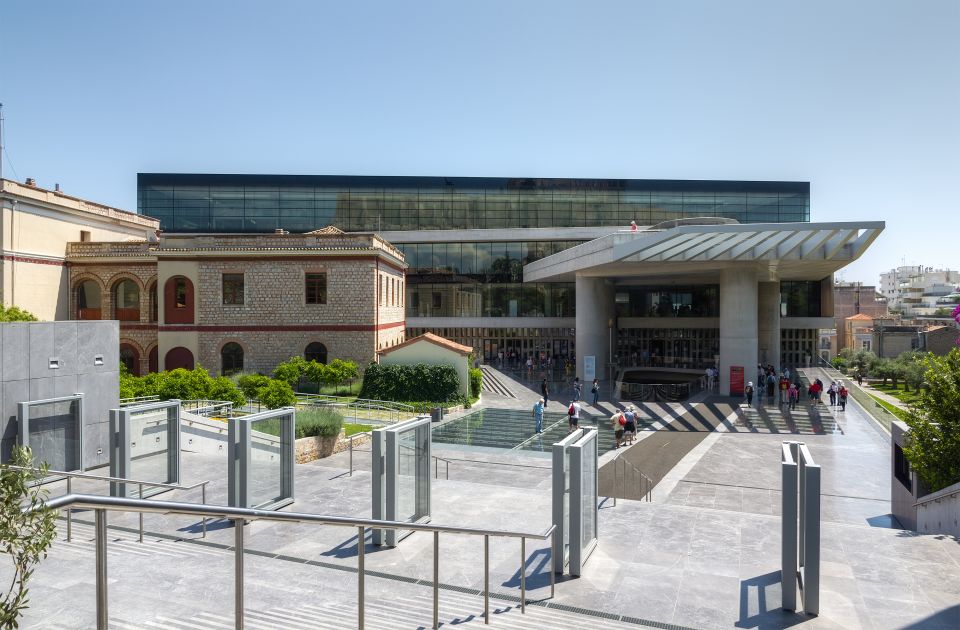
The Acropolis Museum is the second major anchor of the day. Its displays include votive offerings, objects from daily life, archaic statues, Caryatids, and a Parthenon gallery with sculpture from the pediments, metopes, and frieze.
I like this order: first see the Acropolis in its setting, then visit the museum to examine related objects in a more controlled space. The hill gives you the views and the monumental scale. The museum gives you detail.
The museum is described as spacious and user-friendly, with more detailed information than you can absorb during a short outdoor visit. That makes it particularly helpful if this is your first serious look at Greek archaeology.
The Caryatids are a major draw because the Erechtheion’s porch and the museum displays support one another. The Parthenon hall also helps you understand how the sculpture was arranged, rather than leaving you with disconnected images of broken marble.
The tour officially ends at the museum. You can keep exploring on your own, which is a real advantage if you prefer not to be rushed through the final galleries. You can also choose to be taken back to your hotel instead, according to the tour arrangements.
What the guide and vehicle add to the day
The included transportation is a deluxe, air-conditioned bus, minivan, or taxi, depending on group size. That makes the route easier on a hot day and reduces the effort of connecting distant central sights on foot.
The private guide is the main reason to consider this experience instead of arranging the sites independently. The guide provides commentary, manages the sequence, and can respond to questions as you move from ancient monuments to modern Athens.
Past guides named Chris, ViVi, Matina, and driver Mr. Takiz received especially warm personal praise. ViVi was described as well connected in Athens, repeatedly running into people she knew, while Matina was noted for her kindness and flexibility with young children. Those comments do not guarantee which guide you will receive, but they suggest that a personal, human style is part of the service.
English is the listed language. Other languages can be requested, but you should arrange that after booking rather than assume it is automatic.
Starting times are approximate. If you need an early or late departure, contact the provider after booking. That flexibility may help families, cruise passengers, or anyone trying to fit this outing around another Athens plan.
Is $438 per person a fair price?
At $438 per person, this is not a budget sightseeing option. The price includes the Acropolis entrance, Acropolis Museum entrance, professional guide, transportation, and pickup from most centrally located hotels.
The value depends on how much you want assistance. If you are comfortable reading signs, navigating public transportation, and studying the monuments on your own, you can spend far less by visiting independently. The tour earns its price through convenience, limited group size, direct transport, and the chance to ask questions throughout the day.
It makes more financial sense for a family or small party that values a shared guide. With children, an adjustable pace can prevent the Acropolis from becoming a tiring march. For older visitors who want transportation between sights, the vehicle also removes some planning work.
I would not book it simply because it includes skip-the-ticket-line access. The stronger reason is the guided connection between the sites. The package works best when you want a polished introduction to Athens and do not want to organize the details yourself.
Free cancellation up to 24 hours ahead and the option to reserve now and pay later reduce the financial risk, but the high per-person cost still deserves careful thought.
Who should book this Acropolis tour?
I would recommend it to first-time visitors with only a day or two in Athens, families with children, and anyone who wants historical explanation without joining a large coach group. It is also useful for people who prefer hotel pickup and air-conditioned transport between central sights.
The tour may be less suitable for independent museum lovers who want several hours inside the Acropolis Museum. Since the official program ends there after five hours, you may need to continue alone or return another day for a slower visit.
It is also a poor match for wheelchair users, and anyone with limited mobility should ask detailed questions before booking. The Acropolis involves an exposed archaeological site and walking over historic surfaces.
Practical tips for getting the most from the five hours
Wear sturdy shoes and keep your expectations realistic. You will see a lot, but this is a highlights tour, not a full study of every monument in central Athens.
Bring water and protection from the sun, since much of the Acropolis visit is outdoors. The provided details do not specify food stops, so plan to eat before or after the tour.
If you are traveling with children, tell the guide at the start that you want a flexible pace. The experience can cover the major sights without feeling overwhelming when the guide adjusts the timing.
Ask about the preferred ending before the day begins. You can continue at the Acropolis Museum or return to your hotel, and that choice affects how much independent museum time you have.
Should you book Athens Private Tours: Acropolis and Acropolis Museum?
Book it if you want the Acropolis explained properly, appreciate hotel pickup and a small group, and are willing to pay for convenience. The combination of Panathenaic Stadium, Parliament, Roman Athens, the Acropolis, and the museum gives you a strong first look at the city.
Skip it if $438 per person stretches your budget or if you prefer to set your own pace at the monuments. For families and first-time visitors, though, the flexible guiding style associated with ViVi and Matina makes this a particularly appealing splurge.
FAQ
How long does the Athens private tour last?
The tour lasts five hours.
What sites are included?
The tour includes the Acropolis and Acropolis Museum, along with stops or pass-by views of the Panathenaic Stadium, Greek Parliament, Syntagma Square, National Gardens, Zappion, Temple of Olympian Zeus, Hadrian’s Arch, the Tomb of the Unknown Soldier, Numismatic Museum, Catholic Cathedral, Theater of Dionysus, and Herodion.
Are entrance fees included?
Yes. Admission to the Acropolis and Acropolis Museum is included.
Is hotel pickup available?
Yes. Pickup is included from the majority of centrally located hotels in Athens.
What type of transportation is used?
Transportation is provided in a deluxe, air-conditioned vehicle. It may be a bus, minivan, or taxi depending on the group size.
How large is the group?
The experience is listed as a small group limited to eight participants.
What language is the tour offered in?
English is the listed tour language. Other languages can be requested.
Is the tour suitable for wheelchair users?
No. The tour is not suitable for wheelchair users.