REVIEW · ATHENS
From Athens: City & Corinth Guided Day Tour
Book on GetYourGuide →Operated by Greece Athens Tours · Bookable on GetYourGuide
A day trip that mixes democracy with early Christianity. This Athens and Corinth guided day tour strings together two heavyweight ancient cities with real sightlines: the Acropolis and Museum, then the drive southwest to Corinth and St. Paul’s setting. You’ll also catch quick Athens classics like the changing of the guard and the Panathinaiko Stadium photo stop.
I love how much the day packs into a small group format, with an English-speaking driver/guide who can connect the dots between the marble you see and the stories behind it. I also like the balance of big-ticket sites plus time to breathe, like your free stretch in Plaka for lunch-by-your-own-choice and shopping.
One consideration: entrance fees aren’t included, and the driver can’t escort you inside the sites. So you’ll still be doing some walking and lines at ticket counters, even if the tour helps you with ticket-line timing.
In This Review
- Key takeaways before you go
- A 9.5-hour Athens-to-Corinth history day that actually flows
- Morning in Athens: Acropolis first, Museum second
- Other Athens highlights: Zeus, guard change, stadium photos
- Mount Lycabettus and city-center stops you can actually use
- The Corinth drive: Canal photos and Diolkos context
- Ancient Corinth: Apollo Temple, theaters, and the St. Paul altar
- Corinth Museum: Roman emperors and a timeline you can see
- Panoramas, shopping breaks, and how to make the day smoother
- Price and what you should budget on top
- Who this tour is best for (and who should think twice)
- Should you book this Athens and Corinth day tour?
- FAQ
- Are entrance fees included in the tour price?
- What’s included with pick-up and drop-off?
- How long is the tour, and is it private?
- Is a licensed guide included inside the museums and sites?
- Can I skip ticket lines?
- What should I bring for the day?
- What ticket costs should I plan for at the Acropolis and Corinth?
- Are there days when sites are closed?
- What’s the cancellation and payment policy?
Key takeaways before you go
- Acropolis + Acropolis Museum as a tight pairing, so you can see artifacts right after the monuments
- Small private group (up to 3), which usually means fewer waiting games and more chances to ask questions
- Corinth stops tied to St. Paul, including a visit near the altar where he spoke about Christianity
- Corinth Canal photo stop plus the Diolkos context, so the geography makes sense
- Time in Plaka and at key viewpoints like Mount Lycabettus for photos and a break from ruins
- Self-guided site blocks for some stops, which can be great if you like moving at your pace
A 9.5-hour Athens-to-Corinth history day that actually flows
This is built for people who want more than a quick highlights loop. The day starts with pick-up from your Athens area (including options around Athens or Piraeus) and then moves through a planned sequence of viewpoints, museums, and major archaeological sites across two regions.
The pacing is structured but not rigid. You’ll spend focused time at the places that matter most—especially the Acropolis and Acropolis Museum—then switch gears with scenic drives and photo stops on the way to Corinth. Expect a lot of “walk a bit, pause, look closer, then move on.” Bring comfortable shoes and plan for a full day on your feet.
Because this is a private group (priced per group up to 3 people), it tends to feel less like a cattle-call tour and more like a custom day with a local expert driving the story. In the feedback you’ll see a pattern: guides like Nikos, Takis, and Odysseus stood out for depth and flexibility, and the day benefited when the guide could adjust timing for a cruise schedule.
You can also read our reviews of more guided tours in Athens


Morning in Athens: Acropolis first, Museum second
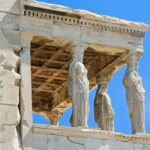
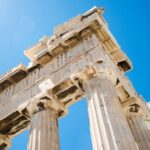
The backbone of the day is the Acropolis. You’ll visit it as the iconic symbol of democracy, and the stops you’re aiming for include the Parthenon, the Erechtheion (famous for its Karyatides), the Propylaea, and the reconstructed Temple of Athena Nike. This is one of those tours where the guide’s explanations matter, because these structures are easier to understand when someone points out how the pieces relate.
Then you head to the Acropolis Museum. This pairing is practical. You’ll see the monuments outside, then shift indoors to the artifacts that help explain them. The museum is open late (8 AM to 8 PM), and the tour is timed so you can take advantage of that. The museum has even been recognized as one of the best globally, and tickets for the museum are €10.
Skip-the-line is included, which helps when you’re dealing with peak crowds. Still, remember one key limit: the guide is not able to escort you inside the sites. You’ll follow the plan, then go in on your own with the guide setting you up with context first.
Practical tip: the Acropolis can be slippery, especially after morning dew or in rainy weather. If you’re visiting in summer, wear light clothes and athletic shoes, and avoid dark colors as advised for heat.
Other Athens highlights: Zeus, guard change, stadium photos
Between the Acropolis block and the drive toward other city views, you’ll also hit classic Athens landmarks that give you quick contrast—ancient scale, then modern city rhythm.
You’ll see the Temple of Zeus (often called the largest temple of ancient Greece) as a pass-by stop rather than a deep visit. For most people, that’s the right choice. It gives you the moment without consuming the whole day with a site that’s more spread out.
You’ll also catch the changing of the guards at the Parliament. It’s short, but it’s one of those experiences that helps you remember Athens isn’t just ruins. If you arrive a little early, you’ll have an easier time finding a spot to watch.
And yes, you’ll get your Panathinaiko Stadium moment. You’re doing a photo stop, not a long tour, but it’s still a great “first modern Olympics in 1896” fact tied to a real place you can see. It’s also a nice change of pace after hours of stone temples.
Mount Lycabettus and city-center stops you can actually use
One of the smarter parts of the plan is that it includes viewpoints. You’ll get a panoramic look over Athens from Mount Lycabettus, with time to take photos. This matters because many visitors see the city only from the street level, then leave without appreciating how the neighborhoods and ancient sites fit together in the wider geography.
The tour also includes a city-center pass for neoclassical buildings, such as:
- University of Athens
- Academy of Art and Sciences
- National Library
You’ll also see the residence linked to Sleiman, the German archaeologist tied to the discovery of Troy. That’s a small detail, but it helps connect Athens to the wider map of how the modern world rediscovered the ancient one.
Finally, you’ll have free time in Plaka for shopping and wandering. This is where you can slow down. Grab a snack, pop into a shop, and do the kind of browsing you can’t do from a tour bus.
The Corinth drive: Canal photos and Diolkos context
After Athens, you head southwest with a scenic drive. The drive itself is part of why this feels like a day trip, not two separate half-days.
You’ll stop at the Corinth Canal for photos, around 20 minutes. You’ll also hear how the Diolkos helped the Corinthians pull ships over land. That context is the difference between just seeing water and understanding why this route mattered.
Then you’ll continue toward the Corinthians heights. You get a visit to Kechries (guided) and a stop at Acrocorinth for scenic views along the way. These are useful because the ancient city isn’t flat; seeing the terrain makes the ruins more legible once you’re there.
You can also read our reviews of more city tours in Athens





Ancient Corinth: Apollo Temple, theaters, and the St. Paul altar
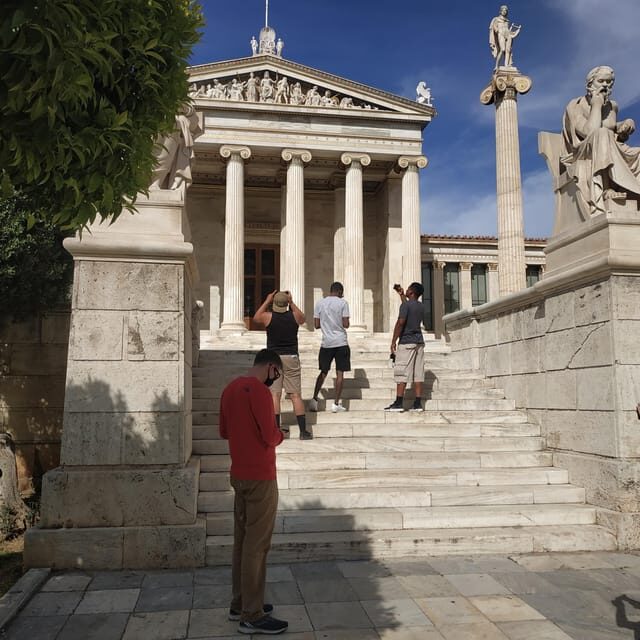
At ancient Corinth, you’ll focus on the ruins that show the city’s layers. This is not just one era. You’ll see:
- ruins of two theaters
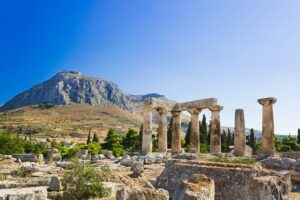
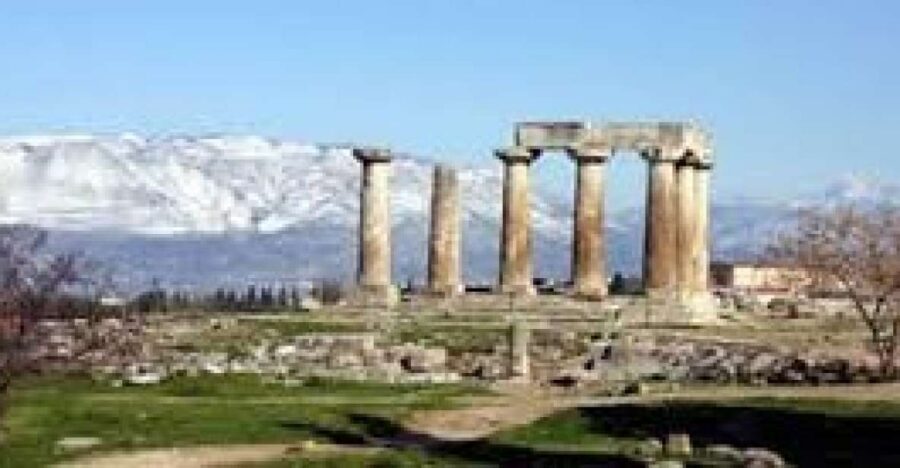
- the Temple of Apollo
- temples from the Roman period
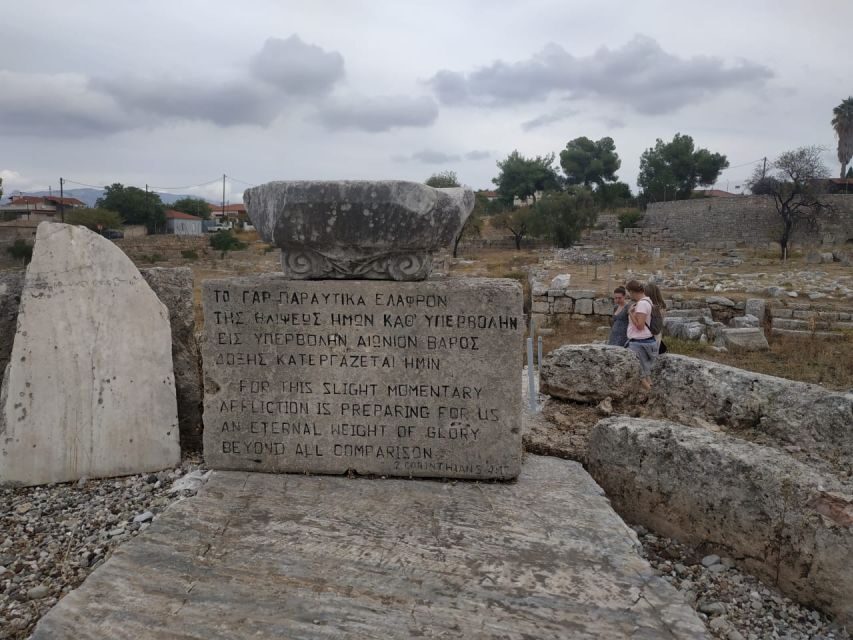
- and the altar location associated with St. Paul’s message to the Corinthians
Your schedule includes time at the Temple of Apollo as self-guided (about 1 hour). That’s a reasonable amount for soaking up the site without feeling rushed. If you like reading stones and imagining ancient crowds, you’ll appreciate this longer self-paced chunk. If you need constant live commentary the whole time, you might find the self-guided element a little less structured.
The big religious anchor is the altar connected to St. Paul. Seeing it in person helps you understand why Corinth became such an important chapter in early Christian history. And the day doesn’t stop at symbolism—there’s also a stop that references St. Paul’s church, tied to the setting around the canal area.
For your timing: the tour includes break time with optional lunch, plus free time for shopping in Corinth before heading back toward Athens.
Corinth Museum: Roman emperors and a timeline you can see
One of the most worthwhile stops on the Corinth side is the Corinth Museum. You’ll spend time there seeing hundreds of artifacts from multiple periods, plus statues of Roman emperors. This is where your day starts to “click.” The museum helps you connect what you saw outside (temples, theaters, altar areas) to objects that show day-to-day life and political power.
If you’ve ever visited ruins and thought, Okay, but where do the details live?—this is the answer. The museum gives you that bridge from archaeology to interpretation.
As with Athens sites, entrances are not included, so you’ll be paying museum and site tickets on the day unless you already purchased them separately.
Panoramas, shopping breaks, and how to make the day smoother
This tour includes multiple short segments designed to prevent exhaustion from stealing the joy:
- photo stops (Mount Lycabettus, Panathinaiko Stadium, Corinth Canal)
- free time blocks (Plaka in Athens; breaks and shopping in Corinth)
- scenic drive time between major anchors (Athens to Corinth, then back)
That mix matters for value. You get major sites without spending the entire day fighting crowds inside every ticketed entrance.
A practical note: the order of visits can change due to unforeseen circumstances. So keep your expectations flexible. If one stop runs tight, you won’t be stranded—you’ll still get the core elements.
Also, the Acropolis has specific hours depending on the season. In winter it’s 8:30 AM to 3 PM, and in summer it’s 8 AM to 7 PM. The Acropolis Museum runs 8 AM to 8 PM. If you’re choosing this on a shorter winter day, your timing window is narrower, so plan to arrive with energy, not stress.
Price and what you should budget on top
The stated price is $471 per group up to 3 for a 9.5-hour day. That’s for transport, a live English-speaking driver/guide, and key comfort items like cold drinking water, plus a mobile phone and Wi-Fi.
What’s not included: entrance fees and lunch/drinks, plus it’s noted there is no licensed guide escort inside the sites. The entrance fees you’ll likely care about from the provided info include:
- Acropolis Museum: €10
- Acropolis multi-ticket: €30 (includes admission to the Temple of Zeus, Ancient Agora, Roman Forum, Kerameikos, and the Theater of Dionysos)
- Corinth: €8 in summer and €4 in winter
If you’re comparing value, treat it like this: you’re paying for a smooth, guided connection between two distant ancient-city experiences. If you were to do Athens and Corinth separately by yourself, you’d spend extra time figuring out routes, coordinating ticket timing, and managing the logistics of a full day. Here, the structure is what you’re buying.
One more value point: skip the ticket line is included. That won’t eliminate all ticket stops, but it can save time where time is usually lost.
Who this tour is best for (and who should think twice)
This tour fits you if you:
- want Athens + Corinth in one day without renting a car
- enjoy having someone connect monuments to the story of the place
- like a mix of big sites (Acropolis) and context stops (Corinth Museum and the canal area)
It’s also a good match if you’re booking as a couple or small family, because the private group model means you’re not packed into a large bus with no time to ask questions.
You might think twice if you:
- dislike self-guided segments (Temple of Apollo in Corinth is self-guided, and the guide can’t walk you inside)
- want all costs included in the price (entrance fees and lunch are on you)
- travel with very limited walking tolerance, since this is still a full-day outing with several outdoor sites and photos
Should you book this Athens and Corinth day tour?
If your priority is seeing the Acropolis + Museum and also getting the Corinth St. Paul connection without turning your vacation into a navigation project, I think this is a strong choice. The day is built around the kind of pairing that makes history make sense: monuments first, then artifacts.
Before you book, do two simple checks:
- Plan your budget for entrance fees and lunch, since they’re not included
- Wear good shoes and keep flexibility for timing shifts, since the visit order can change
If that sounds like you, this is the kind of day trip that leaves you with more than photos. You’ll leave with a clearer sense of how Athens’ civic ideals and Corinth’s crossroads setting shaped what came next.
FAQ
Are entrance fees included in the tour price?
No. The tour includes transfers and an English-speaking driver/guide, but entrance fees are not included. You’ll pay site and museum tickets separately.
What’s included with pick-up and drop-off?
You get round-trip transfers from your Athens accommodation, cruise ship, or other preferred Athens location, with pickup and drop-off options including Athens and Piraeus. You should wait in the lobby about 10 minutes before the scheduled pickup.
How long is the tour, and is it private?
The tour runs for about 9.5 hours and is listed as a private group.
Is a licensed guide included inside the museums and sites?
You’ll have an English-speaking live driver/guide, but the information provided says the driver cannot escort you inside the sites.
Can I skip ticket lines?
Yes. The tour includes skip the ticket line.
What should I bring for the day?
Bring your passport and comfortable shoes. The Acropolis can be slippery, and in summer you’ll want light clothing and athletic shoes.
What ticket costs should I plan for at the Acropolis and Corinth?
From the info provided: the Acropolis Museum is €10. An Acropolis multi-ticket is €30. Corinth costs €8 in summer and €4 in winter (ticket pricing depends on season).
Are there days when sites are closed?
Yes. Sites and museums are closed on 1 January, 25 March, 1 May, 28 October, Christmas Day, and Boxing Day. Opening hours can also change for Good Friday, Holy Saturday, and Easter Monday as listed in the tour details.
What’s the cancellation and payment policy?
You get free cancellation up to 24 hours in advance for a full refund. You can also reserve now and pay later.