Athens reveals itself best on foot, and this tour links more than 15 monuments in one compact route. You move from the grand archaeological sights around the Acropolis to the lively lanes of Monastiraki and Plaka, with myths, history, food ideas, and city tips along the way. I like the walk along Dionysiou Areopagitou Street, and I like that it ends near cafes and restaurants on Makrigianni Street.
The Areopagus Hill viewpoint is another strong point, especially if you want photographs and a quick sense of how Athens fits together. The main consideration is its pace: two hours is enough for an overview, not a full archaeological visit. One traveler found the tour too light on detail, so your experience may depend on how much explanation your guide provides on the day.
In This Review
- Key points to know before booking
- Starting outside Acropolis Metro Station
- Walking Dionysiou Areopagitou Street
- Climbing Areopagus Hill for the city view
- Ancient Agora and the Roman Forum
- Monastiraki Square and the neighborhood of Plaka
- Ending near Makrigianni Street
- What the guide adds to the walk
- Is $43 a fair price for two hours?
- Who should choose this Athens walk?
- Should you book Highlights and Hidden Gems of Athens?
- FAQ
- Where does the Athens walking tour meet?
- How long does the tour last?
- What language is the tour conducted in?
- How many monuments does the route cover?
- Does the tour visit the Acropolis?
- Does the tour include the New Acropolis Museum?
- Is the walking tour wheelchair accessible?
- Can I cancel the booking?
Key points to know before booking
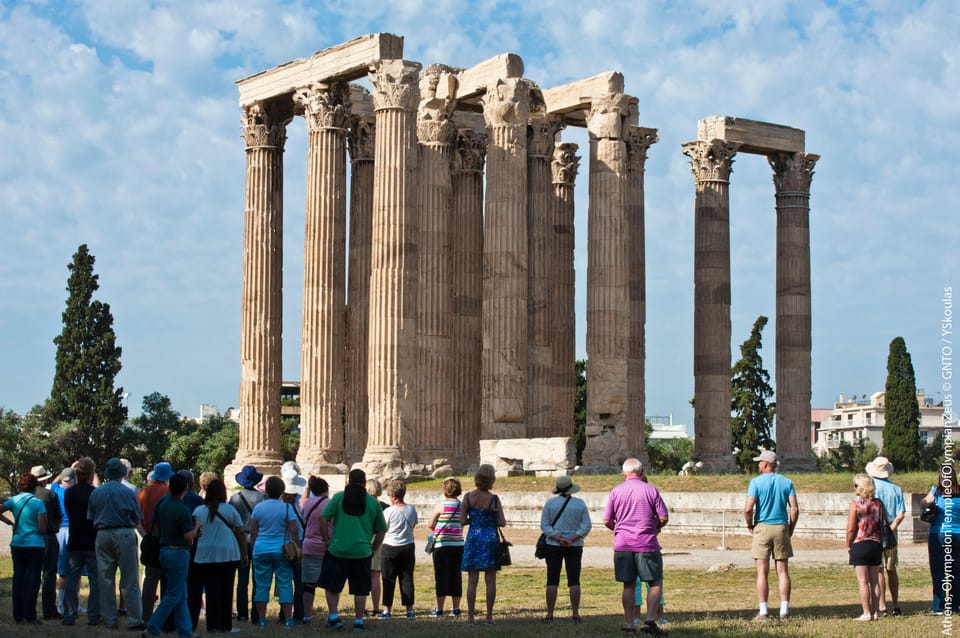
- More than 15 sights in two hours: Expect a brisk orientation walk rather than long visits inside museums or monuments.
- Dionysiou Areopagitou Street: This handsome pedestrian route places you beside major Acropolis landmarks and the New Acropolis Museum.
- Areopagus Hill viewpoint: You get a memorable city view and a look at the site linked with Athens’s ancient law court.
- A useful local finish: The walk ends near Makrigianni Street, with restaurants and cafes close to Acropolis Metro Station.
- Guide style matters: Matina received especially warm praise for her calm, educated approach and her ease with a child in the group.
- Good first-day value: At $43 per person, the tour can help you plan later museum visits, meals, drinks, and sightseeing.
Starting outside Acropolis Metro Station
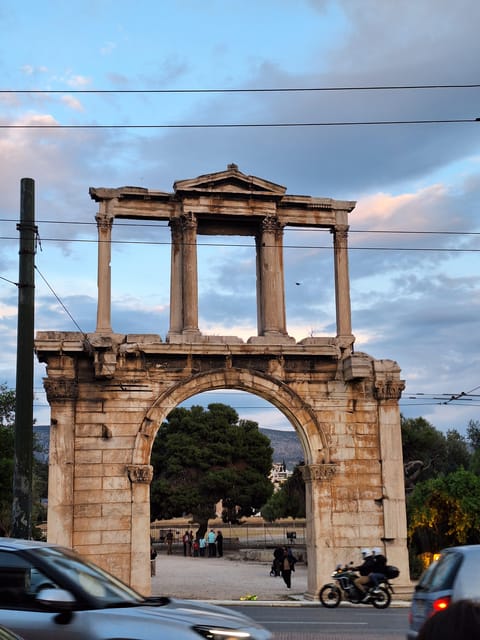
Your meeting point is outside Acropolis Metro Station on Makrigianni Street, a pedestrianized road lined with restaurants and cafes. This is a practical place to begin because you are already close to the Acropolis area, and the same street gives you an easy place to stop for coffee or food after the walk.
The tour is conducted in English with a live guide. The route is on foot and lasts two hours, so wear comfortable shoes and expect regular walking between stops. The experience is listed as wheelchair accessible, though the route includes Areopagus Hill, so you should confirm the exact path and conditions if you need a particular level of access.
A meeting point near the Acropolis can feel busy, especially in a city where many streets, monuments, and tour groups meet in a small area. Arrive with enough time to locate the station exit and the pedestrian street. The clear starting point is a help, but the value of the tour begins once the guide turns the surrounding streets into a story rather than a collection of famous names.
You can also read our reviews of more walking tours in Athens



Walking Dionysiou Areopagitou Street
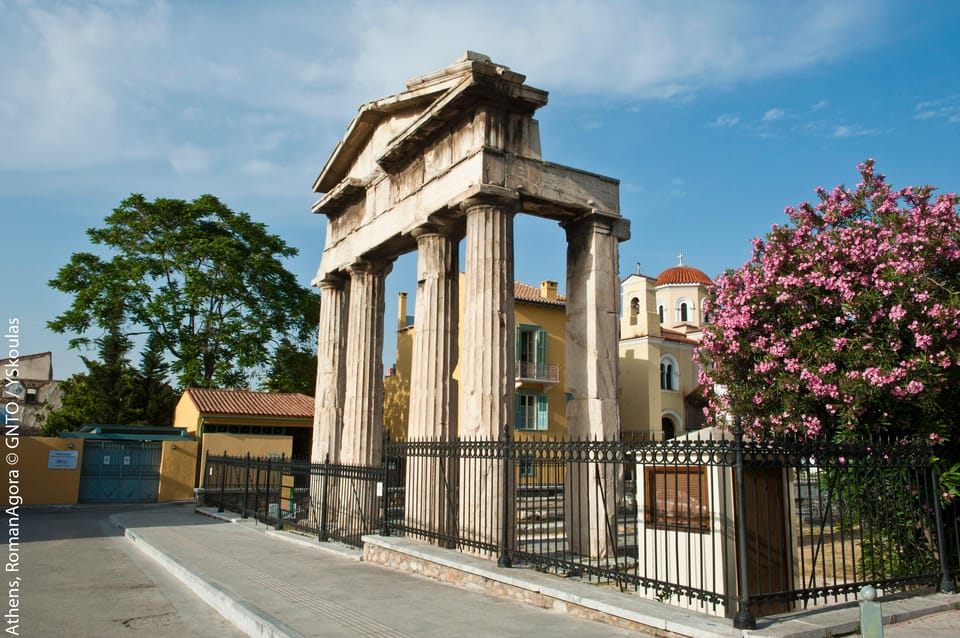
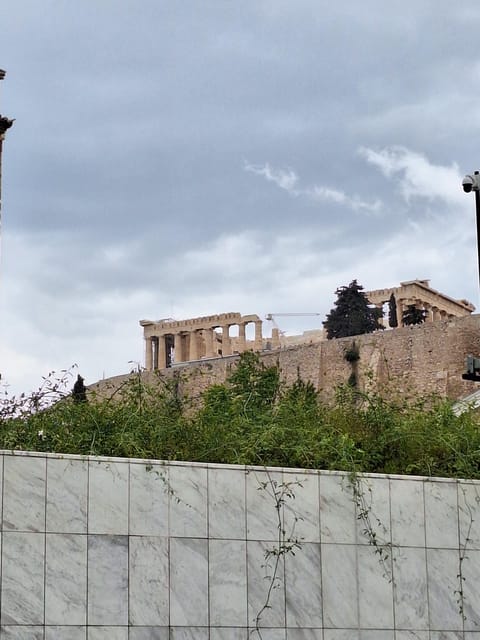
The first major stretch is Dionysiou Areopagitou Street, one of the most impressive pedestrian routes in Athens. It curves around the Acropolis and gives you changing views of the monuments as you walk. Rather than rushing straight toward one sight, you get a sense of how the archaeological zone relates to the modern city.
The street has an aristocratic feel, with important archaeological sites and museums nearby. The New Acropolis Museum is one of the key landmarks along this part of the route, though this walking experience does not include a museum visit. That distinction matters. You will learn where the museum is and why it belongs on your Athens plan, but you should set aside separate time and admission for the interior.
The Odeion of Herodes Atticus is another important stop in this area. Its surviving stone structure gives you a strong sense of the scale of ancient Athens, even during a short exterior visit. Your guide can add the myths, historical details, and archaeological context that are easy to miss when you simply walk past.
This section works well early in an Athens stay. You get a basic map in your head: the Acropolis above you, the museum nearby, the old neighborhoods below, and the pedestrian route connecting them. I like that the walk does not treat the Acropolis as an isolated monument. It shows you the streets and public places that make the site part of present-day Athens.
Climbing Areopagus Hill for the city view
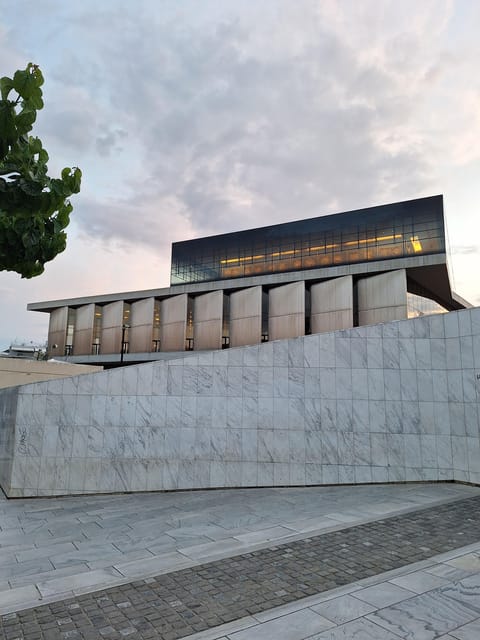
The route continues to Areopagus Hill, described as the site of the ancient law court. The climb gives the tour a physical change of pace and brings you to one of the most useful viewpoints in central Athens.
From the rock, you can take photographs and look across the city. The view is not just a reward at the end of a climb. It helps you understand the position of the Acropolis, the dense urban center, and the surrounding historic districts. For a first visit, that wider view can make later walks much easier to follow.
Take care on the hill. The surface can be uneven, and the walk is not a flat promenade from start to finish. The tour is listed as wheelchair accessible, but Areopagus Hill may require special consideration depending on your mobility needs. Ask before booking if you need precise information about the climb, surface, or an alternative viewing point.
This stop also shows why a guide can be useful even when you are not entering a building. A bare rock can seem like a quick photo stop without context. With an archaeological guide, it becomes part of the story of Athenian law, public life, and myth.
Ancient Agora and the Roman Forum
After the Acropolis area and Areopagus Hill, the walk brings you toward the Ancient Agora and the Roman Forum. These sites help fill in the everyday side of Athens. The Acropolis is the city’s great symbol, but the Agora points you toward public debate, trade, civic life, and ordinary movement through the ancient city.
The Ancient Agora is especially valuable as a place to understand how Athenian life operated beyond temples and monuments. A short guided explanation can help you picture why the area mattered instead of seeing it as scattered ruins. If you want to explore the archaeological grounds in depth, plan another visit, since this two-hour walk focuses on orientation and exterior highlights.
The Roman Forum adds another layer. Athens did not stop changing after its classical period, and the Roman remains remind you that the city continued to serve new rulers and new purposes. Seeing the Ancient Agora and Roman Forum in the same walk gives you a quick timeline without requiring a full day at one site.
The drawback is time. With more than 15 monuments on the route, some stops will be brief. You may get a useful explanation and a good look, but not the quiet time needed to read every sign, study every column, or explore each archaeological area. Think of the tour as a guide to what deserves a return visit.
Monastiraki Square and the neighborhood of Plaka
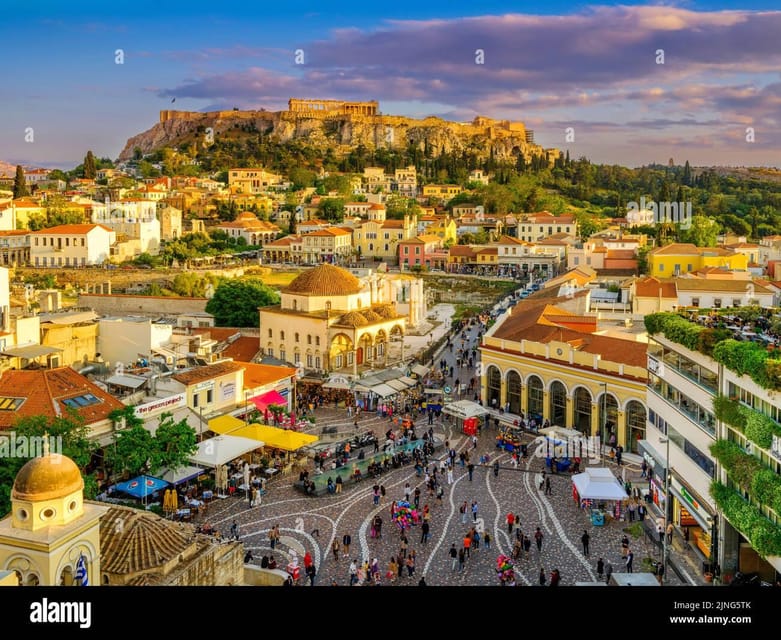
The mood changes as you reach Monastiraki Square. The solemn archaeological zone gives way to a more social part of Athens, where shops, cafes, and street activity make the city feel immediate and current.
This contrast is one of the best reasons to choose a walking tour instead of spending all your time inside museums. You see how the old city and modern city overlap. A few streets can take you from ancient civic life to the sounds and movement of contemporary Athens.
The route also enters Plaka, often called the neighborhood of the Gods. Here, your guide can help you understand the area’s character and point out places worth returning to. The tour promises advice on local places to eat and drink, as well as tips on sightseeing, museums, food, and bars.
That advice can be more useful than a long list of attractions. Athens rewards a flexible plan. You might want a museum after the morning walk, a simple meal in the historic center, or a drink in a livelier district later in the day. Local suggestions help you decide what fits your own interests and schedule.
Do not expect a full food tour. Food and drink recommendations are part of the conversation, not a series of tastings. If your main goal is Greek cuisine, choose a dedicated food experience instead. If you want historical orientation plus practical ideas for later, this approach makes sense.
- All Day Cruise -3 Islands to Agistri,Moni, Aegina with lunch and drinks included
★ 5.0 · 4,958 reviews





Ending near Makrigianni Street
The walk concludes on Makrigianni Street, close to Acropolis Metro Station. This is a smart finish because you can continue your day without retracing your steps. Restaurants and cafes are nearby, so you can stop for a meal, coffee, or a rest after two hours on foot.
The ending also gives you a chance to put the guide’s recommendations to use while the neighborhood is still familiar. You can ask a final question about the Acropolis, a museum, or an area to visit later. Since the tour includes current city trends as well as archaeology, this last stretch connects the old stones with the Athens you will experience for the rest of your stay.
I would schedule this tour near the start of an Athens visit. The route covers enough ground to help you choose where to return, but it does not replace time at the Acropolis, the New Acropolis Museum, or the Ancient Agora. Treat it as a two-hour introduction that improves the rest of your itinerary.
What the guide adds to the walk

The guide is expected to share archaeological expertise, explain myths behind the monuments, and place the sights in their historical setting. That combination is important in Athens, where nearly every corner can carry several layers of meaning.
Matina is the only guide name associated with the experience. Her style was described as relaxed, educated, and comfortable with a child in the group. If you are traveling as a family, that detail may matter. A calm guide who can keep a child included can make a history walk feel less like a lecture.
The overall rating is 4.5 from four ratings, with three especially positive scores and one much less enthusiastic assessment. That spread suggests a useful point: the tour’s success may depend on the guide’s level of detail and engagement. One person felt the walk stayed mostly around the Acropolis and offered too few details. I would keep that possibility in mind if you want an intensive archaeology lesson.
If you enjoy asking questions, do so. Ask about the myths, the law court, the Roman period, or the meaning of a monument you pass. The description promises facts and stories, but a short tour can cover only so much unless you help steer the conversation toward your interests.
Is $43 a fair price for two hours?

At $43 per person, this is not the cheapest way to walk around central Athens, since you can explore many streets and exterior viewpoints on your own. The price makes more sense if you want a live English-speaking guide to connect the monuments and provide a plan for the rest of your visit.
You are paying for more than movement from one stop to another. The value comes from the archaeological explanation, the myths, the city overview, the view from Areopagus Hill, and the practical advice on museums, food, bars, and sightseeing. If those details help you avoid wandering without context, the cost can be reasonable.
The tour is less valuable for someone who already knows Athens well or wants extended time at one site. You will not get a deep visit inside every monument during two hours. Independent visitors with a detailed guidebook may prefer to spend the money on museum admission or a longer specialist tour.
Free cancellation up to 24 hours before the activity and the option to reserve now and pay later add flexibility. Those terms are useful if your Athens schedule is still changing, but they do not alter the main question: do you want a quick, guided overview or a slower visit focused on fewer places?
Who should choose this Athens walk?
I would recommend it to first-time visitors who want to get their bearings early. It suits people who like history but also want current advice about restaurants, cafes, bars, and museums.
Families may find the relaxed approach useful, especially if Matina is leading the walk. The route also suits couples and solo visitors who want company while moving through the central historic districts without committing to a half-day tour.
It is a good fit for anyone with only a short stay in Athens. In two hours, you see the Acropolis area, Areopagus Hill, the Ancient Agora, the Roman Forum, Monastiraki, and Plaka. You will not master the city, but you will have a better map for the hours that follow.
I would hesitate if your priority is detailed archaeological study. The one less favorable account points to the main risk: a guide who gives limited detail can make the walk feel like a circuit around the Acropolis. If expert-level interpretation is essential, ask about the guide’s background and planned route before you commit.
Should you book Highlights and Hidden Gems of Athens?
Book this tour if you want a compact first look at Athens with history, myths, viewpoints, neighborhood atmosphere, and practical city advice in one walk. The route is thoughtfully placed, and the finish near Makrigianni Street makes it easy to continue sightseeing or stop for food.
Skip it if you want long visits inside museums and archaeological sites, or if you already know the center of Athens well. At $43, the tour is worthwhile when the guide is engaged and detailed. It is best used as an orientation walk, not as a substitute for visiting the Acropolis, New Acropolis Museum, or Ancient Agora on your own time.
FAQ
Where does the Athens walking tour meet?
The meeting point is outside Acropolis Metro Station on Makrigianni Street, a pedestrianized road with restaurants and cafes.
How long does the tour last?
The walking tour lasts two hours.
What language is the tour conducted in?
The live tour guide conducts the experience in English.
How many monuments does the route cover?
The tour covers more than 15 monuments and archaeological points of interest in central Athens.
Does the tour visit the Acropolis?
The route walks along Dionysiou Areopagitou Street, where you can see important monuments and the Parthenon area. The provided information does not state that the tour includes entry inside the Acropolis.
Does the tour include the New Acropolis Museum?
The New Acropolis Museum is encountered along the route, but museum admission and an indoor museum visit are not listed as included.
Is the walking tour wheelchair accessible?
The activity is listed as wheelchair accessible. Because the route includes Areopagus Hill, ask for current route details if you need specific accessibility information.
Can I cancel the booking?
You can cancel up to 24 hours in advance for a full refund. You can also reserve now and pay later.