REVIEW · ATHENS
Mycenae Half-Day Private Tour from Athens
Book on Viator →Operated by LS Tours · Bookable on Viator
The most striking part of this private Mycenae tour from Athens is the jump from modern Greek engineering to a Bronze Age fortress. In one half-day, you see ships pass through the narrow Corinth Canal, then walk among the massive walls of Mycenae, a center that flourished more than 3,000 years ago.
I like the door-to-door pickup and the freedom to explore Mycenae at your own pace. I also like the onboard Wi-Fi, bottled water, and private vehicle, especially for a family or small group that wants to avoid a crowded bus. The main catch is that your driver is not a licensed guide and will not enter the archaeological site with you.
In This Review
- Key points to know before booking
- Why the Corinth Canal makes a smart first stop
- The private car changes the pace of the day
- The Treasury of Atreus: a massive Bronze Age tomb
- Walking through the fortified acropolis of Mycenae
- The Lion Gate and Mycenae’s most famous image
- The museum puts small objects beside huge walls
- What the driver can and cannot add
- Is $158.51 per person a fair price?
- Timing, weather, and comfort tips
- Who should book this Mycenae excursion?
- Should you book it?
- FAQ
- How long does the Mycenae private tour take?
- Where can pickup take place?
- Where does the driver return me?
- Is the tour private?
- Is the tour offered in English?
- Does the tour include a licensed guide?
- How much is admission to the Mycenae archaeological site?
- Is the Corinth Canal ticket included?
- What is included in the price?
- Can I cancel for a full refund?
Key points to know before booking
- See two very different wonders in one outing: Pair the 6.4-kilometer Corinth Canal with the Bronze Age ruins of Mycenae.
- Travel privately from Athens or Piraeus: Your driver collects you at a hotel, apartment entrance, or port gate and returns you to a preferred location in Athens.
- Explore Mycenae independently: You can set your own pace, but no official guide accompanies you inside the site.
- Allow extra money for admission: The Mycenae archaeological site costs €20 per adult, and entry is not included.
- Expect about five and a half hours: The drive to the canal takes roughly 90 minutes, followed by the Mycenae visit and return drive.
- Ask for the level of commentary you want: Drivers such as George and Stefanos have been praised for helpful historical and political conversation, but the exact driver is not guaranteed.
Why the Corinth Canal makes a smart first stop
Athens is a superb base for ancient sites, but Mycenae lies across the Isthmus of Corinth in the Peloponnese. The drive takes time. The Corinth Canal gives you a worthwhile break before the main archaeological visit rather than leaving you in the car for the full trip.
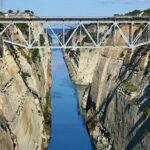
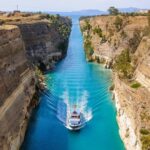
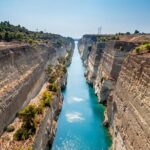
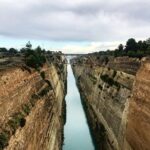
The canal links the Gulf of Corinth with the Saronic Gulf. It cuts through the narrow isthmus and separates the Peloponnese from mainland Greece, at least in the practical sense that the peninsula is surrounded by water. The channel is about 6.4 kilometers long, but only 21.4 meters wide at its base.
From the high viewpoint, you can look down at the steep limestone walls and watch vessels move through the cut. The scale is hard to judge from photographs, so this is a good place to have your camera ready. Admission is free, and the stop lasts about 30 minutes.
I would not think of the canal as a long sightseeing visit. It is a focused photo and orientation stop. You get a clear view, a short stretch of fresh air, and a useful sense of the geography before continuing toward Mycenae.
You can also read our reviews of more private tours in Athens



The private car changes the pace of the day
Your personal driver picks you up in Athens or at Piraeus port. At a hotel, the driver waits in the lobby. At an apartment, the meeting point is the building entrance. For a port pickup, the driver waits at the gate with a sign showing your name.
That arrangement matters if you are arriving by ship or have limited time in Athens. You do not need to find a meeting point across the city, and you can arrange a return to the same place or another preferred location in Athens.
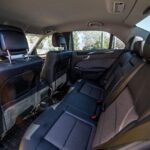
The vehicle is air-conditioned, and private transportation, bottled water, and onboard Wi-Fi are included. Wi-Fi will not replace a full work connection, but it is useful for checking maps, sending messages, or avoiding roaming charges during the long road sections.
A private vehicle also gives you room to discuss the day as it unfolds. If your group cares more about ancient architecture than modern infrastructure, you can keep the canal stop short. If the weather is hot, you can make better use of the air-conditioned car between outdoor visits.
The tradeoff is simple: you are paying for privacy and convenience, not for a fully guided archaeological tour. The driver can offer English commentary and answer questions, but the driver does not enter the ruins with you.
The Treasury of Atreus: a massive Bronze Age tomb
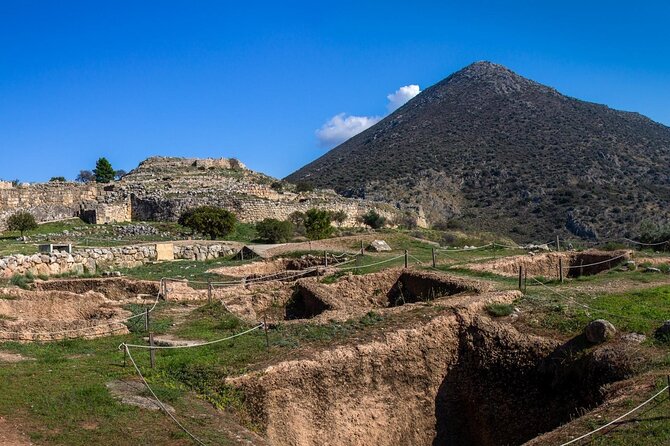
The Treasury of Atreus, also called the Tomb of Agamemnon, sits on Panagitsa Hill near Mycenae. It is a tholos tomb, built with a beehive-shaped interior, and dates to about 1250 BC.
The entrance alone gives you a sense of the builders’ skill. The stone lintel above the doorway weighs about 120 tons and measures approximately 8.3 by 5.2 by 1.2 meters. It is described as the largest lintel in the world.
You have about 30 minutes here. That is enough time to examine the approach, step into the tomb, and take in the stonework without turning the visit into a long stop. The tomb was mentioned by the Roman geographer Pausanias in the second century AD, and it remained visible when Heinrich Schliemann began archaeological work at Mycenae in 1879.
The name can create confusion. This is traditionally linked with Agamemnon, the legendary king associated with the Trojan War, but the actual person buried here is unknown. Treat the name as part of the later tradition, not as proof of the tomb’s occupant.
Admission is not included, so keep the €20 adult entry fee in mind. The information supplied for the tour identifies the fee for the archaeological site of Mycenae, but it does not give a separate charge for the Treasury of Atreus. Ask your driver how admission is handled on the day.
Walking through the fortified acropolis of Mycenae
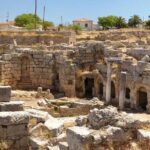
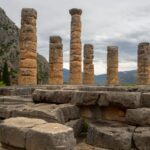
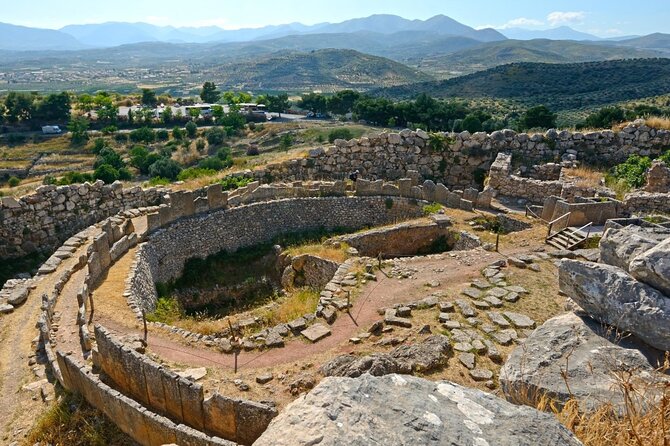
The main archaeological site is the heart of the excursion. Mycenae’s visible remains belong mainly to its great period from about 1350 to 1200 BC. The site includes the fortified acropolis, burial areas, and former habitation areas west and southwest of the citadel.
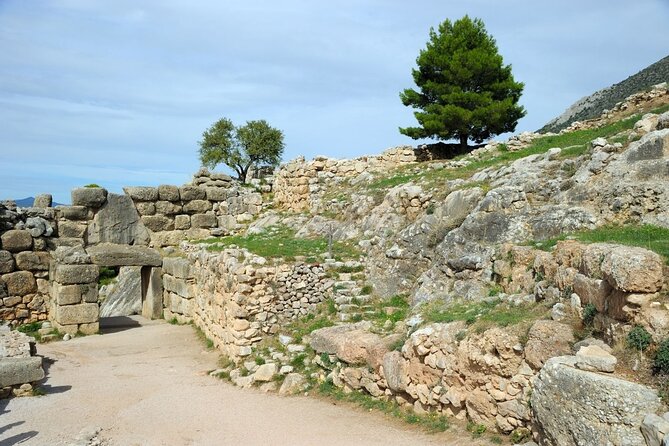
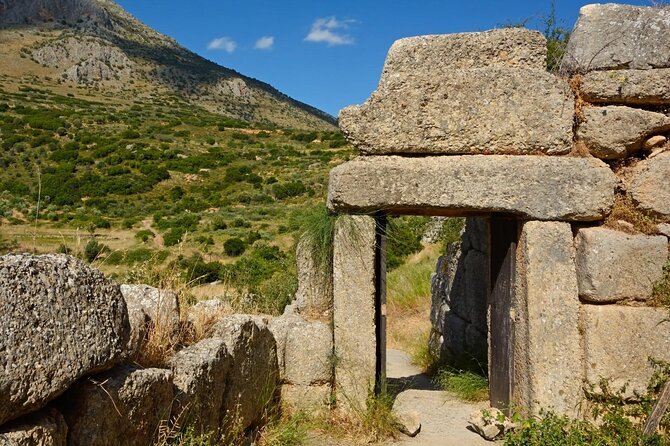
The walls are built from huge stones known as Cyclopean masonry. Later Greeks thought only Cyclopes could have moved blocks of that size, which tells you how unusual the walls looked even in antiquity. You do not need to know every archaeological term to appreciate the basic point: the fortifications are massive, and the site feels built for power and defense.
The acropolis is roughly triangular and entered from the northwest through the Lion Gate. You can walk among the surviving walls and picture Mycenae as a political center rather than just a scattered ruin.
The independent format works well here if you already have some background or prefer to stop only where you want. You can linger at the gate, examine the wall construction, or move on to the museum when you have had enough outdoor walking.
It can be less satisfying if you want a detailed explanation at every monument. Since the driver stays outside the archaeological site, you will not have a licensed guide pointing out each feature. Bring your own reading material if precise archaeological interpretation is important to you.
The tour description recommends athletic or walking shoes, along with a hat, sunglasses, and sunscreen. Take that advice seriously. Much of the visit is outdoors, and the site includes uneven ancient surfaces rather than smooth city sidewalks.
The Lion Gate and Mycenae’s most famous image
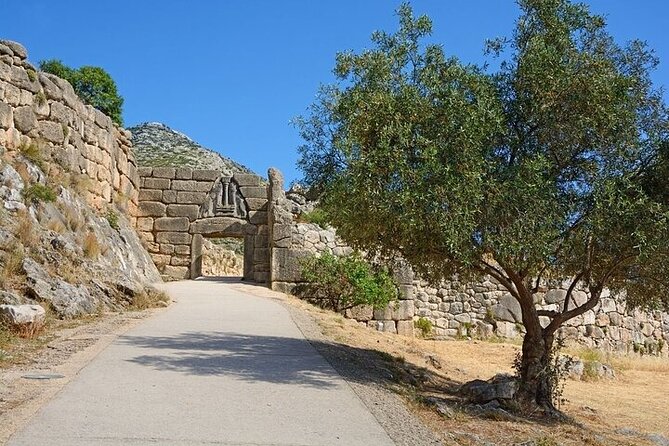
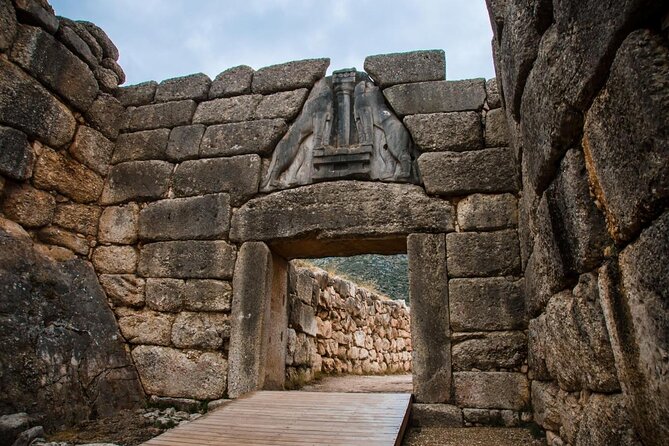
The Lion Gate is the main entrance to the Bronze Age citadel and probably the most memorable single monument on the route. It was built around 1250 BC on the northwest side of the acropolis.
Two lions or lionesses face each other above the doorway in a heraldic pose. The relief sits in the triangular space above the entrance, a construction feature that helped reduce pressure on the massive lintel below.
The image carried a clear message. Anyone entering the citadel passed beneath a symbol of royal authority. The gate is also important because it is the only surviving monumental piece of Mycenaean sculpture and the largest sculpture from the prehistoric Aegean.
You have about 30 minutes allocated for this stop, though it forms part of the main site visit. That gives you enough time for photographs and a close look at the masonry. I recommend taking a moment to study the way the relief fits into the structure, not just photographing the lions and moving on.
The gate was known in classical literature before modern archaeology, which makes it unusual among Bronze Age monuments. Many ancient structures were buried or forgotten. This one remained visible and became a fixed point for later accounts of Mycenae.
A few more Athens tours and experiences worth a look




The museum puts small objects beside huge walls
The Archaeological Museum of Ancient Mycenae helps fill in the gaps left by the outdoor ruins. The citadel walls are impressive, but stone alone cannot show how people lived, worked, worshiped, or buried their dead.
The museum visit is listed at about one hour. The tour information repeats the description of the wider Mycenae archaeological complex, but it does not provide a detailed list of the museum’s individual displays. Plan to use the indoor visit as a chance to place the site’s architecture in context rather than expecting a guided museum lecture.
This stop is especially useful after the Treasury of Atreus and Lion Gate. You have seen the grand entrances and defensive walls. The museum gives you a quieter place to consider the people who built and used them.
Because your driver will not accompany you inside as an official guide, the museum experience is self-directed. That can be a benefit if you like reading labels and choosing your own pace. It may feel thin if you want someone to connect each object to the wider story.
What the driver can and cannot add
The driver is not an official tour guide, but the service assigns English-speaking drivers who can provide commentary and answer questions. That distinction is important when you compare this outing with a guided group tour.
George has been praised for being helpful and for making the trip from Athens to Mycenae easy. Stefanos has also been singled out for wide-ranging conversation about politics and Greek history, supported by extra reading. Those names suggest the company has drivers who take the role seriously, but you should not book on the assumption that one particular person will drive your group.
The best use of the driver is on the road. Ask questions during the long journey, clarify what you are seeing, and request practical help with the order of the stops. Once you reach the ruins, expect to walk independently.
That setup suits you if you like privacy and do not need constant narration. It is less suitable if you want a specialist to explain every layer of Mycenaean archaeology while you stand among the ruins.
Is $158.51 per person a fair price?
The listed price is $158.51 per person, with group discounts available. Whether it is good value depends heavily on the size of your party.
For one or two people, the price may feel high because the archaeological admission and a licensed guide are not included. You also spend a large part of the five-and-a-half-hour outing on the road. The value comes from private pickup, a private air-conditioned vehicle, port access, flexible pacing, Wi-Fi, and the ability to avoid a large tour group.
For a family or small group, the calculation improves, especially if a group discount applies. You are sharing the vehicle and driver only with your own party, so you can keep the day together and avoid coordinating several taxis or a rental car.
The €20 adult admission fee is an extra cost. The tour also does not include a licensed guide. Add those expenses before comparing it with a larger guided excursion.
I would choose this tour for convenience and control, not simply because it is the cheapest route to Mycenae. If your priority is expert interpretation inside the ruins, budget for a guide or choose a product that includes one.
Timing, weather, and comfort tips
The total duration is approximately five hours and 30 minutes. The drive from Athens to the Corinth Canal takes about 90 minutes, and the return drive takes about the same. That leaves the middle of the day for the canal, Treasury of Atreus, archaeological site, Lion Gate, and museum.
The stop descriptions add up in a slightly loose way, so do not expect every visit to run like a railway timetable. Your driver may need to adjust the pace for traffic, site conditions, or your group’s interests.
A morning or late-afternoon visit is the best practical choice according to the supplied advice. The outdoor ruins can be demanding under strong sun, so wear walking shoes and bring a hat, sunglasses, and sunscreen. Bottled water is provided, but carrying what you need for the walking portion remains sensible.
The experience requires good weather. If poor weather forces cancellation, you can choose another date or receive a full refund. For a full refund after booking, cancel at least 24 hours before the start time. Changes or cancellations inside that window are not accepted.
Who should book this Mycenae excursion?
I would recommend it to a couple, family, or small group staying in Athens that wants to see Mycenae without renting a car. It also suits cruise passengers arriving at Piraeus, since port pickup is built into the arrangement.
History-minded visitors will get the most from the trip, especially if they enjoy exploring ruins on their own. The combination of the canal, a giant Bronze Age tomb, Cyclopean walls, Lion Gate, and museum gives you several different ways to understand the area.
It is also a good fit if you value conversation during the drive. Drivers such as George and Stefanos have provided thoughtful historical discussion, and the private format lets you ask questions without competing with a busload of strangers.
I would look elsewhere if you need a licensed archaeologist or a guide who walks through every part of the site with you. I would also think twice if you dislike long drives or want a leisurely full-day visit with several additional stops. This is a compact route with a clear focus on Corinth and Mycenae.
Should you book it?
Book this private Mycenae tour if you want simple door-to-door transport, a small private group, and freedom to explore the ruins without a fixed group pace. The Corinth Canal adds a worthwhile engineering stop, and onboard Wi-Fi makes the road time easier.
Before paying, make sure you are comfortable with three points: the roughly five-and-a-half-hour schedule, the €20 adult archaeological admission fee, and the fact that your driver will not enter the site as a licensed guide. For the right group, those limits are balanced by convenience, strong driver commentary, and a practical visit to one of Greece’s most important Bronze Age sites.
FAQ
How long does the Mycenae private tour take?
The experience lasts approximately five hours and 30 minutes, including the drives between Athens, the Corinth Canal, Mycenae, and Athens.
Where can pickup take place?
Pickup is offered from Athens or Piraeus port. At a hotel, the driver waits in the lobby. At an apartment, the meeting point is the entrance. At the port, the driver waits at the gate with a sign showing your name.
Where does the driver return me?
The driver returns you to the same place or to another point you prefer in Athens.
Is the tour private?
Yes. Only your group participates in the private activity.
Is the tour offered in English?
Yes. The tour is offered in English, and drivers can provide commentary and answer questions in fluent English.
Does the tour include a licensed guide?
No. A licensed tour guide is not included. Drivers are not official guides, although they can provide information and commentary. They do not enter the archaeological sites with you.
How much is admission to the Mycenae archaeological site?
Admission is not included. The stated entry fee is €20 per adult.
Is the Corinth Canal ticket included?
The Corinth Canal stop has no admission ticket charge listed.
What is included in the price?
The tour includes bottled water, an air-conditioned vehicle, Wi-Fi onboard, and private transportation.
Can I cancel for a full refund?
You can receive a full refund if you cancel at least 24 hours before the experience start time. Cancellations or changes made less than 24 hours before the start are not accepted. If poor weather causes the experience to be canceled, you can choose another date or receive a full refund.