REVIEW · METEORA
Naxos: Bus Tour Around the island
Book on Viator →Operated by MTM Experiences · Bookable on Viator
Naxos doesn’t do well with half-measures, and this bus loop shows why. You’ll get an easy all-day hit of marble, villages, and coastal views, starting with the 6th-century BC Temple of Demeter. Best of all, you’re not stuck figuring out transport because hotel pickup is part of the package.
My favorite part is how the day turns into real context, not just check-the-box stops. I especially like the guide’s focus on Naxos marble and how carving and production tie into what you see in town and countryside, and you also get that small-group feel from a tour capped at 40 people. One possible drawback: language support is English-first, and if you were counting on another language (like German), you may be disappointed.
You also should know that comfort can be mixed. One review flagged an older bus and broken armrests, so if you’re picky about seat time, plan for the fact you’ll be rolling for much of the day.
In This Review
- Key highlights at a glance
- Why This Naxos Island Bus Loop Works on a Tight Schedule
- Getting Picked Up in Naxos Town and the Beach Areas
- Stop 1: Temple of Demeter and Naxos Marble Up Close
- Stops 2 and 3: Damalas Views and Halki’s Village Capital Energy
- Stop 4: Apollonas, the Fishing Village Name With Real Roots
- Stop 5: Apollonas Kouros Near Melanes
- The Guide, the Bus Ride, and What Language Really Means
- Price and Value: What $42.14 Buys You (and What It Doesn’t)
- Timing That Feels Real: How the Day Is Balanced
- Practical Tips to Make This Tour Feel Worth It
- Should You Book This Naxos Bus Tour Around the Island?
- FAQ
- What time does the tour start?
- How long is the tour?
- Where is pickup available?
- What language is the tour offered in?
- Is there hotel drop-off after the tour?
- Are there entrance fees to pay during the tour?
- Is lunch included?
- What’s the group size limit?
- What is the cancellation policy?
Key highlights at a glance
- Hotel pickup and drop-off from Naxos Town and common beach areas like Stelida, Stelida/Agios Prokopios, Agia Anna, and Plaka
- Marble-focused stops that connect ancient craft to what you see today
- Village time with actual walking in Damalas and Halki (not just quick photo stops)
- Apollonas fishing village for a slower, seaside feel
- Small-tour pacing with a maximum of 40 travelers and a guide who keeps things moving
Why This Naxos Island Bus Loop Works on a Tight Schedule
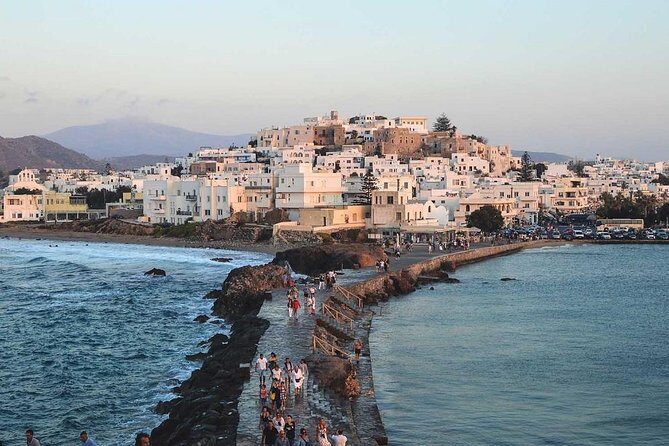
This tour is built for one thing: getting you off the island roads in a sensible way. Naxos is big enough that a DIY day can turn into a car-and-parking headache, especially if you want multiple different vibes, like ancient marble in the mountains and a fishing village by the sea.
You start at 9:00 am and spend about 8 hours total. The rhythm is a mix of short landmark stops and longer stretches in villages. That balance matters because the best parts of Naxos are often in the in-between places: a view from a village edge, a church stop, or seeing how one community shaped itself around stone and farming.
And since the bus is air-conditioned, you’re not paying for air with your own energy. It’s also a practical choice if your vacation days are limited and you want to “learn the island” before you branch out on your own.
You can also read our reviews of more tours and experiences in Meteora.



Getting Picked Up in Naxos Town and the Beach Areas
The logistics are straightforward and that is part of the value. Pickup covers several common bases: Naxos Town, Stelida, Agios Prokopios, Agia Anna, and Plaka. That means you can often avoid the stressful part of island travel—figuring out where your driver expects you to meet.
What I like about pickup like this is that it buys you time. You can sleep in a bit, get ready at your hotel, and let the bus handle the island routing. You don’t have to time buses, rearrange scooter plans, or worry about lining up a driver at the end of the day.
One small thing to keep in mind: with morning pickup, you’ll want to be ready early. Even if the day doesn’t start with a long walk, getting to the meeting point without rushing helps the whole experience feel smoother.
Stop 1: Temple of Demeter and Naxos Marble Up Close

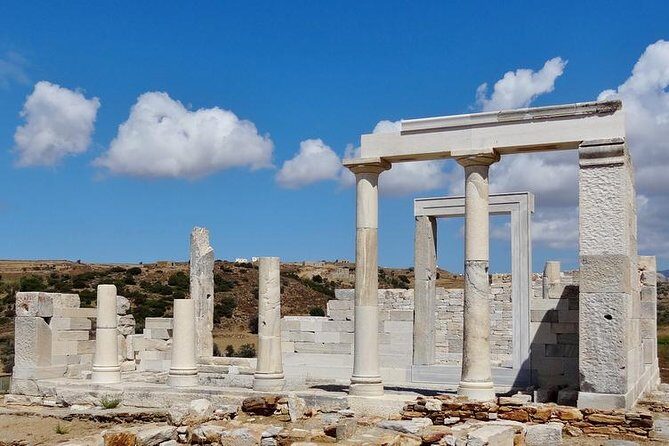
Your first real anchor stop is the Temple of Demeter, a site dating back to the 6th century BC. What makes it special for this tour is not just the age—it’s the material story. The temple is noted as being made exclusively of Naxos marble, and that detail sets up the rest of the day.
You’ll have around 20 minutes here. That’s short enough to keep things moving, but long enough to absorb two things:
- The sheer visual weight of the stone
- The idea that Naxos wasn’t only a scenic island; it was a quarrying and crafting place
Also, admission is listed as free for this stop. That’s a small budget win, and it keeps you focused on seeing instead of calculating what you still have to pay for.
If you’re someone who learns best by seeing physical proof, this is a good start. It’s one of those moments where your later village walks make more sense because you’ve already connected the marble to daily life.
Stops 2 and 3: Damalas Views and Halki’s Village Capital Energy
After the temple, the day shifts into people and places. Stop 2 is Damalas, a small village laid out in an amphitheater-style spread at the foot of Lagos hill in the valley of Tragea. The payoff here is viewpoint time. You can often see how the village “hangs” in the terrain, and that helps explain why communities like this evolved where they did.
You’ll spend about 1 hour 30 minutes in Damalas. That longer window is good because it allows more than one round of pictures. It’s time to slow down, look at angles, and notice how houses, streets, and stonework respond to the hillside.
Admission is listed as free here too, so you can treat it as a pure wandering stop.
Then you move to Halki (also listed as Chalki). This is in central Tragea and about 16 km from Naxos Town. Halki has a long history and was once the capital of Naxos, plus the main administrative and trade center. In plain terms, this is not just a pretty village. It’s tied to how the island organized power and commerce.
You’ll get around 1 hour in Halki. That’s enough time to feel the bones of the place without rushing through it. And one of the big values of Halki during a bus tour is that it gives you a sense of Naxos beyond coastline tourism—more like the island’s working geography.
Stop 4: Apollonas, the Fishing Village Name With Real Roots
Next up is Apollonas, a fishing village named after Apollo, the Olympian god of light and music. The tour also notes it’s inhabited since ancient times, which makes the stop feel like more than a seasonal postcard.
You’ll have about 1 hour 30 minutes here. That extra time is where this tour earns its keep. Apollonas isn’t only about the view. It’s also about watching daily rhythms: the way a working village looks compared with a resort strip.
Admission is listed as free, so again you can spend more time simply being there. If you want a break from “marble mode,” this is the reset. Even if the weather is mild, the seaside element changes how the day feels.
If rain moves in, you might miss some of the more scenic moments on the way back. One review specifically pointed out how weather cut down the view during the return drive, and that’s a good heads-up: much of Naxos’ charm is outdoors, so bring flexibility.



Stop 5: Apollonas Kouros Near Melanes
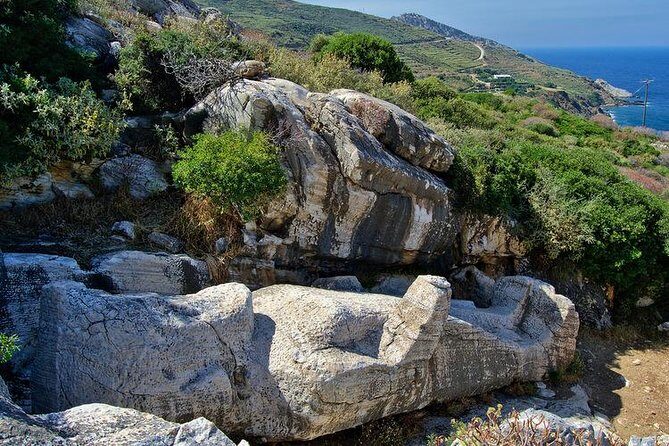
The last cultural punch comes with the Apollonas Kouros, a statue described as remarkable, located outside the village of Melanes in the countryside of Naxos. Expect a shorter stop here—around 20 minutes.
This kind of stop is easy to undervalue, but it can land well if you’ve already been seeing marble as a theme for the day. A kouros statue is a physical reminder that sculpture was a major part of ancient life on these islands, not just a museum concept.
Admission is listed as free. In 20 minutes, you’re mainly there to see the scale, the setting, and what the statue represents in a landscape that still reads like an open-air exhibit.
The Guide, the Bus Ride, and What Language Really Means
A big chunk of your enjoyment comes down to the guide. The day is described as having a local multi-lingual escort and being offered in English. In practice, you should treat this as an English-led experience.
One review praised the guide as very informative and another noted strong knowledge about the area. That lines up with what you want on a tour like this: context that ties each stop to the island’s story.
At the same time, at least one review flagged that the guide could be hard to understand at times. That’s a normal risk on bus tours where audio conditions and accents vary. My practical tip: sit where you can hear clearly, and if you’re in a spot with bad sound, don’t be shy about shifting.
Also, one review mentioned snack and candy as a highlight. Those small bits matter because they break up a long day and keep energy stable between stops.
Finally, there’s the driving side. One review thanked the bus driver and called out navigational skill on narrow roads. That’s not just flattery—it’s real value. Naxos roads can feel tight and winding, and a confident driver makes the ride feel safe instead of stressful.
Price and Value: What $42.14 Buys You (and What It Doesn’t)

At $42.14 per person for about 8 hours, this tour is priced like a solid “transport plus guided highlights” deal. And the included items are where you feel the value:
- Hotel pickup and drop-off from several zones
- Air-conditioned vehicle
- A local escort/guide
- Several stops list admission as free
Here’s the nuance: entrance fees aren’t listed as included. Yet the specific stops (Temple of Demeter, Damalas, Halki, Apollonas, and the Kouros) all show admission ticket free. So in most cases, you may not have entry costs during the day. Still, I’d treat it as a good day to avoid assuming every single related checkpoint is free, just to keep your expectations sane.
Lunch is not included. That’s the biggest “you’ll need to plan” gap. One review complained that the lunch break location had not much to do, and that the lunch break timing felt like it could have been better placed. So if lunch matters to you, plan to eat in a nearby town before or after the tour’s main break, depending on timing.
Personal expenses are also not included. So budget for drinks, snacks beyond what’s provided, and souvenirs.
Given the pickup coverage, the capped group size (max 40), and the number of cultural stops, you’re mostly paying for a guided sampler that would otherwise take coordination to stitch together yourself.
Timing That Feels Real: How the Day Is Balanced
One reason bus tours can feel exhausting is when the stops are all quick. This one mixes short and longer visits:
- Temple stop is short, so you get the key landmark without eating the day
- Damalas and Apollonas each get longer blocks, which helps you actually experience the villages
- Halki is in the middle, enough time to feel the layout
- The Kouros is short but deliberate
That pacing is important if you’re traveling with limited mobility or just want to keep your energy. You’re not stuck in constant stair climbs or long museum endurance. You’re also not only sitting on the bus, which some island tours do.
Practical Tips to Make This Tour Feel Worth It
Bring good walking shoes. Even when village time is “only” an hour or so, stone streets and uneven terrain are part of the experience.
Plan for weather. If rain hits, you might lose scenic moments during driving or outdoor viewpoint breaks. A light rain layer and a small umbrella can keep the day comfortable.
If language matters for you, treat English as the default. This tour is offered in English, and you shouldn’t count on another language explanation.
For lunch, treat it as a self-managed meal strategy. If the scheduled lunch stop looks limited, you might find it better to eat before you go or plan a late lunch after you return.
And lastly, aim to sit where you can hear. On a bus, “close enough” is not always enough for guidance details. Hearing the stories is half the point.
Should You Book This Naxos Bus Tour Around the Island?
Book it if you want an efficient day that gives you marble culture, village atmosphere, and at least one proper seaside stop without renting a car or dealing with island timing.
Skip it or think twice if you’re very sensitive to seat comfort and long rides, or if you need explanations in a language other than English. Also, if your top priority is a gourmet lunch or plenty of free time in a specific town, you may find the day’s structure doesn’t match that.
For most people, though, this is a practical way to get oriented fast. You’ll leave with a clearer sense of where Naxos’ stone and village communities fit into the island story, not just a set of photos.
FAQ
What time does the tour start?
It starts at 9:00 am.
How long is the tour?
The duration is listed as about 8 hours.
Where is pickup available?
Pickup is offered from Naxos Town, Stelida, Agios Prokopios, Agia Anna, and Plaka.
What language is the tour offered in?
The tour is offered in English, and it includes a local multi-lingual escort.
Is there hotel drop-off after the tour?
Yes, hotel drop-off is included along with pickup.
Are there entrance fees to pay during the tour?
Entrance fees are listed as not included, but the specific stops in the schedule show admission as free.
Is lunch included?
No, lunch is not included.
What’s the group size limit?
The tour has a maximum of 40 travelers.
What is the cancellation policy?
You can cancel for a full refund up to 24 hours before the experience start time.