REVIEW · ATHENS
Night Tour of the City of Athens with Guide in Spanish
Book on Viator →Operated by Secrets of Greece · Bookable on Viator
Athens changes after sunset. The white marble, neoclassical facades, quiet lanes, and illuminated Acropolis views give the capital a different mood from its hot, crowded daytime self. This two-hour Spanish walking tour links major sights with stories of Greek history, mythology, and modern city life.
I like the small group limit of 15, which should make it easier to hear the guide and ask questions. I also like the route’s range: you move from the National Library and Academy to Parliament, Olympic landmarks, Plaka, and the Ancient Agora without paying for a string of separate admissions.
The main consideration is that this is an outdoor orientation walk, not an archaeological-site visit. You do not enter the Panathenaic Stadium, Temple of Olympian Zeus, or Ancient Agora, and two hours means some stops are brief. If you want detailed interior visits, book this as a first look rather than a complete Athens history tour.
In This Review
- Key things to know before you book
- Why Athens is worth seeing after sunset
- Starting with Athens’s neoclassical trilogy
- Syntagma Square and the Greek Parliament
- Zappeion and Athens’s Olympic story
- Zeus’s Temple under the evening sky
- Plaka, the cathedral, and the route into older Athens
- What the two-hour format really means
- Is $27.51 a fair price?
- Spanish guides, group feel, and practical details
- Who should book this night walk?
- Should you book the Athens night tour in Spanish?
- FAQ
- How long does the Athens night tour last?
- What language is the tour conducted in?
- Where does the tour begin?
- Where does the tour end?
- Are entrance tickets to archaeological sites included?
- Is dinner included?
- How many people can join the tour?
- Can I cancel for a full refund?
Key things to know before you book
- Night lighting changes the city: Neoclassical buildings, marble monuments, and the Acropolis take on a softer look after dark.
- Spanish guidance is the focus: Guides Juan and Lorena are specifically praised for clear explanations, enthusiasm, and useful city advice.
- The route covers central Athens well: You see the Athenian Trilogy, Syntagma Square, Parliament, Zappeion, the Olympic sites, Plaka, and the Ancient Agora.
- No archaeological interiors are included: The tour stays outside the sites, so plan separate visits if you want to go inside.
- It is good value at $27.51: The price covers a Spanish-speaking official guide and a two-hour route through many major landmarks.
- You finish at the Ancient Agora: The walk starts on Panepistimiou Street and ends near the Agora, not back at the starting point.
Why Athens is worth seeing after sunset
Athens is often sold through its ancient ruins, but the evening tour gives equal attention to the city’s later identity. You begin among grand nineteenth-century buildings, continue through the political heart of modern Greece, and end near the ancient center below the Acropolis.
That contrast is the best idea behind the route. The city’s history does not sit in one fenced-off ruin. It appears in university buildings, public squares, royal-era monuments, Olympic sites, churches, and archaeological remains.
The night setting also helps with comfort. One Spanish-language review specifically praised the pleasant weather, fewer tourists, and reassuring feeling of joining an organized walk after dark. That will depend on the date and evening conditions, but the timing can be a real advantage during Athens’s warmer months.
You should still expect a walking tour, not a slow sightseeing bus. The route includes eleven stops, with many visits lasting only five minutes. That gives you a broad introduction, but it also means the guide must keep the stories moving.
You can also read our reviews of more guided tours in Athens



Starting with Athens’s neoclassical trilogy
Meet at Vallianeio Megaron, Panepistimiou 32, beside the National Library of Athens. This is the first building in the Athenian Trilogy, a group of grand neoclassical institutions that helped shape the look of modern central Athens.
The National Library is a strong opening point because it immediately puts you among formal columns, painted details, and the kind of architecture that can be easy to miss in daylight traffic. At night, lighting draws attention to the facade and gives the guide a good setting for explaining Athens’s nineteenth-century development.
You then walk to the National and Kapodistrian University of Athens. This is the second building in the trilogy and the university’s headquarters. The route description identifies the building as part of the university complex, not the Radiology and Medical Imaging Research Unit as an interior visit, so you should expect to view it from outside.
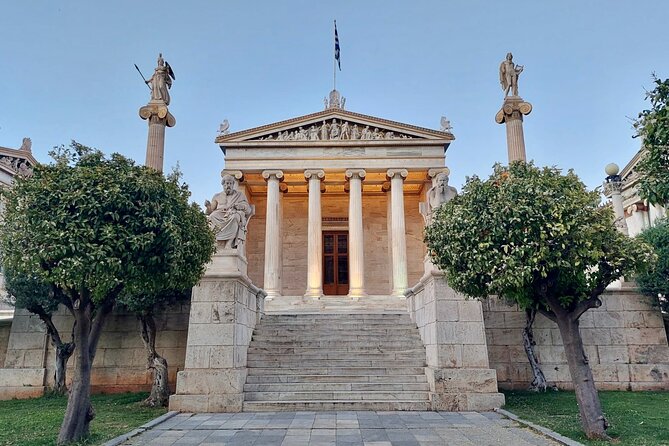
The third stop is the Academy of Athens. Its design draws directly from ancient Greek models, making it a useful bridge between classical ideals and modern Greek public architecture. The five-minute stop is short, but the visual connection is clear: columns and sculptural decoration recall antiquity while the building belongs to a much newer Athens.
I like this opening because it gives you context before the ancient monuments appear. You are not only ticking off famous ruins. You are seeing how Greece used its classical past when shaping the capital of the modern state.
Syntagma Square and the Greek Parliament
From the trilogy, the route continues to Syntagma Square, the central public square named in memory of the constitution granted under King Otto I. The stop lasts about ten minutes, enough time for the guide to explain why this place matters to modern Greek political life.
Syntagma is also a practical orientation point. If Athens is new to you, learning where the square sits in relation to the central streets, Parliament, and the Plaka area can make the rest of your stay easier. The tour does not promise a formal civic ceremony or an interior visit, so focus on the setting and the guide’s explanation.
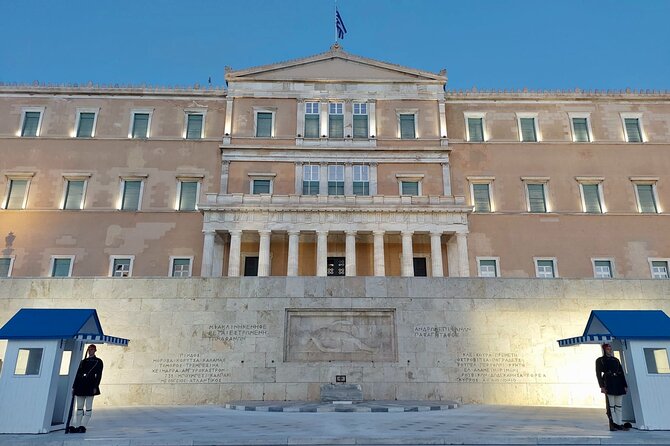
The nearby Hellenic Parliament receives another ten-minute stop. The building is known as the Parliament of Greece, and its position beside Syntagma gives the tour a clear modern counterpoint to the ancient sites later in the evening.
This is one area where a Spanish guide can add real value. The strongest comments about the guides focus on clear language, broad vocabulary, historical detail, and the ability to connect each place to the next. Juan is praised for explaining things in an easy, engaging way and for offering practical advice about the city. Lorena is praised for preparation, enthusiasm, and connecting the descriptions into one story.
Zappeion and Athens’s Olympic story
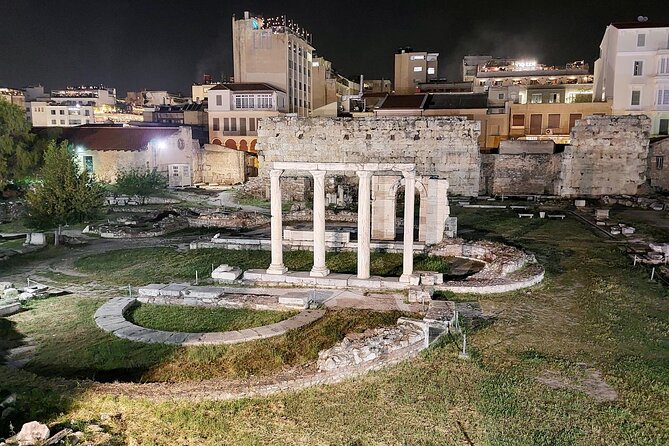
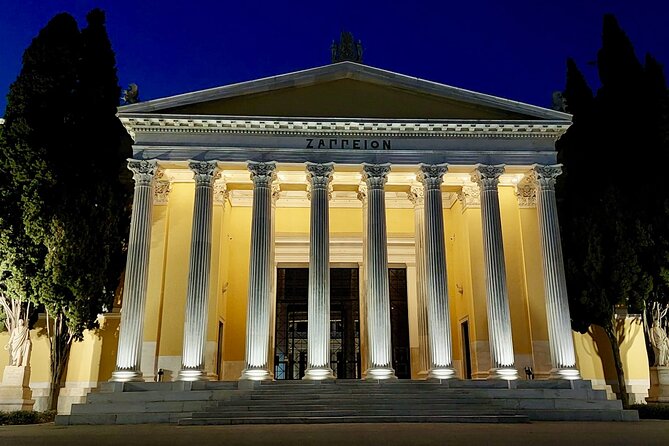
The walk then reaches Zappeion, a handsome building linked to the Olympic Games. The stop is brief, around five minutes, but it widens the story beyond ancient Greece.
Athens has used the Olympics more than once to express its place in the world. At Zappeion, you get a reminder that the city’s public buildings and ceremonial spaces belong to several different eras. The guide may connect the site to the Olympic tradition and the capital’s modern ambitions, though the supplied details do not promise a specific interior or event demonstration.
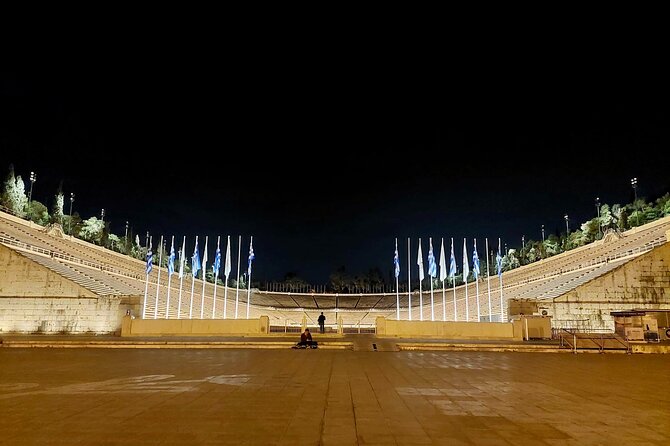
The next stop is the Panathenaic Stadium, the venue associated with the first edition of the Olympic Games. Its white marble is especially effective under evening lighting, and the five-minute pause should give you time to take photographs and hear the main historical points.
Keep your expectations in check. This is an exterior stop, and there is no entry into the stadium. If you want to walk through the seating area or examine the stadium at length, you will need a separate visit. On this tour, the benefit is seeing how the stadium fits into the wider city route without spending the evening inside one monument.
The route also includes Leof. Vasilisis Amalias 50, described as one of Athens’s significant monuments. The information provided does not identify this stop more precisely, so treat it as a brief landmark pause rather than a full guided visit. That is useful for photos, but less satisfying if you want a detailed explanation at every point.
Zeus’s Temple under the evening sky
The Temple of Olympian Zeus receives about ten minutes. It was the largest temple in Greece, and even an exterior view gives you a sense of its scale.
This is one of the places where the night schedule makes sense. Columns lit against the dark sky can be easier to appreciate than they are in the glare and heat of midday. You can also listen to the mythology and history without rushing through an indoor collection.
Again, the tour does not include access inside the archaeological site. The guide explains the monument from the outside, then keeps the group moving. If you already know Athens’s main ancient monuments well, this may feel like a quick reminder. If you are arriving for your first visit, the stop gives you a clear reason to return during opening hours.
The walk’s structure is best for people who prefer a connected story. You hear about classical ideals at the Academy, modern political life at Parliament, the Olympic tradition at Zappeion and the stadium, then ancient religious architecture at Zeus’s Temple. The city begins to feel like one place shaped by many periods, rather than a set of unrelated photo stops.
You can also read our reviews of more city tours in Athens


Plaka, the cathedral, and the route into older Athens
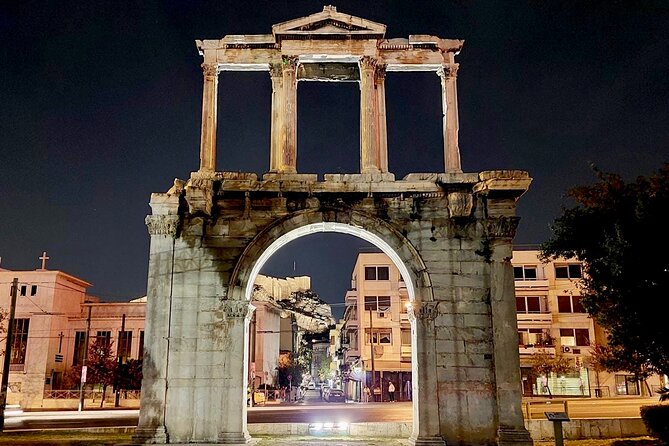
The Metropolitan Cathedral of Athens is in the heart of Plaka and receives about ten minutes. The neighborhood is one of the city’s most atmospheric areas, and an evening walk here gives the tour a more intimate feel after the formal scale of Syntagma and the Olympic sites.
The cathedral stop also changes the subject from state buildings and ancient monuments to religious life in the capital. The tour includes history, mythology, and local culture, so this is a natural place for the guide to explain how central Athens functions beyond its headline archaeological sights.
Plaka is also where you should pay attention to the route rather than only the monument. Small streets, warm lighting, and older facades give the walk a different rhythm. The supplied details do not promise restaurant stops, shopping time, or a meal, so do not book this expecting dinner. Food is specifically not included.
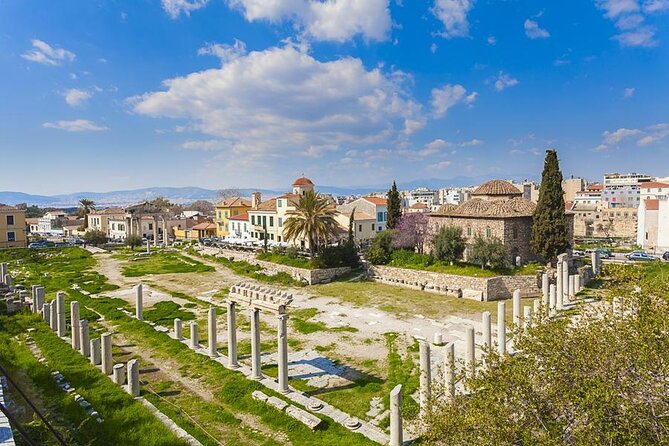
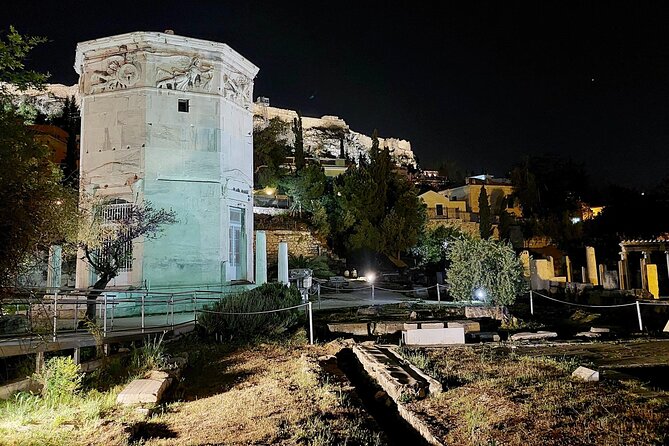
The tour finishes at the Ancient Agora of Athens, with a final stop of around ten minutes. The Agora was a major public and civic center of ancient Athens, and its location near the Acropolis area makes it a fitting endpoint.
The finish is practical for continuing your evening in central Athens, but it is not a return transfer. You should plan your next step from the Agora area, especially if you have a restaurant reservation or need to reach accommodation elsewhere. Since the experience ends there, you may want to ask the guide for local suggestions, something Juan is specifically praised for doing.
What the two-hour format really means
The advertised duration is approximately two hours. The listed stop times add up to about 80 minutes, leaving roughly 40 minutes for walking, regrouping, and transitions. That is a useful clue about the pace.
You will cover a lot of ground, but you will not receive a lecture at every site. Most stops last five minutes, while Syntagma, Parliament, Zeus’s Temple, the cathedral, and the Agora receive about ten minutes each.
I would treat this as a city orientation with historical framing. It works well on your first evening in Athens, when you want to learn where the main areas are and decide which places deserve a return visit in daylight.
It is less suitable if you want a specialist archaeological tour. One review notes a minor mistake, while still describing the guide as serious and very well prepared. That is a fair way to view the experience: the overall route and explanations matter more than expecting a flawless, academic presentation at every stop.
The maximum group size is 15. That is small enough for a personal feel without promising a private tour. Most people can participate, service animals are allowed, and the start is near public transportation. Wear shoes suited to walking and keep your phone ready for the evening views.
Is $27.51 a fair price?
At $27.51 per person, the cost is reasonable for a two-hour guided walk in central Athens, especially because the route includes many major landmarks and the guide speaks Spanish. You are paying mainly for structure, interpretation, and the chance to ask questions, not for admissions or food.
The value is strongest if you are new to Athens. A good guide can help you connect the National Library, Parliament, Olympic sites, Plaka, and the ancient monuments in one evening. That can save you from seeing the city as a scattered list of places.
The value is weaker if you already know central Athens and prefer to explore independently. Since all archaeological sites are viewed from outside, you may decide that your money is better spent on admission to one major monument and a self-guided walk.
Still, the price compares well with the amount covered. The experience is not a bargain because it includes many attractions free of charge. It is a fair purchase because a Spanish-speaking official guide turns a route through public streets into a coherent introduction.
Spanish guides, group feel, and practical details
The named guides connected with the experience are Juan and Lorena Navarrete. Juan receives especially warm praise for simple, engaging explanations and helpful advice about Athens. Lorena is described as prepared, enthusiastic, and skilled at linking one place to the next.
That matters if your Spanish is comfortable but not academic. A guide who uses clear language can make names, dates, mythology, and political history easier to follow. The strongest feedback also points to a professional tone and broad vocabulary, so you can expect more than a casual stroll.
The tour has a mobile ticket, and confirmation is provided when you book. It begins at Vallianeio Megaron, Panepistimiou 32, Athens 106 79, and ends at the Greek Agora in Athens 105 55.
Free cancellation is available up to 24 hours before the start time. Cancellations made later are not refunded, and late changes are not accepted. Cut-off times follow local Athens time, so check the time carefully if you are booking from another country.
Who should book this night walk?
I would recommend it to you if:
- You are arriving in Athens and want a guided first look at the center.
- You prefer Spanish explanations for history and mythology.
- You want evening photos without committing to a long dinner or full-night excursion.
- You like seeing many landmarks from outside rather than spending the whole tour inside one site.
- You want practical city advice from a guide.
I would be more cautious if you have limited walking ability, need frequent indoor breaks, or want admission to archaeological sites. The tour is near public transportation and suitable for most participants, but the information does not provide a detailed accessibility description or promise seating along the route.
It may also disappoint you if you expect a food tour, a private guide, or a long stop at each monument. The small group helps, but 15 people is still a group, and the route’s appeal comes from its range rather than lengthy visits.
Should you book the Athens night tour in Spanish?
Book this tour if you want an affordable, well-organized introduction to Athens after dark, especially during your first days in the city. The combination of Spanish guidance, major central landmarks, Olympic history, Plaka streets, and an illuminated view toward the Acropolis gives you a useful first evening.
Skip it if your priority is entering ruins or studying ancient architecture in depth. For everyone else, the route offers a smart overview, strong photo opportunities, and the kind of historical connections that help you make better choices for the rest of your Athens stay.
FAQ
How long does the Athens night tour last?
The tour lasts approximately two hours.
What language is the tour conducted in?
The tour includes an official tourist guide in Spanish. Guides named in the available information include Juan and Lorena Navarrete.
Where does the tour begin?
The meeting point is Vallianeio Megaron, Panepistimiou 32, Athens 106 79, Greece.
Where does the tour end?
The tour ends at the Ancient Agora of Athens, also called the Greek Agora, in Athens 105 55.
Are entrance tickets to archaeological sites included?
No. The tour does not include access to the interior of any archaeological site.
Is dinner included?
No. Dinner is not included in the tour price.
How many people can join the tour?
The group has a maximum of 15 participants.
Can I cancel for a full refund?
Yes, you can cancel for a full refund up to 24 hours before the experience starts. Cancellations or changes made less than 24 hours before the start time are not accepted for a refund.