REVIEW · ATHENS
Athens: Guided Walking Tour of Ancient Athens
Book on GetYourGuide →Operated by Secrets of Greece IKE · Bookable on GetYourGuide
Athens reveals its older self in the lanes around the Roman Agora and Plaka, where classical, Roman, and later city life sit close together. This two-hour walk gives you a useful story for the monuments, with a Spanish-speaking guide covering mythology, philosophy, science, and everyday life in ancient Athens. The meeting point is easy to identify: the Gate of Athena, outside the Roman Agora.
I like two things here. First, the guide adds meaning to ruins you could otherwise pass in minutes, and guides Lorena and Juan have been praised for clear, friendly explanations. Second, the route goes beyond the Acropolis and Parthenon, bringing in Hadrian’s Library and the Roman Agora. The main catch is important: you do not enter the archaeological sites, and the $30 price does not include admission tickets.
In This Review
- Key points to know before booking
- What this ancient Athens walk actually offers
- Starting outside the Roman Agora at the Gate of Athena
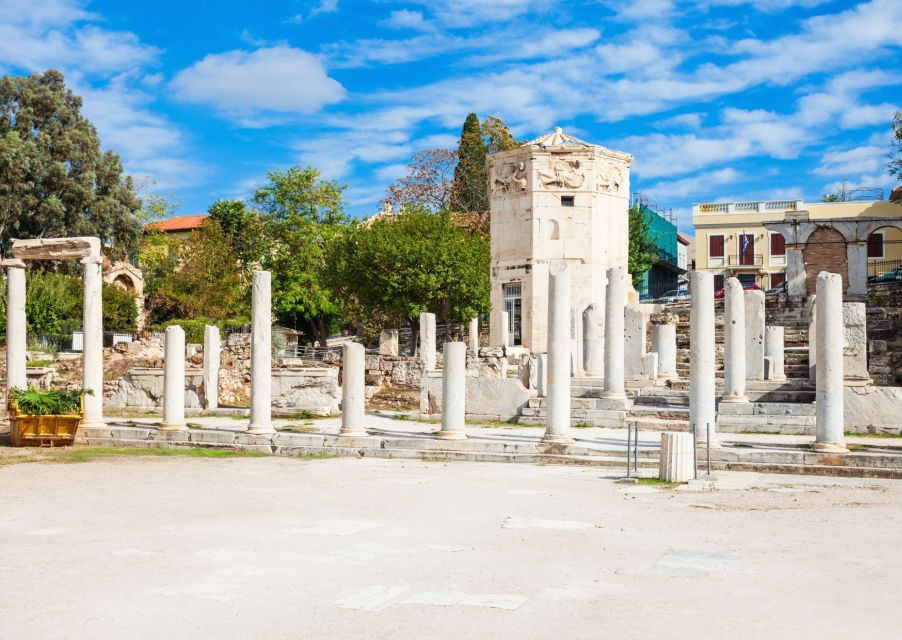
- The Roman Agora and the story behind its stones
- Hadrian’s Library, a Roman-era landmark in central Athens
- Plaka, where ancient sights meet modern Athens
- What the Spanish guide adds
- Why the $30 price can make sense
- Who will get the most from this tour
- Practical planning for the two-hour walk
- Is the Athens Ancient City Walking Tour worth booking?
- FAQ
- How long does the Athens walking tour last?
- What language is the tour conducted in?
- Where is the meeting point?
- Does the tour enter the Roman Agora?
- Are archaeological entrance tickets included?
- Which places are covered?
- Who are some of the guides associated with the tour?
- What should I bring?
- Can I cancel the booking for a refund?
Key points to know before booking
- The tour begins at the Gate of Athena, outside the Roman Agora archaeological site.
- You stay outside the sites, so no admission tickets are needed for this walking experience.
- The two-hour route focuses on Roman Agora, Hadrian’s Library, and Plaka, with other notable points in central Athens.
- The guide speaks Spanish and discusses history, mythology, philosophy, science, and ancient society.
- Lorena and Juan receive specific praise for clear, engaging explanations and a pleasant manner.
- Comfortable shoes, sunscreen, and weather-appropriate clothing will make the walk easier.
What this ancient Athens walk actually offers
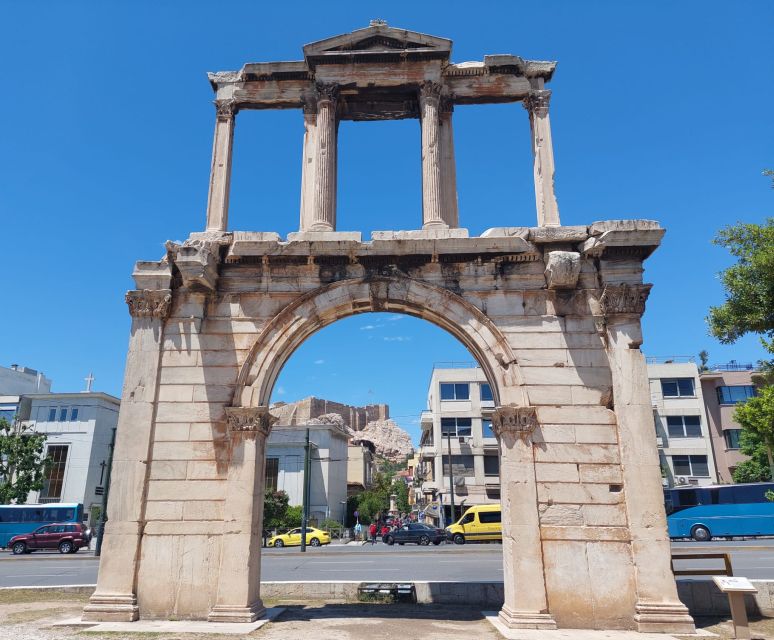
This is a short orientation walk, not a full archaeological-site visit. You meet outside the Roman Agora, then move through central Athens while your guide explains the monuments and the city around them.
That distinction matters. If you want to walk inside the Roman Agora or Hadrian’s Library, you will need to arrange admission separately. If you already have tickets for the archaeological sites, the tour can help you understand what you are seeing from the outside and place each monument within the wider story of Athens.
The guide’s role is the main reason to book. The subject is not limited to dates and names. The tour covers the classical period, mythology, philosophy, scientific progress, and the way ancient society worked. That broad approach should suit you if you prefer a connected story instead of a list of ruins.
The route also includes Plaka, Athens’s well-known old quarter. The information supplied does not promise a fixed list of every street or monument, so expect a tour around its most important tourist sights rather than a detailed neighborhood walk. Still, this part helps connect the archaeological remains with the living center of Athens.
You can also read our reviews of more walking tours in Athens



Starting outside the Roman Agora at the Gate of Athena
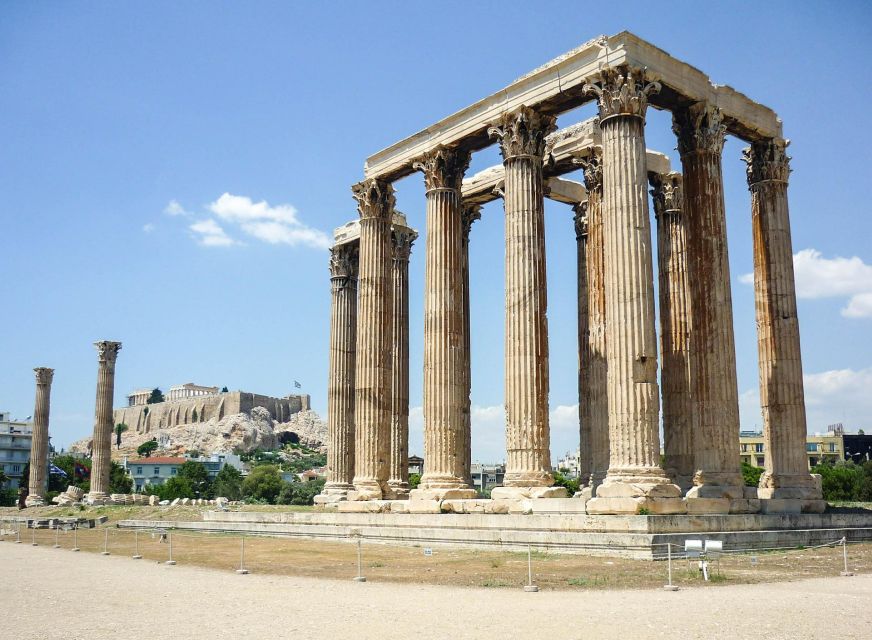
The meeting point is in front of the Gate of Athena, which serves as the entrance to the Roman Agora. You meet outside the archaeological site, not inside it.
Arrive with enough time to locate the gate and your guide. Since the meeting point is beside an archaeological entrance, it is worth checking that you are on the exterior side of the site before the group sets off. You do not need an entry ticket for the tour itself.
The Roman Agora is a useful place to begin because it shows how Athens continued to function after the height of the classical Greek period. The word Roman can cause confusion, since Athens is often introduced through its earlier Greek monuments. Your guide can help separate those periods and explain how the city changed over time.
This is also where the tour’s format becomes clear. You will be looking, listening, and moving between points rather than crossing into the monuments. For some people, that is enough for a strong first introduction. For others, the lack of interior access will feel like a limit, especially if this is your only archaeological tour in Athens.
The Roman Agora and the story behind its stones
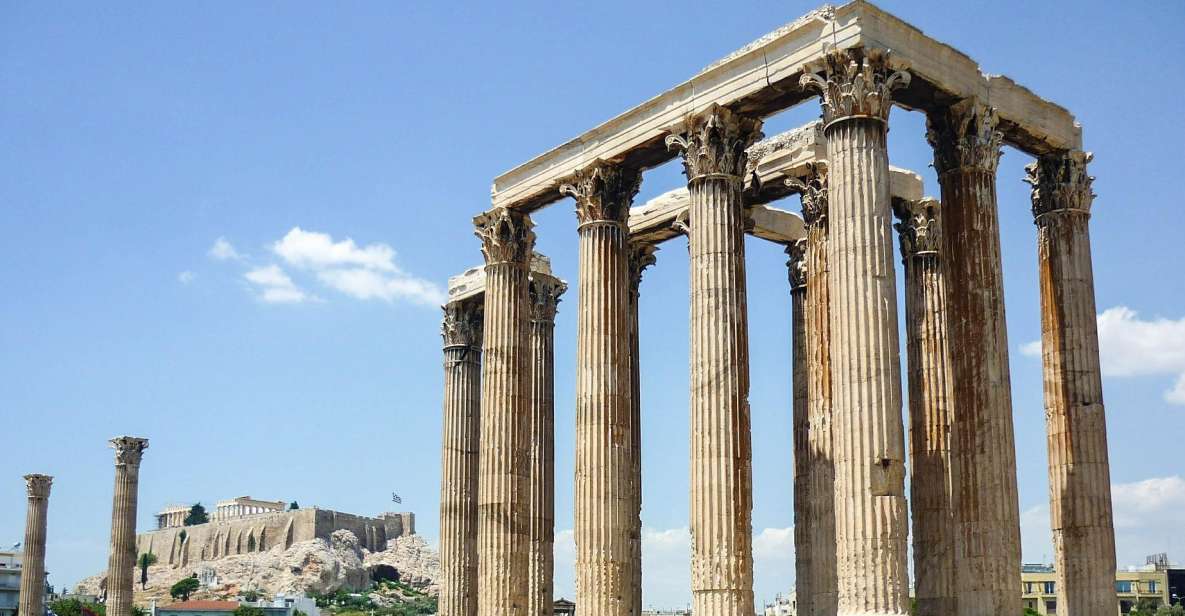
The Roman Agora is one of the central stops. From outside, you can take in the remains and hear how the site fitted into the city’s public life.
A guide is particularly useful here because ruins rarely explain themselves. Columns, walls, gateways, and open spaces can look similar when you do not know their original purpose. A clear explanation can turn a quick glance into a sense of how people used the area and how Roman influence shaped Athens.
The tour is designed to discuss more than architecture. You may hear about mythology and civic life, along with the ideas associated with ancient Greek philosophy and science. The stated focus is the classical period, though the Roman Agora also gives the guide a chance to explain the later development of Athens.
The practical drawback is simple: you will not walk through the site. You can see and discuss the monument, but entrance is not part of the activity. If you want photographs from inside or a close look at the remains, budget for a separate archaeological ticket.
Hadrian’s Library, a Roman-era landmark in central Athens
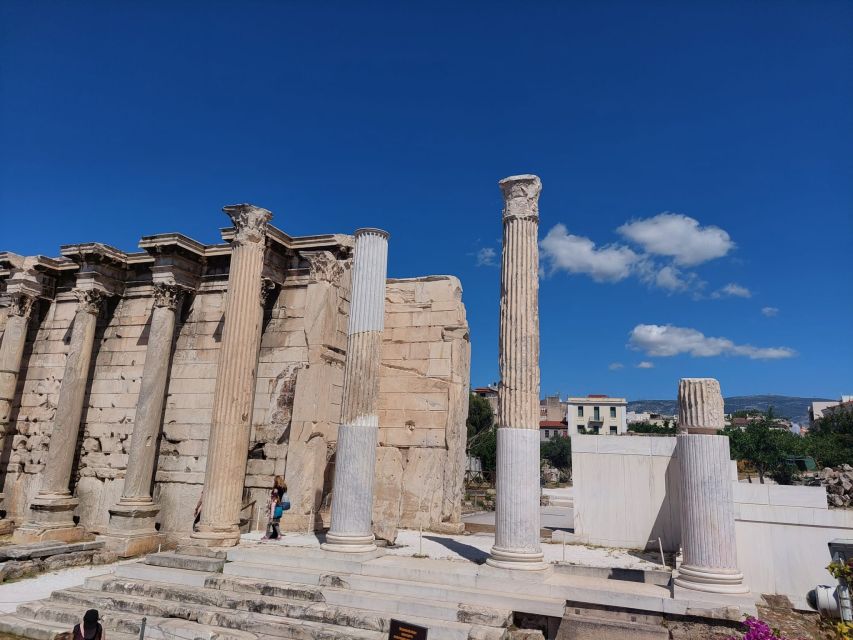
Hadrian’s Library is another named stop. Its name points to the Roman emperor Hadrian, whose connection with Athens is one part of the city’s long story.
The site is valuable even when viewed as part of an outside walking route. It helps show that Athens did not stop being important after the classical age. Roman rulers and builders left their mark, and the city remained a place tied to learning, public life, and cultural prestige.
This is where the guide’s wider subject range should help. A short explanation of Hadrian’s Library can lead into the role of books, education, public buildings, and intellectual life. The exact level of detail depends on the guide and the group, but the activity promises a discussion of history, philosophy, science, and ancient culture rather than only a description of the walls.
Again, you will not enter. Treat this stop as an informed exterior visit. The value lies in hearing what the remains represent and how they fit with the Roman Agora, Plaka, and the better-known monuments elsewhere in Athens.
Plaka, where ancient sights meet modern Athens
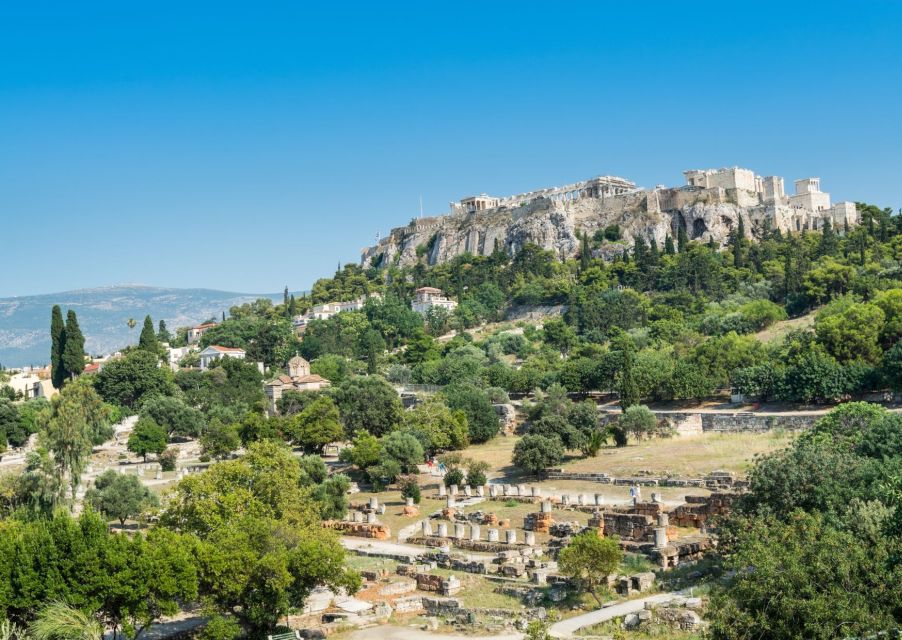
The walk continues around Plaka, with stops at its most relevant tourist attractions. Plaka is a good setting for a tour that wants to connect old Athens with the city you see today.
Here, the experience becomes less like a site visit and more like a guided neighborhood orientation. You move through central streets while the guide points out important sights and adds historical context. The route description does not give a complete street-by-street plan, so do not book this expecting a detailed food, shopping, or local-life tour.
I would use the Plaka section to get your bearings for later independent exploring. A guide can help you understand which parts of the area relate to the ancient city and which belong to later periods. You can then return on your own if you want more time for photographs or a slower walk.
Because the tour lasts only two hours, the Plaka portion is likely to be selective. That is a strength if you want a compact introduction before visiting other parts of Athens. It is less suitable if you want long stops, extensive shopping time, or a full neighborhood history.
You can also read our reviews of more guided tours in Athens





What the Spanish guide adds
This activity is offered with an official Spanish-speaking guide. That makes it a clear choice for Spanish-speaking visitors who want explanations in their strongest language.
The feedback gives two useful names. Lorena is praised for clear explanations, a sympathetic touch, and strong knowledge of the Roman Agora. Juan is described as attentive and clear, with an interesting and easy-going presentation. The booking does not guarantee that either person will lead your particular departure, but their strong feedback gives you a sense of the expected style.
The best part of a live guide is the ability to make ancient subjects understandable in real time. You can follow a single thread from mythology to public life, then from philosophy to scientific advances, instead of trying to join information from separate signs or apps.
One point in the feedback concerns a different audio guide connected with the Parthenon. That comment is useful mainly as a warning not to confuse this activity with an audio tour of the Acropolis. This walking tour has a live Spanish guide, and the listed route centers on the Roman Agora, Hadrian’s Library, and Plaka. It does not promise a detailed Parthenon visit.
Why the $30 price can make sense
At $30 per person, this is reasonably priced if you want a live Spanish explanation of central Athens and do not need entry to the monuments during the walk.
You are paying for the guide and the structure of the route, not for admission. That can be good value if you already hold an archaeological-site pass, plan to buy tickets separately, or prefer to visit interiors at your own pace later.
The value is weaker if you expect the fee to cover the Roman Agora and Hadrian’s Library. It does not. Add the cost of any tickets you want for separate visits, and compare the total with a tour that includes admissions.
The two-hour length keeps the price and time commitment manageable. You can fit it into a morning or afternoon without giving up a full day. It also makes a sensible first activity in Athens, since the guide can introduce the central area before you explore it alone.
The rating is listed as 5 out of 5 from 10 reviews, with repeated praise for the guides’ clear and engaging style. That is a small sample, so I would treat it as encouraging rather than a guarantee. The consistent point is the quality of the explanations, especially from Lorena and Juan.
Who will get the most from this tour
I would recommend this walk to you if Spanish is your preferred tour language and you want a compact introduction to ancient Athens.
It suits first-time visitors who feel that the Acropolis receives all the attention while other nearby remains get overlooked. The Roman Agora and Hadrian’s Library do not carry the same fame as the Parthenon, and a guide can help you understand why they matter.
It also works well for anyone who likes history told through several subjects. The tour includes mythology, philosophy, science, and ancient social life, so it is not limited to building dates and architectural labels.
Families and mixed-interest groups may appreciate the two-hour format. The walk is long enough to give structure to a day but short enough to avoid turning the entire day into a history lesson. Still, comfortable shoes are essential, and you should prepare for sun and changing weather with sunscreen and suitable clothing.
I would be more cautious if you want extensive time inside the archaeological sites. The no-entry rule is not a minor detail. It defines the activity, and you should plan separate site visits if close access is important to you.
Practical planning for the two-hour walk
Wear comfortable shoes. This is a walking tour through central Athens, and even a short route can feel tiring in hot weather or on hard surfaces.
Bring sunscreen and dress for the weather. The information provided does not specify how much shade the route offers, so it is sensible to prepare for sun.
You do not need archaeological tickets to join this experience. The group meets outside the Roman Agora, and the tour does not enter any site. If you plan to go inside afterward, arrange those tickets separately.
The activity offers free cancellation up to 24 hours before the start time, and you can reserve now and pay later. Check the available start times when booking, since the exact schedule is not fixed in the information provided.
The language is Spanish only. Do not assume that the guide will provide English or another language unless your booking details say so.
Is the Athens Ancient City Walking Tour worth booking?
Book it if you want a short, Spanish-language introduction to lesser-known ancient Athens, with a live guide and a route through the Roman Agora, Hadrian’s Library, and Plaka.
The strongest reason to choose it is the guide-led interpretation. Lorena and Juan have been praised for clear, pleasant presentations, and the subject range goes beyond the Parthenon to include mythology, philosophy, science, and ancient society.
Skip it if you need a tour that includes archaeological admission or gives you long interior visits. At $30, it offers good value for context and orientation, but you must pay separately for site entry. Think of it as a smart two-hour foundation for exploring central Athens, not a complete archaeological tour.
FAQ
How long does the Athens walking tour last?
The tour lasts two hours.
What language is the tour conducted in?
The live tour guide speaks Spanish.
Where is the meeting point?
You meet outside the archaeological site, in front of the Gate of Athena, which is the entrance to the Roman Agora.
Does the tour enter the Roman Agora?
No. The tour does not enter any archaeological sites.
Are archaeological entrance tickets included?
No. Entrance tickets to the archaeological sites are not included.
Which places are covered?
The tour includes guided discussion around the Roman Agora, Hadrian’s Library, and Plaka, along with other relevant sights in ancient Athens.
Who are some of the guides associated with the tour?
Reviews specifically praise guides named Lorena and Juan for clear, attentive, and engaging explanations. Your assigned guide is not specified in the available information.
What should I bring?
Bring comfortable shoes, sunscreen, and clothing suited to the weather.
Can I cancel the booking for a refund?
Yes. You can cancel up to 24 hours in advance for a full refund. You can also reserve now and pay later.