REVIEW · ATHENS
Athens Social and Political Walk
Book on Viator →Operated by Planetwonk · Bookable on Viator
Big politics is the point of this walk. Athens’ social and political story shows up fast when you stroll from the Prime Minister’s official seat to Parliament and then to the Athens Polytechnic site tied to the 1973 uprising. What makes it different is the format: you’re guided by a political scientist who keeps it conversational, encourages questions, and connects past choices to current headlines.
Two things I really like are the small-group size (max 15), which makes it easier to ask real questions, and the way the guide’s explanations help you make sense of Greek politics without feeling overwhelmed. In the same route, Isaac (the guide) also brings in comparisons to your own country’s political debates, which makes the ideas easier to grasp.
One possible drawback: this is a topic-heavy tour. If you want mostly classic postcard Athens sightseeing, you may find the political focus a bit intense, and you’ll want moderate physical fitness plus good weather for the walk.
In This Review
- Key Highlights You’ll Actually Feel on the Ground
- Why This Athens Walk Feels Like a Political News Brief
- The Meeting Point, the Pace, and What 2.5 Hours Really Means
- A Small-Group Political Scientist Format (and Why It Matters)
- Prime Minister Stop: Power as a Physical Place
- President’s Residence: How the State Presents Itself
- Parliament and the Old Parliament House: Where Greece Worked Out Its Arguments
- November 17, 1973: The Athens Polytechnic Uprising and Modern Memory
- The Stuff You’ll Learn: Greek Politics Without the Jargon
- Price and Value: About $48 for a Specialized Story Walk
- Practical Tips So You Don’t Trip Over Logistics
- Who This Tour Suits Best (and Who Might Want Something Else)
- FAQ
- FAQ
- How long is the Athens Social and Political Walk?
- Is the tour in English?
- How many people are in the group?
- Where do I start the tour?
- Where does the tour end?
- What stops are included on the route?
- Is there a fitness requirement?
- What ticket do I get?
- What about cancellation and weather?
- Should You Book This Athens Social and Political Walk?
Key Highlights You’ll Actually Feel on the Ground

- Political scientist guide with Q&A built in, not a lecture you just endure
- Prime Minister, President, and Parliament stops that show power as real geography
- A route that connects Greek independence, the Junta era, and democratic change to today
- Small group (15 max) so your questions don’t vanish into the crowd
- Athens Polytechnic (National Technical University) end point, tied to the November 17, 1973 uprising
Why This Athens Walk Feels Like a Political News Brief
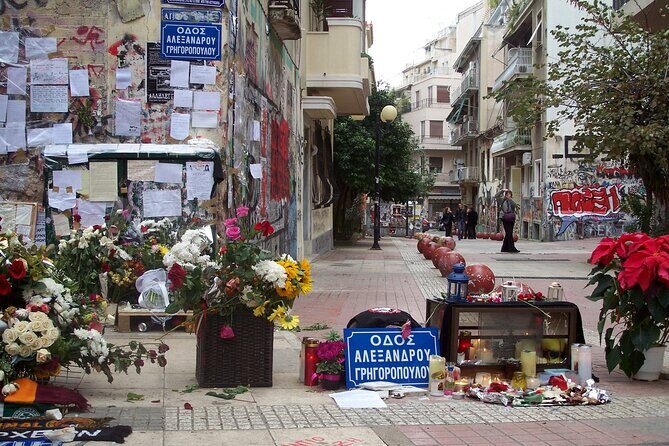
This tour treats Athens like a living textbook. Instead of pointing at buildings and moving on, you connect symbols of authority to the tensions that have shaped Greece over time. The result is that you start looking at the city differently, noticing how politics is physically represented in what’s where.
You’ll also get something rare in sightseeing tours: time to ask. The guide’s approach is built for questions about history and current events, so the walk becomes a back-and-forth discussion rather than a one-way narration.
And yes, it’s walking. The tour is about 2 hours 30 minutes, so it’s long enough to feel like a real mini-journey, but short enough that you’re not burning your whole day to understand the system.
You can also read our reviews of more walking tours in Athens



The Meeting Point, the Pace, and What 2.5 Hours Really Means

You start at Leof. Vasilissis Sofias 2-4, Athina 106 74. The location is in central Athens, and the tour notes that it’s near public transportation, which matters because you don’t want to waste the start of your tour fighting transit.
The walk itself is paced for people with moderate physical fitness. That likely means comfortable shoes and a willingness to keep moving, especially since the activity depends on good weather. Plan around that: if it’s rainy or windy, you may get rerouted to another date.
The end point is at the main entrance of the National Technical University of Athens, sometimes known as Athens Polytechnic, located on Patision Avenue. That’s a smart way to close the tour, because the location is tied to the country’s modern political memory.
A Small-Group Political Scientist Format (and Why It Matters)

The tour is capped at 15 travelers, which changes the whole feel. With a smaller group, the guide can actually steer the conversation to what you care about—history facts, today’s political climate, or why people disagree so sharply.
What stands out is the guide’s ability to explain Greek politics like it’s a system, not a mystery. Isaac’s style (from what you can expect based on the route’s focus) is to organize the story from earlier eras through later events and into current debates, then make the concepts click by comparing them to political dynamics you might recognize at home.
You’re not just learning dates. You’re learning how the pieces fit: institutions, public memory, and the recurring themes that shape modern Greek society.
Prime Minister Stop: Power as a Physical Place

The tour begins with the official seat of the Prime Minister of Greece. That sounds straightforward, but it’s a valuable starting point because it grounds the whole discussion in a simple idea: politics isn’t only TV coverage and polling. It’s also offices, security, protocol, and public symbolism.
As you stand near that official seat, the guide can connect what the building represents to the bigger political questions you’ll talk through later. In a good explanation, you’ll see why institutions exist where they do and why that location matters for how citizens think about authority.
This stop is also a nice “orientation” moment. You get your bearings fast, both geographically and conceptually. By the time you reach the parliamentary buildings, you’re already thinking in categories instead of just viewing façades.
President’s Residence: How the State Presents Itself

Next comes the official residence of the President of the Hellenic Republic. Even without turning this into an architecture tour, this stop helps you understand how the Greek state presents itself through official spaces.
The value here is context. The President’s role may feel abstract until you see how the office is treated as part of the public landscape. The guide can help you connect the idea of the presidency to the broader story you’re building about governance and public legitimacy.
And since the tour encourages questions, this is usually a good moment to ask something you’re truly wondering. Like: what does symbolic authority mean in practice, and how does it interact with the rest of the political system?
- All Day Cruise -3 Islands to Agistri,Moni, Aegina with lunch and drinks included
★ 5.0 · 4,958 reviews



Parliament and the Old Parliament House: Where Greece Worked Out Its Arguments
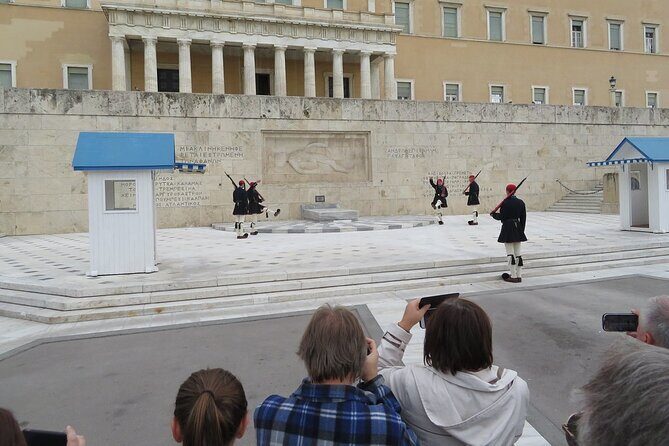
After the presidency stop, you move to the Parliament of Greece, followed by the Old Parliament House. This pairing is smart. You’re not just seeing today’s seat of legislative power—you’re also getting a sense of how parliamentary space has shifted with political change.
The guide’s narrative thread (you’ll feel this across the walk) connects early modern Greek developments to the later Junta period and then toward democratic reform. That’s one of the reasons this tour lands well even if you don’t come with Greece-specific political knowledge. You’re given a roadmap.
The Old Parliament House matters because it signals continuity and change at the same time. You get a sense that political institutions are not static; they reflect the country’s struggles and compromises.
If you like your history tied to real places, these legislative stops are where the tour becomes most satisfying. The buildings stop being landmarks and start being evidence in a bigger argument about how societies rebuild trust.
November 17, 1973: The Athens Polytechnic Uprising and Modern Memory

The final stop is the National Technical University of Athens, known for its connection to the Athens Polytechnic uprising on November 17, 1973. This isn’t just a historical footnote. It’s part of the political memory that still shapes how people talk about democracy, authority, and resistance.
The guide’s approach here is usually to connect the uprising back into the broader line of events you’ve been walking through. In practice, that means you leave with a clearer understanding of why this date shows up repeatedly in political discussions and education.
One of the strongest themes from this tour’s reputation is that it feels like a political story told with real stakes—what happened, why it happened, and why it still matters when you’re reading today’s headlines. If you want your Athens experience to go beyond sightseeing, this is the moment that makes it stick.
The Stuff You’ll Learn: Greek Politics Without the Jargon

This is a niche tour, and that’s a compliment. It’s for people who want context for what they’re seeing in Greece right now, not just a smooth route for photos.
Expect a narrative that spans big arcs: the Greek independence war, the Junta era, democratic reform, and the polarization in Greek society that shows up in recent news. The guide also uses anecdotes tied to current events to add flavor to the story, so the information doesn’t sit behind glass.
You’ll also hear comparisons that help you translate Greek political concepts into something you can relate to. That matters because political systems are complicated, and translation is often what makes the difference between confusion and understanding.
Price and Value: About $48 for a Specialized Story Walk
At $47.92 per person for roughly 2 hours 30 minutes, this tour costs about the same as many standard city walks—except you’re paying for a specialized perspective. You’re not just buying access to buildings; you’re buying time with a guide who frames Greek politics like a connected system.
The value gets even better when you factor in the small-group limit and the built-in Q&A. In other words, you’re paying for attention, not just movement.
It’s also relatively easy to justify the cost if you’re the type who reads the news and then wonders what historical roots explain today’s tensions. This tour doesn’t promise a 100-point Greek civics exam, but it does help you see the “why” behind what can look chaotic from the outside.
Practical Tips So You Don’t Trip Over Logistics
Wear comfortable shoes. The tour is a walking route, and you’ll be focused more on discussion than on stopping for long breaks.
Bring a layer if the weather is changing. The tour is weather-dependent, so conditions can affect how pleasant the walk feels.
If you’re traveling with a service animal, it’s allowed. The tour also notes it’s near public transportation, which you’ll appreciate if your timing is tight.
And if you want to get the most out of the Q&A, come with one or two questions you truly care about—current political issues you’re hearing about, or a part of Greek history you want explained in plain terms.
Who This Tour Suits Best (and Who Might Want Something Else)
Book this if you want more than “look at that building.” It’s ideal for you if you’re curious about how Greek political history connects to what you’ll notice today in Athens, and if you like guided explanations that compare across countries.
You’ll also enjoy it if you’re comfortable with a moderate pace and you’re okay with a tour that can feel like a walking conversation rather than a checklist.
You might skip it if you’re in Athens mainly for classical sites and want minimal political discussion, or if you prefer tours that stay light and purely visual.
FAQ
FAQ
How long is the Athens Social and Political Walk?
It runs for about 2 hours 30 minutes.
Is the tour in English?
Yes, the tour is offered in English.
How many people are in the group?
The tour has a maximum of 15 travelers.
Where do I start the tour?
The start is at Leof. Vasilissis Sofias 2-4, Athina 106 74, Greece.
Where does the tour end?
It ends at the main entrance of the National Technical University of Athens, also known as Athens Polytechnic, on Patision Avenue.
What stops are included on the route?
Key stops include the official seat of the Prime Minister, the official residence of the President, the Parliament of Greece, the Old Parliament House, and the Athens Polytechnic uprising site connected to November 17, 1973.
Is there a fitness requirement?
Yes. The tour is marked for moderate physical fitness.
What ticket do I get?
You get a mobile ticket.
What about cancellation and weather?
You can cancel for a full refund if you cancel at least 24 hours in advance. The tour requires good weather, and if it’s canceled for poor weather, you’ll be offered a different date or a full refund.
Should You Book This Athens Social and Political Walk?
If you want Athens with context, book it. This is one of those rare tours where the route is built around institutions and turning points, and the guide’s job is to help you understand the political logic behind what you see. For about $48, you’re paying for real explanations, thoughtful Q&A, and an ending at the Athens Polytechnic site that gives November 17, 1973 meaning in today’s world.