REVIEW · ATHENS
Private Walking Tour The Acropolis
Book on Viator →Operated by Athens Walking Tours · Bookable on Viator
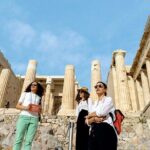
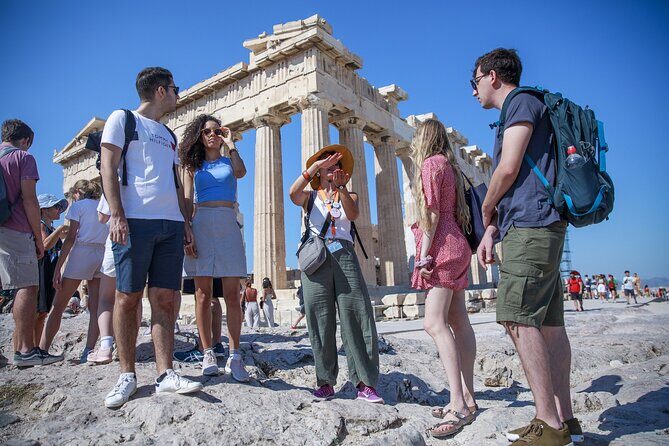
If Athens is on your list, the Acropolis is the big draw. This private walking tour lets you see the monuments with a licensed guide, plus built-in time to ask questions and go at a human pace. One guide, Kate, stood out for turning key spots into a welcome, why it matters kind of stop.
I like that this tour is truly private, so you’re not squeezed into a crowd rhythm. I also like the tight route planning: gateway, main temples, and the famous Caryatids stop are handled in a logical order, so you can build a mental map instead of playing monument bingo.
One consideration: the Acropolis ticket is not included (listed as €30 per person), so your total cost is your guide fee plus the entry fee for the areas that require it.
In This Review
- Key things to know before you go
- What a private Acropolis guide does for you
- Your 1.5-hour route, from meeting point to top-of-Acropolis finish
- Price and entrance tickets: how the math works out
- Stop 1: Acropolis of Athens orientation (and why the first minutes matter)
- Stop 2: Theatre of Dionysus and the Sanctuary of Asclepius
- Stop 3: Herod Atticus Odeon—still in use
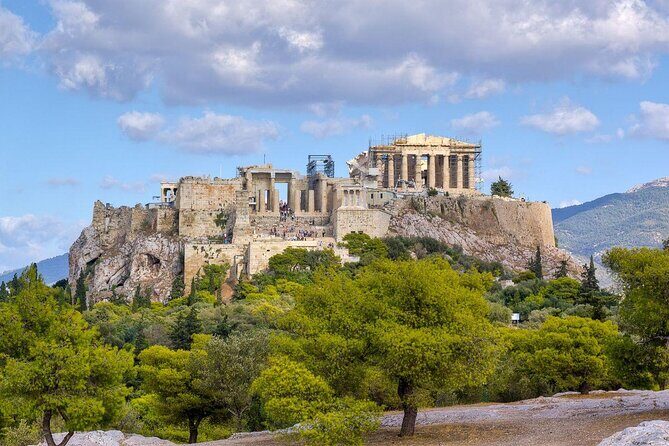
- Stop 4: Propylaea, the monumental gateway to the Acropolis
- Stop 5: Parthenon close-up for about 20 minutes
- Stop 6: Temple of Athena Nike and the detail stop
- Stop 7: Erechtheion and the Caryatids, plus marble and myth
- A bonus explanation on the Agrippa Monument
- How to get the most from your Acropolis private walk
- Who should book this tour?
- Should you book The Private Walking Tour The Acropolis?
- FAQ
- Is the Acropolis entrance ticket included in this tour?
- How long is the private walking tour?
- Is this tour private or part of a group?
- Where does the tour start?
- Where does the tour end?
- Is hotel pick-up and drop-off included?
- What language is the guide?
- What sites are included in the walking route?
- Is cancellation free?
Key things to know before you go
- Private and question-friendly: only your group, with room to ask follow-ups instead of racing ahead.
- A practical 1.5-hour pace: quick stops where you need orientation, longer moments at the Parthenon and Erechtheion.
- Entrance fees are separate: budgeting for the €30 Acropolis ticket matters.
- A route that makes sense on foot: from Dionysus/odeon areas up toward the Parthenon zone.
- Guide materials help you remember: you’ll receive an Athens guide magazine and an Athens map.
- Moderate walking level: you should feel comfortable with a steady uphill trek and site walking.
What a private Acropolis guide does for you
The Acropolis can feel overwhelming fast. You’re surrounded by famous names—Parthenon, Erechtheion, Caryatids, Athena Nike—yet without a guide’s framing it’s easy to memorize labels and still miss the story.
With a local licensed guide, you get something more useful than a basic rundown: a way to connect each monument to the space around it. The stops are chosen so you’re not just looking at buildings; you’re learning how the area functions as a sacred and civic complex. In a private format, you can slow down where you care most—architecture details, religious purpose, or even how people used these spots in ancient times—then move on without feeling guilty about holding up a group.
I also appreciate the inclusion of an Athens Guide magazine and an Athens map. Even though the tour is short, those materials help you keep the names and locations straight afterward—especially helpful if you’re bouncing between neighborhoods in Athens.
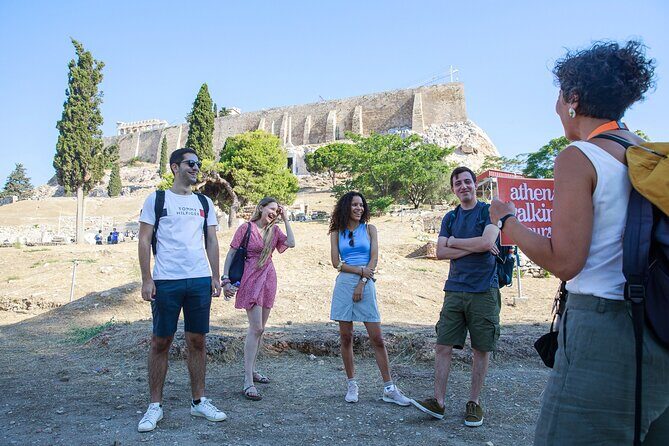
One more plus from recent feedback: a guide named Kate was praised for a “deep dive” level of explanation and for making visitors feel genuinely welcomed. That’s exactly what you want on the Acropolis: a guide who can switch from overview to detail without making it feel like homework.
You can also read our reviews of more walking tours in Athens



Your 1.5-hour route, from meeting point to top-of-Acropolis finish
This tour is listed at about 1 hour 30 minutes. That time is realistic because you’ll be making several short visits—some around 5–10 minutes—plus a couple of longer stops for the big visual anchors.
You start at:
- Dionysiou Areopagitou 3, Athina 117 42, Greece (near public transportation)
And you end at:
- Acropolis, Athens 105 58, Greece
- The tour ends at the top of the Acropolis.
Because there’s no hotel pick-up or drop-off included, you’ll want to build a little extra buffer into your day. The meeting point is walkable from common central routes, but the Acropolis area is still a bit of a maze if you’re coming from somewhere unfamiliar.
Also, because the tour ends at the top, you’ll likely have an easier time continuing your sightseeing right away (rather than backtracking). Just plan your exit route for the way down—staying flexible is the move here.
Price and entrance tickets: how the math works out
The price is $300.06 per person for the private tour (English; group discounts are mentioned). The duration is short, so the fee is really paying for access to a licensed guide and the private format—not for admission.
Here’s the budget piece that matters most:
- The Acropolis ticket is not included and is listed as €30.00 per person.
At multiple stops, admission is also marked as not included. One stop (the Parthenon) is marked as Free in the tour details, but don’t treat that as a full workaround. Your safest assumption is: you’ll still need the Acropolis entry ticket for the sites that require it, and your total budget should include that €30.
So, is it value? For me, the value comes down to how you travel:
- If you hate crowds and want the ability to stop and ask questions, the private price can make sense quickly.
- If you’re okay with fast group tours and you’re happy reading signs yourself, you might feel this is pricier than it needs to be.
The key is that this tour is built for time efficiency plus meaning. In 90 minutes, you don’t just “see” the Acropolis—you come away knowing what you just looked at. That’s the part you’re paying for.
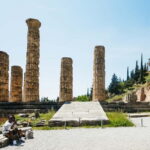
Stop 1: Acropolis of Athens orientation (and why the first minutes matter)
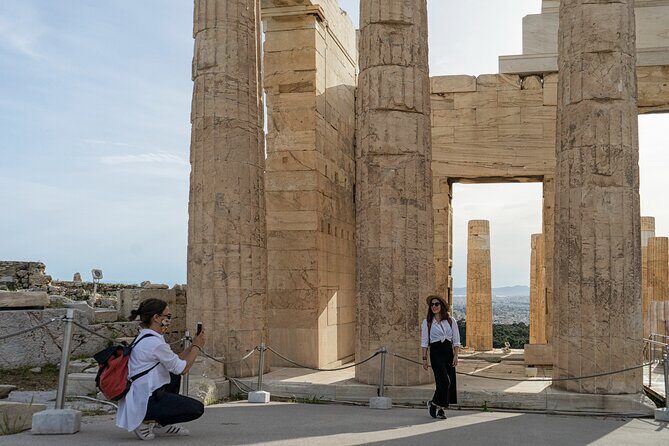
You begin with the Acropolis of Athens itself. The stop is listed at about 10 minutes, and the reason that first segment is important is simple: it sets your mental framework.
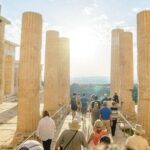
Early on, a good guide helps you notice things you’d otherwise miss—alignments, relative positions, and how the area’s topography shapes where people went. On a site this famous, the temptation is to go straight to the most photographed building. Orientation prevents that. You get oriented first, so later stops feel connected instead of random.
A practical tip: if you’re the type who likes to ask questions, this is the best moment to do it. Ask what to look for next, what the major areas mean, and how the monuments relate to each other on the hill.
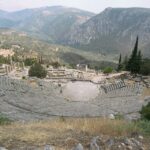
Stop 2: Theatre of Dionysus and the Sanctuary of Asclepius
Next up is the Theatre of Dionysus and the Sanctuary of Asclepius, again listed around 10 minutes.
This is a smart move in the route because it shifts your brain from “temples and statues” to “public life and belief.” The Theatre of Dionysus connects to performance and civic identity, while the Sanctuary of Asclepius points toward healing and religion. Even with quick timing, those themes give you a fuller picture of why this place mattered beyond architecture.
A small drawback of sites like this: if you’re expecting long time inside every structure, 10 minutes can feel short. But for most people, that’s exactly why this private format helps—you can focus on the details you care about most, and your guide can adjust if you want a bit more explanation at one stop.
You can also read our reviews of more private tours in Athens





Stop 3: Herod Atticus Odeon—still in use
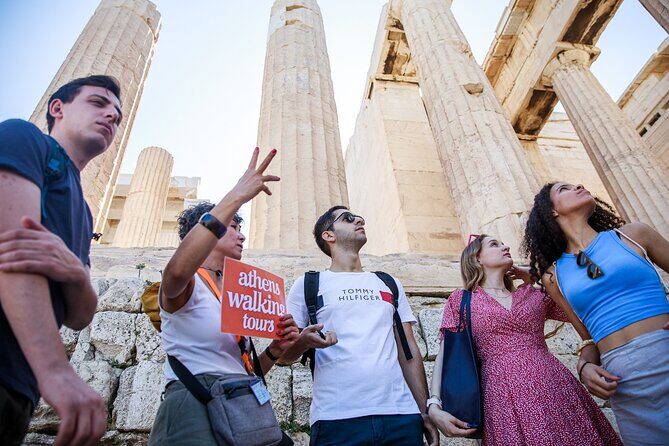
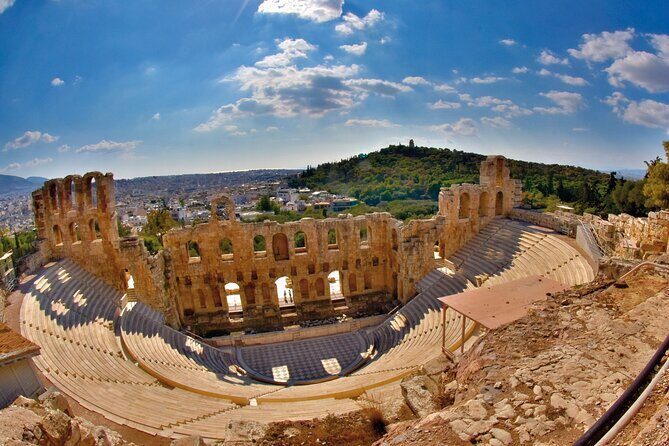
Then you’ll reach the Herod Atticus Odeon, listed at about 5 minutes.
This stop is less about lingering and more about context. It’s one of those places where the modern world is still visible in the ancient stone. That continuity is the point: you’re standing in a space that has remained relevant, which helps the site feel less like a museum and more like living history.
If you’re a visual learner, this is a good place to ask your guide what you should look at first—seating layout, the structure’s form, or how the space would have functioned in ancient times.
Stop 4: Propylaea, the monumental gateway to the Acropolis
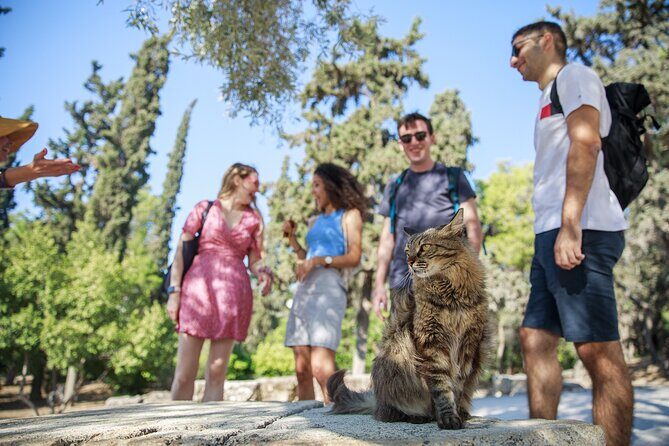
The Propylaea is next, with about 10 minutes listed.
Think of the Propylaea as the site’s threshold. Walking through the gateway helps you feel the shift from the outside world into the sacred complex. Your guide’s explanation at this moment can make the rest of the tour land better, because it frames why people approached the Acropolis the way they did.
If you’re taking photos, this is also a good spot to do it deliberately. It’s the kind of view where composition matters, and because you’re near the main climbing route, you’ll have the angles you need without feeling rushed.
Stop 5: Parthenon close-up for about 20 minutes
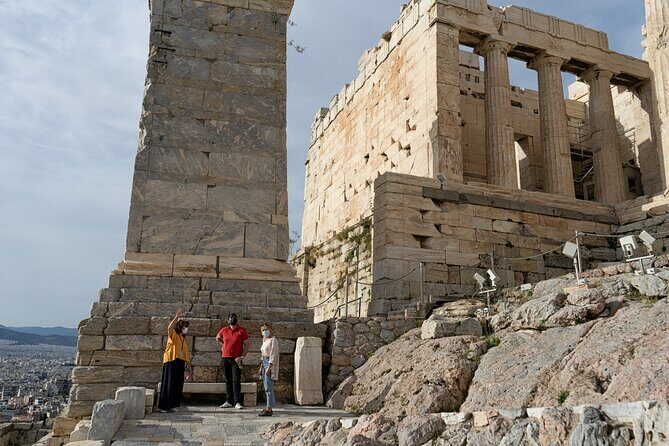
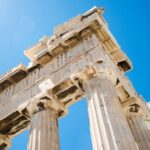
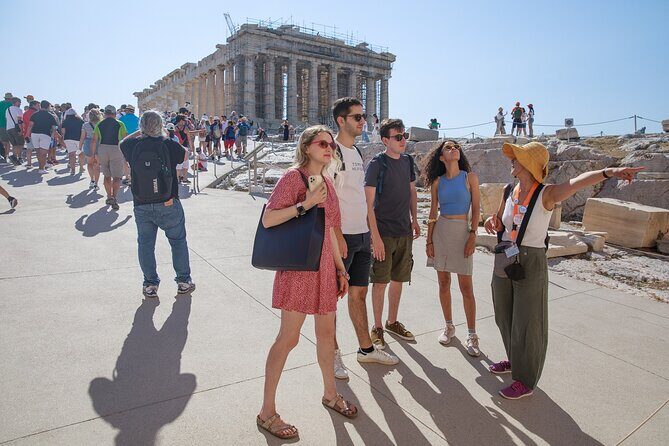
You’ll spend around 20 minutes at the Parthenon, and it’s described as dedicated to Athena, Athens’ patron goddess. This is your big centerpiece stop.
Here’s the practical value of a longer Parthenon segment: you don’t just get a glance. You can notice details—proportions, the way the building dominates the hill, and how it connects to the surrounding temples. In a private tour, you’re more likely to get a conversation rather than a stopwatch tour.
Also, this stop is marked Admission Ticket Free in the tour details. Even if you still pay the main Acropolis entry fee, this kind of information helps you understand which moments are included in your time on site without extra friction.
A good move: ask your guide to point out a couple of specific features (not just “look at the building”). If you come prepared with 1–2 questions—How did they build it? Why was it so important?—your time at the Parthenon becomes far more satisfying.
Stop 6: Temple of Athena Nike and the detail stop
Next is the Temple of Athena Nike, listed at about 10 minutes.
This is a detail stop. It’s smaller than the Parthenon in most visitors’ minds, so it’s easy to miss if you’re moving too fast. With a guide, you get the value of stepping back and seeing what makes this temple distinct—and why Athena Nike matters to the story of Athens.
One thing to watch for: if you’re only interested in the most famous structure, you might feel tempted to skim. Don’t. Temples like this are often where the symbolism becomes clearer, and that’s where your guide’s explanations can add real meaning.
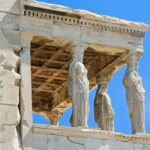
Stop 7: Erechtheion and the Caryatids, plus marble and myth
You’ll spend about 20 minutes at the Erectheion, described as an elegant temple made of Pentelic marble with views of the famous Caryatids.
This is usually the “wow” stop for a lot of people because the Caryatids are visual and immediate. In a private tour, you can slow down here without worrying about a group getting annoyed. You can stand in the best position for viewing, ask questions, and let the details land.
Also, Erechtheion is tied to specific myth and worship in the Acropolis complex. Your guide can help you connect what you’re seeing (the marble, the figures, the temple setting) to the reason it was created and used.
A bonus explanation on the Agrippa Monument
The tour also includes an explanation on the Agrippa Monument (no duration is listed for this part).
Since the time allocation for the other stops is already tight, this is likely a shorter interpretive moment rather than a full extra site visit. Still, these “bonus” explanations can be valuable because they help fill in gaps—tiny context that makes the big names feel less isolated.
If you find yourself wanting to ask more, this is another place where you can do it. A good guide can turn a quick mention into something memorable without eating the whole schedule.
How to get the most from your Acropolis private walk
A private tour is only “private” on paper if you don’t use that flexibility. Here are smart ways to make the most of it, based on how this tour is structured:
- Ask your first big question early. The first stops are short; use them to set your focus.
- Pick one theme. Go all-in on either architecture, religion and symbolism, or public life around the Acropolis. Your guide can shape the talk around that theme.
- Use the longer stops well. Parthenon and Erechtheion have about 20 minutes each. Those are your best chances for a slower look.
- Wear comfortable shoes. The tour is marked for moderate physical fitness, and you’ll be walking a lot at a site that’s built on slopes.
- Bring your curiosity. The whole point is that you can ask questions on the spot—so don’t save them for the walk back.
And because the tour ends at the top of the Acropolis, think about what you’ll do next. If you’re continuing sightseeing in the area, plan for your way down afterward so you’re not rushing.
Who should book this tour?
This one fits best if you:
- Want a private Acropolis experience instead of a faster group format.
- Like having someone translate what you’re seeing into meaning you can remember.
- Appreciate a focused route that hits the major monuments without turning your day into a marathon.
It may be less ideal if you:
- Have your heart set on spending long hours inside every monument complex.
- Prefer reading guide signs yourself and you don’t need context from a licensed guide.
- Are trying to keep costs low, since the guide fee is high and the Acropolis ticket (€30) is separate.
Should you book The Private Walking Tour The Acropolis?
If you’re willing to pay for comfort, clarity, and control of the pacing, I’d say it’s a strong choice. The private format is the heart of this experience: you get a guide who can answer questions and keep the story coherent across several key sites in about 90 minutes.
Book it if you want the Acropolis to feel like more than photos and postcard captions. The best value here is not the number of stops—it’s the fact that those stops are explained and connected, so you leave with names and reasons, not just locations.
FAQ
Is the Acropolis entrance ticket included in this tour?
No. The Acropolis ticket is listed as not included, and it’s shown as €30.00 per person.
How long is the private walking tour?
The duration is approximately 1 hour 30 minutes.
Is this tour private or part of a group?
It’s private. Only your group participates.
Where does the tour start?
It starts at Dionysiou Areopagitou 3, Athina 117 42, Greece.
Where does the tour end?
It ends at the top of the Acropolis (Acropolis, Athens 105 58, Greece).
Is hotel pick-up and drop-off included?
No. Hotel pick-up and drop-off are not included.
What language is the guide?
The tour is offered in English.
What sites are included in the walking route?
The tour includes the Acropolis of Athens, Theatre of Dionysus, Sanctuary of Asclepius, Herod Atticus Odeon, Propylaea, Parthenon, Temple of Athena Nike, and Erectheion, plus an explanation on the Agrippa Monument.
Is cancellation free?
Yes, free cancellation is offered. You can cancel up to 24 hours in advance for a full refund.